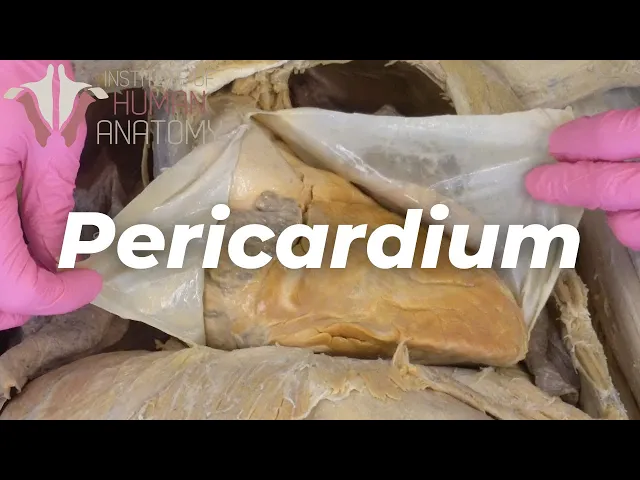
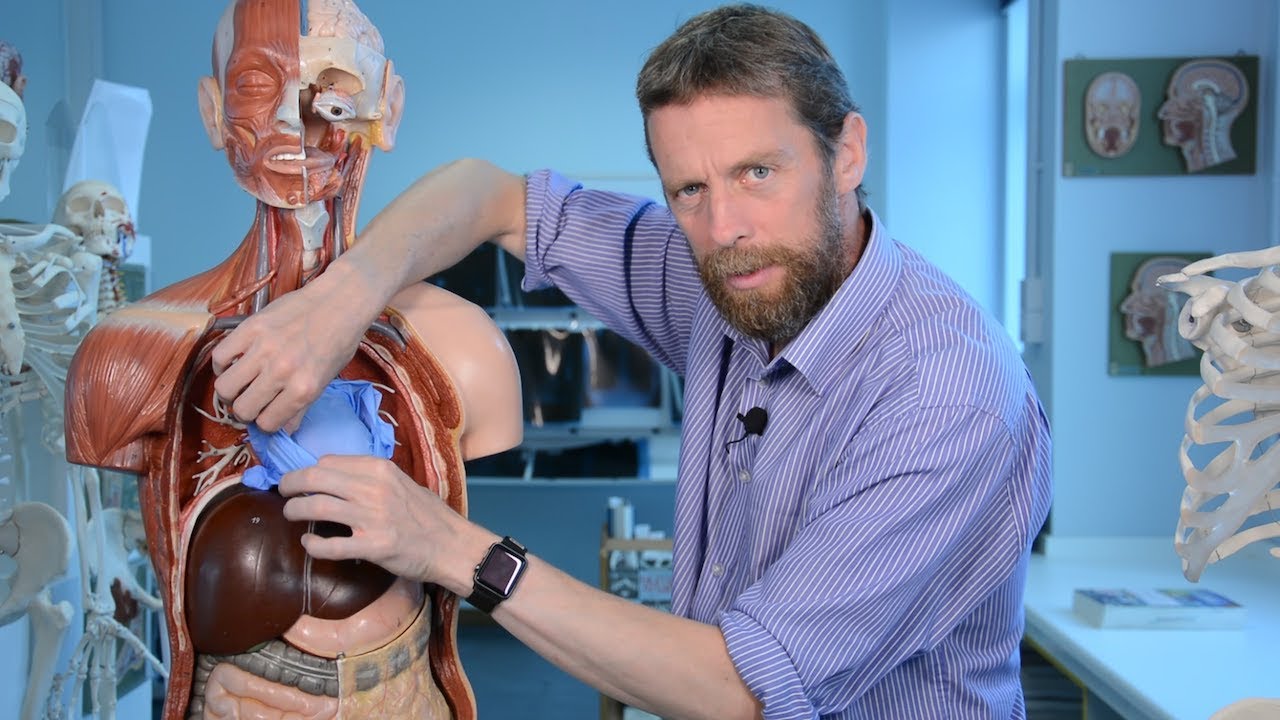
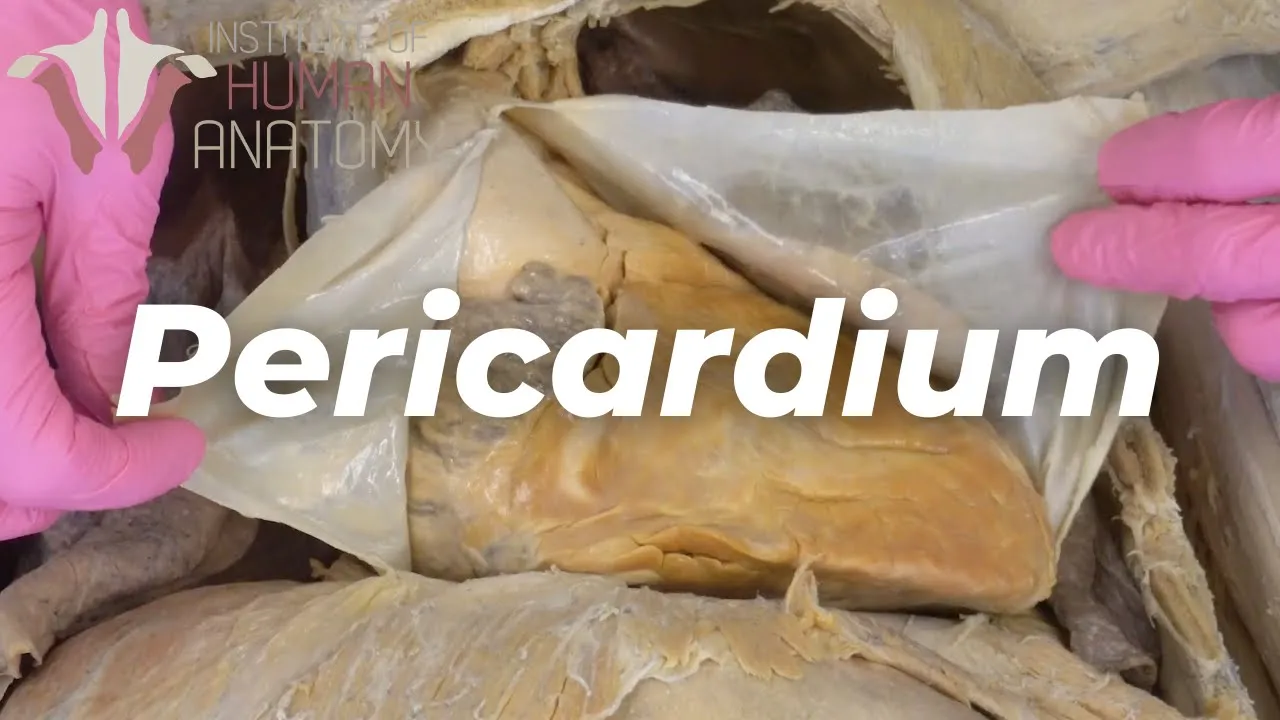
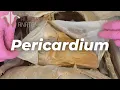
As you can see if I pull the heart up out of this you can truly see it is sitting in an amazing sac. Again, that we call the pericardium. Welcome to the lab everyone!
Today we're going to talk about why hearts are in a sac! And not really this sack — really just the sac that's inside your chest called the pericardium. And we're gonna open the pericardium, pull the heart up, and look at this sac and the heart in all of its glory.
It'll be like an anatomical opening of a Christmas present — even though we're nowhere near Christmas time. . .
We need to talk about why this pericardial sac is so important and what happens if something goes wrong with it. So, as always — let's jump right into this anatomical awesomeness! So I may or may not have been accused of being a little long-winded with my introductions.
. . So let's not waste any time and go straight into this thoracic dissection that we have here.
You can see a lung on either side here and then this tissue that I'm running my finger on. And this is what we're talking about — this is the fibrous pericardium. Spoiler alert!
There's going to be a heart inside of this, so we might as well open up this little "Anatomical Gift" to take a look. And as you can see. .
. [dun, dun, dun. .
. ] Sorry — that was a shameless sound effect. I'm acting like I've never done this before, but I do it all the time, and I make sound effects for the students because it is awesome!
As you can see if I pull the heart up out of this, you can truly see it is sitting in an amazing sac. Again, that we call the pericardium. Now we need to talk about a couple of details that helps us understand the function of this pericardium.
Now one of the first things we need to address before we can fully understand and appreciate the pericardium or the pericardial sac is that this thing is actually two layers fused together. So if I fold it back over the heart, this outer portion is one layer and this inner portion is another layer. And again, they're fused together.
This outer portion or outer layer is known as the fibrous pericardium, because it's made of a dense irregular connective tissue. This is a tough tissue that helps protect the heart and even anchor and hold it in place because you don't want this thing just bouncing or wiggling around while it's beating all over the place, right? Now the inner layer is obviously going to have a different name and as we reflect that back again you can see this is a more glossy tissue.
If I pull this away as well — this is called the serous pericardium because it's made out of a serous membrane that secretes something important called serous fluid. I said serous a lot there. .
. But this serous fluid is an oily fluid that gets in this space here that helps reduce friction between the outer portion of the sac and the actual lining of the heart. So when the heart's beating, when you're running around exercising getting your heart rate up, you can have this reduction in friction and not cause a problem between the heart and the surrounding tissue.
Now before we go into the problems that can occur with the pericardium, we need to talk a little bit more about the serous pericardium because anatomists love naming things. And this actually makes a lot of sense because they need to make some distinctions between some layers here. Now remember, the serous pericardium is fused to the fibrous pericardium here.
But the serous pericardium actually blends on and attaches to the outer layer of the heart as well. It's continuous from here onto the heart tissue. So of course the anatomists are like, "we gotta name the part that's on the heart versus the part that's attached to the fibrous pericardium out here.
. . " Now the part that's on the inside lining of the fibrous pericardium here is called the parietal pericardium.
Now that's a subset of the serous pericardium. And parietal just means wall. The part that blends on and literally attaches to the outside of the heart is called the visceral pericardium, because visceral just means internal organs.
So really what you're reducing friction between is the parietal pericardium here and the visceral pericardium here with a little bit of fluid in between there. So I know — that's pure anatomical awesomeness! So what happens when there's a problem where the sac is inflamed?
What causes it? Is it serious, and can we treat it? Well a lot of you've probably heard of this disorder before, and it's called pericarditis.
-itis just refers to inflammation. And if the sac gets inflamed — you might guess it — somebody might experience chest pain. Now that can be really scary for people, because a lot of times when we think of chest pain we think of things like a heart attack.
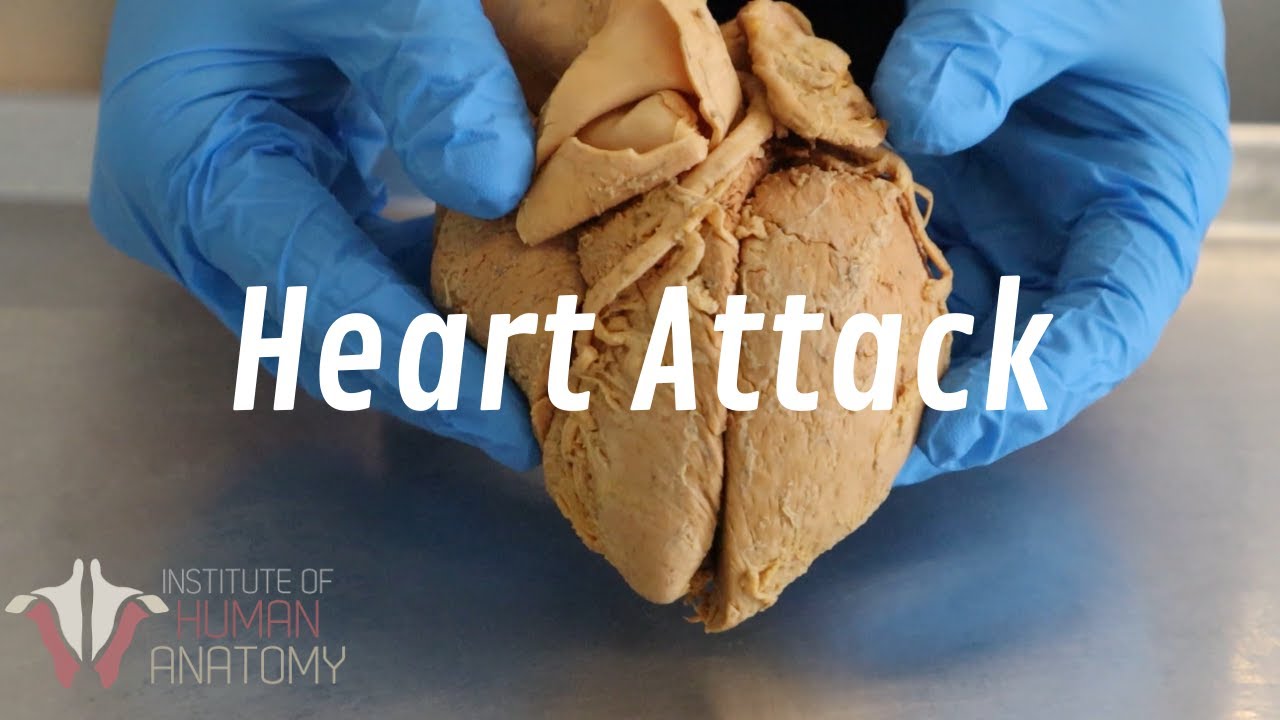
But there are some things that we can use to distinguish the type of pain that pericarditis causes compared to say something like myocardial infarction, which is a fancy-pants name for a heart attack. So how the chest pain is typically described in pericarditis is sharp, with a quick onset. Meaning it comes on fast and has this sharp nature to it.
And because of the inflammation of this pericardial tissue, it also contributes to another unique feature of the type of chest pain people experience which is it tends to improve when people sit up and lean forward. It's also described as pleuritic. Now what in the world does pleuritic mean?
Pleuritic chest pain is chest pain that's worsened with coughing or deep breathing — specifically breathing in. And that is one way to kind of distinguish it from other types of chest pain. Another thing that will happen if you go to the doctor — which we typically recommend with chest pain — is they'll auscultate your heart or listen with a stethoscope, and often hear what's called a pericardial friction rub, which is because the inflammation on the pericardial sac is now not reducing friction like it's supposed to, and you get this rubbing or this specific type of heart sound with pericarditis.
Now something else that'll likely happen in this situation is a patient would get something called an EKG or an ECG, which stands for electrocardiogram. And certain heart conditions can have certain features that will show up on an ECG, and pericarditis is one of those conditions that can have unique features that a clinician can possibly recognize on that electrocardiogram. Now on top of everything else that can occur with pericarditis there's one other thing we need to mention that's pretty important.
Some people can develop what's called a pericardial effusion. Now remember, inside this space there was a little bit of serous fluid to help reduce friction between the heart and the surrounding tissue. But a pericardial effusion is when too much fluid starts to build up in this space.
You can have mild amounts, all the way up to large amounts ,which can obviously be more serious and more severe. So how serious is pericarditis? Well luckily, most patients do just fine and can be treated at home with time, rest, and supportive therapies.
Because most of the time pericarditis is caused by a virus or what they say is an idiopathic cause, which is a fancy way of saying they don't really know the cause, but as long as the patient's stable and not getting worse, they can be safely treated at home. What may cause a patient to need to be hospitalized for this might be other conditions that are being exacerbated by this a large pericardial effusion. So a lot of fluid buildup around the heart, or maybe even something like a high fever.
So as I teased earlier, treatment was essentially rest with supportive therapies. Now specifically those supportive therapies would typically be anti-inflammatories like NSAIDs, or nonsteroidal anti-inflammatory drugs, which ibuprofen and something like Aleve — or also known as naproxen — those fall into that category. Now some patients can't tolerate NSAIDs, so in that case they might give them something like prednisone, which is a steroidal anti-inflammatory.
But typically one of those two drugs is going to get paired with another drug called colchicine. Colchicine is typically used for gout — for those of you who unfortunately get to deal with that — but colchicine can be also used for pericarditis. And the patient will be on these for an extended period of time.
They rest, and they typically get better with that supportive therapy. And now that we've gone over pericarditis, let's do one more thing again just for good measure. [Jonathan makes strange noise.
. . ] Look how cool this is!
It's awesome! Thank you for going on the tour of the pericardial sac with us today everybody! Also want to thank those who donate their bodies to science and education.
This type of education would not be possible without their amazing anatomical gift. It has helped pave the way for multiple different people to go into multiple healthcare professions that then help the living. So thank you to all of them!
Please like, subscribe, and ring the bell so you know when our next videos will drop. We love your guys support and your comments below. So please do that because we love your ideas and love to interact with you guys.
So until next time — take care of those pericardial sacs. . .
I think that's all I have to say — goodbye!