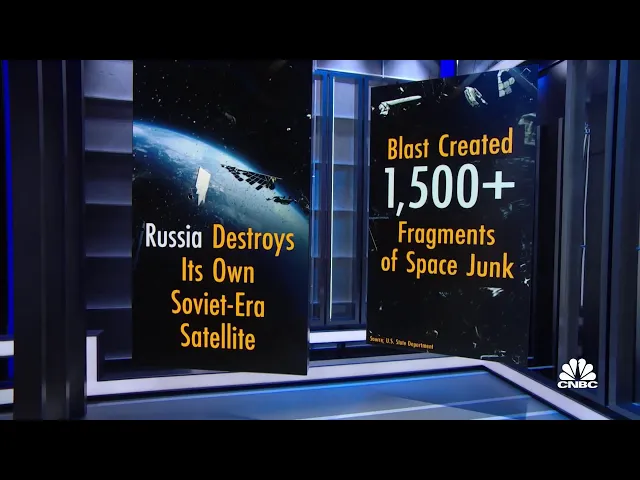
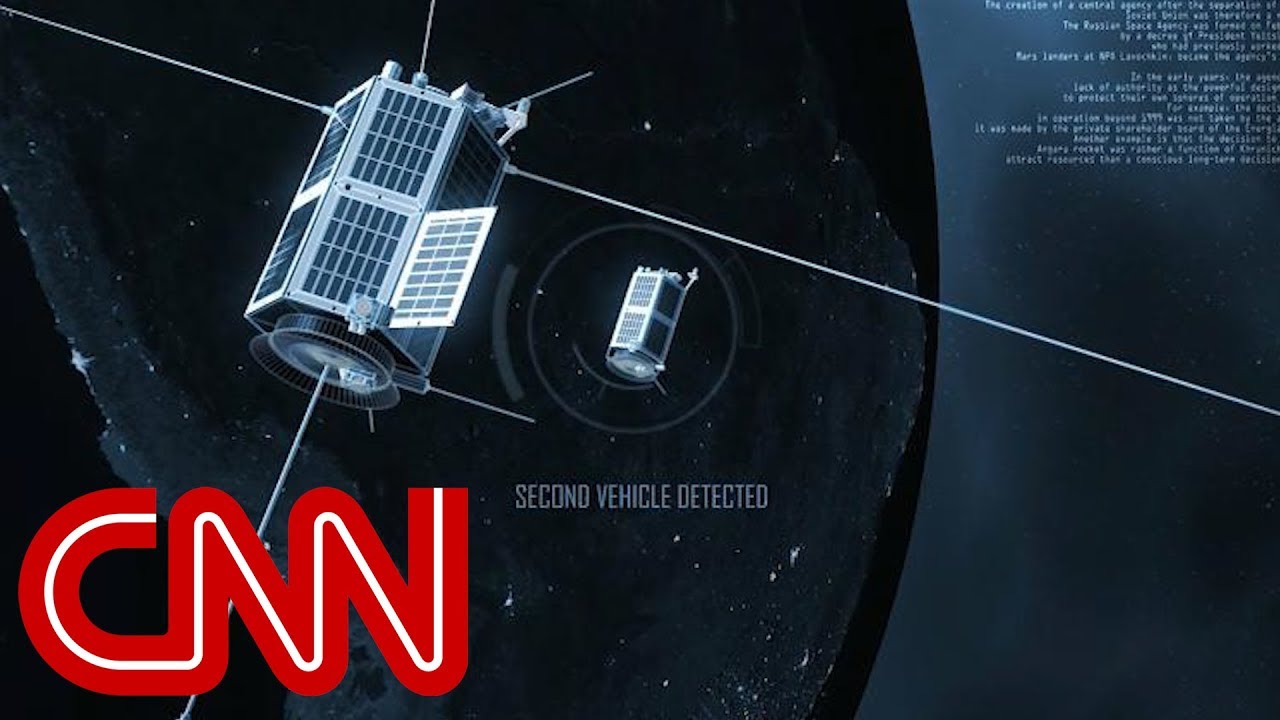
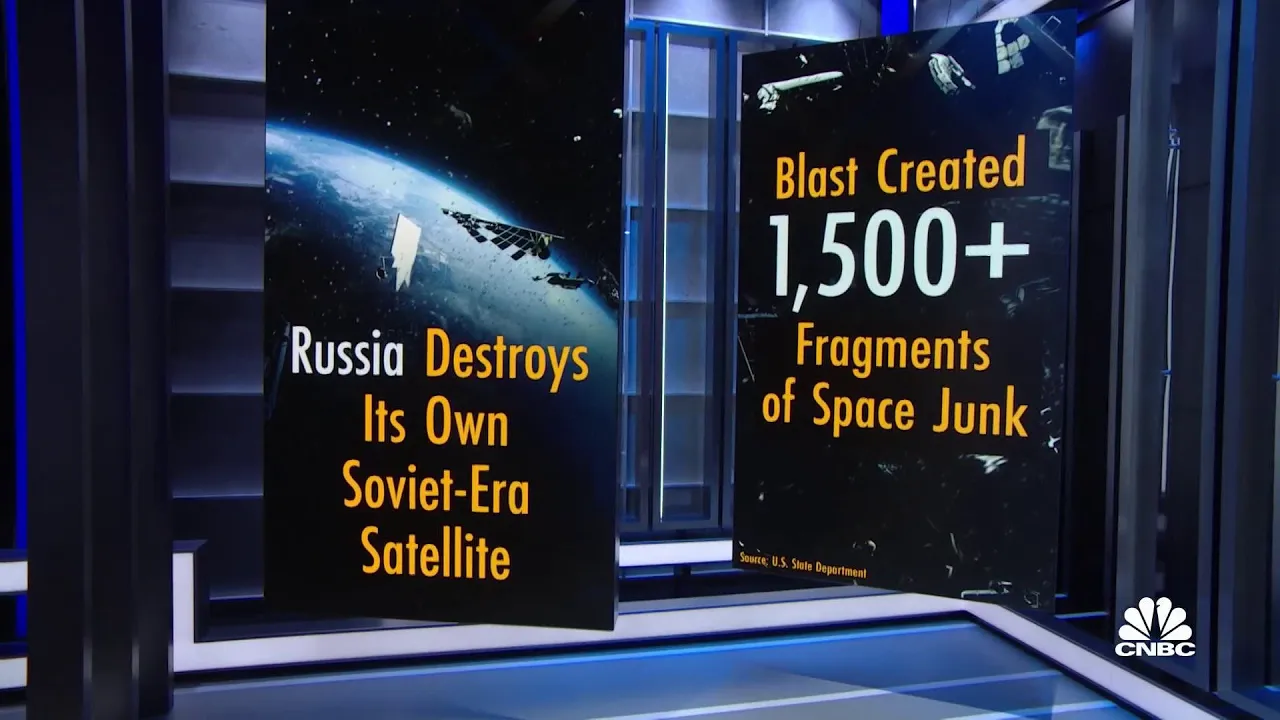
officials at nasa are reportedly set to meet with the heads of russia's space agency in moscow tomorrow they'll discuss we're told what u.s secretary of state tony blinken called a reckless and irresponsible missile test in space yesterday russia's military launched a missile into orbit it blew up one of its own defunct soviet-era satellites the u.s state department reports the blast created more than 1500 fragments of space junk that for seven astronauts including four americans to take shelter on board the international space station as that massive cloud of debris passed by the russian defense minister says
the strike was carried out with surgical precision and that it posed no threat to the space station but some space experts disagree here's cnbc's morgan brennan could space be running out of space we were recently informed of a satellite breakup debris from yesterday's russian missile test put spacecraft and astronauts in possible danger nasa administrator bill nelson lashed out following the strike saying in part quote nations have a responsibility to prevent the purposeful creation of space debris to foster a safe sustainable space environment but that environment has steadily become more crowded the next frontier is emerging
as the new battleground for war fighting as russia is showing but when thousands of objects are moving at 17 500 miles per hour even tiny pieces can become powerful projectiles you could have some that is orbiting around the equator for example you can have some that's orbiting around the poles so very small piece of debris can do a lot of damage as space becomes commercialized events such as this carry implications beyond the geopolitical something rocket lab is now navigating as it looks to launch two satellites to orbit as soon as wednesday as a launch provider
we do absolutely everything to minimise our impact on on any you know potential orbital debris that we may leave behind as a result of emissions several companies are focused on this growing issue of space junk leolabs is tracking objects in earth's orbit using ground radars to collect data it then sells to companies and countries the issue is if we continue to have weapons tests we continue to have collisions then portions of space are going to become very risky and very expensive to use but for all of the work being done to help mitigate the risk
of space debris which can spend decades in orbit no one has found a good remedy at least not yet