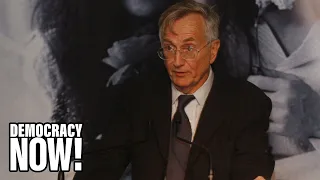
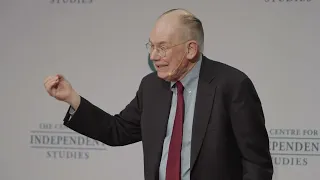
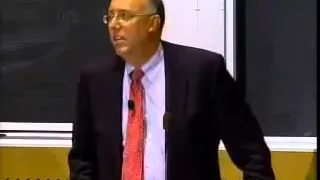
The world beyond the headlines lecture series is a project of the University of Chicago center for international studies I'm quite honored to introduce professor John Mir shimer tonight a man who really needs no introduction but for those of you who don't know Professor Mir shimer is the r Wendell Harrison distinguished service professor of political science and the co-director of the program and international security Policy at the University of Chicago where he has taught since 1982 Professor Mir shr's work has shaped contemporary debates within the field of international relations he's confronted issues related to National Security
strategy since the publication of his first book conventional deterrence which examines the success and failure of deterrence and the role that conventional forces play in deterrence he then published Liddell Harden the Weight of History which addresses military strategy and history of the inner War period among international relations theorists Professor Mir shimer is most well known for the tragedy of great power Politics the tragedy of great power politics is an impressive and influential work that has had a major impact on the realist Canon and the evolution of international relations theory in it he presents a theory
of offensive realism which is used to Explain the key causes of War and Peace um according to this theory in order to seek security and to ensure their survival it's necessary for states to maximize their power resulting in a world of constant security competition in which states behave offensively towards one another in order to survive these ideas have widely influenced the current discourse and debate within contemporary international relations Theory not one to shy from controversy Professor Amir shimer has become quite famous for his book The Israel Lobby and US foreign policy written with Professor Steven
Walt in which they discuss how the pro-israel lobby has shaped US foreign policy and the effect that this has had upon American interests Professor Amir Shimmer's latest book why leaders lie the truth about lying in international politics about which he will speak tonight seeks to identify the types of lies that leaders tell the Circumstances under which they tell those lies and the costs of those lies he presents a typology of lying and a theoretical account to understand when in why States lie and whether there are differences between the lies that leaders tell to their domestic
publics and other states on that note I would like to welcome professor John M [Applause] shimer thank you very much much for that nice introduction Jenna it's a pleasure To be here tonight and I greatly appreciate the CIS the Seminary Co-op bookstore and IH house all being willing to sponsor my talk and I'd especially like to thank Jamie Bender Who invited me to be here tonight and most importantly I'd like to thank all of you for coming out to hear me speak as Jenna said I'm going to speak tonight about my new book uh why
leaders lie the truth about lying in International politics and let me start by telling you how I became interested in the subject in the spring of 2003 Serge schan who then wrote for the New York Times was doing a piece for the Sunday weekend review section on International lying and he called me up and he said that for some reason when thinking about the subject my name popped into his head I had never met him before um but he asked me what were my Thoughts about International line and I said to him uh I've never
thought about the subject before uh and I said as best as I as best as I can recall there's no literature on it so I said why don't you tell me what what you're thinking about it and then I'll bounce off your ideas so we talked for about an hour uh and had a very fruitful discussion about International line and after I hung up the telephone I made some notes and I Stuck them stuck them in a folder a few months later MIT asked me if I'd come and give a talk and they said I
could talk on any subject I wanted so I said what the heck I'll talk about that International line so I pulled out my notes and over the next week or two I crafted a talk went to MIT and gave it and what I found was that people were fascinated by the subject uh and then I gave more talks and everywhere I went I found that people were fascinated by the Subject so I eventually wrote a paper and then I decided to turn the paper into a short book and that's how I ended up writing uh
the book I'm going to talk about tonight now the key premise in the book is that lying sometimes makes strategic sense it sometimes makes good sense for the leaders of a particular country to lie uh lying is a useful tool of statecraft in my argument now in the Beginning of the book I distinguish between selfish Li lies and strategic lies selfish lies are leaders that lie or lies that leaders tell that are designed to benefit them strategic lies are lies that leaders tell to benefit the country and let me give you an example that's actually
quite controversial that illustrates this division uh in the book I talk about four lies that the Bush Administration told in the runup to the Iraq War and I make the argument that the Bush Administration did not tell those lies for selfish reasons none of the individuals in the administration who lied were going to benefit from those lies personally they told those lies because they thought it was in the American national interest to go to war against Iraq as you all know or as hopefully all of you know that was a boneheaded decision but Nevertheless they
thought they were doing the right thing and they waged this deception campaign for what they thought were positive ends it's also important to emphasize that I talk about Noble lies in the book I make the argument that there are some lies that our leaders have told over time which I think can be catak ized as Noble lives and the best example is the lying that President Kennedy did during the Cuban Missile Crisis uh in that crisis Nikita kusf who is his counterpart on the Soviet side told Kennedy that he would take the Soviet missiles out
of Cuba provided that Kennedy take the Jupiter missiles the American Jupiter missiles out of turkey as almost all of you know Turkey is right next door to the Soviet Union and uh those Jupiter missiles looked to the Soviets a lot like the Soviet missiles in Cuba looked like us and kushev wanteded them out actually Kennedy had no problem taking them out because when he had assumed the office of the presidency in January 1961 he had ordered the Pentagon to take the Jupiter missiles out of turkey he didn't want the Jupiter missiles in Turkey but the
Pentagon had failed to take the Jupiter missiles out so he was you know not worried for strategic reasons about those missiles being removed from Turkey but he felt that uh if the American public found out About the deal he would have to reneg on the deal and he also felt that if the Europeans especially the Turks found out about the deal they would think that the United States commitment to defend Europe was not very firm and that America was willing to compromise Europe's security to maximize America's security so Kennedy told Cru Jeff you we have
a deal we have a deal but you cannot announce that we have that deal and if you do announce that we have that Deal I will deny it and furthermore if someone here in the United States smells that a deal has been made and starts asking questions you want to understand that I'm going to lie about it needless to say a number of journalists and others smelled the deal and started asking questions about whether or not Kennedy had agreed to trade the Jupiters for the Soviet missiles in Cuba and Kennedy lied and said there was
no such deal and when I was young I believed as Did almost everybody else who studied the Cuban missiles crisis that there had been no deal and that Kennedy had stood his ground and insisted that Kev take the missiles out without a quidd proquo but we were wrong because he had lied to us I'm glad he lied to us and I'm glad they cut the deal because it ended the Cuban Missile Crisis and I think that the Cuban Missile Crisis was the closest the United States came to war during the Cold War and given that
both sides had thermonuclear weapons and there was a chance that a war would have escalated to the nuclear level I think it was imperative that President Kennedy shut down that crisis and if he had to tell a lie to the American people and to the Europeans to do it so be it so my argument is that there's a distinction between strategic lies and selfish lies and what I'm talking about tonight is strategic lies and I'm also making the Argument that sometimes those lies turn out to be noil lied this is is not to say that
sometimes those lies don't turn out to be blunders and again I did reference the Bush Administration and its deception campaign and the runup to the Iraq War now what exactly do I mean when I'm talking about lying it's important to get the definitions down by basic schema looks like this there's truthtellah and underneath deception there's lying Spinning and concealment and I'll walk you through the definitions of all of those but you want to understand that at the highest level there's a distinction between truth-telling and deception truthtellah deception of course is the opposite and among the
three kinds of deception lying usually means saying something that is not true if Jenna asked me did I go to Kansas City yesterday and I said no when in fact I did go to Kansas City yesterday that would be a lie but there's actually another form of lying and that comes when a person does not make one statement or a series of statements that are untrue but nevertheless makes a series of statements that are designed to lead the listener to a false conclusion so you're purposely deploying Your statements and none of those statements by themselves
are faults you're purposely deploying those statements to lead the listener to a false conclusion that's different than actually saying something that you know to be untrue and let me give you an example for each one of those kinds of lying again going to the Bush Administration and the runup to the Iraq War uh Secretary of Defense Rumsfeld Said on September 27th 2002 he said that we have quote unquote bulletproof evidence of a link between Osama Bin Laden and Saddam Hussein approximately two years later on October 4th 2004 he told the Council on Foreign Relations in
New York quote to my knowledge I have not seen any strong hard evidence that links the two that's a lie it's a bold-faced liee an example of the second kind of line has to do with the argument that the Bush Administration made that Saddam was in part responsible for September 11th when we went to war in March of 2003 well over half of the American people believed that Saddam was in part responsible for September 11th this was because the Bush Administration went to enormous lace to convince you that that was the case they never said
however that Saddam was directly responsible for what happened on September 11th but they Made a series of statements over time that were designed to make you believe that Saddam helped perpetrate September 11th so those are the two kinds of line then there's concealment in spinning concealment is where you simply don't tell the other party about certain facts and again to go to the runup to the Iraq War uh and again to focus on the link between Osama Bin Laden and Saddam Hussein uh we uh interrogated both khed shik Muhammad was the principal architect of the
attacks and Abu zuid and both of them told us in separate um engagements that uh Sadam and Osama Bin Laden had nothing to do with each other and in fact they intensely disliked each other the Bush Administration not surprisingly concealed that information from us because the B Bush Administration wanted to give us the impression that the two Of them were joined at the hip but that's concealment it's not lying the third form of deception which we all engage in in our daily lives is spinning spinning is where you don't tell an outright lie you just
arrange the facts in a story to present yourself in a most positive light or to present an issue that you care about in the most positive light you leave out the negative parts or you downplay the negative Parts when a boy and a girl Flirt with each other they engage in spinning if President Obama were up here and we asked him what's the state of the American economy he would engage in spinning he would tell us all the positive aspects of the economy he would downplay the negative or conceal the negative aspects if John Boehner
on the other hand were up here and we asked him he'd paint a very different picture but he too would spin neither President Obama nor Mr Boehner would lie they Would spin so you have these three forms of deception and I would argue that we all engage in spinning and concealment frequently and in fact there's no way that a society could work without a great deal of spinning and concealment but l on the other hand is a different matter if somebody said that one of the real problems with John Mir Sher is that he's a
liar that would bother me greatly if All of you thought that I was a liar that would not sit well with me if you think that I'm misguided well I can live with that but being called a liar is not something that most people cotton to so given that line is such a special category of deception I figured it made a lot of sense to think about how it applied to International politics now what I discovered is that there are Five kinds of international Li excuse me five kind of international lies and and let me
tell you what the five kinds of lies are uh the first kind of lies are Interstate lies Interstate lies are where the leader of one country lies either to the leader of another country or to a foreign audience and let me give you a good example of that during the Cold War the United States was very interested in Convincing the Soviet Union that we would use nuclear weapons to defend Europe were the Soviets to attack into Western Europe and this is in large part because the threat of nuclear use by the United States was a
wonderful way of deterring the Soviets from attacking in the first place if the Soviets thought that we were going to use nuclear weapons and a conventional war in Europe would therefore likely escalate to the nuclear level they would never start Such a war so we had a vested interest in convincing the Soviets that we would use those nuclear weapons of course it was not clear that we would use nuclear weapons to defend Europe because if the Soviets were overrunning Western Europe as bad as that would be it's nowhere near as bad as a general thermonuclear
war that ends up in the United States getting incinerated so there were all sorts of reasons to think we wouldn't use the Nuclear weapons which of course is why our leaders went to Great Lengths to say we would use nuclear weapons Henry Kissinger and Robert mcem both said when they were in positions of power that they would use nuclear weapons to defend Europe both of them later said that they would have never used nuclear weapons to defend Europe and when they made those statements they were bluffing bluffing by the way is euphemism for lying they
Were bluffing I think it made eminently good sense for them to Bluff because it helped make deterrence work in Europe during the Cold War but the key point is they are admitting that they were lying so Interstate lying is the first kind of line second kind of line is fear-mongering a euphemism for fear mongering might be threat inflation fear mongering is where a leader lies to his or her own public it's very Different than lying to another country what the Bush Administration did in the runup to the Iraq war is an example of fear-mongering the
Bush Administration understood full well that the American public was not enthusiastic about fighting a war against Iraq so they felt that what they had to do was make it clearer than the truth to Bodine aeson's words that Saddam Hussein was so dangerous that he had to be removed from power and in the process they told four Separate lies and more generally they waged a deception campaign and I of course have pointed out a number of those lies already that's fear-mongering and there are other examples as well lynen Johnson some of us in the audience uh
are enough to remember uh the Gulf of tonan resolution where Johnson lied about what the North Vietnamese were doing in the Gulf of tonan uh early in August 1964 because he wanted to get a resolution through Congress that Basically gave him cart blanch to wage the Vietnam War that's fear-mongering uh a third kind of line is what I call Strategic coverups a good example of a Strate strategic cover up is President Kennedy lying about the deal that he cut with Nikita kusf to end the Cuban Missile Crisis what Kennedy was doing was employing a very
controversial policy he made a very important and controversial policy decision that he Could not afford to tell the American people and the Europeans about so he covered it up he lied that's what I call a strategic cover up it's the Third Kind of ly Fourth Kind of lying is nationalist mythmaking all states are infected with nationalism and nationalism invariably involves telling lies about your past what all countries do is engag in mythmaking they tell stories That portray themselves as the good guys and portray the other as the bad guys we're all familiar with this process
the example I like to use because uh it affected me at one point in time uh has to do with uh the creation of the state of Israel in 1948 uh when I was young uh I believed in virtually everyone I knew believed that the reason the Palestinians U left uh what became Israel in 1948 was because the Arab leaders told them to leave because they were then going to come in and murder all the Jews and then the Palestinians could move back into uh their homes and there would be no Jews left because the
Arab armies would have finished all of them off so in effect it was the Palestinians own fault for listening to the Arabs uh and leaving uh their homes and and going uh outside of mandatory Palestine and Creating the problem of all these refugees we now know mainly through the work of Israeli historians that this is not what happened in fact there's not a shred of evidence that that's what happened what happened is that the Israelis ethnically cleansed uh Palestine they pushed uh about 700,000 Palestinians out and then they uh would not allow them to return
to their homes uh this is a nationalist myth and the United States and all sorts of other countries have similar myths I'm not picking on Israel here Israel is not an exception in this regard uh but this is nationalist myth making then the final kind of line International line is is um liberal lies uh we have today uh around the world a wellestablished body of norms regarding how to think about war how to think about when it's permissible to go to war uh had to think about uh what is Permissible in the conduct of war
and so forth and so on and these Norms are very closely aligned with basic just War Theory so when States go out and misbehave or act in ways that violate the laws of War uh they invariably go to Great Lengths to try and cover up what they did and portray it in a very different manner my favorite two liberal lies uh involveed first of all the Vermont on the Eastern front uh in World War II and British bombing policy in That same conflict just with regard to the Vermont when World War II ended uh the
United States found itself in a very interesting position during the war we were allied with the Soviet Union fighting against Germany during the Cold War which followed World War II we were aligned with Germany fighting against the Soviet Union we switched partners and we switched adversaries all of this is to say we effectively jumped into bed with A lot of people who had been key players in what is probably the most murderous regime in modern history and because the Germans were so important for creating military power in the center of Europe during the Cold War
we had to clean them up so we working in conjunction with the Germans cooked up the myth that the Vermont the German military in particular the German Army had virtually nothing to do with all the murder and May on the Eastern front in World War II the verock we argued at the time and I have course believe this had Clean Hands and it was only the einot group and the special police forces and so forth and so on that were involved in The Killing that took place on the Eastern Front indeed that was not true
at all it was a lie the Vermont was inextricably bound up in the German killing machine on the in on the Eastern front and the verok did not have Clean Hands it had Filthy Hands but given that we needed the Vermont or the remnants of the Vermont to create the bundes spere we had had to tell ourselves and tell others a story that was comprised of Lies then the other case involves bomber Harris uh in the spring of 1942 the British were desperate and they thought the only card they had to play against Germany was
to use uh their military uh their Air Force To bomb civilian areas in Germany and kill as many German civilians as possible but of course the British did not want to uh advertized to the world that they were purposely murdering civilians which of course is what they were doing they were murdering civilians uh it's clearly against the laws of War uh and international Norms to purposely kill civilians but that's what the British were doing uh under bomber Harris so What did the British do they lied they said that they were bombing military targets and they
were bombing economic targets and they were not targeting civilians when in fact they were targeting civilians that's a liberal lie so the five kinds of Lies I see are Interstate lies where leaders lie to foreign audience fear-mongering where leaders lied to their own public to inflate a threat strategic coverups again President Kennedy in the Cuban Missile Crisis nationalist myth making this is countries inventing stories about their founding for example to make them look like the good guys and others look like the bad guys and then liberalize which I just talked about so those are the
five kinds of line now what are the two main findings in the book first main finding is that there is not much Interstate line I was actually shocked to discover this I thought as a card carrying realist and a cynic about International politics that I would find an abundance of cases of leaders lying to foreign audiences I figured that diplomats lied all the time to each other and there are actually famous quotes that make those kinds of arguments that's not true I found it very difficult to find examples of Interstate l and all of those
examples that I have in the book I worked very hard to accumulate what very interesting is I'd go around and talk about this subject to audiences like this and I would tell people that there's very little Interstate line and I was always surprised at how cynical the audiences were because people would invariably say to me this can't be true there has to be a ton of lying out there and then I Would say to to my interlocutors look go home think about the list of cases for the next couple days then send me an email
I'd give him a card send me an email with all the lies okay and uh invariably I'd get a response uh a week or so later and the person would say all I could think of was with three lies and here they are and usually two of them would not be lies and the third one would be a case I already Had another cut at this I would go talk to audiences and someone would say are you going to tell me that Saddam Hussein didn't lie are you GNA tell me that akad inad the president
of Iran has not lied to us are you gon to tell me that the North Koreans didn't lie to us and uh I always say to people uh well if they did lie please show me where they lied and nobody can come up with an example I I cannot find an example of where Saddam Hussein lied and I'll say More about this in a minute this is not to say Saddam Hussein was a good guy or akad inad is a good guy the question is did they lie to us and I can't find any evidence
and again people just don't believe this they're remarkably cynical it's not just old John the realist who's cynical uh then my second finding uh is that leaders seem to lie much more often to their own publics than to other countries and uh fear-mongering in the American case is especially prevalent uh for those of you who have any doubts about this there's a book by Eric Alderman who writes for the nation who's a very fine historian who's written a book on presidential lying uh it's a remarkable book in that it's so depressing uh because it's so
filled with cases of our leaders lying to us um just to tell you a story uh about the the book uh in the beginning of the book uh I I Tell the story about Saddam when we didn't discover uh weapons of mass destruction many people argued that the reason that happened was that Saddam bluffed us he Bamboozled us Saddam pretended that he had weapons of mass destruction when in fact he didn't and that's why we were fooled into thinking that he had wmd uh and supposedly uh the evidence to support this claim is in the
dlur Report uh I looked at the dopher report the dopher report does make that claim but there's no evidence in the dlur report to back up that claim and in fact fact all the evidence shows that Saddam claimed that he had no wmd and that he was not lying there's no evidence that he was bluffing and if anybody can find any evidence I would appreciate it if they would give it to me I've talked to all sorts of people so Saddam didn't Lie uh to us in the runup to the Iraq war or throughout the
1990s but President Bush did lie to us in the runup to the Iraq War and this is consistent with my two main findings that leaders don't lie to other leaders very often but leaders lie to their own public now the question you want to ask yourself and really this is The $64,000 Question is why is this the case why did I find that there's not much Interstate line and there's actually quite a bit of Line by leaders to their domestic publics I think the key variable is trust there is not a l of trust in
international politics and if there's not a lot of trust it's difficult to lie States tend not to trust each other remember Ronald Reagan's famous dictum when he was dealing with the Soviet Union trust but verify just think about those words trust but verify what Reagan was saying you can't trust the Soviets we have to Verify that they will stick to the various Arms Control agreements that we are signing or negotiating of course the Soviets felt the same way they wouldn't trust us the Chinese and the Americans today and down the road don't trust each other
especially when important security issues are on the table they don't trust each other they prefer to verify they want some good reason to believe that the Americans Will stick to an agreement and we want some good reason to think that the Chinese will stick to an agreement states don't trust each other very much when it comes to domestic Politics the opposite is the case publics tend to trust their leaders after all our leaders are tasked with the mission of protecting us they're part of the same tribe that we're in we expect them to look out
for our welfare there's trust there that doesn't exist among States uh just to give you uh a good example to highlight this uh Jay William Fulbright who was the chairman of the Senate Foreign Relations Committee and a very powerful Senator uh and who was very skeptical about Vietnam uh but nevertheless helped President Johnson push through the Gulf of tonan resolution despite his skepticism about Vietnam he said afterwards the biggest lesson the biggest lesson I learned from Vietnam is not to trust government statements I had no idea until then get that the biggest lesson I learn
from Vietnam is not to trust there's the key word trust I like to tell the story that in the runup to the Iraq War I heard Scott Ritter who was weapons inspector talk about the presence of wmd in Iraq and uh after listening to Ritter talk I was convinced that uh Iraq did not have wmd he was so knowledgeable and so convincing uh I said he's got to be Right few weeks later uh I heard uh Secretary of Defense Rumsfeld say that uh we know that Iraq has wmd because we know where they are and
I said to myself the Secretary of Defense wouldn't say that if he didn't know where they are right uh so maybe Scott Ritter was making a good faith effort in giving us his giving us his assessment of the situation but I think he's probably just wrong and ramsfeld obviously has access to information that Ritter does not have Access to and he wouldn't lie to us in such a bold-faced way so I changed my mind and I then went about telling people that there was good reason to think that he did have wmd uh when in
fact of course he didn't and Rumsfeld was lying to us but you see in my case as in fulbright's case and this may have been true of many of you we trusted our leaders and it's really hard for a country to function well if nobody trusts their leaders right So it's that presence of trust that makes ly to one's public much easier to pull off than ly to another country where there tends not to be a whole heck of a lot of uh uh trust now I want to make two sets of comments in conclusion
first of all I have basically argued up to now that there are real virtues to telling lies selective lies in international politics I've even made The case that it sometimes makes sense for leaders to lie to their own people however it is important to understand that there is a real downside to lying and I think that's especially true when you talk about fear-mongering not so much Interstate lies but fear-mongering and let me tell you what the two real dangers associated with lying are and then let me talk about how Each of those dangers relates to
fearmongering uh the two dangers are what I call blowback and backfiring now what exactly is blowback blowback is where a leader who loves lies to his or her public about foreign policy soon finds him or herself lying about domestic politics and fostering what I would call a culture of dishonesty if a leader feels compelled to lie to the public about a foreign Policy threat what that leader is in effect saying is that the public can't deal with the issue by being told the truth there's just something wrong with the public it's either not sophisticated enough
it's too ignorant or it doesn't care it could be any one of these reasons but the public right has to be manipulated to do the right thing that's what fear-mongering is really all about as you surely understand it's not A giant leap to go from from making that kind of calculation about foreign policy to making the same calculation about domestic policy and lying to your public on both fronts and that Fosters a culture of dishonesty in my opinion and it is very dangerous because there's no way that a society can function well if dishonesty is
rampant so that's blowback the other downside to International line is Backfiring and fear-mongering is another fearmongering is a case where backfiring is likely to happen backfiring is where the the LIE doesn't work uh the way you intended it to work or the policy that the LIE helps create doesn't work and look at what happened with the Bush Administration the Bush Administration waged the deception campaign in the runup to the Iraq War they were Successful at bamboozling large chunks of the American people they got their War but the war was a disaster what that tells me
is that the reason they couldn't tell us the truth the reason they had to wage a deception campaign was because their ideas about Iraq were wrongheaded to begin with if they had told us the truth we wouldn't have had a war and we wouldn't have had this disaster the reason they had to Lie the reason that they had to wage a deception campaign in the runup to the Iraq War be was because they were pursuing a boneheaded policy the fact that they couldn't tell us the truth and get us to go along was evidence that
the policy was wrong-headed same thing is true with Lynden Johnson in the runup to the Vietnam War regard to the Gulf of tonen incident in particular the reason President Johnson had to distort the Truth was because if he didn't do that he wouldn't have gotten permission to wage the Vietnam War and of course the Vietnam War was an even greater disaster than the Iraq War so in both cases although President Johnson in company and President Bush in company told lies to the American people for what they thought were good strategic reasons and they were successful
at getting us into those two Wars it in the end backfired and we ended up in disastrous Wars so you see that fear-mongering is a very dangerous way of doing business because it can blow back into the body politic and poison the culture and furthermore it can lead to policies that UL ultimately fail finally let me just say in conclusion that the countries that fearmonger the most are democracies that wage preventive Wars against distant threats again the countries in which Leaders lie to their publics most often about foreign threats or countries that are democracies that
wage preventive Wars against distant threats that in a nutshell is the United States of America given that the United States seems committed to trying to run the world given that the United States is a democracy given that the United States Seems committed to using military force liberally just think about Libya it seems that we should expect to have lots more evidence of fear-mongering in the years ahead and therefore it will probably be the case that when I come back here in 20 years to talk about the new edition of my book I will reference Eric
alterman's second volume on presidential lying thank you I will I will gladly take questions And if folks could just come up to the microphone uh that's right here and line up and just fire away and if you would make your questions as succinct as possible that would be appreciated and I will try to answer them as succinctly as possible hi my name is Adam shikov I'm a first year under grad at the University of Chicago I'm just curious to see what your thoughts are on the relationship between investigative journalism and Strategic lying like even though
you have you know John if Kennedy lying about the deal with the Soviet Union you know you said journalists like know caught this the whiff of like the deal had been made like to what extent like I guess you could say like to what extent like is there like a reasonable boundary between like reasonable between like a reasonable secrecy or State's right to secrecy versus like journalistic responsibility Yeah uh it's very did everybody everybody heard the question his question deals with the tension between investigative journalists on one hand who were looking to uncover the the
truth and leaders who are interested in waging deception campaigns and in some cases uh telling lies and he was interested in how I think about that relationship uh I think that there is no doubt that Journalists are in principle committed to finding out what's really going on and Reporting it to the American people and that's why in a number of cases that I looked at in the book uh you see presidents and their lieutenants lying to journalists I tell the story in there about how Jody pal who was President Jimmy Carter's principal spokesman lied to
a journalist about the aborted Iran Rescue Mission and there are a number of Other cases as as well but I would say that what's happened in the United States and this was clear in the runup to the Iraq war is that the mainstream media has basically abandoned its interest in faring out the truth and challenging the administration and instead has become a useful tool for presidents who want to tell lies to the American people I think one of the principal reasons that we collectively were Bamboozled by the Bush Administration in the runup to the Iraq
war is because the American mainstream media failed to do its job you've said that Interstate uh lying is actually relatively infrequent and I wonder if that's a modern occurrence or a historical one in the runup to the second world war particularly in 1937 and 1938 um there were many protestations from Germany that it had fulfilled all of its uh interests with respect to uh Acquiring additional territory uh and right up until 1939 uh uh was the country was constantly claiming that it was not had no intentions to uh uh engage in an aggressive War you
posited the idea between the the contrast between a lie and a stark truth with your did I travel to Kansas City um example but you didn't talk very much about when people talk about their intentions and I wonder if the nature of intentions is much less um Uh it's much less clear when countries are lying or not lying for in Interstate regions okay uh those are two excellent questions first on the 1930s and Hitler uh there is no question that uh uh he lied on a number of occasions in the 1930s about his intentions and
about German capabilities as well and I document them in the book uh he is a good case for me when I'm looking for examples of Interstate line and I would just say to you you want to remember my Point is and you stated it but I'll just repeat it that lying does take place it's just that it's infrequent uh but Hitler is a good example so I have no problem with what you said there with regard to intentions uh there is no question that it is very hard to discern what the intentions of a particular
leader are at the time okay so when Hitler says uh that he has no Intention of going on the offensive after he gets the Sudan land as a result of the Munich agreement uh we have no way of knowing at the time what his intentions are that's your point and I I think you're absolutely correct and as a number of the students in the audience who know my writings on IR Theory uh would tell you I place a very high premium on that basic logic uh for explaining how I think the world works so I'm
in agreement with you but Nevertheless you can look at what a Leader's intentions were in some cases after the fact and determine whether or not they were telling the truth at the time at the time of Munich it was very difficult to tell exactly what Hitler's in intentions were which is in large part why they gave him the Sudan land they thought that if he had the Sudan land which included all these Germans in it that that would be the end he'd be a problem but not that big a problem but We later found out
that his intentions were far more ambitious than that uh so it's obvious that he lied and that's why you were able to point out that he lied on a number of occasions in the 1930s so intentions are hard to figure out at the time but later on you sometimes can figure out whether someone lied or not about their intentions yeah history seems to be largely retrospective um near the beginning of Your talk uh you um uh suggested a dichotomy which I'd like to ask you about uh that was uh selfish lies versus strategic lies and
for selfish lies as you were saying to benefit the self versus uh strategic lies to benefit the country but it seems to me that this is rather too limiting uh there are also I would think uh categories of lies to benefit oh domestically speaking say big donors or um internationally large corporations And uh military corporations oil companies and whatnot and perhaps also um even another category of uh the greater good whatever our president might interpret that as uh I wonder if you could elaborate on that and perhaps uh enlarge the dichotomy to accommodate these other
possibilities yeah I I would categorize those sorts of lies that you described as selfish lies where the leader obviously acting in cahoot say with the Oil company uh the oil companies or some element of the military-industrial complex told a lie for their benefit and that would obviously be to his or her benefit as well so that'd be a selfish lie do we ever have a greater good consideration above and beyond strategic relations between nations no in in my lexicon a strategic lie is done for the greater good again I believe that the Bush Administration and
the Johnson Administration lied about um the uh Iraq lied lied in the runup to the Vietnam and Iraq Wars because they thought they were doing it for the greater good they thought it was in the National interest I guess I was thinking supernational super nationally in terms of the United Nations or oh for the super Nationally supernational oh I see what you're saying just trying to enlarge your categories that's all no that's a very interesting question I never thought about that uh I never thought about by the way just before I take this gentleman's question
I gave a talk uh in Denmark last week on this and a person got up and made I thought was a very interesting point that I had not thought about I told him I wish he had told me this before I wrote the book I would Have Incorporated his idea he said as a citizen uh he understood that leaders sometimes had to lie to the public but he said that as far as he was concerned it was only acceptable for his leaders to lie to him when the issue at stake was National survival right when
there was an existential threat so he could accept that the lie that John F Kennedy told uh in um 1962 but a lot of the other lies that are told don't involve Matters of survival they don't deal with extent existential threats and he said in those cases he did not think it was acceptable for a leader to lie to his or her public in large part because of the blowback effects the fact that it poisoned uh the social culture uh so first of all I just like to thank you for your time um so thank
you you're welcome um also um just sort of like to extend uh the first question that was asked um regarding Investigative journalism um I just uh just recently um you're aware of the Wikileaks um I guess phenomenon that has uh been occurring the past couple months um obviously they're undermining some of the lies that uh that Nations have told um whether they be strategic or selfish lies um so I was just wondering if how you regarded um that sort of investigative journalism if you selectively supported it or if you were against it okay Uh with
regard to WikiLeaks it's not an example of investigative journalism uh there was this man bradle Manning who was a soldier in the Army who gave all of this data uh to Julian Assange and he then made it available to a handful of newspapers uh and the newspapers have published uh those documents but this is not investigative journalism as I said the mainstream media doesn't do much investigative journalism anymore the American Media is basic the American mainstream media is basically toothless you young people in the audience can't appreciate it because you don't remember when the American
mainstream media actually had some bite uh but I can assure you it's toothless now and presidents manipulate it with great ease uh with regard to WikiLeaks uh I think that what you see if you look at the documents that have been released so far is number one There's not much evidence of lying there is some for sure and much of the lying is leaders lying to their own public not lying to each other and the best example of this is the head of Yemen uh who was in cahoots with the Americans in particular with General
Petraeus to allow us to use the American Air Force to strike at Al Qaeda Targets in Yemen but the president of Yemen said you can do that to General Petraeus but you have to Understand that I have to tell my people that it is the Emin Air Force that's doing the attacking not the American Air Force because it would get me into an immense amount of trouble on the home front right and I am very interested he he had a vested interest in dealing with al- Qaeda right so he had a good strategic reason for
wanting to deal with al- Qaeda he couldn't do it himself he was willing to let the Americans do it but he had to be able to tell his People that it was not uh the Americans it was his military their military that was doing it this is a strategic cover up by the way uh the president of Yemen's cover was blown by the Wikileaks documents and one of the reasons that he's in so much trouble today and in danger of going overboard being thrown overboard is because of wikileak leaks so Wikileaks has had a big
influence thank you I also want to thank you I enjoyed The lecture very much um uh I just got satellite radio and and um I I find the BBC uh a lot sharper by far than than the domestic um uh questioners I don't know if that's your experience also um my thought about how politicians talk to each other is is like you have Lyon Johnson and you have ever derkson and Lyon Johnson says I really need a couple of uh Republican votes on this and ever Duron saying something like you know we We need a
couple of uh judges confirmed here and Johnson saying oh these are very good men and and derkson saying well yeah that legislation you know we could do something about that and no deal has ever been made you know officially they they can go out and and tell everybody that no deal was made but obviously a deal was made um uh and they have they have cover to say that they're just kind of and I'm just wondering in The conversation between Cru jof and Kennedy um you portrayed it and I don't know if you have the
um documents or whatever as as being very direct I'm going to lie I'm going to say this whereas Kennedy might have put it as you know I I can't make a deal about these missiles but but I've never been interested in in having them there anyway and I'm interested in peace and then turning around and and telling the vice president you know if somebody if You called them and and said uh we're going to pull these Miss missiles out I certainly wouldn't contradict you and then he could turn around and truthfully say no actual deal
was made but obviously a deal was so I guess I'm I'm trying to say um when do do does does more of a straight lying go on and and and when does more of a kind of an obfuscation type situation take place is is it a International versus domestic or no I I think that I would call Obfuscation spinning okay and and you're talking about the tradeoff between lying and spinning I I believe that if a leader can deal with an issue by spinning and that leader does not have to tell a lie the leader
will spin every time I don't think I've come across any Leaders with the possible exception of Hitler who enjoys telling lies uh it's not something that uh that people relish the point that I'm trying To make is that leaders tell these lies because they think it's important for the National Security of their country they think they're doing it for the welfare of all of us okay but if they don't have to lie if they can deal with it another way they'd much prefer to do that so leaders will aisc all the time and this is
why if you go over to the library and you uh rumage through all the books on Deception what you discover is that pretty much everybody says that There is a great deal of deception in everyone's daily life and the argument here is that you can't sort of deal with your wife or your husband or your kids without spinning all the time so there's lots of spinning there's lots of concealment and there are even White Lies you know which are generally considered to be permissible and sometimes you even tell boldfaced lies because you think it's good
for uh the benefit of other people uh my mother is Elderly and I've told her a number of bold-faced Lies uh for the purposes of sparing her pain I guess you might consider those white lies but nevertheless they are lies but I'm not telling them for selfish reasons I'm telling them for her benefit but the point is there's just a lot of deception in our everyday life and when ever derson and LBJ get together uh there's no question that they're going to tell each other um some stories that uh are Not completely true they'll be
spinning with each other but I think in most cases they don't lie I think lying is actually quite rare in the in the case of the Iraq War and in Vietnam you seem to have uh certain amount of trust in the American people to evaluate um an international strategy uh correctly um whereas in the case of the Cuban Missile Crisis uh you seem to think that Kennedy was really right um that the American people Couldn't know really what was going on um so what's the difference between the two cases well in in the C case
of the Cuban Missile Crisis I didn't elaborate just because of time constraints the real problem that he would have faced is that the Republicans would have clobbered him uh Barry Goldwater uh was then the leading figure in the Republican party uh and in fact President Kennedy expected to run against Barry Goldwater in 1964 instead LBJ ran against Goldwater because Kennedy was assassinated but the Republican was uh very Republican party was very Hardline very right-wing at the time and Kennedy felt that it wasn't so much the American public per se uh that would kill the deal
it was the Republican Party putting the compromise up in bright lights and pounding him politically that would undermine the deal okay so that's why he uh he he he covered it up but the other point I Would make to you is different presidents at different times make different assessments of the American people uh there are you know you talked to 10 professors at the University of Chicago about what they think regarding the American public's ability to assess complicated issues and you probably get 10 different views uh and the same thing would be true with regard
to leaders um my question is about the uh sort of the future of liar of uh leaders Lying to their own public um if the opportunity for lying or or if the ease of lying is increased by the tendency to trust rather than to verify uh do you think that uh techn Tech olical advances you know with the internet increased access to information I.E uh increased ability to verify information and maybe an aware a wider awareness of leaders lying to their own publics um with those uh uh Trends do you see a difference in uh
the the way that leaders go about Lying to the public in the future yeah I've been asked this question a number of times and it's obviously a terrific question it's basically a question that boils down to does the internet make lying more or less difficult uh and one might think given that I just said that uh line has become reasonably easy given the um mainstream media's failure to uh look closely at what administrations are saying and try to faret out the truth that maybe because the internet has now Become so powerful it will do the
job that the mainstream media has not been doing in recent times uh you can make that argument uh you could also make the argument that the internet uh is very good at you know reporting all sorts of information from different sources and putting it in one place and it's good at uh giving pundits an opportunity to express their views uh and those pundits otherwise would not have a platform but it's not clear to me That there's a lot of investigative journalism going on on the internet and that that would solve the problem so I'm quite
agnostic on this issue I I don't usually I have an answer for every question I don't have a good answer to your question uh I think you should write a thesis on this and uh and educate me but I I'm not I'm really not sure how to think about how the internet affects lying uh and and I've been asked the question a number of Times uh prior to um Iraq war a year or two prior to it 60 Minutes the television program had an interview was talking to an official of Iraq he might have been
a prime minister or whatever and this man was uh questioned about mass destruction uh material and he said I mean he was so honest and he it seemed so real his answer was that there wasn't Any do you but I can't remember the man's name or his position do you know no I don't uh but I would say to you it gets back to one of the pre previous questioners just because somebody says that Iraq doesn't have wmd doesn't mean that the person is telling the truth you know it's very hard to be sure in
those circumstances I think the smart thing for the Bush Administration to have said was we have no hard evidence that Saddam Has wmd but we think that does that's what they should have said and I think it was perfectly reasonable to think that Saddam had at least some wmd but the problem that the Bush Administration got into is that they said that they were sure they had wmd because they actually knew where the the weapons were and that of course wasn't true but if Saddam tells us he doesn't have wmd which is what I reported
and you tell us that there was another one Of um his lieutenants who was on 60 Minutes and said the same thing uh that might make us think maybe he doesn't have wmd but how can you be sure we have this saying in international relations talk is cheap do you know what I mean uh so you know unless we can verify trust but verify there you go it it's just hard to know uh hello thank you for your time um you just alluded to uh this issue in one of your prior Responses uh to me
it seems like in your argument there's a presumption that um the American public is on many of these issues is going to be unable to properly judge what's best uh in uh in in America's interests you know specifically the example of the Cuban Missile Crisis um I uh my question is why is there this presumption why leaders some leaders think that that's the case especially um in uh cases of existential Threats I mean you can probably find a number of examples where the majority opinion is probably more often right than wrong okay uh first of
all I I agree that there are a lot of cases where the majority opinion is right not wrong I I I personally don't make the argument that you're dealing with bubis americanus and therefore it's important to lie to bubis americanas that's not my personal view okay nevertheless I think That there could be a situation if you made me president of the United United States fortunately we don't have to worry about this happening but if you made me president of the United States and the country was operating in a high threat environment it might be the
case that for one reason or another I concluded despite my rather benign view of the American public that they that the public was Not uh sufficiently uh motivated to deal with a particular threat and therefore I had to engage in deception I could imagine that happening I don't think it's likely because I think my basic view of the issue is a lot like yours uh so I wouldn't say it would definitely happen but I would leave myself open to that possibility now we have surely had leaders over time I don't know who they Were but
we surely have had a few leaders over time who think that they are dealing with bubis americanas these are people who are elitist and think the public uh is more of an obstacle than an asset uh in thinking about foreign policy and if you have that particular view your first instinct is going to be one where you manipulate the public right and get the public exercised and I sort of agree with the thrust of your comments and This is why I talked about backfiring I think if the president has to why or deceive the American
people then the problem is probably with the policy not the public that's what you're saying and I think you're basically right but again I would leave myself open to the other possib the the other side or the other possibility uh thank you so when you discussed the concept of A noble lie you alluded to JFK lying about exchanging the Jupiter missiles for the missiles in Cuba but of course had the journalists discovered that JFK had been lying to him when he said there was no deal there would have been a massive Scandal it would have
undermined faith in government it would have been a political nightmare and so my question is and and KF might not have taken the missiles at a Cuba indeed so my question is is the criteria for a noble lie its Intention which was obviously very good by JFK the success of the lie or both oh I hadn't thought of that uh well in terms of intentions my argument is that all of these strategic lies have Noble intentions uh I think uh that when I talk about a noble lie I'm talking about a lie that solved a
truly important problem uh uh it dealt with an existential threat and it worked Uh just I'm thinking as I'm answering your question because your question is an excellent one I really hadn't given it a lot of thought uh but some people say to me okay John you told us that uh President Kennedy's line about the Cuban Missile Crisis an example of a noble lie tell us another example and the one I go to is uh President Roosevelt Franklin D Roosevelt lying about the Greer incident in uh August of 1941 just to tell you the story
uh President Roosevelt was deeply committed to getting us into World War II in 1941 and President Roosevelt was dealing with isolationist America and he really could not get the United States off dead center and you want to remember up until June 22nd 1941 June 22nd 1941 when the Germans invaded the Soviet Union Germany and the Soviet Union were allies and Britain was basically fighting all alone against Nazi Germany Which was allied with the Soviet Union so up until June 41 but of course even after June 41 Roosevelt is scrambling like crazy to see if he
can get the Americans if not into the war at least helping Britain in a really Major League way for all the obvious reasons uh anyway there's a naval incident that takes place in the Atlantic Ocean off the American Coast in August 1941 involving a German Submarine uh a British aircraft and an American surface ship and Roosevelt tells a series of lies to the American people Eric Alderman talks about this in his book he tells a series of lies to the American people people about that incident that are designed to make it look like the Germans
are responsible for the incident and they are threatening the United States and what he's trying to do is get us into the war now I refer to that as a noble Lie because I think it was absolutely imperative that we get into World War II against Nazi Germany and to a lesser extent against Japan some of the people in the audience have heard me talk about how I believe Roosevelt engineered us into the war by in effect pushing the Japanese to attack Us in uh December 1941 the Japanese were trying to get off the hook
they had no interest in going to war with the United States and I believe Roosevelt pushed the Japanese to Attack us and I believe he was right to do that because it was imperative that we get into the war so if you think like us do I'm not saying you have to agree with me on the importance of getting into World War II but if you think like I do that it was imperative to get into World War II right then lying about the Greer incident does categor can't be categorized as a noble lie but
the fact is it failed it didn't Work the American people hardly moved an inch on the issue of involvement in World War II so one could argue if you're C te in is Success on an important issue this is certainly an important issue but he didn't succeed then it's not a noble lie if you're looking at just intentions I think it was a noble lie thank you so on the topic of uh Interstate lying uh in in you know your research have you observed any differences Between representative and authoritarian governments or open close Societies in
particular I'm thinking about Stalin and Ma who lied profusely to the international communist movement about what was going on in their countries um um and you know put window dressing on the atrocities that they were committing and I mean even Stalin especially was very effective in this he basically used the New York Times as a propaganda organ in the 30s and this so-called journalism Won the pull to prize um so uh so yeah just do you think there's a difference between so you know uh totalitarian and represent excellent question I I said in the beginning
of the book that uh I had never thought about this subject before and I viewed the book as sort of a starting point uh for discussing these issues uh and uh there obviously some issues I've told you about one that come up from the audience that I really Hadn't thought about and one of the previous questioners was pushing me on something I hadn't thought about uh I did not see any evidence of U uh of authoritarian leaders engaging in Interstate lying more often than Democratic leaders which is what you're saying uh I did see as
I reported to you and as I say in the book that I saw evidence of leaders Democratic leaders lying to their publics more often than Non-democratic leaders but I even qualified that because I argued that in the age of nationalism where popular sovereignty is a core concept that leaders even of authoritarian states have to pay attention to their publics and I talk about Hitler in that regard it's quite amazing how much attention Hitler and his propaganda Minister Joseph Geral paid to public attention in the Third Reich right and that's because of nationalism but anyway my
main point Was that democracies are more likely to see Le Lies by the leaders to their public but on Interstate line I did not see any evidence that uh that authoritarian leaders lied more often you remember the gentleman who uh was up here earlier who talked about Hitler Hitler would be more evidence for your basic perspective Ive uh but the truth is you can find quite a few examples of democratic leaders telling Interstate lies uh as well as non-democratic Leaders but you may be on to something but to prove to me that you're correct you'd
have to show me what all those lies are that Stalin told and Mao told and other authoritarian leaders because I'm very suspicious when you tell me that they told all these lies because as I said in my talk people often say oh they're all these examples of lies and then when they show me the evidence they're really not lies or they're not many of them so you'd have to show me There are lots of examples of authoritarian leaders telling lies to other leaders or other or to foreign audiences and much more so than Democratic leaders
and then the final thing that you have to do for me in your thesis is you have to explain the logic that explain the logic that accounts for that right in other words I need the evidence first and then I need the logic okay so I don't know [Applause] about thank you very much everyone for coming out tonight I appreciate it