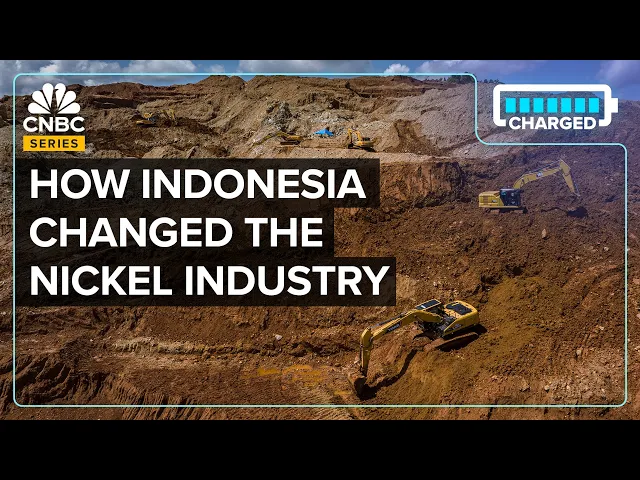
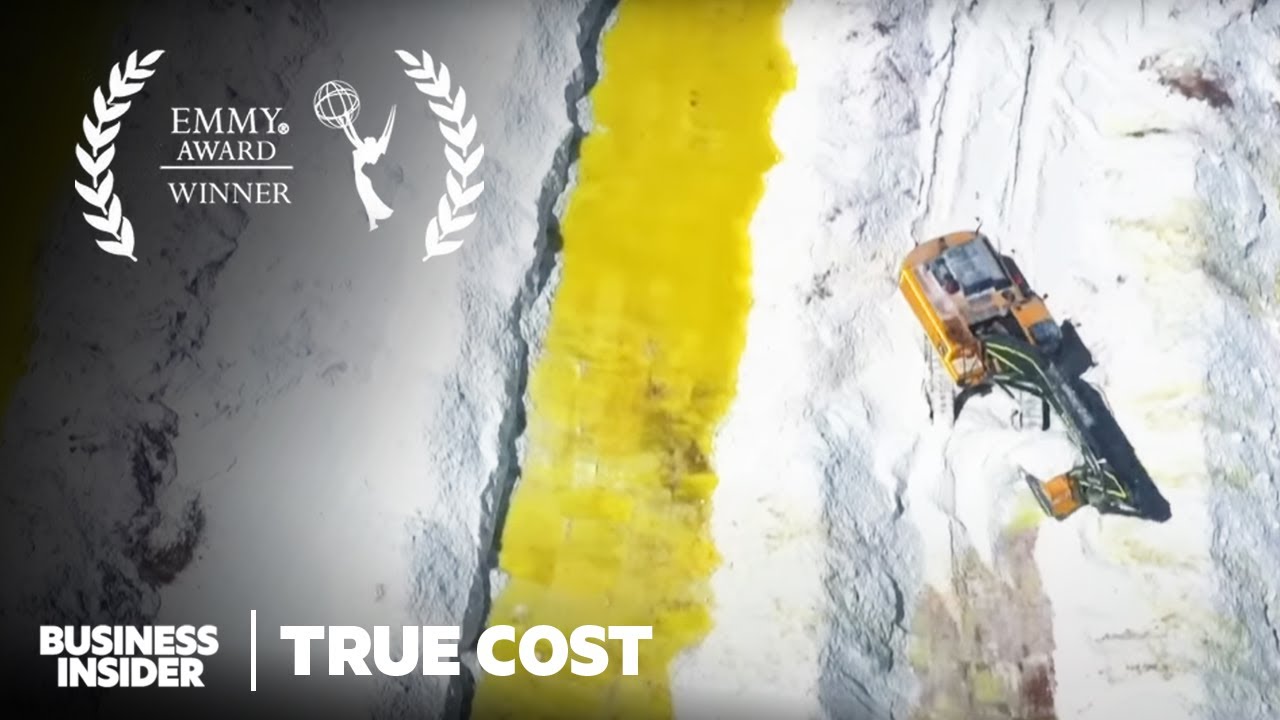
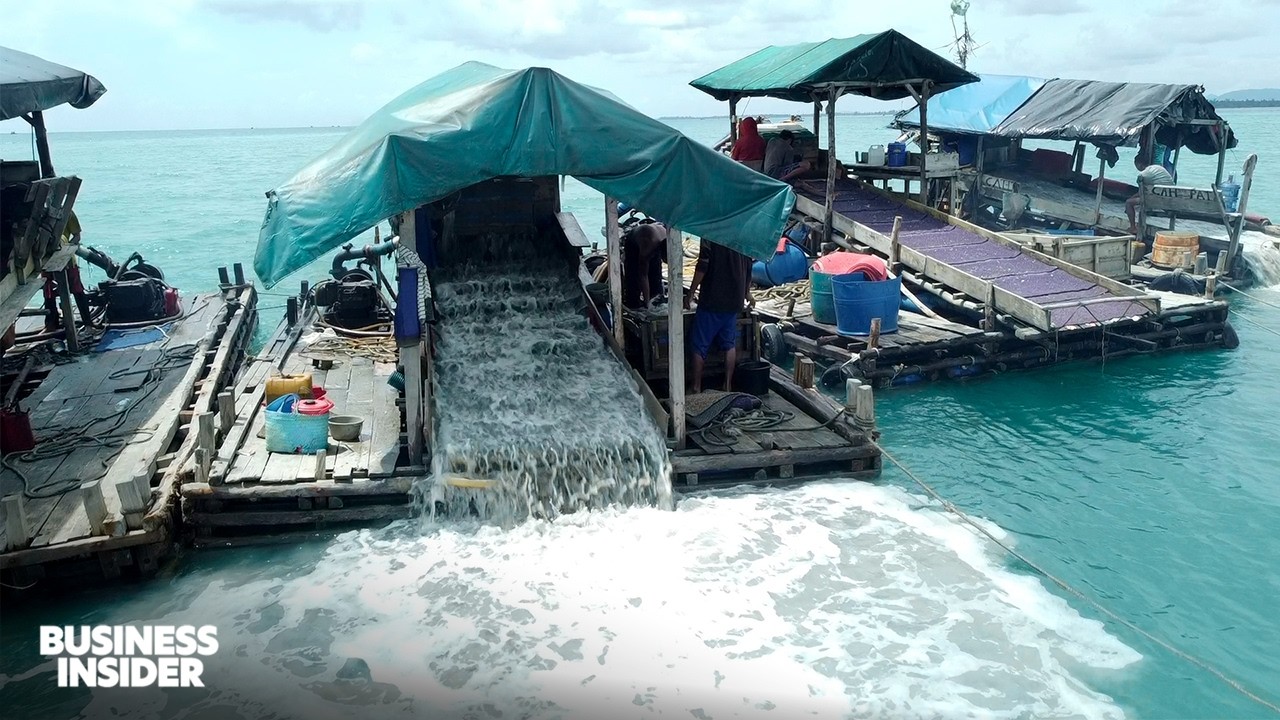
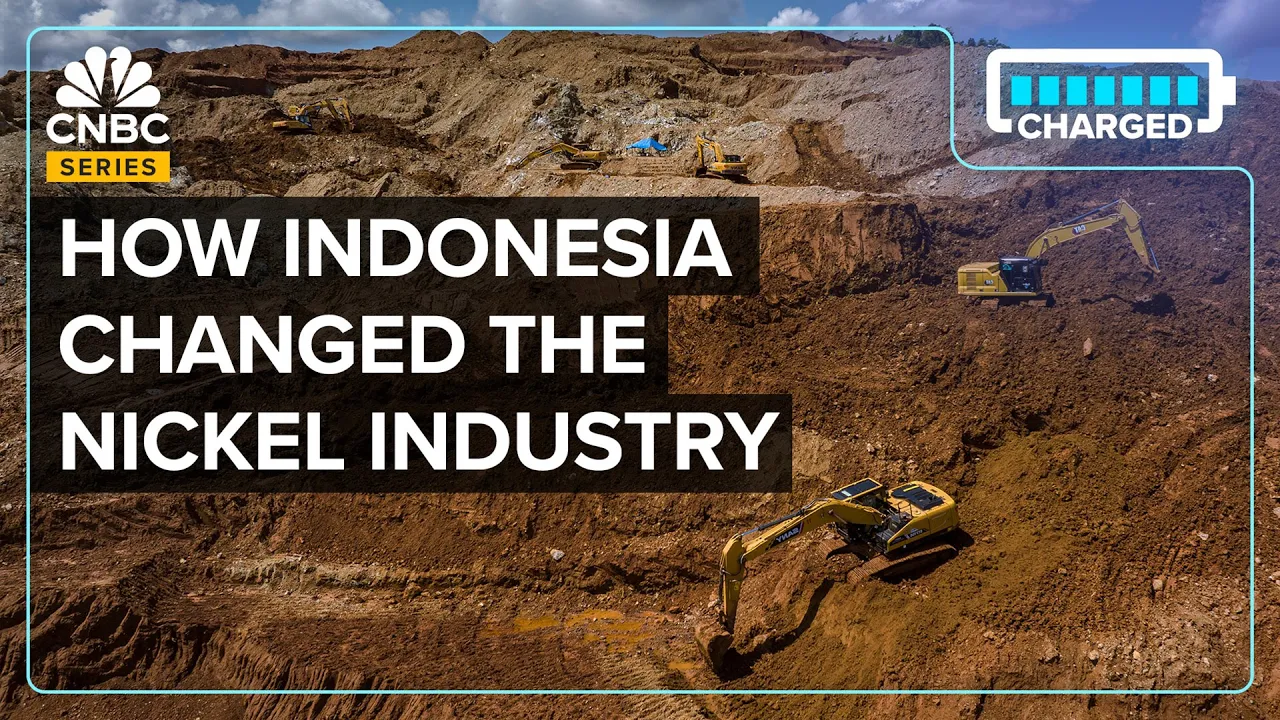
This is a nickel mine in Indonesia. There are at least 14 nickel mines in the country, and it's grown to be the largest nickel producer in the world, supplying more than 40% of the world's nickel in 2023. According to the information we got, this nickel is used as a battery material and the battery is used for electric cars.
Nickel is used in stainless steel smartphones and increasingly batteries for electric vehicles and renewable energy. The demand has grown worldwide from 3. 06 million metric tons in 2022 to an estimated 3.
71 million metric tons in 2024. It is possible that by the end of the decade, the share of nickel coming from Indonesia for EV batteries will be as high as 75%. Indonesia's nickel production has nearly tripled since 2020, and China has played a key role in the country's rise as a global nickel leader.
Over the last decade, China has poured over $65 billion into Indonesia's nickel industry, boosting economic and political bonds between the two nations. China is the world's largest producer of EV batteries. And now, with demand rising, China controls most of Indonesia's nickel mines and processing plants.
Indonesia and China are kind of like a tag team in this. They're working together, so that lead to more nickel being in the system. Indonesia established a ban on the export of raw nickel and other battery minerals.
And with that, you saw a lot of Chinese companies coming to Indonesia to build refining capacity there. Meanwhile, the United States faces significant challenges with its nickel supply, relying on just one operational mine located in Michigan. In 2023, the US mined 17,000 metric tons of nickel, while Indonesia produced 1.
8 million metric tons. Talon metals has been working on opening a new nickel mine in Minnesota, but the path to full production can take decades. Any mining companies out there please mine more nickel.
Tesla will give you a giant contract for a long period of time. If you mine nickel efficiently and in an environmentally sensitive way. The search for nickel led Tesla and other automakers, like Ford, to partner with nickel projects in Indonesia to supply its batteries.
13% of Tesla's nickel came from Indonesia in 2023, but there's growing concern about Indonesian nickel, mainly because of regulatory gaps and environmental impacts. Locals and experts alike worry about water pollution, deforestation and air pollution near nickel mines. Refining is growing in Indonesia as well, and nickel refining is among the dirtiest of the critical minerals.
Our water has changed. First, we can't drink it anymore because it's turned murky. Second, it's hard to access my own farm now as I have to go through the nickel mining hall road.
They wanted to buy my land, but I refused. The land on the right side of our garden, which used to be pristine native land, has now become polluted. This pollution has affected our garden plants and has impacted tens of hectare acres belonging to local residents.
The advantages that the profits obtained will only improve areas in big cities. Meanwhile, those of us on remote islands are victims of government greed. Well over $40 billion has been invested in the last five years in this sort of shock and awe approach to low grade nickel out of Indonesia.
And that means they have cut corners, they've cut corners on safety, they've cut corners on the environment, and there are no labor rights that we would recognize as labor rights in Indonesia. CNBC visited a remote area in Sulawesi to understand the impact of nickel mining on the locals lives and its significance on the wider electric vehicle industry. I go fishing every day at 6 a.
m. as usual. It used to be a short trip, but now has become longer because the water is murky.
This is the island of Sulawesi. It's one of some 17,500 islands that make up Indonesia, which is Southeast Asia's largest country. Here in the fishing village of Sukarela Jaya, nickel products are not a part of daily life.
My daily work involves farming and fishing, but I mainly focus on farming. I've lived on the wagon since I was born, just like my mother who was also born here. In the past few years it has changed.
But in the advanced world, nickel is a vital part of modern technology. It's prized for its strength and rust resistance. It's used in stainless steel and batteries.
Each year, over 3 million metric tons of nickel are produced and mined for more than 25 countries. Nickel just has an amazing property, along with manganese and cobalt, to provide electric vehicles that extra range and and capability. It's also used for military purposes, so you have nickel metal alloys that can be applied for things like armor and in steel making.
And so, you know, nickel is such an important mineral because we need the nickel supply for both national security and economic security purposes. About 65% of nickel is used for stainless steel. Another 12% goes into special alloys, vital in industries like aerospace for making turbine parts.
The remaining 23% is used in various products like catalysts, chemicals and batteries. The demand for nickel and batteries is expected to skyrocket 247% by 2030 due to the global electric vehicle boom. Nickel is also crucial for renewable energy projects like solar, which rely on batteries for energy storage.
The battery sector is the fastest rising demand used for nickel, and is expected to be the main driver of primary nickel use over in the future. The big use right now is in clean energy systems. And that's why we're focused on building a secure domestic source of nickel from US deposits.
China's significant investment in Indonesia's nickel industry has played a pivotal role in its growth and development. This investment boom matches with Indonesia's processed nickel exports jumping from $1 billion in 2015 to about $20 billion in 2022. 60 to 70% of Indonesian nickel production is Chinese mining or Chinese refining.
So you're really then replicating the dependency on China. So this is all part of China's strategy as a country to dominate global production of nickel. China, you know, is heavily subsidized EV manufacturing.
It's a race to be a global leader. And I think it sees Indonesia as a as a source for some of the materials that it needs. In 2022, Indonesia banned the export of raw nickel despite opposition from the European Union and a ruling from the World Trade Organization.
Indonesia still bans nickel ore exports, requiring nickel to be processed domestically before export. As a result, processed nickel products surged. A flood of foreign investment, mostly from China, essentially turned Indonesia from a mining giant into a refining giant.
Not material that is being produced in Indonesia with collaborating in collaboration with Chinese companies, is largely being exported back to China for the development of their electric vehicle battery sectors, their stainless steel sectors. There's been so much development in Indonesian supply that it's meant that the nickel market is oversupplied. There's more material being produced than there is, um, demand for it.
And that's had a negative impact on the price. The price of nickel has plummeted 68% from $50,000 per metric ton in March 20th 22 to $16,100. Now we have a situation where, you know, China is working towards market domination, and that's really, you know, where you're seeing all these nickel mines consider their fate, at least temporarily, because you know who can compete on this price.
It's a fake price. It's a it's a depressed below market value of the resource. This isn't just about having enough nickel for Chinese manufacturing.
It's about having a dominance over the whole global supply of nickel. This is affecting mining projects worldwide. We're seeing a big oversupply of nickel from Chinese companies operating in Indonesia.
That's lowering prices and that's making it hard for some projects in places like Australia to actually survive economically, because they have to operate under a more Western idea of profitable, profitable enterprise. They're not relying on state support. That is, again, driving through and trying to create a strategic imperative for China.
Brazil, Australia. They have comparable reserves. They have begun taking nickel mines offline because they can't compete, because Indonesia is using so much cheap coal to process their nickel.
Nickel smelting and refining is an energy intensive and dirty process. Depending on the energy source. We need electric vehicles to to meet our climate ambitions.
What we don't need is cheap and dirty nickel to do it. CNBC reached out to several of the largest nickel producers in the region, but none responded to our request for comment. Indonesia is flooding the market with low cost nickel.
It's fueled by a huge build out of captive coal, and so part of what allows the this nickel to be so cheap is it's being refined by coal. Unfortunately, this is often very low quality coal. And so it emits a huge number of particulates impacting the local communities where these smelters are built.
Since 2000, nickel production in Indonesia has led to significant environmental damages, including deforestation, displacement of indigenous communities, and contamination of important reef ecosystems. In 2023, there was an uptick in deforestation. In Indonesia, nickel mines have cleared nearly 75,000 hectares of forest to extract nickel.
The people of Sulawesi have seen this first hand. The big fish have disappeared because their food, the small fish, died from polluted water. They used to live close to the shore, but now I have to row for half an hour to catch any fish.
If we were to fish daily, we'd have to go far because of the pollution. I'm really against the mining operations. They affect the water, causing the fish to leave or die.
The mine hasn't positively impacted the local community. In fact, it's had a detrimental effect, particularly on livelihoods. The environment is polluted, social conditions are deteriorating, and cultural norms are being disrupted due to an influx of migrant workers.
Even the village, which has traditionally relied on fishing, is now heavily polluted. Indonesia and this this huge surge in nickel mining is driving deforestation. It's impacting the health of communities near mines and smelters.
But it's not inevitable. 40% of the nickel mines in Indonesia have significant degraded land within their concessions. And so what these mining companies could do if the auto companies and their investors put pressure on them, is start mining in those areas first.
The same logic was employed by the palm oil industry and has led to something like a 90% decline in deforestation for palm oil in a place like Indonesia. We can't cook anymore. We can't drink anymore.
Like our coconut garden at IDI. There's one at the end of it that I can't reach anymore, but my children still can. If I were alone, I'd struggle to access it because it's on the mining route now due to the constant traffic from mining operations were unable to reach it.
Clearly there's conflict because we refused to sell the company and our friends pressure us to sell. What choice do we have? Our friends who sold now regret it.
They survive as if they've never had a contract. It's disheartening. No one feels fortunate in this situation.
We're already feeling the impact. Over the past few years, since the nickel mining company began operations in Mega on Wawonii Island, significant changes have occurred. One major impact is the decline in water quality, which has become cloudy and unfit for public use.
For instance, Banda Spring, once a clean water source, has turned murky and is now unusable. On top of that, the village's water supply from the pipeline has been contaminated due to nickel mining activities, particularly affecting Teluk Rokoknya Village. Others have witnessed pollution affecting their crops, making farming a challenge.
The soil used to be dark black, which was the natural color of our land. Now it has turned brown and reddish due to mining activities above our village, causing pollution in our garden. The use of high pressure acid leaching is a crucial technique in nickel extraction, and it has faced criticism for its toxic waste.
A lot of nickel produced in Indonesia is carbon intensive. There have been concerns around waste disposal, so it creates a bit of a conundrum because the world needs nickel, but the largest source of nickel doesn't produce it in the most efficient way. I think in order to protect populations, we need the Indonesian government, we need international automakers.
We need everyone to agree that there needs to be stronger social and environmental safeguards to protect people who are being impacted by nickel mining. Indonesian government officials did not immediately respond to CNBC's request for comment. Talon metals is a US based mineral exploration company.
Its plan is to build a domestic supply of ethically sourced and sustainable nickel. We have high standards for protection of the environment, for public consultation. As something goes through a permitting process, labor rights, our operations will be organized, they'll be safe, they'll provide high levels of benefits and and good compensation for for working people.
Yes, it's going to take a little bit longer. But the benefits of being able to operate in a place like the United States and being proximate to all of the battery manufacturing in the United States is a big advantage for us. Although it is still in the permitting stage for its new nickel mining projects.
Talon has already secured a supply deal with Tesla to get Tamarack Nickel into its EV batteries. We're very fortunate that we have an offtake agreement for about 60% of our production with Tesla. We're proud of our connection with Tesla, and that we will together create a domestic supply of nickel for EV batteries.
All the nickel that we would produce for battery making is in itself recyclable. So we will track and trace the nickel that's produced at high standards in Minnesota or actually in North Dakota. That will go on to Tesla, and they'll be able to track and trace.
That also means that redwood materials or any other recycler, when that reaches its end of life, then it will be able to be known that that nickel was produced responsibly in the United States. And hopefully we can improve that ratio of, you know, virgin mining material and recycling. Over time, when nickel is recycled, it keeps its strength and versatility.
Recycling would significantly cut down carbon emissions and reduce the need for new mining operations. Companies like Li-cycle and Redwood Materials are two North American companies working on building battery recycling facilities to decrease the need for new mines. We should put as much emphasis as possible into recycling batteries at the end of their life.
The EU has some really good legislation on this. The US could be doing more. It makes all the sense in the world that because we have these resources domestically and with our free trade allies, that we would want these companies to source where they can get it.
And it's produced at a high standard. It's a little more expensive to do that sourcing, but not that much more expensive that it's going to change the price of the vehicle. While companies like Talon are exploring solutions, getting ethically sourced nickel, particularly from Indonesia, remains a big challenge for carmakers.
Back then, most locals supported the mining activity because jobs were scarce and any chance to earn money was seen as crucial. Visits from companies were welcomed and many of us backed their plans, but with better access to TV and educated locals returning home, some have warned us about the serious risks of mining. They told us about the environmental pollution that could harm the future generations.
Now we strongly oppose the mining operations.