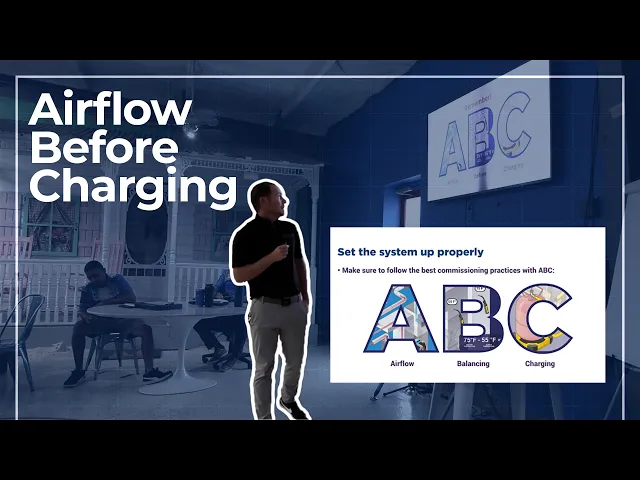
airf flow is one of those conversations that I can tell you the nerdiest process the most insane way of validating air flow that you'll never actually do uh and it still would only be just scratching the surface like air flow is one of the most complicated like the measurement of air flow all that is one of the most complicated topics there are um so I'm going to start by keeping it pretty basic uh and then we're going to get into it a little bit more in depth Matt's going to do some on fan laws and
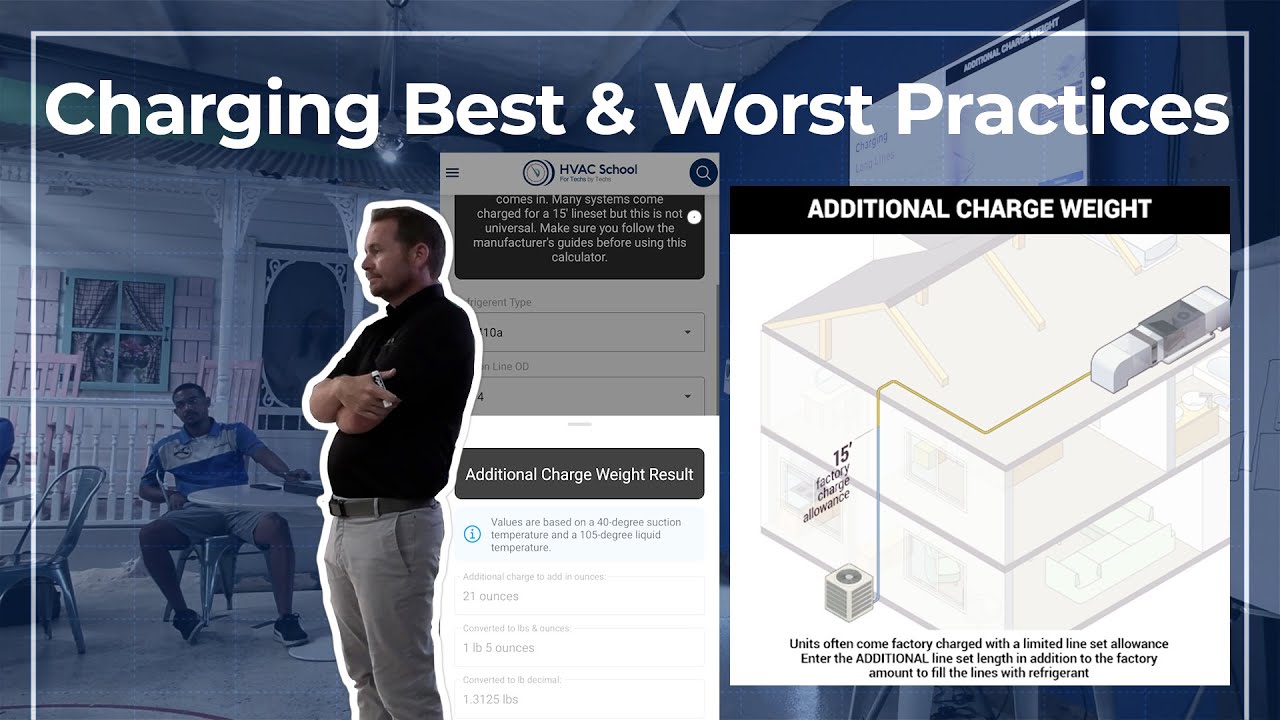
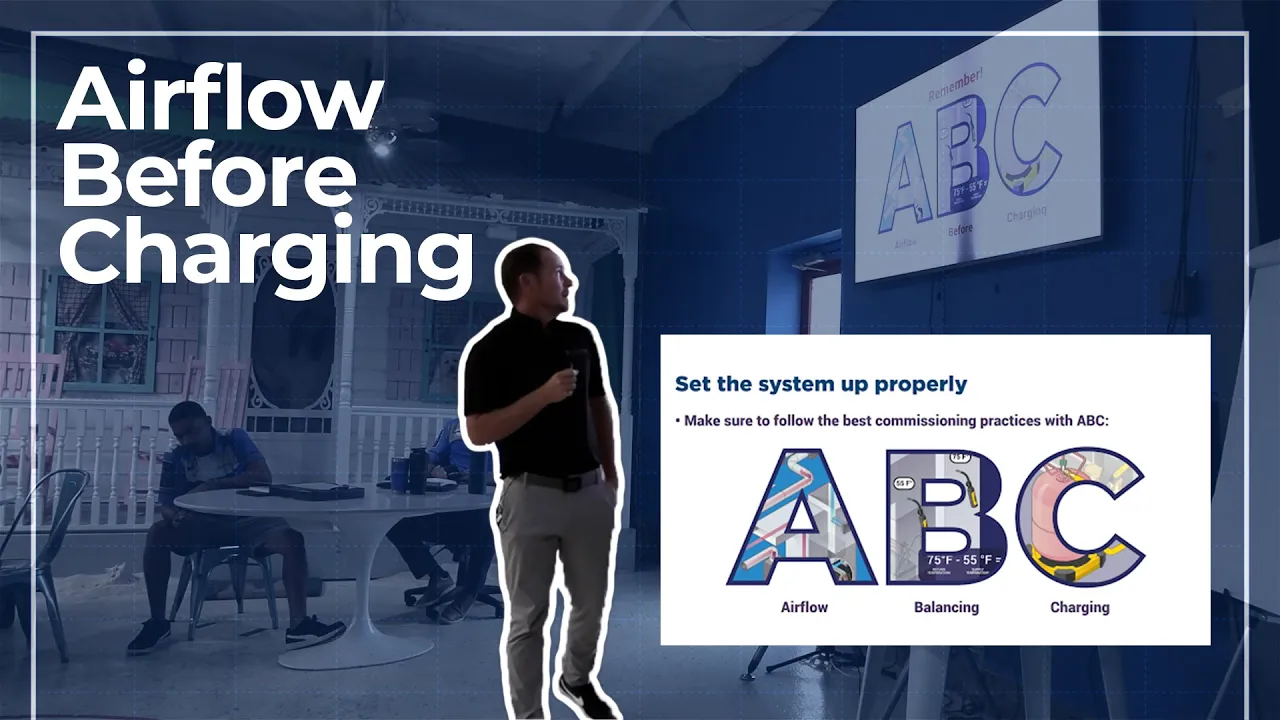
some of that stuff again I'm not going to expect you to memorize formulas uh if we show you formulas it will be for the benefit of you understanding how it works not for you having to do math right and if we do make you do math you'll do it on my app where it's free and you can do it anytime you need to right um easily without having to actually do the math but airf flow before charging is very true right and I don't want people messing with and that does not mean you need know
the exact CFM production number but it does mean that you need to have a very solid um understanding or solid belief that you have proper air flow before you start putting gas in the system um and on a new system that's very important so from a practical standpoint what ises that look like it looks like do a basic assessment of the ducts that you're connecting to to the filter that you're connecting to does this duct work from a very visual you guys have those of you who have done this for any amount of time you
know what's normal and what's not normal and if you're connecting to something that's like that return duct looks too small I can almost guarantee you it's too small right without having to do any fancy math or anything else so just start there with the basic take responsibility for if you're about to connect to something and it doesn't look right say something um because you don't want to put in a brand new system on poor duct work it causes all kinds of problems so that's that's Basics 101 the next thing that I want you to really
pay attention to is how you set up your air handlers and controllers right make sure that you're doing that correctly um with modern communicating equipment a lot of that is done at the controller you know just making sure that's set up properly um do you guys do a lot of setting up of dehumidification controls that kind of stuff do you work with like a lot of uh I give an example variable speed air handler with 24volt thermostat type of setup okay so if you're doing so you'll have like a d a d Hume a DH
that type of terminal and you actually have to wire that to the thermostat do you do that very often I'm getting a lot of blank faces you go in and set up for okay okay but I'm saying with 24 volt type air handlers where you're not doing a communicating control like an like a like a ecob thermostat a nest thermostat whatever where you actually have a DH terminal anything like that no you don't run into that very often okay all right so that's that's a good one because that's one that a lot of people mess
up where the system is operating in dehumidification mode all the time ramping down the blower and some some cases people will land the Y wire on the wrong terminal which results in half speed blow or that kind of stuff so it's important that you know how to set up the equipment that you're working on and that it produces the right air flow beyond that static pressure is the easiest way to kind of just assess right but it's important that you do those other things first because if you don't have the system set up to produce
the right air flow to begin with so it say it's making it's producing half the air flow it should produce your static pressure is going to look great right your static pressure only tells you anything if the system is producing the air flow it's supposed to produce does that make sense if it's not making the right amount of air flow then your static pressure is going to be low if you if it's not making enough air flow does that make sense at all okay good so it's important that we get those things set up first
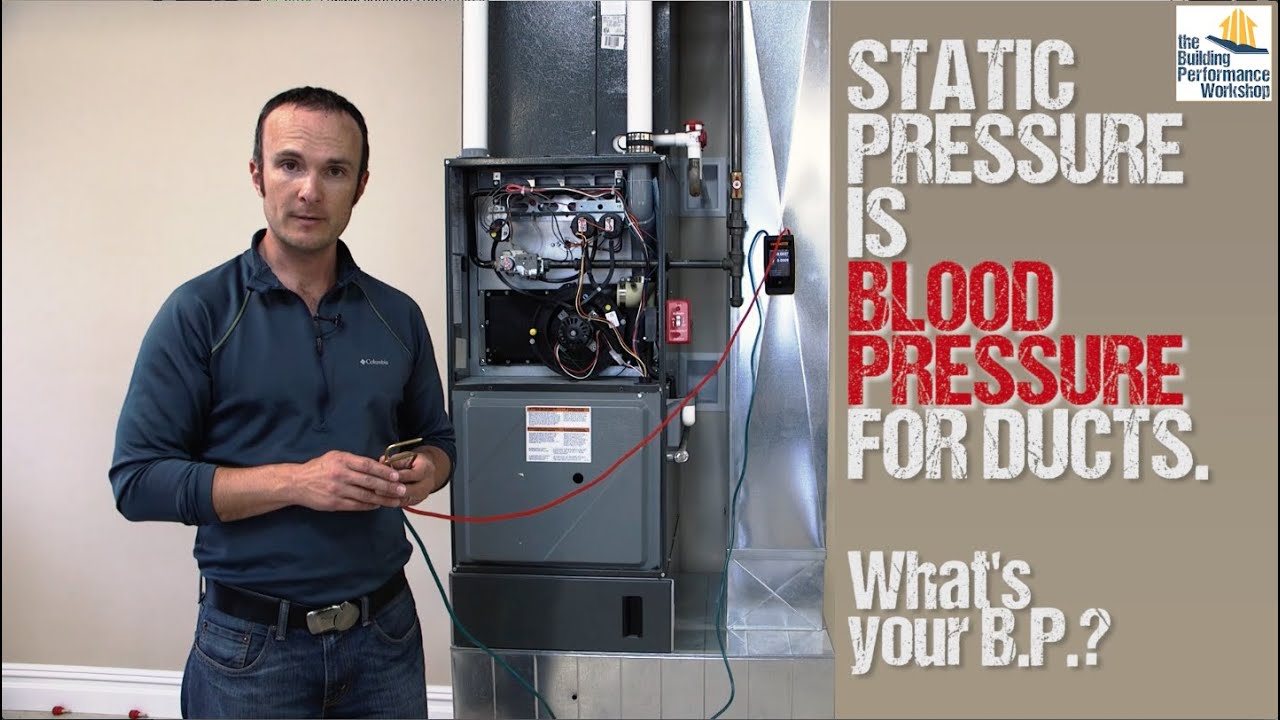
after that you are just putting static pressure probes in but putting them in the right place is also important now in our in your Market you're working on air handlers almost exclusively you guys never work on furnaces do you no furnaces great cuz furnaces are a pain in the butt to measure static pressure on everything in the Box everything that comes shipped in the box is contained in the static pressure reading for that system so when you look at that data tag and it shows that design static or that Max design static and it's 0.5
or3 or 08 or whatever it is nowadays almost everything's coming as point. five I think now you see3 still they it's a little bit older I think all the the modern sear 2 equipment has to be 0.5 um I don't know so you need to make sure that you as much as you can keep your total external static meaning the static pressure external to the system within that range but keep in mind that's a new construction that's that's new install if your evaporator coil gets dirty your blower wheel gets dirty your filter inside the unit
gets dirty dirtier than it should be then all bets are off because now that adds to that external static right so we're saying internal with a perfectly clean box perfectly clean evapor coil perfectly clean blower everything else so let's say you have that that uh carrier control there that you're showing and it shows you your static pressure right Evolution what's that oh it's a Brian Evolution sorry Brian Evolution same thing but same thing I have in my house right same controller Bryant yes um whatever that says on that display is actually not total external static
I'm going to give a second for you guys to think about that what that says on that display even though the display says total external static te is not actually total external static why the the the actual the actual display your Evolution display is measuring static pressure how is it measuring it just not just measuring at the blower at the blower there you go have well it's it's but it is measuring it at the blower so if you have a dirty aerator coil that's also factoring in so it's actually measuring total static not total external
static total external static means return in Supply right that's measuring at the blower so that takes into account evapora coil everything else right and so if your evap coil gets dirtier the that blower doesn't know where the Restriction is coming from it just knows there is one right it showing it from the blower that make sense so that's why a lot of times if you're looking at a control like that you can actually if you if you Baseline that so you keep you you log that information and then you go back a year later two
years later three years later and you can look at the change that can tell you is my Raper coil getting dirty is my blower wheel potentially uh getting clogged up that kind of stuff make sense yeah so keep that in mind static is tricky it's all about where you measure to so it's really really important where you put the probes is the point and so you can do neat things like you can actually look at what the pressure drop across the filter is by putting one probe underneath one above you can show the coil pressure
drop below the coil above the coil you can actually over time Trend if that coil is getting dirty by doing that lots of things you lots of neat things you can do but you have to have a before and after got to have something to compare to uh if you did it on one model and then you could actually apply that to other mods too there's some cool things you can do there not all manufacturers publish that sort of granular information on fan coils they do on gas furnaces because the coil is a separate piece
it's a totally separate piece if you before the you would have seen the pressure correct across that filter right right what you coer oh to to get underneath the coil you mean and above the coil usually what I would do honestly is I would literally just take a because again the uh the whole probe thing the position of the probe and all that it's overrated like a lot of guys use ball needles they'll take tiny drill tiny little holes or even sometimes screw holes um retro Tech makes now a static pressure probe that's like that
long and it's flexible and you can literally take a screw out and it'll slide through um does it make a difference a little bit but it's not enough for what we do for it to be a big deal so what I would do if I was going to do it is I would literally just throw one on top of the coil kind of get the panel on most way and put one under the coil and that would be enough for me and it's not I don't over don't overdo it you may get 01 Difference by
how you position it but for our purposes it's not enough to matter that much um but again the point is be com use common sense make sure it's set up right in the first place verify static pressure make sure that it's in range before you start adding charge is a best practice does do I always do that no I have not but it is helpful go ahead I for charge so you need to check some maybe one some guys know you can see you charge social pressure right you can see if you have the pressure
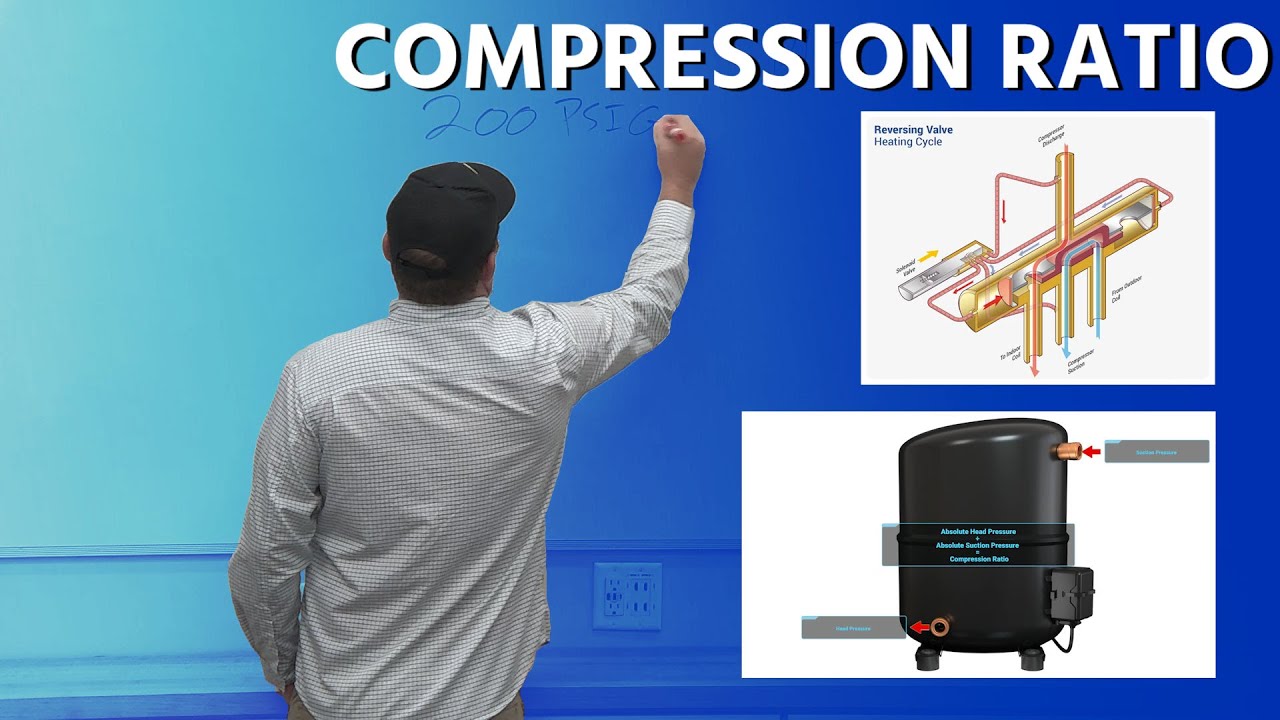
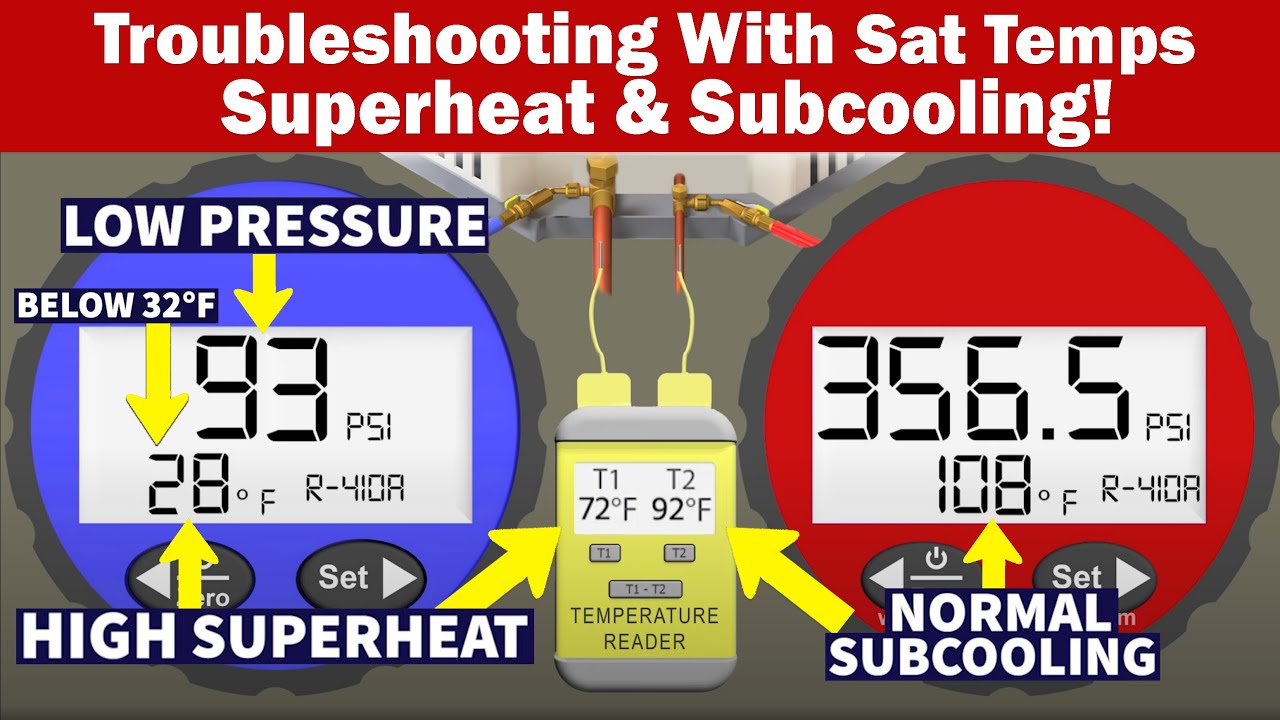
MH or you can see if the pressure coming up you have AOW two sure this is yeah so again like I'm not saying that you don't still also look at your readings on the charge side to help validate air flow but it's that it's that which comes first thing right like it's much easier to to set your charge if you know that your air flow is at least generally in range um the the other way around there's a lot of things that can cause low suction pressure right now well and when we talk through troubleshooting
I'll cover more of this so I'm not going to get too far ahead of myself but uh but to your point yes you do use charge to help validate air flow as well it is a both and type of situation not either or so go ahead um I don't know if this is common for you guys but a lot of times my the equipment I buy the furnus shifts it has a 2 ton a 3 ton a 4 ton and a 5 ton lower motor and the blower motor is set up for the air that
number so so even if I put if I put a 4 ton condenser on a 5 ton furnace then I really have to make sure I go in like you can't expect the unit to come from the box for me set for 400 does that happen to you guys where you got like a like yeah a larger up tonage fan coil h spe you have it two to three four you have two condenser you have about the set speed 3 t or four and that's and that's back to the original point I was making that
if you don't get that set up to begin with um then your static pressure is meaningless right you need to have that set up properly otherwise your static pressure is going to look good if you don't have the right air flow to start with yeah or really bad or really bad right if it's set too high it'll look really bad yeah us half T bigger hand sometimes right even five a t bigger you don't change it you got too much air flow all right and too much air flow in this market very bad why why
is too much air flow very bades doesn't de humidify right and it again we want to drive down our saturated suction temperature we want to drive down our coil temperature so that way we can get more dehumidification right and we have to try to manage our air handler sweating too so it's a real tricky thing ignore this if you've already covered it but [Music] 350 um okay so I will cover it now uh we're going to cover it again this is in my favorite this is my favorite topic one of my favorite topics um and
I have lots of stories around this that I'll tell you of mistakes I've made um but just to answer the question in this market I would definitely go for 350 um sometimes even as low as 325 now here's the problem the problem is is that that's going to help the humidity in the space be better okay so the space humidity is going to be better but your air handler is going to want to sweat your ducks are going to want to sweat your vents are going to want to sweat so it It's Tricky right if
you increase air flow will happen is your air handler will be less likely to sweat in the Attic but your house will be more likely to be moldy and high humidity right so that's the trade-off lower air flow per ton lower CFM per ton air flow results in better dehumidification in the space does that make sense and so that's where sometimes you have to you have to make concessions right so if you're in an if you're in a vented attic and you know that this particular brand of air handler you have is going to sweat
like a pig sometimes you may need to pump up the the um airf flow but then you may need to look at something like supplemental deification or something else for the space so that it stays where it's supposed to be it's always a it's always a trade-off would you would you design your duting for 350 or 400 well it again if I if I know for a fact that my air handler is not going to be a problem because it's in a closet it's in a it's in the condition space whatever then I'm definitely going
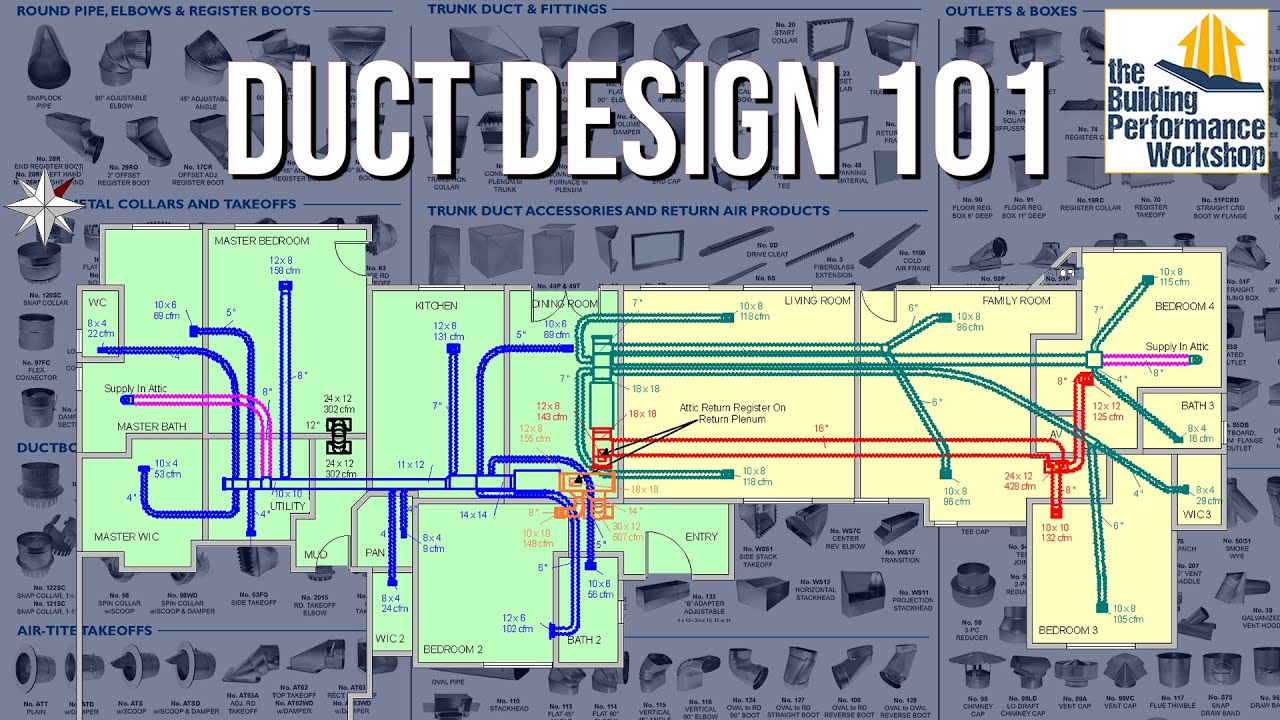
to design for 350 if it's going to be in the attic and I know that I'm going to have an issue um then I'm May design it for 400 but again the other thing is designing your duct work for is is another like for you guys here just make your duct work bigger if you're designing duct work make it bigger make it as big as you can make it and then use balancing dampers having too big of duct work is not a real problem that's in fact even Emanuel D which is the Bible for duct
work it literally says at the end um it's like velocity really isn't an ISS having too low of velocity really isn't a problem um so basically everything you just learned here just put in bigger Ducks that's the answer um it solves a lot of problems um and then if you use balancing dampers that's how they do it in commercial anyway commercial they use eights and balancing dampers for everything like it's very very simple now again for cost obviously you're not going to put right you're not going to put a 12 de bedroom like I I
get that but you know you know what on the edge is just don't go on the edge play make it bigger if you have a choice and use balancing dampers then that way you can set it however you want to set it to that too is even if you have a you know you're using your friction rate you're designing your duck system it's not violence probably probably not violence you probably need to go and make some adjustments right so it's not like you know if you were a new construction shop where you did a bunch
of new construction okay right because now it becomes a cost Factor right oversizing your duct work all the time and space and all that stuff it becomes more of a factor but you're a retrofit shop you're a change out shop so you're going to be doing duct work but it's going to be in existing houses making it work right and when you're making it work go bigger and do balancing dampers and just plan on a balance you know plan on going through and even if you're balance you know like again I I want you to
have an airflow Hood that's what I would prefer um you actually design for that part but even if you don't have an airflow hood and you just want to use a vein anomet and you just balance it based on the VIN anemometer like hey we're just going to get the velocities very similar in all of these rooms you're going to be pretty good like you're going to be it's better than nothing it's pretty good right it's better than a hand ometer and it's better than nothing right it's better than what everyone else is doing uh
and you're going to get pretty good results and Van anomers are really cheap like you can and you can put them on a selfie stick like literally get a selfie stick and a van anomer and now you're not setting air flow at that point you're setting velocity but again if you design your your grill similar and you kind of and you have a pretty good sense if the velocities are all the same you're probably going to be in pretty good shape and if you have a balancing damper you can make some slight adjustments you know
like all right you want a little it's a master bedroom okay give them a little more air you know open it up a little bit more you know most of our restri exactly and there you go right so to your point back to this bigger returns at the equipment bigger filters at the equipment solve so much problems getting your Ducks bigger at the unit and getting your filters bigger at the unit it is just pays for itself in Spades and it's so much easier to do too like having to replace Ducks all across the house
and again that's the whole thing a lot of people believe if you want to make air flow better you have to replace everything that's not true imagine okay here's the best example how many of you have wells at your house where you get well water instead of city water anyone no not here okay all right some not neor well so where I live I've got a well and my well is far away from my house okay and it's in a pump house and when I ran the water line I was an idiot and I've made
it too small okay so I want to get better water pressure to my house I want to get better flow rate to my house but I can't replace the entire line because part of it goes under my driveway and it's going to be a big deal to do right so what can I do Does it help if I replace the line that I can replace with a bigger pipe does that help yes it does yes it does a lot of people say no it doesn't because it chokes down again so it makes no difference it
does make a difference so for example if you have a duct and you know it's two it's a six okay and it and it but now it's going in between floors or it's going somewhere you can't get to the end 6 ft of it but it runs through the attic 30 ft you could replace it with a nine or a 10 and adapt it down to the six right where you can and you will get more air flow out of the end of that duct and sometimes we just don't we we are in pursuit of
the perfect so we don't do the good uh and we miss out on giving our clients good results does that make sense and again that's where balancing dampers come in really handy oversizing Ducks bigger returns bigger filters you get great result results out of that consistently cuz again if you and and Matt will talk about this if you are able to get a little budget by putting a bigger return in now you can actually accept a little worse Supply Ducks because now your total external static is adding up those two right so you can you
can give a little take a little there in your design thanks for watching if you're willing give this video a thumbs up and drop us a comment don't forget to hit that Bell icon to stay updated with all of our future videos and as a quick reminder HVAC school isn't just a YouTube channel dive deeper with us at our main website hvr school.com curious for more knowledge on the go we've got you covered tune into the HVAC School podcast available on all your favorite podcast apps and while you're at it join our thriving Facebook group
also don't miss out on our free mobile applications available for both iPhone and Android we're all about Community Forex byx