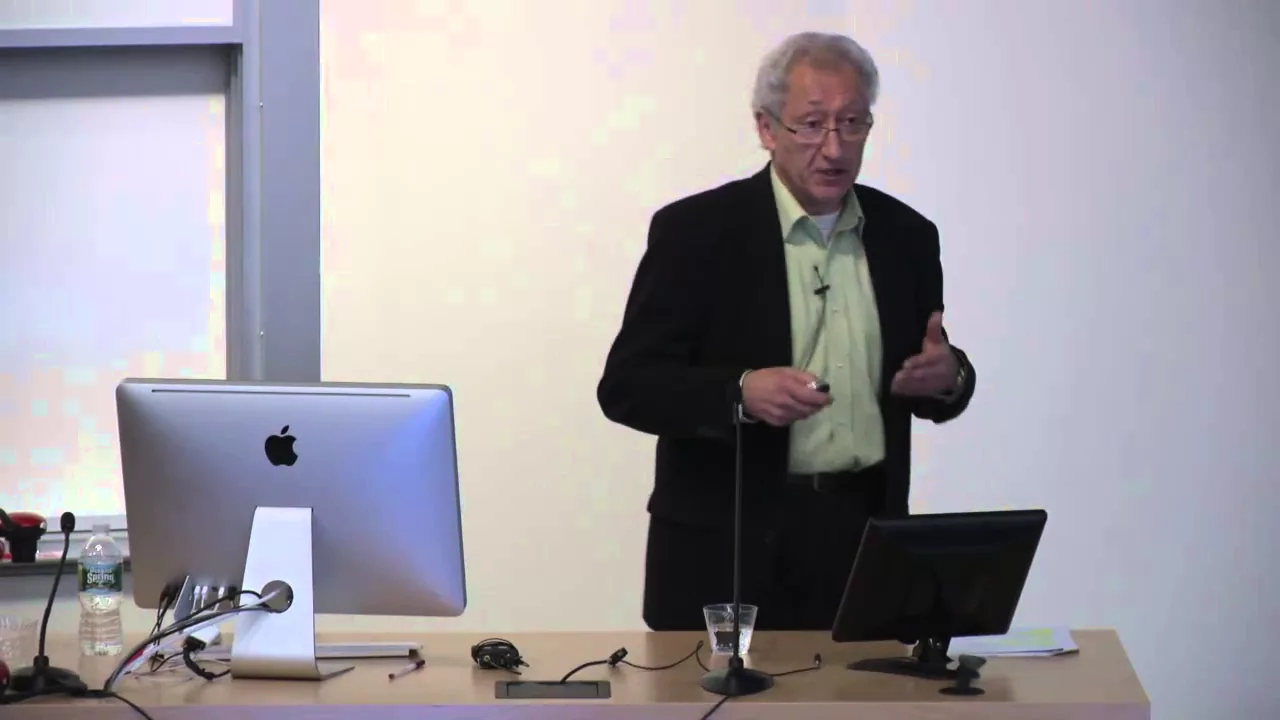
Um I'm Dan rockmore chair of the Department of Mathematics here at Dartmouth and also director of the William H Nukem Institute for computational Science and on behalf of the college and the Nukem Institute I'd like you I'd like to welcome you to this year's spring donaho colloquium Mission Impossible constructing Charles babbage's analytical engine delivered by Professor doron sued of England's Portmouth Portsmouth University the donaho colloquium is an ongoing series of public Le lectures aimed at increasing awareness of the many important and sometimes surprising places in which computational ideas appear these lectures are made possible by
a generous gift from David Mickey and Dan donaho in honor of Dan's graduation as a member of the class of 2006 the donaho colloquium is a central piece of the larger mission of the Nukem Institute whose aim is to support and integrate computational thinking and computational ideas throughout Dartmouth so no discussion of computation would be complete without considering the inventions that actually affect these processes it is in this regard that Professor sued speaks to us today while the word computer derives from the Latin computar which means to sum up computers have evolved so far and
so widely that for many of us the Connection to simple arithmetic is all but forgotten today the name computer is perhaps better associated with the grand diversity of processes now produced by any digital device it is something of an irony that the way in which we today use the word computer is in fact much closer to the original use of the word as the name for any one of the legions of people who were employed to perform by hand and For Hire significant and Multi-step calculations for any of a variety of quantitative tasks in some
sense the grand goal of computer science and computer engineering is to make future computers more like these original human computers while simple calculating machines go back some 5,000 years to the Abacus at least it was not until the mid 19th century that we find the design of the kind of flexible or programmable device that might someday grow up to Engender our own digital age this was accomplished when the British mathematician in polymath Charles babage came up with plans for the analytical engine the story of babage and his quest to build the analytical engine is like
any good tale both of its time and Timeless when babage undertook his project science was still largely the province of the amateur or the natural philosopher indeed the word scientist had yet to be coined babage was a great Believer in the importance of intellectual and scientific breath today called interdisciplinarity and babbage's analytical engine project was actually never um never proceeded beyond the design phase and his frequent complaints as to the unreasonable nature and shortsightedness of his local funding environment would undoubtedly resonate with many faculty members today luckily babage has found a Champion in today's speaker
Daron sued who is leading an effort to prove the viability of babbage's 150 year old design it is an extraordinary project in the history of ideas that lies at the Nexus of the Sciences engineering computation and the Arts the truly interdisciplinary nature of this project requires a certain breadth of interests and expertise Professor sued studied physics Electronics engineering philosophy of science machine Intelligence and history at various universities including Cambridge University and University College London Duron is currently visiting professor in the history of computing at Portsmouth University and research fellow at Royal H Holloway University of
London he is a former assistant director and head of collections at the science museum London where he was also senior curator of computing he has published widely and is the Author of several books and is especially well known as a leading Authority on the life and work of Charles babage in 2009 Professor sued was made a member of the order of the British Empire for quote services to the history of computing unquote of which the most notable was his leadership in the Magnificent construction of the first complete Babbage calculating machine the difference engine built to
original 19th century designs his new And daring project is sure to prove to be at least equally amazing please join me in welcoming our donaho colloquium speaker Professor Duron sued uh Dan thanks very much for those uh generous comments and thank you to Dartmouth to The newom Institute and to the Dono colloquium for the opportunity of participating in this program uh it really is a pleasure to be here thank you Um I was struck by the inclusion in the aims of The nuum Institute the inclusion of a reference to expanding or extending computational ideas computational
thinking into General thinking that is to Take It Outside the computational culture of the internal discipline of computing and look at its broader implications obviously where these things are provide models or relevance and um Poly as he was with a huge range of interests provides a huge number of his examples of instances in which computational culture actually spills over and affects history of ideas so although I'll be concentrating to a large extent on the engines the difference engines the analytical analytical engine um what I'll do is flag as we go along instances in which these
computational models these computational ideas actually have Relevance um Way Beyond Computing itself and perhaps that's less surprising in the 19th century where pooy was actually more widespread than it perhaps is now so the story of Charles babage and his efforts to build these automatic machines in the 19th century is increasingly well known what we have here is a mathematician an accomplished mathematician at the age of 29 in 1821 conceiving of an automatic Computing engine and he devoted much of The rest of his life to to the pursuit of this um he failed so we have
invention and failure and in the context of babage these two are almost invariably mentioned in the same sentence invention and failure he failed despite a blank check from government independent personal wealth Decades of design and development the social privileges of a gentleman of science which gave him access to the highest echelons of British Society both In government and the aristocracy and nonetheless he failed well we built one of the engines as Dan has mentioned and what gives particular relevance and urgency to that construction what revives interest in that is this recent undertaking to try and
build an analytical engine which is 10 times bigger vastly more sophisticated and part of what I'll be focusing on addressing during the course of this evening is whether the mission Impossible is a statement should have a question mark next it whether it's an ironic statement or actually whether it is possible to do this thing because as will as will become evident um what is involved there are certain what are known politely as Challengers so what I propose to do is very briefly give a thumbnail biography of bage and do this through iconography do this to
through images for images in the way he was Represented in his own time secondly describe the engines describe what the Ambitions and expectations for these engines were and also to some extent um how they work um and in the course of which I will describe the construction of Difference Engine 2 the first complete um bagage engine built to original designs and finally then very briefly try and assess what the entailment is what is what is entailed in attempting to build a machine that is At least 10 times as big I mean Difference Engine 2 took
17 years to build and um we reckon that and that has 8,000 parts and weighs 5 the analytical engine we estimate to have between 50 and 80,000 parts and if these things are scalable we're talking about a project that will take 170 years so what I will do at the end is assess whether actually this is a realistic thing or whether there's some what we might call assists things that will brighten rather than Darken our prospects so if we just very briefly to give an a kind of contextual outline of babage this is babage in
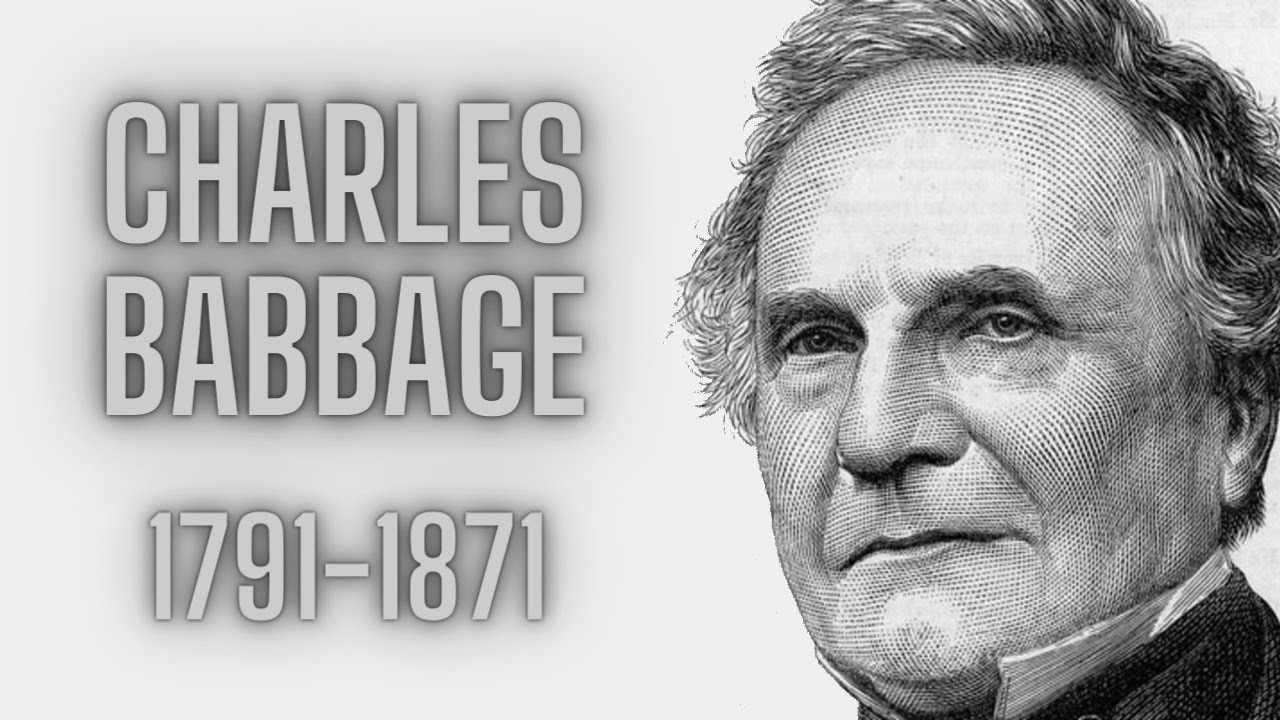
1813 age 21 undergraduate at Cambridge those are Miniatures that um are in the possession of the family and on the left is Georgiana his fiance and on the right is babage the resemblance to Napoleon is not accidental um babage as a student actually supported Napoleonic France with whom England was still at War the Napoleonic Wars ended in 1815 and babage as a student actually supported Napoleon um he defied his father and in 184 ran away well he didn't elope but actually in defiance of his father his father was a very wealthy Banker and who regarded
it as imprudent for a young man to marry without means and babich had no career he had no profession he was he was still due he was an undergraduate he was due to graduate the following year um went off And married J Georgiana despite his fault so already we have Defiance we have independence of mind and we have to some extent the suggestion of radicalism this is babage man of science esteemed by his peers he's about age 53 mid-50s at this stage it's an oil painting by Lawrence um babage was in capable of incontinent savagery
he launched sarcastic public attacks against the scientific establishment for the mismanagement and poor governance of Science in Britain which he regarded as in Decline and inferior to European um science and he succeeded in um alienating most of the senior figures by launching personal attacks against them including srey Dy um this this was in 1830 he published decline of Science in England this is now already 1844 so by this stage he's already partly rehabilitated and enjoying their steam he has an oil painting by Lawrence a famous portraitist and um so by this Stage he's already to
some extent redeemed this is particularly to gypa Cloud because it is taken around the time that babies was designing Difference Engine 2 so we've actually got a a photographic image um of bab at the time he was designing his Masterwork this was a device he this was baby to the top of his game he had already designed the analytical engine which was vastly more demanding than his earlier difference engin and realized that he Could build with huge Elegance efficiency and simplicity actually it's complex so it's comparatively simple a much more efficient Difference Engine and that's
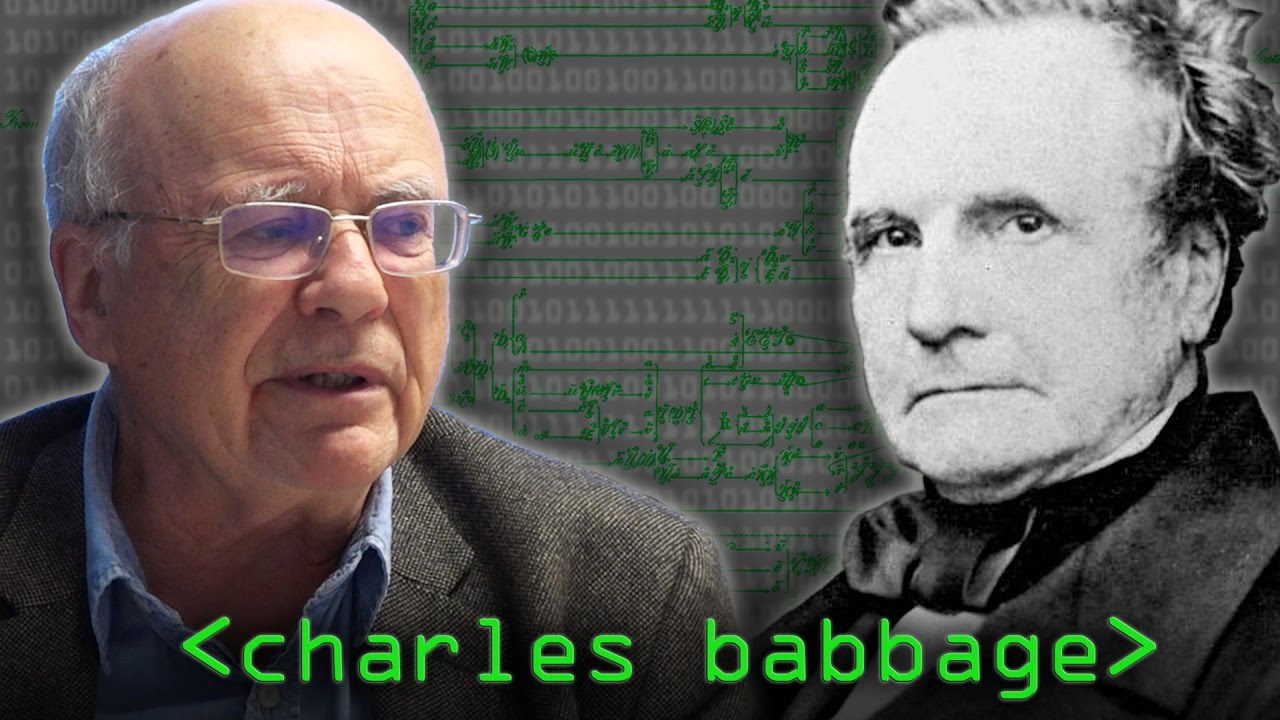
the machine we built so this is babage at at the top of his game um spirited beaten up but still spirited and and and and and um and up for it still um still with some anticipation some he hadn't entirely given up an expectation that one of his machines might still be built in his Lifetime this is babage with what I call his Beethoven look this is 1860 that's he died in 1871 this is the last known portrait of babage taken at the fourth statistical conference in London and this is babage professionally unfulfilled self-perceived failure
he did not deliver an engine he failed and he he he measured his worth by his ability to demonstr state to his peers through the delivery of a physical engine his ideas And to that extent he failed he refused public honors because he said the honor was for the engine not for himself and since he had failed to deliver one um he refused to accept it on his own behalf as it were uh despite that during his SC he achd for honors he achd for honors he he he he drew up lists of comparisons of
Pensions and emoluments that his peers had received um as dispensations from government and that he had been denied so strong sense of Injustice a strong Sense of of being overlooked yet nonetheless he preferred actually to remain in some sense obscure in in his acknowledgement um because of the lack of recognition of his engine so this is babage um and his first biographer titled the biography the erasable genius the erasable genius and that perhaps is is that was 1963 and that is um if one's looking for a sing Single signature um characterization a thumbnail characterization babage
then erasable Genius does the job pretty well so what we have is a complex and colorful character he authorized six full books nearly 90 articles on a massive range even by the standards of Victorian pmoy this is a very very wide range um of of interests um you we talking about a man who was proud princip principled Beyond Reason principled Beyond reason he would attack people on grounds of principle quite inde quite regardless of the Political implications of so doing he behaved as though being right entitled him to be rude and this is again is
a characteristic that that that that that characterized much of his public conduct we all know people like that um nonetheless he had great charm he was a prized dinner guest Mr bab's coming to dinner was was a Triumph for any Hostess um yet he was capable of wounding abrasiveness you can see this disconnection between the need shmooing Wasn't his strong suit um we could say so politically there was a huge ineptness he didn't understand that having failed to build Difference Engine one it was more important to finish a machine that was not his latest design
as a staging Post in credibility in political terms than it was to try and sell his latest design to government try and convince the prevail government to abandon huge investment in his earlier design and build his analytical engine So you can see there's a political kind of ineptitude there um which came together with this with this boldness this Independence and this um Pride this huge Pride so so much for babage that's a kind of quick context of um of um you know who bage was and briefly the trajectory from an idealistic student into an eminent
man of science into a disillusioned and to some extent embittered um uh um embed in in in in in in in in Older age so what were what were his engines about what was he trying to do what were his expectations what what triggered what was the jumping off point for this whole thing it's it's captured in a in a delightful vignette which occurred in 1821 where Charles Babbage and John hersh's great friend from camridge the astronomer or checking mathematical tables mathematical tables were calculated by hand in those days by as Dan said by people
called computers And we have babage and hersel checking them so two sets of independent computers would do the same calculations independently without collaboration and the idea is if these tallied then you have fairly High degree of confidence there were there were instances of both groups making the same mistakes but they're very rare and so if they Ted exactly you had a fairly High degree of confidence about the accuracy of the tables and so babes and herel are Sitting there checking these tables one is reading out a result the other one is checking it and B
becomes increasingly agile itated and he clasps his hand to his head as he said as it were and he says I wish to God these calculations had been executed by Steam and Peter akroy the um novelist and historian has said this is the most wonderful sentence of the 19th century because steam represented not only the infallibility of Machinery the unerring certainty of Mechanical means as as dinus ler put it but it was a metaphor for production you could now produce tables on demand and amateur astronomers were pressuring government making thoroughgoing nuisance of themselves trying to
get the government to pressure the Greenwich Observatory to produce tables for the trajectory of new stars and um the reason they were sitting there doing these astronomical tables was to provide these tables so Yeah you could have tables on demand you could just you could you could ter a handle literally and metaphorically and produce tables at will for new fun you didn't have to go through the huge procedure of their production tables that should be set at that stage were indispensable for science for engineering for navigation particularly for navigation for Taxation and for surveying you
were Reliant the only portable means of doing complex Calculations Beyond trivial arithmetic was through printed mathematical tables so what was the what was involved in the production of printed mathematical that's a set of logarithms a piece of a page of log from cona 1794 so that's what baby was trying to produce now how does that produce firstly manual calculation people human beings sat there did the calculation secondly you then had to transcribe the results into lists to give to a type Setter the type Setter would set each individual digit in loose type so he took
a piece of type for every single digit there and to create the page this is purely for dissemination this is to communicate the tables elsewhere you had have a mechanical method of production and then finally verification you had to check to see that the that the lists and the tables were correct so its calculation transcription type setting and Verification now bab's conception was a machine would eliminate all sources of error at a stroke so it would have automatic type setting built in it would have a built-in printer not only produce hard copy Inked hard copy
because that you would still have to transcribe it also automatically produce stereotype plates so the results were stereotype they were impressed on trays with soft material either plaster Paris copper uh paper Masche papier masche um to produce the mold for printing plate so you turned the you set the machine up you entered the initial values you turned the handle and you got printed hard copy as a checking copy and you got a printing plate out at the end to produce that and we say okay why spend staggering sums of money equivalent he spent equivalent of
in today's terms 100 million on the engine that he never completed Ed the argument of the day was There is no economic case for doing this the experts of the day George mid area astronomer Royal um uh Cinder in Sweden Laria in France all argued astronomers all evaluated these bab machines and the schitz Machine Swedish machines built to babage ideas and said that there was no justification for doing it firstly economically if you took the same capital and used the interest to pay computers it would be cheaper firstly secondly why do you need 30 40
50 digits Of precision when you could only measure to three or four in those days so these were people aring there was no practical use and it was economically ill founded so um so the point of that is that um it was not universally agreed amongst Experts of the day that there was any real utility for these machines but that it was a jumping off point without question so if we say well um that doesn't seem too difficult a task imagine to to produce that by hand to Transcribe public if you look at the page
it comes from you say well okay even that is still doable without this huge investment but if you look at the volume from which that came and say okay I challenge you to have verified those numbers and tell me that you have some degree of confidence in the in in the accuracy because unlike texture a literary text there is no intuitive way of knowing whether there's a spelling mistake in in a in a there's nothing That corresponds to a spelling mistake in this and it's only now with computers where you can scan that in and
verify the tables that you can actually resolve through a piece of experimental history the historical question who was right was ay right and saying tables are sufficiently accurate you would get no additional advantage in building a machine purely to ensure the Integrity of the tables or was babage right and that these things were riddled rather Babbage's protagonists the advocates for the babage machines of whether these things were riddled with errors or not and now we're in a position it's a project I've been trying to get a University take for the last 20 years scan them
in check them out and say well who was right wonderful combining Science and History through experiment you can resolve issues of dispute um to a large extent the job's been done in Germany where they've actually taken all The major um rare book tables and evaluated them scanned them and verified them and um right so 1821 baby just conceives with an engine that will eliminate now babit did not assume that because the machine was mechanical it was therefore immune from error because machines make mistakes and there Oodles of examples of those but what he did show
and he worked on the principle that because it was mechanical he could through Control Systems locking Systems security systems ensure that it was um free of error and I will show you examples of his security systems of how he ensured the digital Integrity of his machines through really ingenious device and he was the first to do that choosing a digital discretized motion as a way of uring integrity and um through control mechanisms so bab spends from 19 1821 to 1830 he spent about 10 11 years designing Difference difference engine number one it's called A Difference
Engine because of the mathematical principle on which it's based which is the method of finite differences and we won't go into that but simply to say the beauty of the technique is that you can find the value of a polinomial expression a mathematical expression using addition only whereas ordinarily you would require multiplication division subtraction and addition to find the Value of an equation here you can do it by addition only and um addition a gear wheel with a value where rotation is proportional to Value linking with another gear wheel and moving is an essential in
Adder you're adding the number from one wheel to another Wheel by allowing one to rotate the other so addition is kind of quite easy comparatively easy compare to multiplication division um using Gear wheels multiplication division was Hugely difficult accomplished in the analytical engine but not for the differences the beauty of this was it allowed mechanics to get a grip on arithmetic and in the course of trying to mechanize arithmetic he was led from mechanized arithmetic to fully fledged digital computation with the analytical engine which embodies almost every single logical feature of a modern digital computer
as we shall see so Difference Engine one um I'm pointing to That as Difference Engine That is 17th of the full-sized engine this is 17th of the fulltime now it's probably the most celebrated icon in the prehistory of computing this machine this is 17th that is completed it still exists it works impeccably it's on display at the science museum in London it's operated by cranking a handle so you crank that handle backwards and forwards four times to take the machine through a single cycle you set the thing up initially by Putting um uh uh numbers
from a pre-calculated table which you do by hand um onto these columns and what it does is add the number from this the multi-digit number from this column into the next column into the next column and the tabular result appears here every time you take the machine through a cycle the next value of the table appears on the last column over there so the point is it's automatic and The significance of it being automatic cannot be overstated you crank the handle you exert phys IAL effort and you get for the first time in history a
result which you could otherwise get only by thinking for the first time in history you exert physical effort and you get a result that you would otherwise get by thinking and so you have the first transference of human intelligence to machine looking at it the other way Around you have the first ingression of Machinery into psychology because the significance of this was lost lost on babage and his contemporaries um Harry wil buckton said um the wondrous pulp and fiber of the brain has been replaced by brass and iron he babage has taught wheelwork to think
um uh lady love lady Byron ad love LA's mother um um in 1833 wrote in a diary last week we saw the thinking machine for such it seems now Harry W Buckon says wers SP of my brain uh he babby to talk whe wheel work to think or and he adds or to do the office of thought so they were not saying minds are computational what they were saying is you have for the first time a machine capable of mind-like activity it was doing something that up to that point now the significance of this is
Monumental you have if you like in a broader context the um idea of the industrial metaphor of production the Model of industrial production being extended from thought from thing to thought from matter to mind from physical to mental Industrial Revolution was to do with replacement of physical labor physical work and here you have a machine producing mental work so this was the first artificial intelligence machine if you like that's the beginning and you had to have to some extent machine autonomy you had to have some element of autonomy in a machine before You can begin
to have automatic computation and begin to have machine intelligence so this machine is hugely significant historically um it is significant in other respects and this is an example of what I mentioned early on about how computational idea spilling over and having an impact on the history of ideas we have here an example of an artifact influencing the history of Ideas um here we have babage the Difference Engine the 17th complete that's a love and standing next to him in the dark is is John herel um that is that the reason that the um quality of
that photograph is poor is because digital photography wasn't very veloped in the 19th century um that is a BBC reconstruction of babage demonstrating his theory of Miracles so here we have a computational model and we have babage actually Entering a debate and having huge influence significant influence on geologists on preo inian evolutionists um about discontinuities in nature and this is how he addresses an issue and reconciles a hugely difficult issue in the 1830s which was how do you reconcile a belief in a god with rational thought and science because an earthquake occurs if you if
a deity is used as the causal Account for the earthquake there is no difficulty so what they were struggling with was this you had Millennia of geophysical stability and suddenly an earthquake you had stability in relation to species and suddenly you had the occurrence of a new species without now science espouses material cause so the question was in the absence of a miracle how would science if it was competing with religion for an account of the world give an account of something Discontinuous so babage and his sarees if you were part of the glitterati or
intelligencia of London you went to baber Suare on Saturday and there he had his engine and this was taken at one of his Suare with a digital camera in 1833 um want of started demonstrating his theory of Miracles and what he would do is he' program the machine to do something quite benar increment by two so every time you crank the handle the number at the end would increment by two So it went 2 4 6 8 and so on um and you know he would play with his visitors and say well you know what
do you think the next number is going to be and they'd say is that terrific and you know keep doing this and eventually it got quite boring and they think well this is actually Bal or something and suddenly without intervention by babage at all the machine would jump from what it's supposed to be to say 119 and no baby you broken it they would Say and he and then he would deliver his his argument and he said you see to you the Observer this discontinuity is a violation of law and the law is increment by
two but for you this is a violation because it's not incr y to but I programmed this machine that after 100 iterations it would jump by 119 so to me the programmer this is not a violation of law this is a manifestation of a higher law known to me but not to you by Analogy miracles in nature are not violations of natural law but manifestations of higher law known to the deity but not to us and he allowed you therefore to be both a Believer and a scientist and reconcile this this Progressive tension so for
for babage um God was a programmer and I thought those of you in the software industry may be flattered to know that I mentioned that was 17th of the Engine ah um right these are decimal digital machines right they work in decimal not in binary and they're digital they're digital because motion is discretized that is only fixed so that's a gear wheel it represents a value so it's 1 2 3 four with each tooth representing a number and um so if you want to represent 2.5 the the the wheel doesn't sit between two and three
you've got a wheel with two and a wheel with five on it It's digital in that sense but it's digital in the sense that only discret integer numbers are legitimate and valid logically valid now the problem is that a gear wheel is inherently analog device all the transitional stages between one and two are physically viable unlike a flip-flop which has a threshold a switching threshold where if it's exceeded it suddenly flips to another state so unlike electronic thing bab was dealing with inherently analog um um Logic which he then had to turn into digital controll
he did this through through using uh control mechanisms now here we see this is top of the Difference Engine opened up in a little model that was built from Parts made for the first Difference Engine and you can see these these semicircular stubs there and you've got a sprung roller you can see the spring there and that roller on that lever is sprung and presses between the things I can blow that up a bit so There we can see the roller right so as this tries to turn there's resistance you can see that the dwell
angle on the top of that thing is not um sufficiently decisive not sufficiently sharp to cause a decisive switch but you can see the beginnings of an attempt to digitize motion to discretize the motion so that although it's not it's still probably stable there a small displacement will jump it into the next thing so that's one of the Earliest examples of bab's attempt to discretize to turn an inherently analog um um uh component into a digital discretized um thing now he's there there are much more sophisticated examples of how he did this and we'll see
an example I'll show you a video one of them actually operating later where he uses a wedge which drives and it's absolutely the the the the point of the wedge is a line and the switch over is absolutely Decisive right I mentioned that it was 17 of the that's the 1830 plan of Difference Engine one um uh 16 uh oops a Precision of 16 digits so it goes units tens hundreds thousands so it's a 16 digigit number there which gets added to the column alongside it them and the tabular value appears over here that's a
printing mechanism you can see it runs on tracks and rails um uh their wheels on Rails so uh it's a first portable computer um it's uh Between 8 and 10t high it weighs um well Nexus to 5 tons um but it's portable I mean it's precedes Osborne and all those other it doesn't have a carrying handle though so you can see firstly we're talking about a Quantum Leap in physical scale and logical complexity in relation to what had gone before which were little um desktop calculators of of dubious reliability and limited Precision um and the
point is they were not automatic they still the algorithm Was still in the human the algorithm had to um lift do the dials operate the stylus move the carriage the algorithm was in the hum still over here we've got the beginnings of the first time the algorithmic um uh uh instruction is actually been transferred to the [Applause] machine right we've been 8 to 10 ft High 25,000 Parts baby had made in 11 years his engineer Joseph Clemen had made 12,000 Parts 12,500 Parts most of which Got melt melted down for scrap subsequently um they're about
2,000 Parts in the little 17th full size and these were some of the highest Precision um highest Precision Parts made in the 18 1820s it's it's a kind of meterological standard if you want to know how precisely could an engineer have made a parts then you you take measurements from from the Difference Engine one okay what I'm going to do I'm aware um That that that there's some people who may be technically well um Versed and there others that are not so I'm going to read some of the logical features that are embodied explicitly so
these are not suggestive hints these are logical circuit and system functions that are embodied in this engine explicitly in the detail of the mechanical design so I'll rattle them off they may mean more to some than to others firstly parallel operation Non-destructive addition you don't um you recover the add end after the um addition microprogramming um a single it automatically executes a number of minor instructions minor functions in order to execute a larger one pipelining overlap simultaneous functioning what we these are modern terms with strong affinities to the logic there pulse shaping um that is
cleaning up a degraded transition in um in in U to ensure digital Integrity bin Rel latching that's one word storage One bit storage polling sequence interrogation of a series of logical States you poll a thing to find out what's going on input output um there was manual input printed and stereotyped output and a schut trigger a bounce catcher when a thing bounced and you had to stop it once it crossed the threshold um now I mentioned also that um many of B's ideas spill out Beyond computation we have now a very bright guy a mathematician
who for the first Time has a machine which he ex comp computational process and it's curious what speculations about this were firstly he saw for the first time computation as a systematic method of solution the way you solved equations before is you did analytic Solutions and Abstract formalism generalization was prized computation was regarded as inferior because it was like arithmetic arithmetic was rather inferior to so you can see there's already a kind of Prejudice that babage was aware of against computation and systematic method but he's got a comp of calculation is now he's talking about
computation as systematic method of solution that if you have an expression which hasn't for which you do not have an analytic solution you can now find solutions to this equation by Computing them you set the machine up you crank the handle and you crank until you find a Solution so um the idea of computation is systematic solution which elevates it if you like from um from um the mundanity and banality of arithmetic the inferior status of that arithmetic had in that culture um was was very evident and he says um this is not in Conformity
with the tastes of the time he was aware that there was a prejudice against computation as a systematic method even though Solution by computation was Actually more systematic than analytic Solutions there was no systematic way of finding solution to equation you had to manipulate until it had a form for which there was a known solution which is one way um trial and error regard is deeply in elegant by mathem so curiously what is regarded as inferior is more systematic um than was the accepted um the accepted um methods so you want to find the solution
of equation you set the Machine up you crank the handle and a solution of the equation is when the independent variable the value of the independent variable which drives the equation to zero so solution computationally um is equivalent to the tabular value being all zero now you can detect that mechanically so he would have a he's got a bell that rings in the Difference Engine which warns the operator that a solution has been found or if the value goes through zero and Sorry if there's a sign change in the value when it goes through zero
it will ring a bell and stop but babage also incorporate automatic halting mechanisms that would automatically detect the all zero situation so you you entered initial values into the machine you crank the handle and the Machine would stop when it found the first solution if there were multiple um Roots you would carry on cranking until another one if there were no roots you would carry on Indefinitely now anyone who knows about Alan touring who used his the halting criteria to resolve the issue of decidability you've got babage talking about the machine halting as a Criterion
of finding a solution of solvability so you have rather extraordinary preecho here and so babage was the first person in a position to consider what the implications of um um of mechanical process which is which are definite method mechanical process are Terms that touring actually use so it's curious that two people who s mathematicians who thought this systematically right he also saw the machine as having heuristic value it could suggest series for which there was no you could find the value of a series for which there was no General expression which is another thing and
also tic value the machine would actually suggest series for which there was computational rule but no analytical Formula so he anticipated all things he also anticipated that there would be a new branch of mathematics called numerical analysis that would be devoted to manipulating expressions for the purposes of machine computation in the most efficient possible way and he uses an example where he has an expression which requires 35 multiplications in six additions and he manipulates the expression to something mathematically identical and he says you can do this With five five multiplications in one addition and he
uses that as an example of how you need a branch of mathematics that would optimize the um ability of a machine to do the computation the project failed um in 1833 the thing was abandoned his engineer walked out circumstances are very complex they involve a unresolved dispute which spiraled out of control with his engineer Joseph Clement for compensation for moving his Workshop Closer to bab's house bab regarded himself as the master and the Joseph Clement's engineer was the servant and the expectation was that servants would obey Masters and Clement was quite intransigent about this and
within his rights demanded £600 compensation to move his Workshop because he would lose trade and all the rest of it unresolved both actually um stood their ground and the relationship was never repaired the the engine was abandoned now during the Period during this period of the dispute which lasted many many months um possibly over 18 months babit was deprived of his drawings and his and his parts and be in this enforced break from the nuts and bolts of construction he began to go back to his original ideas and that's the point to which 1834 he
conceived of his analytical engine okay the Difference Engine is a calculator it crunches numbers the only way it knows how you turn the you put numbers in you Turn the handle it's all it can do it's not a general purpose calculator you can't do ordinary multiplication ordinary division all the rest of it it's exactly what we would call calcul has a fixed algorithm and it does everything according to that according to the way the wheelwork is set up the analytical engine involves again a Quantum Leap in physical scale and logical complexity because here we have
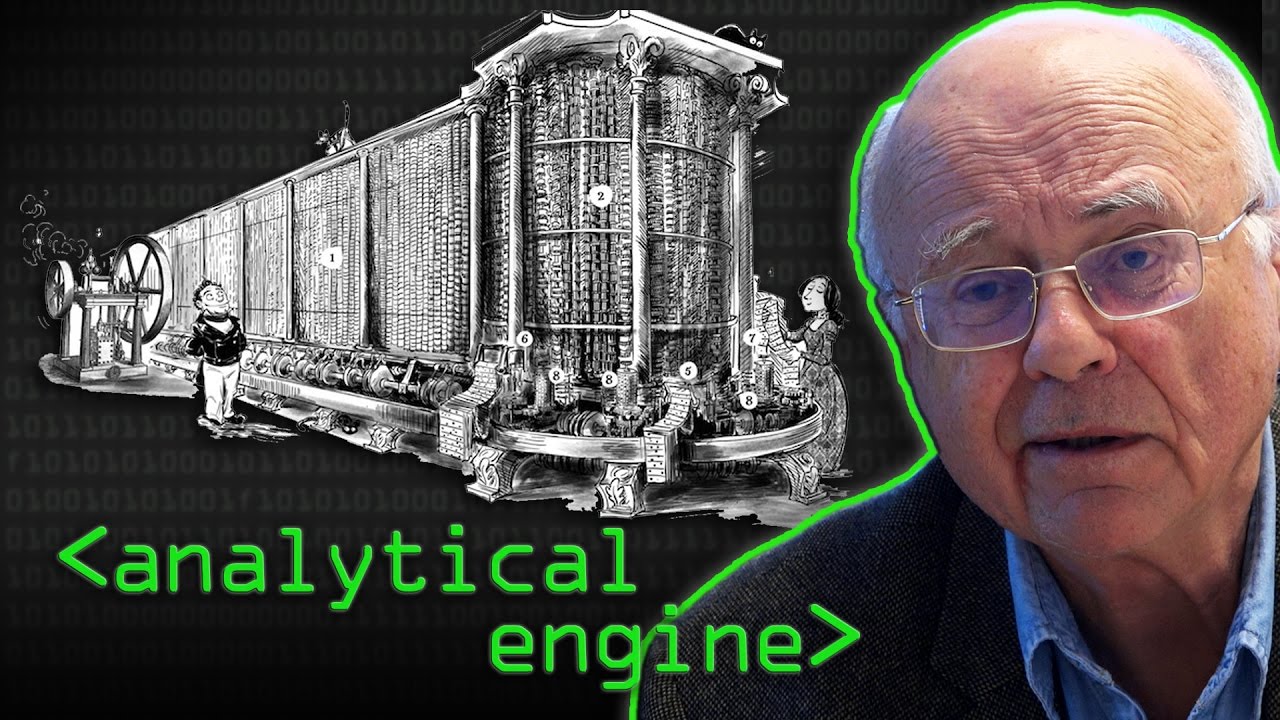
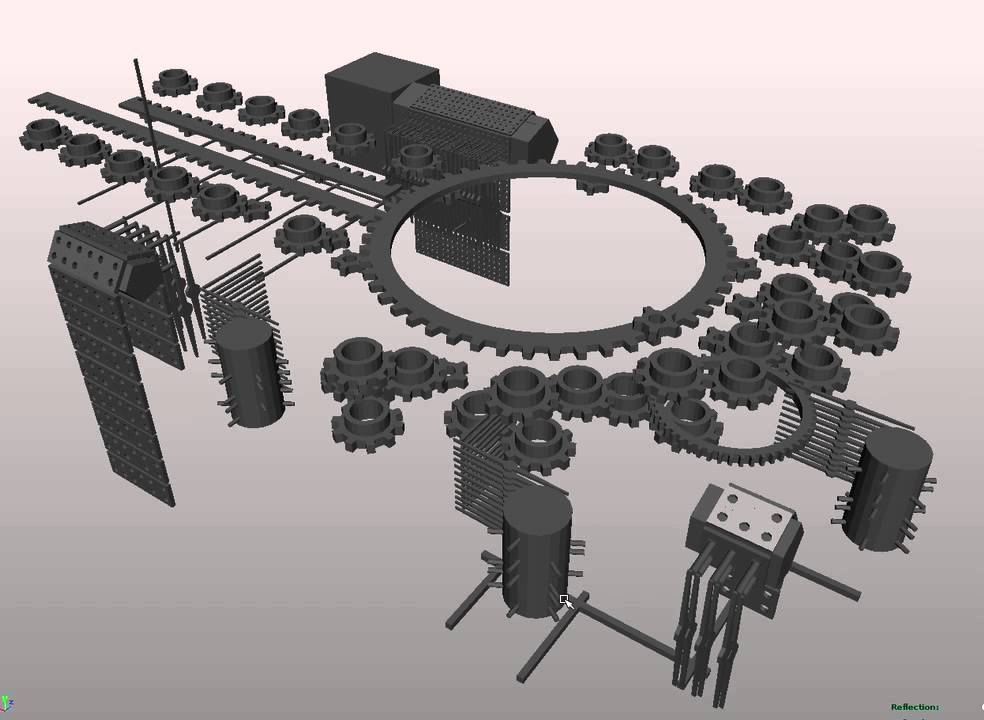
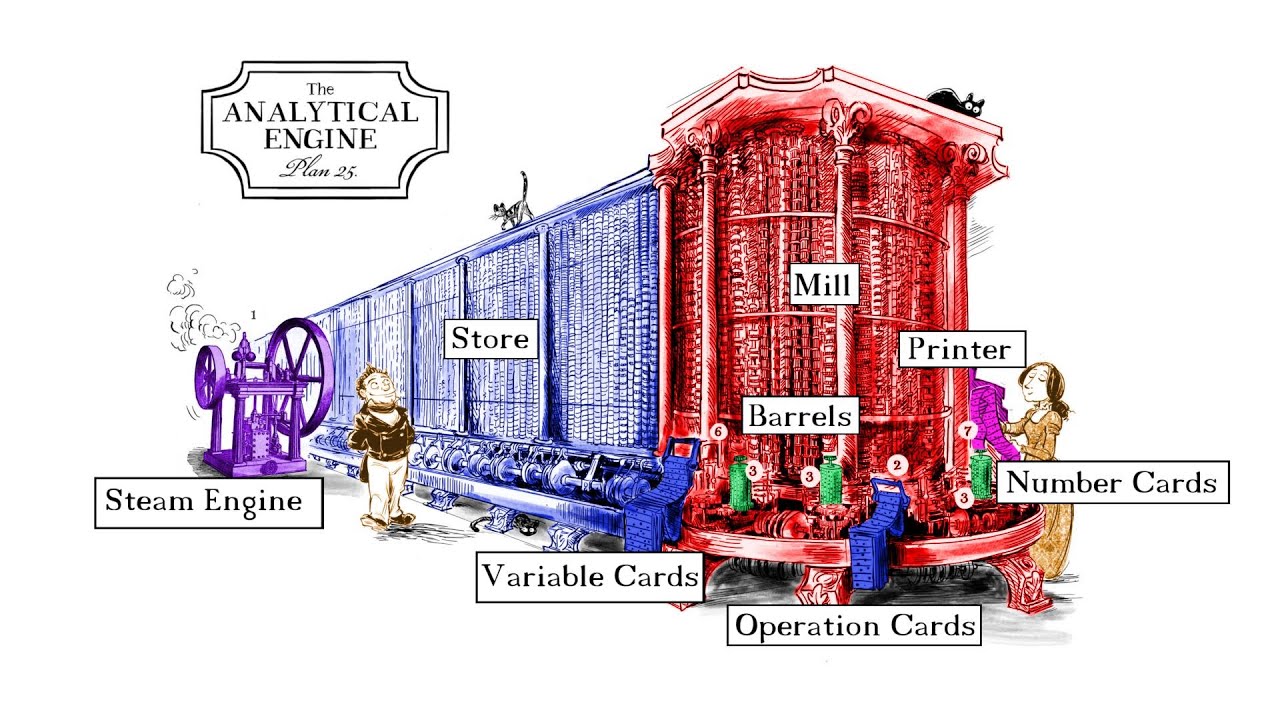
the conception of a general purpose Computing machine conce received the beginnings of the glimmers in 1834 made huge and massive progress by 1836 by 1838 he had a kind of plan and the plan we're going to look at is if you like the mature version of his middle plans so um here we go that is plan 25 1840 um and um to give you some idea of the physical scale the diameter of the central Wheels is uh 5 1/2 ft each of these circles is looking at a Column of figure wheels from the top so
each of these circles is a column of figure Wheels 40 deep these Central wheels are toothed Wheels 5 1/2 ft in diameter with teeth on them and that's and they're 40 deep too and they are the internal bus so let's first look that's the mill that would correspond to the um central processing unit and this is the memory what he called the store we call it memory he called it the Store so that's where the data was kept so firstly you see the separation of Mill and store of CPU and memory which is a feature
of the fman architecture which dominated computer design since 1945 separation of store and M um these are racks now a rack is a a thin slat with teeth all around the edges and that is a bus so that's 40 deep every wheel is connected to every other Wheel by this toothed rack and you can Transfer um any data from any column to another column using these racks into the buffer stores and into the mill so there's a fetch execute cycle which is another piece of fman architecture which fetches the data from the store takes it
to the mill process it and returns it back to the store so internal architecture is um you'd say pretty modern um the physical scale of this is is rather extraordinary um the store can extend in Practical within practical Limits indefinitely it's a linear thing goes on there are 17 what he calls the things called V what he calls variables we call them registers now so they are 40 digigit registers 30 40 digigit registers now there're 17 shown here from here to there is 18 ft now the entry level machine that's got 17 registers the entry
level machine had 100 registers and he talks with machines for a th registers so we talking about a machine that is 15t high 8T across here And the entry level machine will be 45t long so so when I say this is a Quantum Leap in logical conception physical scale you're talking about something something of huge complexity which we'll explore very briefly now but the physical scale of this is just utterly Monumental Morris WLS Professor Sam moris wils of Ed Zac Fame person who 1950s built the first post-war electronic work of a postwar store program Computing
in Cambridge I was one Of the early people to evaluate bab's standing as a computer Pioneer described this as vision verging on genius um anyone who knows Morris would hesitate to call anyone else a genius um but this was Vision verging on genius and I think that's a very very extraordinary tribute from someone of of wil's standing because he understood perhaps more than anyone at the point in which he evaluated this what the implications of bab's accomplishments Were um the rationale for centralizing the mill was interesting he was saying um processing um uh Hardware is
very expensive so don't distribute it so centralize it and bring the data to it exactly what we do now and he's very explicit about this he's very very clear about why it is he centralize the um the processing power um it's operated well y right I'll I'll go again for those who are into computer science or circum system design I'll just again just read A bunch of features of this machine without bothering to explain I'll go back and explain one of two of them firstly it's programmable using Punch Cards there's a separation of the store
and mo which which we've mentioned it has serial operation with a fetch execute cycle it has conditional control so it's capable of if then statements which you need for multiplication division capable of iterative looping can repeat the same sequence of Operations any a predetermined number of times it's got built-in micro programming which would explore very briefly pipelining again buffering um you take the uh a number from the store and you put it in the Ingress access over there so it's stored in the buffer the mill processes it and returns it to the egress access which
is there so you've got a system of buffering so it isn't just direct addressing it has anticipating Carriage Which is a form of carry look ahead um it has an internal repertoire automatic instruction multiplication division subtraction addition is built in as a repertoire internal repertoire up to 50 digigit registers with double Precision results so up to 100 digits in the output it's cap parallel processing it has multiple process it has three barrels there there and there um all which can operate at the same time so you split the problem between three sets Of processes so
I mean this is pretty advanced stuff um punch card input of data and instructions the outputs are printed stereotype punch cards or graph plotter or or run on a curve plotter it's a fixed Point decimal digital machine it uses sign and magnitude representation of numbers negative numbers are hand used handing T complement and we see here with the fetch execute and the separation of stor M the central input and output the Central features of fman architecture um right punch card cards um that's an example of set of operation cards which are instruction cards those are
variable cards which tell you um where in the store to place a number so it tells you the location in store that a number is to place the operation cards tell you exactly as you would now in instruction add this subtracted from that multiplied by that and so on and these are in a fanfold form and in Touring's terms you can extend them to any practical um they within the limits of what's practical they are you can extend this indefinitely right there is an example of bab's card reader it's a prism that's reading variable cards
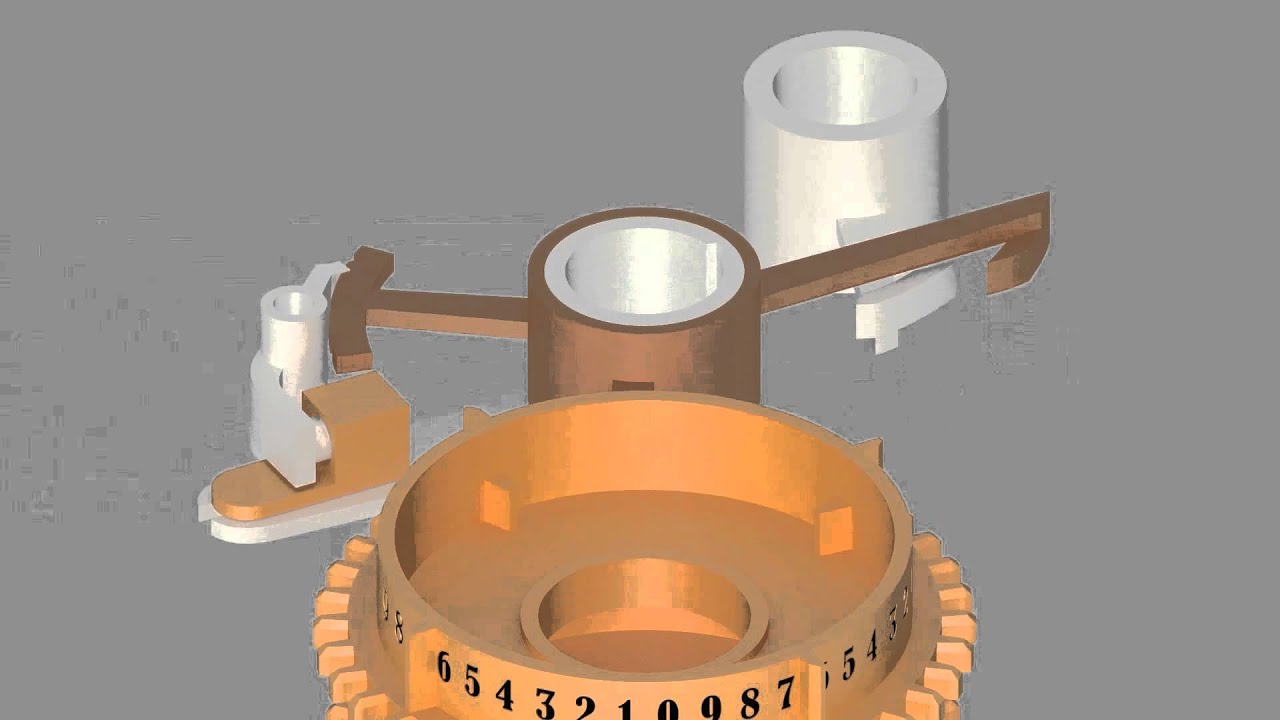
and what happens is so there's a box full of them that's the fanfold stock of of cards and what happens is this turns each cycle and each cycle it turns and moves forward that whole apparatus moves forward and Activates these rods depending on whether there is or is not a hole in the in the card that is how the activation is done and um so each cycle this thing automatically Cycles through um and you can get a begin to get an idea of what his drawings looked like there's a barrel which we'll look at there
um there's a rack that's looking end on a rack so you can see there three sets of of teeth and that is a thing that runs the full depth of the store Um um interestingly that that more has been built of the analytical engine in moano than anywhere else uh the last thing built from the analytical engine was a four function calculator built by baber Sun completed in 1910 um it works but not without error and there's an extraordinary man Tim Robinson in California who's built the Difference Engine one difference engine two out of mccno
and he's now building different building the analytical engine So that is a card reader built by Tim Robinson um you can see the um rods those are the rods which get pressed or not pressed depending on not on whether there is a hole in the card so that is how the activation of the higher level control worked uh barrels I mentioned barrels okay um we have here a linear form of store right it goes on indefinitely but in 1837 this is an 1840s drawing in 1837 this was a circular rangement and You can see that
the store is limited everything is around the circular wheels and the store is limited by what you can fit around the circumference so you can see an automatic progression now there are three stages in his plans early middle and late that's the end of the early stage the ones I've shown you is the mature side of the middle stage the version We building is plan 28 which is the third stage which is even more elegant than the one I've described but This is the the the plan2 um is the most complete and um illustrative of
the drawings uh these cards are quite huge that's uh 26 28 in Long the variable operation cards and the um operation sorry the variable and number cards number cards are data cards and the instruction cards are 7 7 and a half in long so these cards are quite big um these are the barrels and perhaps since I'm been spending much too much Time on things that I shouldn't be um we should um skip it but that's a barrel um and you can see that uh there's a stud and the whole Barrel moves forward the barrel
is the microprogram barrel is the internal microprogram of the machine so it's a barrel it's like a barrel organ so there's studs there if the stud is present this whole Barrel you can see they dotted lines the whole thing moves forward and either activates or does not activate one of these rods these rods Depending on whether there's a stud there's a stud present or not and then it automatically Retreats and then is Advanced to the next stage depending on um these other Wheels here now those other wheels are controlled by the existing word so each
word instructs the barrel where the next instruction is by these sectors so you can see there's a one there's a two and there's a four and they got one tooth on it and that's got two teeth and that's four teeth so that Advances the barrel from one word either one two or combinations of those depending on what conditions are satisfied or not satisfied you also include conditionals in that and there's also multiple branching so you can have multiple conditionals here's a conditional if you get a running up which is a sign change from the top
of a register then you will add another turn by lifting in that sector wheel or not depending on where they was running Up here there's a condition that will take account of pre-existing States so you can see there's a little slug there if you withdraw that arm there's a gap between the the stud and the rod and if that moves forward it doesn't act but if that Rod is forward then that fills that Gap and when the next time so that will be a pre-existing so a condition arises the rod moves forward but the stud
in the wheel that it may be five instructions before that is actually Interrogated that is then ped and a condition will result from pre-exist in state and these are all operate together now you can work combinations of these because the phasing of these sectors operating is all different so if they happen at different times you can add anything from one to seven moves now that's a simplified version you can have um uh words so that's a word in the vertical if you like it's a single computer word in the vertical up to 50 High and
um 100 On Any Given barrel and there three barrels operating simultaneously as multiple processes so if didn't mean a whole lot we can actually just summarize by saying when we call babage a computer the first computer Pioneer it's not a casual tribute this is not uh these are not suggested hints this is not a backwards projection from our own age these features are explicit in the detail of Um of babbage's work and that's a drawing by Alan Bromley who sadly um passed away in 2002 he was he was the person who first cracked these drawings
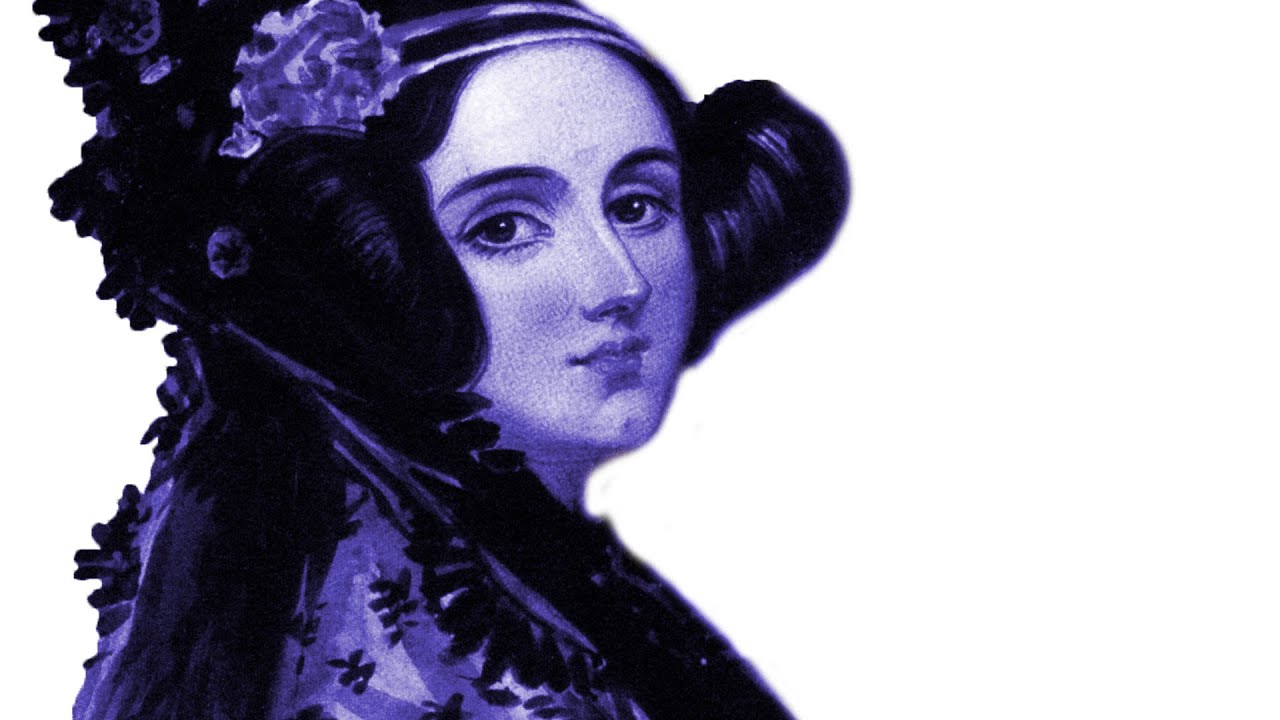
and that's probably one of the few illustrations which um describe what it does um babage uh that's a um a piece of the analytical engine under construction at the time of babbage's death in 1871 that was always all that was ever built you can see the racks oops there's a little Printing press over there and it was an experimental thing which um it's questionable whether that ever worked um this is a love lace and um ad love lace has a very interesting part to play in the babage story because it was love lace not babage
actually understood the implications of what comput comput Computing as the synchron computation meant it was love lace who saw in a ways that babage did not that Number could represent entity other than quantity a number could represent the letter of the alphabet or or note of Music babage always saw his machines Bound by number or by mathematics the most General formul machine he saw as an algebra machine something that manipulate a symbol independently of the value of that symbol but the machine can't do Algebra the machine is arithmetic mathematical machine he's got algebraic Edition and
he designed a Printer their sketches for a printer um he became intrigued by how do you elevate the symbol to get it above the horizontal line and how do you lower it so he had a way of actually controlling this so he clearly had it in mind that the machine would produce mathematical algebraic notation and love lace writes 1843 the only published paper she did love La I'm assuming everyone knows love L love La was Byron's daughter um who um babage met in 1833 when babage was 42 And aah was 16 and babage and aah
sort of got it she got it in ways that even babage didn't get it and wrote in 1843 a famous paper sketch of the analytical engine which is the most comprehensive and insightful um uh that captures the most insightful um thinking about the analytical engine at the time a hugely Reliant and derivative of babyes work in all technical senses but in this there is love lace talking about the power of computers the vision that the power of Computers lies in taking representations from the world putting them in numerically represented in the machine and that the
machine can manipulate symbols according to rules and then you can start saying things about the World by mapping back the representations onto the entities that they're representing and she saw that more clearly than Baby J did that this was the this was the this was why this machine was significant and this isn't again a Casual thing in a footnote This is Love La thumping the table saying it is this that is important about this machine this machine is in a different category it's a it's a different in kind from anything that's gone before because it
is able to do this representation the untethering of representation from thing and the manipulation of the representation according to logical as distinct from physical Rule and she had this Vision in way bage nowhere in his Published writing writes in this way and lovely uniquely does that now there there's a lot of Mythology about love life she's fated and and um she's fated and celebrated for four things she was the first computer programmer the programming language Ada was was um was named after she was had an influential um she um had positive influential um effect on
bab in the conception of the analytical engine she was a mathematical genius and she was a Propet of the Computer age the first three have absolutely no foundation in any form of historical evidence the chronology just contradicts them entirely all the examples she gives for her first program the the question of her being the first program is understandable but wrong she was the first to publish a program or something that we recognized as a program as a stepwise sequence of operations the notion of an algorithm but the example was done in by for Turin In
1840 by babage um so none of the three claims mathematical genius first programmer and influence on the analytical engine stand up at all but the profit of the computer age absolutely in ways that actually so not only she she deserved of the celebration she see she's more deserved than she actually is because she's usually celebrated for reasons which actually were historically ill founded so that's my take on ad Love we've arrived at Difference Engine 2 and I realize that we don't have a whole lot of time difference Engine 2 is the one we built so
babage spends um he conceives the analytical engine 1834 gets a glimmer of it works with huge intensity 1836 1838 midle plan lat his late plans in 1846 plan 28 which is even more evolved in this but more to do with refinements than it is he used half zero addition and various other things refinements rather than big logical Architectural breakthroughs which is why it's useful to look at the plan I looked at the 1840 plan 1846 he stops and he realizes he's now at the top of his game he's now at the top of his game
he realizes he can build an elegant um Difference Engine one three times more efficient onethird the number of parts from engine one so this is like his Masterpiece he produced no experimental pieces because he conceived of it all entirely Difference Engine 2 is a hugely Elegant sophisticated Difference Engine it has 8,000 Parts compared to the 25,000 parts of um of different engine one it um is uh 11t long it is 7t high it weighs 5 tons it will calculate and tabulate any seventh order polinomial to 31 decimal places is what it does so you enter
the the initial values on these Columns of figure Wheels you turn the handle there's the micro program in the cam stack and out here is the output apparatus which Prints in hard copy on a print ink print roll and stereotypes plates of 30 digigit results and I'll show you examples of those that's the machine we built um uh it took 17 years as I mentioned although three it actually took if you had a kit of parts of 8,000 parts and assembled it would take you 3 years to f it to do it all the 17
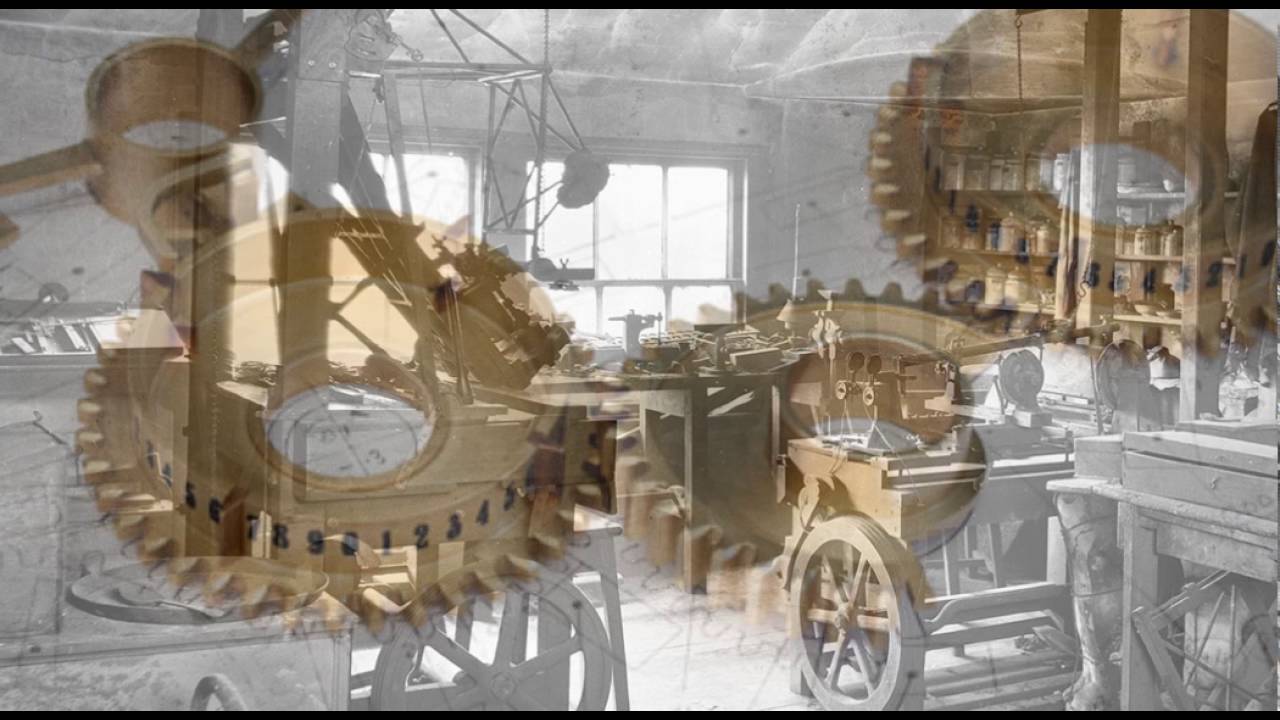
years was what what might be called politics or life it's prevailing upon people it's getting Money it's producing drawings babish left 20 drawings it's the most complete design he he ever did he left 20 complete drawings and those have you can see that this defines the machine completely but there is insufficient information to give a drawing like that to for manufacturing to machine shop so we translated those to 168 drawings where every single of the 8,000 Parts is specified completely and I'll show you an example of just how much information That requires um so that's
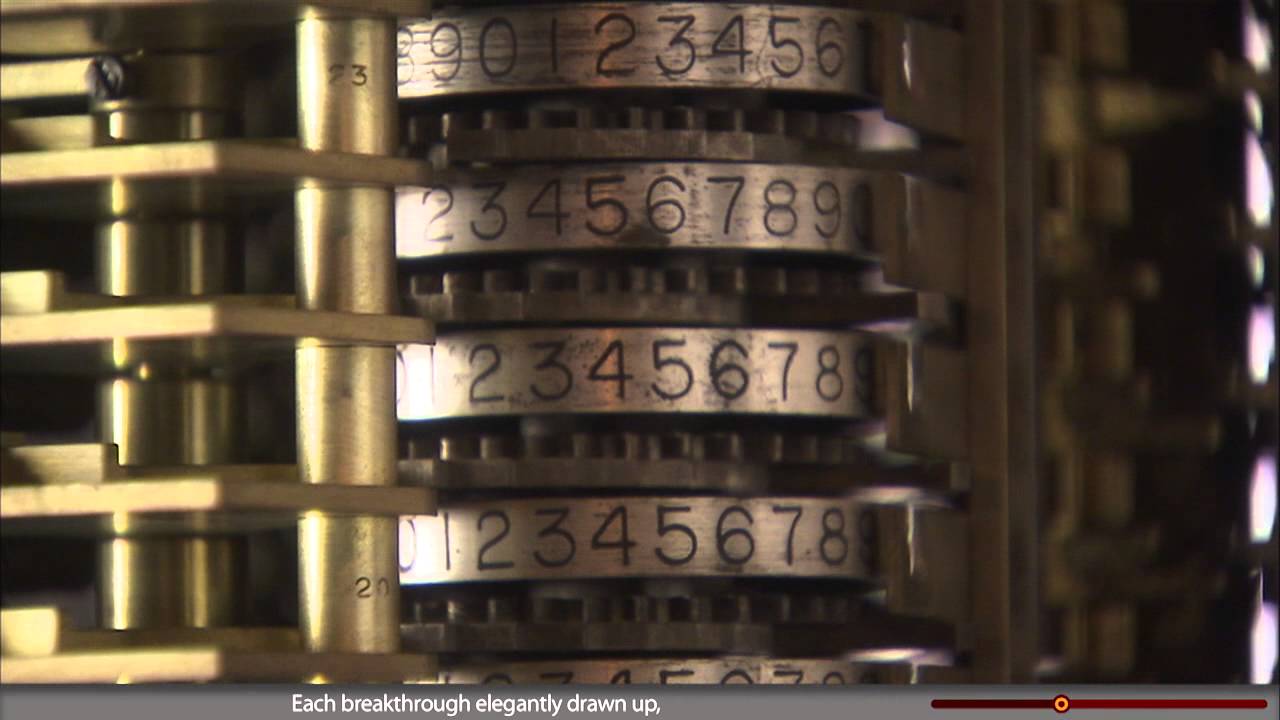
the engine um standing on display in South Kensington and that's an elevation of the engine you can see it's huge similarity to the well similarity it should be identical to the drawing because it was built of those designs okay numbers are stored in figure Wheels they're 10 decades n to9 uh four times over to get the wheel about 5 in across there 230 odd wheels In the in the machine um that they are in columns so you've got units units at the bottom tens hundreds thousands so 30 digigit number is represented there with one wheel
for each digit and what the machine does um that's the back of the engine um what the machine does is add the seventh difference so it adds a 30 digigit number 31 digigit number in that column to that column to that column until the Tabular value appears here it's automatically transferred to the printer and prints the results automatically with no overhead the printing happens in parallel with the computation um if it just added this number to this number and then this number number to that number only two columns out of eight columns would been used
at any one time and babish thought it was pretty inefficient so he what's called pipelining he adds all the odd axes he Splits the cycle in two adds all the odd axes that's Axis 13579 or 1357 to all the even axes in the first half cycle all the evens to the odds in the second half cycle and in that way the machine is used fully which means you can extend this indefinitely to 152 orders of difference without increasing the calculator cycle in time so this was pretty sophisticated stuff right at the end there I said
there was a printer which does Um jump ahead again okay that's an example of the most intricate part which is a carry arm uh that's a carry lever bronze and you can see how much information you need that's a modern PE part drawing with a piece on it and there um over 200 of those in the machine and you can see um the kind of manufacturing uh issues involved here that's the most intricate most delicate part um and so you had to take those schematic drawings and make 8,000 of these in order to give it
to a machine shop to to manufacture okay we spoke about the printer which is this apparatus over here and that's the printer built now it's programmable um it's program you can alter the format of the information on the page so you can change the number of columns one anything from 1 to four change youve got variable line height variable margin widths it will leave blanks between groups of lines for ease Of reading um it will print in two font simultaneously and alter the line height automatically and um if you can you can print um Line
to Line okay that's printing column to column so it's going column to column did and then automatically line wraps or you can program it to print column to column uh sorry Line to Line down the page and it'll automatically column wrap and it does that automatically the the the printer then halts the machine at The end of thing um each piece of information every time the machine calculates the next result it destroys the previous one so if the machine overruns and you haven't printed the result you've got to start the calculation all over so it's
imperative that the machine halts automatically at the end of the say so you can replenish the trays for a new page and it does this automatically that's built into the print And I'll show you the the notation about how that is done and that is an experimental um impression of a stereotype plate done from this machine um in uh plaster Paris so we've actually did some experiments see does this thing actually work and that's what we get out of it um that's a plan view of the printer you can see the um that's the large
font that's a small font and so these are rods operating from the same print Wheels which actually allow you to produce a smaller font I that's the reason I'm showing you this is to look at this table on the side here now babich invented a language okay we have systems of unprecedented complexity here um nothing had been designed this of this scale at that time and um he developed what we would Now call a hardware description language to actually not only optimize the design but to specify the design so he could See redundancies automatically and
he could actually specify the machine using a language idiosyncratic language that he devised called his mechanical notation it's a a system of of of signs that allow you to specify every part the category of part its motion whether continuous whether discontinuous whether circular with linear um what other parts any given part is connected to whether it's driving point or driven point and so on so I developed this notation and That's an example there's a tabular form there's three forms of the notation that's the tabular form so you use three different alphabets and up to six
superscripts around every single part to indicate these various features of it the kinds of motion and so on um that is a timing diagram from Difference Engine 2 and for those into such things the diagonal symmetry here is the pipelining there thing here that's the odds and evens access even differences Odd differences and um each of those symbols actually mean something so this means lift the secta that little arrow with a double head means lift the sector atus 34 of an inch this then means the circular thing there means a rotational motion that little line
means it's additive it's additive Direction it's a positive direction so this thing says then lift the sector for . 34° 34 in rotate it for for um 8 units from 2 to 10 units of time and that will return it To the rest position which is significance of the double-headed Arrow um f means it's free l means it's locked so that is a complete description over there that means that you will have an event which is only one unit in duration but it will occur somewhere in that window so you can see here's an example
of how he's trying to capture in abstract form in symbolic form the physical motions uh of the mechanical logic um that is the flow diagram form So you've got a tabular form you've got a timing diagram which shows the phasing of the orchestrated movements and then you've got what he calls the trains which is the influence of one part of the machine onto onto another and you can see the separation of um that's that's data and that's control that's the data from the calculating part 31 digits that's the control mechan which operates the printer um
so this so what we're trying To do quite in rather Revolution way see where you can simulate the machine using the hardware description language um to inform the simulator to actually drive the simulation and that's a research project that we're kind of currently running that's a closeup of the a detail of the last picture I showed you and there you can see this stops the engine I mentioned that the printing apparatus when it got to the end of the page would automatically halt the machine and here You can see this stops the engine that's when
the page gets the when the when the thing gets the end of its line end of its column if it's doing Line to Line and so on so um and that's the full device it's 4,000 parts so that one single flow diagram actually is an abstract formal form formalization of a 4,000 part apparatus I'm now going to show you two videos we've done the hard work's done um um I'm going to show you a video of how um Bab's locking security systems work okay you've got a figure wheel you've got a lock a lock is
a thing with a wed shaped thing you can see it here there's a little wedge that little Shadow is the wedge so this lock is like a sword blade which runs on the entire column that wedge goes between the teeth and the wedge has three functions firstly there's a small derangement you get this is what I call Pulse shaping you get automatic error correction so if It's deranged slightly it will automatically Center because the entry of the wedge during periods of the cycle where that thing should not be moved because it shouldn't move because it
might be deranged because it might be influenced by something else but shouldn't be it locks it and holds the lock in and that the device can't move and finally if a wheel drifts through 2 and a/4 de as the lock comes in it will hit a tooth end on and Jam now jamming is not as catastrophic as it might appear jamming is a form of error detection if the machine jams it's indicating that there's a wheel in an indeterminate position it's no longer digital the Integrity of the calculation has been compromised and the Machine must
Jam in order to alert the operator that the results are unreliable so that's what the lock does and we can now watch it operate um okay these are operating on racks Horizontal racks not figure wheels and you can see as it enters if you just watch there what very carefully as it goes in it it automatically readjusts everything so that it's aligned as it goes in boom there's a small deviation I don't know if you can spot it right it's self correcting now that operates all the way to it's correcting all the time now they're
locks throughout the Engine okay so that's one example of how the Lo that's on racks it's easier to use most of them are on figure whe columns so they inside you can't see them that one's done because it's quite exposed it's part of the those are the horizontal racks which communicate from the tabular value to the printer okay I'm going to run the engine for you now this takes about just over a minute um it's unfortunately the quality isn't massively good um because was actually Transferred pre video days actually okay that's Richard Horton Science Museum
engineer now that slapping sound is the locks coming in every one of those columns has a lock what you can see there is the is the P roller going up and taking an Inked impression of the result there every cyle of the machine it prodes six results every minute sorry 10 results every minute one every 6 seconds that weight drops and advances The paper tray automatically The Matrix tray for the SC okay this is the cam step this is the micr program this orchestrates the internal functions that's 28 cams 14 conjugate cams each has a
geometric inversion of itself with Cam follow so you can see a cam follower that's operating the locks you can hear that slapping sound synchronized for that the timing cycle is terribly terribly tight just hands back so you can Reorient now you can see the shifting motion here is that pipelining I mentioned you'll see it again now you see all the odds move together all the even so 1 35 moves and then the evens move together I mean who cares whether it works okay this is just pure ballet this a mechanical ballet that's the successive carry
mechanism working it's polling Each decade in turn to find it it's a carry which needs to be Propagated heic but double DNA DNA right okay what can we conclude from this how practical what kind of proposition is it so very very briefly there are several challenges one is the knowledge Gap three people studied these the archive bab's archive consists of 1,000 notation 7,000 sheets of manuscript only three people have ever studied this and not completely and that's Bruce col An American did a Harvard PhD in 1970 wrote a beautiful thesis on the evolution of bab's
ideas Professor samaris wils who in 1969 1974 1971 the benter one of the B ceries he did a modern evaluation the first evaluation in the modern era of babage as a computer Pioneer and finally Alan Bromley who's the person who really cracked these designs in huge detail who's produced some masterful papers and all none of those three are alive Bromley died in 2002 he published only three papers which are kind of survey papers so one if there's a knowledge Gap we're going to have to recover a lot of knowledge that was lost by these three
people so one of the things we want to build in is succession planning so we want a bunch bunch of post docks in there so that if this thing's going to take 170 years we're going to need some continuity um um so one is the knowledge Gap there two forms of knowledge one is The Lost knowledge that people have already had the other thing is the knowledge Gap in the sense that there is no complete drawing well behind the starting line with Difference Engine two we had 20 complete sets of drawings as a starting point
you got three different versions of the machine incompletely specified there are some elements of one version specified in great detail and elements of another detail which are missing completely it is not entirely Clear how the control mechanisms to integrate the high level control from Punch Cards with the micro program internally how do you program the thing for multiple processing it's not evident that babage actually worked this out in any huge detail um so there's a knowledge Gap we behind the starting line there um the um so those sort of things darken our prospects what brightens
our prospects What brightens our prospects is the fact that we started the Difference Engine 2 project in 1985 we finished the first engine um in 2002 and then we built a duplicate a multiple original for Nathan mval in for his private collection in California that's the one that's now currently on Exhibition at the Computer History Museum in California um we used conventional pen and paper Design for all the parts the 168 drawings are drawn by hand um using a conventional draftsman um that was that was a huge overhead in resources uh in physical time and
in resources what the biggest single thing which will collapse 170 years to what I estimate will be substantially less is we're going to simulate the machine before we even build it and I would suggest that we can actually solve almost all certainly issues of logical feasibility Completeness um all except the final engineering issues done at stage of simulation also if the simulation front end is chosen judiciously as a front end to a cat cam system manufacturing then ceases to be the huge burden it was when we had to do do things um uh by hand
fettling and so on so um the uh so if we put all this in a kind of predictive mix and mix together the classic and traditional engineering fudge factors um guess workor divination Astrological prediction um I reckon on 15 to 20 years to construct and between 20 and $40 million and so I would put the question mark ad Mission Impossible thanks very much I'll so when you bu how many um there are two categories of you talking about deficiencies in the drawings or actually trying to debug the Thing in real life no I'm talking about
the the plant um they two talk about other um the plans provide a complete logical description of what the machines intended to do and what the parts shape of the parts were what it does not contain is methods of manufacturer which you couldn't do choice of materials finish and tolerancing because tolerancing didn't exist in those days They were no interchangeable parts you couldn't say make a part to in a tolerance we had to provide all that for modern manufacturing so that information is missing but in ter of bugs we found astonishingly no fundamental logical errors
that compromise the fundamental function of the machine there were huge number of things thousands of things we had to do to make it work but none of them were logical things there's only one device we actually had to Redesign and that was not a logical device it was a sliding clutch in the print mechanism where you had um a drive mechanism that was sliding in a slot on a shaft and had to turn at the same time and the load the torque on that path made it such that it couldn't slide so we redesigned that
b in the same space that's the most extreme um redesign we had to do not a logical thing a practical thing about um just a p engineering thing there were a huge Number of modifications we had to do for instance when you turn you saw that um U cam follower with that slapping sound hitting that steep rise you couldn't turn the handle to get the cam follow past that rise so wherever there were modifications to be made we looked elsewhere for Solutions babage had used and babage had used a counterbalancing spring those axes actually aren't
displaced up and down they Bob around a neutral position are just displaced Because they counterbalance from on top so you don't actually carry the load of turning that handle to lift that ton ton of a all those axes so we used the same technique slotted it underneath and lo and behold so there's an example of a modification which I would says inessential in logical terms we found in short there was nothing that compromised the logical validity of this machine that we but there were thousands of engineering instances we strengthened Framing um we had to increase
tolerances to make clearances where there were no clearances uh we had to resolve issues in the there's one terrible error in the drawings which is so basic it's incomprehensible that it was that might not have been deliberate and that is the fundamental carry mechanism doesn't work as drawn but a mirror image of it does um because the direction of rotation is wrong and this speculation whether this was to prevent industrial Espionage or Or the draftsman got it wrong but but their example Mirror Image the fundamental workings of the thing there were precautionary modifications there were
remedial modifications precaution modification of things we anticipated we didn't think that the weight of the printer was well supported on the frame so we built bigger brackets that's a remediable that's that was a remediable one there were um there were um precautionary ones um where we thought That there was one tooth on on an impact gear that would come under particular stress and so we used a slightly higher grade of Steel only part in the whole machine we used a slightly higher grade of Steel than babage himself would have had available but for the rest
the bronze the cartin and the Steels we did composition analysis on these things to match the the metals as precisely as we could and we built the machine no more precisely than we know from measurement From Difference Engine one babage himself could have achieved then that was the idea we had to resist the charge says you built it but babage could not have otherwise we would have Vindicated nothing if we' actually used mod techniques we didn't use period manufactur Ing we used CAD cam system we used computer a manufacturer um um but always with intolerances
preferably sloppier than than actually B so in short there were huge numbers of disc Like for instance the same part represented inconsistently on two views of the same so the same part be Dimension differently between the drawings well you can't build it as babage designed with a problem like that there are omissions there Omission there are omitted uh mechanisms the printing mechanism has print wheels and and inking rollers with no visible means of sport they just sit there either it was incomplete or we thought it so trivial Derive the drive from somewhere else so that's
what we did but always looking for solutions that bab would used elsewhere so in short no fundamental logical difficulties huge numbers of engineering issues the S you mentioned analytical engine isn't really completely described probably more so than differ Eng so do you think it actually works the way it's supposed to do do you think that something like that would Um I'll tell you why there's cause for optimism MH the printing mechanism that I showed you is designed for the analytical engine and the Difference Engine it's a dual design because that's the most sophisticated 1846 he
stopped the analytical engine came back to it later with some refin this 1846 he's designed Difference Engine 2 between 1847 and 1849 immediately after this so this was he's fresh from the analytical engine he wants a printer for the Analytical engine he designs a dual purpose one so we built a piece we buil 4,000 Parts the engine and it's spectacular it works as exactly as intended so I think the incompleteness is um are things that are resolvable by immersing oneself in the design style and the thinking but the are the incom competences are substantial the
list of features that you mentioned I mean it's not unlike you know the first computer that We actually yes yes nothing new yes yes so you know we have reasons for confidence you know that when until we built the engine there was an historical question mark over babage babage this guy designed these huge vast mechanical engines but he never built them and the big question was with the circumstances surrounding the collapse of his own attempt to do so did that conceal the logical or technical impossibility of The machines so question mark has always hung over
his head and senses was this an impractical dreamer or or a genius designer and the fact that his engine works as he intended it to work we used parts with no greater Precision than was achievable in his day sort of pretty well vindicates the fact that we're talking about some you know Vision ver verging on genius here talk about somebody who was not just a Visionary but somebody who actually was a designer Of extraordinary caliber so those are reasons for optimism in the video U we see gentleman cranking that the handle and the machine working
it doesn't seem to be putting in any extraordin effort so it seems like the machine is welld designed for the kind of energy load that that could be produced in that supplied in that manner I'm wondering uh whether there was any doubt about whether that would turn out that way there were concerns either Because of the weight of all the parts that had to move or because of um well you mentioned one friction issue having to do with the cams were there any other uh questions relating to friction from having so many parts being moved
by just one handle um I'm I'm tracking back to the that elevation but when Engineers first looked at this drawing and we were ped by this they said you couldn't possibly turn the handle because of the cumul of Friction because the understanding was that each of these columns who drive the column alongside and here's an example of of sorry this is a digression you can see there that the gap between that column and that column is bigger than all the others now question is that significant it's an error in the drawing the drafts when started
on Monday at this end started on Thursday at this end and came found there was a g to the hell with this I'm leaving it we pondered Long and hard when there was some deep significance to that alteration of pitch but there's an example of of something that had to be resolved you know of of gaps in the drawing um the question of um right when Engineers first looked at this they said you couldn't possibly turn the handle and of course you know us babage Advocates thought you know our genius hero could not have made
an error so fundamental um um you are lifting a huge amount of Weight there um and what we did as a precautionary measure in deference to the people who doubted that the handle could be turned we put a 4 to1 reduction gear in there so it's four line is easier to turn the machine and runs four times faster you have to turn it four times faster to make it go as bab intended um so I I'll run on to the I'll show you the okay if we just look at this drawing the handle comes straight
out of the main shaft there y there's The main drive shaft goes by a bunch of B gears down the can state but it's on a line with that shaft if we go back to the um elevation of the machine you can see the handle actually doesn't come out oops the handle doesn't come out of the main sha the handle comes down below and that's a precautionary modification to include the 41 reduction gear um it's not necessary but we've never taken it away we're so happy when it works we don't touch it um so we've
Never actually we've always run it that way but everything is reversible you just pull a pin out and you can put the handle back with B intend um so um the question of isan friction the machine is well run in and as you correctly observed it's quite easy to turn you can turn it with one hand but at three or four points in the cycle there's a shot load when that steep rise on the cam for the locks comes in you suddenly get a shock load so there's a trick there's a Technique for running the
engine evenly and that is not to go faster when it's easy but actually to put some Force into and to do it very uniformly and strongly so that you you drive it through the shock loads um in at at an even Pace otherwise it tends to jam um so as far as friction goes there was a catastrophic piece of frictional difficulty that took us over a year to solve and it delayed the completion of the printer by a year and that is that Um the uh if this time no um I've got a I've got
a simulation that will demonstrate e these are vertical um these are vertical ranks so there's a gear wheel sitting on the last column which turns this way you have to transfer that motion to a print wheel going this way it's done through a series of spindles and vertical racks so vertical rack is a thin slice of of of a slat with gears on it which is turned by spindle on top and operates the wheel The figure wheel at the bottom because those are so thin and they have to fit within the pitch of the printing
mechanism so they have to all fit within the width of one column that has to fit within the width of one column 30 of those we thought that because they so thin we'd help them by letting them butt onto each other and slide against each other so they reinforce each other that cost us a year that decision because the um sliding friction was so great there Was a back pressure which started distorting and affecting the timing of the rest of the machine we didn't understand that we started solving the problems that were consequential on this
decision so we used all kinds of things we put an electric motor on to wear them in and ran them for 36 hours to try and wear the wear the um the uh vertical racks in we then used um stopped using we used um conventional oils catastrophic surface tension meant they Actually stuck together we dried them all out we used graph on it and eventually we said take these out and reduce the bearing surfaces by by Machining scalloping out pieces to ruse the very and thin the whole lot completely so the actual thing and you
can actually see air with that they're quite strong enough and that solved the problem but that was the only frictional problem it's not inherent to bages design it's because we chose he Doesn't specify tolerances and so we as a precautionary measure said we'll reinforce these slats by butting them onto each other and that was catastrophic it masked um a huge number of it pled a huge number of problems and and and the problems of which masked the actual cause um but that's the only frictional issue that there was all right surrender [Applause]