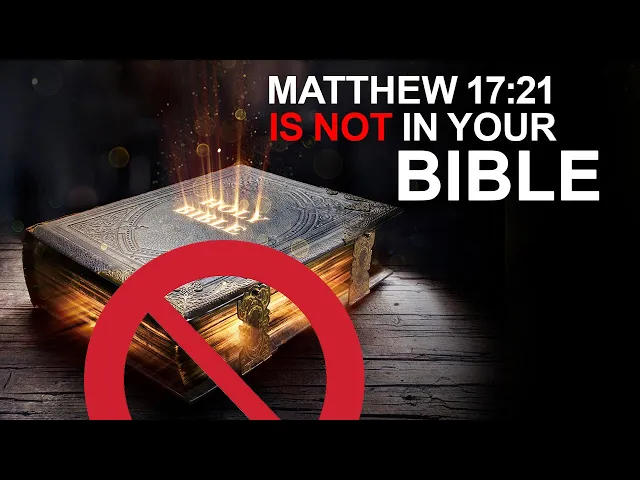
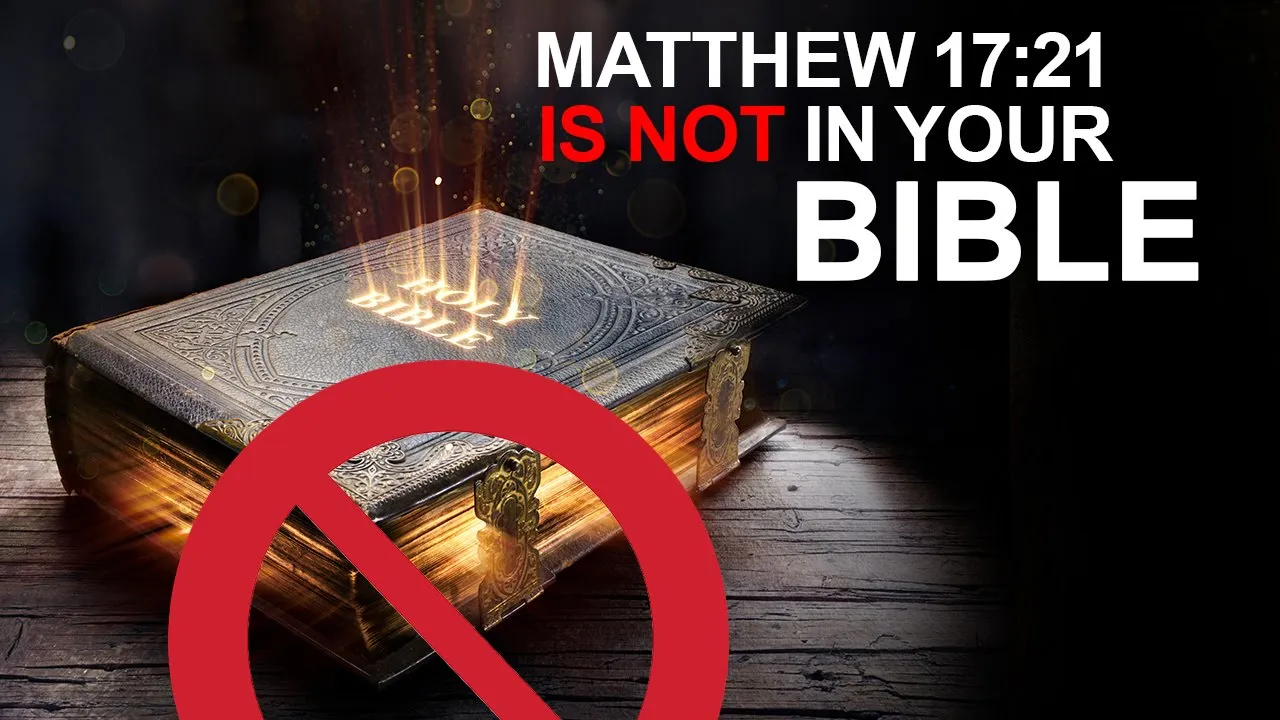
three Bible verses missing from over 500 million Bibles number one why Matthew 17: 21 is missing from most Bibles what if I told you that over 500 million Bibles that exist today are missing a particular verse how is that possible did this take place on purpose the Bible is a history book but it is unlike any other history book available in any public Public Library the Bible's history starts with the Earth's creation and ends with the end of the world no other history book has ever been published that covers such a broad range of events
on planet Earth partially because no one was present at the start to witness and document it and therefore no one can write the beginning of our world authoritatively have you ever been reading the Bible and felt like something was missing well what if I told you that one verse Matthew 17: 21 just isn't in many modern Bibles that's right an entire verse what's going on here let's start by reading Matthew 17 verse 21 from the King James version how be it this kind goeth not out but by prayer and fasting it's a verse that reminds
us of the power of spiritual discipline prayer and and fasting together but if you open most newer translations like the NIV or the ESV this verse is nowhere to be found instead you might see a footnote and that footnote says something like some manuscripts do not include this verse and that's when the questions start flying what manuscripts why would some Bibles leave it out while others keep it and does this mean we can't can't trust the Bible this is where things get really interesting to understand what's happening we have to look back in time way
back the Bible didn't just fall from the sky in one piece it was copied by hand for centuries and the New Testament it's based on thousands of ancient manuscripts but here's the twist not all those manuscripts are exactly the same some are older some are more complex and yes some include this verse While others don't now Scholars call these differences textual variants most of the time these variants are tiny like a missing letter or a swapped word but sometimes entire verses are in one manuscript but missing from another let's zoom in on the 1500s the
King James version one of the most beloved translations was based on a handful of Greek manuscripts collectively called the textus receptus these manuscripts included Matthew 17: 21 but fast forward to the 1800s when Scholars discovered older manuscripts like the Codex sinaiticus and codex vaticanus these ancient texts dating back to the 4th Century didn't include the verse now the question becomes which is more reliable the manuscripts that included the verse or the ones that didn't and here's where it gets messy some believe the verse was added later to emphasize the importance of fasting others argue it
was accidentally left out in the older manuscripts the stakes are high because this verse directly impacts how we approach spiritual warfare it is also a serious topic because it covers Jesus's own Direction fasting correctly is a concept deeply rooted in spiritual discipline and who better to learn from than Jesus himself Jesus viewed fasting not just as a religious duty but as something much deeper and more meaningful this particular verse was in response to a situation where the disciples couldn't drive out a demon from a boy this statement from Jesus gives us a huge insight into
the significance of fasting combined with prayer the the disciples were unable to cast out a demon which was a bit of a shock for them since they had been given the authority to perform such Miracles when they asked Jesus why they couldn't drive it out he pointed out their lack of faith and then mentioned fasting as a powerful tool this indicates that some spiritual battles require not just faith and prayer but the added strength that comes from fasting well the verse that is missing in many bibles suggest suggests that fasting can bring a deeper spiritual
Clarity and connection with God it's like when you fast you're tuning out the noise of the world and tuning into God's frequency have you ever felt cluttered by all the distractions around you fasting can be a way to clear out that clutter it can be a form of spiritual warfare think about what Matthew 17: 211 is saying how be it this kind goeth not out but by prayer and fasting Jesus is talking about driving out demons about facing the spiritual battles in life now imagine you're a believer in the early church copying these texts by
hand maybe the verse didn't seem necessary because prayer and fasting were already a part of everyday life or maybe just maybe someone thought it was too difficult to practice and decided to leave it out wouldn't you be curious to know if that's true and this is not the only verse that has this particular issue verses like Matthew 18:1 Mark 7: 16 Mark 9: 44 and 46 Mark 16:9-20 John 5: 4 acts 8: 37 Acts 15:3 4 and acts 24: 7 let me show you an example John 5: 4 in the KJV reads for an angel
of the Lord went down at certain times into the pool and stirred up the water whoever stepped in first was made well of whatever disease he had but in the NIV it jumps straight from verse three to verse 5 before you panic let me assure you this isn't some conspiracy to rewrite the Bible instead it's part of an incredible effort to uncover what the biblical writers originally wrote over the course of 1,500 years as the Bible was copied and recopied some scribes made notes in the margins these notes Were Meant to explain confusing passages or
provide extra details modern Scholars using the most ancient manuscripts available believe these vers verses were not part of the original Bible That's why newer translations either omit them or place them in footnotes but wait doesn't this mean the Bible has been tampered with shouldn't we be worried about the reliability of scripture not at all in fact this shows us just how much care has gone into preserving God's word textual critics people who study ancient manuscripts use science and history to ensure we're reading what was originally written and here's the amazing part even with these missing
verses the core message of the Bible hasn't changed the doctrines of salvation the resurrection of Jesus and God's love for us remain perfectly intact by placing these verses in footnotes or brackets modern translations are being honest about what's in the oldest manuscripts they're not hiding anything they're helping us understand the truth the Bible is more than just a book it's God's message of love and Redemption another example is John 7:53 the story of the woman caught in adultery is found in John 7:8 this part of the Bible sometimes called the paropy adultera has caused a
lot of debate over the years the big question is whether it's authentic did the Apostle John actually write John 7 or was this story about the woman forgiven by Jesus added later and not inspired by God the textus receptus includes this passage and most Greek texts do too that's why the King James version of the Bible based on the texus receptus includes it as part of the original Gospel of John but newer Bible translations like the NIV and the ESV still include the story but put brackets around it showing they don't think it was part
of the original text this is because the oldest and what many believe to be the most trustworthy Greek manuscripts do not have this story about the woman caught in adultery when you look at the Greek manuscripts it's pretty clear that the story wasn't originally part of John's gospel even in the manuscripts that include the story either in full or in part there are differences in where it is placed I remember talking to a friend who discovered this verse was missing in their Bible they were heartbroken they asked me does this mean my Bible is incom
complete but before you panic let's put this into perspective the heart of the Bible's message hasn't changed whether Matthew 17: 21 is there or not the call to prayer and fasting is echoed throughout scripture Jesus himself fasted in the wilderness the apostles prayed fervently the Bible consistently teaches these practices so don't let this shake your faith instead let it deepen your hunger for God's word the Bible is critically important for Christian faith as it serves as the source of information about God who he is and what he has done for us additionally it reveals insights
into Humanity including our character history and spiritual needs first furthermore the Bible outlines God's Plan of Salvation offering forgiveness and renewal for Humanity in its sinful state it also delineates God's standards of right and wrong and communicates his will for his Creations as Christian faith is rooted in Hope for the future the Bible is indispensable in guiding our path into eternity the significance of the Bible and its Revelations cannot be overstated the Bible is a unique and unparalleled book that stands alone it was written by about 40 human authors over a period of 1,500 years
starting with Moses in the 15th century BC the Bible was written in two major languages Hebrew and Greek with a few portions of the Old Testament in Aramaic the diverse group of authors came from various walks of life including Moses Joshua and renowned prophets such as Samuel Isaiah Jeremiah and Ezekiel this makes the Bible a truly exceptional and unparalleled work the authors of the Bible came from diverse backgrounds for example there were authors like David who started as a Shepherd but later became the king of Israel as a King David wrote many of the Psalms
providing a rich poetic background for biblical truths other writers were farmers Warriors or fishermen despite their differing backgrounds they all contributed to the Bible the Bible itself is unique it contains a wide range of content including moral and political laws history poetry prophecy and letters yet it maintains continuity from Genesis to Revelation in Christian faith the unity of the Bible amid its diversity is attributed to the work of the Holy Spirit rather than to human authors the difficulty of producing a book like the Bible is evident when considering that it was written by 40 different
authors over a span of 1,500 years even with access to all the world's literature it would be impossible to create a second Bible identical to the original the Bible is seen as a supernatural production distinct from other works and presents a consistent portrayal of God and the world while some of the writers may have had access to other man manuscripts containing historical information the Bible is not simply a copy of those books instead the authors selected and included what they believe to be true resulting in a fresh unique and authoritative account of God's truth the
Bible is a supernatural book it would be impossible to explain the origin of the Bible by any other means than to note that it claims to be a supernatural book Guided by the Holy Spirit and supports its claim by the facts presented the Bible's contents indicate that it is of Supernatural origin because it contains Revelations Beyond human knowledge it also provides God's perspective on human activity and history which could only be known through divine revelation the Bible is not only Supernatural in its origin but also in its truth it deals with subjects such as salvation
forgiveness righteous spiritual restoration and Hope For Eternity the scope of the Revelation extends from eternity past to Eternity future which obviously requires divine revelation why Matthew 18 verse 11 is now missing from millions of Bibles in the King James version Matthew 18:1 says for the son of man is come to save that which was lost a powerful statement right this verse shows the tremendous spiritual mission of Jesus it is known as the verse of the Lost in the Bible and in Christian teaching being lost refers to people who don't have eternal life through Jesus one
line in the well-known hymn Amazing Grace says I once was lost but now am found was blind but now I see we've probably sung it many times without think thinking about what lost really means being spiritually lost means being separated from God and unable to find our way back to him that is why this verse is so critical to be lost is to wander away and not know how to get back think about a hiker who takes a wrong turn on a trail and can't find his way or a child who Strays too far from
their parents and doesn't know where to go in the same way we are spiritually lost because we've moved away from God and can't find him on our own some people try to find God through religion this verse shows that Christianity is different it teaches that we can't find God by ourselves so God sent Jesus to find us God did for us what we couldn't do for ourselves even when we don't know we're lost God knows that's why Jesus left heaven to come find us and bring us back to God this verse lets us know that
every person is either lost or found there's no middle ground in this particular Story the disciples asked Jesus who then is the greatest in the Kingdom of Heaven Jesus brings a child over and said assuredly I say to you unless you are converted and become as Little Children You Will by no means enter the Kingdom of Heaven therefore whoever humbles himself as this little child is the greatest in the Kingdom of Heaven he then States his true Mission several times in Jesus's life he showed that he was a man on a mission he had a
purpose and he followed it on purpose why is it missing let's start at the very beginning when Matthew picked up his pen to write his gospel there were no chapters no verses picture him in a simple room maybe lit by a single oil lamp he's not working on a book with chapters and verses like we have today nope he's writing one continuous account of Jesus's life and teachings carefully crafting his words as the Holy Spirit guides him his goal to preserve the story of Jesus for generations to come and it worked but here's where things
get interesting chapters weren't added until the 13th century more than a thousand years after Matthew wrote his gospel a man named Steven lton who was an Archbishop of Canterbury thought dividing the Bible into chapters would make it easier to reference Lon made the chapter divisions in the Bible around ad. 1227 the Whitecliff English Bible of 1382 was the first Bible to use these divisions since then almost every Bible translation has used the chapters that lankton created a Jewish rabbi named Nathan divided the Hebrew Old Testament into verses in ad 1448 later Robert Esten also called
stephanus was the first person to number the verses in the New Testament in 1555 for the Old Testament stephanus mostly followed Nathan's verse divisions from that time on starting with the Geneva Bible nearly all Bibles have used step 's chapter and verse numbers but here's the catch while chapters and verses are super helpful for finding your way around the Bible they weren't part of the original text so any errors or additions that crept in over the centuries were essentially locked into the chapter and verse structure later on here's where it gets fascinating some scholars believe
Matthew chapter 18:1 may have been added by a scribe who wanted to emphasize Jesus's mission to save the Lost others argue it was always there and simply omitted from certain manuscripts who's right the earliest Greek manuscripts of Matthew the ones closest to when the gospel was originally written don't include verse 11 but later manuscripts like those used to compile the King James version do this raises an intriguing question what did Matthew originally write let's break it down the King James version first published in 1611 relied on a collection of manuscripts known as the textus receptus
these manuscripts while valuable were compiled from later copies of the new testan by contrast modern translations like the NIV and ESV often rely on older more reliable manuscripts ones that don't include Matthew 18:1 some of these older manuscripts like codex vaticanus and codex sinaiticus date back to the 4th Century they're some of the most reliable sources we have for the New Testament and they leave Matthew 18:1 out entirely now before you start thinking wait does this mean my Bible is wrong take a breath the truth is whether Matthew 18:1 was part of the original text
or not but its message is still 100% biblical let me show you why in Luke chap 19 a tax collector had a lifechanging meeting with Jesus he was one of the top tax collectors in Jericho and the Bible tells us he was very rich Tax Collectors like him were hated by their people for two reasons first they were known for cheating people out of their money and second they worked for the Roman government to other Jews Tax Collectors were seen as traitors because they helped their enemies the tax collector wanted to see Jesus when he
came to town he figured out where Jesus would walk so he ran ahead and climbed a sycamore tree to get a better view this is interesting it was like a fan trying hard to catch a glimpse of a famous movie star even though they know the star won't notice them but then something amazing happened when Jesus reached the tree he stopped looked up and said zakus come down immediately I must stay at your house today but the crowd was upset they couldn't believe that Jesus would want to visit a tax collector they saw him as
a bad person a sinner zakus was so moved by what happened that he stood up and told Jesus look Lord here and now I give half of my possessions to the poor and if I have cheated anybody out of anything I will pay back four times the amount Jesus was pleased and said today salvation has come to this house because this man too is a son of Abraham then Jesus spoke to the people who were upset saying for the son of man came to seek and to save the Lost sound familiar it's almost identical to
Matthew 18:1 so even if this verse wasn't part of Matthew's original gospel the message is consistent with Jesus's teachings but this raises a big question if Matthew 18:1 isn't in all translations can we trust the Bible is it still the word of God let's pause for a moment because this is where doubt can creep in let me assure you this isn't some conspiracy to rewrite the Bible instead it's part of an incredible effort to uncover what the biblical writers originally wrote over the course of 1,500 years as the Bible was copied and recopied some scribes
made notes in the margins these notes Were Meant to explain confusing passages or provide extra details modern Scholars using the most ancient manuscripts available believe these verses were not part of the original Bible That's why newer translations either omit them or place them in footnotes but wait doesn't this mean the Bible has been tampered with shouldn't we be worried about the reliability of scripture not at all in fact this shows us just how much care has gone into preserving God's word textual critics people who study ancient manuscripts use science and history to ensure we're reading
what was originally written and here's the amazing part even with these missing verses the core message of the Bible hasn't changed the doctrines of salvation the resurrection of Jesus and God's love for us remain perfectly intact by placing these verses in footnotes or brackets modern translations are being honest about what's in the oldest manuscripts they're not hiding anything they're helping us understand the truth instead let it deepen your hunger for God's word the Bible is critically important for Christian faith as it serves as the source of information about God who he is and what he
has done for us additionally it reveals insights into Humanity including our character history and spiritual needs furthermore the Bible outlines God's Plan of Salvation offering forgiveness and renewal for Humanity in its sinful state it also delineates God's standards of right and wrong and communicates his will for his Creations as Christian faith is rooted in Hope for the future the Bible is indispensable in guiding our path into eternity the significance of the Bible and its Revelations cannot be overstated the Bible is a unique and unparalleled book that stands alone it was written by about 40 human
authors over a period of 1,500 years starting with Moses in the 15th century BC the Bible was written in two major languages Hebrew and Greek with a few portions of the Old Testament in Aramaic the diverse group of authors came from various walks of life including Moses Joshua and renowned prophets such as Samuel Isaiah Jeremiah and Ezekiel this makes the Bible a truly exceptional and unparalleled work the authors of the Bible came from diverse backgrounds for example there were authors like David who started as a Shepherd but later became the king of Israel other writers
were farmers Warriors or fishermen despite their differing backgrounds they all contributed to the Bible the Bible itself is unique it contains a wide range of content including moral and political IC laws history poetry prophecy and letters yet it maintains continuity from Genesis to Revelation in Christian faith the unity of the Bible amid its diversity is attributed to the work of the Holy Spirit rather than to human authors the difficulty of producing a book like the Bible is evident when considering that it was written by 40 different authors over a span of years even with access
to all the world's literature it would be impossible to create a second Bible identical to the original the Bible is seen as a supernatural production distinct from other works and presents a consistent portrayal of God and the world while some of the writers may have had access to other manuscripts containing historical information the Bible is not simply a copy of those books instead the authors selected and included what they believe to be true resulting in a fresh unique and authoritative account of God's truth the Bible's contents indicate that it is of Supernatural origin because it
contains Revelations Beyond human knowledge it also provides God's perspective on human activity and history which could only be known through divine revelation the Bible is not only Supernatural in its origin but also in its truth it deals with subjects such as salvation forgiveness righteousness spiritual restoration and Hope For Eternity the scope of the Revelation extends from eternity past to Eternity future which obviously requires divine revelation depending on how one distinguishes A different Bible version from a revision of an existing Bible version there are as many as 50 different English versions of the Bible there are
two primary reasons for the existence of different versions of the English Bible the first reason is that over time the English language evolves necessitating updates to the English versions of the Bible God has given us a library of 66 books therefore it is no surprise that many people come to the Bible wondering if it is still the true words written centuries ago the Dead Sea Scrolls show this to be true we need to trust God's word especially during these times as these are the last days the Bible is a book full of predictions its Pages
contain 735 predictions about the future a prediction can be found in one quarter of the Bible's chapters from beginning to end it is basically a prophetic text though some books focus more on predictions than others 596 of the 735 predictions have indeed occurred and have literally come true according to the scripture prediction so a 81% of all Bible prophecies have already come true and some of those prophecies were made centuries before the case it doesn't take much confidence to believe that the remaining 19% will happen as well that's a very high score the Bible has
proved 100% right for every prediction that could have been fulfilled by now of the rest most of them are concerned with the actual return of Jesus and what follows after that the Bible is critically important for Christian faith as it serves as the source of information about God who he is and what he has done for us additionally it reveals insights into Humanity including our character history and spiritual needs furthermore the Bible outlines God's Plan of Salvation offering forgiveness and renewal for Humanity in its sinful State the Bible makes some bold assertions about itself although
some individuals may believe they have the freedom to choose which parts of the Bible they consider accurate the book itself does not provide such an option it proclaims that it is the inspired word of God that it is truthful and that it serves as a manual for our lives the Bible has endured countless attempts by Kings dictators and entire societies to abolish it yet it continues to be the bestselling book of all time its words provide a hope that cannot be found in any other religious text and have transformed the lives of millions many other
religions have followers who are loyal to their beliefs but often their loyalty is based on fear intimidation or their own efforts the Bible on the other hand offers something unique a promise of Life hope and purpose as a gift from almighty God its words have the power to transform even the most hardened Hearts because they resonate as truth within the deepest part of the human soul some may reject hate or ignore the Bible but its impact on those who take it to heart cannot be discounted God has given us free will to choose but also
provided an instruction manual for a fulfilling life his word has given us ample evidence that it can be trusted and those who do trust the Bible have a solid foundation upon which to build their lives why is Mark 7:16 missing from so many modern translations let's start by reading Mark 7: 16 from the King James version If any man have ears to hear Let Him hear whenever Jesus says he who has ears to hear Let Him hear he is calling for people to pay careful heed it's another way of saying listen up pay close attention
but if you're reading a modern translation like the NIV or ESV Mark 7:16 is completely gone it just skips straight to verse 17 and if you're like most people your first reaction is probably wait what now I don't know about you but when some first noticed this their mind starts racing was it a printing error did the editors forget to include it or and this is where the plot thickens was it removed on purpose to answer these questions we need to dive into the fascinating world of Bible translation you see the Bible we hold in
our hands today didn't magically appear it's the result of centuries of careful copying translating and studying ancient manuscripts but here's the twist not all manuscripts are exactly the same some include verses that others don't and that's where the mystery of Mark 7:16 begins to unfold let's rewind back to the early church before printing presses or copy machines existed scribes painstakingly wrote out copies of the Bible by hand these copies were then passed along to different regions like Alexandria in Egypt B antium in turkey and Rome in Italy over time small differences began to creep into
the text sometimes a word was misspelled or a phrase was accidentally left out and occasionally a verse was added as a note in the margins only to be copied into the main text later here's where it gets interesting Scholars have discovered that Mark 7:6 is missing from some of the oldest Greek manuscripts like those found in Alexandria but in later manuscripts from Byzantium and Rome the verse reappears so what does this mean did someone deliberately add the verse to the text or was it accidentally left out in some copies and preserved in others the answer
isn't as simple as you might think fast forward to today and you'll find teams of Bible translators faced with a tough decision which manuscripts should they Trust should they rely on the oldest ones even if they're missing certain verses or should they include verses found in later copies even if they might not be original this is where Mark 7:16 comes into play Modern translations like the NIV and ESV choose to exclude the verse because it's absent in those early alexandrian manuscripts instead they add a footnote explaining the decision but older translations like the King James
version include the verse because it was present in the manuscripts available at the time so when you're flipping through your Bible and see that Mark 7:6 is missing it's not because someone was trying to erase scripture it's because translators are working hard to give us the most accurate version of God's word based on the evidence they have it is also a serious topic because it covers Jesus's own advice here we see the Pharisees and scribes criticizing Jesus because his disciples ate without washing their hands the Pharisees and scribes were religious leaders who had created a
system of strict rules and traditions these Traditions became so important that they were treated as equal to the law of God in the scriptures this was interesting because it didn't mean the disciples didn't wash their hands before eating instead they didn't follow the detail ritual required by tradition the Pharisees and scribes came all the way from Jerusalem to confront Jesus their attitudes were so negative and focused on finding fault that all they noticed was that the disciples didn't follow their washing rituals they couldn't see the amazing work of redemption a movement changing people's hearts minds
and bodies they were focused on the small unimportant details and blind to the incred inedible work of God Jesus quickly pointed out their hypocrisy they were exactly what Isaiah had spoken about they claimed to be devoted to God but their hearts were far from him they performed elaborate rituals to make it look like they were worshiping God but they had replaced God's teachings with their own traditions instead of treating God's word as the highest Authority they twisted or ignored its clear teachings to follow their traditions instead finally Jesus made a powerful statement he said it's
not what goes into a person's mouth like food eaten with unwashed hands that makes them unclean instead what comes out of a person like traditions that reject God's word he then says the verse that is missing from most scriptures If any man have ears to hear Let Him hear but here's the real question does this change the message of the gospel does the absence of Mark 7:16 affect what Jesus taught or who he is stick with me because the answer might just bring you peace now let's be honest when people hear about missing verses in
the Bible it raises big questions is the Bible we're reading today incomplete did someone tamper with God's word or worse can we even trust the Bible at all it it's natural to feel a little shaken when you discover something like this after all the Bible is the foundation of our faith if parts of it are missing or altered what does that mean for us but here's the thing the story of Mark 7: 16 isn't just about one verse it's part of a much bigger picture and when you see the whole picture it'll strengthen your faith
not weaken it let me show you how you see the heart of the Gospel hasn't changed God's word is still alive powerful and able to transform lives but if the message hasn't changed why does this still feel unsettling here's the deeper issue it's not just about Mark 7:16 it's about trust trust in God's word trust in the people who translated it and trust that God has Pres reserved his Truth for us today and let's be real trust isn't always easy however this call for Jesus warning us to pay attention is Not absent in the Bible
in the gospels Jesus often talks about those who have ears to hear after sharing a difficult story or Parable for example we see this in Matthew 11:15 and Mark 4:9 but who is he who has ears to hear even better who is he who has ears having ears is something all people have it would be very unusual not to have them so when Jesus says this he's talking to everyone who has been given his message it doesn't matter how old they are where they come from what language they speak or how important they are his
words are for everyone one time Jesus disciples asked him why he taught the crowds using Parables Jesus pointed them to Isaiah 6 which talks about people who have eyes and ears but have hardened hearts these people choose to ignore God's word and refuse to listen as part of their judgment those who don't believe will eventually lose their chance to believe Jesus said whoever has will be given more and they will have an abundance whoever does not have even what they have will be taken from them this idea is rep reped in the Book of Revelation
in each of the seven letters to the churches it says Whoever has ears let them hear what the spirit says to the churches Revelation 2.7 111 1729 and later in Revelation 139 right after talking about the Antichrist it says Whoever has ears let them hear the readers of Revelation are told to listen carefully and seek God's wisdom about what is written so who is he who has ears the simple answer it's all people who are given the words of God just like the people who first heard Jesus's Parables we are told to listen up pay
attention however some ask what does it mean to not add or take away from the Bible in Deuteronomy God gives the Israelites this warning do not add to what I command you and do not subtract from it but keep the commands of the Lord your God that I give you God told them not to change his commands by adding or taking away from them this was right after their long journey in the wilderness but was Moses also telling them not to change the Bible and does this command matter to us today God told the Israelites
to always remember what he had done for them and to carefully obey his laws these laws included the Ten Commandments and other rules God gave them to follow when they entered the promised land Deuteronomy 4 4:14 by obeying God's good and fair laws the Israelites would be an example to other nations Deuteronomy 4: 6 to7 the warning not to add or take away from God's word was important people often try to improve What God Says as if his perfect word needs fixing Jesus pointed this this out when he corrected the Pharisees and the religious leaders
of his time he said you nullify the word of God by your tradition that you have handed down Mark 7:13 this means they were breaking God's laws by adding their own traditions and ignoring his commands the warning in Deuteronomy was first given about the law for the Israelites but does it apply to the whole Bible at the time Moses gave this command the only part of the Bible written was from Genesis to Deuteronomy that was all God had revealed so far so Moses was telling them not to change any of the Bible they had at
that time later as God gave more of his word this warning was repeated for example in Revelation 221 18-19 it says I warn everyone who hears the words of the prophecy of this book if anyone adds to them God will add to him the plagues described in this book and if anyone takes away from the words of the book of this prophecy God will take away his share in the tree of life and in the holy city which are described in this book Proverbs 30:5 to6 also says anyone who adds to God's word will be
proven a liar these verses show that the entire Bible is Holy and should never be changed the Bible is God's word to us 2 Timothy 316 it teaches us about God and his amazing works it shows us how to live Godly lives Psalm 11915 God honors his word and his name above everything else Psalm 1382 so we must not change it we shouldn't add or remove anything from it to make it say what we want we shouldn't put Traditions or people's opinions on the same level as God's word we should never lie about or twist
what the Bible says instead we should obey it and let it guide us every day Colossians 3:16 God's word helps us learn correct our mistakes and grow in righteousness 2 Timothy 3:16-17 Hebrews 4:12 the command to not add to or take away from the Bible still matters today and will always be true your word Lord is eternal it stands firm in the heavens Psalm 119 89 God loves us so much that he gave us his word to lead us to a full and Godly life let's be careful to follow and respect his word so we
can show the world his Truth and Love does the missing verse mean my Bible is incomplete the short answer is no your Bible isn't incomplete you see the process of Bible translation is all about accuracy Scholars want to make sure that every word in your Bible reflects what was originally written Mark 7:16 isn't included in some Modern translations because it's not found in the oldest and most reliable manuscripts but remember the message of the Gospel doesn't depend on one verse the teachings of Jesus are clear and consistent throughout scripture does this mean the Bible has
errors not at all in fact the process of identifying these differences shows how much effort has gone into preserving the Bible think of it like a puzzle when Scholars compare different manuscripts they're able to piece together the most accurate version of the text at the end of the day the story of Mark 7:16 isn't just about one verse it's about trusting the faithfulness of God the Bible isn't just another book it's God's love letter to US Written across generations and preserved through history and even when questions arise his word stands firm in Isaiah 48 we're
reminded the grass withers the flower Fades but the word of our God will stand forever seek answers and most importantly listen to what God is saying to you through his word because when we open the Bible with a heart to hear God speaks and his message message is one of Hope love and salvation through Jesus Christ however this verse is said so much in the Book of Revelation to watch the complete animation of the Book of Revelation in the KJV click here