in fact the technique all all the techniques I'm going to mention in lab tomorrow but the um that sort of lead us into the big one um are related to antibodies and today we are going to talk about antigens and antibodies um so thus far um we have been talking about the innate immune response um we've been thinking we saw first sort of that very immediate part of the innate immune response that happens um within the first few hours following um microbe uh coming into the body um where we are using those preformed uh proteins
um we also talked about the cells of the innate immune response that start acting a little bit later um to lead to um their response and that's because those cells needed to get activated and do some signal transduction so it needs a little bit of time unlike the pre-formed proteins um and in both cases sometimes the pathogen can be eliminated um with the response and we live happily ever after but in other times um we um are not going to eliminate the pathogen just with those innate immune responses and we're going to need to have
the Adaptive immune response um working as well and so in starting to talk about antigens and antibodies um we are starting into thinking about the Adaptive immune response um in telling you about this I want to tell you about some experiments that were done by two scientists um in the 1890s um voming and kado um Ving and kado um won the Nobel Prize for these experiments these are one of many Nobel Prize experiments that we're going to hear about this semester um and I'm going to describe these experiments like they were all in one paper
um if you tried to find the paper you actually would find out that I'm combining stuff from a few different papers here um for ease of our discussion um so I apolog ol if you desperately want to read it and then can't really find the details to read it because it's not one paper that I'm I'm throwing some stuff together um and um these experiments were um important in some of our understanding of particularly the parts of adaptive immunity that we are talking about right now um I will admit that they leave some stuff out
um when I sort of go through through the specifics um I will mention it will be less important to you um exactly which pathogens Ving and kosad used in their experiments and we now know that they locked out in terms of pick they just pick some pathogens that seemed cool to them um the pathogens they picked all have some unique features that made this experiment really clean and really only involve one part of the Adaptive immune response so yes this does kind of overs simp by some things because of the pathogens they picked but it's
useful for our purposes right now um so boming and kado um used um did experiments using three different microorganisms um the three different microorganisms are um corny bacterium dii cladium tetani and Clum fulum again we now know that they kind of locked out in that there's something that these have in common um Chon bacterium dii causes a disease called diptheria Clum tetai causes tetanus Clan botulinum causes botulism um I'm only going to mention Clum tetani and Clum Binum I'm not going to go through the experiment with Dei as well um and the reason why I
choose claustrum tet and Clum botolinum as my examples that I'm going to go through here um is because you can notice the I actually have the scientific names for the organisms written here um they're not in italics because I don't know how to write in italics um but what you can notice is that these two organisms are in the same genus so they're pretty closely related though they are different organisms that cause different diseases um I'm pretty much just going to call them tetan and botolinum um to make our lives sort of easier and the
first thing that um they did is they took a rabbit um and they took a syringe and infected the rabbit um with a low dose of clustering ium tetai yes I once had a student ask me why I drew a picture of a baseball cap getting hit by a shovel um but it's not a baseball cap cap getting hit by a shovel it's a rabbit and it's a syringe um so the rabbit was infected with lowdose cladium tetti and after that the rabbit lived here I'll give it a carrot they then did a different experiment
where they had another rabbit that was given a high dose of claustrum tanine and when they did that experiment the rabbit died that's that's my dead rabbit it can be sad um so this is so they did this experiment they actually did The Identical experiment with a low dose of cladium botolinum and the rabbit lived they did a high dose of claustrum botolinum the rabbit died they also did the same lowd dose high do with the other microbe lowd do rabbit lived high dose rabbit died um and then they were running out of rabbits so
they did another experiment they took this rabbit who had lived through lose claustrum tanite infection and they gave this rabbit a second infection and now they gave this rabbit a high dose of cherium Tani you can remember that in uh previous experiments if a rabbit got highd do cladium tetani that the rabbit died however in this experiment they saw that if the rabbit had previously had a low dose of claustrum tetai before it got the high dose of claustrum tetai it was protected somehow previously having lived through a low dose protected the rabbit from a
high dose of claustrum tanai um and so that was cool um but they also did one additional experiment actually they did two additional experiments that we're going to think about so they also took a rabbit that had gotten a lowd dose of custum tetan and they gave that rabbit a high dose of cluster and bachelo so high dose again this is the dose that kills the rabbits um and uh this is a member of genus claustrum um but it's not the same microbe that this rabbit had early had previously seen so you can now see
rabbit's getting high dose of a different microbe and in this case the rabbit died and so what they learned here is that having having previously had a low dose of claustrum tetani didn't like magically protect you from everything it only protected you from the same thing over again if you were challenged with something different even something pretty closely related a bacteria in the same genus um it was not protective and so um one of the things that they took home from this experiment and one of the things that we talk about with this experiment is
the idea of specificity in the Adaptive immune response and so they saw that this magical protection was specific to a microbe that you had seen before and wasn't just like your immune response improved generally um and so you can see here are molecules that are binding to one uh virus measles will not be able to bind to a SE different virus influenza and both of these are RNA viruses so they would actually both trigger the same PRS and so one of the things that was learned from the bomb in In kidos a experiment is this
immune principle of specificity um for reasons that I've never understood immunologists really love to use the phrase the Exquisite specificity of the Adaptive immune system because it's so specific this is the like this variant of covid versus that variant of covid kind of Distinction that these responses are making they're really really really fine distinctions but then Bomar and kado and in fact did one more experiment and other um scientists extended those experiments um from here and um because what they saw in this experiment was sort of like that this rabbit had like magical protection once
the rabbit got this high dose of tetai after previously having low do it the previous low do had like gave it magic protection and so they wanted to try to figure out what was giving the rabbits protection at this time immunologists were kind of arguing a lot about whether the immune system was proteins in the blood or was magic stuff in the blood actually they didn't know it was proteins whether it was magic stuff in the blood or whether it was cells um now we kind of understand that distinction is slightly differently but that was
what they were like trying to think about at that time and so boming and kado wanteded to say okay so we have this rabbit getting this magical protection is the protection from blood stuff or is the protection from cells and so in their experiment they did this one final experiment um so they have the rabbit rabbit gets low dose closterium tetan and then they um euthanize the rabbit and take samples from the rabbit and they take two kinds of samples one kind of sample is called this is a serum sample and so on the slide
you see some pictures of serum um and basically Serum is the this liquid part of your blood so if you take blood let it clot let all the cells come out and just have the liquids and the proteins and also the lipids actually um all of that stuff at the top so it's like the part of the blood that's not cells it's the liquid and everything else is the serum um and you can see you can basically get that you can do a separation of blood and get all the cells in a pellet at the
bottom and all the liquid and that liquid is called serum so they took serum which to them represented you know the liquid blood stuff or they took the spleen from the rabbit very similar to what you guys did in terms of isolating a spleen and making a cell suspension of a spren um like you did in lab last week and they took those two samples and they put them in other rabbits these samples were from a rabbit who had um received the low do so the idea is now these these the second group of rabbits
hasn't actually been ever been infected but has sort of gotten either the liquid or the cells from a previously infected animal and so what they're hoping to figure out is which one had the magic protection was it the liquid part of the blood was it the cells of the blood that gave this magic protection against cluster tetan um I again if I did this experiment m in my lab right now I would never have picked cluster Dum tetti because I don't really have any particular affinity for cluster Dame tany and the experiment would have been
a mess because because uh I would pick a microbe that has different um properties they happened to pick a a microbe that had such good properties that they got a very very very clean answer so for some microbes the answer about Cells versus liquid the answer would be both but that was not the answer they got cuz they we now know lucked out in terms of which microbes they picked and what they saw in this experiment was that the uh rabbit who had received the serum lived so it gets a carrot and the rabbit who
had received the spleen cells died um when challenged with high do tetani this type of experiment where you take some immune cells potentially from an organism with some experience um immune experience um and um transfer it into another animal is a thing that immunologists do all the time we we do stuff like this all the time it's officially called an adoptive transfer um and this is one of many adoptive transfers that you might see um but the conclusion that they came up with from this experiment was that in the case of claustrum tetai also botolinum
and Dei um the magical protective thing was something in the blood it wasn't a cell it was something in the blood um we now know spoiler alert um that the magic thing in the blood is an antibody so antibodies are in fact the answer um I'll get us more to some experiments about how they in fact how subsequent scientists found that the protective thing was antibodies um and some details about antibodies in a little bit but before I do that I have one other sort of thing I want to tell you about um because you
might look at this experiment and you might say okay yeah great 1890s um this does not matter at all today she's telling us about old dust experiments no one cares about um yeah early Nobel Prize blah blah blah we still do something based on this experiment in the uh in medical uh Fields today um so we actually do something called passive antibody therapy today we know now that the magic stuff is antibodies and that sometimes individuals or animals will have a lot of antibodies in their blood and we know that we can actually transfer those
antibodies into somebody and help them out and so if for example you get a black widow spider bite what they will do is they will give you a shot of antibodies from someone else so those antibodies can immediately protect you you don't have to worry about a cell making anything you basically are getting some antibodies from somebody else and so the idea is you're going to there's going to be some antibodies that was T that were taken from someone else um that are going to be injected into you to protect you immediately uh it's passive
because you didn't make those antibodies somebody else did um so it say passive antibody therapy and you can see a number of situations where passive antibody therapy is still used today um so you can see you know black witer spider bite um you can see uh snake bite um if you actually get tetanus um this is what will happen um if you've ever heard about uh what happens if you actually find out that you got infected with rabies and you have to get the shots afterwards which are like really not fun um that that's because
they're giving you passive antibody um and so this idea of passive antibody therapy of transferring antibodies from a previously immune individual is still used all the time if you actually think back to the very beginning of the covid pandemic um the first treatment that was used effectively in covid pandemic was blood from people who lived through covid so you might have heard about um there were some things in like early 2020 where if you'd had covid and lived through it they asked you to give blood and the reason was because they were going to do
passive antibody therapy and give your antibodies to people in who were in the hospital who were really sick um this is also one of the big things that was done in some that's done in big Ebola epidemics um and so we still do this and it's it's really all the same thing that you saw with um with uh Boman kosad experiments in fact um you might have heard of some of the treatments this is particularly before Pax loid for Co before covid some of the earliest treatments we actually that we figured out how to make
the antibodies in the lab instead of having to get them from a person and so the first treatment that we actually had for covid was that we just made the antibodies in the lab and we're doing passive antibody therapy um so if you've heard of for example for example um Bam lmab um that was just an antibody we made in the lab to do passive antibody therapy for Co patients um and there are other some other companies made the an made antibodies as well so um while yes I'm telling you about a set of experiments
that were done in the 1890s and you might be like no one cares um in fact we still use um exactly the same principle from those experiments today um so people after voming and kado looked at this experiment and thought it was cool and they said all right we know there's magic protection we know it's some part of the blood that's magic protection but we want to narrow it down and find out what part of the blood is actually giving us this protection so the first thing that uh people did was they treated the blood
with different enzymes so one enzyme that they treated or specifically they treated the serum with different enzymes one enzyme that they used was a light base what does a lightbase enzyme act on yeah it it breaks lipids it Cleaves lipids yeah so if you use the lipase on the serum You' basically destroy all the lipids so they did that and then they did the same experiment and they looked to see does the serum still work and that was basically them trying to say is the magic thing a lipid or did our light base destroy it
when they did that they found out it wasn't a lipid and they did the same experiment with um a osilas to destroy carbohydrates and they found out it wasn't a carbohydrate and they did the same experiment with nucleas and they found out it wasn't a nucleic acid and they did an experiment with proteas and they found out oh my gosh the magic thing is a protein there's some protein in the serum that is actually providing this protection and again it was really the same experiment over and over and over again um that you see here
it's just breaking up the serum more and more ways to try to figure out what is the magic protective thing so then they knew it was a protein yay um and then they wanted to know more about this protein what is this protein um and at that time they weren't like amazing awesome biochemists but they knew they could divide the blood into four proteins they knew there were four major protein groups in the blood one of them was called Elum and it was like a massive protein in the blood just so you know this uh
data from this textbook this is actually how they separated it these Four Peaks are the four different proteins this is what they did before a gel so these would have been four bands in the gel but it was before they did gels so they're like well there's this one protein called alumin there's a lot of it in the blood we now know there's a lot of alumin in the blood and we also got these other four proteins and they're globular that's basically just a biochemistry term don't worry about it they're globular so we're going to
call them globulins and there's three of them and we don't really know anything about them so we're going to call them alpha beta and gamma globulin so globulin and like I said it was either Alpha Beta or gamma and they did experiments both where they transferred each of these fractions just like they had done in previous experiments and they did some experiments where they tried to make the magical um the magical prote thing go away and look to see which one was missing to try to figure out what was up and in fact when they
did that experiment where they got rid of the magical stuff they got the result shown in black and the result shown in blue is normal and so which one seems to include the um the magical protective stuff if black is where it was gone yeah David gam so it looked like gamma globulin was the one that was the important one in some ways they also said aha so we found out that gamma globulin is the immune globulin it's the one that has the immune powers if you go to the hospital today and you need antibody
treatments you need antibodies put into your body you know what they're going to say you're get what kind of treatment you're getting you're going to go to the hospital and get gammaglobulin treatment still what it's called today like that is a very common treatment that some patients will get is gamma globulins um sometimes people will also talk about immune globulin because it was the immune one of all the choices is the one with the immune activity um and the term that immunologists tend to use very frequently when they are talking about antibodies is imunoglobulin so
we get this term that we're going to use a lot for antibodies of imunoglobulin just by smushing together um those two terms um I totally spell it wrong there glob oh o OB no that I don't know what that is [Music] globulin um I definitely know some people who are Immunology trainees and students who call themselves imuno goblins um based on this um so um after all of this stuff um people actually were able to start looking at these proteins these immune globulins under electron microscopes um and you can actually see two of those early
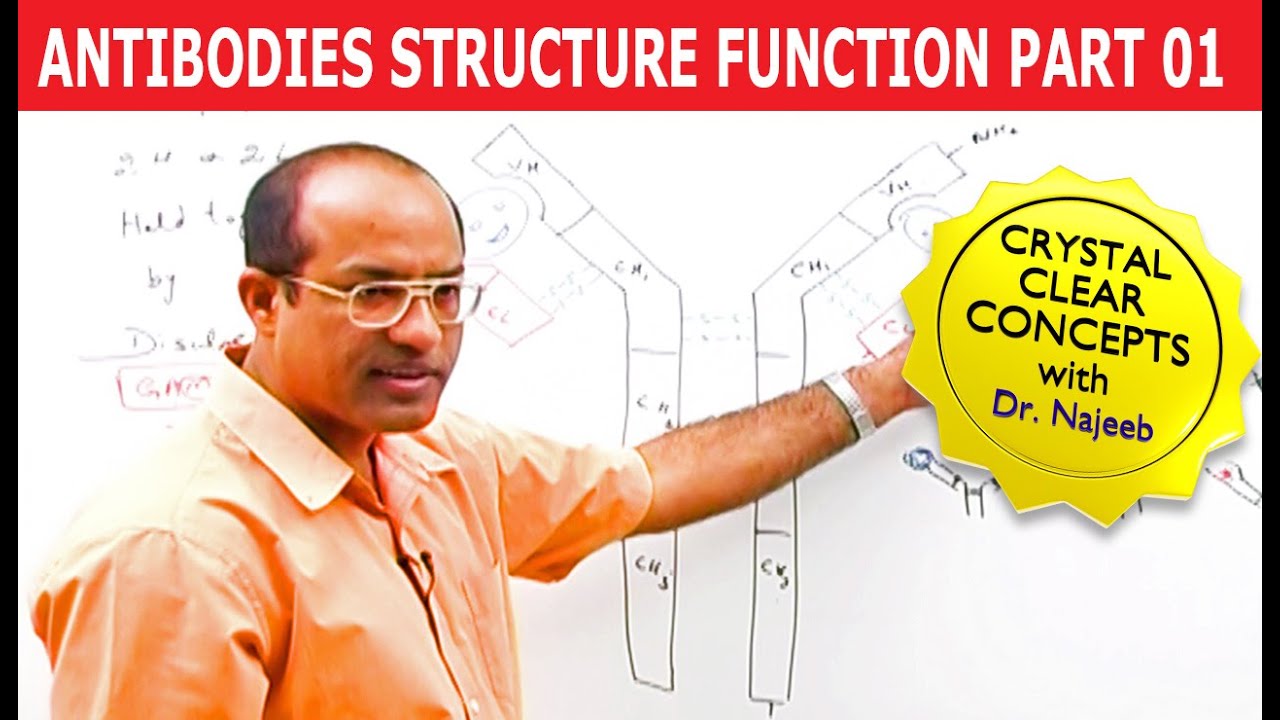
electron microscope pictures here so those are actually some of the earliest um electron microscope pictures of antibodies and what you can see is it looks like a y-shaped protein and so here is our antibod um and what that protein looks like um you can see that uh antibody structure here from your textbook and I'm going to um Talk a bunch about um details of this structure um and what we can see with this structure um but one of the first things that they found when they looked under the electron microscope at an antibody was that
this y shaped structure had basically two arms that were identical that could bind to things and so they said okay we've got these two kind of binding arms and they're identical so there are actually some images where people like have stuff bound at the end and they could find you always get binding on these two arms kind of like these two so much shorter arms and you don't get binding to your thing and this tail and the same thing binds to either one of these arms it's not like it's two separate binding sites that bind
two unique things it's it's duplicates and this thing that the antibody binds is known as an anti um and so I need to tell you a few things about antigens and specifically here I am telling you about the antigens that are bound by antibodies when we get to te- cells the antigen will there will be some differences in the antigens in fact sometimes I like to ask questions about like comparing and contrasting the antigen with antibodies and t- cells um I will also tell you that the way that U if you look at the syllabus
the way that things are structured is that um I sort of introduced the idea of an antibody I'm going to tell you some stuff about the antigen that binds to antibodies and then we're going to swing back to more about the antibody part after we know some stuff about antigens we're actually going to do that same sort of structure of timing when we do te- cells in terms of the t- cell receptor and then the antigen it's just that it will feel different because that antigen is more complicated um so we need to think now
about our antigen and the antigen is a molecule that is recognized by the um adaptive immune response and so usually if we're talking about the inate immune response we talk about a PR and a a mamp so the m is the thing the receptor is the pr here the if we're talking about the adaptive immunity we talk about an antigen instead of a mamp um and one of the really important things to know about antigens um is something that we uh have we know based on this experiment that was done by a scientist named Carl
liner um liner did not win his Nobel Prize for this experiment he won it for a different one um he also is the person who came up with the blood groups and discovered all that that's where he got his NOA from um but Lyn Steiner did um this experiment that was uh pretty important um in helping us understand antigens particularly we now know antigens that bind to antibodies liner did a bunch of organic chemistry and he made these three dyes that you can see at the top here and what I want you to imagine about
the three D or the four dies sorry is that they had never been made before in the history of the world so I want you to imagine liner this is like the first time they're ever made was for liners experiment um and liner actually made them and attached them to a protein but we're going to not deal with that right now and then he took his four dyes and injected them into four different groups of animals I don't remember if he which animals he used um but he injected them into four different animals and he
was able to find out that he could get an antibody response to these dies so these we'll call them rabbits I don't remember what they were these rabbits made an antibody response to dyes that had never before been synthesized in the history of the world which gave us one of the first key things that we learned about antigens that bind antibodies and that is they can be literally anything any sort of chemical molecule that you can imagine whether it's been synthesized or not you can make an antibody too and in fact you can see these
rabbits they had these they made these antibody responses even though these were brand new dyes so like I made a Dy tomorrow you already can have an antibody response against it that's how that's a that's one thing that's like so cool about the these responses is that we get an body responses to literally anything anything but he also had one other key observation from this experiment so in this case I want you to imagine we've got these little dyes and they're added to a great big there's like some giant protein attached to them these rabbits
we're calling them are making an antibody response when he looked at the antibodies that he got from the rabbits injected with this dye he found that those antibodies bound to this Dy and did not bind to these dyes and what you can notice is that these dyes are actually quite chemically similar especially if you think about this also like this whole giant protein attached there's only uh this one carboxy group difference and when he made a version with the carboxy group the antibodies only recognized this version and not these with the carboxy group in slightly
different locations and so he also learned just how specific antibodies are because he was able to see that even these really small chemical differences could be easily recog could be distinguished by the antibodies and when you make an an an antibody to one of these antigens it's actually unique to that antigen and not reacting to these very similar uh antigens that are shown here um so one of the things that um we learn from this is that if the antibod is binding to this protein with the dye attached it's probably not like going and hugging
the whole thing it's probably it's got to be able to bind where this Die part is and actually do some distinguishing and so we often think about um another term in relationship to antigens which is something known as the epitope and so often I as imun as an immunologist think a lot about epitopes epitope is the part of the antigen that is actually making physical contact with the antibody um when we get to te- cells it will be this actual portion of the antigen that's making contact with the t- cell but same basic idea and
so this whole molecule this whole yellow molecule we will say it's a protein um but in the case of antibodies it could be a protein it could be a lipid it could be a nucleic acid it could be um a carbohydrate it could be a random dye um this whole thing like I said I'm going to call it a protein but it could be any of those things when we're talking about antibodies is the antigen but there are different sections of it that might bind to different um antibodies and so here you can see there's
this little patch that's made up of these three loops and that little patch binds to the blue antibody um it's just perfectly complimentary to that blue antibody and so we refer to this as the epitope for this antibody so there's sort of this blue um epitope here you can see here's a different patch that is binding to the red antibody and so that would be a different epitope and so you can see that each antibody um will uh bind to a particular epitope and you can also see that any one antigen may have multiple epitopes
so in the case of my antibody here the epitope is this sort of Roundy side epitope isn't the eyes that's not where it binds it binds here um so this section is the epitope the whole thing is the antigen um one thing I've already said to you on the previous slide that I will say again cuz can't say it enough is that when we are talking about antibodies the antigen can be anything the antigen can be a protein the antigen can be a carbohydrate the antigen can be a lipid the antigen can be a nucleic
acid it can be literally anything as Lan Steiner showed us please note when we get to te- cells that's another big comparing contrast thing is all of those things can't be antigens for te- cells so that's why I'm hitting the fact that all of them can be for antibodies really hard um this example also shows you um a um examples of protein antigens and what I want you to notice about my protein antigens that are binding to my antibodies is that the proteins that I'm showing you are not sort of linear primary structure proteins they're
not like a straight line of amino acids they're folded in some way um and antibodies we tend to think about as binding to um proteins or whatevers that are sort of in their three-dimensional structure their threedimensional context so that means if you were to unfold these proteins if you were to denature them they you might actually kill the an the epitope you might kill the the ability to bind um and so that so the top here says antibodies recognize native epitopes that means antibodies recognize epitopes in things that are folded correctly now you can notice
the one on the right if I unfolded this protein these two amino acids wouldn't be so very close next to each other if I just pulled the string and made it straight and the antibody probably couldn't bind anymore because it wouldn't be in the right geometry so I actually would have ruined this one sometimes they might bind to some amino acids that are next to each other and so this one if I unfolded it it' probably still work this one wouldn't so whether or not unfolding totally kills everything kind of depends on your epitope specifically
it depends on is that epitope um an epitope that is just a line of amino acids in your prot protein if it's a protein antigen that would be called a linear epitope uh or is your epitope an epitope that only is found when you have a folded protein or folded whatever antigen that might be a confirmational epitope so now when I unfold this protein you can see the loops aren't next to each other anymore so the antibody won't work um if you see this and you and um you say you know what I'm never doing
Immunology ever again um but you are do but you do spend some time doing any kind of biomedical science or any kind of biochemistry this will be the most important slide for you to know because if you do any technique that uses an antibody like a western lot you need to know if your epitope is a linear or confirmational epitope so you know how to prepare your samples because if you do something like unfold your sample and then use an antibody that only recognizes folded sample you're going to get a negative answer no matter what
and it's only because of how you prepped your sample so this actually is um something that's super important for uh throughout all of biomedical science um whenever I think about an individual antigen um this has been implied in some of the previous uh slides but I will say it explicitly now um any antigen can contain multiple epitopes so each antigen doesn't necessarily have one epitope it has many that might be repetitive copies of the same epitope like you see on the right or that might be multiple different unique epitopes like you see on the left
um so I am well I'll say this the later slide in addition um if I actually go not to an antigen but if I go to the level of a pathogen like a whole microb a whole microb has many antigens and then those antigens all have multiple epitopes so individual pathogens can have multiple antigens and individual antigens can have multiple epitopes so to give you an idea of what this looks like I've got two examples on the left you can see um a cartoon version of HIV and you can see all sorts of different parts
of HIV that are colorcoded um and labeled here lots of different proteins nucleic acids lipids all sorts of good stuff each one of those could be an antigen so gp120 is an antigen gp41 is an antigen p7 gag is an antigen all of those are antigens you can see this one microbe has so many antigens and if this is actually a zoom in of gp220 just this yellow uh Protein that's shown here all of these little patches that are shown in different colors are different epitopes that we know of in that one antigen and so
I could give you a list of sort of all of these patches for every epitope in every antigen so what I want you to realize from this is that you really aren't making one kind of antibody responding to HIV you're actually making tons of them you're making one antibody to each epitope of each antigen so you got a lot of sort of Target those are the targets you have a lot of bow and arrows to hit the targets I don't know what my term is um but you have all of these different epitopes within a
microb um I mention this because if you think about what's happening in your body when you get infected with a particular virus I'm going to frequently mention oh and then we're you have the the antibody against influenza it's not right there's not one antibody against influenza in your body there's one antibody against every epitope of every antigen so there might actually be like a thousand unique Targets in influenza and you actually have an antibody against every single one of them that's just a lot of words to say other than the antibody against influenza um and
so what I want you to see with these epitopes is what I mean by specificity that you have spe that each antibody has specificity for one little epitope in um each microbe um similarly uh on the left here you see SARS K2 the virus that causes covid um you can see all sorts of different parts that are colorcoded here um and here you can actually see on the left one antigen from that virus that one antigen is this yellow thing called Spike um this is kind of also interesting because when you get the vaccine um
this vaccine we'll say so much more about vaccines later but when you get the SARS k 2 vaccine you're actually only getting the spike part you're not getting any of the rest of this um yay safety um so you're only getting Spike you only one antigen not all the antigens but it turns out even Spike we can we have been able to find many any epitopes in it so you're not just going to make one antibody in response to that antigen you're going to make an antibody in response to every epitope within Spike if you
get infected with this virus and you're going to make an antibody against every epitope in the whole um virus and in the past couple of years we have actually been able to do things like start to count how many epitopes are there um this has you know only been a recent thing been going on during the pandemic um you can see this is a paper from 2021 um but just to give you an example we're pretty sure that within Spike alone there are 20 antibody epitopes um that we can then add on to some other
types of um epitopes and so when you think about the your antibody to um the vaccine or your antibody to spike really you actually have 20 different ones that are each binding to different targets on Spike yeah H um it's a great question um a lot of it has to do with sort of structural biochemistry stuff in terms of both where the antibody can access um and some of the details of how antibodies are generated um and so it ends up not being infinite um because of some of the details of antibody generation that we'll
talk about later um but also um some of the details of sort of biochemistry structure of what you can actually can or cannot pull off um but imagine it's a big number yeah Jonah so Domina is very worried about antibodies detecting self and it's probably because you have many biomolecules proteins lipids carbohydrates and I told you like how broad recognition is uh the answer is yes so um this is going to be uh two weeks from now problem I think but what I'll tell you um now um and again we'll see much more of later
is that um you actually make those antibodies and then kill the cells that made them so you actually do a testing process um to kill uh any cell that makes a self reative antibody um during the antibody development process and so that also gets to some of your problem your question Brian is that some there Pro there may have been more epitopes but we may kill those cells and so that may be part of it because some of those may be self-reactive yep David yes absolutely yes so there are people who have who are medicine
allergies that's largely going to be an antibody response um again this is going to be sort of more of an allergy thing but um basically what you saw with that Dy thing is kind of similar to what happens this is I'm like months ahead of myself with a sentence um with uh poison ivy is actually you're actually you have a compound from poison ivy that's modifying um another compound um I have an allergy among my many allergies to Nickel so if I wear cheap jewelry I have I get a response it it's the same it's
the same kind of thing so yeah you can make antibody responses to all those types of things yes it's okay uhhuh uhhuh um great question and that gets a point I was like deciding whether or not to make so perfect um sometimes people have been like freaking out about different covid variants right and they be like oh my gosh this Co variant avoids antibodies actually not true what it act what actually they what actually happened and I read the original papers is that they will show that a particular variant has changed one epitope and can
avoid antibodies at that one epitope but the other 19 are still fine and so yeah you're avoiding one of the 20 antibodies with that particular variant um but you still got the other targets that are not moved and and so yes it does avoid immune responses but if you actually think about it in big picture it's not really avoiding all that much um and so that led to some debates about with boosters do we need to give you the new versions of the virus or not um I know people who still debate both sides of
that um but the answer is we are giving you the new versions um so all of this is awesome stuff um so one um other thing I just want to tell you um on this slide and sort of the next couple slides this will this is all sort of related to some stuff we're talking about um is the the antibodies that we are talking about these lovely proteins are made by a particular type of cell and that cell is called a B cell and so while we are talking about antibodies a bunch right now technically
we're kind of also talking about B cells because B cells are the ones that make these antibodies and as I am talking about antibodies for the next section of the course there are certainly situations where I'm going to just slip and talk about the B cell and I want you to know why that is and in fact there's one other part of the reason why that is B cells have a unique receptor on their surface it is very creatively called the B cell receptor um or the BCR the B cell receptor that a particular B
cell makes is just an antibody with a transmembrane domain attached so sometimes when I think about making antibodies I'm also really well not sometimes all the time when I think about making antibodies I'm actually also thinking about how we make Bol receptors and sometimes when I say something I might mess up at some point in describing stuff and say the b cell receptor blah blah blah blah blah when I should have said the antibody blah blah blah blah blah and the reason why I might mess that up is because they're actually the same thing um
this also um gets me to um one other kind of thing I want you to know about B cells um it's a big uh principle of adaptive immunity um and it's again one of those things that I can't say enough I'm going to introd I officially introduce this concept to you later and you're going to find it terribly confusing so I hope that it's not confusing now and you can be like oh wait it's the same thing get it now um each B cell makes one antibody SLB cell receptor that can respond to one epitope
so each B cell is unique so I mentioned that with SARS kv2 Spike you've got 20 antibody epitopes if you were going to have an antibody response against SARS K2 Spike you would need 20 b cells participating each of them having its own unique epitope that it recognizes so each B cell is really only recognizing one epitope you can see this here as well um we will have um one B cell might have multiple B cell receptors but they're all recognizing The Identical uh epitope in fact and even the two arms of this antibody are
both recognizing The Identical epitope so we have this homogeneous binding um the difference here is that each B cell will make a slightly different receptor so you've got one each B cell has its own unique receptor that just belongs to that B cell um and eventually that B cell May divide a bunch of times and make more copies of itself sort of like attack of the Clones it makes a bunch of clones of itself um and um they will all have that same specificity and so this um process where we have a whole bunch of
cells that have one specificity and only one specificity um and then those cells might expand out might make a clone of themselves is sort of the underlying way that all of adaptive immunity Works um this is officially known as the clonal expansion Theory clonal expansion um and I want you to compare and contrast that to what we saw with our macr phases and their PRS remember every macras had tons of PRS so every macrophase could recognize any microbe that happened to come around cuz that macrophase would have all sorts of different PRS but each B
cell is like specific to this variance covid this part of Spike and it's going to be useless against Ebola while the macrophase has all sorts of PRS and it's going to respond to whatever um and so this is really where that specificity uh comes from in the immune system um one other really important piece um that or one other really important thing that is related to all of this is again a labish thing um in that there we often will think about two different kinds of antibodies if you are going to go do a western
block and you need to buy the antibodies you need for your Western blot one of the things you will have to decide is if you want to buy a polyclonal antibody or a monoclonal antibody so I have to tell you what polyclonal versus monoclonal antibodies are um and so I want you to look first at this list of polyclonal antibodies polyclonal antibodies are are like real life antibodies the idea of a polyclonal antibody a set of polycal antibodies is that they are antibodies that bind that all bind the same antigen but they might bind different
epitopes of that antigen so another way you can think about that is that polyclonal antibodies are a mixture of many different antibodies that came from many different B cells they have in common that they all bind to the same antigen but they might bind to different epitopes and so here you can see that my mixture of antibodies my polyclonal antibodies includes the red antibody it came from the red B cell not pictured um it binds to the red triangle antigen you can see that my mixture of polyclonal antibodies includes the blue antibod which but came
from the blue p b cell not picture that binds to the blue epitope and you can see that it also includes the black antibody came from the black pel that's not pictured and bind to this gray black epitope so this is sort of the idea of what polyal antibodies look like and what you can imagine is if I give if I inject any antigen into you if I give you any vaccine that's actually what happens that's what you make you always make polyclonal antibodies we have figured out a way in the lab to make antibodies
where we don't get a mixture of antibodies that all bind to different epitopes within the same antigen but where we get a purified population of antibodies that all bind to exactly the same epitope these are known as monoclonal antibodies and to do this we actually had to find the blue B cell and isolate the blue B cell and get just the antibodies that were made by the blue M cell instead of seeing the whole population that we really see in an organism and there are lots of situations where um in uh experimental settings we like
to use monoclonal antibodies um when we do some of those therapies that I told you about um we use monoclonal antibodies um like in a lot of our patients we're using monoclonals right now and so in a and in a lot of situations we use these in people we use monoclonals that we've made in the lab um where we're getting a purified population that's responding to just one epitope of the antigen instead of kind of the real life scenario of what you get in a polyclonal response in your body um I will see you guys
on uh tomorrow that's a weird grammar I will see you guys tomorrow when we're going to talk about a particularly important technique that involves antibodies called fetometry and um yeah and then we will continue talking about fun antibody biochemistry on Friday