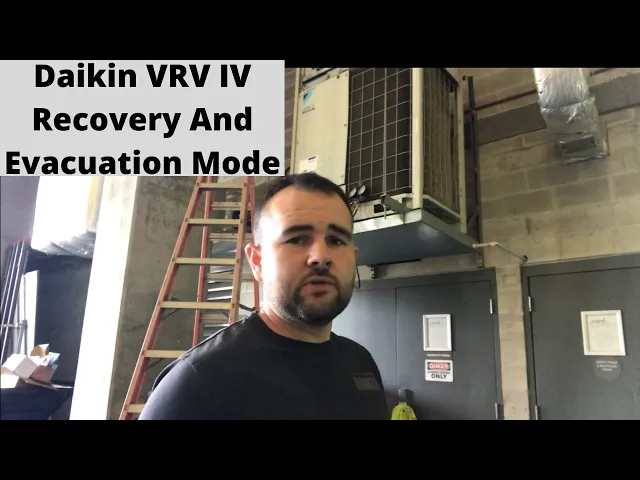
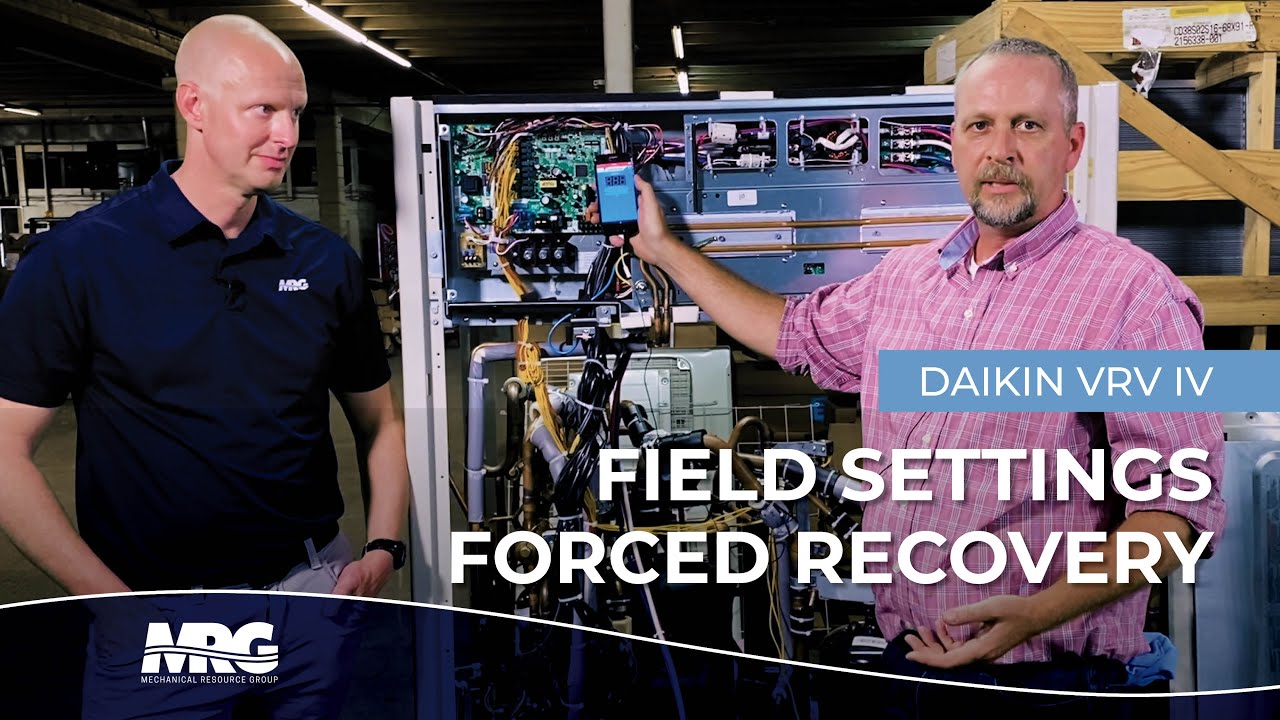
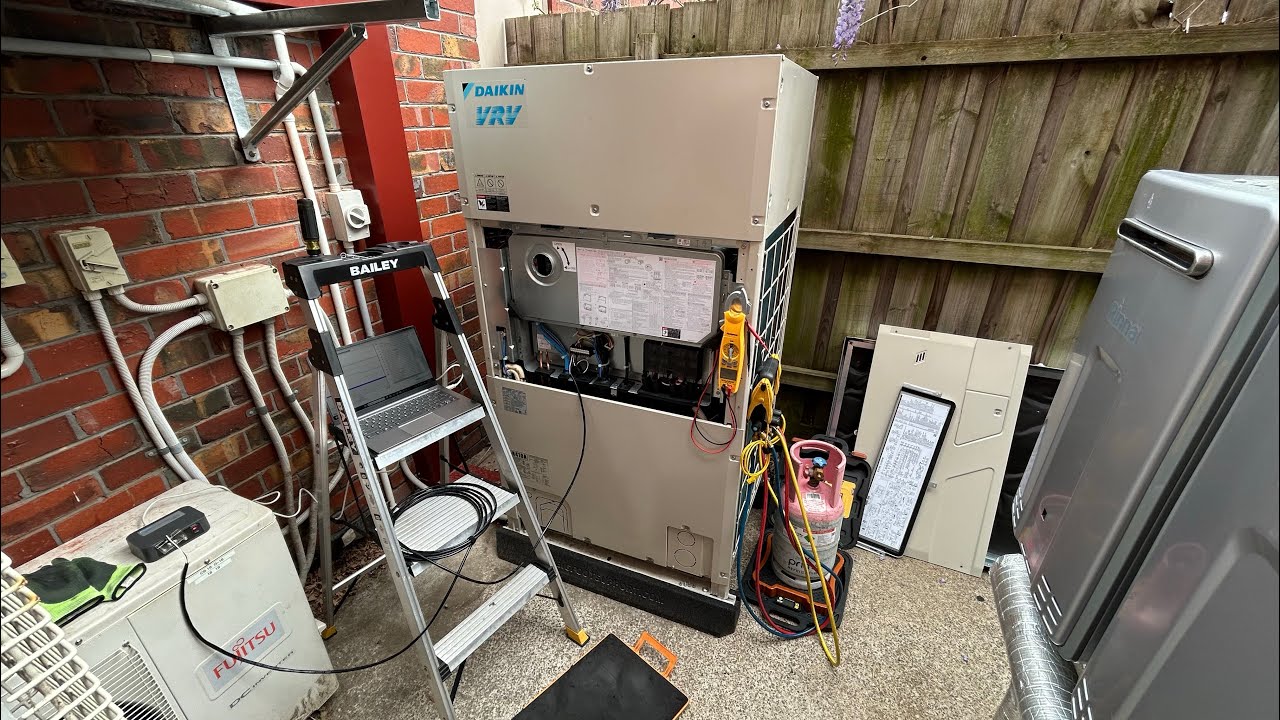
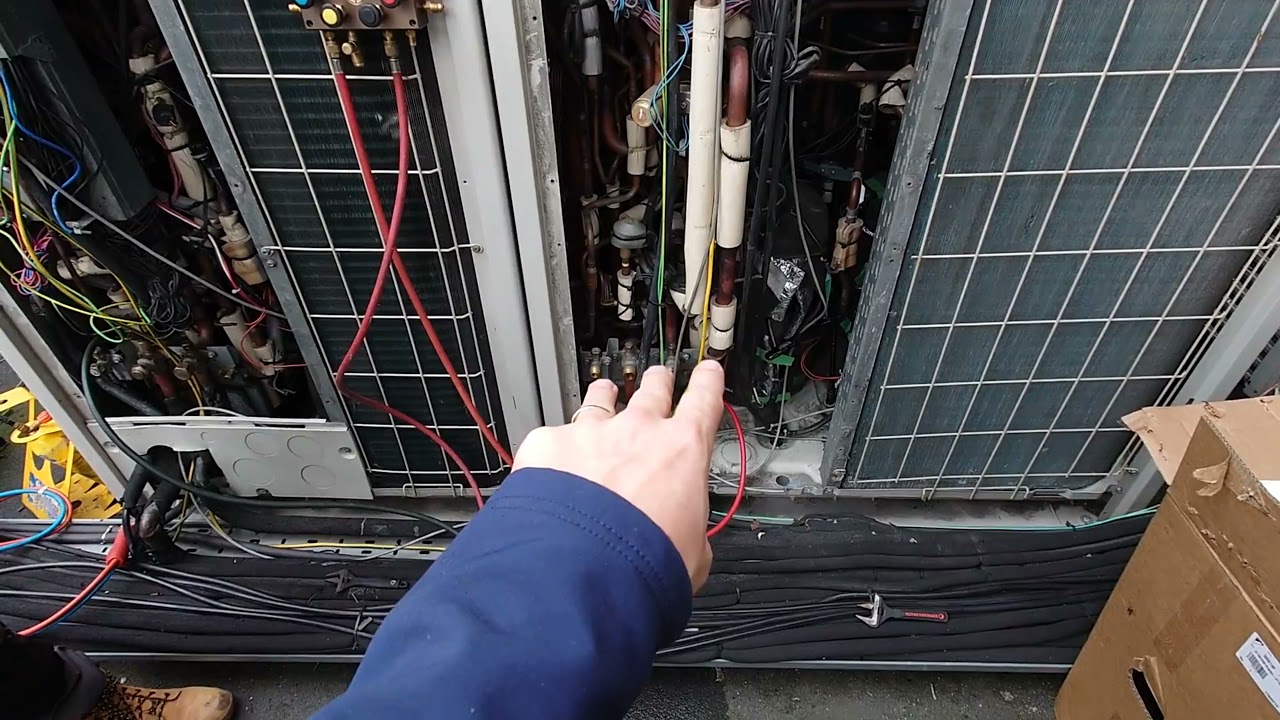
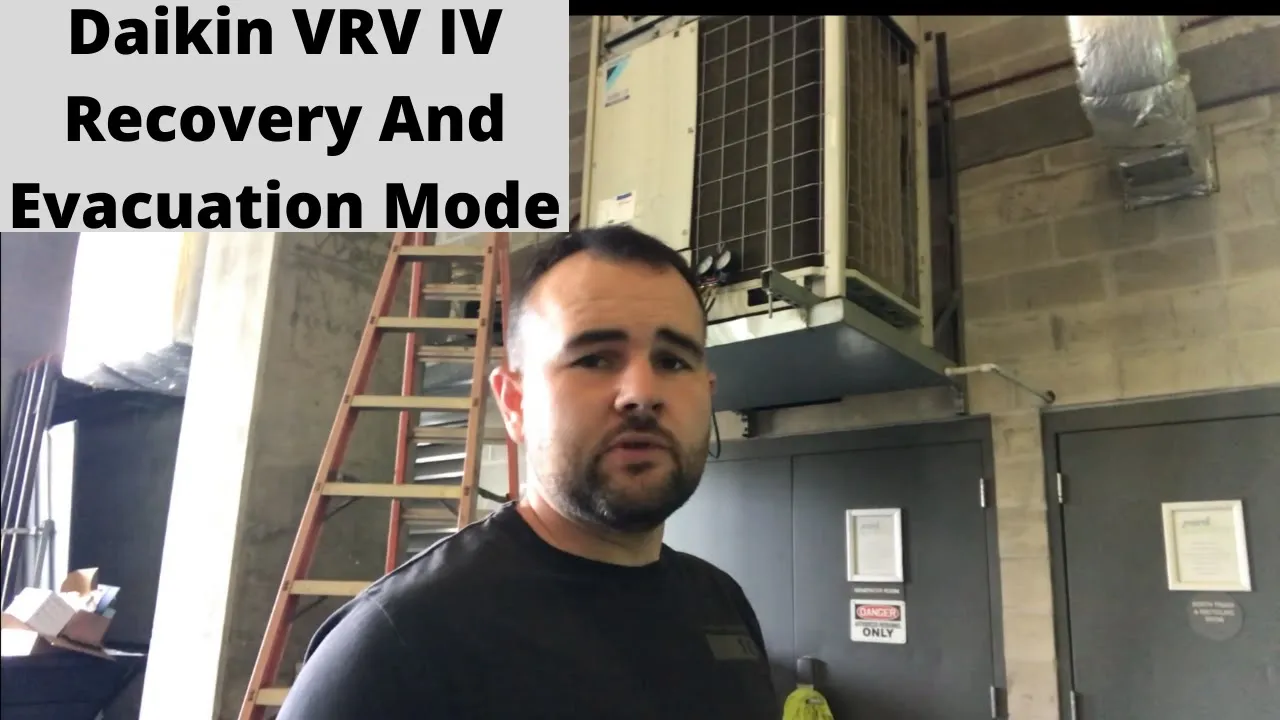
hey everyone travis michael working on this daikin vr v4 system today the purpose of this video is to show you guys how to put it into recovery and evacuation mode if you're interested more on why that's necessary when working on one of these systems uh just stay tuned uh that'll be at the end of the video but let's jump right into it first you have to remove the access cover that's up here which i already did there is detailed instructions over here about how to put it into the refrigerant recovery operation or evacuation mode setting
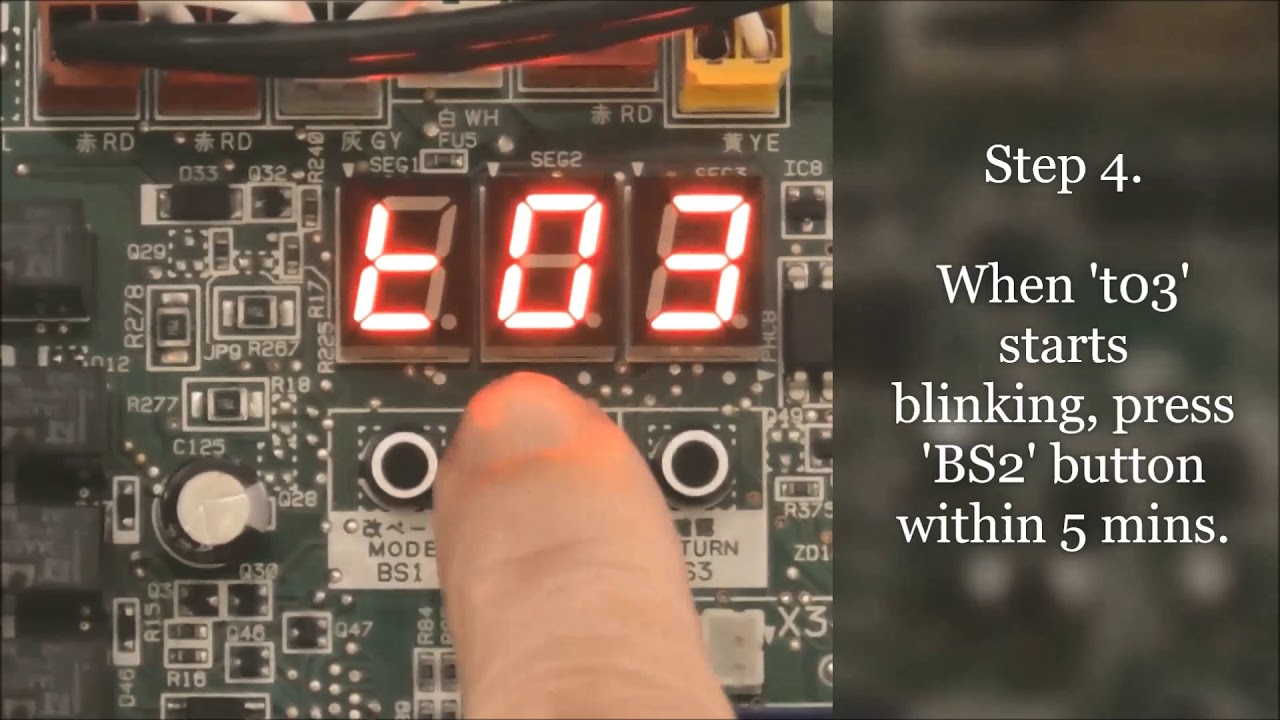
but it's a little confusing and uh i figured it'd be best to have just a video you guys can watch so we're going to start by checking out this this is the switches that we were going to operate and then that's this display screen that we're going to see what mode it's in and first we need to start by holding speed s1 which is the mode switch you hold that for 5 seconds now once the two with the blinking zeros pops up you're gonna hit bs2 the set button and you have to set the zeros
to 21. so basically i push it 21 times if you go past it you have to go all the way back to 99 so try to not pass it okay so now once we have it set to 221 which you can see here is that the refrigerant recovery operation evacuation mode setting two two one we're gonna hit the return button this bs3 so now zero the flashing zero basically indicates that it's off and we want to activate we want to turn it on and you can see that further down here so so we need to
do is go back to set button again push that to make it one you can see here it says light off light off one is on so once we do that we hit b3 again which is the third button now it took that and now we have to hit that one more time and when that displays that means it's in the recovery mode evacuation mode you can actually hear the pressures equalizing out in the system so to return it to its initial setting to take it out of the mode it's also detailed right here you
have to hit the return button bs3 the screen goes blank so if you just hit mode button once one zero zero means that it's in the normal mode so that's where we're back where we want to be if you ever do get confused when you're trying to set it or you mess something up and you're not in the right menu all you have to do is hit the mode button once and that will bring you back to this beginning screen so you know say if you start changing something you go oh wait that's not where
i'm supposed to be hit the mode button once and that will bring you back that's also explained here in case you want to read it so once you take out the recovery evacuation mode it does take some time for the system to come back on it's been about 12 minutes and it's still not running yet um i experienced this yesterday when i was out here working on it it was probably close to 20 minutes before it really came out so don't start panic and just just give it some time you know make sure it comes
back on but as long as you have that one with zero zero in the display screen it means it's normal operating mode so it's also possible it's a low load conditions today that maybe it's not calling at the moment all the zones might have satisfied so i'm gonna go inside and check that out but like i said just don't panic give it some time so after waiting a little bit i took a look at all the thermostats inside and they're actually all set in the fan mode so i ended up just switching them back to
auto and setting the you know my cooling set points down below like i said today's kind of a no-load condition day so you know pretty much the entire area was at set point so just take a look at that when you take it out of the recovery mode you know otherwise you're going to sit around and wait for the unit to come back on and it's never going to come on because it ain't calling so why exactly would we need to put it into this recovery evacuation mode in my case i was doing a leak
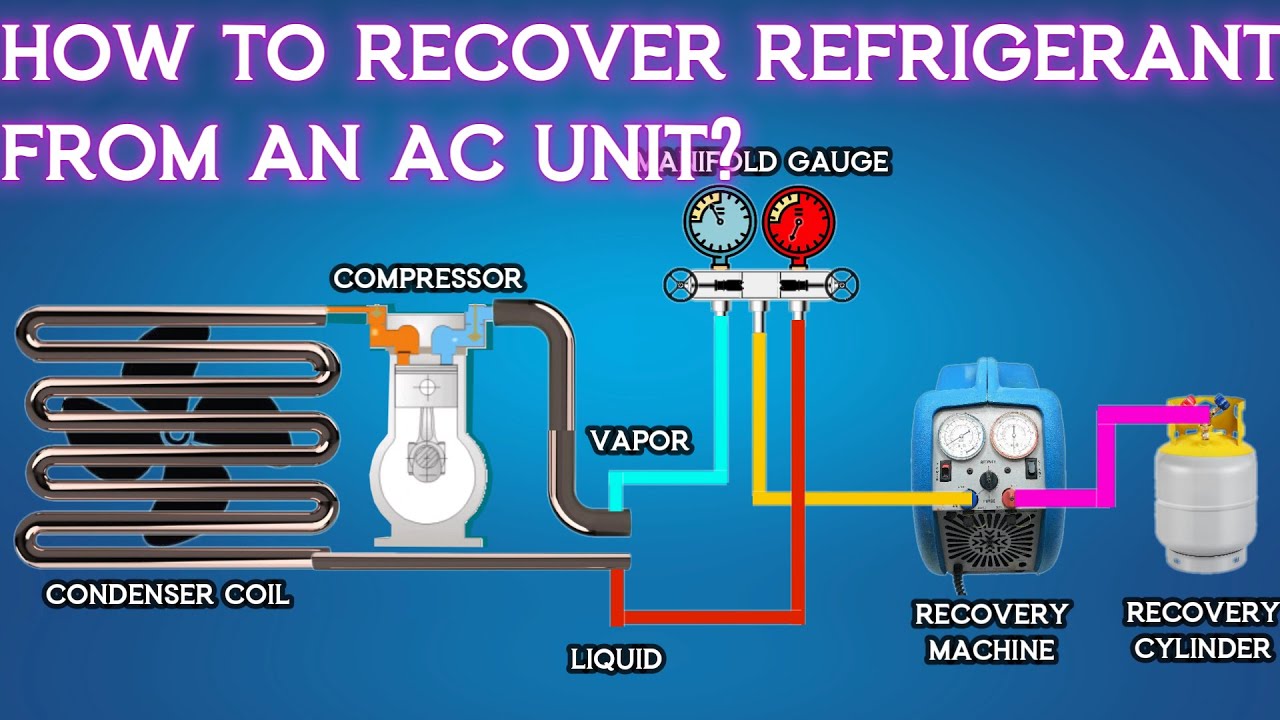
repair on the system and there was a leak on one of the suction line flare fittings at an indoor unit basically i wanted to recover the entire charge so i could weigh back in what we lost you know there was a leak i wasn't sure how long it was leaking for we don't know what was lost but i know how much the system held it was documented on the unit and normally that's general practice with these vrf systems or vrv systems different manufacturers called different names but when the manufacturers design these systems with the architects
or whoever the engineers involved they come up with the diagram they measure all the piping they take tr keep they take into account all the elbows and the pretty much everything all the components in the system the error handlers branch boxes and they calculate pretty much to an exact uh precise amount what the unit needs so i knew that number so knowing what charge we have and not knowing what leaked out we don't know what to put back in the only way to recover the entire charge is by putting this recovery evacuation mode when you
put it into this mode all the valves in the system go open whether you have the branch control box and the expansion valves on your air handlers everything is going to go open so there's going to be no place where refrigerant can be trapped since since there's no place for it to be trapped we know we're getting everything out this is also crucial when you're pressurizing with nitrogen so you know you're pressurizing the entire system and the same thing when you're evacuating you want to evacuate the tire system if there's some refrigerant trapped somewhere we're
not sure how much is there and then also if nitrogen happened to push through one of the valves would then seat properly you could contaminate your refrigerant and when you go to run it you have nothing problems when you're trying to evacuate you're going to have issues trying to evacuate so you need to have it placed into this mode in order to do the correct job the reason why it's so crucial to know exactly what charge you have in the system is because you're never going to be able to troubleshoot these systems based off of
pressures and temperatures you probably could if you had tech support on the phone they'll tell you what to look at but these are not going to run your traditional standard pressures that a conventional system is going to run you know that you just throw your gauges on you know either you're low or you're not they're much more complicated they have variable speed fan motors they have variable speed compressors they modulate their capacity down super low they could probably run just one air handler that's you know 9000 btus off of uh you know seven or eight
ton condensing unit if none of the other zones are calling so if you have a leak and you don't know what you lost your best bet is to remove the entire charge and weigh it in the way when you put it back in way back in everything you need this way you're back to where the factory wanted it at the beginning because usually like i said that that charge is spot on that's calculated you know specifically for that system so that's it that's all i got for this one if you're not currently a subscriber please
consider hitting that subscribe button if you like the videos give me a thumbs up if you've got any questions just comment down below i'll get back to you otherwise i'll see you in the next one [Music] [Music] you