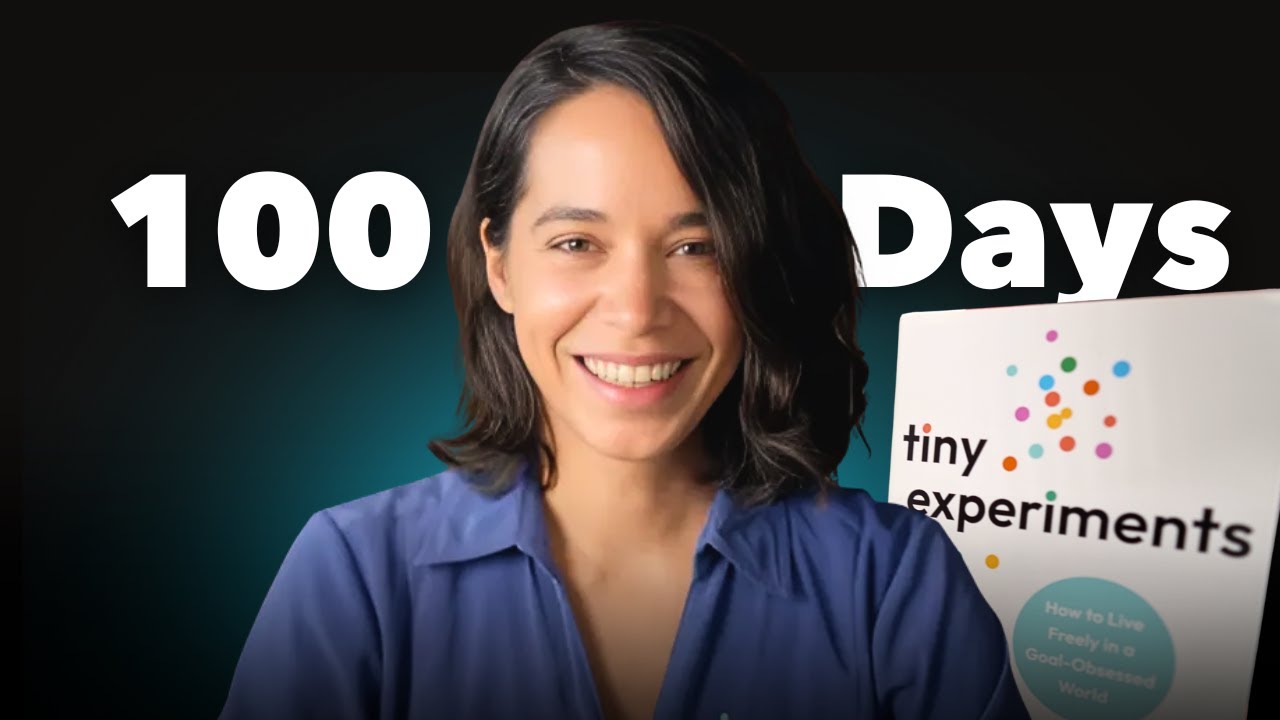
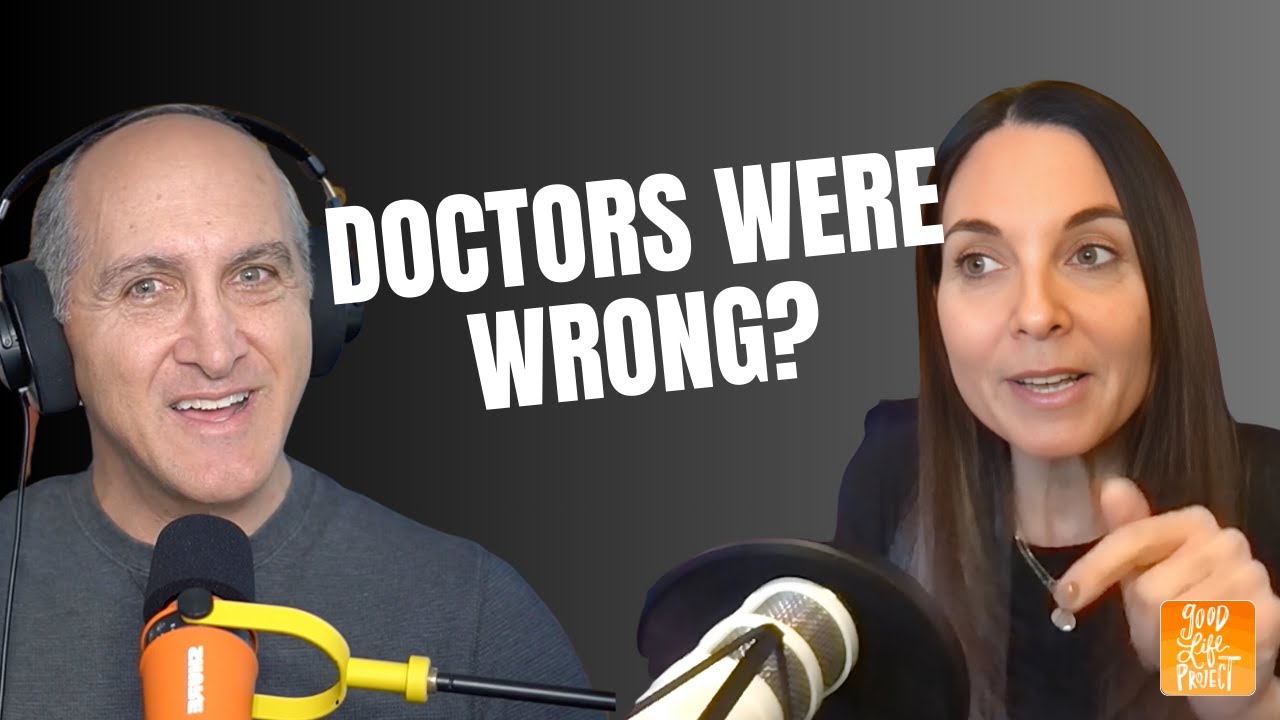
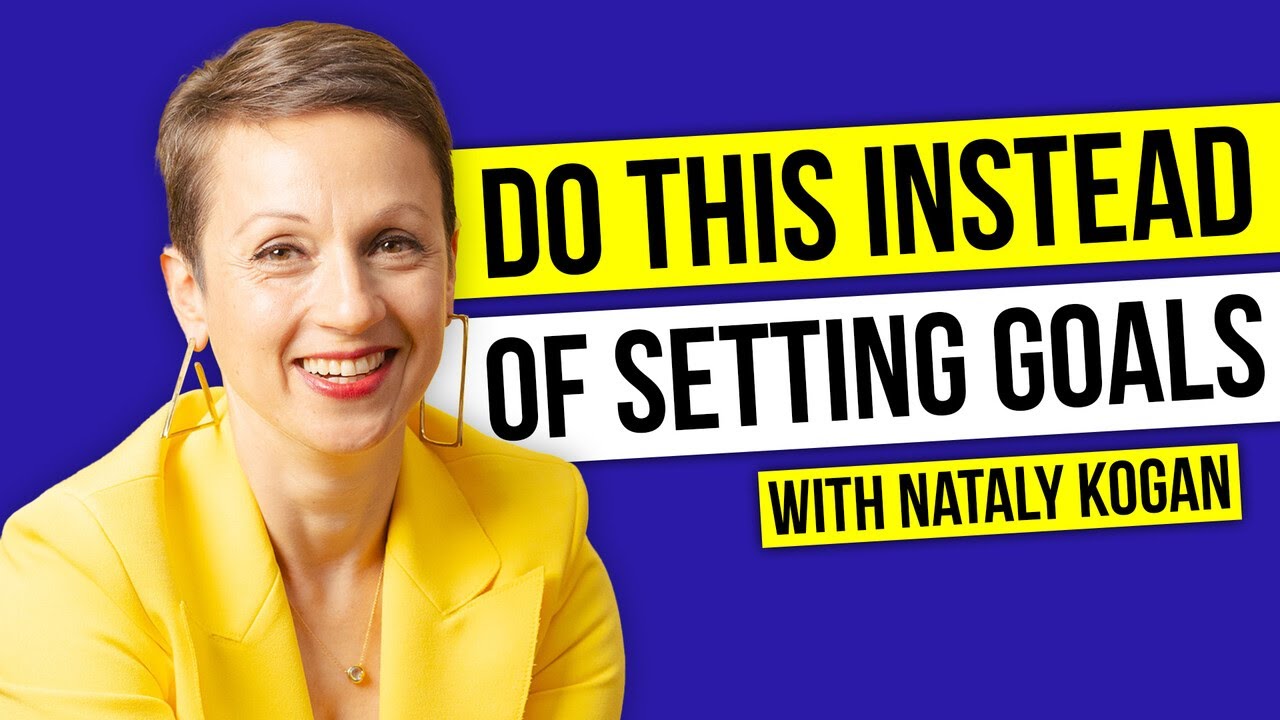
The doctors found a blood clot in my arm and it was threatening to travel to my lungs and my first reaction was to that was one moment where I caught myself and felt like something is really wrong with my sense of priorities right now and Laur Lum is a French Algerian neuroscientist entrepreneur and writer after leaving a prestigious role at Google she founded Nest Labs pursued a PhD in Psychology and Neuroscience and Champions this idea that life is a series of Curious experiments rather than a linear path in her new book tiny experiments a scientist
doesn't feel like a failure when they get an unexpected result and this is something that they can learn from and Ed to design their next experiment and all of this leads to a different philosophy I wish I could tell you that I went from this moment of realization to then starting straight away to experiment More and live more freely but that's not what happened I was working at Google I had a really good career there um good salary good team I was working on interesting projects and uh I had a healthc care where the doctors
found a blood clot in my arm and it was threatening to travel to my lungs but they said don't worry if we schedule the surgery pretty soon you will be okay so let's do that right and my first reaction was to open my laptop And check my CA calendar so I could make sure to schedule this when it would not disrupt any of the product launches that we had planned with the team that was the first thing I thought about how can I make sure that I'm not disrupting work for others so that was one
moment where I CAU myself and felt like something is really wrong with my sense of priorities right now I might be a bit too focused on my career and the other moment was a few months later I so I did the surgery It went well and I went back to France to visit my parents for Christmas and someone in my family asked how's life and I don't know why but for the first time I really listened to the question and I paused and I asked myself how's life really and on the surface it was great
work was great I again I was living a friendly excited I was living in San Francisco working for one of the best tech companies that you could work for At the time but I felt a little bit empty and uh this is when I started questioning my path what was it what was the feeling when you sort of paused for that moment um it this is going to sound like a weird question but what was the feeling of emptiness for you it's uh I describe it as um being bored out and as if as if
someone had spilled the a movie for you and that told you how it finishes and uh all of a sudden you're not really interested in watching the Movie anymore that's how I felt like I had this sense of clarity as to where my career could go the steps that I had to follow what success looked like what was expected for me all of the rules of the game were pretty clear to me but because of that there was no sense of excitement of wonder anymore I'm really curious now did you have sort of growing up
did you have an ideology or sense of philosophy of what quote work was supposed to be like in life that came from family or Friends or local community that you kind of tracked yourself into and said I'm doing the thing um before this happened oh absolutely I think it's very rare for to meet people who are not in that situation a lot of us and up following the scripts that we've been taught unconsciously and uh I was a a very curious kid as most kids are if when you asked me when I was a kid
what I wanted to be when I grew up I said uh a writer or a paleon ologist so you know like was Keeping my options quite open but um coming from an immigrant background my parents really pushed me to optimize for safety and stability making sure that I would always have a roof over my head and food on the table these were the factors I was optimizing for and so I chose my studies and I chose my first job and I designed my career around optimizing for safety so when in your home and this person
asks you how how you are and you pause for a moment and You realize okay on paper objectively I've checked all the boxes that I was supposed to check you know but why am I not feeling the way that I'm feeling um where do you go from there you know like because if you sort of like you've tried to you grab them the brass ring and you got it um was it disconcerting for you to sort of like in that moment say what what's happening here it was and that's what's interesting is that I wish
I could tell you that I went from this Moment of realization to then starting straight away to experiment more and live more freely but that's not what happened I realized something was wrong and so I said that's probably a sign that I need to quit my job and I need to start something new and I need to build my own thing and so I quit my job at Google and I started a startup what I didn't realize at the time that I know now is that I was yet again following another script because that's what
a lot Of people around me were doing you start your job at a big tech company you stay for long enough that you can save a bit of money and build your network and then you raise money and you start a startup to save the world anything less than that is failure so I followed that script again and it's only when my startup failed that I found myself again in that state of okay what next but this time around I decided to really sit with the uncertainty to really explore it and Not try to just
go and do the next logical thing that you're supposed to do when you're feeling this way yeah I mean it is so interesting the way you describe it because you know I think maybe if you're especially if you're not in the tech industry and you look at somebody who's at Google building this incredible career and then decides to just completely leave um walk away and start their own business a lot of people raise an eyebrow and say how could you Ever do that but in the space that you were living in in the tech world
that's actually a pretty normal linear path you know it's almost like the the equivalent of the investment banking path you know like you sort of you know you go you become an analyst and then you go you get your MBA and then you go back and you become like deeper embedded and then you go out and often times start your own thing or start your own firm or like um and even though you're doing your own Thing it's actually like really following a script still um so when when that startup fails then I mean imagine
it was just brutally hard for you anyway because then when you have your own thing that fails I have been through that it's not fun um how do you how do you think through at that point how to do the next move differently yeah I um it was very difficult but once I had processed the grief because that really what the emotion was like it really felt Like grief when my startup fa I actually felt a sense of Freedom that was very surprising to me I did not expect that that was going to be the
next emotion to show up after grief freedom freedom to do whatever I wanted to do but also a little bit of um a fear around this this freedom because all of a sudden I didn't have a next step didn't have a blueprint and didn't want to follow a script so what I did was that I went back to the drawing board and I asked Myself what would you be interested in exploring even if nobody was watching even if money was not part of the equation even if you removed any kind of thoughts around outcomes and
success and achievements what is something that you would like to explore if you could just wake up in the morning and do that thing just you want to do it and you're curious about it in and enough itself and for me that had always been the Brain I had always been curious about why we think the way we think and feel the way we feel and so I decided in my late 20s to go back to University and study Neuroscience which also raised a few eyebrows actually because a lot of people around me said what
are you doing you you don't become a neuroscientist at that age right those are very long studies you're don't just do that like maybe pick something easier um um and uh and going back to University how are you Going to pay for this and so it just you know maybe looked a little bit crazy from the outside but it felt really grounded for me because I knew I had made this decision not based on trying to achieve a certain version of success or following a certain script but just because that was generally the thing I
was the most curious about in that specific moment yeah I mean it's such a powerful move when you reach that moment where you decide that the the script of Others expectations is no longer going to guide your choices in your work and your life but that is a brutally hard thing for most people to do there's so much you know there's fear of being rejected fear of being Outcast from the people you want to be seen as you know like being the accomplished one the smart one the one who's like doing all the good things
um did you have any sort of internal battle um when people were really raising an eyebrow and Questioning this in that moment I felt so strongly about my decision that it was actually fine but in the Years afterward especially when I talked to former colleagues who stayed at Google and had another promotion and AR raise and then they bought their house their first house and then their second house and uh or other startup Founders that I knew um who their first startup failed but they tried again and the second one was successful and obviously you're
Going to compare yourself to these other people and and you'll have your moments of Doubt so I never tell people that it's about getting rid of doubt it's really not about getting rid of that I think if you're a human being you are going to experience that we're social creatures and we're going to actually keep on comparing ourselves to each other it's more about the response that you have when you experience that kind of of Doubt and uncertainty and embracing it as part of the process knowing that it's normal and that actually it might be
a signal that you're doing something interesting yeah I love that and that's been a big part of the way that I tend to look at work and life as well um you know but we we are I remember doing research on this years ago when I was working on a book and and it was all about how we deal with uncertainty in high stakes Environments and you know and you can see fmri study where the fear centers of the brain light up you know this is something you talk and right about as well you know
and and we're literally we're softwired to have this physiological and neurolog IAL response that makes us want to run from uncertainty so walk me through some ideas and some sort of like strategies because everybody's going to experience this when we start to think about doing Something that's maybe not the mainstream take me into this a little bit more about how we sort of explore handling that Psychology and Physiology I think two things the first one is just in the way you approach experimentation in general in your life I took that big leap I don't think
I had to do that right it is absolutely possible to experiment in areas of your life where it might feel a little bit more comfortable and illicit a little bit Less fear so you could say I'm actually happy to stay in that linear career where I know what I'm doing I like my team it's a good salary but now that I have the sense of safety here I might be able to experiment in other areas of my life maybe I'll experiment with health the way I push myself and challenge myself and in terms of running
or different types of sports maybe I'll experiment when it comes to my creativity to site projects how I show Up in my community How I build my network in my relationships so you don't have to experiment with absolutely everything and you don't have to take a crazy leap and quitting your job or anything like that in order to experiment so I think in terms of managing that fear in the first place maybe you don't have to put yourself in a situation where it's overly scary but there's still going to be always a little bit of
fear when you do something New when you're you're uncomfortable I think understanding why you're feeling this way from a neurophysiological perspective can be helpful from an evolutionary perspective it makes sense that when we feel like we don't have enough information we don't understand what's in front of us we want to get out of there as quickly as possible and when we were in the jungle not knowing who the the other players were um what that noise in the bushes Was and uh where the resources were could actually mean death so your your brain is also
optimized for your survival and so knowing that that's a natural reaction this Spar is natural but that today in your modern environment your your ambition is not just to survive but to thrive and so you want to play with that fear and again from a neurophysiological perspective something we can do that to the extent that we know other mammals Cannot do is that we're able to practice what is called metacognition which is observing your own thoughts and so you can actually decide to have this activation in your prefrontal cortex where you look at the fear
and you say hello old friend you're back what do we do what are you trying to tell me why are we feeling this way so it's a little bit like a I describe it like a two-step in the book where you are able to move through really trying to understand the Subjective experience of fear and then working on the objective consequences is something really scary happening that you need to deal with or is it just this kind of primal fear that we all experience when we do something new yeah and I think we we will
all experience that at some point I mean maybe it's not your work or your job maybe it's literally just approaching somebody you're interest in for friendship or romance you know like at a Dinner party or when friends are around it's we don't know if it's going to work out we don't know if they're going to reject us or accept us you know there's there are these microsocial moments all the way up to the really big things in life where the stakes are incredibly high but it's like our brains still go to that same place um
so you've described this experience where you're you know like you're you're tracking in this linear life this path Like doing all the right things quote succeeding by everybody else's metric and then you decide to um go a completely different direction um take me more into this notion of the linear life because this was something that you were living but this is something that you I didn't speak about this is a really broad phenomenon this is sort of like there's a philosophy or there's a way that you're quote supposed to build your life and your living
that So many of us buy into um M this out a little bit for me I think about it as a a mental model like how you visualize your life I think the way we visualize our and that has a lot of Downstream consequences on literally everything and all of the decisions we make a lot of us think about our lives and success in general as a ladder that you're supposed to climb and so you're supposed to go through each step each Rong of the letter and a little bit like in a video Game you're
supposed to collect all of the points and the artifacts at a certain level and then you're allowed to move on to the next one and so you try to to climb this ladder and ideally get to the top before you die that's the idea and this seems like such a a simple mental model and such a harmless one but actually when you think about the way it makes us navigate life it again has a lot of consequences one of them is that we keep on comparing ourselves to each Other because it's very easy if we
all have our letters next to each other to just look right and left and ask yourself am I going fast enough am I high enough on this lad how come this person that was in school with me is already there and I'm still here so that linear approach really creates comparison social comparison so that's one thing the other one is that it's based on a lot of assumptions it's based on the assumption that if you get to a Specific point a specific outcome of Milestone you'll be happy we all know that once we've had several
experiences of success we all know that that's not the case you get there and you realize that oh I'm still the same person my problems are still here I'm not particularly ecstatic to be here and once you have this sense of short-lived a achievement what you do is just feel like oh but maybe I'm not on the right wrong yet I need to climb a little bit Higher and then I'll be happy the other assumption it makes is that you know what outcome you want and that's the one that I feel like is the most
dangerous it assumes that the person you are today can imagine the kind of success that that you're capable of and so you design your outcomes your goals based on what you think is possible but the person you're going to be in two years or three years or five years is going to know a lot more things Have more skills have more experience as no more people have lived more and will be able to imagine more so to me a ladder is and this linear model is optimizing for achieving a very narrow definition of success where
you might get to that place that you have predetermined before you got started but it's going to limit what you're capable of and what you ideally want to do in life I think is get design your life in a way where when you look Back in five years or in 10 years you feel like huh I had no idea the place I'm in right now existed I had no idea I could get here no I think that resonates so deeply I think you know so many of us we we pursue our lives and our livings
in chasing a feeling that we think we'll want to have 10 years from now if our life looks a certain way if our work looks a certain way if our health and relationships look a certain way um and assuming that we know like we know Ourselves we know the thing that we want we know the way that we want to feel we know the things that will make us feel that you know like 5 years 10 years 15 years maybe even 20 years out um and all the research says it's completely wrong I remember years
ago reading Dan Gilbert's you know work on effective forecasting he's like we are literally worse at predicting how we'll feel you know like at a certain point in our future is then we ask if we ask a Total stranger who's in that similar situation 10 20 years from that like they'll actually be more accurate and like describing how we would probably feel but we think we're really good at it like we really delude ourselves and think like no we know we know our eles but we really don't we're so bad at it because we feel
like it's also the the illusion that we feel like the more information we have the more clarity we'll have about the Future and so we think that I know myself right which again is another assumption a lot of us don't know ourselves very well either but also yeah we don't know what's in front of us and how each experience and each person we meet is going to shape Us in ways that are impossible to for us today that makes so much sense to me you know and and tell me if this is right I think
what I'm reading from what you're describing here is that we end up Effectively doing harm to our future cell by limiting all the actions we're taking now to just tracking along this one sort of like like linear path that we think will get us to this place and make us feel the way we want to feel and we don't realize that a we probably won't feel that way even if we get get it and be we kind of put blinders on and then ignore all the other possibilities that may be so much more energizing and
fulfilling for us and does that make Sense absolutely and uh and again there there's research on this but also you don't even need to read a research paper if you go and grab someone a little bit older and ask them if they have any regrets in terms of the way they live their lives a lot of them will tell you that they regret that they they didn't pursue that random thing they were curious about they didn't Explore More they didn't jump on that plane to visit that country and take that holiday even If their boss
said that we were busy at work right none of them will tell you that they regret not sticking better to the carer ladder that they were supposed to climb at work so I think at an instinctive level we know this but again the the fear of uncertainty and this illusion of control that we cling to feeling like we can predict what we want and what the future will look like is so strong that despite the intuition that this is really not the right way to Design our lives a lot of it still cling to the
linear model yeah we we want we want that safety we want the feeling of you like ground beneath our feet it in in my very early career I was a lawyer and working in a large firm in New York and a couple years in I decided to leave um and I send a memo around which is what you did back then like you everyone send a quote a departure memo land on everybody's desk kind of and most of the memo was were like oh I'm going to be Like general counsel in this firm I'm going
to like do all these different things and I my memo was a CO saying I'm leaving the practice of law to go Le people up mountains and help people and um and what was interesting and I'm curious whether you got anything similar Google when you left the the response from people who were sort of like at my level mid-level Associates in The Firm were kind of like oh what a shame like he couldn't cut it you know or he's like How could you leave like this is the job that everybody wants how could you like
leave all this behind and then I got some some notes from sort of like you like senior Partners in The Firm who are saying God bless go do this keep me in the loop tell me how it is this is amazing that was such a huge signal to me I I wonder if you experienced anything similar or if you've like talked to people who experienced something like that that's very Interesting because uh I actually also at Google got really nice notes from very senior people uh and yeah the number three person at the company sent
me an email reply to my email and told me to have fun enjoy explore and uh it was mostly my friends at my level who were worried for me and uh who thought that maybe I was making a terrible mistake and who also very reassuringly and kindly told me you know if you ever need to come back to Google will help You they're there for you um so when you decide okay I've left Google I've done my own thing it didn't work out and now I really have to take a different path you end up
Mally creating your own entity which which ends up evolving into Nest labs and where you're running a lot of experiments learning writing exploring you go back to school even to pursue a degree in Neuroscience um and all of this leads to a different philosophy um the the experimental life Philosophy so tell me how this this it starts to emerge for me it started with going back to school studying neuroscience and getting reacquainted with the scientific method and the scientific mindset and I absolutely fell in love with this way of thinking where instead of reacting with
fear when you're faced with uncertainty you react with curiosity uncertainty becomes almost an opportunity something that you want to Explore something you want to experiment with and and that's how scientists design their experiments they see something they don't understand and they ask themselves what kind of experiment can I design around this the other thing I really liked was that instead of defining an outcome in advance and saying this is what success looks like they taught us to start from a hypothesis and so you say I think this might be the case I'm not quite sure
Again I'm going to try it and I'm going to see what happens and that really completely changes your relationship to success because as long as you complete the experiment and you collect the data and you learn something new whatever the results are this is Success you learn something and so I started asking myself how can I start applying this in my own life because the contrast between this approach and the linear approach that I had been following before was so obvious That it felt like an interesting Avenue to explore and so I started running more
and more experiments in my life personal experiments really taking that mindset out of the lab and using it in the way I wrote so conducting writing experiments and I conducted experiments around meditation my current experiment is around walking just walking more um and uh and I started writing about it in the newsletter and then a lot of other People joined and decided to also run their experiments with me so that's how this entire kind of um I don't really like honestly calling it a method because I tell everyone you should also experiment with the way
you do this instead of copy pasting the way I do it kind of meta but this uh you said fopi I think this is the right term this is how it emerged yeah I mean I that makes so much sense to me and I love how you took the the scientific method and really Adapted it for life you know could you imagine a scientist starting like a PhD program saying like I know exactly what outcome I'm working towards and I've seen it replicated a whole bunch of times before so I'm going to do it again
myself for the next five years I mean that would be insane that's how we live our lives yes oh I love that how you're putting it and it's true when we say it this way it actually sounds completely absurd and That would explain why so many people get both bored out and burned out at work but somehow that's still what we do and what a lot of people decide to follow in terms of path yeah it's that safety thing right and and I guess you could make the argument that I mean there's been a lot
of turmoil in the world of science um over the last decade or two um and you can make an argument that some of it is due to people saying well I want to actually take the safe Option even within the field of research I need how can I create the perception of doing something but really play it safe so that I'm protected my lab is protected my reputation my salary are protected and and and this is a very human instinct you know um you know so you've seen that even kind of in moments in the
world of science and research absolutely and I think that's why it's very important even when you have decided and committed for yourself to Living a more experimental life to still keep on questioning your scripts questioning your behaviors and your actions because you know we talked at the beginning how I thought I was finally free and doing my own thing and I didn't realize until later on that I was falling yet another script and it can absolutely happen that you think you're experimenting and really if you take the time to really look inside within and Pay
attention to where you got that experiment from or or maybe what outcome you're hoping to get that you're not truly experimenting you're performing something that looks like an experiment from the outside but really you're hoping for a very specific form of success I mean you know in research you call that curve fitting right it's like you're you're really you're quote running the experiments but you're really kind of manipulating the data to Get you to the outcome that you want at the end of the day um so you have uh you developed the framework a really
simple and and super useful framework to actually run these experiments um you know so I'd let they drop into that kind of walk through the elements of it and um and then explore what it's like to apply that in different domains of life um you shorthand it with the Aquin impact so taking answer this so just like a Scientific experiment has a protocol that you write before you get started I recommend creating a PCT and I called it a PCT because it's a commitment to curiosity you commit to completing the experiment and only when you're
done you will analyze the results and see if you want to keep going or tweak the experiment the format of the pack is also inspired by the scientific method in the sense that a scientist when they design an experiment they say we're Going to conduct this test and we're going to have this number of Trials and it's very important to have several trials so you know whether there's actually an effect happening here right and to conduct the same test and you do it over several times and you collect that data and then you analyze it
so a PCT follows this very simple format you say I will insert an action for insert a duration so action and duration those are the two ingredients For a packed and I mention that my my current packed uh my current experiment that I'm running is around walking and my packed is I will walk for 20 minutes every day for 20 days so that's an example you can do that with literally anything with your health routine your diet your relationships I know someone in my community for example who realized that they were losing touch with their
friends and so they designed a pack where they said that every week they Will send a voice note to one friend that they haven't talked to in a while just ask for some news and tell them how they were doing that was their PCT so that's a PCT a commitment to curiosity a commitment to complete your experiment and collect the data and a commitment to not judge whether it worked out or not until you're done going through all of the repetitions so I will and then insert what the thing is is for a particular duration
um and then suspend Judgment like don't try and analyze it along the way while it's happening so let let's go with that first part um that thing where you're going to say okay so this is experiment this is the behavior this is the action I'm going to take whatever it may be H how do we choose that like how do we because that in itself is kind of an experiment like how do we actually decide what is the thing that we want to be the the source of the experiment that we want to run Yes
it always starts with observation always starts with observation and I know for a lot of people they want to get into the the PCT and start running the experiment but it's very important to have a little phase where you don't do anything you just observe and I call this self anthropology because that's really the way you want to approach it you want to pretend that you're an anthropologist but with your life as the subject of study and just like an Anthropo just looks at a new culture and they ask questions like why are they doing
things like that where do they care about this why do they communicate in this way why do they design their days in in this way you can do the same with your life and a simple exercise that you can do is for 24 hours you literally take field notes just like an anthropologist and throughout the day you can do that on your phone or if you have a notebook can do that on your Phone is usually a little bit easier you take little notes throughout the day and you you write things like oh I feel
like I have a lot of energy after this conversation or I was scared to give this presentation but actually it was fine maybe I'm really good at this or I noticed that I'm not productive at all right after lunch or I snapped back at my spouse when I got back home tonight for no reason at all and you can write down those little things and you can ask Yourself also why have I been scheduling those meetings exactly at that time every morning why have I not been taking a break why maybe you're eating at your
desk it can be literally anything that you notice and you write it down you would not be able to do that for a week just for 24 hours you're an anthropologist observing your own life based on that you will see it's really incredible I've uh really I've helped really thousands of people run this Experiment in the nest laabs community and they all say it's absolutely incredible the number of decisions that I make subconsciously or that I consider obvious on a day-to-day basis I don't even question that's just the way I've been doing things and it's
eye opening for a lot of people based on that you can say maybe I could do this thing differently and that's the beginning of An experiment that's the formulation of a hypothesis that's just looking at how things currently are and asking yourself how they could potentially be if I understand this then basically take 24 hours and just jot down all the different things that you're noticing about moment circumstances decisions you're making interactions that you're having and probably also note like how they're making you feel and like did it go the way that I would like
it to go And then reflect back on that and maybe for the things where it didn't actually feel the way you wanted to feel or go the way you wanted to go maybe those become really interesting sources to run experiments around is that right absolutely and this is the more active practice of finding experiments but once you're used to looking for experiments everywhere in your life you'll also have other ways to do it one for me is anytime I say something that sounds like It's a fixed mindset it's a very useful one also a good
signal so my meditation experiment for example started after I heard myself say to a friend I'm I'm just not good at meditation it's just not my thing and now whenever I hear myself say something like that I'll go oh interesting why am I so convinced that I'm not good at meditation maybe I'll run a tiny experiment yeah I love that I I had a friend who she had a rule she said um anytime I hear myself Complain about something three times then I'm a I'm not allowed to complain about it again and B I need
to fix it um whether it's like something in my own behavior or whether it's something that just bugs you you know about the way somebody else does something or product or service she's like like like I literally like like that's my Trader like there's my rule like I need to run the experiment of like how can I fix this now this is amazing yeah and she Literally ended up building like a series of companies um in no small part because of that you know that brought so much joy to thousands and thousands of people so
um so so those are some great ways to think about okay so what experiments could I even think about running you know because a lot of people probably I would imagine and and I'm curious whether you see this you know with the community in Nest laabs I would imagine a lot of people start out Thinking like oh there's this big thing like I need to like run experiment doing completely a different job or changing relationships or um but there probably a lot of just really tiny ones and this is your whole philosophy like thought literally
the name of your book tiny experiments that are going to feel a lot more accessible and doable to us that'll get us into the habit of experimentation does that make sense oh absolutely I um I call this the maximalist brain and It's our tendency to think that we really need to always go for the biggest most impactful version of whatever project we're starting and and I see that when people design experiments and this is why I tell them don't get started yet go back to that place of observation and have a look because very often
you'll find very fun interesting things that could be you know the the basis for an experiment that might not be the big ambition the big change that You had thought about in the first place so in terms of the kind of experiments that you can run you can think about different categories in your life as well so that could be in your work a lot of people do that with the way they manage their time their productivity their schedule their meetings so those are some of the the easiest ones sometimes to run and especially if
you're in the kind of work where you have a little bit of Freedom over the Way you organize your time you can experiment with relationships so I've seen people experiment with saying okay for the next two month every two weeks we're going to go on a date with my spouse and going to alternate and one of us is going to organize it for the other one and the great thing about that is that you're not committing to it for the rest of your life right you're just saying let's do it for two month and at
the end of the two month we can decide If we want to keep going or not another relationship one is the one I mentioned earlier about reaching out to friends you haven't talked to for with in a world that's a good one too you can experiment with your studies with your health um you can experiment with even where you live a lot of people will want to make a big move to another City if she can and especially if you're in a remote job it might be interesting to go and experiment and say for the
next year I will spend one weekend in a different city every month and I'm going to go and see if I like it she can afford to do that that's the kind of travel experiment that you can run so you can really run experiments in all areas of your life and whenever you're in doubt in terms of the scope and the duration always try to think tiny what's the the tinier version of this that I can run yeah I love that so let's dive into the duration side of it a little bit more Also like
as we're having this conversation I'm in bould the Colorado um but you know I spent my literally my entire life in New York and my entire adult life in New York City for 30 years and we came out here as a family in September 2020 after New York was a very scary place and we looked at it as an experiment we're kind of like you know what we're going to come out here for two or three months just to see how it feels we and we much assumed that we Would love it but you know
we're New Yorkers we'll go back um and you four and a half years later I'm still in Boulder and we're still here but had we I mean this this goes to what you're saying the psychology of the duration had we at that moment said okay let's move to Boulder Colorado we would have probably L each other and said not happening there's just no way it's too big it's too disruptive but we ran this you know in our mind we were committing To a couple of months and that led us say yes to making the change
in Behavior so take me me deeper into how we think about choosing what feels like uh a psychologically sustainable commitment for duration but also something that's maybe long enough for us to experience to gather the data that we need to actually like like run a successful experiment yes it's uh it's really based on the nature of the the action itself that you want to test in Your experiment so if you're doing something daily for example so let's say you want to experiment with going to bed at the same time every evening for two weeks two
weeks might be enough a couple of weeks might be enough to start seeing changes and see if that has any impact on your mood your energy levels right if you want to run more of um creative experiment similar to what I did with nestabs and you say you want to experiment with a Weekly Newsletter well Obviously you can't do that for just one week and maybe two weeks is not enough so you can commit to maybe 6 months but maybe I'm not quite sure actually and in a lot of cases what's great is that although
we're not all climbing the same ladders like in a linear model it is likely that you're not the very first person ever to come up with that particular experiment and so if she knows someone who has experimented with something similar you can actually ask Them and say hey how long did it take you to feel like you knew whether you wanted to keep going with this thing and this person will tell you you say Okay cool so you're telling me three month I'm just going to commit to that three month and the great thing about
experiments is that if that duration was wrong if after three months you're still not quite sure well that's an experiment so you can say actually let's collect more data I'm going to redesign my pack And I'm going to say that it's going to be for you know I'm going to run it for another two 2 month just see if I I feel clearer after two month so you can also experiment with the duration of your experiment yeah as you're describing that the thing that came to mind for me is we're having this conversation under this
umbrella of good life project which was launched 13 years ago um people thought I was like a little off my rocker when I actually said okay so We're going to start producing video and audio and all this stuff at a time where nobody was doing this in a long form but the the name of you know what what became a business and a community and all sorts of other stuff has baked into it the notion that from the beginning this has been an experiment it's called Good Life project rather than you know like the whatever
not having this you good life success story is a good life because for from the very beginning I Had no idea what was going to happen with this I'm like let if I literally just call it a project then I kind of let myself off the hook if I decide 6 months in a year in two years in okay the project has run as of course and who knows like if and when it will but it really changes the psychology in a powerful way of you being willing to take the first step um and and
I found that really um powerful shortly before I started this I started something that Nobody knows about called the being project and that was basically me um sharing things on back in the day when blogging was a big thing and it's started to grow really quickly but I had delusional aspirations around how I would measure growth because I was comparing myself to other friends who were doing something similar in the space so I guess my question around this is how do we set realistic expectations when we're running our experiments how Do we measure what you
know the learning looks like what success looks like TR us in a way that is true to us without being caught up in how others have run similar experiments and gotten better or worse results yes it's um it's really about letting go of the idea of getting to a specific place a specific destination because this is what causes a lot of misery it's the idea that and very often again copy pasted from others we see That this person has a 100,000 subscribers or YouTube like followers or or that this person is making this amount of
money or they have this big house on the the other side of town right and we compare ourselves to each other those are specific outcomes they're a destination and they are what cause this also arrival fallacy where we feel like if finally I get there and I just need to work harder when you experiment the only Thing you're trying to achieve is to learn more about yourself about the world and about your work and your relationships you're just trying to learn learn more you're just trying to complete the cycles of experimentation where you just collect
data so first there's no specific outcome so what are you measuring then what you're measuring is based on your hypothesis you always start from this hypothesis and if when you designed your Experiment it started from this huh maybe I would like this maybe I would enjoy that maybe I would be good at this maybe this would make me feel more productive more creative maybe my mood would be better maybe that would improve communication with my friend or my spouse or my my manager and you're only testing whether that hypothesis was correct or not and so
if at the end of the experiment it turns out the hypothesis Was not correct so let's say for example in my case I I can give you an example of a an experiment that could be considered as failed based on the normal definition traditional definition of uccess as I write a newsletter I love writing and a lot of people around me uh started YouTube channels and they were very successful with that and so I formulated that hypothesis maybe I like I would like that to and maybe uh this would be a way to engage with
more People connect with other people and so I started publishing weekly YouTube videos and I said I'm going to do that for the next six months which was roughly until the end of the year so for the next six month I'm going to publish one video every week what did I measure two things and I think it's very important to always do that internal and external metrics of success so external metrics of success at the end of the experiment were pretty Good actually I got to about 10,000 subscribers which was fairly good people seem to
love the videos internal metrics though I was dreading it every time I had to sit in front of the camera every time I had to do it and because of that I was procrastinating on every single other project on the days that I was supposed to film and so this was actually having a pretty negative impact across the board for all of my other projects and Even my mental well-being and so at the end of the six month I said well no actually I'm done I don't think YouTube is for me I like writing much
better and so some people might say oh she failed she she tried to build a YouTube channel and she quit after six month but to me that's success because I actually didn't know if I would like it or not if that was something for me or not before I run the experiment and after the six month I had data actual real world data based on My experience that was telling me that actually that was not the thing that I wanted to pursue so how do we frame that hypothesis then so that we don't trap ourselves
um you know because if like that experiment if we use it as an example you know the you had basically these two measures of whether it was you know like quote successful or not one was external um and like you said like objectively check you know you grew really quickly people Were loving what you're doing then there was the internal measure which is like how's it making me feel um H how do we frame that in a way where it's a hypothesis and not a want it's uh really this magic keyword maybe maybe you just
start the statement with maybe maybe if I do this action for this duration this will happen and it might be the case that if I perform this action for this duration something else will happen that's not what I expected And that means my hypothesis was wrong but that's okay a scientist doesn't feel like a failure when they get an unexpected result and actually they might even celebrate it because they did not see that coming that is something new that was outside of the realm of what they expected and this is something that they can learn
from and use to design their next experiment so what happens when you run an Experiment I'll go back to your YouTube experiment right you run it you have kind of like two different metrics um and they end up conflicting with each other one is like Yay like like and the other is like no um and especially when one of those metrics is something that will get you social acceptance a claim maybe status maybe money and these are all things that matter to to most people even if we say we don't want them to Matter they
do um it's a really hard dance right to kind of say okay so all these things um like were proven out by this experiment um but there's one metric like which is really you know like critical to me that is telling me that this is not the thing that I want to move forward with like so you've got to do this dances like how do I how do I resolve this yes I I think you should always optimize for making sure that as a basis at least the Internal metrics are aligned and they work there's
no point in being successful externally if you're miserable we have so many examples we know a lot of us have probably and and been through that where again successful externally but feeling very empty or burned out or overwhelm right so at as a basis having that those internal metrics sorted out making sure it feels aligned it brings you a certain sense of Joy or excitement or or curiosity or whatever It is that you want to optimize for at an internal level and then for the external metrics this is where it's interesting is that once you
have that sorted you can ask yourself whether the external metrics are important or not in some projects the internal metrics are enough you're not optimizing for any kind of external success you're just trying to maybe explore a new hobby or do something like that and it doesn't matter how successful it is but it might Be that in other areas those external metrics also matter um I'm going to give you another example which is not necessarily an experiment but I think is a good illustration of this where I'm you know I'm publishing my first book and
they are external metrics of success they are very clear in terms of book cells and all of that and the reason why I'm okay with optimizing for that and working pretty hard actually to make sure that many people get to read my Book is because it actually does feel good it actually feels good and it gives me a lot of Joy so I have that basis sorted so if you think about the different scenarios you can find yourself in right I would say that if the external is not working and the internal is not working
that's pretty clear you should stop this experiment and this is not working right if the internal is working but the external is not working then it's about Asking yourself is that okay is that the kind of project where actually the external doesn't matter and if the external is working but the internal is not working I would also argue that something needs to change and it doesn't necessarily mean you need to completely quit the project but you should not keep on going exactly in this way because you're just going to burn out that's the outcome usually
that we get when we do that yeah and I think that's the state Of so many people's lives you know in all the different domains you there's another really interesting lens that you bring to the notion of just literally living your life um as a series of tiny experiments and and this is the impact on decision- making like we we hear that there's decision fatigue with everything you know there's so many things coming at us all day every day and we're overwhelmed and we're burned out we've got to make a million decisions and and By
the time you get home and and you know like you're like what am I having for dinner literally like you can't function anymore even decide um so many of us we try to decide about like what's the next step like what do I do with this relationship with this job with my health we try to reason it out we try to think ourselves to the answer um and and I think there is value and trying to like gather data and sort of like okay so let me like like see what the Research says and talk
to authorities and um but at a certain point you know you get to a place where you can't you can't get to the answer by just thinking your way to it you have to do your way to it so I love that you centered this as a part of the conversation there actually a lot of decisions that you make in your life where you're wasting a lot of time and energy trying to figure out what the right path is and it would actually not be a big deal if you chose The wrong one you can
either backtrack and try the other one or actually continue forward and realize that it was okay both choices were completely fine yeah um I think that is is the the typical dinner choice also most of the time you're really going to be fine no matter what you choose but like you know so the half hour of angst that you cause yourself try try to figure it out it's a half an hour you could have been living your life and doing something else or Talking to a loved one um you so as we have this conversation
I'm uh a little over a year into what I've been calling my 2x20 um so I decided that I have a big birthday coming up at the end of this year and like two years before that I said you know um I started asking the question I said do I feel the way I want to feel with the work that I'm doing the way I'm living my life and um when I hit this Milestone birthday do I want to Keep feeling this way I've always had the same philosophy as you like I do pretty much
everything in my life especially in my work Life as a series of of experiments I said what if I spent two years running experiments to figure out like what could I learn do or build over a 2-year window that would potentially allow me to step into the next 20e season of my life experiencing more joy more Significance um and more Simplicity and what's interesting is that like most people here the two years are like oh that's really cool you're running a series of experiments over two years and some of them have lasted minutes some of
have lasted months some of them have cost substantial amount of money some of them are completely free um but if you look at how up on the 20 year thing and I'm curious what your take is on this because as we were Discussing earlier in a conversation how could you possibly know what something is going to make you feel like you know like 20 years from now but I found it to be a really interesting decisionmaking criteria when thinking about what experiments to choose to fit into this 2-year window because it it allows me to
eliminate a whole bunch of things that I just know that like there's no possible way this is going to stain my interest my curiosity my passion my purpose for Anywhere longer than you like a hot minute let alone a couple of years so do I know that anything that I end up with you like is actually going to keep me busy or like really engaged for 20 years I have no idea but using that as decision-making metric lets me eliminate a whole bunch of stuff and run experiments that I found really much more valuable and
fruitful so I'm curious what your take is on that yeah I think thinking about your experence Ments in terms of whether they're going to sustain your curiosity for a long time is actually really good juristic and that's not a problem at all because you're not trying to you're not saying this is the outcome I'm going to have in 20 years this is where I'm going to be in 20 years you're just saying the person I am today feels like this is the kind of thing I'm curious enough about that it might be able to sustain
my curiosity for a long time and especially When you're very curious about a lot of different things that's actually a really good way way to you make that choice I love that okay I feel better now um but it has because it's been incredibly useful for me to do this process I've run you like so many different experiments now like I said a lot of them are really tiny and some of them are like months long and pretty substantial but um I'm thankful that I said no to weigh more of them because I Had that
sort of like one decision-making criteria um that let me really do things that are much that I feel are have ended up being much juicier um well I mean I I love the take I love what you bring sort of like the the way that you bring together neurophysiology and this really beautiful it's an elegant philosophy of experimentation it's simple it's meaningful it's impactful anybody can do this and you know when you really Zoom The lens out and think about like how can I live my life in a way that is maybe more likely to
allow me to feel the way I want to feel and and keep feeling that way over time this feels like a beautiful approach thank you so much and uh I absolutely love your questions as well it's always nice to hear about people's experiments and this is what I love about this approach is that I myself cannot really predict how people are going to use it how people Are going to apply it and make it their own so I always round out these conversations with one question in this container of good life project if I offer
up the phrase to live a good life what comes up to live a good life is to have the freedom to experiment thank you if you haven't yet subscribed to the show it would mean the world to me if you took just two seconds to tap on that subscribe button it helps Us grow our good life project community and continue creating the best possible show that we can for you and it ensures you'll never miss an episode