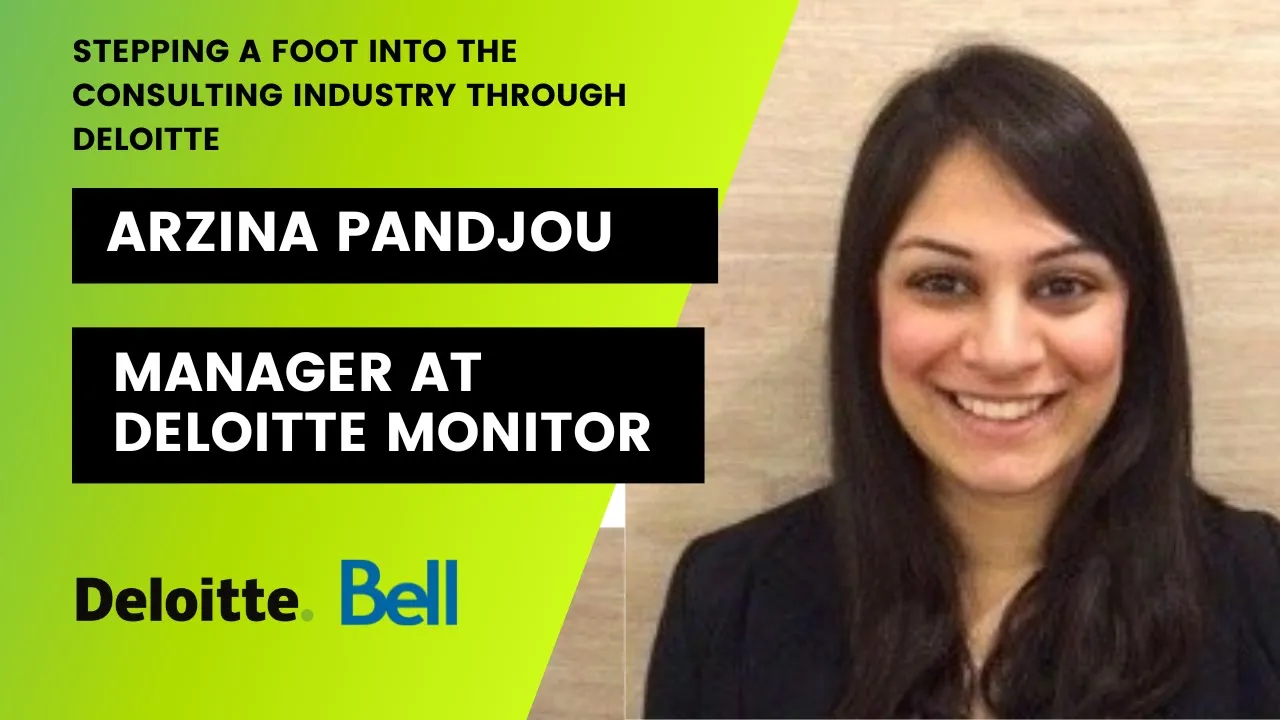
hi aren we are so excited to have you join us on today's episode and learn more about your career Journey let's get started with the first question can you start by giving us a brief introduction of yourself and tell us a bit about your educational background career journey and how you ended up working in strategy Consulting yeah for sure well thank you for having me pretty excited to share my experience so I did my undergrad at Queens University I was did a bachelor's in Queen Commerce and then after that I joined B Canada so that's
a large telecommunication company within Canada and joined their rotational programs so as part of that I was able to go through different business units try out for six months and then move on to the next role so I think that was a pretty interesting experience for me to really learn about the business and then kind of decide where I wanted to land full-time or you know what role I wanted to work at fulltime with in Bel so as part of that I I worked in business intelligence I worked in loyalty retention project management got quite
a diverse experience I was at Belle for maybe around four five years and then I decided to go for my MBA just because I wanted a little bit of a different career path than what I was on so I went to inad from my MBA it's a one-year program their campus is based out France and Singapore and once I graduated I actually ended up moving to London UK to work at centure and worked for their Consulting practice as well specifically on customer strategy and experience I then ended up wanting to move back to Canada just
because it was around the time of covid and things weren't kind of you know great in UK with all the lockdown so I moved back to Canada and ended up kind of you know reaching out to different people within Toronto offices and seeing where I wanted to land and monitor was one of the places where I really clicked with the people that I talked to and um I figured you know it'd be a good one for me to kind of join and get an experience at a different firm just that you know I'm not transferring
from Accenture UK to Toronto which usually it's you know you don't have as much control over it so I wanted to kind of do it at my own terms and that's kind of how I ended up at deoy and and within the monitor practice thanks for that it seems like you came a long way to end up to where you are today and yeah congrats to you as well and as you're talking about the Loy monitor can you provide an overview of the Loy Monitor and its role within the ly's Consulting practice yeah for sure
so how I think about deoe is there's five main businesses that deoe has so Consulting is one of the five businesses and even within Consulting they have many different practices so strategy analytics and uh m& is one practice within Consulting another one could be like human capital for example So within strategy analytics and m&a is another level which is where monitor deoe fits in so you know where the strategy section within the Consulting practice that m&a is separate analytics is like another team so kind of like many many layers because Deo is such a big
organization we focus primarily on strategy for different Industries so there's FSI which is financial services Insurance government or public sector customer experience consumer products so there's a quite a few different teams within the strategy practice as well so you can kind of decide if you want to be aligned to a specific industry or you could also be a generalist but generally the monitor practice is more the strategy Consulting practice perfect thanks for that I learned a lot as well and what specific skill and qualifications do candidates typically need to be competitive when applying for positions
at the Loy monitor yeah I think just things to think about in terms of skills and qualifications is you know what are they looking for and if you really think about what are they're looking for one of the best sources is the job description itself I feel like that always tells you you know what that role requires but generally I would say it's like the ability to solve complex problems you know being analytical and being curious on how to solve those problems I think communication skill is a very important skill because you're facing many senior
Executives at clients so you want to be able to communicate effectively and articulate what the strategy is or what you're trying to get to so internally also communication matters because you're working with you know senior leaders within the organization to help support on the engagement so I think overall communication is super important and I think the last piece I would talk about is like ownership or leadership even regardless of what level you're at I still believe you need to be a leader because whatever little practice or whatever little activity you have you should be able
to lead it or own it end to end and be curious to ask the right questions you know have the drive to solve it yourself and reach job for support where you need it which is always available but you need to be the one owning it you know within the client context but also ownership is important when you think about your career as well like you want to be the owner of your career and you know where you want to go next like people can guide you but I think you need to have the right
kind of mindset in terms of where you want to go and how do you want to own that thank you for that yeah I'm sure those are all really valuable traes that you need to have when you're applying for the lwy or just any role in particular as well are there any particular educational backgrounds or degrees that are preferred or advantageous for candidates interested in joining the Loy monitor yeah so I think I would say definitely open to you know people with different educational backgrounds like I feel like we are interested in people who have
engineering background or economics so it's I think it's diverse but I definitely see a lot from like Core Business Schools come in and we are trying to make an active effort to make sure we're not just hiring from like people coming from business school but also looking at other candidates who might have a little bit more diverse experience and you know bring that New Perspective into the engagement so in my opinion I think business is a great kind of undergrad degree to have but if not like I wouldn't say that would stop you from getting
within deoe or monitor yeah thank you for that it's nice to hear that big companies such as deoe are also looking for all those diverse degrees as well not just one in particular and can you can you describe the typical career path for someone starting as an entry level consultant at the Loy monitor yeah for sure so how it works within monitor is you start off as a consultant I think some firms have analyst level So within monitor you start a consultant level after consultant you move to senior consultant and then after that you move
to manager and then Senior manager and then after senior manager kind of depends either you become director or partner or depends on like you know the practice itself but say like typically you spend like around two to three years at each level even within consultant you know there's different kind of tiers of bands that you're in in terms of like your progression with at the consultant level so I'd say like overall those were the kind of defined I guess levels and then you move maybe every two three years depending on your experience and how you're
performing and how important is prior Consulting experience when um applying to the Loy Monitor and what types of Consulting experience are most valued yeah so I would say like I didn't have a Consulting background when I joined well when I joined Deo yes I did but like when I joined Accenture I didn't necessarily have a Consulting background so I would say like I don't necessarily believe that you always need to have a Consulting experience I think what's more important is to have transferable skill set you know skill set that you can gather from different experiences
you know be it from your school like undergrad experience of leading the communities or organization you know like being able to communicate and lead the projects within your school projects and things like that so those type of transferable skills are I think more important and I think the other piece probably important as you're interviewing for monitor is like the ability to solve a case so I think that's you know an important piece to keep in mind is like you can have you know the right experience in terms of transferable skills but you should also be
able to kind of successfully pass the interview at the load you mentioned interview so this leads actually to my next question of can you share any tips or strategies for preparing a strong application and resume when applying to the loint monitor yeah I mean for sure I think the main piece is you know customizing your resume to the kind of job description or where you're applying so you know if you have specific experience within an industry and you're interested in that industry with after you join you can definitely highlight that experience and you know I
think that will will help you kind of differentiate yourself other things to keep in mind as I mentioned like you know the leadership being able to work in teams being able to you know showcase your analytical skill set all of those are pretty important to highlight in your resume so that you know that come across in your application the other piece I would mention is the networking so I think a lot of times how you get to apply and get accepted to get to the interview stage is also like the networking that you do so
a lot of times you know you can either reach out to people in LinkedIn you can like you know de Representatives would come to school so like I think there's a lot of networks and a lot of avenues you could have for networking but I do believe that's important so that you can learn more about you know the company and where you're applying so then you can then differentiate yourself in terms of highlighting what Deo is looking for versus what you are able to bring to to Dey and as candidates are um accepted to an
interview what is the interview process like for candidates applying to theoy Monitor and what types of questions or assessments should they expect yeah I think the process kind of varies a little bit but generally it's it's very similar and consistent you would always have one sort of case interview I think like the number of case interviews would be what might vary so for example I'll tell you about my experience where I did two case studies and the behavioral in my first round and then once I was successful in the first round second round was more
having behavioral behavioral interviews with the senior leaders that I would be working with within monitor so I think generally it would follow the same concept of having case studies and behavioral I think what might vary is like the number of cases that you might do or the number of behavior interviews you might go through what advice would you give to someone who is passionate about cons Consulting and aspires to work at the Loy monor but may not have a traditional Consulting background yeah again I think like the networking piece is important not only just to
you know learn about the company but also learn about you know what a consultant does dayto day like how does it work like what skill sets or what kind of job like engagements are they part of you know what value are they bringing to deoy and how is deoy helping them in their career I feel like it's important to know that as well so that when you go apply you can tell you know here's what I bring to the table here's why I'm excited to join deoy as well in terms of how deoy will help
you to get to the next level or like in the next 5 years where you want to be and how deoe will help you get there and what you will bring to deoe in the next 5 years as well so I think that kind of mentality of like learning about uh the company itself and then the other piece I would say is like definitely prepare for the case studies and behavioral interviews I feel like a lot sometimes I've done interviews with people and they're like surprised that you can't use a calculator which is like kind
of basic case study concept of like you can't use a calculator and you need to do mental math so having prepped and done a few cases is very important that you're like successful when you actually need to do one under pressure you know add an interview setting thanks for that I'm sure our students will um take away these advises in the future and um as someone deeply involved with the ly what ongoing professional development opportunities and re resources does the ly M offer to his consultant yeah so there's a lot of like small community groups
that you can join so there's like the women's um leadership organization that helps have events and speaker sessions and things like that so there's many that you know you could join in terms of the interest that you have there they have ones for like financial services and they'll bring in speakers to talk about what are the latest kind of happenings within the financial services sector and Industry so those kind of sessions are one thing the other thing I would say is sometimes they have alumni events so you get to talk to people who worked at
deoy and now have gone to on to other companies so I think that's always an interesting experience and then the last piece I would just point out is something really cool that deoe does is deoe University so at every level that you are within deoe As you move to Next Level you get to join on a two three day you know kind of learning session you get to stay at the deoy University Hotel like you get to stay with your peers you get really get immersed in that University experience and they go through quite a
few different you know skill set building exercises you know some more knowledge sharing kind of sessions and things like that which is always interesting to do as you're moving on to the next level so I think they have quite a few different resources available is this what you're interested in and you know are wanting to pursue um I was very intrigued when you mentioned the law University I've never heard of that and I'm sure those are really helpful for um people who are at the ly and looking to be more successful in the future and
to move up I guess the hierarchy as well and how does the Loy monitor support work life balance and employee well-being within the Consulting industry yeah so I mean generally the ly is pretty flexible in terms of you can have flexible work Arrangement if you would like that I find like it's also just depends on like the project and the team you're working with but generally everyone is kind of you know great with working around what might be your important life events or things that you need to do so for example at the start of
a project you might do a little bit of a team pledge and there you can talk about like here's what's important to me and you know and the team then try to accommodates and make sure that you're able to do what's important for you but then just outside of that you know there's things like personal days you also get a lot of service that check in with your well-being you have your coach who kind of checks in on you and then the last piece I would say is like you know we have a pretty great
coverage with insurance companies in terms of Mental Health Resources that theoy helps support and provide you know insurance coverage for so I think that those are always great resources that that Theo provides perfect and can you share any personal experiences that highlight the unique aspect of working at theoy Monitor and what makes it a desirable career choice yeah I think for me it's the people that I get to work with so I join within a specific practice within deoy and like so I kind of try to work with those people specifically not to say I
haven't done projects with other teams it you know it all depends on Staffing and things like that but I think it's the people that you get to work with and kind of you know having those team events and team bonding experiences that really make it special in terms of being able to be part of a team where you know you have a little bit of a home team to come back to because it within Consulting you know you're always staff with different people all the time like you're not always working with the same people so
it's nice to have like a little home team to come back to and kind of share your experiences with but then also get guidance and you know support on your projects thanks for that and my final question for you is what resources or next steps would you recommend to someone interested in applying to the Loy monitor to increase their chance of success in the application and interview process yeah I think overall as I mentioned like you know first part is getting this interview right so securing the interview and from that comes out of the fact
that your application or your resume is strong but then also that you stand up to the hiring manager right so being able to network or also just making sure that your resume really um highlights you know how you are different from all the participants or all the candidates but then also like what will you bring to the table I think that's always important to highlight I think it's also important to remember you know there's a set job description that they provide and make making sure that you understand what that job description is and that you
can use that to kind of tailor your resume I definitely think there's a lot of like case study resources available to make sure that you're prepared for like the case study section of it again same for Behavioral I think there's a lot of like you know great resources out there available to help you prep your behavioral you know interviews so I think it's like identifying what is your weak spot almost like is it your application your resume or is it about the actual interview process and then figuring out okay like what it is that you
know obviously when you Google and things like that there's a lot of uh resources to defining where you want to focus on and then using those resources to help you get to that level thanks for that um I'm sure our listeners will um learn lots from what you've um said and also from your experiences as well that was the last question we would like to ask you thank you so much for sharing all your insights and joining us on a guest on the podcast today and we really appreciate this tie and enjoy the rest of
your day thank you for having me