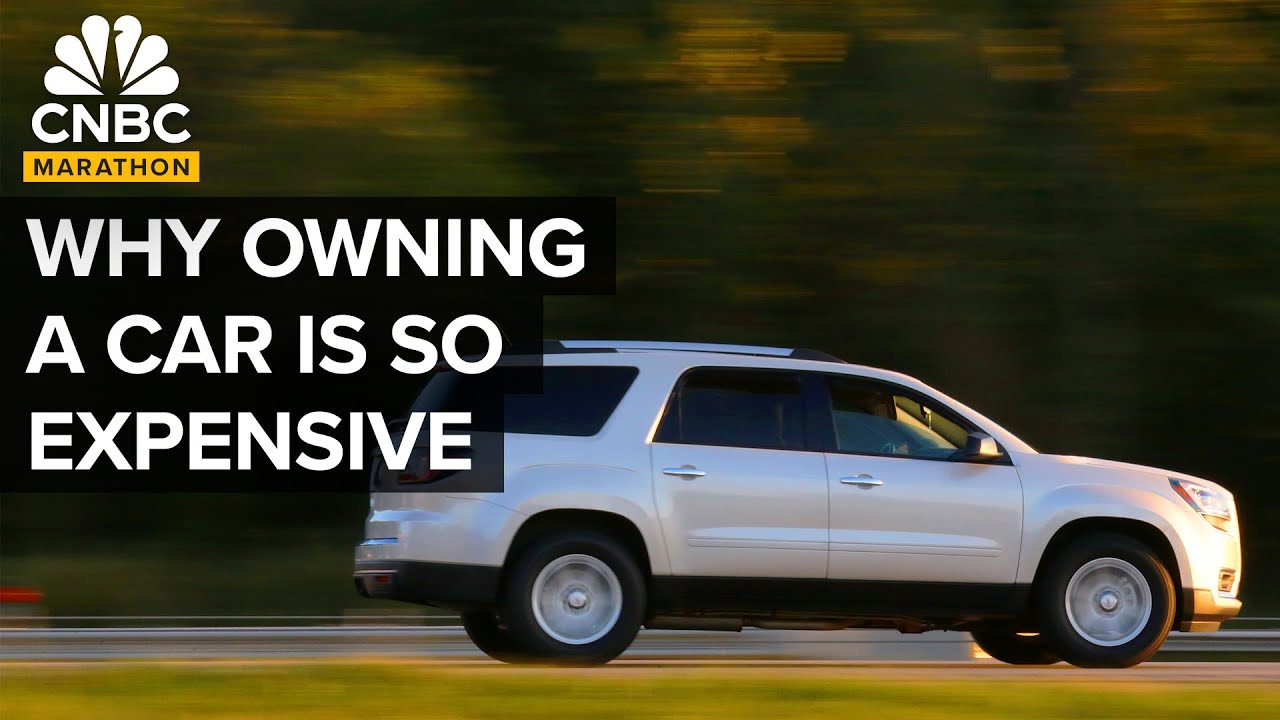
This is my car that I use and it's considered the family car. This car over here is my husband's car. This one that we actually have for my youngest daughter.
This is probably the cheapest car for insurance coverage. Car insurance has gotten expensive. The average annual premium for full auto insurance in the US spiked 26% in 2024 from the previous year to $2,543.
Fewer auto mechanics, a tighter supply of used vehicles, record health care bills and litigation are fueling rising prices. If these rate increases continue to go up, I'm not quite sure that we would all be able to have cars, because I don't think we would be able to continue to insure our cars as a family. We're middle class income, family, two incomes, and we're still trying to figure out how can we actually get by on a month to month basis.
It's fair to say in the last couple of years, the average consumer has seen over a 20% increase in their auto insurance premiums. Some have seen much more than that. Higher premiums have resulted in an increase in the number of uninsured drivers.
It is also coincided with higher stock prices for the nation's leading auto insurers. Progressive had an incredible quarter. It's driving all the insurers up.
This group has been very hot. People love the insurers. But there are other factors impacting car insurance rates, too.
Cars are becoming costlier to fix and American drivers are becoming more reckless. In 2019 and 2020, there were an average of 3. 8 million emergency room visits for injuries from car crashes annually in the U.
S. The following year, more than 6. 1 million motor vehicle crashes were reported to the police.
Everybody's got a story about something crazy that they saw on the highway or just more people driving around, you know, texting on their phones and things like that. Motor vehicle crashes cost Americans an estimated $498 billion in 2021. So what's really behind the spike in auto insurance rates?
How do insurers set that rate and what impact are rising premiums having on consumers and the large publicly traded companies like Allstate, Progressive and Berkshire Hathaway's Geico? Dawn King lives with her husband and two daughters in suburban New Jersey, an area with limited public transportation. With four full time workers and four cars the family has faced an uphill battle paying for car insurance in recent years.
In September of 2023, I got a renewal and it went up to about $3,100 for four drivers, four cars for six months. I just got my renewal policy last week and it went up again, and I'm now paying close to $3,900 for those same four drivers and four cars. Mandated by the government most states require some type of car insurance to drive legally.
New Jersey saw its full auto insurance premium rise 45% in 2024, from the year prior to $2,555. Americans, on average, spend 3. 4% of their income on full auto coverage.
My car and my oldest daughter's car are the two expensive ones on the policy. Because they are leased vehicles the car insurance company requires a higher coverage on those vehicles. We're faced with the decision of if we actually even contact our insurance, because it feels as though when something does unfortunate happen, we have to then deal with the penalty of actually filing a claim and then having to now pay even more on top of the increased premiums that we're already getting.
In an attempt to lower her rate, King took a self-defense driving course, downloaded an app to monitor her driving, and was advised by her insurance agent to run a credit check. If things continue, it's pretty hard to deal with because it it then puts us at a point where we have to decide, okay, well, how little coverage can we actually get by with if it keeps costing more and more? As a family who is just a middle class family who's struggling to make ends meet with everything that has increased since the pandemic, I feel like we're kind of at a loss on what to do.
With fewer drivers on the road and a decrease in accidents at the start of the pandemic, auto insurers refunded customers billions of dollars in April and May of 2020. But as supply chain issues mounted and inflation rose, those insurers faced increased costs for everything from spare parts and labor to litigation and car rentals. So went from an environment of prizes for consumers, where they're receiving a check in the mail or an electronic deposit from their insurers to they get a renewal notice for their auto insurance policy, and they're seeing 10%, 20, 30% increases in their premium.
By 2022 private U. S. auto insurers were facing their worst underwriting results in more than two decades.
The top ten car insurance companies represent more than 75% of auto policies in the U. S. .
The last two years, auto insurers as a whole have lost money writing auto insurance because the cost of paying claims and other underwriting costs are greater than the premiums are bringing in. The combined ratio, a measure of profitability used by insurance companies to gauge their performance, is calculated by taking the total of incurred losses and expenses, and dividing that by the earned premiums. Anything over 100% means an unprofitable year.
So having a 112 combined ratio by 2022 was absolutely horrible, and some companies did a lot worse than that. Inflationary headwinds weren't the only challenge insurers faced in recent years. At that point in time, 2016 and 2017, use of iPhones just took off in the car and a lot of accidents occurred as a result.
There was also driving while under the influence of marijuana. It shows that these insurance companies need to be vigilant, right? Because if they're not, you could end up in another situation like 2016 and 17 or the horrible situation that we've seen in the last three years.
So they really, when you think about it, they really need to get the price in order to be profitable. To slash their overhead insurers trimmed staff and cut back on their ad budgets. Farmers Insurance laid off about 2,400 people, or 11% of its employees, in 2023, Geico slashed its advertising spend by $800 million to $1.
2 billion in 2022 from the year prior, or a 38% decrease. But it was higher premiums that had the biggest impact on the insurer's bottom line. In 2023, most large auto insurers increased their rates by double digits.
In the past about 12 months. We're in an environment now where essentially all insurers have aggressively increased premiums, and that has led to an environment now where the consumer, the insured, is out shopping for auto insurance and finding that they cannot get an insurer, they cannot find an insurer that has a lower premium for them. I knew that were going to be price spikes due to inflation.
And in the wake of the pandemic, you know, there were some supply shortages, repair costs have gone up, so there was going to be something. But the insurance companies have taken it way too far. And the prices that we're seeing right now are really out of scale with the cost of inflation.
In an email to CNBC, Allstate said we provide affordable coverage and help customers save money with discounts like bundling and products based on how they drive like drive wise. According to analysts, with their margins improved, insurers like Allstate and Progressive could be entering a new phase of growth. You're starting to see year-over-year improvement.
Most books are not quite profitable yet, but they're on the path. While your vehicle type and driving record have a major impact on your auto insurance rate, not everyone pays the same amount. New Yorkers with poor credit, for example, were found to have been charged almost three times the amount as residents with excellent credit.
Other than in California, Massachusetts and Hawaii, where it's illegal to use credit scores. If you have a low credit score or even just a fair credit score, you know, a 650, 700, you're going to pay a lot more for auto insurance than somebody with a very high credit score, even if you have a perfect driving record. In fact, in most states with an excellent credit score, you can have a drunk driving conviction and still pay a lower rate than a good driver with a poor credit score.
Insurers say drivers with good credit are less likely to file insurance claims. They don't use your credit score, but they use elements of your credit score. It's called a credit-based insurance score, and it's proven to be one of the most predictive things of whether or not you're going to have claims in an auto insurance cost.
Other socioeconomic factors that push up rates for lower income drivers include having a blue collar job versus a professional title, lacking a college degree, being single, divorced or widowed, or renting versus owning. Your home address is also a factor. According to a 2015 report, insurers charge premiums on average 70% higher to drivers in predominantly minority communities compared with drivers in non-minority communities.
I think it would help consumers to remember in most cases, your auto insurance premiums are not being set at an individual level. They're being set based on a group of people that are similar to you. Around 215 million Americans own auto insurance.
The market is valued at roughly $353 billion in 2023. As insurance premiums have spiked, so too have the number of uninsured drivers. While estimates on the number of uninsured drivers in the U.
S. Vary from as little as 5% to over 10%, the number appears to be increasing. If you're making a decision between paying these higher premiums that you might see a 10, 20, 30 or greater percent increase in your premium payment to your auto insurer, and you're deciding between that and paying other bills that are coming in, putting food on the table, etc.
a greater share of consumers than in the past have shown that they're willing to drive uninsured. Drving without insurance can trigger severe fines, impounding your car or even jail time. It also makes it more expensive for insured drivers.
But it is the increase in auto deaths that has safety officials most concerned. While the death rate for crashes in the U. S.
Has fallen about 90% from its 1920 levels over the past few years, the number of fatalities has increased. The amount of traffic fatalities in the U. S.
Increased more than 16%, from 36,000 in 2018, to an estimate of over 42,000 in 2023. Increasingly complex dashboards, bigger and heavier cars, the opioid epidemic and the legalization of cannabis may all be contributing factors. When there are more crashes and when the cost of those crashes are more, that means the costs are higher.
That's the base of what we all pay. Another trend alarming car safety advocates is the volume of people texting, scrolling, or glued to their mobile device while behind the wheel. Distracted driving, which includes cell phone use, eating and talking to other passengers, claim more than 3,500 lives in the U.
S. in 2021. U.
S. drivers in general spend almost triple the amount of time looking at their mobile phones while driving than do their UK counterparts. Improved safety features in cars may be giving drivers the false impression they can spend less time focusing on the road.
But what can drivers do to save money on auto insurance? Bundling your home and auto insurance can save on average 14%. Other tips include increasing your deductible, maintaining good credit, shopping around for better rates, and paying your annual premium in advance.