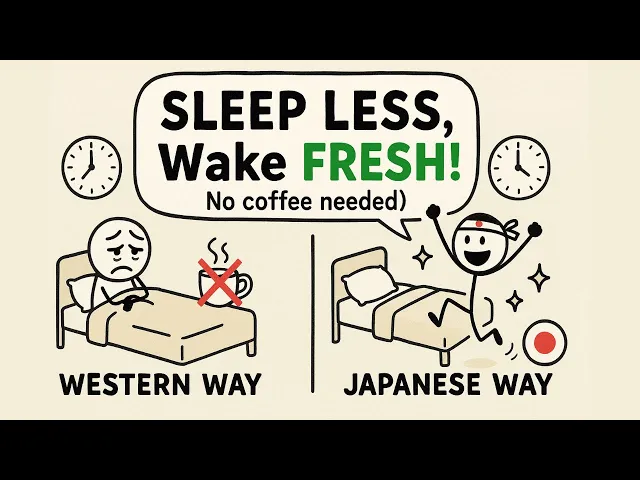
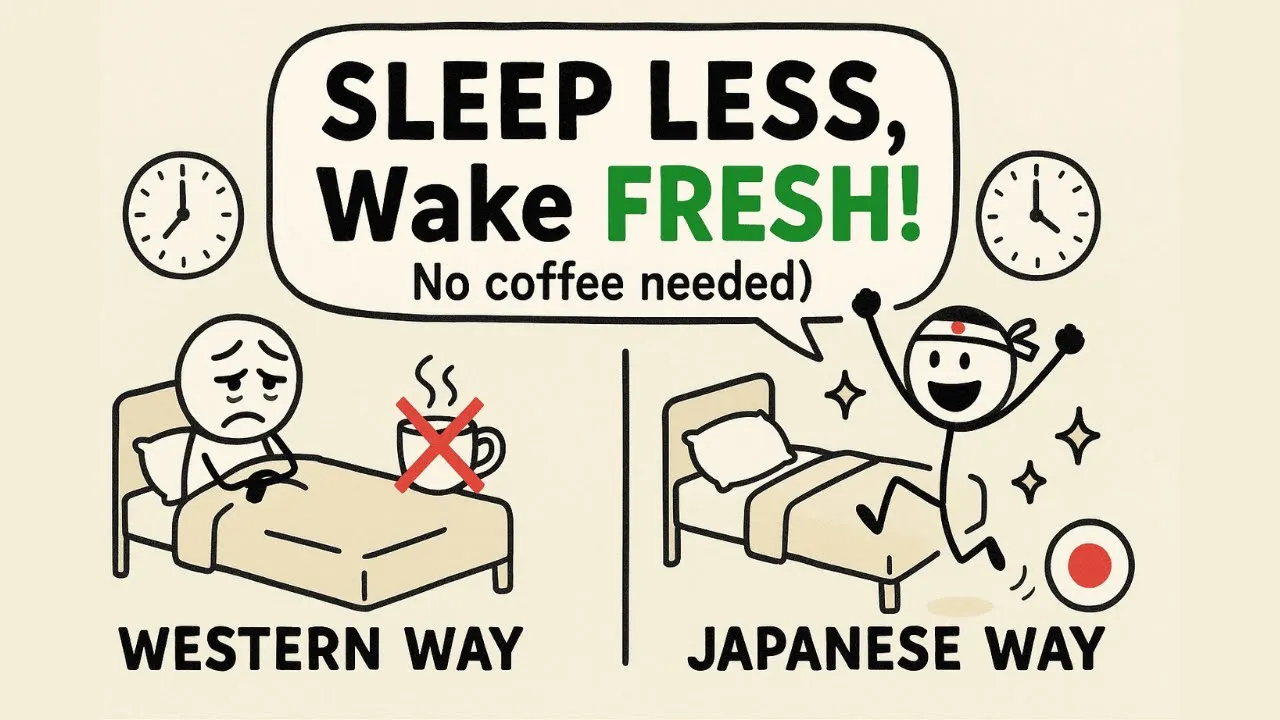
You sleep seven hours, you do everything right. Go to bed on time, avoid caffeine, even shut your eyes before midnight. But still, you wake up groggy, foggy, and reaching for that double shot of espresso.
Frustrating, right? Now, here's the crazy part. Someone in Japan sleeps the exact same 7 hours and wakes up fresh, focused, and full of energy.
What's their secret? Is it genetics? Some magical futon?
Or have we been doing sleep all wrong? Welcome back to Easy Way, actually, where we take big ideas and make them simple. Today, we're diving into the sleep habits of Japan.
How they turn just six to seven hours into deep, energizing rest, while many of us sleep eight and still feel like zombies. But don't worry, you don't need to fly to Tokyo or buy a $400 mattress. I've done the research for you.
In this video, I'll break down seven powerful sciencebacked Japanese sleep habits that can help you wake up refreshed, even on limited sleep. Let's go step by step. And yes, you can start applying these tonight.
Step one, cool down your cave. The temperature shift that changes everything. A massive study across 2,000 plus Japanese homes revealed their bedrooms average around 55° F or 13° during sleep.
Compare that to the American average of 68 to 72° F. It's not about comfort, it's neuroscience. Sleep scientist Dr Matthew Walker explains that for your brain to enter deep restorative sleep, it needs to cool down by 2 to 3°.
A colder room helps your body do that naturally. Try this tonight. Set your thermostat between 60 to 65° F.
Or if you're in a warmer climate, use a fan or open a window. You're not a lizard. You're just giving your brain the cool signal to start healing.
Step two, support, not softness. We love plush cloud-like beds. But here's the truth.
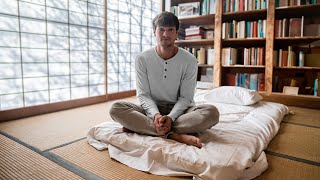
Your spine doesn't want comfort. It wants support. In Japan, people sleep on firm futons over tatami mats.
It sounds tough, but it helps keep the spine in perfect alignment and reduces pressure points. Two things that lead to deeper uninterrupted sleep. Poor sleep posture equals micro awakenings equals groggginess.
James Clear, author of Atomic Habits, would say small changes compound. Swapping to a firmer surface may seem minor, but the sleep gains massive. Step three, hot bath, cold room equals sleep magic.
Here's where Japan really wins. The Ouro ritual. A hot bath around 104 degrees Fahrenheit or 40° C before bed.
Now, you might think, a hot bath before bed. Won't that make me hotter? Actually, it tricks your body into cooling down rapidly afterward, which signals to your brain that it's time to sleep.
It's like pressing the sleep mode button for your body. Your move. Take a hot bath or a shower 1 to 2 hours before bed.
The drop in core temperature afterwards sets the perfect stage for deep sleep. No Netflix needed, just soak, relax, and reset. Step four, shift the shame around sleep.
Here's a cultural bombshell. In Japan, saying you look tired, is a compliment. It means you've worked hard.
It's respected. Even napping in public, called inamorei, is seen as honorable. Contrast that with the western hustle mindset.
Sleep is for the weak. You snooze, you lose. And when we do feel tired, we hide it with caffeine instead of fixing the root cause.
Let's flip the script. Tiredness isn't failure. It's feedback and honoring it helps your nervous system relax, making sleep easier.
So, tonight, don't fight it. Respect your body's signal you've earned it. Step five, master the mini nap.
Another Japanese secret, strategic sleep. They don't obsess over hitting 8 hours every night. They focus on efficiency and recovery.
Short naps, around 20 minutes, can boost memory, mood, and focus without groggginess. You don't need more sleep hours, you need better sleep habits. James Clear would call this optimizing the system, not obsessing over the goal.
Try this. Instead of forcing 9 hours every night and feeling guilty when you fail, build in a 20inut recovery nap during your day. Less pressure equals better rest.
Step six, tech off means sleep on. In most bedrooms, phones, tablets, and TVs have VIP status. But these screens blast blue light that delays melatonin production, your sleep hormone.
Japan has tech, too. 95% of teens own smartphones, but they follow stricter screen discipline. No chaotic content right before bed.
Your new habit, one hour before bed, go screenfree or switch to low light mode and calming audio content. Give your brain a break before it breaks you. Remember, your bed is not a cinema, it's a sleep zone.
Step seven, upgrade your pillow game. You might not think your pillow matters, but imagine spending 8 hours with your neck tilted the wrong way. That's what most soft, puffy pillows do.
Japanese people use sobakawa pillows filled with buckwheat holes that adapt to the neck's natural curve, not the head's weight. Check the link in the description for purchasing one. Research shows up to 50% reduction in neck pain when switching to proper neck support.
Your neck will thank you every morning. So, what can you steal from Japanese sleep culture starting tonight? Keep your room cool 60 to 65° F.
Take a hot bath 1 to 2 hours before bed. Sleep on a firmer surface. Reframe tiredness as a signal, not a weakness.
Take short strategic naps. Set tech boundaries one hour before sleep. Use a supportive pillow that aligns your neck.
These aren't massive life overhauls. They're tiny tweaks that build up just like any good habit. And the results?
Deeper sleep, more energy, clearer thinking. Because better sleep isn't just about feeling rested. It's about performing at your best.
Here at Easy Way, actually, we believe in making hard things feel simple. So, now it's your turn. What's one sleep habit you're going to change tonight?
Drp it in the comments. I'll be reading everyone. And if this helped you, share it with someone who's tired of being tired.