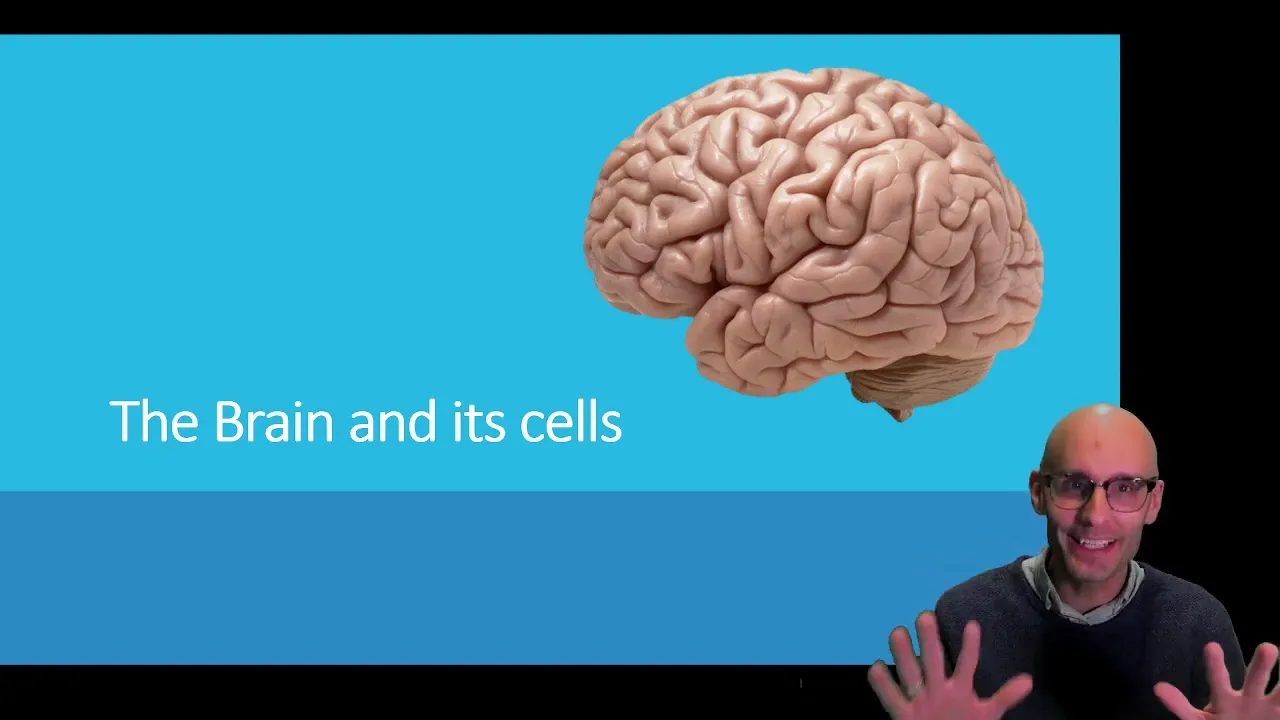
hey everyone Dr J Cordy here and in the next few videos I want to cover the Immunology of the brain the immune cells within the brain the immune cells around the brain how the immune system can interact with the brain and how the immune system integrating with the brain can cause disease but to understand that we need to understand the brain so we need to get a basic understanding of what the brain is how it works in order to understand how it might go wrong when the immune system starts to get in there and interfere
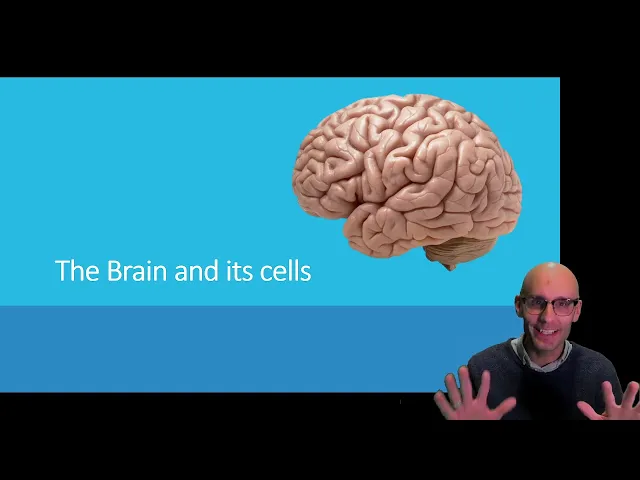
with some of the functions of the brain so we need to do an absolute tiny crash course on the brain now this is not a neuroscience lecture because we can't go into those complicated details of action potentials and all this Jazz but I am going to give a brief breakdown of many of the cells within the brain and how they work so here's the brain here I always like to think of it like a boxing glove on the side wait wait where's my thumb anyway like that there we go a boxing glove on the side
that's the temporal lobe so that's right there that's the thumb of the boxing glove now we see all these grooves on the brain those are called sulky and the the non-grooved parts the bulbous parts are called jirey now the reason why we have those is this outer area of the brain is called the cortex it does a lot of our higher level thinking um so humans have a very large core Tigers because we do things like social planning and all this kind of stuff it's where like the real big brain stuff happens and in order
for the human brain to pack as many cortical neurons as it can it needs to do this folding technique and that's because cortical neurons are largely in the outer layer of the brain so if you imagine if I've got this much space and I just have a smooth brain then I can only fit so many cortical neurons in that outer layer but if I wiggle that and so now it comes up and down and up and down it's ruffled like a scrunch piece of paper now I've got much more surface area in order to pack
way more cortical neurons on that's why the term smooth brain can be used as an insult so you're a smooth brain imbecile is a good insult um so mice and rats are really smooth brains but you know even things like sheep have quite wrinkly brains and elephants brains are crazy wrinkly they almost look like a dehydrated Walnut or something but the human brain is very wrinkly because we do a lot of big brain stuff okay so that's rough Anatomy the other thing I kind of want to point to down is the cerebellum it's a little
mini brain within a brain it's very computationally heavy and I might bring that up a little bit later and it's evolved in things like balance and proprio reception and amazing stuff if you take it out the whole brain goes crazy so it's a very complicated organ in itself but it's this little thing down here okay cool so neurons neurons are why the brain exists right the neurons do the computation of the brain they do the thinking um they are an electrical cell that means that they fire off they have these electrical currents that flow through
them and they do the computations of the brain they're highly connected here's a a diagram of them um and they're highly connected and you can kind of see these little dots along each of these processes now each of these dots is actually a connection with another neuron and we call that a synapse and the connecting kind of swells up and so that's why we can see it as a little Dot and though each of those connections are a synapse and they are critical to the function of the neuron so I keep saying the neurons neurons
are electrical um and and so here we can actually see this is a fluorescent image of a depolarization or an electrical current flowing through a neuron let's see will it go again I don't know what the timing there it goes boom and so there's an incredibly rapid thing and when you think about it electricity is kind of the perfect thing to use for this computational uh process because it's incredibly fast right and if we if we use the slower molecular process um like uh like some sort of protein uh production or something like that if
we used a slower physiological process they're now thinking would have to slow down whereas an electrical poles is an incredibly fast thing and that allows for communication at a distance incredibly quick now it's One Direction as you can see here is the communication of the neuron that's not strictly true there's always exceptions to all biological things but largely the communicate a neuron is about receiving inputs from the top um in an area that we call the dendritic tree and sending out a single output down the axon and the communication that goes down there is an
electrical current now I don't want to get the details there but it's not electrons flowing down the neuron it's just a flux of iron so it's really just sodium coming from outside the cell into the cell as well as calcium what we're Imaging there actually is calcium going from outside the cell into the cell so it's not electrons but it the the flux of those positively charged ions manipulates the electrical field so that's why it is electrical and if we were to put an electrical current through a neuron we can get it to Fire and
anyone who's grabbed an electric fence understands that principle okay so I mentioned yes so neurons largely have an input in What's called the dendritic tree and they connect to tens hundreds probably thousands of neurons and then that is sort of computed into an output now while the within cell communication so the as the information flows down and you're on that's electrical when the information wants to flow from one uh neuron to the next neuron that's typically now there's always exceptions again but that's typically done by neurotransmitters and so neurotransmitters are a chemical that's released at
the end diffuses across the synapse the connection between the two neurons and it binds to receptors on the downstream neuron so it looks a little something like that so we've got a bunch of connected neurons there and so the electrical flow will come down the axon here and it will stimulate the release of neurotransmitters so here's some neurotransmitters and they will activate the receptors now neurotransmitters can do lots of things there are auditory one so that will cause an electrical current in the downstream neuron and there are inhibitory ones that will try and inhibit an
electrical current in the downstream neuron now really crudely speaking is what's happening is the neuron is um combining its inputs and sort of summing up its inputs and deciding quote unquote molecularly deciding based on my inputs should I fire and signal to my Downstream neurons now if I could break this down a little bit more what I'm about to say is actually not crazy far from the truth it sounds like a massive oversimplification oversimplification but it's not crazy far from the truth imagine we have a neuron that's a cat neuron and so it fires when
we see a cat and what its inputs might be is you know whiskers a tail fur cute and spawn of the devil and so once it gets those inputs into its dendritic tree it says okay I've got enough of my matching inputs of it's got a tail it's got whiskers that's got fur it's got everything that means I should fire and then it will fire and tell everything Downstream that we've seen a cat so maybe you should go pet it or run from the hills depending on what kind of human being you are now what
you could also Imagine is that there is an input called a patch right and so if this furry animal has a pouch that might input into this neuron and it might release an inhibitory uh neurotransmitter that will inhibit the firing of this neuron now all those neurons might also act on another neuron that might be a possum neuron and it has a tail a fur it's got eyes it's also the spawn of the devil I'm a New Zealander so I'm allowed to say that um okay and it has a pouch and this time the pouch
may not be inhibitory it may be excitatory in that neuron and so instead the possum neuron fires when it has a pouch and when it doesn't have a pouch the cat neuron fires now you think I'm oversimplifying it but they've actually done studies in human patients and they found like a single neuron that responded to Jennifer Anderson and it wouldn't respond to Angelina Jolie or Brad Pitt they had a holly berry one as well they found a Halle Berry neuron that would fire to Halle Berry but it wouldn't fire to anyone else and so it
sounds like an oversimplification but it's likely that those attributes input to a single neuron that fires that then tells but it gets way more complicated because it's integrated what were the chances that they would find a single neuron that can really recognize Jennifer Anderson it's probably that that neuron recognizes a few things that are miles apart from each other perhaps like a like an octopus and Jennifer Aniston and so anyway it's complicated but roughly what I've seen is a great description of how neurons do their computation how they do computing okay next up there's glial
cells now roughly 50 of the brain is made up of glial cells glial cells comes from the word glue and it's because when they were originally discovered they were thought to sort of glue the brain together glue all the neurons together but actually they're a diverse group of cells that have complicated lives in their own that are hugely important to the function of the brain these glial cells now they're 50 numbers a little bit tricky in the cortex where we do our big brain thinking um uh it's actually only by number 10 10 to 20
neurons and mostly clear but in places like the cerebellum it's mostly neurons in a little bit of glare so it does depend on the function of the brain and what's going on there about the proportions but on average across your whole brain it's roughly 50 Global cells now there's several types here now this isn't an exhaustive list this is just some of the main ones so I'm just going to mention some of them there's ependymal cells oligodendrocytes astrocytes and microglia so let's briefly uh skim over each of these so ependymal cells they essentially line align
some of the cavities within your brain and their main job is the production of the fluid the brain uh the bathes the brain and that's called the cerebral spinal fluid so your brain is like floating in a vat of liquid and that liquid is really tightly controlled what's in that is critical like you imagine your brain's the most complicated computer on the earth it needs to be in an environment that's very tightly controlled so that's the main function of the epidimal cells and they line the cavities called ventricles in the brain and that's where they
produce things now they have these projections these cilia and billy-like structures that help actually flow the cerebral spinal fluid around the brain which is kind of kind of gross I kind of imagine it like a CNN anemone bed flowing in the cerebral Splinter fluid as it kind of causes lovely oscillations of the fluid that your brain is floating in um next up we have oligodendrocytes um they wrap axons so they're the projection that comes out you see this part down here you see all these blue uh blobs there these are myelin fatty sheaths that wrap
axons and essentially it accelerates the electrical conductance it changes the electrical properties of the Exon to make it go faster and it can make it go orders of magnitude faster and different neurons have different myelination status including your pain versus your touch neurons and so often you'll be able to touch something and feel that you've touched it before you can feel the pain and that's because of the different conductance speeds of those different neurons so when you touch an element you feel the touch before you feel the pain and that's because one of them is
myelinated one of them isn't in the myelinator one goes faster than the amyla negative one um yes which is a funny feeling if you've ever stood on an attack you feel the tag then you feel the pain okay anyway um there's pros and cons to myelination it makes your brain more rigid and so when you're young your brain is like not very myelinated which makes it lives fast at communicating but more easier more plastic and then as you age your brain gets more myelinated which makes it less plastic less changeable but faster operating for example
okay and next we've got extra size the extra sites are can sort of be glial cell um they are a huge percentage of the brain and they're the most common glial cell if you ever do a stain for glia um in the brain they're just absolutely the brain is thick with glial cells and they kind of do everything it's really hard to narrow down what they do they are an extremely diverse function cell they do do immune surveillance so they have pattern recognition receptors they're only cytokines they do do a bit of immune surveillance one
of the big things is blood flow modulation so um if a neuron is firing Lots like if these neurons are firing Lots here this astrocyte will recognize that these neurons are firing a lot by having a a process right on the synapse we'll go man these guys are firing a lot and then it also has processes that essentially touch capillaries and say okay we need more blood because these neurons are doing a lot of work so your brain is constantly modulating where the blood flow goes and if you've ever heard of functional MRI studies those
studies that basically analyze how hard the certain regions of the brain working they are measuring blood flow so they can say this part of the brain is working harder than the other parts of the brain because the blood flow has changed and increased more in this region of the brain then this region of the brain so that's how those functional MRI studies work and that's all mediated by these astrocytes um uh and then they do things like neuronal maintenance they really look after neurons um and and um uh essentially address their needs as they need
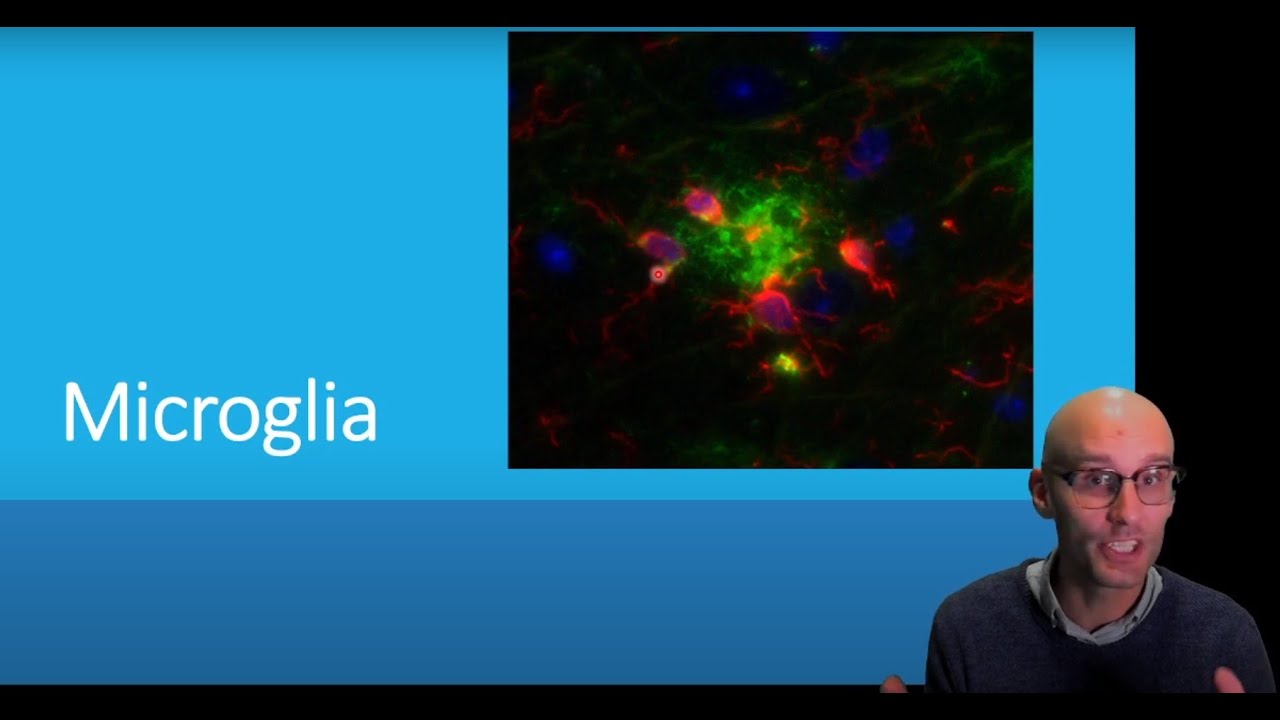
to and in terms of changing the micro environment around them um and supporting them structurally they also do cerebral spinal fluid maintenance um double checking what's in there taking up things that we don't need um and for example okay and then last but not least this is the best one can we all be honest the microglia the guy I study um it's the innate immune cell of the brain it's very much like a macrophage um but it isn't actually a macrophage and it it is also not monocyte derived so monocytes can normally recruit into a
tissue and turn into a macrophage a monocyte can recruit into the brain and tune into something a lot like a microglare and this is during tissue damage so this isn't normal a normal situation so monocytes are bone marrow-derived circulating immune cells they can get into the brain they can tune into things that look a lot like a microglare but now with amazing technology such as single cell rna-seq we know that they never become exactly microgreens they stay sort of their own thing and they have different reactivities for example so where did microglia come from well
they actually come from the yolk Sac they're like a deep embryonic cell and they form in the brain and divide in the brain and they self-maintain their population so they're never replaced from the periphery truly because of monocytes come in they can take over some of the role but they never quite make it to a Micro Clear function okay then the innate immune cell of the brain they can do antigen presenting they make up five to ten percent of cells in the brain I'm going to do a bit of a deep dive into microglia later
so I don't need to talk about them too much right now okay so basically you can think of an astrocyte support neurons compute in microglare immune cells that's the basic summary of the brain of the main cells within the brain however there's a lot of overlap in their functions which is quite surprising we always like to in biology divide things up and go this does this this does this this does this but now as modern technology reveals to us the complicated Natures of um these cells in our brain we now realize that many of their
functions are massively overlapping so for example who releases cytokines cytokines are are an immune regulatory protein signaling molecule who releases them in the brain turns out neurons do astrocytes do and microglia do so um this immune regulating function this immune functions actually happens in all the cells oligodendrocytes do it too ependymal cells do it too so actually the immune the immune functions of the brain are spread out across all the cells within the brain it's just the microglare are the main ones but there is lots of overlap there who tightly controls the extracellular environment a
good example of this is if one neuron releases um it's excitatory neurotransmitters what happens to those neurotransmitters do they just sit in the synaptic cleft constantly activating the downstream neuron no they have to be taken up right we need to be able to communicate often away neurons communicate is the frequency of the firing slow firing means one thing fast firing means another thing so if we need to fire a couple of times we need to clear those new neurotransmitters in order to allow a secondary excitatory event now clearing them is done by the neurons and
so the neurons take back up the uh the neurotransmitter but astrocytes take up a whole bunch of that as well so astrocytes say this this is two neurons connected at a synapse and astrocyte will often it's like it's like the creepo listening to the conversation it'll have it'll sidel up and it will have a process sitting right on the synapse and it will be constantly sucking up the neurotransmitters that are released in that synapse there so astrocytes do it neurons do it microglia do it so the astrocytes role has kind of being done by neurons
and microglare as well um who controls the brain architecture for efficient computational function now you might be like that's got to be just neurons and it is a lot neurons but astrocytes are microglare also do this now one thing's microglia do is if a synapse needs to be destroyed a microgreen comes along and prunes it it turns out when we're born we're born with way too many synapses so microglia come in and prune all the unnecessary ones to make sure the architecture of the brain is fantastic and astrocytes plays support roles as well in the
architecture of it they're doing lots of listening they're listening to multiple neurons at their firing rates and providing the needs for those neurons in order to function efficiently and so yeah it's complicated right the the very simple picture that I put in the beginning actually all the cells overlapping and this story applies to every organ every cell in the human body you can be like this guy does this and then it turns out a bunch of people do that okay a bunch of cells do that awesome and so here we have an immunofluorescence uh image
where they've done staining on brain tissue and in red they had stained a neuron and in blue the stained a microglare and in green they've stained an astrocyte so here we can see look it's a very Integrated Network of connected cells that are all supporting and reacting to the activity and the challenges of the brain so it's nowhere near anywhere a compartmentalized organ in which this guy does this this cell does this and the cell does this it's a very integrated dense Network you can also see the micro glare are indeed micros are smaller than
the average cell astrocytes do look like stars hence the Astro part of the extra site and neurons are big this is a perimeter neuron there are smaller neurons but these guys are shaped like a pyramid because they're pyramidal neurons that's a hard one um and they're massive uh and they do lots of functions in the brain now one of the major outputs of the brain awesome that's it I'm next I'm going to do a deep dive into microglare um so stick around for that and uh I'll be talking about some of the cool things that
microglia do