let me know if this sounds a little familiar to you new year's comes around and you decide to go ahead and start setting up a new year's resolution whether it's going to the gym more often making some more financially sound decisions throughout the year or just figuring out what to do in a career change and for the first couple weeks it goes on pretty strong you start to make a lot of great strides you're going to the gym about three or four times every week but after about a couple months it kind of starts to
taper off a little bit and eventually you decide to put it off until next year and you kind of wonder maybe i'll just put it off maybe i'll get back around to it and eventually the cycle just repeats so subconsciously we try to avoid whatever is going to cause us any kind of discomfort pain anything of that sense even if it's for the betterment of our own self like going to the gym because it's a change in routine physical harm due to muscles tearing we don't like to be uncomfortable so that being the case what
can we do to make the change that we want to see in ourselves or around us in that situation so what i would like to propose to you guys today is a six-step process known as neuro-associative conditioning nac was popularized by a guy that a lot of us would probably know as tony robbins and it's a six-step process that utilizes neuro-linguistic programming or the psychology of words by shifting the way you associate pain and pleasure to better suit the change that you want to make so to give a very condensed definition to all of this
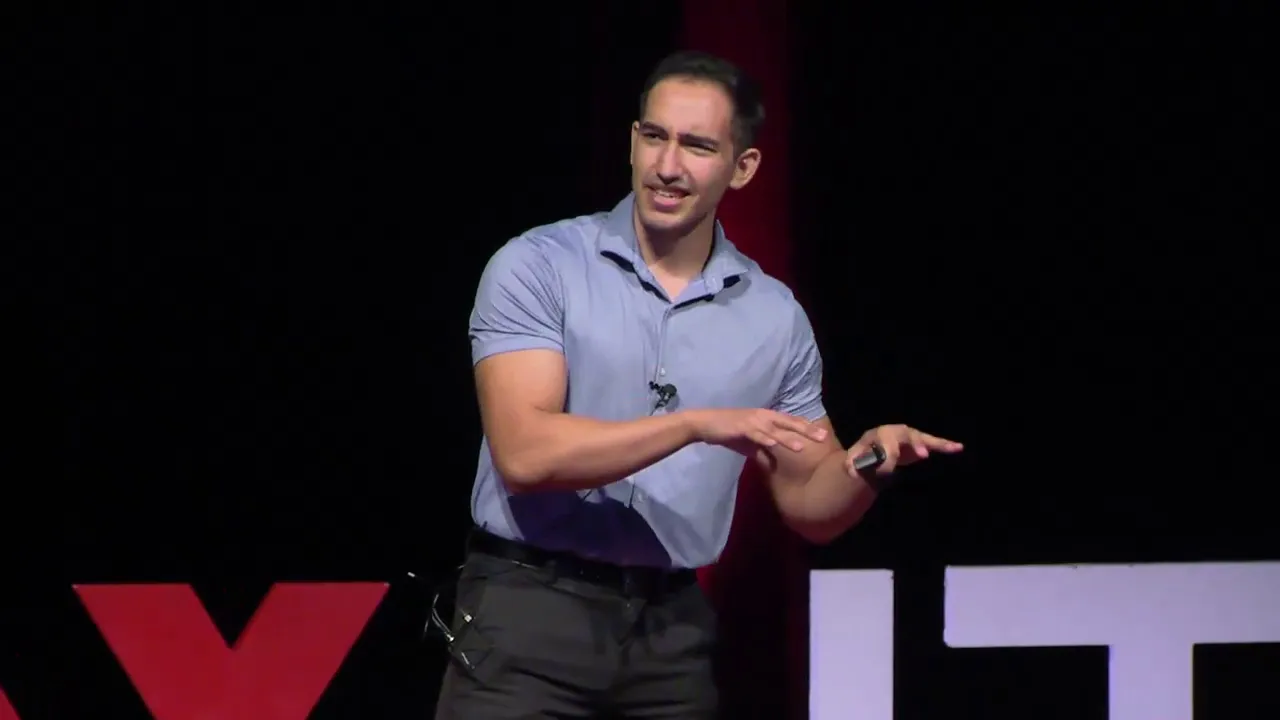
to cut out all the psychology lingo by altering the way you perceive your current situation and what you want to change through the means of pain and pleasure you can more easily take succinct steps to achieve your end goal so i personally utilized the six steps of neuroassociative conditioning from going about 5 11 and 165 severely underweight a little bit of skin and bones to where i'm now going to be competing in men's physique bodybuilding so to start implementing those six steps we need to decide what it is that we want to change whether it's
a new habit beginning a new routine and also identifying what it is that's holding us back from making that change so just by a show of hands and be honest how many of you guys have something in your lives that you want to change start a new routine start a new hobby all right so quite a few of us for sure so i saw one person raise their hand right over here you mind coming up on stage real quick you can just come right around over here to this side yeah just right over here all
right so can we go ahead and get a round of applause for this girls bravery for coming up here sorry for this man yeah right over here all right and can can you tell us your name real quick um my name is madison hey madison all right so what is something that you would like to change um i think one of the big things especially with this week is disconnecting from my phone disconnecting from the phone i know with the collection and everything going on it's been a little tricky to try and not look at
social media and not look at your phone especially with so many things changing left and right so we've kind of identified that first little part of step one which is to figure out what it is that you want to change and the next part of that is to figure out what it is that's holding you back what do you think is kind of stopping you from not looking at your phone all too much that's a good question um i think maybe that that validation and that boost that i get when i get like a notification
and i think also maybe just um just like fear of missing out gotcha fomo and that little double mean boost that you get whenever you see a notification can definitely be very very addicting so once we have that all identified the next step that you need to do is to get leverage in making that change so the way we do that is by associating pain to what it is that we're trying to change and not making that change immediately and now associating pleasure and great feelings to changing that habit so for example what do you
think would be the worst case scenario um if you don't change this kind of habit of constantly reaching out to look at your phone um i think maybe just like missing out on something that happens like in real life like being so focused over here that i just completely missed something really important okay so let's think of something a little bit more extreme now a lot of us can probably be guilty of this as well but while we're driving how many times would you say that you look at your phone to see if you got
a new text or see if you got some kind of notification even if you know nobody's probably texting you right now but you still look at your phone anyways now with that being the case you're putting not only yourself at risk but maybe a pedestrian another car you could potentially put yourself six feet under or somebody else and that's it you won't be able to see your graduation you won't be able to see the rest of your life because now you just cut yourself short now on the other side of that what do you think
are some good things that would come out of not looking at your phone all too much um well with that standpoint i guess not putting other lives in jeopardy but i think also maybe just um getting to separate myself a little bit from the toxicity of social media and being able to just maybe feel a little better throughout the day absolutely and that's a very very good way to look at it i know i personally when i was going from the transition from being underweight to where i am now that type of pain and pleasure
was looking at it where if i didn't change where i was physically i'm putting myself at risk of potential health issues later on down the road malnutrition probably not going to be able to see a full long healthy life because of how i was physically but on the other side of that coin if i at least put myself in a better physical standpoint i can now be able to have a better chance of looking at a much longer more fulfilling life being able to do what it is that i would truly want to do and
not hold myself back because of being too frail being too weak anything of that sense and on that third little step you need to be um start creating an interruption to your limiting behavior or that habit that you're trying to break so a lot of you probably know that whole little routine of if you're trying to break a habit have a little rubber band on your wrist and just kind of snap your wrist every single time you think of trying to do what you're trying to break now we don't always need to create some kind
of rubber band in order to harm ourselves in order to break a habit we can always have a positive or a negative punishment to prevent yourself from repeating that behavior that you're trying to change so when it comes to wanting to look at your phone all the time maybe try texting yourself saying hey stop looking at your phone or toss it do something but you don't need to harm yourself in order to stop yourself from breaking a habit but it's always okay to get a little creative to find a way that's going to be just
a little uncomfortable for you to where you're not going to want to try and repeat that same behavior over and over and over again so i know for me one of the biggest things was make sure i was eating enough making sure i was going to exercise enough and those moments where you really just don't want to get up you don't want to go out and be active for those times force yourself to do like jumping jacks push-ups something active break that little limiting behavior that's that tiny little voice in your head saying maybe i'll
do this another time maybe i'll do this later maybe tomorrow all that matters is that you find some kind of interruption and for the fourth step is to create that new alternative creating something that's going to be a little bit better for you than for example for madison looking at her phone all the time and finding something that's going to be more empowering for you for me in my fitness journey it's as simple as going to the gym for somebody that's trying to find a way to not look at their phone it could be something
entirely different so madison for example what can you think of that you can do instead of looking at your phone um i guess maybe um instead of like if i'm texting someone maybe just say hey do you do you want to meet in person i know that well i know that with the pandemic that can be a little a little uh rocky but just trying to still get a social interaction without the screen in between absolutely and that's a good alternative starting in a conversation with somebody that's there around you instead of constantly looking at
at your phone is an absolutely amazing alternative because you're still getting that social interaction you're still getting that little serotonin boost that you're getting from actually talking to somebody getting something out of it that's going to make you feel better learning more about another person but at the same time prevents you from constantly having to pull out your phone and look at it all the time and so thank you so much for your participation on this madison can we go ahead and get one more round of applause for real quick all right so on to
the fifth step we now need to start conditioning this new habit this new routine so this can be as simple as just giving yourself a pat on the back finding something that you thoroughly enjoy to reward yourself for now doing the new routine finding that new habit instead of the more detrimental reaching that you had before and this can be as simple as just treating yourself to a smoothie having a shake something and that's all that you need to do reinforce that new habit and next thing you know you're going to find yourself repeating that
new alternative over and over and over again without needing to constantly reward yourself for doing so and lastly to sum all of those other steps into one you need to put this all into action it's great and all to have this all on paper and saying this is great i know what i need to do now but it's all great on paper but you need to actually put action to those words those ideas and those thoughts that you have in order to see if it works or not see if it sticks i know i for
one have gone through a couple of ideas of how to get more active how to get in shape and it didn't work so it's going back to that drawing board that's okay for you to do figure out what works better for you and take those steps again to see if you can make the change that you want to see and now this isn't a one-man job it's okay to ask for help and these six steps are only as effective as you make them out to be and if you need help with accountability it's always okay
to ask a friend for help whether it's a family member a significant other a best friend whoever it is it's okay to have someone to reach out to for help even if it's as simple as saying hey can you text me on these days to say i need to go to the gym or hey can you come over on these days to kind of just help me disconnect from looking at my phone all of these matters are okay just because it's a transformation for yourself doesn't mean that you have to go solo it doesn't mean
that you can't ask for help and with all of this being the case i just want to leave you all with a question with these six steps of neuro-associative conditioning how are you going to use those six steps to start a chain reaction in your life and how are you going to use those six steps to change something in your life thank you you