hello and welcome all to the section of seed Business Development with lessons from Asia and Africa in our experience most of us focus on the management aspect for running seed production and marketing as a sustainable and profitable business it's normally lacking also private small and medium seed Enterprises in developing countries often have challenges in expertise and skills in the business management aspects for running their Enterprise a viable business model in other words rational of how to create deliver and capture value is essential for each business to survive basic knowledge on business model development and looking
How seed uh production and marketing can be approached as a viable business will make intervention efforts with seed producers more sustainable and commercially viable in the beginning uh we will be looking at the aspects that help us to assess the Readiness of an organization to plunge into a seed business first of all is commitment it means that you are willing to put your business before almost anything else then comes motivation the business is more likely to succeed if you are very motivated to try your business idea and create wealth and make your money work for
you taking risks there is no absolutely safe business idea you always run the risk of failure making decisions you are in charge of your own business which means that you have to make decision that may lead to either success or failure important decisions cannot be postponed or passed onto someone else problem solving running your own business requires that you are able to solve problems ability to handle stress the entrepreneurs are subjected to a lot of stress stress may be the results of either difficult decisions that must be made dealing with stakeholders in the business are
working long hours goal orientation goal is the desired outcome or Target one feature that differentiates an entrepreneur from an employee is the ability to develop and Achieve goals you should be able to Envision where your business is headed and to see the bigger picture rather than focusing on Minor Details social support running a business will take a lot of time and effort but it is important to have adequate support from family friends and other business people financial situation access to financial resources to start your business is very important Financial Resources can be accessed from your
social network including your family and finance institutions the business model canvas is a tool for business development so that you can focus on your how you could structure the business around your product in a direction of your liking an exercise every ready business should do to blueprint the healthy running of the business out of the many aspects this canvas has the value proposition in its heart and cost and revenue streams as a strong Foundation this symbolizes the philosophy that the value the business offers is at the heart but it all runs with the money in
other words sound financials this is an example of a business model canvas for a small seat business who considers the supply of good quality seeds of traditional varieties as one of their value propositions they also said their value proposition or VP in the niche status where these varieties are in demand but not sold by the bigger seed companies you can easily see the other relevant components like the key Partners Key activities Key Resources customer relationships channels customer segments being noted appropriately the cost and the revenue sections has also been planned this section is the starting
point for the financial analysis for the business now the characteristics or the key performance indicators of a successful seed business hovers around four aspects technical competency Market orientation professionally organized and strategically Linked In other words how technically competent the employees are how well equipped they are to produce seeds what are The Innovation and improvements they Vision what quality assurance mechanisms they imply and what about the inventory management systems in place and similar attributes Market orientation primarily tells us about the customer-driven value proposition by being professionally organized refers to operational systems for excellence and being cash
conscious and having a strong financial control strategically linked with key Partners like suppliers who provide necessary inputs into a seed company Regulators which are the various government agencies that regulate the seed sector and business operations supporters which include both government and non-government agencies that are directly involved in the seed sector or with customers like the national extension services NGO projects this kpi can be grouped as product based that covers a technical competency and the market orientation and by organization that covers the professionally organized and strategic linkages depending on the focus these kpis can have an
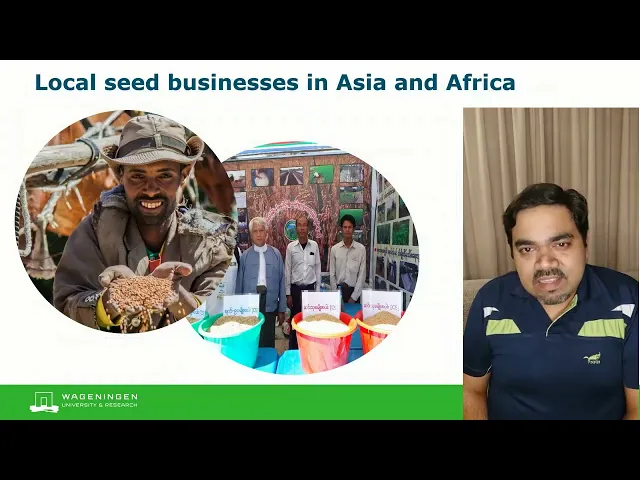
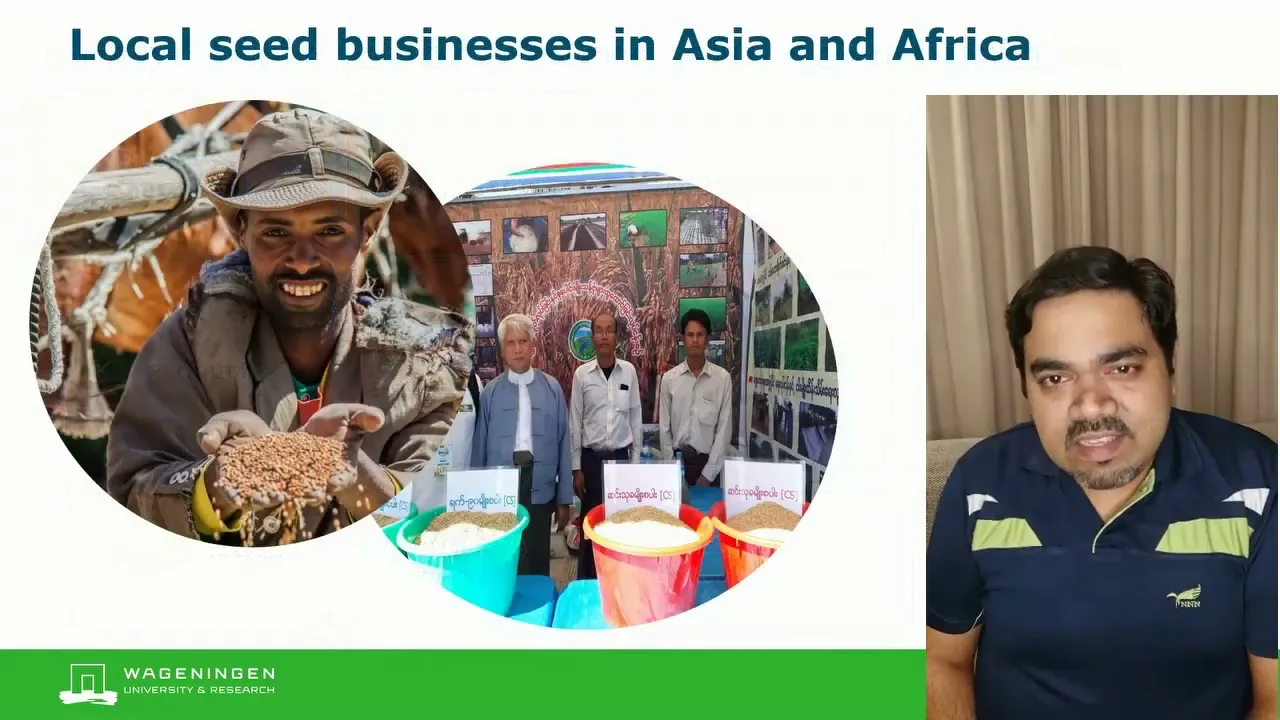
Inward and outward Focus that explains how good they are internally and how good they have relations with the outside world by way of markets or linkages let us see some local seed business intricacies in Asia and Africa now uh due to our immense work in these countries we will specifically focus on the local seat businesses in Ethiopia Uganda and Myanmar talking about the typologies in their or their nomenclature the seed businesses in Uganda are called lsbs or local seed business while the seed growers in Myanmar handle small seed businesses and in Ethiopia they are termed
as the spcs or the seed producing cooperative in terms of legal status of the of there are seed laws and regulations in these countries let us see what do they say about the small seed businesses so the seat policy in Uganda fully recognizes the local seed businesses as a separate entity while in Myanmar while in Myanmar 2 this is the case and the seed business licensing is not required as long as they produce below a certain volume and these volumes are different for different crops however in Ethiopia the policy on small business is a draft
and it is not very clear if the spcs are mentioned but the national seed systems development strategy recognizes communitybased seed producers and intermediary seed systems by law and regulations in Uganda there are regulations in kesa or the common market for eastern and southern Africa also the draft qds or quality declared seats are available the qds is a special seat class in Uganda which are produced by the lsbs under their own quality control and slight intervention from the formal seed certification centers in the myanma seed regulations explicit mentions of these seed growers are also mentioned however
for Ethiopia there are no mention of seed producing cooperatives but there are certain guidelines on Qs and certificate of competence or COC they are mentioned now we will talk talk about the seed producing cooperatives in Ethiopia we will now analyze these three countries briefly on some attributes the domain organization seed quality and Seed dissemination in Ethiopia the domain of uh seed Productions seed producers is informal also called the intermediary system this system is now also recognized in the Ethiopian National seed system strategy there is also a private domain for private seed producers ERS or PSPs
Civil Society domain for seed producer cooperatives or spcs but many times the spcs can also be consider as private in terms of organization these spcs are farmers organization the regulation has some mention of multi-purpose cooperatives or MPCs which are are uh is a kind of an own seat program so normally the spcs have 50 to 100 member seed producers the PSPs or the private seed producers are are individual entrepreneurs or similar to small and medium Enterprises or smmes all of these businesses must have a COC or a certificate of competence for seed production seed distribution
and Retail or all of these to get a COC you need to have an agronomist on board and there are many such requirements in terms of seed quality the seed producing Cooper is multiply seeds of class classes of certified first generation till the certified seed third generation a they have internal quality control through quality control subcommittee there are also Provisions for local quality assured Seed where the quality assurance is done through district offices of Agriculture or the doas with local inspection and local seed lab testing however sometimes they may be fully certified the dissemination aspect
many times might have some gray areas but in practice dissemination via Cooperative directly to Farmers accounts for 30 to 35% of the volumes some happens via the popular channel of Cooperative to Union which is almost 50 to 60% of the volumes and the rest happens via Cooperative to non-contractual institutional buyers the crops and varieties that are dealt with are quite obvious and they comprise of food and cash crops with local demand and has cereals legumes potatoes oil seeds photo crops and spices these Ethiopian seed producing certies deal with improved varieties of self parented crops previously
there used to be hybrid ma seed production too but not anymore they have the institutional support for early Generation seed from the national agriculture resarch system or the NS and institutional buyers unions doas Bureau of Agriculture agricultural transformation agency or atas issd program and their projects now we talk briefly about the Myanmar seed growers domain wise they are informed but with link to the public sector this link with the government is primarily for EGS and Seed quality assurance organization wise these individual seed producers have preference to work individually many programs are currently exploring how to
organize them into working groups the number of members within a group are at least seven and at the most 18 seed quality assurance is in the form of own quality control there's a new system or the pgs or the participatory guarantee system that is in piloted by the department of Cooperative which relies on peer group field inspections which are partially audited by the seed inspectors of the Department of Agriculture the basic challenge here is that the government certification system is quite understaffed to give everyone access to Quality Assurance Services well dissemination is in the form
of seed sales to individual Farmers which is around 80% the sales to seed compy companies and Agro dealers which are also around 10% each talking about crops they deal with food and cash crops like rice green Graham black gram chickpea pigeon PE ground nut Sesame with improved varieties of public breeding programs some local varieties also are there but uh no hybrids they get institutional support from the integrated seed sector development project who also facilitate linkages with the government seed fun for registered seed quality assurance input management marketing strategy with linkages with the private sector and
similar activities now we come to how the lsvs or the local seed businesses are organized in Uganda so their basic domain is informal or intermediary with seed production happening at the community level their organization comprises mostly of registered farmer groups with 20 to 40 members and with land size somewhere around 5 to 100 acres per group the Committees for quality control production marketing associations are of 30 to 50 members who are at the district level there are some cooperatives with higher number of members in which more than uh members May produce seed for other Cooperative
members seed quality is assured by the quality declar seat or the qds system which is a decentralized quality assurance quality insurance form in the Ministry of Agriculture or mif to District agriculture offices breeders closely supervised EGS EGS Foundation seed production which is also inspected by the ministry experts having external field inspection at least two times per field SE uh two times per field per season with random seed sampling and testing of farmers Fields qts is now approved as seed class in the seed policy yeah and dissemination is handled through local exchange from lsvs to Farmers
from lsbs to Nos and Commercial Farmers Seed promotion is done through seed fairs weekly Village markets seed sold from stores often have small seed packages of 1 2 3 5 or 10 kilog the marketing strategy often calls for small packs for selling competitive pricing which are lower than the domestic companies the crops that are handled are food and cash crops with cereals like rice millets sorum Irish potato sweet potato casava with legumes and oil seeds mostly improved varieties and a few Landes are dealt with in Uganda the lsvs or the local seed businesses get institutional
support from the national agriculture research organization the N with the zonal agriculture research development Institute or the zard the district local government also extends support along with many outskilling partners many micro Finance support center which are are a part of the ministry are also extended uh they are also extending financial support there are many other concerns for the lsbs in Uganda like uh problems with climate change delayed rins long marketing cycle versus pressing needs and the lsbs are weigh under the need for cash sometimes problems in getting access to local CED Inspection Services problems with
EGS access due to distances and availability a wholesome Attitude Change is also required like to wait for the appropriate moment to sell alth the different in different in setup and context the lsbs in the different countries face many common challenges the lsvs are normally Capital constraint the lsvs receive institutional support which they partly pay for themselves lsbs also operate as individuals and groups these groups are informal groups uh associations and cooperatives the scale of operation of lsbs is on average 10 to 100 acres the niche of the lsbs is the focus on less invested upon
crops cost of Productions are low which means own labor they Market locally with limited value addition lsvs are different from Community Based seed production by their business orientation producing seed is their Core Business and they sell directly to Farmers or institutional buyers the lsbs are dependent on input and output market and so they're very vulnerable so those were the key conclusions of this session so summing up we learned about seed businesses and business models and the kpis are the key performance indicators we also learned about the local seed businesses of certain countries and how their
operations and organizations are so much context specific they have common challenges and how a good planning and strong commitment is necessary to enhance the great work that they are already doing thank you