I came into a team I didn't know, a market I didn't know. I had a big job ahead of me, right? So really getting outside my comfort zone knowing that there's an awful lot I didn't know. >> Um, so you know, you just stick to the basics. You connect with the team. You spend time in the field with clients. You watch and listen what's working, what's not. Clients buy a certain way. Figure that out and build the sales model around that, you're going to be successful. We grew a business from 30 to $60 million in
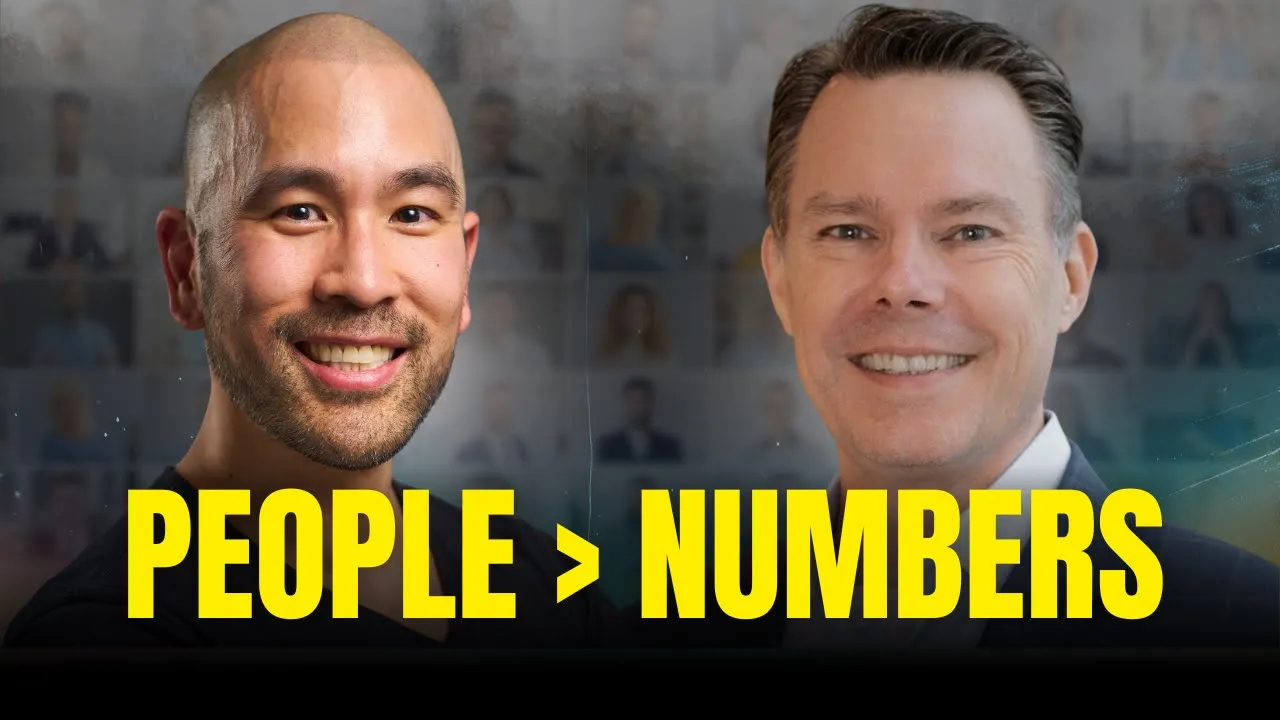
about three [Music] [Music] You're listening to the revenue vault, the show for pipeline architects who build unstoppable revenue engines. I'm Mark Shan, CEO of Benley. Here we ditch the fluff and build frameworks that scale. If you're here to dominate, you're in the right place. Today's guest is Eric Hawkimer, former senior VP of sales at ADP Oracle, who grew a struggling UK division from 30 million to over 60 million in just three years, making it Europe's growth engine. He is now the founder of High-5 Advisory. Today, we unpack Eric's systematic stakeholder mapping approach, his weak structuring
framework around true revenue activities, his contrarian stance on why numbers only leadership kills cultures, plus his interview question that exposed fake leaders from real ones. Let's dive in. So Eric, you've been very very successful, you know, running massive organizations as the SVP over at ADP to over at Oracle as well. If you had to give a first year sales VP a piece of advice, one piece of advice, what would it be? >> You know what I would say bring your authentic self and listen that might sound a little cliche like it's in all the books,
but what I mean by that is you jump into a role, there's pentup expectation for success. You've probably got more senior people encouraging to do things a certain way, but they put that person in the role because of their unique mix of talent, abilities, expertise. So, just bring your view. You may not get it right. You may come up with ideas or tactics that aren't as popular, but put it out there. Be the best version of yourself you can, the best leader, because we need diversity. If all the leaders were exactly the same, we would
not grow as quickly as we can. So, you know, have the courage just to be your authentic self. you'll get some stuff wrong, but have confidence that um you got the backing to to go out and break some glass and get most things right and a few things wrong and just, you know, learn from there. But that's that's really the the advice I'd give. >> You know, I love that advice, right? And I think it's like it's easy to say, hard to do. And I mean, you came from a company like ADP where there's a
lot of structure and process. I mean, they're multi multi-billion dollar organization. Same with Oracle, you I came from kind of like Cintas and Enterprise Holdings and it was very structured and it's almost like you feel like there's a pressure to fit the mold, right? >> Yeah. >> So, how did you kind of break free that limiting belief so you could feel psychologically safe to be able to be authentic without repercussion or impact? >> Yeah. You know, I think there's a couple of things. One of them is the the secret of you think about a lot
of sales leadership roles, they're in the middle somewhere. You're managing down, you're managing up. Yeah. >> So part of it is, you know, understanding how to manage up well, right? Having those just those basic but clear conversations, set expectations early, clear. If there's going to be a misunderstanding about what success looks like, get it out early, right? And then just agree or disagree, but then how you manage down with your teams in the field, the culture you're creating, the dynamic you're you're leading with, I think that has a lot to do with it. And you
touched on something like there there is a mold, right? like ADP is a great example, terrific organization. I mean, it's probably one of the benchmark for sales organizations around the world and yeah, there's there's a playbook and there's a common profile, but there's also an ability to maneuver around within that and bring your own kind of style, your own focus. And I think a lot of that is best amplified as you manage down through your teams to the market. You're not going to change as much the expectations going up. There's a culture, accountability, all that.
But I think you can manage down and really exert your influence there through your team, through your clients in the market and really bring you that magic dust, if you will, uh, to that layer. I think that's where I would focus. >> Yeah, I love that so much, right? I remember like being in those roles and being like being scared like how would I want to be authentic to my team, but how would my how my sales VP, how would my how do my, you know, sea level execs look at me, right? You know, they
kind of want you to fit in this mold. What's maybe an example of something that, you know, you did your best to show up authentically. maybe it it maybe backfire or maybe have the surprising result you didn't expect. >> Yeah, I think I've always um listen, I've always liked to bring the right talent to the team and then support them and and be committed to to those folks. And there's been times where I probably haven't moved as fast as my senior management would like because it's easier for senior management to manage down say, "Well, get
rid of that person, make that change, do whatever." They're not involved. They don't see the human beings involved. Um, but there's been times where I've said, "No, you know what? Let's play a little bit of the long game here. This these are the right people. They need a little development, a little coaching. They're doing the right things. The results will come." So, um, you know, that's where, you know, and I've gone kind of against the grain from time to time. And, you know, sometimes you got to ask for forgiveness versus permission, right? Like, you know,
you just commit to those people, commit to that team, and usually you get it right, but it might take a little longer. So there's that friction and I think that's healthy and that's really one area where I say maybe pushed back a little bit and said no you know what we're going to take a little longer than you'd like the results will come and at the end of the day you know if I make the wrong decision you know who to fire but I feel this is the right path and we will have the right
outcome you got to trust me >> and how did you personally balance that pressure right because like you know like when you feel the pressure from in some people's situation the earnings calls the EPS you Oh, you you I mean I was in corporate for a long felt that pressure, right? For some people listening out there, it's a pressure from the investment and long-term moves. How did you balance the pressure of making sure it was the right move for you? >> Yeah. Gosh, I don't there's you know what, Marcus, there's not one answer because there's
so many different scenarios, but I think part of it there's an old expression a guy I used to work with used this one. He said, you know, bad news is not like red wine. It doesn't get better with age, right? So, I think there's a there's an there's an element of calling things out early. I think pressure builds when people back themselves into a corner and then have to do the miraculous. Let's take the miraculous off the table. You know, what situation are we in? Let's use data. Let's use clarity and either we're on the
right path or we're not. And if we're not on the right path, let's make the change early. I think the problem pressure builds up in most cases when you're delaying the inevitable, either acknowledging the problem or getting to the solution. So, I think you can just nip that, but get at that early, right? bring the right stakeholders together, communicate clearly, be transparent. Um, hey, the other kind of pressure is is when it's just unrealistic expectations or, you know, what have you. And that's you have to manage that in a different way, right? That's less about
what you're doing and more about managing expectations and trying to get to common ground. So, I think it depends. But my big thing would be just don't ignore things. Get at it. even if it's hard, you might as well get the hard part out quickly and then get on to the good stuff and and get back to the success you need. >> Yeah, I love that so much. I think you illustrated so well, right? Where I think the key is is like you're getting that pressure down, but how can you effectively manage up and influence
up by sending clear expectations of what's to happen, right? To be able to say the facts. Here's a situation. We're underperforming. This is or we took over. Here's a turnover rate. Here's where people were at. Okay, here's the data we know now. Here's my plan to solve it. And here's a timeline to solve it. And if it doesn't go the way the way it needs to go, we'll make the decision at that point, right? But your your state, you know, your claim to fame, if you will, and send expectations for that. >> Yeah. Exactly. Exactly.
>> You know, I love that. So for you, right, you know, you let some big orgs across across the board. What's maybe the worst day you've had as a sales leader? >> That's that's a good question. Um, besides the sting of losing that big deal that you expected, those aren't fun. >> But you know what? I think probably uh it is around people right so for example where I just you know didn't do what I needed to do enough or either to support or coach or enable someone and you know they've left for the wrong
reason right that's probably been the worst day you know when you see good talent leaving for the wrong reasons right I think that's that's the worst because that's controllable um and it has to do with the people involved um and it's something that you know at the heart of what we do from a revenue and sales leadership perspective, it's all about the people. Like, well, we may we might talk about AI and tools and all that stuff today, may maybe not, but and that's all shiny and good, but it's really about the people. And if
you can get the people right, you're an awful long way there. So, if you know, when I've acknowledged that I probably didn't do enough to either enable or keep a good talent, that's that's the stuff that that bothers me over time that I think about. You win, you lose deals. Tactically, you might have made a mistake. You can learn from that. But when you get something wrong and it impacts another human being, that's that's the stuff that stings the most, right? >> And you're so spawn, right? Is there a particular person you're thinking about when
you when you share that, you're like, "Oh, there's this one person that you know ends up leaving. Was there any like that person? Was there any like pink or red flags leading up as in hindsight that you now see like, oh, I wish I could have spotted these?" >> Yeah. Yeah, I mean there's all listen if you can be that empathetic that human based leader you should be able to pick up on the on the flags and listen in a sales environment um there's not too many wall flowers right I mean you people in the
sales team they like to share what they think and share what they feel so you should be able to pick up on things but no I think it's it's less about pick missing cues as opposed to just not being able to do or remove the barriers that that I would have liked you know recently in a in a in a recent role I had a fellow who worked for me great solution architect, but there was structural elements of the business that made it very hard for him to do his job. >> And I knew it
was going to be a loss for him to move on. I knew that we were better off with him. But, you know, sometimes you just can't find the way to remove the structural barriers to keep the talent, right? Could I do it differently? I'm not sure because, you know, again, when you get some of these barriers that are immovable objects, I don't there isn't always an answer. But um when you when you know that there is a way around it, you just can't make that happen. It it's frustrating, right? Uh and sometimes you people leave
for reasons that you understand, but it's a shame because they could have done more and you could have done more to to help them be successful and have an impact. >> Yeah. I always find it really interesting, right? Because you're so spot on, especially when it's a large organization where there's some things just kind of set in play. It's like a giant ship. Like you can't just like it's not a speedbook you can just turn on time. There's so many internal workings and people and the politics and red tape and yellow tape that you have
to kind of push through to guide through. As you reflect in hindsight, is there anything you would have done differently for that solution architect to help maybe minimize that like risk factor for them? So this way they're not leaving, you know, x amount of years after. >> Yeah. You know, I think the only thing I could have done, and this is, you know, looking back, this was when uh in a business that was, you know, in hyperrowth. We were growing awfully fast. We grew a business from 30 to $60 million in about three years. So,
we were building in every aspect. Think about it as you're doing a rena on the house and you've torn every room is being worked on. Like, it's one of those situations. So, I think the only thing, you know, in hindsight, maybe what I would have done is repprioritize some of the other things. And as a leader, there's always a long list of things you want to get to. They're not always equal, but they're always feel equally urgent. Yeah. And about the only thing I could have done is just taken a bigger risk and let other
things uh slide for a bit to try to fix the systemic issues around this particular person. >> Would it have worked out differently? Maybe or maybe not. But that really that's the end and that's a big thing about leadership. It's prioritizing and constantly rep prioritizing. And it takes courage, right? I mean, it feels good to lay down to say, "Okay, here's here's my priorities. It's good for 12 months." But sometimes you got to revisit that and and it takes a little courage to to move things around and pivot and take more chances than you'd like.
But sometimes that's a sign of good leadership as well. >> Oh yeah, 100%. It's um I always picture it's as if you have tons of fires are burning but like which is the biggest one you got to focus on first which is like the raging force of fire. If we don't address that one the whole place is going to burn down. >> Exactly. Exactly. And yeah and you never have enough fire extinguishers, right? So >> No, you you never enough you don't have enough people. It's always always a a game of the resourcing of try
to deploy properly to put out the right type of fire, right? So, yeah, that makes sense. And I always think too in terms of like, you know, because there's some listeners out there where they're dealing these structural issues, right? And I always think through it's like yeah for sure if we can like prioritize to kind of solve it. But I always think too as a while depending what the situation is is you know let's say if they're if they're interview if they're if it's consistent problem across the board where people are consistently leaving because of
XYZ structural issue that you know just because the nature of the business it's not going to be solved overnight. How can we as leaders then set the right expectation upfront like even the interview process they just want to give you a heads up in this role you come into this is a common these are five most common problem people hate >> let's walk through them number one number two number three how do you feel about those things how did you overcome that you almost like disqualifying people right >> and I found the best ones are
always going to be like no I've dealt with this over here I'm totally game with it I understand so the expectations are aligned you know versus that mismatch where that's where you start to get in trouble down the Yeah, I would I mean I would agree completely because again transparency is so important. That's how you build trust, right? That's right. >> But one of the questions I always ask in an interview regardless of level I'm I'm bringing in the organization is tell me what you're going to need from us, from me, from my team to
be successful. >> A, it measures self-awareness, which is always important to me, but it also opens up the conversation because they're gonna say, well, you know, I need this, I need this, and well, you know, right now we don't have that and let me explain why. um we're going so fast we don't have as much of a bench of these resources that you would normally rely on. Is that going to be okay? How would you approach that? You know, and you get into a conversation, right? And you you know, you make sure the comfort's there
because the worst thing is, you know, I was talking to a client recently about, you know, making a a bad hire on a sales leader, right? You haven't lost 60 days or 90 days. You've lost almost a year because you've got to then start from scratch and find a new person and on board them and all that. So, get at it early. make sure you've got a good um transparent sense of what the challenges are, what the options are around those and what the good stuff is and clarify that early. So, I think that's what
you'd be if you're doing it in the interview stage and then and then you got a firm basis to move forward. That's really how I would approach it. >> I I love that. Now, now speaking of hiring sales leaders, because you and I both know, man, if you you put the wrong sales leader in place, I mean, it's not only going to set you back, but it really can cost the organization millions and millions of dollars and you might have turnover and all those other like ripple effects as well. Have you seen anything any particular
part of the process of interviewing or a question that you've asked in that process of finding a sales leader has been really effective for hopefully vetting a better fit for the company long term? >> Yeah, that's good questions, Marcus. So, and and uh at risk of giving a long answer to a short question, um >> you know, I think uh I like I like asking open-ended questions. And a lot of the times I'll say to someone, whether it be a rep or a leader, I'll say, "Tell me about a week in the life. You tell
me." >> Yeah. >> And I like that because it gives them latitude to tell me in, you know, how they're spending their time today and how they'd like because I'm listening and I'm measuring, you know, are they talking about using data and are they talking about one-on- ones? How much time in the field? How are they organizing themselves? What types of things are they getting into? Is it carrying the bag with the rep? Is it meeting clients, solving client problems, solving internal problems? But a good question like that helps me understand their their psyche and
the type of leader they want to be. Are they hands-on? Are they hands off? Are they data driven? What have you to get under the covers that way? But what things that I measure are how I I need a sales leader that knows the balance between being in the market, right? That's how you you influence clients. That's how you find talent. That's how you build the brand. That's how you amplify all that. But at the same time, being willing to lead from behind, right? I don't need a bunch of sales managers or leaders that are
overgrown sales reps. >> You don't want to lead the cycle. I got a job for you. I'll carry a bag and knock it out of the park. But if you're going to be a sales leader, you got to lead from behind, enable, coach, be there shoulderto-shoulder, but not be, you know, controlling the whole process. So that those are some of the things that I I look for. And then lastly is you know what you know have they got a crisp view of the the handful of data points that is most important to them and to
the success of the business and they can can they consistently manage to those right the last thing I want a sales leader to do is burden the team with administrative reporting or focus on the wrong things or make things more complex than they need to be there's only a couple of data points that are going to be most important in my mind right >> so a couple great key points right and I want I want to dive a little deeper because I think a lot of times people put the wrong sales lead us in place
and that really impacts a little everything else as part of it, right? You can like I mean you can have a superstar sales leader that can turn turn around a mediocre team, you know, you can have like a very mediocre sales rep who becomes a sales leader and they take over like a great team and make them worse, right? We see we see across the board. So for you when you're interviewing these sal you potential sales leaders, how do you determine if they're going to be that super rep, if you will, just just like a
bas basis of rep versus a true leader of the people? What questions are you asking to kind help uncover that? >> Yeah. Uh well, first of all, I like to ask questions that generate stories >> because, you know, you can tell pretty quick if the story is real or not. Um, and if they've got stories that are top of mind, it means they've lived those that situation. So, it's probably a reasonably good proof point. So, first of all, I try to generate the stories, but I'll really I'll I'll try to get at them and take
it gets what gets them excited. Really, at the end of the day, I want to know, is it the thrill of the win? Is it being able to support the team? Is it bringing new ideas into the sales process? Is it optimizing? Uh, is it working across internal barriers? I mean, I think if if you pretty quickly get to questions about what gets you most excited, what's your best work, how do you do it best, they'll tell you where their focus areas on, and then I'll make the call as to whether that's the right fit.
And you didn't touch on this, Marcus, but I think maybe 15 years ago, there'd be one playbook for a sales leader and B2B sales was very similar across most organizations. But now between the markets, the technology, the levels of maturity of firms, what have there's so many variables. There isn't one profile. So I think, you know, it it'd be nice if we could just say, hey, look, just look for this kind of person. But I think now we just find good talent, but also timing is everything. Is it the right time for that profile in
this business? I think that's a pretty important question. And the answer isn't always yes. Even if they are a rockstar, right? They may not be the right person based on maturity or needs or style of the team, right? Yeah, that's so so key, right? I mean, I think it's um the more spec the more specific and and elicit you can get them to share the response about how they're leading, but but you also at the same time as a leader, you have to be really clear what am I specifically looking to hire and optimize for
for my organization, my stage. Like, it can't just be like, oh, I worked over here. I'm going to keep recruiting my same place now this company. It's like the company I'm at, the life cycle we're at, what do we actually need? Do we need more hands-on leader? Do you need someone that can scale a team? you know, do we need someone who can build processes out? You know, because they're they're very different focuses, right? So, I think it's absolutely vital. Now, as you you've had a lot of success in your career as you look through
your career, was there a moment in time where you maybe felt like a total fraud, but you kept going anyways? >> I don't know if it if it a fraud. I probably use the word more that definitely outside of my comfort zone. And when I was with ADP, I had the opportunity to move I was running sales for enterprise sales for Canada and I had the chance to go to the UK um run sales and marketing and it was an underperforming business unit. Uh I was coming in cold. Hadn't didn't know the team. The team
there were certain people that expected they were going to get the job. There's a lot going on, right? So I came into a team I didn't know, a market I didn't know. Um and uh I had a big job ahead of me, right? So, so really it was about just really getting outside my comfort zone knowing that there's an awful lot I didn't know. >> Um, so you know, you just kind of stick to the basics, right? You know, what do you do best, right? You connect with the team, you spend time in the field
with clients, you watch and listen and and see what's working and what's not. U the nice thing about sales and sales leadership is generally clients buy a certain way. And if you can figure that out and build the sales model around that, you're going to be successful. So I just went to the basics, was naturally curious and just had to be patient, right, and and learn as fast as I could. So and it it you know, it worked. We had a great result. I was able to develop my successor and move on to something else.
And uh UK was really the growth engine for Europe for quite a few years. So yeah, fraud not not necessarily because I you know, I knew I knew what I was doing, but out of my comfort zone, absolutely. And it was a question of jumping in the deep end, right? hand on the nose and just jump in and swim, right? So, >> so I want to get like super tactical, right? Because like, you know, because I've been in that same situation where I'm taking over a whole new market. They might have misconceptions about me. It
could be true, could be not. They have certain perceptions as well. I'm taking over. I need to like build trust and like like make sure every single team is like bought into the vision and not minimize turnover from trying to stabilize and then go from there. Tactically, if you if you had to reflect back on like your weeks, how did how did you structure your weeks and how did you kind of plan your weeks and how to kind of look a toz so people can if they're doing something similar? They taking over a new market
or team, how can they mimic what you basically did to basically build trust and have a thriving market? >> Yeah. And I think it's it comes down to prioritization and I first of all I mapped out who the stake most important stakeholders were, right? So number one was the clients, right? understanding level of client success and what needed to be fixed and were we selling what we could deliver for example right another one then was the team right I had some great salespeople some emerging developing leaders really passionate group so I made sure I built
my week around helping enabling them to do their best work and then lastly was my internal stakeholders my partners right because you know sales is not a a solo game what we sell you you drag in the kill and then it has to be implemented and serviced and then hopefully that client tells another client to buy from ADP. I mean, it's not that difficult. So, I really have balanced. I said, look, the stakeholders are have I got the trust and the support, the partnership with my head of implementation, my head of customer success. Am I
spend enough time with clients to truly understand what they need and why they they're buying? And then does the team feel supported, equipped, and with the right direction, right? They know where we need to go. So, that's really how I based my week. And then at the end of the day, like those were the priorities. Like there's lots of other stuff I did, which was great. I'll do that after dinner. But during the day, it was about my stakeholders and helping build those relationships, that level of trust. And then that drove, you know, how I
spent my my time. >> Um, and that was that was kind of a week. And it wasn't uncommon on a Friday, you know, it'd be 5:00, 5:30 on a Friday, we would all be back in the bullpen talking about, you know, maybe celebrating the deal, but talking about what worked and what didn't. And then we'd figure it out again. Monday comes around in two days, we'll start again and hopefully do more of it, right? So it was just a weekly kind of a routine that worked really well. >> Yeah, I love it so much because
um these are some of the core basics I find are missing a lot of sales orgs, right? Um you identify exactly who the key stakeholders are and you we're making sure whether it's internal or external, right? You're spending time with them and you're spending majority of your week really doing those are RGA's revenue generating activities. You're not playing, you know, you're not playing armchair quarterback sitting behind your laptop and just like going through data and going to go through numbers by itself for weeks on end. You're getting into the field. You're meeting with customers. You're
meeting with with reps and teams and leaders. So, you can see the core constraints to help guide them through it, which I absolutely love. Now, as you kind of reflect back, because uh I always think about like, you know, when you take over like a market, people kind they know you for stuff, right? And they might make fun of you for something. I mean, I got made fun of tons, you know, got those rules. What's something maybe your team needs to tease you about behind your back and you knew about it? >> Yeah. I you
know I think uh look I'm I'm a little structured in in in my approach a little bit uh again structured. So, one thing is they would tease me about my attention to detail, right? So, I used to work for a guy that, you know, was very much so. And, you know, you'd have a PowerPoint and you'd forget a period on one of the bullets and he'd kind of circle it and it got ingrained, right? And so, I' I'd be with my team and I'd saying this client facing. Yeah. Okay. Why is the font not the
same? Why where's the customer logo? It's like those little things. And I would constantly challenge my team and even on the internal coms. Think about your internal person like your customer. Would you put this in front of your customer? Well, no. Well, then why clean it up? like have the have the professionalism, the image, the the uh the clean version. So, my team knew that I would ask for that. I would pick up on those things. I would edit and critique and ask them, you know, where where's, you know, where's the last period? Where's the
logo? Things like that. Um because if you do the small things, right, the big things take care of themselves. Oh, yeah. So, if their attention to detail is there, that means they care, they're focused, they're diligent. If I know they're doing that, I know they're on top of the bigger things around the overall client strategy. So, it was it was partly my way of kind of reinforcing that that attention, but also just just nitpicking in terms of I want things to be perfect when a client sees it, so they think that we got our act
together. >> I'm very similar. I'm a little bit OCD in that type of sense, right? But probably why we get along, right? >> Yeah. >> But but I it's they would make fun of me too. They like you're like a freaking machine. Like the level of attention to detail is a little insane, you know? Yeah. maybe a little overkill at times, but it does serve you well in a lot of great ways from managing my own personal finances to everything else, right? On the flip side, right, because um you know, sometime when you when you're
when they when people see you that way, it makes it like I mean I found personally they're like they found it hard to relate to me, right? Because they're like how he runs his life is kind of what how he expected all of us. That wasn't the case. I expected I just expected certain things were done right a certain way from a sales perspective. My own personal life is a little bit different. So, how did you stay relatable with your teams, you know, and your leaders despite having this level of attention to detail that most
people like that's kind of wildly insane? >> Yeah. Yeah, that's a great question. Let me take it a little level up because I I was joking about a PowerPoint, but a real situation would be deal strategy, right? >> And I'll have reps, you know, my team call me up and say, "Oh, you know, we got we got this great deal. I think Marcus is going to buy from us. You know, he said he's going to go with us." I said, "Okay." And then you start to layer into the deal strategy and asking the questions what
can happen what can go wrong right like what are you prepared for this have you done that and it's not always a comfortable situation but you're asking the questions to get ahead of the potential barriers right I think the way you make that relatable is remind everybody it's about shared success I'm only asking you questions in this safe environment so that you are more successful and don't take it personally I'm only doing this because I want you to win this deal so Let's think about it. Let's let's let's go through it. It's not always comfortable.
And sometimes the reps go, I don't want to call Eric because I'm going to get three, five, seven actions, you know, and I just wanted to give them an update on where the deal was. Well, agreed, but if we can do better, if we can do it faster, let's work together. And yeah, there might be some actions and some questions, but I make it approachable and and make it workable just by by reminding them it's about shared success, right? That's as a leader, that's why you're there, right? is to help them be more successful and
win that client, win that deal, etc. >> Yeah, I I love that so much. And um you know what I was thinking about too as well is like um and this helped me a lot for the listeners out there, which is if that's a core strength of yours, I level attention to detail, that that fidiousness, right? Which can be a double-edged sword, but how can you use it in a way to connect a deeper level, right? Like I like the way I used to do it. I would, you know, after meeting with, you know, a
rep or a manager and I had a decent sized sales, 100 plus reps and multiple levels of leadership, right? I would always take notes after anything personal that I notice. So this way when I sat back down with them, I could, hey, you know, how how's your wife Suzie? You know, hey, how's your dog blah blah blah, whatever, or like, hey, did you get that dog got that surgery? Whatever. And then I would like systemize certain things. So like quarterly handwritten thank you notes, right? So things are always systemized so I can create this extra
personal touch by leveraging this attention to detail that would help me in a whole different way. Like it's if you use it in the right way, it can definitely help you build and scale a team. Use it a wrong way, you just become like an OCD machinist that nobody likes >> and it can feel a little bit contrived, right? Like 100% >> I get the birthday card from Marcus every year but he never calls me otherwise to ask what he can do to help. Right. >> Correct. Correct. >> Correct. >> Yeah. I think uh that
personalization is so key and you gave one aspect of it. The other one I would say is just how you work with people and >> I had in my previous role I had some pretty senior people working for me and quite successful but very different styles and I had to adjust my style to theirs right you could say well Eric you're the boss like why don't you just get tell them how it's going to be >> and it's because you got to meet people where they are make it personal right so I had one person
who really did well was process driven right really great guy and you know we'd have an agenda we'd have a process and we'd launch into he knew what to expect and we'd get into the more personal stuff, the the softer stuff and brainstorming or whatever, but we started with the agenda. I had another person, there was no point until she felt heard, until she could say, "This is what's going on. I'm my hair's on fire. You know, the dog got, you know, sprayed by a sky. I don't know, whatever." Right? Like, until we got through
all that stuff, she wouldn't be in a place where we could really lean into the objectives of the one-on-one. So part of it is just understanding the style of your of your team and working to their style to engage them in a way that brings out the best of their style, right? So I think you have to be humble as a leader and not just impose necessarily your way of doing things, but to meet them where they are. >> 100%. I think it's really really valuable, right? And I think you hit on a really key
point, which is the power of improving your own social and self-awareness, right? That emotional intelligence so you can adjust accordingly. Uh, and I'm sure you probably seen this too when you have like, you know, one of your leaders sit down with one of the reps. Some of them like they're just kind of they're very process driven. So, like they get down, okay, Eric, what do you got for me? Let's go through. They're just like very checklisty, if you will. And there's some that can really adjust. When you've had like a sales leader that you're like,
okay, they need they need to work on their self-awareness. What are maybe some things you found as a good best practice kind of help them improve their self-awareness so they can better lead their own individual team? >> So, sorry, your question is how how to bring out that self-awareness or How do you increase like if you have a sales leader who maybe struggles that that self-awareness with their team and possibly their team's going to feel effects? How do you help that leader improve their self-awareness? >> Yeah, that's a great question because that's a soft skill
that can be can be um what uh people can be uncomfortable with that if they don't naturally do it, right? >> So, I think again a lot of things start with good questions, >> right? So, if someone isn't necessarily self-aware, we'll try to ask them questions and just tease out the issues with them, right? and just let them go. And and if they're telling me, you know, good example is they'll go to the facts and we'll say, "This rep is, you know, not making it, and I've given them all the advice I can, I want
to fire them." All right, be that as it may, let's back up a little bit. Tell me what you've done. Tell me how you've approached it. What did you do that worked? What did work? You know, how did they respond? And just get them thinking and observing. And if they're not naturally self-aware, you just try to bring the conversation, make it real for them. let them tell you about what's going on and hopefully that'll come to the surface, right? And if you can have that aha moment, then in a separate conversation, you can coach them
and say, "Hey, remember when we talked last week and you came up with that really the better approach to, you know, employee X and instead of firing them, do this. >> That was amazing. You really you really self-reflected on what you did, you know, and coach them on just doing more of that, but better break it into two pieces." So, I think questions solve a lot of problems. getting the people talking and just guide the conversation to where you both think it needs to go. >> You're so you're so spawning, right? It's like u Tony
Robbins says if you don't like the answer, ask a better question. You know, >> there you go. >> You know, and I found this so valless in that same situation, right? When you talk to that leader who's trying to have a tough conversation like, "Hey, so how that conversation go with Marcus who's not performing." >> Yeah. You know, >> the thing I'd ask too, Marcus, is ask a question without an agenda. >> Correct. >> So often, right, we ask questions and because we need to get to a place, right? And the questions are veiled attempts
to get to my agenda. Open-ended questions, exploratory questions without an agenda. That's I find what engages my team, my sales leaders. If I don't have an agenda, they feel more comfortable about sharing because part of the time they just want to please me, like give me what I want. And if they sense what my agenda is, that's where it's going to go. This might not be where I want to take it. And also, if I have an agenda, it's not about them anymore. It's about me. So go in within an agenda, ask questions, get them
talking, see where it goes. We run out of time, we'll pick up later, but let's have a good conversation that's about them and their problem. And I think that's what makes it real for them and engages them and helps them be a better leader. >> 100%. Yeah. That's why I always think it's like, yeah, it's good to be predictable when you have like conversations with your team, but it's also good to be unpredictable as well. You know, like meaning like if you if you have an in-person team, it's like, hey, we don't always have to
like sit down my office for a one-on-one. Hey, you know what? Let's just shoot. Let's go to Starbucks real quick. >> Yeah. >> Let's go to uh >> uh Tim Hortons. Tim Horton here in Canada. Let's go to Tim Hortons, right? Let's go Tim Hortons. Let's get a coffee and and just just talk, right? Like I think it's important to like to break it up and switch it up as well. So this way you can have that real rich and honest conversation about whatever it is, right? In whether you're in gender or not. But your
goal is can we get to the truth? If we can get to the truth, we have a better conversation, you know, across the board. >> Yeah, I think you're right. But I also think predictability and slashconistency is so key. I think >> as a leader if if your teams know what you're expecting, how to best engage with you, >> not without without being you still need to be flexible and agile with your team, but then that goes a long way. They're more prepared. It feels like a little safer environment. Correct. >> And you know, it
it makes for better conversation. So I think that predictability is important, but I think you got to limit it. I mean, you've got to make the time. Okay. Being nimble and agile, but at the same time, you know, I'm always going to ask you these three things. Be prepared. The rest of the time is yours. Let's have a great call. Right. So, >> yeah. The way I think about it's like um it's like guardrails, if you will, right? It's like you're driving on an eight lane freeway, right? >> Yeah. >> You're they know you're going
the same direction, but you know, sometimes because of what's going on, you're going to speed up, slow down, get off the freeway, get back on the freeway, but you're still heading the same direction. So, they feel that psychological safety of what's predictable. Because when you have a consistent leader, you really it puts them at ease as well, right? Which is really key, too. I love that. What's maybe a popular take in sales thought leadership that you completely disagree with? >> H just one. Hey, >> just one. >> Well, I think uh there's Well, one would
be it's it's all about the number, right? So, >> I think that's a lazy simplistic way of viewing sales because it needs to be all about the person, right? So, yes, we use numbers to measure success. Those are the outputs. Let's talk about the throughputs. Let's talk about what people are doing. You know, are their territories equal, you know, what kind of clients are they dealing with? You know, what are the marketing conditions, whatever. So, I think it's very easy to say, okay, let's just manage to the number. But I think that that's that's nonsense.
I think you have to look at the person, what they're capable of doing, what they're doing, how they're doing it, all those things. It's about coaching versus measuring just outcomes. I mean, they both go together, right? that measurement of success, but let's not I mean that's the that's the leaders that kind of whip the bullpen, you know, and it's the lowest lowest person on the totem pole is getting fired this quarter and that kind of stuff because the risk is it certainly doesn't humanize and personalize the the process which creates that that culture you want
but it also doesn't uh creates unintended consequences, right? So you want to whip a team into shape, everyone has to make 50 calls. Well, you know, someone might make 40 calls to the pizza place, right? and uh said, "Look, I made 45 calls." Like, it's, you know, that doesn't mean they're talking to customers. So, I think numbers are fine, but they're not the be all and end all. I think you have to get into the behaviors more importantly. >> Well, ultimately, I found that leadership is really about human capital management. How can we help our
people become the best version of themselves, right? And ultimately, you know, I found if you want to consistently overd deliver number, it's how can I win the hearts and minds of my people? >> Yeah. Yeah, if I can do that consistently through my actions, through the systems I put into place. And yes, there's obviously a number, but I'll manage the number and process separately, but I'm going to lead the people. If I can lead the people, the number takes care of itself. >> Yeah. And I think I I would agree completely on that. I think
the two litmus tests are one, if you've got a sales team that are bringing their friends over, that is like such an important measurement of culture and buyin and engagement. And second of all, if your team are getting client referrals and advocacy, you know, that as well, because that means that your salespeople are really um out there delivering the brand, enjoying what they're doing, representing, being optimistic, being higher, doing all the things you want um as being a again a brand representative. And if the clients are saying buy from Marcus and if you know other
people saying I want to work for you Marcus based on what Eric said, those are two really important measurements that are very hard to game and very hard to create in a short term. That takes long-term sustained focus on on the uh the human aspect of the bullpen. Right. >> I I love that so much. Amazing conversation, Eric. If people want to uh find out more about you and your organization, how can they get a hold of you? >> Sure. So I I uh lead a firm, a small consulting company called High-5 Advisory based here
in Toronto, Canada. And you know, we can we're on the web h5.com. I'm on LinkedIn. Reach out. Uh our focus is really working with scaling organizations that want to really professionalize their goto market function and you know take uh the enterprise space and put it in the hands of smaller firms that have a great offering uh but just need to grow and uh revenue and sales a lot quicker than they are today. That's our focus and always happy to chat with anybody that has an interest in in um scaling their business. >> Awesome. Thanks very
much for being on. >> I my pleasure Marcus. Thanks for the time. >> That's a wrap on this episode of the Revenue Vault. Now, if you got value, here's your next step. Go to eventconsulting.com/teams. Get a free performance scan of your sales or we'll show exactly where deals are still and how to actually fix it. And if this episode gave you even one insight worth sharing, send to a sales you respect. I'm Marcus Shannon. Thanks for being in the room.