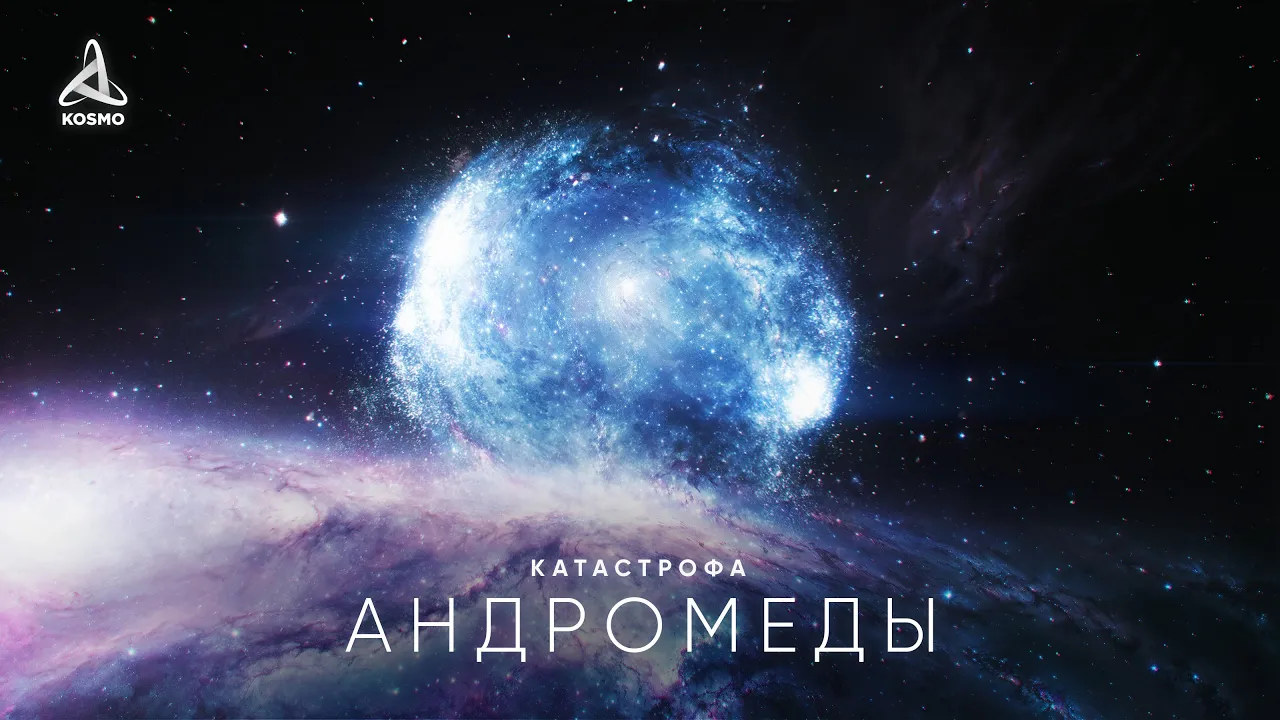
2,500,000 years ago The Andromeda Galaxy A giant star expires close to the galactic core. The last seconds of its life pass in an explosion of tremendous force. Trillions of tonnes of red-hot plasma explode in a huge cloud, turning the nearest planets and satellites to dust.
A powerful electromagnetic pulse pierces outer space in all directions. Millions of years later it is to reach the Earth. .
. The year 1885, the planet Earth The attention of all astronomers on the planet is focused on an amazing astronomical event. A remarkably bright flare in the region of the Andromeda Nebula briefly eclipses the nearest stars with its radiance.
This amazing supernova is dubbed S Andromeda, and its anomalous parameters baffle astronomers for a long time. But just six months later, the star rapidly dims, and soon disappears from the sky … forever. Unfortunately, at the time of the flare, generally accepted notions about the structure of the Universe were far from those of today.
At that time, astronomers were not yet able to measure distances to cosmic bodies, so the bright spot in the constellation Andromeda, also known as object M31, was considered an ordinary reflection nebula on the outskirts of the Milky Way. Meanwhile, with the advent of new, more powerful telescopes and the development of space technology the situation gradually changed. As soon as in the 1920s, observations by Edwin Hubble and other astronomers proved that the Andromeda Nebula is a different galaxy, much like the Milky Way.
About a century has passed since then, and science has moved far ahead. It is currently known that the Andromeda Galaxy has a spiral structure and comprises about a trillion stars. As for its diametre, it exceeds 150 thousand light-years, and its mass is relatively small and ranges from 800 billion to one and a half trillion solar masses - about the same as the Milky Way.
This is thought to be the case due to the abundance of red dwarfs and less dark matter in its composition. Like all spiral galaxies, Andromeda has a massive nucleus at its centre, made up of millions of closely spaced stars. Its radiance is so great that it dazzles observation instruments, making it impossible to distinguish individual stars.
On account of this the remnants of the 1885 supernova known as S Andromeda have long been impossible to trace, although surviving records clearly indicate that it exploded near the centre of the galaxy. It was only in 1988, 103 years after the legendary flare, that a small nebula was detected at a small distance from the nucleus, a dark spot standing out against the background of the dazzling central region. With the help of spectral analysis and proper motion modelling, it was firmly established that it is a remnant of S Andromeda.
Thus, this cosmic object became the first supernova detected outside the Milky Way. Careful study of the central part of Andromeda will clearly reveal its unique difference from other spiral galaxies. It is an unusual double nucleus, the origin of which is not yet fully understood.
The brighter and larger part is located slightly away from the geometric centre of the galaxy, and is a giant super cluster of many bright stars with a total size of about 7 light years. The second part, on the other hand, is closer to the centre and is noticeably dimmer and smaller, with a diametre of about 1. 3 light-years.
It is assumed that this region hides inside a supermassive black hole about 50 million times heavier than the Sun. The nature of such a strange phenomenon remains a subject of scientific debate. According to some assumptions, in the distant past, M31 absorbed and scattered a rather large satellite galaxy, and the bright region is a remnant of its core.
According to other hypotheses, the centre of Andromeda still has a single structure. However, it is separated by a band of opaque dust, creating an unusual optical effect. Due to the remoteness and inconvenient location of the galaxy in space, it is still impossible to collect enough data to confirm these hypotheses one way or another.
Meanwhile, as we continue travelling through the central region of Andromeda, you can also spot one of the most mysterious objects in this galaxy. Here’s its tongue-twisting name on your screens The key feature of this celestial body is that it is almost impossible to see even in the most powerful optical telescope. However, everything changes if you use X-rays - in this part of the spectrum this star is the brightest point in the galaxy.
Observations show that the object is a system made up of two components, one of which is a low-mass neutron star. Its radius is only a few dozen kilometres, and it completes a full turn around its axis roughly every 3 seconds. The second star of the system is a larger object, although it is relatively dim.
It’s most likely a red giant. Calculations show that the total mass of both components does not exceed 3 solar masses, and the distance between them is very small. Every four hours, the neutron star is eclipsed by the other star, and this causes its luminosity to sharply drop - to recover its previous values later.
It is also very likely that due to the small distance between the stars, the neutron star is gradually absorbing its companion, which is why its mass is constantly growing. According to calculations, this process will last several tens of millions of years, and eventually the second star will be torn apart by tidal forces and turn into a bright and hot ring-like nebula. Incidentally, this amazing object is only one of the many stars densely surrounding Andromeda's core.
Together, they form a massive bulge with a diametre of about 12,000 light- years, which has a noticeably elongated shape. Also, M31 has a pronounced Bar, which, however, faces us with its narrow side and so is almost invisible to the observer on the Earth. According to calculations, the Bar’s length measures about 17,000 light-years, with the width being about 6,500 light-years.
In total, about 30% of the Andromeda Galaxy's entire mass is concentrated in its central part. While we’re gradually moving away, we can see that the edges of the bar serve as the basis for two giant spiral arms, majestic coils encompassing the centre of the galaxy. At the same time, there are darker gaps between them, whose width significantly larger than in the Milky Way, reaching 13,000 light-years.
Calculations show that the Andromeda arms contain about 56% of the galaxy's stellar mass, as well as some dark matter. Under the influence of gravity, interstellar dust and gas concentrate in the arms, forming numerous stellar nurseries, regions where new stars are born. Over time, these gas-dust clouds evolve into open clusters and associations containing a great variety of young stars.
Their light is reflected and scattered by cosmic nebulae, endowing the galactic disc with an incredible shimmering pallette of colours. And in one of these clusters there is a remarkable star dubbed AE Andromeda. It is one of the brightest stars in the galaxy and is a hot blue giant whose luminosity varies without any apparent pattern.
Such objects are known as "luminous blue variables" and are extremely rare - currently only a few dozen are known. Because of the extremely high temperature and pressure, the outer layers of AE Andromeda are constantly in a state of unstable equilibrium, and the processes running in the interior of the star are largely chaotic and unpredictable. From time to time, streams of red-hot plasma collide with each other, generating extremely bright flares and enhancing the luminosity of the object by several dozen times.
Hypothetically, the most powerful of them can increase the brightness of the star several million times - such a phenomenon is called a supernova impostor and may occur at any time. Measuring the parameters of such a star, what with its instability and remote location, is an extremely difficult task. Nevertheless, with the help of modern ultra-precise telescopes it turned out that the mass of AE Andromeda lies in the range from 50 to 120 solar, and the radius at the peak of pulsations measures about 55 times the radius of our star, which is only slightly smaller than the orbit of Mercury.
At the same time, its surface temperature is close to 20,000 K, and its luminosity is 500,000-700,000 times greater than that of the Sun. Just like all blue giants, AE Andromeda generates remarkably strong stellar wind, whose speed, according to calculations, can reach 100 kilometres per second. Because of this, the object loses about two quadrillion tonnes of matter per second, which means that its mass decreases annually by an amount similar to ten planets such as Earth.
However, for such a large star it is almost imperceptible, because AE Andromeda will complete its evolution much sooner than the losses incurred from the stellar wind reach at least a tenth of a per cent of its mass. The fact is that despite its age of two million years, which is mere seconds by space standards, AE Andromeda has already completed most of its life cycle. According to calculations, within the next million years, the star will explode into a supernova, leaving behind a black hole surrounded by a vast gas and dust nebula.
Speaking about the age of stars, one cannot help but notice that they are scattered unevenly throughout the galaxy. Thus, we can look into Andromeda's past and observe how it was being formed. The oldest stars, some 11-13 billion years old, are concentrated in the central part of the galaxy.
In contrast, the disc and spiral arms mostly contain younger stars, ones formed about 3-4 billion years ago. Here, the numerous stellar nurseries also contain pretty much baby stars, born only a few million years ago, which is practically seconds by space standards. This means that in the first stage of its evolution, M31 was much smaller in size and its shape resembled an ellipse.
Also, by analysing the parametres of individual stars in Andromeda, it is possible to define an important, but at the same time rather conditional concept known as "galactic habitable zone". It is believed that the concentration of stars in the central part of Andromeda, as well as the high level of radiation and unstable orbits of potential exoplanets, make this zone unfavourable for the genesis of life. At the same time, distant planetary systems located at the periphery of the galaxy are too poor in heavy elements, which implies that there are not that many Earth-like planets.
Therefore, only the intermediate region of the galaxy can be considered hypothetically habitable. It is in this kind of zone, at a distance of about several tens of thousands of light years from the centre of the galaxy, that a small faint object known as MEGA-ML 7 is located. It is a red giant with a relatively small mass of about 50 per cent of the solar mass.
In 1999, thanks to a fortunate coincidence, astronomers were able to record the phenomenon of microlensing, during which they were able to study this inconspicuous and distant space body in more detail. The results of these measurements helped determine the mass and spectrum of the star, as well as the temperature of its surface, which was about 3,700 K. But the most important observation was the rhythmic deviation of the trajectory of the star from the main direction of its movement.
Such oscillations are considered a sign of the possible presence of a fairly massive companion. The hypothetical object was dubbed MEGA-ML 7 b and is now considered a potential exoplanet. If the existence of this celestial body is confirmed, it would be the first exoplanet in the history of astronomy to be discovered outside the Milky Way.
Information about this object is still rather scant, but calculations show that it is highly likely to be a gas giant with a mass of about 6. 3 times that of Jupiter. There are also reports that this system is likely to be as diverse as our own in terms of chemical elements, which means that there is a good chance of finding a variety of planet types within its boundaries: not only gas giants, but also rocky celestial bodies similar to Earth.
When observing the Andromeda Galaxy, another striking feature that becomes immediately apparent is the great multitude of star clusters and associations, whose number is much higher than in the Milky Way. In total, about 460 globular star clusters and about 10 thousand open clusters are known to exist in M31, as well as several dozen large star associations. Some of them are concentrated in the centre of the galaxy, others are scattered in the halo, and still other ones have settled right in its spiral arms.
And one of the largest and most noticeable structures is NGC 206, a cluster located almost at the very edge of the galactic disc. Previously, this association was considered a globular cluster, but now due to its size it has received a higher status and is called a stellar association. In this region of space with a radius of about 200 light-years, roughly 300 extremely bright stars and countless less noticeable ones are concentrated, with a total mass of about 200 thousand solar masses.
Their overall luminosity is so great that the association is visible from Earth in an amateur telescope along with the core and arms of the galaxy. According to observations, NGC 206 formed after a merger of at least two large gas and dust nebulae separated by a dark band of interstellar dust. The age of one of them is about 10 million years, the other is noticeably older, having formed about 50 million years ago.
The single giant nebula became a point of gravitational attraction for interstellar gas, which led to the formation of a great area of star formation. Over time, some of its constituent stars will dissipate in the surrounding space, with the rest forming a large globular cluster. The galactic disc M31 contains many such formations, and not all of them originally formed within its boundaries.
It is assumed that many large stellar associations are the remnants of major cosmic catastrophes of the past. According to calculations, throughout its entire existence Andromeda absorbed more than a hundred satellite galaxies. Some of them dissolved without a trace, while others turned into giant stellar streams.
The collision with the object known to us as M32 may be considered the greatest. This compact elliptical galaxy is located above the Andromeda disc only 17,000 light-years away. Its diametre is about 8,000 light-years, and considering its small size the galaxy has a rather big mass - about a billion solar masses.
In the centre of M32 there is a supermassive black hole about 2. 5 million times heavier than our star, which is surprising for such a compact object. In fact, M32 is just a remnant of a much larger galaxy that survived the great catastrophe.
According to data from the Spitzer orbiting telescope, about 800 million years ago a large satellite galaxy pierced Andromeda's disc at high speed, leaving a gigantic hole in one of the spiral arms. During this collision, M32 lost most of its stars, and it is unlikely to be restored to its former appearance. It is assumed that it could have been a full elliptical galaxy or a small spiral galaxy, of which only the central part remains.
In addition to M32, Andromeda has about 30 satellite galaxies connected to it by invisible gravitational threads. The brightest and largest of them is M110, which has a diameter of about 15,000 light-years. Most of the rest belong to dwarf spherical galaxies and are located within a million light years.
Nevertheless, together they form the Andromeda subgroup, which is part of the Local Group. Its other members are the Milky Way and its surroundings, as well as the Triangulum Galaxy and some other objects. Inexorable gravitational forces are gradually pulling the Local Group towards a single centre, because of which the Andromeda Galaxy Galaxy is rapidly moving in our direction, covering over three hundred kilometres every second.
In a few billion years, Andromeda will merge with the Milky Way to form a giant elliptical galaxy. Great gravitational forces will mess up the stars of both stars, randomly scattering them in space. By this time our planet will be mercilessly scorched by the destructive rays of the dying Sun or else disappear altogether in the ocean of red-hot plasma.
It is almost impossible to predict what will happen to mankind then. Will we populate other worlds, unrecognisably changed under the influence of their natural conditions, or will we disappear without a trace, like many ancient species? It is hardly possible to answer this question with certainty.
. . .