So [Music] so [Music] so [Music] existentialism is both a philosophy and a mood as a mood i think we could say that it is the mood of the 20th century or at least Of those people in the 20th century who are discontent with things as they are it expresses the feeling that somehow or other all of those systems whether they be social or psychological or scientific which have attempted to define and explain and determine man have somehow missed the living individual person existentialism feels that we must return to man And in returning to the individual
man and his experience we must also ask our question what is man for once again the definitions which have been provided and it seems as though in the 20th century everyone is giving definitions those definitions of man in terms of his physiology or psychology or the study of his social behavior Again bear no more relation to the real individual then the printed description of the antics of a lover bears love existentialism is concerned especially with what the spanish existentialist una muno has called the tragic sense of life the tragic sense of life is something which
philosophers for the most part Have neglected for they have been concerned above all else with providing some sort of rational explanation which would include and smooth away everything but the existentialists feel that the old problem of evil has not been explained away that the fact that man dies has not been taken care of that the rational promises of Immortality are not enough and that man's suffering simply because he is man needs to be explored again one of the best presentations of the existentialist mood at least in my opinion is found in the work of a
non-existentialist author namely eugene o'neill in his play a long day's journey into Night the character edmund speaks these words it was a great mistake my being born a man i would have been much more successful as a seagull or a fish as it is i will always be a stranger who never feels at home who does not really want And is not really wanted who can never belong who must always be a little in love with death now what o'neal is expressing here is really the feeling that it is difficult simply to be human difficult
because to be human means somehow or other to be separated to be separated from one's environment To have a little gap even between oneself and whatever one thinks one is consequently it is a little difficult to see just how one can be related to other people or to this alienated world difficult not to feel that one is constantly overshadowed by the possibility well the certainty of a death which one can never quite comprehend there are of course many facets to the Existentialist mood and it would be more accurate to say that even in the philosophy
there is not an existentialist philosophy but rather many existentialist philosophies for within existentialism we have included widely different people we might begin perhaps with the dane siren kierkegaard who lived over a hundred years ago but who wasn't really appreciated or very Significant until our own day and we would have to include people like gabrielle marcel who was a catholic and will herberg who was a jew and the controversial paul tillich these on the religious side but they're the humanistic existentialists too those who deny that there is any god the most well-known of these probably is
john paul sartre And his close associate simon de beauvoir is again a figure familiar to many people i would include here albert camus for although camus has said he is not an existentialist he works on the same premises as de beauvoir and sartre he asked the same questions and frequently the answers that he gives are absolutely acceptable to the Beauvoir and sartre sometimes i myself would say even better and entirely consistent with their premises perhaps the most fundamental view in existentialism whether religious or humanistic is what sartre has declared to be the one unifying factor
the one unifying statement says sartre Which every existentialist would agree to is this existence precedes essence it would be very easy to shrug this off and say oh well this is an abstract bit of philosophical jargon what does it mean to me what it means in non-technical terms is this that man is different from the rest of Creation and that he is not born with an essence that is there is no overall definition as to what man is or ought to be for man if he has an essence at all has simply the essence of
freedom and if his very essence is freedom this means that his being is to determine what he wants to make of himself therefore as sartre puts it man exists First and as an individual strictly speaking there is no mankind except retrospectively but the individual man exists and by his life by his actions he determines not only his own essence but he helps to contribute to what will have been the essence of mankind as william james would put it we will know what man was when the last man has had his last say As early as
1921 we find in a play by the italian pirandello an investigation of this problem of what the reality of the human might be i'm referring to the play called six characters in search of an author in the scene which concerns us we find that one of six characters has appeared to the director he has insisted that their comedy which has not yet been written Should be performed instead of the one which the director had in mind and then the father raises very embarrassing questions as he talks to his director questions which the director does not
quite know how to answer i should like to ask you to abandon this game of art which you are accustomed to play here with your actors to ask you again quite seriously Who are you well if this fellow doesn't have a nerve a man comes here who calls himself a character and asks me who i am a character sir may always ask a man who he is because a character has a real life of his own marked with special characteristics for this reason a character is always somebody but a man i'm not saying you now
may very well be nobody yes but you are asking these questions of me the Director the boss do you understand but only to know if you as you really are now can see yourself as you once were with all the illusions that were yours then with all the things both inside of you and outside of you as they seem to you then well sir if you think of all those illusions which mean nothing to you now of all those things which don't even seem to you to exist now whereas once they were for you don't
you feel that The very earth under your feet is sinking away when you reflect it in this same way this you as it seems to you now this present reality of yours is fated to seem a mere illusion tomorrow well well and where does all this take us anyway nowhere it's only to show that if we characters have no reality beyond illusion then you too cannot count over much on your reality as it seems today since like that of yesterday it may Prove a mere illusion tomorrow oh excellent next you'll be saying that you with
this comedy of yours you have brought me here are more true and real than i but of course without a doubt oh really but i thought you understood that from the beginning more real than i if your reality can change from this can change the same as anyone else no sir not ours look here our reality doesn't change it can't change it can't be other than it Is because it's already fixed forever it's terrible ours is an immutable reality that should make you shudder when you approach us if you are truly conscious of the fact
that your reality is a transitory and fleeting illusion taking one form today and another tomorrow an illusion of reality in this fatuous comedy of life which never ends nor can never end because if it were to end tomorrow well then all would be nothing oh for God's sakes will you at least stop this philosophizing let us try and shape this comedy which you yourself have brought us here you argue and philosophize a bit too much my dear sir but believe me i feel what i think and i seem to be philosophizing only to those who
cannot think what they feel because they blind themselves with self-sentiment i know that to many people such self-blinding seems much more human But the contrary is really true for a man never reasons so much or becomes so un introspective is when he suffers it's when he suffers that he seeks to find the reasons for his suffering to find out whether it's just or unjust that he should have to suffer them but on the other hand when a man is happy he takes his happiness as he comes and doesn't think about just as if happiness where
is right An animal suffers without reasoning about its suffering but take the case of a man who suffers and begins to reason about it and oh no it can't be allowed let him suffer as an animal suffers and then ah yes he is human oh look here you're off again philosophizing worse than ever i'm not philosophizing i'm crying aloud the reason of my suffering parendello is seen as existentialist in two ways in the first place apparentello is Saying that philosophy may indeed stem from the suffering of man because man finds that his very existence is
somehow or other painful and this is what unamuno meant when he spoke of the tragic sense and besides this parendello recognizes that man is not an entity or a thing not even really a being rather he is a becoming a constant Changing a process and to be a process and to have this discrepancy at his heart means that man never quite knows who he is now sartre has expressed this in far more technical terms by his famous distinction of two kinds of being All of reality he says may be divided up into being in itself
and being for itself being in itself is the kind of being which the things have everything which is not conscious the river the mountain a rock a tree or even a man-created object such being involves no gap No separation the acorn can't reflect upon itself and say i wonder if i want to be an acorn or would it perhaps be more interesting to be an apple tree in fact the acorn can't know what it is because it simply is it can't reflect upon itself as sartre would say it's too Full too dense too much as
he says just a plentitude or a mass of being the other kind of being being for itself is the being of consciousness the being of the human person zartra has startled the philosophical world and his definition of being for itself for he says that being for itself Is distinguished from being in itself only by this one thing that consciousness or being for itself has the power of effecting a nothingness this means that consciousness puts a kind of psychic distance between itself and its objects as a consciousness looks at a thing it is the consciousness of
the object and sorry says that consciousness Is always consciousness of something one cannot imagine a consciousness would which would not be consciousness of something this means that in one sense consciousness is open for my consciousness is what it's conscious of in the sense that it can't exist without things of which it's conscious And yet as i am conscious of the object i'm also implicitly conscious that i am not the object in other words i have encased this object with this shell of nothingness which means that i am implicitly aware of my awareness and consequently i
know the world i am aware of the world by knowing what i am not And by knowing that one object is not another object on the other hand this means that consciousness is closed in on itself too for if i am aware of not being the object then i can't escape from my own consciousness i can't get outside it i can never know what the world would be like Independently of my knowing it this interplay of being in itself which is the being of something other than a consciousness and being for itself is very interestingly
given us in a scene from de bevoir's novel called she came to stay francoise is sitting in front of one of the cafes of paris and silently musing to herself And suddenly she remembers something from far back in her childhood and like proust she sets out on the pursuit of time past she felt a sudden anguish it was not a definite pain but she began to delve deep into the past to unearth a similar pain then she remembered the house was empty i was standing on the first floor a little girl Holding my breath it
was funny to be there all alone it was funny and it was frightening the furniture looked just as it always did but at the same time it was completely changed it was thick and heavy and secret my heart seemed to turn over my old jacket was hanging over the back Of a chair it was very old and it looked very warm it was old and worn but it could not complain as i francoise complained when i was hurt it could not say to itself i'm an old worn jacket i tried to imagine what it might
be like if i were unable to say i'm francoise i'm six years old and i'm in grandma's house Supposing i could say absolutely nothing i closed my eyes it was just as if i did not exist at all and yet other people would be coming here and they would see me and they would talk about me i opened my eyes again i could see the jacket now it existed yet it was not aware of itself there was something disturbing a little Frightening in all of this what was the use of its existence if it couldn't
be aware of its existence i thought it over perhaps there was a way since i can say i what would happen if i set it for the jacket [Music] it was very disappointing I could look at the jacket i could see absolutely nothing but the jacket and i could say very quickly i'm old i'm worn but nothing happened the jacket stayed there indifferent a complete stranger and i i was still francoise and what if i became the jacket well then i francoise Would never know it everything began spinning in my head and suddenly i ran
downstairs and i went out into the garden francoise emptied her coffee cup and one gulp it was almost stone cold she looked up at the clouded sky she felt that the world around her was suddenly out of reach the people who were walking in the street were insubstantial they were shadows The houses were nothing but painted backdrops with no depth and her friendship bear who was coming toward her now with a smile he was nothing but a light and charming shadow he could not help her recover her place in the world he would be just
a pleasant companion and exile de beauvoir's little girl Was feeling what i suppose every one of us at some time or other has experienced and that is the frustration the impossibility of really comprehending what the world would be like if we were not there if we try to find out what it would be like even in our imagination if we a familiar scene should not have us in it or if for example we had just Died and people were discovering our death inevitably we find ourselves thinking of ourselves as being there and experiencing it for
we feel that somehow our other we are positive factors and yet the whole point of the whole thing is that we are not there all of this of course involves sartre's idea that as of for itself man has within him this power of Effecting a nothingness he introduces the image by one which is quite in keeping with the tradition of western philosophy have you ever stopped to think what a very important part the apple has played in human history the first apple is of course the one that tempted adam and eve in the garden and
certainly this apple must have been a very succulent desirable kind of apple and then there was the apple that sent The greeks off to troy and this one we are told was an apple made of pure gold sordra's image of nothingness also implies an apple nothingness he says lies coiled at the heart of being like a worm i don't think it's an accident that there is a suspicion of rottenness and worminess at the heart of being for man according to sartre discovers This nothingness within himself in anguish and in despair there is another image where
sartre i think makes it a little easier to understand this difficult concept of how nothingness can somehow be real let us imagine he says that in the universe one day an atom is annihilated not simply split not transformed into some other species Of energy but just absolutely annihilated now if such a thing could happen we can believe readily enough that the universe would never be the same again there would be an absolute change in everything now in the same way being being in itself without any consciousness to look at it And pronounce judgment on it
is just an undifferentiated mass it has no significance it is simply a fullness and that's why sartre can say that all we can really say about it is that in its brute reality it is there for all eternity but the moment a consciousness comes in then there can be significance and differentiation For a consciousness can balance one part against another by putting a distance between them can say this object is not that object and can also stand aloof from the world and bring it there before itself for judgment sandra has given several definitions of man
one of them is this man is the being Who is what he is not and who not is not what he is i think some people have felt that merely reading this sentence was sufficient cause for despair and yet it isn't hard to understand by saying that man is the being who is what he is not and is not what he is sartre merely means that man has no fixed reality that he is constantly in the process of making himself something But that he never is quite the same as his particular acts sartre has also
said that man never is he is always about to be and here we see the same view expressed with regard to the future for at any given moment man is living in terms of a projection of himself into the future what sartre calls the project it is just as though each person carried Around with himself a little shell of emptiness into which he projected what he was about to become suppose we think of it this way i make a rendezvous with myself down there in the future but who will show up at the rendezvous will
it be the i who made the appointment or will it be some new eye which this consciousness Has created out of the nothingness which it brings into the world another definition of sartres is that man is the being through whom nothingness comes into the world this like the other definitions sounds at first like something so totally abstract that it seems not to have anything to do with us as living individuals But let's think of it as if we were trying to draw a picture of it if one were to attempt a concrete picture of man
as the existentialists and other of our contemporaries see him i think the result would be reminiscent of one of the forms of archipenko a strange figure partly organic partly mechanized With a hole in the middle with bony excrescences jutting out into the distance all of this set in a background of melting or disintegrating time so [Music] use of the scene from six characters in search of an author by luigi pirandello was made possible through the cooperation of the mundadori publishing Company and the pirandello estate the scene from she came to stay by simon de beauvoir
was translated by yvonne moyes and roger senhouse and published by the world publishing company the sculpture walking woman by acapenko and shapes of the desert by peter worth courtesy of the denver art museum [Music] [Music] so [Music] So [Music] toward the end of the 19th century friedrich nietzsche declared god is dead and he spoke the words in exaltation but dostoyevsky said that if god does not exist then everything is allowed and here we see the under edge of tragedy and despair for if everything is allowed then Can there be any right and wrong if everything
is allowed how can man choose how can man know how to live both nietzsche and dostoevsky have profoundly influenced 20th century existentialism so much so that it would be hardly an exaggeration to say that for the whole of the humanistic movement there is simply an exploration of the Consequences of this idea of the missing god john paul sartre in a play which is called the devil and the good lord has presented a scene which interestingly enough combines both the exultation and the despair here toward the end of the play two strangely disturbed characters meet to
settle a wager the priest heinrich Has been haunted by the guilty memory that he has betrayed his own city and yet it is he who comes as victor in the settling of the bet for the military leader getz had bet that he could for a year's time do nothing but serve god and achieve only good but he failed for somehow or other history and the world distorted his acts so the good resulted only in men's suffering As the scene progresses there takes place a curious reversal lord if you refuse to grant us the means of
doing good why have you filled us with this goating desire for it if you will not grant that i should become good then why have you removed from me the wish to be evil Strange there's no way out of this why do you pretend to be speaking to him you know quite well if he won't answer why this silence he who manifested himself to the ass of the prophet why should he not manifest himself to me because you are an important torture the weak or modernize yourself kiss the lips of a holland or a leper
die of fasting or die of excesses god couldn't care less then who is important No one man is nothing don't pretend to be so surprised you've always known it you cheated you raised your voice to cover the silence of god and those orders you pretend to receive from him it is you who send them to yourself myself yes yes indeed you yourself i alone yes you i said you I alone father you're right i alone i supplicated i demanded some sign i said messages up to heaven no answer heaven ignored my very name each minute
i asked myself what i could be in god's eyes and now i know the answer god does not know me you see that emptiness up there over our heads that is god you see that hole in The ground there that is god too the silence is god the absence is god god is the loneliness of men there was never anyone there but me it is i who invented good it is i who invented evil it is i who accuse myself today and i am the only one who can absolve myself i man if god exists
man is nothing If man exists like where were you going i'm going away from you i want nothing more to do with you wait father i'm going to make you laugh be quiet but you don't know yet what i'm gonna tell you it's not true i know nothing i i don't want to know anything heinrich i'm gonna let you in on a colossal joke god doesn't exist he doesn't exist no joy tears of joy Hallelujah fool don't fight me i'm bringing us deliverance no more heaven no more hell nothing but the earth let him dare
me a hundred times a thousand times as long as he exists gets men have called us traitor and bastard and they have condemned us if god does not exist and there is no longer any way of escaping men oh my god this man is blasphemed i Believe in you i believe our father which art in heaven i prefer to be judged by an infinite being not by my equals to whom are you speaking you've just said he was deaf no way now of escaping man farewell to monsters farewell to saints farewell pride there's nothing left
but man in gets we can see nietzsche's Exaltation for him the thought that there is no god comes as a relief almost a salvation it delivers him from the crushing burden of trying to serve a remote being whose will he can never fully understand and it sets him free to love mankind and to serve men in the way that he himself thinks is best if god exists man is nothing but if god does not exist Then man is free to choose what he wants to make of himself but for the priest heinrich the thought of
god's absence brings only terror and despair so long as god existed for heinrich then although he might fear god's condemnation he could at the same time hope for god's pardon he could feel that if he admitted his Guilt and repented then god might see fit to pronounce him finally not guilty but without god heinrich is at the mercy of men so long as he exists or is remembered he will be guilty in the eyes of humanity for sartre gatz's attitude is ultimately the right one and yet in sartre's work as in the work Of other
existentialist writers we generally see the negative side the forlornness of man without god sartre has declared that he is the first person who has ever explored to the full the consequences of man's life without god if god does not exist then says sartre Man has nowhere to turn it is one might say using perhaps a rather strange analogy just as if we would try to judge a ford car without any mr ford so long as there is a mr ford or one of his agents then we have a model we have a blueprint and we
can say that the car which is coming there off the assembly line is a perfect ford or an imperfect ford The right number of rattles not enough rattles but without a plan one cannot judge a car without god there is no plan for mankind and there is no final point of reference by which man can judge his values or right or wrong or declare that he has lived up to his possibilities or not lived up to his possibilities Sartre feels that most men simply cannot face the burden of this self-creative life and so they try
to live as if there were a god but this forsadra is an evasion furthermore it is not the right kind of sacrifice man denies himself so that god may exist but there is no god and man Is a useless passion one might well wonder why since sartre realizes how desperately man needs god why he will not go the one step further and say that god is there perhaps the very desperation of man's need is one reason for such suspicion he feels the concept concept smacks too much of self fulfillment in the sense of wish fulfillment
but sartre and other existentialists Have in any case no intention of trying to prove that god does not exist one cannot prove a negative and we probably all realize that basically each of us finds on non-rational grounds that the hypothesis of god is satisfactory and meaningful or not and then afterwards we each want hunt around for reasons or for proof To uphold the position we have already chosen on the other hand one will find in existentialist work one very specific objection to the traditional concept of god and this is an objection based upon the injustice
of the universe why ask these writers if god is all-powerful does man have to suffer If god is merciful then how can he sentence man any man at all to eternal damnation in a later scene in sartre's the devil and the good lord we see sartre raising this kind of criticism of the concept of god in the light of the injustice of the world here a group of women have gathered in a Cathedral they are in mourning bewailing the death of catherine getz's mistress who died when getz cast her off cast her off in the
name of righteousness is she dead yes may god receive her soul god he'll refuse it hilda how can you say that she saw the flames of hell before she died Suddenly she sat up crying that she saw them and then she died let us pray my friends pray for the forgiveness of this poor dead girl who saw the flames of hell and is in danger of damnation i do not know what thou hast in store for me and i did not even know that girl but if thou dost condemn her then i shall refuse to
enter heaven dost thou think a thousand years of Paradise would make me forget the terror in her eyes i have only scorned for thy elect idiots who have the hearts to rejoice while they are damned souls writhing in hell and poor people on earth i know thou hast the power to let me die without confession and suddenly summon me before thy bar of judgment but we shall then see who will judge the other hilda's attitude reminds me of that of William james who once asked how many people would be willing to accept an eternity of
bliss if they knew that their everlasting happiness was being paid for by the never-ending torture of one damned soul and a very few of us would be willing to accept heavenly rapture on these terms then we can easily understand sartre's criticism of men who are willing to accept An image of a creating god less merciful than men themselves albert camus has voiced the same type of criticism in his novel the plague there the priest ponolu confesses that he is not able to understand how there can be any justification so that even eternal paradise could cancel
out the sufferings here on earth Of one innocent child now many people might say perhaps rightly that this type of criticism has meaning only for a fundamentalist even an old-fashioned view of religion in his place the fly play the flies asartra has given a broader challenge to the religious concept here he brings to our attention the question as to whether or not we may accept Any idea of a harmonious rational universe sustained by an intelligent guiding supreme being or spirit the flies is a most interesting thing sartre is retelling here the old greek story of
the unhappy house of agamemnon plato nestra and her lover killed my hemnestra's husband and then later or estes came the son to avenge the crime he killed his mother and her lover but Very reluctantly only because the gods had commanded it and finally it is the gods who ultimately justify him as sartre tells the story everything is different or estes kills because he thinks that he must do so in order to punish the evil doers and ultimately he does not receive justification from the gods instead he challenges And defies them the most amazing scene in
this play is probably the one where zeus holds out for arrestees an overwhelming view of the whole universe lying there before him the scene has always reminded me of the one in the old testament where god speaks to job out of the whirlwind but there are differences too and important differences in the old testament god appeared Because job seeking an answer to the problem of evil had cried out to him and asked for him to come and explain in sarkar's play zeus appears voluntarily orestes does not really want him and orestes is given this vision
because zeus hopes by means of it to lure him to win him back so that by viewing the wonders of the universe or estes may arrive at what Zeus would consider a natural piety and reverence resties i created you as i created all things now see see the stars moving in the firmament never swerving never clashing it is i who have fixed their courses according to the laws of justice it is my work that living things increase and multiply each according to his kind It is my work that the tides innumerable tongues creep in to
lap the sand and then withdraw at the appointed hour i make the plants grow and my breath fans round the world the yellow clouds of pollen you are not in your own home intruder you are like a sliver in the flesh or a poacher in his lordship's forest for the world is good i created it in accordance with my will and i am goodness The good is everywhere but you or s ts have done evil and that of which you are so proud the evil which you claim to have invented what is it but a
reflection in a mocking mirror a phantom thing that would have no being but for goodness now return to yourself orestes return to your saner self the universe refutes you you are but a might in the scheme of things return to nature nature's thankless sun Or else you must beware lest the seas shrink back at your approach springs dry up as you pass by rocks and stones roll out of your path and the earth itself crumble under your feet let it crumble the whole universe is not enough to prove me wrong you are the king of
gods king of stone and stars king of the waves of the sea but you are not the king of man job saw man's littleness and bowed down In faith but our estes asserts himself as man if we want to know the meaning of this assertion we must realize what zeus means for sartre i don't think zeus stands for god himself but rather for any idea that man may have had of god particularly a belief in any principle whatsoever which is rational which sustains the universe in an all-encompassing order And which gives man his natural his
right place and purpose as orestes rejects zeus's vision he is admitting that the order of the universe its principle of harmony are not in the universe itself but are there because man has put them there he has so organized the world that he finds them there in one way we may say that this is the most thoroughgoing atheism that the world has ever known And yet the strange thing is that if we hunt for parallel positions dusartra's view we will find them not as much in the works of the humanistic philosophers who for the most
part have relied very much on scientific reasoning and upon this principle of order which our estes is rejecting but we do find a parallel in the work of religious existentialists in the work of people Like kierkegaard for instance now this is not to say that atheism and a belief in god can ever be one in the same thing they are natural opposites of course and yet if one looks at the mood the attitude toward living which is involved then i think that the parallel between sartre and kierkegaard is much closer than that of either one
Of them as compared with the outlook of the ordinary man on the street whether that man is one who goes to church or not there are two ways in particular in which i think sartre and kierkegaard are alike in this connection one is their emphasis on subjectivity it is obvious that for the humanistic philosopher at least essart reviews him then Man must be shut up in his own subjectivity he can't get outside he can't find any non-personal non-human point of view but for kierkegaard 2 this isolation within the individual is complete this is illustrated particularly
well in kierkegaard's discussion of abraham's sacrifice of isaac when abraham was told as the result of god's will That he must sacrifice his son isaac he was in this kind of quandary if the message is genuinely from god then he must sacrifice isaac and it is the right thing to do but if the message is not from god then he would be committing what would be the very worst possible crime judged on the basis of abraham's own view of human ethics but how is abraham to know whether the Command is from god or not if
an angel speaks to him how does abraham know it's not an hallucination and if god himself speaks how is abraham to know whether this is really god or whether actually the command is the projection of abraham's own inward evil wishes nobody but abraham can decide and Abraham cannot tell within his life whether he has done the right thing or not the second way in which i think these two men are alike is in their emphasis on commitment the either or comes in here either there is a god and god and religion are the most important
things and man must do nothing but obey the religious command or there is no god And then man must take the total burden of responsibility for the world and for himself upon his own shoulders with no one to give him any sign both men are absolutely the opposite of what we might call the easter sunday christian the commitment is total it is a passionate choice but here again when man makes the leap in faith He leaps without any knowledge that there is going to be anything but a chasm of nothingness on the other side or
if he refuses to make the leap then he must stay on this side without knowing whether he was right or not kierkegaard feels that only the irrational is commensurate with the grandeur of man's need sartre feels that for man to leap is a Betrayal of the human condition as orestes rejects zeus he is admitting his estrangement from nature he goes forth into loneliness and exile but these open spaces are at least not a prison they are an open future orestes is moving on to freedom but what is this freedom zeus tells him what it is
in no uncertain terms Impudence spawn so i am not your king who then made you you but you blundered you should not have made me free i made you free so that you might serve me perhaps but it has turned against its giver and neither you nor i can undo what has been done at last so that is your excuse i am not excusing myself no well let me tell you it sounds much like an excuse this freedom whose slave you claim to be Neither slave nor master i am my freedom no sooner had you
created me than i ceased to be yours this language is somewhat you and someone shocking to my ears too in fact i hardly understand myself yesterday i had an excuse you were my excuse for being alive for you would put me in the world to fulfill your purpose and the world was an old panda praying to me about your goodness day in and day out Then you forsook me i forsook you how yesterday i felt at one with nature this nature of your making and suddenly out of the blue freedom crashed down and swept me
off my feet nature sprang back my youth flew with the wind and i knew myself alone utterly alone in this well-meaning little universe of yours and nothing was left in heaven no right Or wrong nor anyone to give me orders what of it am i to admire a scabby sheep that has to be kept apart your vaunted freedom isolates you from the fold it means exile yes exile what do you propose to do the folk of our ghosts are my folk i must open their eyes poor people the gift you make to them will be
a sad One of loneliness and shame you will take from their eyes the veils i had laid on them and you will show them their lives as they really are foolish and futile a barren boon why since it is their lot should i deny them the despair i have in me what will they do with it what they choose they are free and human life begins on the far side of despair If god does not exist there is nothing left but men but if god does exist is there anything better for man to do to
serve him than to follow his own deepest spiritual aspirations and potentialities for centuries man has looked outside into the universe for an answer but the universe has returned to him only his own image it is not easy for Man to come back and look only within but if he can find the courage to do so then perhaps on the far side of despair a new life may begin [Music] foreign [Music] scenes from the flies were taken from the book no exit and the flies translated by stuart gilbert the devil and the good lord was translated
by kitty black Both books by jean-paul sacht published by alfred akanov incorporated [Music] my so [Music] the only philosophical problem that is truly serious says albert camus is suicide to judge whether or not life is really worth the living Is to answer philosophy's most fundamental question now i suppose that if we could somehow make a calculation of all the people who had committed suicide we would find that a very small number if any had ever sat down and made a cold rational calculation of the joys and the pains in life and then because the answer
was negative had gone out and thrown it all up yet at the same time when we stop to Think of the number of people who do commit suicide for a few reasons or poor reasons or no reason and then on the other hand the people who will battle with what seems to us unbearable tragedy and cling on to the end and even perhaps say it was good it was worth it then we wonder if after all the clue to all this doesn't lie in One's philosophical answer to this question of whether or not life itself
is worth living obviously our view of suicide will vary greatly according to whether we put it in the religious context or the humanistic one if we once assume that there is a god and that he has given man a purpose a place in a universe that has a meaning Then the only attitude one can take logically is a negative one so far as suicide is concerned but if we take the other point of view if we assume that there isn't any overall purpose for the universe then we have a different question now bear camus in
his book the myth of sisyphus puts the question in humanistic terms i do not know he says whether or not This world has a meaning which transcends it but this i am fully aware of that if there is a higher meaning it is not one which it is possible for me to know and if the meaning is not a human meaning then how can it be a meaning at all for me in this case the leap in question is no longer the leap toward god in Faith it is a literal leap over the precipice toward
death what one encounters if one assumes that there is no higher meaning is what existentialist writers have called the absurd absurdity is a discrepancy a gap between man's aspirations and that which he is capable even at Best of achieving it is the fact that when man appeals to the universe for meaning or form for unity there is no answer in the myth of sisyphus camus has described how we encounter the absurd in our everyday lives most of the time we go through without standing apart to ask questions but suddenly it may be in the midst
of our seeming to be one with our Environment that the stage said as it were collapses and we are left there against a backdrop of nothingness in our lives we know that we rise we take the streetcar we work four hours in the office or the factory we eat lunch we work four hours in the office of the factory we take the streetcar we go home we sleep And monday tuesday wednesday thursday friday all in the same rhythm until one day the why arises in that weariness that is tinged with amazement [Music] [Applause] [Music] [Applause]
[Music] so [Applause] [Music] [Applause] [Music] [Applause] [Music] [Applause] [Music] [Applause] so [Music] [Music] We encounter the observed when the why arises but we meet it also in time mostly we are carried along by time we speak of later tomorrow when i get settled when i get this done but suddenly one day a man sits at a table and he looks in a mirror and he says i am thirty thus he situates himself with regard to His youth he asserts it but he places himself also in relation to time he admits that he stands at a
certain point on a curve that he acknowledges having to travel to its end but what is at the end death he was looking toward that tomorrow of death when with all of his self he should have been cringing from it And that revolt of the flesh that too is the absurd absurd comes not only from the inhuman universe sometimes men too can secrete the inhuman if we should suddenly see men's actions separated from this backdrop of meaning they too become only mechanical and silly it's as though we were watching all of The time a man
in a telephone booth but could not hear what he said he gestures he speaks excitedly for him there is a connecting link but for us it is foolishness it is an incomprehensible dumb show as camille says this discomfort in the face of man's own inhumanity this incalculable tumble before the image of what we are this nausea Is also the absurd to meet nausea as a philosophical term is a very strange thing and something which i think could not have happened before the 20th century but it is one of the most familiar concepts in existentialism we
all know nausea of this sort it is a flat stale taste in our mouths when we realize that one part of us at least has no more reason for being here is no more necessary Than the brute things in the world around us the most dramatic presentation of nausea can be found in jean-paul sartre's novel which is called simply nausea in it the hero is sitting in a park and he experiences what he calls a horrible ecstasy is the very opposite of the religious pantheistic ecstasy where man feels himself happily at one with the universe
penetrated by god Here the things of the world seem to pour in upon him and he and they alike are in the way they are superfluous unnecessary existence had suddenly unveiled itself it was the very paste of things this root was needed into existence or rather the root the park gates the bench the sparse grass all that had vanished the diversity of things their individuality were only an appearance a veneer this veneer had melted leaving soft monstrous Masses all in disorder naked in a frightful obscene nakedness superfluous detro it was the only relationship i could
establish between these trees these gates these stones in vain i tried to count the chestnut trees to locate them by their relationship to the statue to compare their height with the height of the plane trees each of them escaped the relationship in which i tried to enclose it isolated itself and overflowed to throw the Chestnut tree there opposite me a little to the left detro the statue and i soft weak obscene digesting juggling with dismal thoughts i too was detrow i had dreamed vaguely of killing myself to wipe out at least one of these superfluous
lives but even my death would have been superfluous detroit to troll my corpse my blood on these stones between these plants at the back of this Smiling garden and the decomposed flesh would have been to troll the earth which would receive my bones at last cleaned stripped peeled proper and clean as teeth it would have been detro i was detro for eternity and without formulating anything clearly i understood that i had found the key to existence the key to my nauseas to my own life in fact all that i could grasp beyond That returns to
this fundamental absurdity every existing thing is born without reason prolongs itself out of weakness and dies by chance had i but dreamed of this enormous presence it was there in the garden toppled down into the trees all soft sticky soiling everything all thick a jelly and i was inside i with the garden I knew it was the world the naked world suddenly revealing itself and i choked with rage at this gross absurd being you couldn't even wonder where all that sprang from or how it was that a world came into existence rather than nothingness it
didn't make sense the world was everywhere in front behind of course there was no reason for this flowing lava to exist but it was impossible for it not to Exist i shouted filth what rotten filth and shook myself to get rid of this sticky filth but it held fast and there was so much tons and tons of existence endless i stifled at the depths of this immense weariness and then suddenly the park emptied as through a great hole the world disappeared as it had come or else i woke up In any case i saw no
more of it nothing was left but the yellow earth around me out of which dead branches rose up this experience is to say the least unusual it would be very easy for us to dismiss it with this complacent thought that our young hero is sick and after all thank heavens we are not like him but as freud has said the abnormal is only the exaggeration of the normal Written large so that we can see it and understand one of the functions of literature is to hold up before us these extreme situations so that we may
see ourselves in them just as though we were looking into a magnifying mirror one place where i think with less difficulty we all encounter and recognize the absurdity of existence Is when we bump up against needless meaningless suffering camus has explored this aspect of the absurd in his play the misunderstanding here two women a mother and a daughter have murdered a wealthy guest for his money the daughter discovers that it was really her own brother she had killed when the young wife Finds out what has happened to her husband she is horrified and views it
as a tragic misunderstanding but the sister will have none of this it is no misunderstanding this is the normal course of events in life nobody has ever recognized all of existence all of suffering all tragedy is pointless Pretty did i tell you yes cheated what do they serve those blind impulses that surge up in us the yearnings that wrack our souls why cry out for the sea or for love but futility your husband knows now what the answer is at charnel house where in the end we shall lie huddle together side by side try to
realize that no grief of yours Can equal the injustice done to man and now before i go let me give a word of advice i owe it to you since i killed your husband pray your god to harden you to stone it's the happiness he has assigned himself the one true happiness do as he does be blind to all appeals and turn your heart to stone while there still is time And if you feel you lack the courage to enter this hard-blind peace then come and join us in our common house goodbye my sister you
see it's all quite simple you have a choice between the mindless happiness of stone and the slimy bed in which we are awaiting you oh god i cannot live in this desert It is on you i must call and i shall find the words i place myself in your hands have pity on me turn toward me hear me and raise me from the dust o heavenly father have pity on those who love one another and are parted what's this did you call me oh I don't know but help me help me for i need help
please be kind and say that you will help me no but our suicide and stony indifference really the only alternatives the wife says that she cannot live in this desert but camus asked precisely this Can we or can we not live without appeal to any idea of higher purpose to guarantee us hemu points out that most people illogically mix up the idea of an external higher purpose and the worthwhileness of life but there is no reason he says for us to feel that because the universe has no meaning My own life cannot be worthwhile how
many of our everyday actions are really governed by the belief in the worth whileness of the universe suppose we had in the world or suppose that the world were a gigantic chinese checkerboard with nothing but a heterogeneous assortment of marbles and a disorganized set of holes now older philosophers have proceeded as Though there were only two points of view one could take either when confined by faith or by rational investigation that there is a pattern after all underneath it all or that there is nothing and we might as well give it up it can't possibly
be worthwhile the existentialist takes neither view he says I can create my own pattern i don't need any other pattern if this is personally gratifying to me if i can enjoy participating in it and sharing it with others this is enough this is the meaning and the significance of my life pragmatists too take much the same position but they have a heartier stomach and they don't worry all the time for fear someone suddenly shake the Board but if we are going to say all right then i create my own significance my own worth wellness how
can we do it one answer is that we live the creative life and one form of creativity is artistic creativity in a later passage in nausea sartre shows us his hero rokhan taft still worrying about existence deciding Now to leave the town where he had the horrible ecstasy and we find him sitting in a cafe your record mr antoine the one you like so well can i play it for you again for the last time please i said that out of politeness but i don't feel too well disposed to listen to jazz now there is
this song on the saxophone And i am ashamed a glorious little suffering has been born an exemplary suffering four notes on the saxophone they come and go they seem to say you must be like us suffer in rhythm [Music] the melody does not exist it is even an annoyance if i were to get up and rip this record from the table which holds it if i were to break it in two i Wouldn't reach it it is beyond always beyond something a voice a violin note through layers and layers of existence it veils itself and
when you want to seize it you find only existences devoid of sense it is behind them i hear sounds vibrations in the air which unveil it it does not exist because it has nothing superfluous all the rest is supervised To it it is and i too wanted to be i think about a clean-shaven american with thick black eyebrows suffocating with the heat on the 31st floor of a new york skyscraper he is sitting in shirt sleeves in front of his piano he has a taste of smoke in his mouth and vaguely a ghost of a
tune in his head the moist hand seizes the pencil on the Piano that's the way it happened that way or another way it makes little difference that is how it was born so two of them are said the composer and the singer they have washed themselves of the sin of existing or not completely of course but as much as anyone can can you justify your existence then and why not i Just a little couldn't i try and naturally it wouldn't be the question of a tune but couldn't i in another medium it would have to
be a book i don't know how to do anything else a book a novel and there would be people who would read this book and say antoine wrote wrote this a red-headed man who hung around cafes And they would think about my life as i think about the negresses as something precious and almost legendary a book perhaps one day thinking precisely of this hour of this gloomy hour in which i waited for it to be time to get on the train perhaps i shall feel my heart beat faster and say to myself that was the
day That was the hour when it all started and i might succeed in the past in accepting myself to write a book or to compose a piece of music same somehow redeeming to rokhanta for it is to lift something out of the flux of experience and bestow upon it its own unique form its own inevitable beginning middle and end but this is not the only kind of Artistic creation a man may learn to find a creative pattern in his own life and sartre has said that the highest of all artistic creations is the construction of
a freely chosen value system by which one is willing to live camus has derived three consequences from his confrontation with the observed in revolt A man asserts the worthwhileness of his own life in the very face of the universe which denies any purpose in freedom we learn that without any external purpose we are then and only then free to decide what will be the significance of our existence not being determined by anything from the outside and then there is passion One might learn to cultivate full awareness so that he may derive from each moment all
that it has to offer in the way of pleasure of pain but always of intensity and we may learn to find it all somehow interesting camus tells of how in when he was a young man in north africa he learned to love the beauty of this world for its very indifference In a subdued ecstasy totally unlike the ecstasy of rokhan tan he found that there was a happiness and a truth of the sun and of the sea i love this life with abandon and i want to speak of it without reservation it makes me proud
of my condition as a human being yet people have often said to me there is nothing in that to be proud of yes there is something this sun This sea my heart leaping with youth my body with the taste of the salt still on it and that immense setting where tenderness and glory meet in the yellow and the blue years later camille returned to the shores of africa sickened with the memory of war and destruction trying to find out whether he might even yet Find the solace of an ancient beauty here i recaptured the former
beauty a young sky and i measured my luck realizing at last that in the worst years of our madness the memory of that sky had never left me this was what in the end it kept me from despairing here the world began over again every day in an ever new light o light this is the cry of all the characters of ancient drama brought face to face with Their fate this last resort was ours too and i knew it now in the middle of winter i had last discovered that there was in me an invincible
summer the world offers us no reasons for living but it may if we let it help us to find our lives more worth the living life by itself makes no sense but it is ours to make sense of If we confront a blank canvas we don't have to throw mud at it or kill ourselves we may set about creating a painting a painting which sets its own artistic laws which provides its own reason for being of course i think one has to go to others ultimately and yet camus is probably right in saying That we
must confront the situation first each man alone and for himself in the myth of sisyphus he asked whether we could live without any external meaning in a later work the letters to a german friend he writes again on the same question i continue to believe that this world has no higher meaning but i know that something in it has Meaning and that is man for man is the one being to insist on having a meaning this world has at least the truth of man and our task is to provide man with reasons to justify him
against destiny itself there are no reasons other than man and it is man who must be saved if we want to save the idea which we form of life [Music] the scene from misunderstanding is to be found in caligula and three other plays by albert camus translated by stuart gilbert other material was taken from the myth of sisyphus by albert camus translated by justin o'brien both books are published by alfred a connot incorporated [Music] um [Music] Bad faith for the existentialist is a form of original sin one is not born in it to be sure
but it is so prevalent in the world that it is almost impossible to escape the contagion of bad faith bad faith is a lie to oneself it is a form of self-deception sartre has formulated the concept as foi it is his belief that most of us simply cannot bear the anguish of recognizing That we are free and that because we are free we are responsible for whatever we have made of our lives and so he says we seek by any means possible to escape from the terror of this dreadful freedom by retreating into the serious
world the serious world is a world where everything is absolute in it each man is born into his rightful Place he has his own privileges which are his do he knows how to behave because all is defined and values too are clear and absolute just as clearly marked as articles on a bargain table each one with its own price but in reality sartre says we are not living in a serious world in reality our position is more like That of a player in a game he is consented to acknowledge the states is worthwhile he has
agreed to abide by the rules but he knows very well that nothing from outside the game forces him to be there or to choose these rules and consequently at any moment he realizes he could change the rules of his game alter the stakes Or choose another game entirely in this sense we find that man is not identical with the role that he plays sartre has exploited this in a drama known as keane edmund keen the shakespearean actor has apparently ruined his career the night before by shouting abuses at the prince of wales who was sitting
in the audience governor if i tell them you're in your right mind They'll put you in prison prison because i'm in my right mind what a world very well then i shall go to prison if you go to prison you'll never act again what a fate oh governor you mustn't let him so what do you want me to do well if you're only just for a day or two What pretend to yes solomon well you were magnificent in leah my dear fellow even if i wanted to it would be impossible i can never act again
you can never since when since last night i've been thinking to act one must take oneself as Someone else i thought i was keen who thought he was hamlet who thought he was foughten brass yes hamlet does think he's fought and brass it's a secret what a series of misunderstandings fortinbras doesn't think he is anyone fort and brass and mr edmund are alike They know who they are and they say only what is you can ask them about the weather the time of day the price of bread but never try to make them act on
a stage what's the weather like can't you see the sun is shining is that your son i shall have to grow accustomed to it keen sun was painted on a stage canvas Solomon the london sky is a painted cloth every morning you opened the curtains i opened my eyes and i saw i don't know what i saw and the man himself is a sham everything is a sham around him under a sham sun the sham king cried the tale of his sham sufferings to his sham heart today the sun is real how flat real light
is Truth should be blinding dazzling it's true it's true i am a ruined man i shall wait for the police here that's uh richard the third chair in this very chair when you go leave the street door wide open i want the police to have free access like the gauls inviting the roman senate Who told you i was thinking of that it was in the new play you get me to read oh my god you are right i am making a gesture you know my whole life is composed of nothing but gestures there is one
for every hour Every season every period of my entire life i learned to walk to breathe to die now at last those gestures are dead like so many dead branches i killed them all last night at one blow i will root them out and if i cannot i will cut off my arms Do you hear do you hear oh mountain you are going to lead a hard life you must learn to be simple perfectly simple out of my life or i will kill you no stay you do not incommode me no you see the man
in the armchair was not Me it was richard iii and that one is well it will have to happen by degrees i will imitate the natural until it becomes second nature as an actor keane can perhaps see the human situation a little more clearly than the rest of us for as he watches himself playing his roles it is as though he looked into a Series of mirrors finding image upon image and then discovering that he cannot decide which is the real king the answer of course for the existentialist is that there is no real king
for one cannot say of a man that he is anything and the way that the tree is a tree or a table is a table there is as it were a little film of nothingness between a man and his axe And here according to sartre is where bad faith enters in it is just says sartre as though men shifted back and forth between two meanings of the verb to be in the past one was what one was in other words a man was what his acts made him be but in the present and the future
then the situation is different facing the past the man in bad faith Will attempt to say that he isn't really what his acts would seem to have made him for example i have let's say cheated on my income tax pocketed a few extra items in the supermarket and yet i declare i am not a thief for i do not have the nature of a thief now such bad faith is easy to detect but what about sincerity itself This may be a trap it may prove to be a form of bad faith for suppose a person
says i am an evil person i am a hostile to society i am an outcast and since i am a criminal or a thief there's no point in my trying to be anything else for this is what i am and i can't change it this becomes perhaps a more serious form Of bad faith the seeming sincerity than the insincerity one might recall the old story of the man who was made to feel by an old-fashioned minister and he was totally evil and depraved as the limerick puts it at ipswich when the preacher had quitted a
young man said ah now i've hid it since nothing is right i'll go out tonight find the best sin and commit it But bad faith is not just an attitude toward oneself it involves also an attitude toward others in general we may say that bad faith consists in accepting absolutely the customs and the outlook of the society around one as though it were absolutely true for eternity and more than this it consists in identifying a man with some accident of his situation His social situation his religion his race or what he happens to have done
in the past simone de beauvoir in her book the ethics of ambiguity discusses bad faith in connection with a society with oppressed and oppressors it is common she says for the oppressors to deny the oppressed education and everything which would help lift them above the level of sub-men And then the oppressors look around them and say but can i possibly be on an equal basis with such animals as these in prejudice one can see most easily of all the structure of bad faith the prejudiced man pins all others than himself to some accident of birth
or religion or situation and then he feels that he has in contrast A position which cannot be assailed no matter what he does he does not have to win his place in the son he is what he is he has the impenetrability of a rock sortra says that no man is ever simply an anti-semite or an anti-negro for example but that anti-semitism or one of the other prejudices is not an opinion one can't change the prejudiced man by showing him a ray Of facts so that he will modify his opinion but prejudice is a global
attitude and the man who is prejudiced in one respect will be prejudiced in every other respect for what he fears is the truth about man that he is what he makes himself and consequently he wants to keep men always attached to some mere accidental property of their being We can see an especially amusing example of this insider's play nekrosov in one scene a thief has been caught in the apartment of a very respectable householder c below the man of the house has just called the police do i look like a murderer what a misunderstanding i
admire you and you think i want to cut your throat i admire you let me look at the honest man in his Full and splendid majesty suppose i were to tell you that i tried to kill myself just now in order to escape my pursuers don't try to get around me splendid and suppose i were to take a vial from my pocket swallow the contents and drop dead at your feet well what would you say i'd say the rogue had saved the law a job the quiet certitude of an irreproachable conscience it is easy to
see sir that you have Never entertained the slightest doubt about what is right of course and that you don't subscribe to those subversive doctrines which hold the criminal to be a product of society a criminal is a criminal splendid a criminal is a criminal that's well said Ah sir there's no danger that i'd touch your heart by telling you the story of my unfortunate childhood it would do you no good i had a tough childhood myself and little you'd care that i'm a victim of the first world war the communist revolution and the capitalist system
there are others who are victims of all that me for example and who don't stoop to thieving You have an answer for everything nothing saps your convictions ah sir with that bronze forehead those enamel eyes and that heart of stone you must be an anti-semite i should have known it are you a jew no sir no and i'll admit you that i share your anti-semitism don't be offended cher is going too far Let's say i pick up the crumbs not having the good fortune to be honest i don't enjoy your assurance i have doubt sir
i have doubts that is the prerogative of troubled souls i am if you like an aspiring anti-semite what about the arabs you hate them don't you that's enough I have neither the time nor the inclination to listen to your nonsense i ask you to go back in this room immediately and to wait there quietly until the police arrive i'll go i'll go back in the other room but just tell me that you hate the arabs yes say it better than that just to please me and i'll swear to you it's my last Question they have
to stay where they belong wonderful sir i take off my hat to you you are honest to the point of ferocity after this brief tour of the horizon our identity of views is claimed which doesn't surprise me what honest people we scoundrels would be if your police would give us the chance in such obvious examples as this it may Be difficult to see how bad faith can be even self-deception but more often the patterns of bad faith are more insidious the most subtle of all perhaps is in a book by albert camus called the fall
the title is applied ironically to the self-recognition of its hero clements was a brilliant defense attorney and then At the height of his professional and social success he felt that everything was undermined as he had come gradually to see that all of his loudly proclaimed love of humanity all of his many acts of altruism were simply manifestations of self-interest of self-love so he gave it all up and went to a bar at the side of the sea Grabbing hold of anyone he could find to listen to him and launching into a long monologue of denunciation
in part this was an attack against the whole human race and clements listed rather gleefully all of the crimes and atrocities of humankind and sometimes he became more subtle pointing out for example our inability to love Have you noticed he said that death alone awakens our feelings how we love the friends who have just left us how we admire those of our teachers who have ceased to speak their mouths filled with earth then the expression of admiration springs forth naturally that admiration they were perhaps expecting from us all their lives But do you know why
we are always more just and more generous toward the dead the reason is simple with them there is no obligation they leave us free and we can take our time fit the testimonial in between a cocktail party and a nice little mistress in our spare time if they forced us to anything It would be to remembering and we have a very short memory no it is the recently dead we love among our friends the painful dead our emotion ourselves after all that's the way man is my friend he has two faces he can't live without
self-love but clement's Denunciation is not just of mankind in general as he goes on he goes more and more into the nature of a personal confession showing how gradually in his life in paris he had discovered that every single act was really but one more stone in the monument of self-pride the crisis he said occurred one night as he stood on the bridge over the seine From a distance he heard muffled cries for help and out of fear of danger and even more dislike of the necessary discomfort involved he failed to jump in and save
the drowning woman then the image shattered and he fled from paris to his bar and his listening victim [Music] i have been practicing my useful profession here for some time it consists to begin with as you know from experience in indulging in public confession as often as possible i accuse myself up and down covered with ashes tearing my hair my face scored with clawing but with piercing eyes i stand before all humanity recapitulating my shames without losing Sight of the effect i am producing and saying i i was the lowest of the lower when i
get to this is what we are the trick's been played and i can tell them off however i'm like to be sure we're in the soup together however i have a superiority in that i Know it this gives me the right to speak you see the advantage i'm sure the more i accuse myself the more i have a right to judge you even better i provoke you into judging yourself and this relieves me of that much of the burdens oh we are odd wretched creatures and if we simply look back over our lives there's no
lack of occasions to amaze and horrify ourselves [Music] just try i shall listen you may be sure to your own confession with a great feeling of fraternity we not all alike constantly talking into no one forever up against the same questions although we know the answers in advance then please tell me what happened to you one night on the keys of the sin And how you managed never to risk your life you yourself utter the words that for years have never seized echoing through my nights that i shall at last say through your mouth oh
young woman throw yourself into the water again that i may a second time have the chance of saving both of us A second timing but a risky suggestion just suppose sir that we should be taken literally we'd have to go through with it the water's so cold [Music] but let's not worry it's too late now it shall always be too late fortunately the question is whether clements at long Last really is in good faith or not whether his grim self-portrait is as he intended the proper mirror of all mankind some critics have said that it
is and that camus for his part in this book has pronounced his own condemnation of men and that he is confessing the failure of humanism one writer has gone so far as to say that the only logical step for kemu Would have been to retreat into the church and to confess his need for divine grace that man cannot go it alone but this is not what camus did and he has made it very clear that these are not the correct interpretations of the fall there are two things which destroy mankind he said the first is
that conventional self-righteousness which In the name of the easily established morality of society would pass dreadful judgments against men and the other is cynicism which holding up before man some non-human standard of perfection would deny to him any of his weaker aspirations for good camille says that his hero with his guilty conscience with his sense of sin Represents the attitude in europe which has condemned mankind finally which ends up by killing and by putting men into concentration camps this would mean that clements actually represented both of the attitudes both the self-complacent virtue and what we
might call his days of grace and the cynicism at the time of his fall camus says I detest virtue that is only smugnest i detest the frightful morality of the world and i detest it because it ends just like absolute cynicism in demoralizing men and in keeping them from running their own lives with their own just measures of meanness and of magnificence perhaps we may say that good faith consists in accepting men in spite of their evil for the sake of their Potential good if this is true then bad faith is any device which either
pretends that the meanness is not there in man or that we should for any reason whatsoever give up our never-ending struggle to attain the magnificence [Music] [Music] the scene from necrosoft by jean-paul Satra was translated by sylvia and george lafon the scene from satra's keen was translated by kitty black both works are published by alfred a knopf under the title the devil and the good lord and two other plays [Music] so [Music] [Music] yes now is the moment I'm looking at this thing on the mantelpiece and i understand that i'm in hell i tell you
everything's been thought out beforehand they knew i'd stand here at the mantelpiece stroking this thing of bronze and all those eyes intent upon me devouring me what only two of you I thought there were [Laughter] more so this is hell i'd never have known it do you remember all those stories they used to tell us about the brimstone and the fires and the torture chambers the old wives tales no there's no need of red-hot pokers hell is other people Hell is other people so says sartre in his play no exit i suppose that there are
moments in our lives when frustrated by the difficulties of intricate human relationships we agree with him in this play sartre makes his point by showing how any relation which two people can set up Is always threatened by the presence of a third two people may come to accept each other even if in no better way than by agreeing to respect each other's lives but the third person is always entering in bringing his objective point of view and consequently causing the whole structure to disintegrate this by the way says artra is the reason Why lovers like
to be alone the very basis of the revelation of the other person's existence according to sartre is the realization that someone is staring at me we all know the experience i'm sitting let's say on a bus an almost empty bus and i start talking to myself for making some sort of awkward gesture or laughing aloud Then i look up and i see that someone has watched me do it we all know the feeling of embarrassment but why is it there it doesn't mean that we've been doing something reprehensible it means according to sartre that we
feel that we are simply objects that we have an outside for the other person to judge something which we can't control Perhaps the best example of this is one of sartre's suppose there is a man looking through a keyhole watching something going on inside now as he looks inside as he watches this interesting episode he is the only subject the people in the world are absolutely objects like things in the world but if someone comes down the corridor And finds him looking through the keyhole then the situation changes because then his embarrassment is not due
to any bourgeois shame and having been looking through a keyhole but it's because he feels too acutely that he is like the objects he has been looking at and at once he realizes he's both subject And object in the world and this is a very disconcerting experience what happens in this encounter with others is that there comes into being what sart calls a self for others and this self for others although it has no re reality or true existence Except in the mind of others is nevertheless the thing by which i am seen and judged
for others i am not the self which i am for myself but i am that which they see and i can never grasp the meaning of this self furthermore i am accustomed to think of the world as being what i interpreted as being But i realize sometimes and bewilderment and pain that my world is not the only world that other people have made of the world what they like to and i wonder then which is the real world one of the best literary presentations which i know of of this sudden encounter with the subjectivity or
consciousness of another person what sartre refers to as the look Is given us in a novel by simone de beauvoir one which is called she came to stay in this book a couple by the name of francoise and pierre a closely knit couple have invited a little girl xavier a little girl from the provinces to come and stay with them for a while now this little girl throws everything into confusion not through the usual fatal triangle Which novelists are so fond of dealing with for francoise never really doubts that she is first in pierre's mind
and will always be there but xavier will not allow any other consciousness to be called valid except her own she pronounces her own judgments on the lives of francoise and pierre and suddenly makes them see themselves in Their relationship as something totally new and strange francoise in particular feels defenseless before her and attacked one evening which is particularly difficult francoise just decides she cannot stand it any longer laureate has been impossible francoise bursts into tears and rushes out of the nightclub Pierre follows trying to find out what on earth can be the matter with her
what's the matter i don't know did i do something no is it because of xavier why did you cry then you'll laugh at me it's because i i discovered that she has a Consciousness like mine have you ever felt someone else's consciousness in yourself it's unbearable you think i'm drunk in a way i am but it doesn't matter why are you so astounded if i were to tell you i was afraid of death you would understand this thing then is just as real and just as terrifying of course we know we're not alone in This
world we say these things just as we know that someday we're going to die but when we begin to believe it but you feel that there's something scandalous in xavier's existence it only comes to me in flashes you know and yet you you do feel that it occurs from time to time it has to you're amazing You're the only living being i know who is capable of shedding tears upon discovering in someone else a consciousness similar to your own do you consider that stupid oh no no of course not everyone recognizes his own consciousness as
absolute how can several absolutes be compatible the problem is as great a mystery as life or death In fact it's such a problem that philosophers are breaking their heads over it well then why are you so astounded now what surprises me is that you should be affected in such a concrete manner by a metaphysical problem but it is something concrete the whole meaning of my life is at stake i don't say it isn't nevertheless this power you have to live an idea body and soul well that's Unusual to me an idea is not a question
of theory it can be proved but if it remains theoretical it has no value otherwise i would never have waited for xavier's arrival to find out if my consciousness were not unique in this world i can readily understand this problem arising apropos but i've never had any difficulty with you since i barely distinguish you for Myself and besides between us there's reciprocation how do you mean as soon as i recognize a consciousness in you you in turn immediately recognize one in me now that makes all the difference perhaps in short that's what friendship really is
each renounces his preeminence but What if either refuses to renounce it well then friendship is impossible then what can be done about it i don't know xavier never renounces any part of herself no matter how high she placed someone else even to the point of worship that person would still remain an object to her there is no remedy one Would have to kill levier in this battle to the death of consciousnesses francoise finally does kill xavier and this is because she follows to its logical conclusion one way of resolving the subject object conflict in this
case what we might call a metaphysical murder if we are going to have a struggle of subjects and objects one obvious way of dealing with the problem Is to decide that i will be the only subject i will not tolerate anybody else as being a subject to look at me this is of course the path of domination in the simplest form what you might call staring the other person down we all know people like this people who can't tolerate any other person's way of life who have to tell everybody else just how to live who
can't see any point of view except Their own in its most ex form most extreme form this is sadism the saddest wants to capture and imprison the subjectivity of the other the other's freedom in his body he wants to make the other feel that he is a thing at the saddest mercy by mental or physical torture He tries to make the other feel that he is nothing except this panting flesh dependent on the saddest slightest command but the saddest fails he can't help it in the first place he can never capture a subjectivity the extent
to which he can control the other person is only the degree to which the other person is made an object Furthermore the other person's look is always there at the moment of the greatest torture still the victim may look at his tormentor and in this look the saddest is judged a less bizarre way of remaining the sole subject in the world is the path of indifference a kind of self-willed blindness so artra points out that some people managed to maintain this state of Blindness for almost a lifetime going on forever with only occasional brief terrifying
moments of the revelation of the nature of the other such a person doesn't hate others but he acts as if they were nothing but objects and by acting as if they're nothing but objects he tends to imprison them In their roles to treat the waiter as if he's only a waiter the clerk in the store as if he's not a person but merely a clerk and friends as if the friends are nothing except instruments for a particular kind of pleasure for this person's subjectivity but this path of indifference won't work either in the first place
it's not only Dishonest it's dangerous for at any moment one of these objects in my world may suddenly look up at me and i know that i have been judged the look has been there and i cannot erase it and in the second place i'm impoverished for myself for others is necessary to me if i am going to reveal to myself what i am what my possibilities are and insofar as i refuse to let the other person Pass judgment on myself for others i am restricting my own growth now even more extreme than the saddest
position and a kind of consequence of the failure of all of these efforts to be soul subject there comes hate this was francoise way out for hate says sartre is basically the will to annihilate the other to get rid Of him completely again it fails logically if i'm going to annihilate the look of the other i must annihilate all others for i can never be soul subject unless there are no other people in the world but aside from the fact that this is impossible it can't succeed anyway there will always be the memory of the
other person's judgment i would always Have to live with the knowledge of what i had been for others the opposite recourse is naturally to accept myself as being an object to make myself only object here the extreme form is masochism the opposite of sadism the masochist is the person who finds it somehow delightful to have pain and domination from the other it isn't because he enjoys the pain or The defeatism it's simply that it's easier for him to let someone else be responsible for his being rather than to try to take up the struggle of
dealing with the world in which there are other people and being responsible for what one does rather surprisingly asadra puts love here as one way of making oneself an object it is of course love and bad faith and i Should say that all these structures where we say that hell is other people are structures in bad faith but before we try to consider just how love enters in here we ought to look at another scene from a de bove water de beauvoir novel this one is the mandarins here henry and paula are having breakfast they
have lived together for a long time thinking that they were in love with one Another and yet there's something in this scene which shows us clearly that at least one of the two is getting a little bit tired and finding the affair grown stale what are you planning to do today nothing special but what well i think i'll call it my dressmaker and have her take a look at those beautiful materials you brought back And after that oh i always manage to find something to do by that you mean you have nothing whatever to do
i've been thinking a lot about you during this past month i think it's a crime for you to spend your days vegetating inside these four walls you call this vegetating when you love someone you're not vegetating but loving isn't a vocation you're wrong For me it is a vocation i've been thinking over what i said you the other day i'm sure that i was right you must start singing again for years i've been living exactly as i do now why are you suddenly concerned but during the war it was possible to be satisfied just to
kill time the war is over now listen to me You're going to tell old man grape that you want to go back to work again i'll help you choose your songs i'll even write a few for you i'll ask the boys if they would care to try their hand at it too just wait and see the repertoire we get for you whenever you're ready sabririo will get you an audition i guarantee that he can get you star booking at the club 45 After that you're made then what will i mean any more to you if
you see my name on posters of course not don't be foolish why is it that you're not willing to try i try to write and you want to try to sing you have a talent for it i'm alive and i love you and to me that's not nothing no you're just playing with words Why don't you want to give it a try have you become that lazy or are you afraid or what listen even if all those vanities success fame still meant something to me i wouldn't start out in a second-rate career at the ripe
age of 37. well i sacrificed that tour of brazil for you was a final retirement i have no regrets let's just forget the whole thing yes Without consulting me you're only too willing to make that sacrifice and now you seem to be holding me responsible for it i have never been able to decide whether you really scorn fame or whether you were just afraid of not being able to attain it but your voice is as beautiful as it ever was so are you not quite But i know exactly how it would turn out to make
you happy a handful of intellectuals would proclaim my genius for a few months and then goodbye i might have been a pf but i missed my chance well it's too bad and let's just drop it but even if you can't take the world by storm it would still be worth it you have your voice your special talent don't you think it would be interesting to try to get all you can out of it I'm sure that you'd find life much more satisfying i find life satisfying as it is now you don't seem to understand what
my love for you means to me i do understand but you won't do for love of me what i ask you to do if you had good reason for us can i do it what you mean by that is you prefer your reasons to mine yes because they're better you've been giving me a purely Superficial point of view wordy reasons that aren't really your own whatever your reasons are i simply don't understand them all right let's drop it but i'm telling you you're wrong are you going to work now yes on your novel yes good
paula wants to live for love alone but what does this mean well doctor says it means she wants to be an object But what kind of an object she wants to be so fascinating an object that henry's freedom will be ensnared to the point where he can do nothing except consider this object and tend for it it's a double evasion as is made very clear in this scene paul is wanting to live for love alone is at least in part due to the fact that she wants to escape the difficulties of a long career in
which she's not quite sure of herself and her ability to carry Through and in the second place what sort of love is this sword says that love is a desire to maintain the other as subject so that one can be object before him but is henry really free because paula wants him to be free only so long as he devotes his freedom to her And this is not much of a freedom now henry is wise enough to refuse he is not going to be responsible he wants her to live her own life and not make
him the foundation of her being whether this is because he honestly feels this way or whether it's because he's getting a little bored with paula i'm not sure but in either case his attitude is more correct let us say than hers it's rather amusing to think how couples We know fit into this pattern of sartrian relationships there are the strong ones where you find two very strong personalities who seem impelled to destroy themselves by this constant battle to the death of consciousnesses to see which one will come out as soul subject and then there are
the uneven ones some of the successful marriages where the strong personality and the weak personality get along together the Strong one being soul subject and the weak one being so object a balance yes but not really a healthy one offhand it might seem impossible to have a relation where two people would each be trying to be made an object but i rather think it happens i think we all know cases where two people seem to find their whole reason for existence in each other's being and yet There's something pathetic about them there's a sense in
which although they live for each other they seem not to be really living in the world de beauvoir maintains that there is bad faith in the social structure involving the relation of the sexes in her book called the second sex she maintains that traditionally men have tried to make women the second sex the other sex Equating the human with man and then making of women the other some men says de beauvoir do this cynically and openly women are toys faith play things others do it more subtly they make of their wives or mistress the reason
for their being yes but what she really is is a talking mirror sending back not a true reflection of the man but the reflection which he has So carefully placed there but this is all a broader thing than simply marriage or sex we see it in family relationships where parents love their child oh yes love the child so much that they devote their lives to creating him into exactly the object they want him to be or on the other hand love the child so much that they have faced themselves completely living only for and through
the child giving up all responsibility For life of their own and we see it everywhere in the employee employer relationship the student teacher relationship even in the many unequal friendships that we see around about us if we were to leave things at this stage i am sure that we would all feel profoundly dissatisfied human relationships are often perhaps usually like this but do they have to be Is there not a love or a friendship in good faith of course there is whether if we're an existentialist or for non-existentialist we've seen the germ of it already
and the two scenes from the de beauvoir novels we saw how francoise and pierre agreed that in friendship one gives up this struggle for preeminence one knows that when he recognizes the Consciousness of the other the other is also recognizing his consciousness and whatever his motives henry at least wanted paula to live her own life knowing that unless they grew separately they could not grow as a couple together the basis of all relations and good faith is fundamentally this respecting the other as a free subject valuing the uniqueness Of others and of myself as well
it is a precarious structure it is not an easy thing for it means that one gives up forever the idea that one can predict and classify and fully understand the other or that one oneself can be fully predicted and understood but human relationships are interesting because of this element of mystery and the knowledge of change The relation with others in good faith of two free subjects is not paradise or if it is a paradise it's a terribly busy paradise requiring constant vigilance but it is not hell either and the very possibility of its existence perhaps
helps us to realize that if hell is other people it is a hell which we ourselves have created [Music] Do [Music] the scene from she came to stay was translated by yvonne moyes and roger senhouse the mandarins was translated by leonard m friedman both books by simon de beauvoir were published by the world publishing company the scene from no exit by jean-paul sat was translated by stuart gilbert and published by alfred a knife incorporated The painting sky festival by gordon wagner courtesy of the denver art museum [Music] so [Music] so [Music] in america today we
are living a paradox we talk all the time about how important it is to get freedom for everybody and i think myself that we are quite honestly trying to achieve this ideal And yet at the same time we are forever persuading ourselves that we are by nature not free the psychologist tells us that we are merely the victims of our heredity and an environment or puppets directed by the unconscious forces within us the sociologist says that we and our values are holy sociologically conditioned and the advertisers try their best to make us want what they
Think we should want and to hold that what they tell us is important to have is important to have regardless of what we ourselves might choose and this satanic trio as the existentialist would call them madison avenue the sociologist the psychologist have persuaded many of us that we really are not free and you will hear people arguing very vehemently that they are not free agents The existentialists will have none of this they maintain that man is free and that he ought to be free but when they say that he is free and ought to be
free they are not uttering a paradox for they believe that it is only when man recognizes psychologically his freedom that he is in a position to fight for political freedom And they think that freedom from oppression is something which man ought to have but that only when he is free will he work for it this message was stated very early in a play of john paul sarts the flies in the scene there zeus is talking to a jesus warning him that he ought to kill orestes and his sister before They managed to kill him in
vengeance for his having murdered their father my creature and my mortal brother for the sake of the order that we both serve i ask you nay i command you to lay hands on orestes and his sister are they so dangerous orestes knows that he is free he knows he is free and to lay hands on him to Put irons on him is not enough one free man in a city is like a plague spot you will infect my whole kingdom and bring my work to nothing almighty zeus why stay your hand why not fill him
with a thunderbolt [Laughter] fill him with a thunderbolt adjust those the gods have a secret Yes once freedom has kindled its beacon in a man's heart the gods are powerless against him it is between men and men it is for other men to decide and for them only whether to let a man go his gate or to throttle him zeus says that the man who knows he is free may prevail against heaven itself But is there any psychology to support such a theory certainly not the behaviorists with its theory that man is an almost automatic
system of stimuli and response and not the freudian doctrine either but existential psychology does support the idea that man is free sartre in his existential psychoanalysis follows the general belief that freedom is not a proposition to be proved But a fact to be experienced and he appeals to our own experience in the present we all know or at least we've read in novels about those sudden shifts in orientation everything from the kind of thing that happens in the religious conversion to a simple reorientation of our loves and hates our attitudes toward the people around us
toward our patterns in Life we do as a matter of actual fact make a new choice of ourselves from one time to another or to use star trek then again you may all remember sometime when you've stood over a precipice and you remember that vertiginous appeal from the depths below almost compelling you to throw yourself over and what's so horrifying about that Experience is not the fear of falling but the realization that nothing prevents you from going over you could suddenly despite everything in your past give in and just go naturally they determine it says
that this is all an illusion that in reality your decision to go over or not is caused but What about this cause does it come from the past the determinist always views the past as if he were a historian it's very easy since things have happened as they did happen to look back and pick out the connections and the patterns but this is to evade the real question for the real question as to whether these patterns these connections had to be what they were Or whether they might just as well have been something else if
the determinist is to be absolutely convincing he must predict the future and i know of no determinist who has pretended to do so i think in reality we have two meanings when we speak of the past and we don't always keep them separate first there is the past of our objective acts and events And in this sense the past was what it was and it will never change but there is another sense and that is that the past influences us and when we say that the past influences us what we are doing is saying my
past is such and such we are talking now about the meaning of the past and this is something which we are constantly remaking every Moment of our lives if at the age of 18 i was guilty of some shameful act or for that matter if i had a religious experience it was what it was but what is it now is it a determining force in my life or do i regard it all as a momentary aberration do i refuse to look at it and involve myself in self-deception or do i say this was the real
me and i'll always be that me Only i can decide the same thing happens if we look at environment we talk about being influenced by our environment well let's take an example suppose you're born in a small town there are many choices open to you to take the simplest you can either conform so absolutely to the morries of your small town that you become the very Biggest frog in this little puddle or you can make it an excuse what chance have i had stuck in a place like this or you can make it your reason
for working every bit as hard as you can and get to new york or paris and start a new life the same thing happens no matter what phase of our lives we're looking at if our parents were over strict Do we become what they tried to make us do we revolt hostilely and perhaps foolishly destructively or do we take our background as a challenge to work out something new which we can justify even before our parents assurance and even if it's a matter of a physical handicap suppose i have only one arm am i going
to show i can be an athlete despite all Or will i try to make myself something else now one might say okay i'll go so far but this is to assume that man is always rational and conscious but are there not unconscious influences one of the whole freudian school here the existentialist takes a firm stand he declares that the doctrine of an unconscious capital u is either a falsification or a device in bad faith There's an illuminating scene about this in the mandarins and herself a psychoanalyst is talking with paula who had retreated far and
further and farther from reality until she finally had to go to a psychiatric clinic they are talking about her so-called cure are you sorry things have changed that would be saying too much but you can't imagine how rich the world Was in those days the least little thing had a thousand facets i would have questioned myself about the revenue dress that man over there would have taken to be a dozen different people all at once and now the world seems rather flat to you not at all i'm glad to have had that experience behind me
now i can assure you my life isn't going To be flat i'm crawling with plans tell me about them paula i have decided to become famous i want to go out travel meet people i want love and glory i want to live are you thinking of singing or writing writing a book in which i'm going to tell about myself i've given it a lot of thought it won't be an amusing story but i believe it'll create quite a Sensation are you planning on fictionalizing it or are you going to tell it as it really is
right now i haven't decided on a form it wasn't easy what i went through but if you only knew how happy i am to have finally found myself you must have been through some pretty bad moments paula yes indeed there were days when everything seemed so funny i almost died laughing but other days were pure horror They had to put me in a straight check well dr mardress is good isn't he oh he's wonderful it's extraordinary with what certainty he found the key to the whole story although i must admit i didn't offer much resistance
is the analysis over not completely the main part is done i never told you about my brother did i never i didn't even know you had a brother he died when he was 15 months old I was four it's easy to understand how my love for all ree immediately took on a pathological character henry was also two or three years younger than you wasn't he exactly that explains my well my childish jealousy gave rise to a feeling of guilt which explains my masochism and connection with honoree i made myself a slave to that man i
gave up all personal success for him i chose Obscurity dependence and why to redeem myself so that through him my dead brother would eventually consent to absolve me well i think i made a hero of that man a saint sometimes i could burst out laughing just thinking about it have you seen him again oh no i won't see him again he took unfair advantage of the Situation i'm quite familiar with the kind of explanations dr madras has used yet to release paula it was necessary to reach back into the past in order to destroy her
love but i think those microbes which can't be exterminated except by destroying the organism they are devouring andrei's dead for paula but she's dead too i don't know that fat woman with the Sweaty face in the bovine eyes who's swilling scotch beside me anne is a very unconventional psychoanalyst and obviously de beauvoir has set up this scene to satirize the belief of the freudians there are many things here which we could comment on for example the new cured and adjusted paula is she any better really than the earlier paula who had had her hallucinations But
the chief thing which is involved here is this the attack on the idea of the oedipus complex as something which can be used to explain anybody at all or if not the oedipus complex at least childhood experiences which have been forgotten and yet somehow determine us and always of course the determinism is in terms of the unconscious in paula's case we can see how ludicrous it all is Somehow or other the idea that this brother whom she had not thought enough of consciously even to have mentioned him has unconsciously been dictating her whole adult life
we somehow don't believe it but before blaming paula too much we should ask ourselves just how much of the modern world does live by the belief and the unconscious sometimes i wonder if people could do Without the unconscious with any less difficulty than without the concept of god it's such an alluring thing it's so easy to say well my childhood experiences have undoubtedly made me this way there's not much i can do about it i i don't really understand why i do the strange things that i do but this is the way people are there's
a real me somewhere there down In the mysterious depths and i can't find this me but it's there directing my conduct it's a very alluring way of avoiding the responsibility of doing something about ourselves and changing sartre feels and says that the concept of the unconscious is absolutely incorrect because it escapes the realization of what consciousness itself actually is The personality is not he says as freud would have it like a many structured building where we can start at the top and go deeper and deeper down until finally we end up finding real truth somewhere
there in the depths of the cellar instead consciousness for the existentialist is simply a process whereby we relate ourselves to the outside world immediately someone may ask but this is Nonsense isn't it how can i possibly say that all of me is conscious when i forget things when i suddenly have things drawn to my attention i hadn't known before and new insights this kind of thing well of course sartre allows for levels of awareness he argues that we do decide which parts of our experience we are going to make into our lives which parts of
our past we are Going to remember and how we are going to remember them what significance we're going to attach to them this is all a matter of reflective consciousness and non-reflective consciousness a matter of whether we concentrate on certain things or deliberately avoid seeing them but never at any time he tells us are we determined by something which we could not if we tried grasp and Understand sartre is naturally not the only existential psychologist there are many in europe and in america perhaps the movement of existential psychology in america is the most important aspect
of existentialism here right now the existentialists are not all alike in this field they are too much individuals but they do agree that the significant thing about man is not Those traits and instincts which he might share with the animals with the famous white rats of the laboratory for instance it's the distinctively human qualities of a being who has in him somewhere a wellspring of freedom to decide what he will make of himself a being who knows he will die and who can raise questions about why he is here all of these existential psychologists Feel
that there is such a thing as over adjustment and that man should find himself not by adjusting to his society but by learning to value his own free uniqueness of course there is another difficult question here if we even say such a thing as existential psychiatrist are we not implying that there is mental illness and if there's mental illness we Can hardly deny that there is then how can we speak of freedom if a person has retreated from reality apparently completely can we say he's free in any sense at all we might look at it
this way we recognize of course that there's more than one type of mental affliction if a person has suffered actual brain damage to the point where we would hardly say That he is a human being any longer then to the degree that he is not a human being he is not free but so long as he is human he is free but the vast majority of mental illnesses are not caused by brain damage and here i think we have a parallel with hypnosis if a person is under hypnosis he is subject to another's will but
a person can't be hypnotized against His will and when he's in hypnosis it is because he has as it were willed to put himself under another's will the existentialists say that in mental retreats also the patient has will to escape from reality both the quality of what he does and the mere fact that he has escaped depends upon his having refused reality sandra has an extremely interesting play that deals with this subject the Condemned of altona here as in the flies the themes of personal freedom and responsibility and guilt are mingled with the political its
hero france had retreated at the end of the war in germany because he had practiced torture and he felt that he could no longer justify the torture since his country had been defeated the End was no longer justifying the means his sister laney is encouraging him in his delusion as he sits in his oyster shell-filled room giving messages to the 30th century the crabs before whom he thinks he is a defense for the 20th century i'm discovering the horrible truth we're under observation all the time we are you me All the dead mankind be on
your guard they're watching you laugh while you can my lady the 30th century will arrive like a thief in the night and you will find yourself in the middle of them what if we are already there where in the 30th century beyond your guard if the crabs are watching you can be Sure they'll find us very ugly how do you know crabs like crabs are totally natural suppose they were men in the 30th century if there is a man left he'll be preserved in a museum and will the crabs do that yes they'll have different
bodies and therefore different ideas what ideas huh what can you grasp the importance of my task The exceptional difficulty i'm defending you before judges are having the pleasure of knowing working blind you drop a word here to the judgment it tumbles down the centuries what will it mean up there do you know sometimes i say white when i mean to say black good god they want to stop my morale yes They do bad move my morale is like steel my poor friends he'll do as he likes with you who representative of the occupation forces you'll
knock at the door you'll answer it and you know what he'll say i don't give a damn he'll say you imagine you're the witness But you're not you're the accused what will you reply get out you're in their pay you're the one who's trying to demoralize me what will you reply for 12 years now you've been prostrating yourself before this tribunal of the future and you've conceded them every right why not the right to condemn you i'm a witness for the defense Who appointed you history it has happened hasn't it that someone believed himself to
be appointed by history it turned out to be someone else i won't let that happen i'll put history into a mouse hall shh they're listening you egg me on until i forget myself i beg your pardon listeners my words have betrayed my thoughts Challenge their confidence please that's your only weakness tell them they are not your judges and then you'll have no one else to fear neither in this world nor the next get out i haven't finished cleaning up very well i'm going to the 30th will you take your eyes off me i will if
you'll speak to me you're driving me mad You'd like that wouldn't you very well you want to look at me then do so but right let's stop right left right please spread up what's the matter my beauty afraid of a soldier i'm afraid of despising you lightning don't leave me alone do you want me to stay i need you laney I doubt that it will be the crabs who judge us in the 30th century but france is right in saying that we will be judged by the 30th century and by any century so long as
there are men alive to look upon our actions and to judge them the psychology of freedom is a harsh a pitiless and almost a terrifying psychology for it gives us absolutely nowhere to turn for excuse We cannot blame our parents or our society we cannot even take refuge in the idea that our mental afflictions have caused us to do what we have done or that being an alcoholic is an excuse for our behavior or that having any other kind of handicap has made it impossible for us to lead better lives and this really puts man
entirely on his Own and alone but it is a dignity which is involved here man has the burden of the whole world on his shoulders and if he can change then there is hope it is determinism which is the hopeless thing for it says there's no way out others have made us what we are and there's nothing we can do The philosopher kant said that our sense of moral duty implies the freedom of our will i ought means that i can the existentialists begin with the fact that i can change but the choice as to
whether or not i will change and how i will change rest with me alone for i and only i am responsible for what i have done i am responsible for what i am And for what i shall freely choose to be [Music] [Music] so [Music] the scene from the mandarins by simone de beauvoir translated by leonard m friedman is published by the world publishing company the scene from the flies was translated by stuart gilbert the scene from the condemned vowel tona was translated by Sylvia and george leeson both plays by jean-paul sartre are published by
alfred akanov incorporated [Music] so [Music] the existentialists state emphatically that man is free but if every man is free then there exists paradoxically at least one limitation to my freedom and that is the freedom of the other person thus at The outset we find a paradox freedom and responsibility are inseparable what does this word responsible mean first of all it means acknowledging oneself as the author of an act so that if i have led a responsible life this means that i am willing to admit that the life which i have led has been one in
which at each moment i said to myself in so many words or by Implication this is the life i have freely chosen to make i do not pretend that it could have been otherwise if other people had made it different in this sense it's easy for us to see that we are responsible for others as well for in the course of my existence i am bound to do many things which inevitably affect the life within which the other person makes his choices therefore i am The author of the circumstances and which he has chosen but
responsible has another meaning as well and this refers to the idea of obligation and recognizing an obligation being willing to answer a demand whether it is spoken or unspoken william james stated that we have all the elements of an ethical system the moment we have two loving souls on a Rock and this is all that it takes just one person to exert a claim upon me which i am willing to acknowledge as in some way valid the existentialists declare that one's freedom is responsible in both of these ways that we should care for the other
person we should recognize The demand that he makes upon us they start out by saying that i have to recognize the other for i need the other in order to know myself as i develop gradually over the years my idea of myself this is inevitably influenced by the image of myself which i seem to see in the other person's eyes and as i judge As i judge him i have to exert more or less the same judgment upon myself and i am aware too that he is judging me what he thinks of me is part
of my data i am trapped by my own imagination jean-paul sartre has dealt with this theme in his play the devil and the good lord in one scene a forest scene goetz and the priest heinrich have met To settle a bet getz had bet that he could do nothing but good for a year he learns that he has miserably failed that when he thought he was least acting he had acted most he finds out one other thing too that he needs the other and especially an enemy in order to know who he is the meeting
takes place in the presence of hilda the girl gets loves happy anniversary gets Happy anniversary heinrich the peasants are looking for you to kill you i had to run to get here before them to kill me the hell with it they do me an honor i thought i'd been completely forgotten and why do they want to kill me last thursdays the barons cut nasty's army to ribbons 25 000 did it was a complete rut 25 000 dead Should never have engaged in the battle the initiation of the devil we're all born to die aren't we
they put the blame on me of course they say you would have avoided the butchery had you accepted the leadership of the troops get get what is it you cannot stay here why not i must pay musentai but you have nothing to pay for you are not guilty you have no right to Get yourself killed that would be cheating oh yes cheating well i've cheated all my life haven't i begin the interrogation this is the moment i'm ready tell her to go away you will have to talk before me i will not leave him he's
right hilda this trial must be conducted in private but why let him put you on trial let us leave the village hilda I need to have someone judge me every day every hour i condemn myself but i cannot convince myself because i know me too well to trust in myself i cannot see my soul anymore because it's under my very nose someone must lend me his eyes take mine no you cannot see me either you love me heinrich hates me therefore he can convince me When my thoughts come from his mouth then i can believe
in them as human beings we live outside ourselves since nobody ever is or could be a robinson crusoe from the moment of his birth my being is affected at its very heart by my awareness of the other i cannot judge him without knowing that at the same time i am opening myself to his judgment And i am aware that as i judge him i will be called upon also to judge myself in the light of what i have thought of him simon de beauvoir points out that in my relations with others they enable me to
escape the limitations of my own finitude life would be unimaginably impoverished if we were limited to just those things which administer directly and immediately to our own needs But through my interest in the other i expand my own experience i can even in a sense escape my own mortality for i can make a meaningful part of my life the projects of others until even what happens after my death is significant for me and makes my life worthwhile camus has attempted to connect the idea of revolt with the feeling of the oneness of mankind When a
man says i will go this far and no farther i prefer to die rather than to suffer this shame or this suffering then says camus he is asserting that there is something which transcends him which is a value which is there for all of mankind and human solidarity emerges as camus expresses it i revolt therefore we are sartre speaks about the us object and The we subject it is perhaps easier to feel one with other people in the face of some common threat in political terms the us object emerges when you have an oppressed group
facing conquerors or oppressors but if the oppressed group suddenly asserts itself to throw off the yoke then a wee subject emerges as they try together to accomplish a value which is the same for everyone And in everyday life we are constantly aware of the emergence of this we whether it be in the chamber music concert or the football team where we accomplish not only something which we couldn't do alone in an external sense but we develop our own capacities our own potentialities in a way that we could never do by ourselves Christianity and existentialism the
humanistic sort both assert the infinite value of every human soul for different reasons of course for the christian all souls are infinite because they were equally metaphorically at least the children of god for the existentialist the humanistic existentialist there is no god to guarantee this equality But the mere fact that no subjectivity is privileged and that all subjectivities are from one point of view isolated means that each one then is equally valuable no one has any right over the other in any absolute sense one cannot being logical give any value to his own freedom without
thereby asserting an equal value for all other freedoms individually and Collectively and if i say that the other person's activities are no more significant than those of an ant this is to say that all human endeavor is like that of the ant heap including my own one can of course refuse to acknowledge the responsibility and the christian can't i suppose theoretically say i believe in god but i do not want his happiness i do not Accept his promise of heaven but this is to be inconsistent and self-blinding an existentialist too may choose to be self-blinding
but we can call him mistaken and dishonest this perhaps seems a little too abstract let's notice how de beauvoir has worked it all out in her novel the blood of others this is laid in pre-war france the two central characters are jean who Feels perhaps too acutely his responsibility and a len who can't get beyond the personal at all to feel that others even exist they are talking together on the evening when they have heard the news that austria has been annexed by nazi germany or you take pleasure in tormenting yourself after all it's not
your business not my business well i wish someone would tell me what is my Business there's your own life don't you think that's enough but my life is made up with my relations of the remainder of mankind austria is part of my life the whole world is part of my life quite and these people who are passing us now are part of your life because you see them that doesn't mean that you're responsible for what happens to them that remains to be seen oh it's as though you imagine that you created the world One day
i read each of us is responsible for everything and to every human being it seems so true to me i don't understand of course if you look upon yourself as an ant and an antique you can't do anything about anything i'm not saying i could have stopped the nazi's invasion by stretching out my arms yet if we had stretched out our arms maybe But no one did others are just as responsible as you that's their business certainly we're all responsible but all means each one of us i've always felt that ever since i was a
kid my eyes are sufficient for this boulevard to exist my voice gives a voice to the whole world when it's silent it's my fault and you still don't understand yes i I understand i didn't create the world but i created again at every instant by my very presence and i see everything that happens yesterday through me yes what's wrong why should other people have rights over us that's the thing i've been unable to Understand it's not a question of rights the others are there one must be blind not to see them then i must be
blind world war ii begins and still elend cannot get outside her own tight little world by using influence she manages to get john transferred out of the army and into a civilian job and he is so disgusted he breaks with her completely then it is reported that the germans are About to enter paris with hundreds of other parishioners elend flees in mad panic only to find that there is nowhere to go and i have to return as she is sitting with other refugees a dusty road she seems suddenly to hear jean's words from the past
spoken to her now with a new meaning what are your husband and the others waiting for to be given a gas coupon and Once they have the coupon will they get gas when the gas comes they aren't taking any more train travelers have passed why do they tell us to go home if they won't help us to move they say there's a famine in paris and here they'd rather we've died on our feet the others are there one must be blind and not to see them are you from paris We come from one of the
suburbs i'm with these people who have a car they may find some gas and be able to start off again would you like them to take you they take us well i don't promise anything but there is a chance you must wait a little bit they've given me 10 liters we'll be able to get out of this place they say it's easier to get food further ahead please Would you mind if i gave my place to the young woman who's over there with her child oh i'll manage if you'll be so kind to take my
suitcase with you this young woman yes that child of hers will die if you don't take it away what about you it's impossible to carry an extra person in this car i know i told you i managed and she'd better get ready come on get in Aren't you coming goodbye thanks ellen has taken the first steps in the direction toward recognizing her responsibility for others but as the novel develops she has to go further she can see that a particular other is there and a part of her life but you can't somehow feel the reality
of the big events which are going on Around her she tries now to take refuge not in the personal but in the impersonal it's all a force of history the march of history she says what have i to do with it i can't stop the march of history what have i to do with the russian russians or the germans or any other nation which tries to enter into some other country i as an individual must simply submit to My destiny but as time goes on and then finds that no matter how impersonal she may feel
the force of history is the people who suffer are real a concrete event broadens her horizons her childhood friend a jewish is about to be arrested and is likely to be sent to a concentration camp she seeks help from jean whom she hadn't seen for a long time And she tells him there that she wants to work with him in his resistance group for she has come to know the existentialist lesson that history is carried on by people who live the history and consequently the war which comes is my war the peace whether shameful or
prosperous is my peace by my very choosing not to do anything to stop Events i am allowing them to happen and furthering them on their progress and then also finds the answer to another question she had wondered throughout her life whether one could find any meaning to it whether it was all worth living and no intellectual answer had ever seemed to satisfy her but as she works in the resistance movement she comes gradually to know That life has meaning it is worthwhile for me at that instant when i find something which i am willing to
die for as it turns out elin does give up her life as a result of her work in the resistance movement john the leader of the group sends her out on a mission with a bomb and as a result she is fatally wounded the events of the novel the blood of Others have actually not taken place as i have been discussing them here in the same order the whole novel is done as a series of story reconstructions and flashbacks partly in the mind of john partly a matter of one might call the omniscient author's interpretation
but nevertheless giving us the events which john had known and known about And supposedly all of this is being retold as john is sitting by the bed of the dying alien not only is he thinking about his relation with her but he's thinking of what this means in terms of his next action for he is supposed to give the order that another friend is to go out and lay a bomb or in the other hand he can stop him if He likes and unless he can somehow justify the fact that he has been responsible for
elen's death he doesn't feel that he can give the order for his other friend john from the beginning had recognized his responsibility but he had been terrified always of the results which his actions might have earlier in his life a friend had been Killed because john had asked him to go with him to a political meeting and in the riot which ensued the friend had been killed and so jean felt almost paralyzed with regard to any action how could he take any step whatsoever when another person might be harmed or killed by it was this
not an assault on the precious freedom of the other during the time before the war He tried to maintain a position of non-intervention but gradually he came to see that neutrality whether for better or for worse is not a passive thing it is an active position not to choose is already to have chosen in anguish jean learned another existentialist lesson He realized that the other person changes distorts the meaning of my acts and this is the cause of human despair that i recognize my total responsibility at the same moment that i realize my complete inability
to control an act or to judge its outcome as elin dies she finally gives to john some assurance she explains to him that people just like the things in the world Have to be in a sense the objects within which my freedom chooses itself and makes of itself a life but just as i need the resistance of the outside world in order for me to take any action whatsoever just as as it is i who gives the significance to these actions so with other people I come to them i interfere with their freedom whatever i
do is an assault upon it if i'd tried to prevent them from risking their lives this is just as much an assault as if i were to try to force them forward but basically i am to them just like the material world in which they live I may assault their freedom by my action but it is they who choose what significance to give my act let us look at the scene in which aylin tries to tell john not to feel guilty you awake what did the doctor say he didn't give much hope i thought so
i don't mind Ellen you're here and it's my fault wherein lies the fault it was i who wanted to go but i could have forbidden you you had no right to decide for me that's what you used to say but i let you choose did you know what you chose i chose you and i would make the same choice over again No i wouldn't have wanted any other life you didn't choose me you stumbled against me as you stumble against a a stone and now no but what is there to regret was it really so
necessary for me to grow old is it true you regret nothing nothing and above all don't feel guilty I'll try you mustn't feel guilty i did what i wanted you were just a stone stones are necessary to make roads why otherwise how would one choose a way for oneself if it were true but it is true i'm certain of it why what would i have been if i had never done anything If i could believe you whom will you believe when i look at you i believe you look at me i'm going to sleep for
a little while longer tired i must believe you no harm came to you through me under your feet i was an innocent stone as innocent as the stones [Music] as that piece of steel that tore your lungs it was not i who killed you ellen ellen what is it i want your answer yes it's over did she suffer much no the time bomb can be laid within an hour Do you agree or not for you only an innocent stone you had chosen those who will be shot tomorrow have not chosen i am the rock that
crushes them i shall not escape the curse forever i shall be to them the blind force of fate but if only i use myself to defend that supreme good which makes innocent and Vain all the stones all the rocks that good which saves each man from all the others and from myself freedom then my passion will not have been in vain you've not given me peace and why should i desire peace you have given me the courage to accept forever the risk and the anguish to bear my crimes and my guilt Which will render me
eternally there is no other way don't you agree yes i agree there we saw the full scope of the paradox of the existentialist view of responsible freedom the existentialists accept dostoevsky's statement that everybody is responsible for everything and to every human being And i know that in the anguish of my decision the world and others will steal my action from me and make of it what they will there is no escape and yet whatever i do to others whatever others may do to me cannot be made by either one of us a way of evading
our own responsibility we are all each one of us totally responsible And holy without excuse [Music] [Music] mmm [Music] material for self-encounter was taken in part from the literature of possibility a study in humanistic existentialism by hazel e barnes published by the university of nebraska press the devil and the good lord by jean-paul sartre was translated by kitty black the Blood of others by simon de beauvoir was translated by yvonne moyes and roger senhouse both books are published by alfred akanov incorporated [Music] so [Music] man is free but his freedom has no value for himself
or for anybody else until he learns to engage it Engaged freedom which the existentialists have made such an important concept means that one involves oneself one commits oneself to something or somebody the existentialists have been accused of saying that any commitment is better than no commitment this is obvious nonsense and they did not intend such an idea What they do mean is that if man is to live completely and with integrity his condition is man he will first find out what he does believe and then having decided he will commit himself wholly and consistently to
it i think we can understand the idea best perhaps in terms of the religious commitment whatever our own view may be i think we all tend to admire more A person who knows what he believes in religious terms and lives consistently with his ideas and is willing to stand up for them such a person we admire much more than the man who is nominally something or other but who doesn't live at all consistently with what he professes when it comes to political commitment there is no one position which naturally and of necessity goes with existentialism
If we look historically we find that martin heidegger on the one hand seriously compromised himself by working with hitler and on the other hand the other extreme we have norman mailer in america who calls himself the first american existentialist and who holds a philosophy which is an almost anarchist individualism the french existentialists and christian existentialists here in america Have been almost entirely on the liberal or even radical side i think the leftist position though not the totalitarian position is a natural and logical one for existentialism for it holds that man is responsible for his fellow
men and that all men are equal that no accident of birth or wealth or even intelligence Gives a person or a class any natural rights over another person or class and yet there is a paradox a kind of tension in any political idea which existentialism can back on the one hand they do emphasize the individual and never forget him and yet one is responsible for all other individuals there is also the community On the one hand again they call for action in the real world but on the other hand they refuse to compromise with what
they consider a true principle and so we have the demand for purity of principle over here and yet the insistence on immediate action over there and a rejection of quietism i think it's particularly interesting to See how they have attempted to resolve this tension by noticing the different positions assumed by jean-paul sartre and by albert camus sartre posed the question fairly in a play which came out about 1948 dirty hands in this play we see the question can an intellectual who believes in truth and freedom work for a party which even in the name Of
ultimate justice and good for all sacrifices both truth and freedom a young man you go has been sent by the workers party to serve as a secretary to a party leader murder in reality he is supposed to assassinate herder for the party believes that erder is pursuing his own policy which is against the interests of the party for you go the problem is simple erder Is ready to sacrifice principle for immediate expediency how you cling to your purity young man how afraid you are to soil your hands well stay pure what good will it do
you why did you join us purity is an idea for a yogi or a monk you intellectuals and bourgeois anarchists use it as a as a pretext for doing nothing To do nothing to stand motionless arms are just eyes wearing kid gloves well i have dirty hands right up to the elbows i've plunged them in filth and blood now what do you hope to do do you think you can govern innocently you'll see someday that i'm not afraid of blood really Red gloves well that's elegant that's the rest that scares you it's that that stinks
to your little aristocratic nose oh we're back to that are we i'm an aristocrat a guy who's never gone hungry unfortunately for you i'm not alone in my opinion so you misunderstand something my boy i know these people of the party who Disagree with my policy that i can tell you that they are of my tribe and not of yours if they oppose these negotiations it's simply because they think them in opportune under other circumstances they would be the first to launch them but you are making it a matter of principle who spoke of principle
well aren't you trying to make it into a Matter of principle oh good then here's something that ought to convince you if we deal with the regents he'll call off the war but if we break off these parlis hundreds of thousands of men will lose their hides now what do you say to that can you scratch out a hundred thousand men at the soak of a pen Can't make revolution with flowers but if there's no other way then so much the worse there you are you can see for yourself you don't love men you go
you love only principles i joined the party because its cause was just and i shall leave the party when its cause ceases to be just as for men it's not what they are that Interests me it's what they can become and i i love them for what they are soiled hands or blood stained gloves with such an alternative it is easy to see why software has declared that it is erderer's position which he favors hugo is willing to sacrifice men to principle and the list of those who throughout the century have been willing to kill
and Torment other people in the name of a religious ideal or a national loyalty or even some private belief is sickeningly long and yet i don't think we can be quite satisfied with urdu's position as the only alternative in terms of the play what he does is realistically humane and yet his doctrine comes dangerously Close to saying that the end justifies the means it does raise the question as to whether we dare adopt the opponent's methods work with the opponents and yet not become like the opponents is there perhaps a limit beyond which we cannot
compromise without betraying the very thing we are trying to accomplish sartre of course did not mean to say That the end justified the means and yet it seemed too many of us who watched him during the years accompanying the production of this play and following it that he himself was too and much inclined to go along with urdur he worked with the communists though he never became a member of the communist party he seemed to advocate all that they advocated Until the time that russia attacked hungary in 1956 at that point he broke with the
party completely but many people asked whether this was because he disagreed in the doctrine that the end justifies the means or whether it was just that he had become disillusioned about the end if we try to see the difference between sartre and kamu i think one of the best ways to approach The problem is to see how they use the words rebel or rebellion or revolt on the one hand and revolutionist or revolution on the other for sartre the rebel is simply the one who is responsible for a negative rebellion he rebels but not in
the name of anything He is inefficacious it is the revolutionist who by committing himself to a party and an institution accomplishes enough to make the necessary sacrifice worthwhile for camus the opposite is true he feels that institutionalizing that organizing a revolution Usually ends up in betraying it that it ends up in simply codifying political murder the true rebellion to which we might give our loyalty he says is that movement of revolt which acknowledges limits such a revolt always maintains the individual at its very heart it begins with the assumption that there are certain things which
simply are not Permitted and at no time will this revolt be itself guilty of transgressing those limits have you admits that violence is not something we may rule out completely if we had a philosophy of eternity perhaps we could if we knew that when we died we would be reincarnated immediately again Then we might say we will suffer anything rather than to be guilty of murder or violence but if we have only one earthly life then we cannot stand by and let the violence of the other man go unchecked but camille feels that in our
concern for accomplishing a society where there will be no violence we must not sacrifice the present generation If we resort to violence we must never do so in the name of any institution which would make violence a part of its structure but only take up violence as an extreme to another violence and the work then work in the direction of getting rid of violence completely camus rebel like camus himself would join in fighting in a world war ii for example on the side of the allies But he would not subscribe to any totalitarian state nor
would he subscribe to legalized violence which we call capital punishment the literary presentation of camus doctrine of a revolt with limits is found in a play called the just assassins here we have a group of russian terrorists at about nineteen five these are historical people and camus Respects them he calls them the fastidious or scrupulous murderers for if they committed an act of violence they did so on the condition that they knew they would pay for it with their own lives and they were not simply trying to bring in another society which would support itself
by violence in the play the young man yannick agrees to throw a bomb at the carriage in which the grand duke is sitting But then he doesn't throw the bomb for as he is just about to let it go he sees that there are two children in the carriage afterwards he finds it difficult to explain himself to the other members of the group open your eyes stefan and try to realize that the group would lose its entire driving force were to tolerate the idea of children being blown to pieces by our bombs I'm sorry but
i don't suffer from a tender heart that sort of nonsense cuffs no ice with me not until the day when we stop sentimentalizing about children with the revolution triumph when that day comes the revolution will be hated by the entire human race what's the matter if we love it enough to force our revolution on it can't you see what is at stake Just because janna couldn't bring himself to kill those two thousands of russian children will go on dying of starvation for years to come have you ever seen children dying of starvation well i have
yanuk's ready to kill the grand duke because his death may bring nearer the time when russian children no longer starve to death even that in itself is none too easy for Him but the death of the grand duke's niece and nephew won't prevent any child from dying of hunger even in destruction there's a right way and a wrong way and there are limits there are no limits the truth is is that you don't believe in the revolution any of you if you did believe in it if you felt that by the dent of our struggles
and sacrifices someday we could build up a New russia redeemed from despotism a land of freedom that will gradually spread out over the whole earth and that then man freed from his masters and his superstitions could at last look up toward the sky a god in his own right and how i ask you can the death of two children be weighed in the balance of such a faith stefan i cannot let you continue i am ready to shed blood to sows to Overthrow the present despotism but behind your words i see the threat of a
despotism which if ever it comes into power will make of me a murderer and what i want to be is a doer of justice not a man of blood as long as justice is done even if it's by assassins what does it matter men do not live by justice alone when their bread is stolen what else have They to live by why justice and don't forget by innocence innocence yes maybe i know what that means but i prefer to shut my eyes to it for the time being so that one way it will have a
worldwide meaning you must feel very sure that day is going to come soon if you are willing to repudiate everything that makes life worth living today on its account i'm certain that that day is coming you can't be that sure By the time that all this blood has dried off this earth we will long since have turned to dust then others will come and i will hail them as my brothers you say others well i can tell you that the men that i love are the men who are alive today that walk this earth it's
they whom i hail it is for them i am fighting for them i am willing to lay down my life And i will not strike my brothers in the face for the sake of some far-off city which for all i know may not even exist no i will not add to the living injustice i see all around me for the sake of a dead justice killing children is against a man's honor and if one day the revolution chooses to break with honor well i am through with the revolution Yannick's reference to the coming despotism is
camus condemnation of the soviet totalitarian state if the society which comes into being upholds political murder then the people who had by supposedly heroic exploits brought it into being become simply political assassins does the end justify the means as can you Possibly yes but the answer to this question which historical thought leaves dangling is only this what can justify the end only the means if we could foresee the future if we could see absolutely what will come into being and if we could see that what comes into being is a perfect state and total happiness
for mankind Then possibly we could justify the arbitrary sacrifice of other people as well as ourselves but since we can't foresee the future then it seems that there is nothing to justify our designating as victims the men with whom we share our present existence and yet says camus our only recur course is what you might call a calculated culpability There is no innocence for one cannot refuse to act at all and if one acts at all one is in all probability going to sacrifice someone if one tried to attain a position of absolute innocence it
would be just like the act of the man who in his fear of death resolves to commit suicide for by not acting at all we are simply allowing violence to go on unchecked Sartre criticized the rebel calling it a selling out to the forces of reaction on camus part and aquatism and camus on the other hand felt that sartre had compromised to the point where he was no longer living even by the principles of his own philosophy the two men never reconciled their quarrel and yet it has always seemed to me that it was a
quarrel which existed More in the application to specific actions than in the real formulation and intent for one thing asatra in criticizing marxism has always felt that it was wrong in assuming that a sort of economic determinism was acting forcing men to do things instead of recognizing in people free agents and he has always insisted that a state is nothing except A collection of individual real people and that consequently individuals shouldn't be judged in terms of the whole and also sartre in his recent years has said over and over again that a country must not
take the position that any action is justified so long as it accomplishes a national goal in his play the condemned of altona again in his introduction to andrea lags The question when he takes up the question of torture he says as emphatically as anyone could that neither france nor any other nation must use torture or political murder unless it wants to lose everything which it is struggling to keep alive as being its own ideal i think that sartre has actually sought throughout his life some sort of reconciliation Of these demands just as camus has felt
that somehow or other the extremes must be limited so that there can be some proper meaning found between quietism and compromise in one of his plays a scenario called in the mesh assad for very pessimistic pessimistically describes how a certain jean gradually becomes a dictator of a small Country only to find that like those who preceded him and like those who are going to follow him he must compromise until all the ideals for which he fought have been lost he had first condoned violence against his enemies and then gradually in order to keep himself going
he had had to use it even against his friends Especially against his close friend lucian who not understanding john's motives had attacked him over and over in the newspapers finally jean has lucienne imprisoned and when lucian is at the point of death jean comes to visit him in the concentration camp well little fellow i thought you'd come are you in pain No i should never make all bones lucian do you hate me no i pity you i shall have kept my hands clean to the last i regret nothing your hands are covered with blood i
know don't you think i would have liked to stay clean but if i'd been like you the regent Would still be on the throne purity is a luxury you could afford it because i was on hand to do the dirty work it's not for myself i'm angry with you it's because of the others i tell you i regret nothing i had to save the revolution by nationalized oil it would have meant war why didn't you say so i couldn't did you have to report so many people to save the revolution if the foreigners Had reinstated
the region don't you think there would have been a hundred times as many deported i had to choose lucian the whole country is against me one year maybe two i shall be overthrown and shot well but i shall have hold on for five years the revolution is saved in a few years the deported will be able to return They will be able to nationalize oil and men will be happy thanks to me the tyrants whom they will still curse and what have you done what is the sense of babbling about justice if you don't do
anything about it why do you say that to me do you want me to die in despair no no no lucy don't you think i'm in despair myself taking everything on my shoulders All the murders even your death and i blow with myself john i think i understand you do you think it was a crime to want to remain unsolid i i don't think so louisiana there have to be men like you and men like me we've both done everything we could we've both gone to the limit But listen one day they'll invade the palace
and condemn me to death i i almost hope for it but there's one thing which counts i must know if you acquit me you did what you could my little brother thus sartre artistically whether or not an actual life has found a reconciliation between the conflicting needs for purity of principle on the one hand and the need For concrete action in the real world on the other but someone might say this is all very well this talk of commitment for a dictator or a ruler or a person of responsibility in a war but what about
me what difference does it make to history and the people of the future whether or not i commit myself this way or that way but we you and i will all be part of those nameless dead Who together enable historians to sum up a period you know the kind of statement we make when we are trying to get what the germans call the zeitgeist or the spirit of the age something like this in the middle ages european man was on the whole content to accept the place in the universe which the church gave to him
and the social status into which he was Born or in the first 50 years of america men pushed on restlessly farther and farther against the frontier tired of stability and seeking to rest ever more and more greatness from the boundless wilderness or in the 20th century 20th century man was so content with the material comforts which he was understandably proud of achieving that he felt suspicious and resentful of those people who tried to tell him that all was not well with the world or isn't this the way to sum up the 20th century it depends
on you and me how the future will sum it up we are now by our commitments and our Evasions writing that statement for the future historian to decipher [Music] so [Music] dirty hands by jean-paul sartre was translated by lion label the just assassins by albert camus was translated by stuart gilbert both books are published by alfred aconov incorporated [Music] so [Music] so [Music] [Music] [Music] there's an old syllogism which goes like this all men are mortal socrates is a man therefore socrates is mortal This obvious although impeccable logic seems to be merely an application of
a universal theme to a particular incident but it contains within it the deepest emotional experience that man can have it is the movement from people die to i die on the whole society tries to hide from Us the thought that i as an individual must die but this is perhaps a commentary on society and on us ourselves tolstoy in his short story the death of ivan ilich shows how his hero like most of us goes through life thinking always that death is something which belongs to other people not to him and then one day when
he falls ill he suddenly realizes That the question is not one of an appendix or a kidney but of the life and death of him ivan ellich and then he begins a scream which lasts for three unendurable days a scream which is partly a protest against the fact of death but even more a scream of regret against the wasted life behind him if we knew That we had exactly one year to live i think most of us would say we must make the year count broaden our experience deepen it question ourselves in our lives suppose
we had five years or ten we would still feel that if we must die then what we do now must count but what is the difference between five years or ten years or three score years and ten especially Since for most of us it will not be three score years and ten the existentialists feel that we do not really live authentically unless we do confront this fact of our ultimate death and deliberately and fully choose the kind of life we want to have in the face of it some of them of course say that death
means the end of everything Others would say that we must somehow despite all lack of compulsive evidence to the contrary believe in the possibility of our own immortality one example of the latter point of view is the spanish philosopher una muno he feels that although our minds would have us say that death is the end we must somehow go beyond where our minds would lead us and believe despite everything That death is not the end in his short story the madness of dr montarco the hero falls mad to be sure but with what plato called
a divine madness something which is not a mere departure from normalcy but rather an inspiration an adventurous quest for something more in the scene which is about to be before us we see dr montarco talking to a friend Who questions him about some short stories which montarco has recently written i don't know whether you're doing the wisest thing by publishing these stories by heaven i have to i simply have to express myself and work off my feelings if i didn't write out these atrocities i'd probably end by committing them it's begun to be whispered the
doctor is a haughty man a man who gives himself heirs and considers himself a genius And regards other people as poor devils incapable of understanding him hearty and proud am i no only ignorant people fools are ever really haughty and frankly i don't consider myself a fool my type of foolishness doesn't qualify me what is all this talk about pride and the struggle for superiority worth anyway The truth is my friend that when a man tries to get ahead of other people he is simply trying to save himself when a man tries to drown out
the names of other men he's merely trying to ensure that his own be preserved in the memory of living men because he knows that posterity is a close meshed sieve which allows few names to get through to other ages have you ever noticed the way a fly trap works What do you mean one of those bottles filled with water that one sees set about the countryside to trap flies well the poor flies try to save themselves and since there is only one way out and that's to climb on the backs of their fellow flies they
navigate on cadavers in those enclosed waters of death and a tremendous struggle ensues to see which ones will save themselves now they do not in the least intend to drown one another they are merely trying To stay afloat and so it is with the struggle for fame which is a thousand times more terrible than a struggle for bread and just so in the struggle for life darwin says darwin have you ever read biological problems by william rolfe no well read it and you will see that it is not not the multiplication of a species that
Necessitates more food and leads to such struggle it is a tendency toward needing more and more food an impulse to go beyond the merely necessary that causes a species to grow and multiply it is not an instinct towards self-preservation that impels us to action but an instinct toward expansion toward invasion and encroachment we do not strive to maintain ourselves Merely but to be more than we are already to be everything in the strong words of father alonso rodriguez we are driven by uh by an appetite for the divine and whoever does not strive to be
everything well he will not be anything all or nothing now there is profound meaning in that and whatever reason may tell us Reason that's great liar who was invented for the consolation of failures the doctrine of the golden mean and whatever reason may tell us in our innermost soul which we now call the unconscious the depths of our spirit we know that if we are going to avoid becoming nothing the best course to follow is to strive to become all ah the struggle for life is an offensive struggle not a defensive one Let them say
what they will about me i'll not hear them i'll close my ears but this purely offensive system of yours yes it has its flaws and even one great danger and that is the moment my arm weakens or my sword becomes blunted they will trample me under their feet and turn me to dust but before that happens They will already have accomplished their purpose they will have driven me mad and so it was to be says but the man who looked after montarco in the last hours says this you know it often strikes me that the
feeling of veneration accorded mad men and certain countries is quite justified it's simply that i think they say the things that we all think But don't express because of timidity or shame but who can say that the inextinguishable longing to survive this thirst for immortality is not the proof the revelation of another world a world which envelops and also makes possible our world and who can say that when reason and its Chains have been broken such dreams and delirium such frenzied outbursts as dr montarco's are not desperate attempts by the spirit to reach this other
world but suppose that opposite to unemuno we say that death is the final annihilation what then the great epicureans of course had a lovely way of dealing with this they said that if death is a nothingness all This means is that there's nothing there for us to fear so long as i am alive i am conscious now perhaps the idea of not being conscious doesn't appeal to me but when i'm dead i won't be there to know it all of which is very good logically but i don't think that it does much to console the
human spirit When we come to modern existentialists we find that martin heidegger the german existentialist has tried to make something positive out of this negative fact of death since only i can die my own death he says this means that if i resolutely confront my own death i somehow bestow upon my life a unique and authentic Value objects to this he feels that in one sense it is not correct to say that i die my own death or at least not that i live my home death as heidegger would put it for in reality cesar
it is not i but the other person who lives my death So long as i was alive the meaning of my acts the significance of my past was constantly changing forever in suspense for i constantly redetermined what it all was when i die then my dead life becomes a prey to others and they become its guardians and they determine what its significance or meaning has been In any case says sartre it's ridiculous to say that i can even comprehend death death doesn't come as a final resolving chord giving my life a meaning an addition as
it were with a fixed sum for i can't determine the time at which i am to die sartre tells us the story of two brothers who went up before god at the day of judgment And the younger one said god why did you make me die so young and god said because if you had lived to be older you would have committed a crime as your older brother did and the older brother said god why did you let me wait and die so old there has sometimes been a comparison of man to the condemned in
a cell we see each day a person being led off to execution and we know that sometime but we don't know when It will be our day to be let off serger objects that this is not quite a correct image it is more as though the condemned man did everything possible to get ready for the day of his death and to meet it courageously and then he's taken off by an attack of flu sartre doesn't offer us very much in the way of consolation for all of this i suppose the most we can say Is
that we should live in such a way that when the unexpected summing up of our acts occurs we will not be too reluctant to leave it there to the mercy of the other who will judge it simone de beauvoir in her novel all men are mortal has made the most detailed study of death and mortality and existentialist literature she uses a sort of science fiction gimmick Representing to us her hero foska who in 13th century italy in the city carmona is actually offered the opportunity of drinking an elixir of immortality well speak in this bottle
is the elixir of immortality is that all you don't believe me but if you're immortal why are you so afraid of being thrown off the ramparts but i'm not immortal The bottle is full and why haven't you dropped any would you dare to drink it you drink first no is is there a living animal here a small animal my son has a white mouse go get it katharina the elixir of immortality why didn't you think of selling it to me sooner you'd never have had to beg again it's that cursed bottle that made me a
Beggar how did that come about my father was wise he hid the bottle in his attic and forgot about it when he was about to die he told me it's secret but advised me to forget it too when i was 20 i was made a presence of eternal youth what did i have to worry about i squandered my father's fortune each day i said to myself I will drink it tomorrow and you never drank poverty struck me and i didn't dare drink old age came and i i said to myself i'll drink it the moment
i'm about to die a little while ago the guards discovered me where i was hiding but i didn't drink there is still time i'm afraid to die but an eternal life How long it must be watch carefully it's dead no watch watch it was dead it will never die again make him leave he's a sorcerer must i drink the whole bottle yes will i ever grow old no you are not going to drink it he's not lying why would he lie That's just it when christ wanted to punish the jew who laughed in his face
he condemned him to live forever the things i'll be able to do don't drink if you really were offered a chance at immortality would you have the courage to accept it or would the horror of feeling that you could never never die Be even worse than our customary feeling of distaste or fear for death in foska's case he regrets it deeply he finds in the first place that there is no common measure between a mortal and an immortal when he tries to do something for his city he sees things in terms of the future for
him to keep the city alive it seems justifiable to sacrifice one Two three generations but for those who are living then this is diabolical he can't find any joy in human relations one woman tells him that she feels repelled by him as though he remember of another species his best friend curses him as the friend dies because he feels that he's put more into their venture than fasca ever has and yet fasca alone will live to enjoy It as vasco lives on to the 18th century he meets one woman who means more to him than
the rest and for a while he feels that the very shortness of her days gives the joy of preciousness to his life which he hadn't known for a long time her time gives value but when she discovers the truth about him She too rejects him and inevitably in time she seems to have dropped out of the world for him fasca learns also that basically one can't do things for other people the only good he finally concludes is to act freely in accordance with one's own conscience but if this is the case what can one do
for mankind And perhaps worst of all bhaskar decides that as soon as one takes the point of view of sirius as the french like to put it then all human endeavors with their limited futures and ends seem to have lost all meaning to be a bit of trivia foska tells this story actually in the 20th century to an actress regina at first regina had been terribly Excited by the thought that she was going to be seen through the eyes of an immortal and remembered forever but as she listens to fosga's story she grows more and
more horrified he concludes his list of adventures with an account of what happened in the 1840s when he had lent himself so to speak to the workers in their struggle for freedom and recognition at a banquet he lingers afterwards and talks to a Friend about his new decision i'm sorry there's nothing to be sorry about i'm sorry because i realized i could no longer work with you why not i don't believe in the future there will be a future that at least is certain but all of you speak of it as if it were going
to be a paradise there won't be any paradises that's Equally certain of course not paradise for us is simply the moment when the dreams we dream today are finally realized we're well aware that after that other men will have new needs new desires and will make new demands how can you have any desires at all knowing that man will never be satisfied don't you know what it's like to have desires yes i once wanted my city carmona to be free and because i saved her from being Subjugated by florence and geneva she was lost along
with them you want the republic freedom what makes you so sure that if you succeed your successes won't be lead eventually to the worst tyrannies if one lives long enough one sees it every victory sooner or later turns to defeat everything that's ever done eventually ends up by being undone And from the moment you're born you begin to die but in between birth and death there's life i suppose the difference between you and me is that a human destiny for you an ephemeral human destiny isn't very important in your eyes that's correct you're already far
off in the future you look upon these moments as if they Were part of the past that carmona was great and free for 200 years doesn't move you much today but you know how much she meant to those who loved her you admit that you're working for only a limited future a limited future a limited life that's our lot as men and it's enough tomorrow we may have to fight again but today we're victorious and whatever May happen this is a real victory i walked toward the door today the word had a meaning for them
and they knew too that it was important to be alive to be victorious they had risked had given their lives to convince themselves of it and they were convinced there was no other truth for them i could not risk my life a man of Nowhere without a past without a future without a present i advanced step after step a dead man an outsider they were men they were alive i went out the door and on the other side of the door was there still something yes paris and the road which led off into the country
a woods thickets Sleep i slept sixty years when they awakened me the world was the same as ever i said to them i slept sixty years and they put me into the asylum oh i wasn't unhappy there don't go so fast there's nothing more to tell every day the sun rose and set i went to the asylum i came out there were wars and after each wore Peace and after the peace another war men are born every day and others die stop it stop it what are you going to do now i don't know sleep
no i can't sleep anymore i have nightmares you nightmares I dream that there are no more men they're all dead the earth is white the moon is still in the sky and it lights up an earth that's completely white i'm alone with the mouse the little accursed mouse there will be no more men and the mouse will go on turning round in circles through eternity it was i who condemned it That was my greatest crime it doesn't know and it goes on spinning in circles and then one day there will be nothing but that mouse
and eye on the surface of the earth and i i under the earth i'm going to leave now where are you going anywhere it doesn't matter and why go There is a desire in my legs to move i must take advantage of that desire and me oh you it will come to an end let him go let him disappear forever in horror and terror she accepted the metamorphosis a gnat a bit of foam and ant until her death to me all men are mortal is the most pessimistic thing in Existentialist literature and i believe that
it contains both an aesthetic and a philosophical flaw fosca regrets what he has done but why he lives on and on but he never grows in wisdom he never learns anything furthermore he finally concludes that men never change and consequently everything remains the Same and in these terms one can see why he finds immortality so dreadful the moon is used throughout as an image bosca hates it because it will go on there sneering in the sky when the earth and the people on it all except him and the mouse are gone but why if he
says one would have to go to the moon in order to get out of this Impasse why not try it one can't blame de beauvoir for not having in 1946 anticipated the possibility of moon expeditions any more than we could expect her to have foreseen the use of mice and outer space investigations but is there any reason why an existentialist who holds that there is no fixed human nature and that man does determine his destiny Is there any reason why man could not change granted that columbus's discovery didn't qualitatively change the human condition but simply
gave more scope to our greed hostility and avarice but is there any reason why with or without outer space we couldn't change our existence qualitatively if one knew that man's limitations could never be changed Then i think it's impossible to think that anybody would ever be willing to accept the challenge of immortality but if it were all left open not being either one way or the other then what the person who ought to accept to accept it is the one who believes in man and in an open future who is willing to make a passionate
commitment without any kind of guarantee He ought in short to be an existentialist whether we take unamunos way and dare to hope for immortality or whether we feel that this life is the only thing perhaps there's nothing better to do than to do what unemul says live so that we deserve immortality in that case possibly we may find it after all or perhaps we will discover that it no Longer makes so much difference to us so [Music] all men are mortal by simone de beauvoir was translated by leonard friedman and is published by the world
publishing company [Music] so [Music] so [Music] [Music] the word sin holds for us all the fascination of the forbidden selfish a social acts do not attract us but sin that conjures up visions of loveliness dancing there tantalizingly just beyond the no trespassing signs and yet the concept of sin is not fashionable in today's society we speak a great deal about guilt but It's mostly guilt feelings as though in some strange way we had guilt without sin i believe there are only two groups which really take sin seriously one is the fundamentalists who are still with
us and the other is the existentialists if we look back at the traditional meanings sin in religious terms we find two that are fundamental there's first of all The idea of sin as transgression or now this is disobedience to the will of god and one can overcome this kind of sin by repentance by saying i'm sorry by works of penance perhaps and by resolving to obey god actively in the future the other sort is original sin original sin is what we're born in and one can't get out of original sin not at least without god's
grace What one has to do is to admit one's total unworthiness of having god's grace so that curiously we are saved by faith from original sin by the hope that we will be given what we have decided we don't deserve in religious existentialism the idea of sin both original sin and sin as transgression still makes sense although the difference is That religious existentialists no longer feel that there is any clearly defined moral code there before us or that we have any rational guarantee that we can ever be sure that we know god's will for humanistic
existentialism the situation is more difficult and some people declare flatly that it is perfectly meaningless to talk about good evil right or wrong if there is no god to refer to I remember that one time when i was talking about humanistic existentialism someone in the audience said but if these people are right is there any reason whatsoever why i should not go home and beat my wife but the existentialist would say that if the only reason this man does not beat his wife is because he fears or even loves god then he is in sin
whether he knows it or not Why shouldn't he beat his wife well because he loves his wife or at least he esteems her as a human being whose joys and sorrows are as important as his own are but i'll admit that there is a tremendous difficulty here dostoevsky said it in very strong terms as he has one of his characters remark if god does not exist then everything Is allowed if everything is allowed does it make any difference whether we are good or evil or is it meaningful even to speak of the terms albert camus
in the myth of sisyphus declares that the concept of sin without god is one more manifestation of the absurd in another of his works the plague he raises the question but this time in Rather more positive terms in one scene his two principal heroes dr rue and taru are talking together on the terrace and taru asks dr roo why if he doesn't believe in god he spends so much energy trying to cure men of the plague do you believe in god doctor no but what does that prove i'm fumbling in the dark struggling to Find
something out but i've long since ceased finding that original may i ask you another question yes fire away my question is this why do you show so much devotion considering that you don't believe in god if i believed in an all-powerful god i would cease curing the sick and leave that to him but no one believes in a god of that Sort no not even the priest panalu who believes that he believes in such a god and this is proved by the fact that no one ever throws himself on providence completely anyhow in this respect
i feel myself to be on the right road fighting creation as i've found it so that's the idea you have of your profession more or less You're thinking it calls for pride to feel that way and i assure you i have no more than the pride that's necessary to keep me going i have no idea what will happen when all this ends or what's in store for me for the moment i know this there are sick people and they need curing now later on perhaps they'll think things over and So shall i what's wanted now
is to make them well i defend them as best i can against whom i haven't a notion to rue i assure you i haven't a notion when i entered this profession i did it abstractedly because i had a desire for it because it meant a career like another then i had to see people die do you know that there are people who Refuse to die have you ever seen a woman scream never with her last gasp well i have and i saw i could never get hardened to it i was young then and outraged at
the whole scheme of things i grew more modest but i could still never get used to the idea of seeing people die well after all After all after all it's something that a man of your sort can understand most likely but since the order of the world is shaped by death might it be better for god if we refuse to believe in him and struggle with all our might against death without once raising our eyes to the heaven where he sits in silence yes But your victories will never be lasting ones that's all yes a
never-ending defeat who taught you all this doctor suffering dr rue has demonstrated for us the possibility of love and responsibility without god he finds that the solidarity of mankind is based upon the recognition of our common suffering As though men stand together against the hostile universe in later conversation the two men are discussing this kind of metaphysical question or ethical question together once more and this time taru raises the problem of evil not in the sense of suffering but in a moral sense he says that he has found that our society is permeated by an
absolute evil he is speaking not only of outright acts Of criminal violence but of what seems to him even worse of men's attempt to justify evil he speaks of political groups which rationalize murder as they sacrifice some individuals for what supposedly is a struggle for a better state for all of mankind and he speaks of that form of legalized murder which society calls capital punishment taru finds himself Weary of it all it seems to him that this evil is indeed a pestilence among men and he longs nostalgically for purity i know that each of us
has the plague within him no one no one on earth is free from it i know too that we must keep a constant vigil lest in a careless moment we breathe in someone's face and fasten the infection on him In this earth there are the pestilences and there are the victims and it's up to us so far as possible not to join forces with the pestilences now i i grant you we should add a third category that of the true healers but one doesn't come across many of them and anyhow it must be a hard
vocation that's why i've decided in every predicament to take the victims part so as to reduce the damage done At least among them i can hope for finding a path towards attaining to the third category that is to peace and you have an idea of the road to follow for attaining peace yes the path of sympathy it comes to this what interests me is learning how to become a saint But you don't believe in god exactly can one be a saint without god that's the problem in fact the only problem that's facing me today another
skirmish at the gates i suppose well it's over now no it's it's never over there will always be more victims that's in the order of things i suppose so but you know i feel more Fellowship with the defeated and with the saints heroism and sanctity have never appealed to me what interests me is being a man yes we're both interested in the same thing but i'm less ambitious dr rue and taru both want to live developing their highest potentialities as human beings But dr rue has chosen the path of service whereas taru is still seeking
some way of uprooting all of the seeds of pestilence within him he wants to be a saint but before we can ask the question whether if grace is withdrawn there can be saints without god we must ask another question can there be sin without god I think that there can if one looks at the essential nature of sin one finds that there is always somewhere the idea of a discrepancy some sort of gap between what is set up as needing to be that it ought to be and what actually is but man has within himself
this discrepancy this gap This cleavage this nothingness for there exists a space as it were a psychic space between himself and his projects between what he is at any one moment and what he aspires to be and out of this nothingness there comes of course man's freedom but out of this nothingness too comes the possibility of his sin I believe that sin for the existentialist may exist in either of the two senses of which i spoke earlier first let's take the matter of sin as transgression sinner's transgression here is no longer a broken bargain or
disobedience it is rather a discrepancy between the fact of man's freedom and the lie Which he tells of himself it is based upon cowardice upon the rejection of an open future upon a refusal to accept the human condition as what it is a rejection which is based upon fear the existentialists call this kind of sin bad faith bad faith tells a man That he is whatever his situation is that he is absolutely and must be the role which he plays in society usually a role which he feels has been thrust upon him bad faith tells
man that he is determined that he is not himself responsible but the things from the outside have made him what he is and caused him to do what he did when i speak of my relation to myself as Being in bad faith i am basically living what is called the unauthentic life and unauthenticity is bad it is bad because in the first place it is false i am free and responsible no matter how much i might tell myself that i am not furthermore it doesn't work it's always a failure for no matter how much i
may try to pin down and glue down the wings of my Consciousness it will soar free at inconvenient moments leaving anguish in its wake bad faith refers also to my attitude toward others in bad faith i try to say that a man is only what his situation is what his color of skin is or his religious background or national background or his education or his social environment And bad faith says that some men by their natures are superior to other men and hence it justifies racism and oppression and religious prejudice in bad faith i am
willing to sacrifice men for ends which they themselves have not chosen as in political murder or as in war in bad faith i identify the existing standards of society with the absolute Right and wrong that i pose in bad faith i assume that what may be simply society's expedient device to refuse to avoid having to decide whether after all the values it places are the best values i pretend that these standards or laws are somehow sacred and cannot be questioned bad faith is perfectly content to say that non-conformity Is social crime bad faith is quite
willing to have a discrepancy exist between theory and practice of all those who have denounced a society in bad faith i think one of the most vehement and effective may be found in the work of richard wright in his later years richard wright was willing to identify himself openly with Existentialism but i would like to refer to an earlier work native son in a play which wright and paul greene based upon the novel called native son we find a great trial scene for bigger thomas a negro is being tried for the murder of mary dalton
but his defending attorney tries to show that in reality It is not bigger thomas who is on trial it is we that is society in all of us your honor when i took this case i thought at first that it was the same old story of a boy or on a foul of the law but it is more terrible than that with meaning more far-reaching where is the responsibility where is the guilt for there is guilt in the rage that Demands that this man's life be stamped out your honor i wish i could bring to
you evidence of a morally worthier nature i wish i could say that love or ambition or jealousy or any of the more romantic emotions were back of this case but i cannot fear and hate and guilt are the keynotes of this drama You see your honor i'm not afraid to assign the blame for thus i can the more honestly plead for mercy i say that this boy is a victim of a wrong that has grown like a cancer into the very blood and bone of our social structure bigger thomas sits there as a symbol of
that wrong and the judgment that you deliver upon him Is a judgment upon ourselves and upon our whole civilization your honor i object the court is still waiting for you to produce mitigating evidence mr max farewell then let us look back into this man's childhood on a certain day he stood and saw his father shot down by a southern mob while trying to protect One of his own kind from hate and violence then baker thomas fled north to this great city hoping to find here a freer life and what did he find here poverty idleness
economic injustice race discrimination and all the squeezing and oppression of a ruthless world it is that way of life that stands on Trial today your honor in the person of bigger thomas like his forefathers he is a slave but unlike his forefathers there is something in him that refuses to accept this slavery because through the very teachings of our schools he was led to believe that in this land of liberty men are free with one part of his mind he believed what we had taught him that he was a free man With the other he
found himself denied the right to accept that truth out of this confusion fear was born and fear breeds hate and hate breeds guilt and guilt in turn breeds the urge to destroy to kill i object all this is merely an attempt to prove the prisoner insane objection overruled in this fear crazed guilt-ridden body of bigger thomas a vast multitude cries out to you give us our freedom Our hope and our chance to be men can we deny these cries can we boast to every medium of public utterance that this is a land of freedom and
justice for all and in our behavior tear these all down figure thomas sits as a symbol an organism created by the political and economic hypocrisy of our time we stand condemned before mankind your honor i beg you not in the name of Bigger thomas but in the name of ourselves spare this boy's life the council for the defense may criticize the american nation and its methods of government but that government is not on trial here today only one person the defendant is on trial he pleads guilty the rest Is brief and simple punishment must follow
punishment laid down by the sacred laws of this commonwealth to protect that society and social system of which we are apart a criminal is one who goes against those laws therefore the laws must destroy him the ruined the rotten and degraded must be cut out cleansed away so that the body politic Itself may keep its health yes if the defense wishes let us not speak in terms of crime but in terms of disease i pity this diseased and ruined defendant but as a true surgeon looking to the welfare of the organic body of our people
i repeat that it is necessary that this diseased member be cut off and obliterated lest it infect us all unto Death bigger thomas is sane and responsible for his crimes and all the eloquent tongues of angels or men cannot convince this honorable court that it and i and the others gathered here are the guilty ones your honor in the name of the people of this city in the name of truth and almighty god i demand that this bigger thomas justly die for the brutal murder of mary dalton Bigger thomas stand up bigger thomas was condemned
to death and for the moment at least the jury persuaded itself that it was not on trial wright's novel and play are more than an attack on segregation even more than a description of society in bad faith i think it contains a suspicion of the existentialist original sin sartre in his book being and nothingness Says original sin is my upsurge in a world where there are others my original fall is the existence of the other once again we find that original sin contains a discrepancy we live we have to live as if there were only
one world the same for everyone but there is not one world there are as many worlds as there are Individual and independent subjectivities in my daily life i cannot avoid treating at least some men as if they were objects and thinking of them as such but no man is an object we are all subjects and the world for us is the world which our own subjectivity experiences there is no other again i live and have to live and full responsibility for my acts but this Responsibility is accompanied by so terribly limited a knowledge so that
in a sense i must act responsibly and blindly paraphrasing the old catechism we may say that every day i assault the others freedom and thought word and deed i may say that i do so for his good but good from whose point of view even if it's for his own good still If his own good is his own freedom then i am the enemy our social structure is based on original sin for no matter how enlightened the majority does and must live at the expense of the minority but there is no arithmetic by which we
can add up human souls and justify this kind of attitude we might get rid of political oppression and maybe capital punishment but what about the old idea Of a criminal who needs punishment can we justify this there is salvation by works from bad faith we may improve our conduct but there is no salvation for original sin if by this we mean that the saint may be cleansed of existential guilt and washed clean in fact sainthood may be the greatest temptation for if a person actually shuts him off Shuts himself off from mankind and withdraws to
preserve his purity this is simply an avoidance of that responsibility which we ought to recognize it is just as though one committed moral suicide by refusing guilt as though one tried to escape god's judgment by killing himself Does this mean that man is going to replace god no in fact the greatest sin of all would be trying to take on god's absolute judgment to sacrifice people because one pretended one could see the ultimate outcome and again it does not mean that we are to take on god's judgment But there is one way in which the
existentialist saint does choose to imitate god the existentialist saint wants like god to be aware at every moment that an act is not the same to the man who performs it in the inward life as the same act is when judged from Outside and this realization is inevitably going to mean that we will try to cultivate god's forgiveness if we care to respond to the challenge the existentialist saint baptized in the sins of the world wants to understand men to accept them without condemning them to help them without passing judgment Upon them or living their
life for them he is saved by faith by faith and the lovability of mankind thus we find that there are the same demands the same temptation the same challenge for the existentialist saint as for the traditional saints and religious heroes but for him there is no divine part no Grace no paradise his passion is not the reliving of the crucifixion and resurrection but the reenactment of the original fall [Music] [Music] material for self-encounter was taken in part from the literature of possibility a study in humanistic existentialism by hazel e barnes published by the university of
nebraska press the plague by albert camus was Translated by stuart gilbert and is published by alfred akanov incorporated [Music] [Laughter] [Music] this is n-e-t national educational television
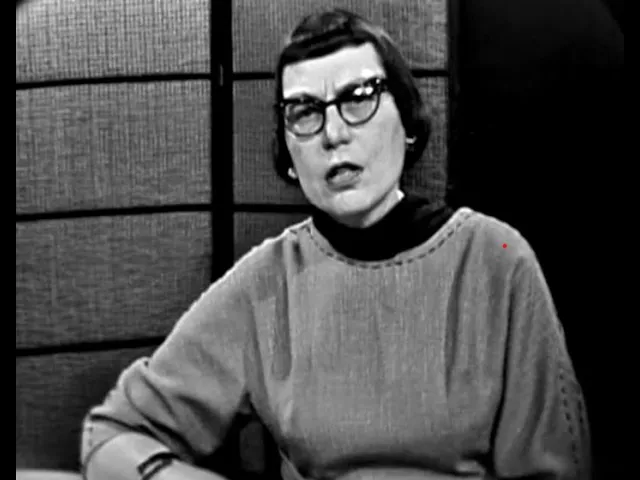
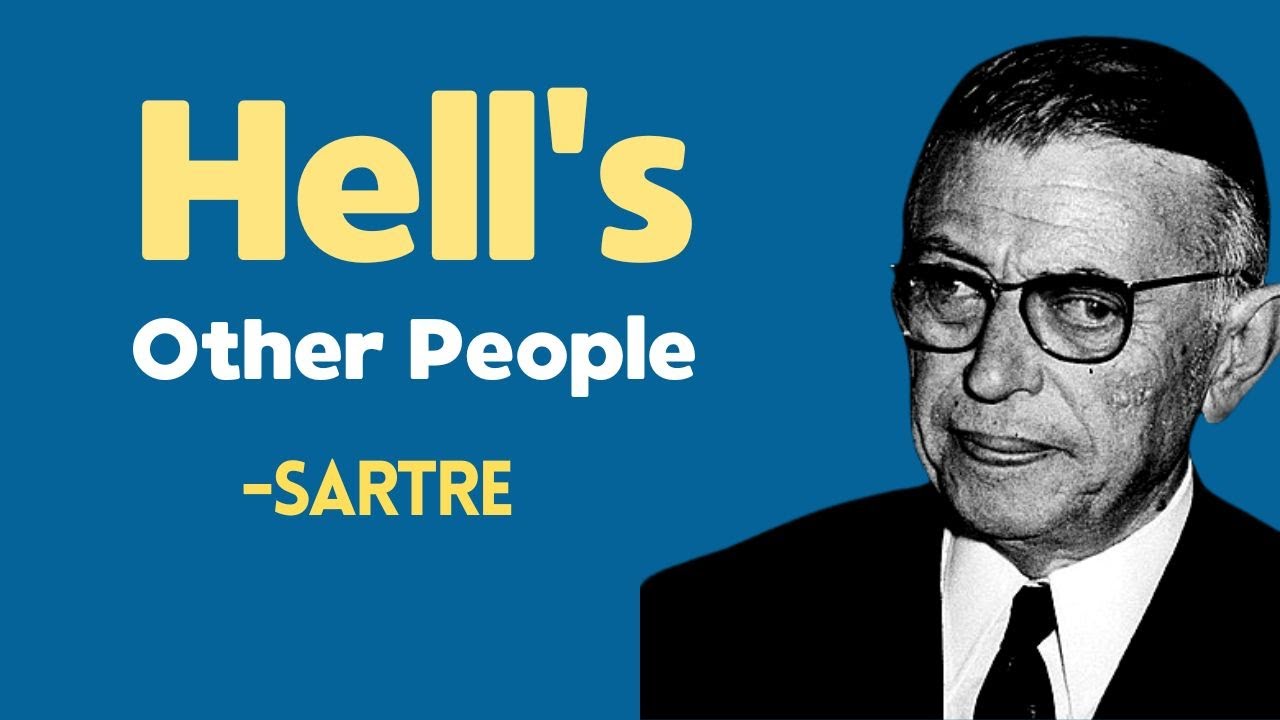



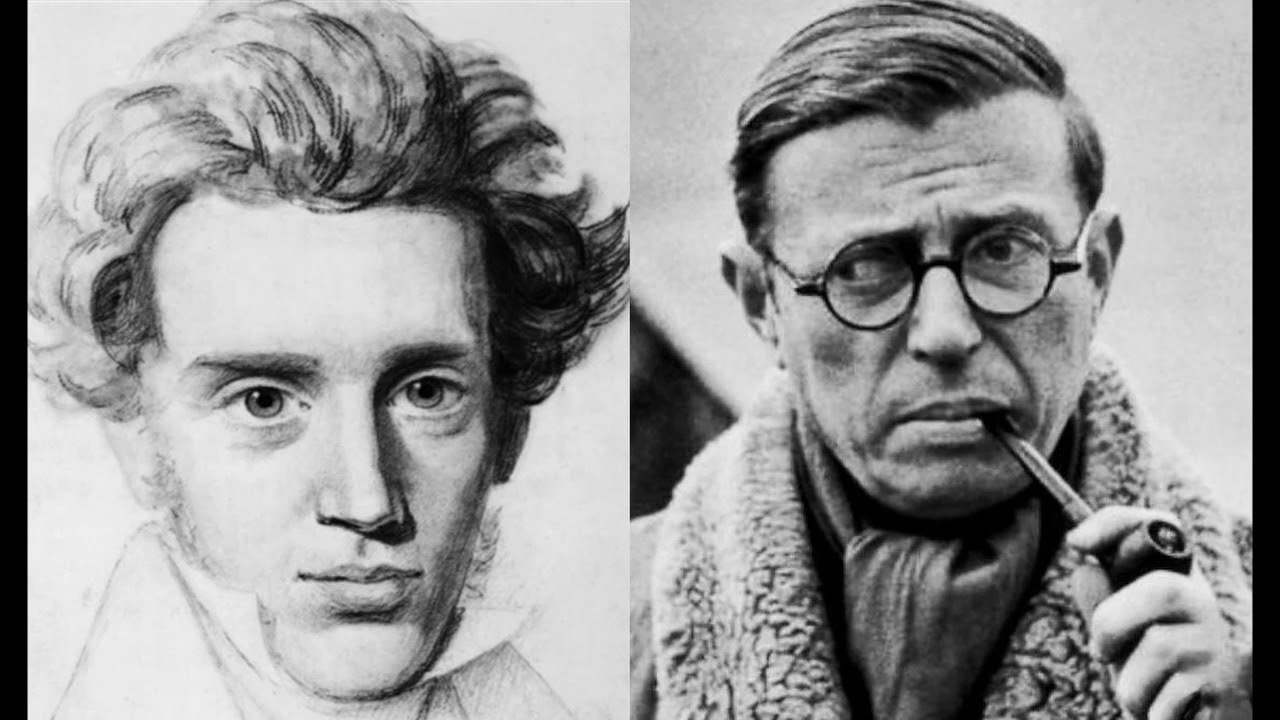



![Chris Langan - The Interview THEY Didn't Want You To See - CTMU [Full Version; Timestamps]](https://img.youtube.com/vi/9miVG2xT5jY/maxresdefault.jpg)