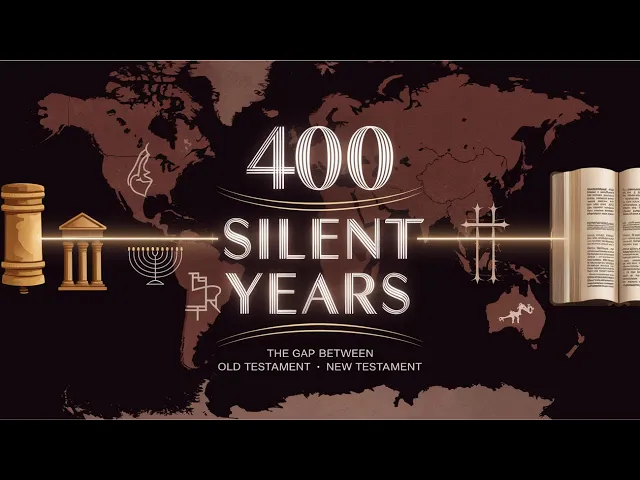
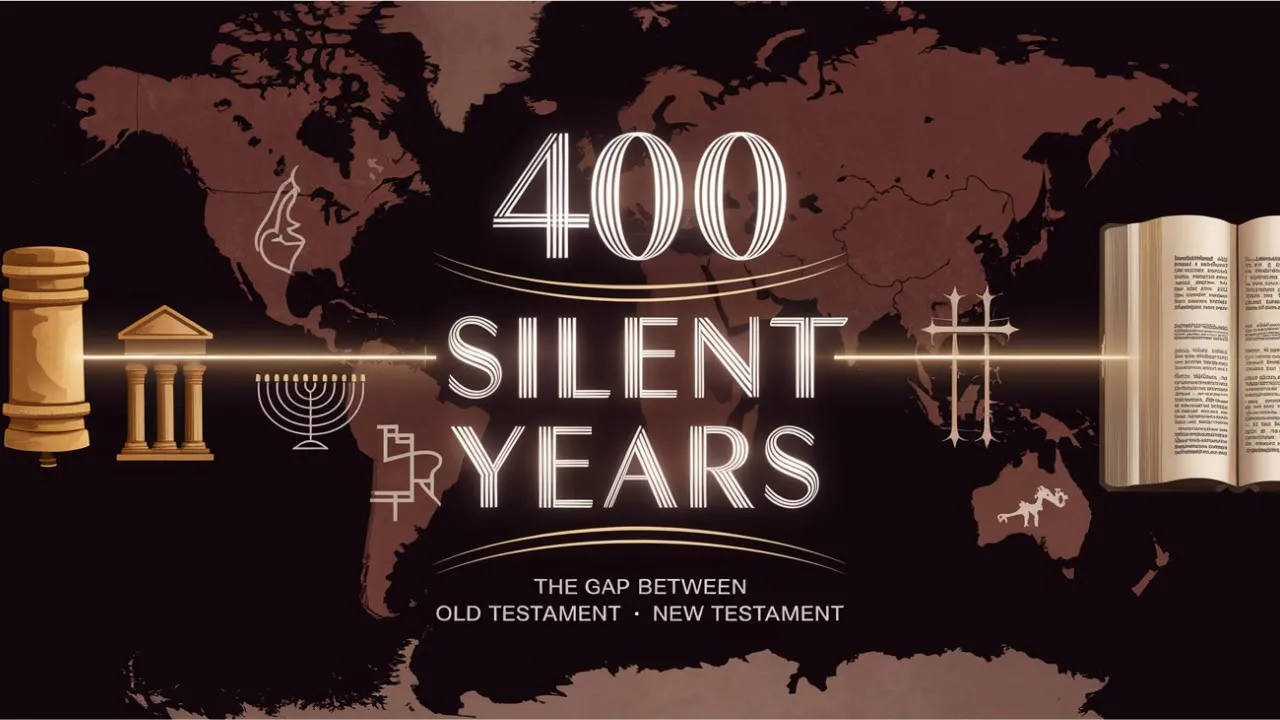
Have you ever stopped to wonder what happened during the 400 years between the Old Testament and the New Testament the Old Testament closes with Malachi a prophet foretelling the arrival of both a messenger and a messiah then suddenly the New Testament opens and Jesus Christ is already on the scene what happened in between were those 400 years truly silent or was God wor working behind the scenes to prepare the world for the most Monumental event in human history this period is often referred to as the silent years because there were no prophets and no new
scriptures written during this time but calling it silent might not entirely capture what was actually happening history reveals that these centuries were far from inactive behind the apparent quietness Empires Rose and fell cultures clashed and intertwined and religious systems evolved all Setting the stage for the birth of Jesus Christ God's hand was moving in ways that directly fulfilled prophecies found in the Book of Daniel particularly in chapters 2 7 and 11 which describe the rise and fall of Empires and their impact on God's people Malachi 3:1 also speaks of the coming of John the Baptist
the messenger who would prepare the way for the Lord for those living through this time it may have seemed like God had gone silent there were no Visions no Angelic messages no prophetic voices reminding them of God's promises yet this silence wasn't abandonment it was preparation as Ecclesiastes 3:1 says to everything there is a season a time for every purpose under Heaven these centuries were God's time to set the stage for the arrival of his son the silence was not not in activity it was divine orchestration consider Daniel's prophecy in Daniel 231 to4 the vision
of a statue made of Different Metals symbolize successive kingdoms Babylon Persia Greece and Rome each played a pivotal role in preparing the world for Christ similarly Daniel 72:8 describes the rise and fall of these empires in the form of four beasts reflecting the political and cult natural upheavals of this period even when God's voice seemed absent his plans were unfolding precisely as he had foretold during this time many changes shaped the world the Persian Empire Rose Allowing the Jewish people to return from Exile and rebuild their Temple later Alexander the Great's conquests spread Greek culture
and language across the known world creating a common tongue Tong that would later enable the rapid spread of the Gospel the Roman Empire followed bringing with it unparalleled infrastructure like roads and governance which would provide the framework for the missionary Journeys described in the New Testament the silent years were not Just a time of political transformation but also a period of spiritual significance under persan rule the Jewish people reestablished their Temple worship however during the Greek period they suffered immensely under the rule of Antiochus the fourth epiphanies who desecrated the temple this oppression gave rise
to the maban revolt and eventually the Festival of Hanukah a celebration of the Temple's rededication and a reminder of God's faithfulness Even in times of great struggle spiritually the Jewish people remained anchored to the promises of their prophets particularly the hope of a coming Messiah Malachi 3:1 captain Ed this hope prophesying a messenger who would prepare the way for the Lord even in the midst of Silence their faith endured and their anticipation grew this longing for the Messiah was a key part of their identity during these centuries think about this how often do we feel
That God is silent in our own lives we pray and wait and sometimes it feels like nothing is happening but just as we'll see from this exploration of the 400 silent years God is always at work behind the scenes he aligns events shifts circumstances and prepares us for his perfect timing just as he did back then God's quiet but deliberate hand was shaping history during these fascinating years Empires Rose and fell shaping the political landscape that made the Gospels eventual spread possible Greek culture unified language and thought Roman roads and governance created a connected World
ready to receive a message that would transcend borders even religious life evolved with groups like the Pharisees and Sadducees emerging setting the stage for the interactions and conflicts that would define Jesus's Earthly Ministry this is a reminder that silence doesn't mean absence when an artist begins a Masterpiece The Strokes are often subtle hidden or incomplete until the full picture comes into view during the 400 silent years God was painting a masterpiece his work wasn't loud or obvious but every event every shift in power and every longing heart was part of his divine plan as we
look back on this period we see how God used those 400 years to bridge the promises of the Old Testament with the Fulfillment found in the New Testament his sovereignty and Faithfulness were on full display even when it seemed like nothing was happening and just as he was then he is now working in your life even when his voice seems quiet the rise of the Persian Empire brought hope and restoration for the Jewish people in 539 BC Cyrus the Great conquered Babylon fulfilling the prophecy in Isaiah 451 where Cyrus is described as God's anointed this
Victory marked the end of the Babylonian exile and the start of a New chapter for the Jewish people who had been living in captivity Cyrus issued a decree recorded in Ezra 111:4 allowing the Jewish people to return to Jerusalem and rebuild their Temple this decree was not just a political move it was the Fulfillment of divine prophecy Jeremiah had foretold in Jeremiah 29:10 that the Exile would last 70 years and true to his words the return took place exactly on time this precise fulfillment of Prophecy Highlights God's sovereignty showing that even the shifts of Empires
were part of his Grand Design the first group of Exiles led by zerubabel faced enormous challenges upon their return Jerusalem was in Ruins and rebuilding the temple required immense resources faith and labor they encountered opposition from neighboring groups and their progress often stalled due to discouragement and fear however prophets like Hagar and Zechariah encouraged the People to persevere and their efforts ultimately succeeded the second temple was completed in 516 BC exactly 70 years after the destruction of Solomon's Temple reaffirming God's faithfulness the temple was much more than a physical structure it represented God's covenant with
his people rebuilding it restored their identity and renewed their faith it became a focal point for worship repentance and obedience to God law Ezra And Nehemiah were pivotal figures in this period of restoration Ezra a scribe and priest emphasized the centrality of the Torah teaching the people God's law and calling them to repentance Nehemiah who served as a cup Bearer to the Persian king returned to Jerusalem with a mission to rebuild the city's walls and restore its defenses his leadership was characterized by prayer strategic planning and unshakable faith in God one of nehemiah's most memorable
Achievements was the public reading of the Lord described in Nehemiah 8 as the people listened they were moved to tears recognizing their sins and recommitting themselves to the Covenant this moment of spiritual Revival underscores the power of scripture to transform lives even in the midst of hardship while many Jews returned to Jerusalem a significant number chose to remain in Persia and other parts of the Persian Empire this dispersion known as The diaspora marked the beginning of a global Jewish presence communities flourished in places like Babylon Egypt and Asia Minor where they preserved their faith and
traditions even while living in foreign lands the diaspora had a profound impact on Jewish life creating centers of worship study and community in the form of synagogues these institutions not only helped maintain Jewish identity but also laid the groundwork for the later spread Of Christianity the story of Esther is a powerful example of God's Providence during the diaspora though God's name is never explicitly mentioned in the Book of Esther his presence is evident throughout Esther a Jewish woman who became queen of Persia and her cousin morai thwarted a plot to annihilate the Jewish people this
Deliverance commemorated in the Festival of puim is a testament to God's faithfulness even in Exile returning to Jerusalem Wasn't without its difficulties economic hardship internal conflicts and external threats tested the community's resolve the books of Ezra and Nehemiah provide a candid look at these struggles including disputes over intermarriage and opposition from hostile neighbors nehemiah's response to these challenges was a combination of Faith and Action when faced with threats he encourage the people saying in Nehemiah 4:14 don't be afraid of them remember The Lord who is great and awesome and fight for your families your sons
and your daughters your wives and your homes this era also emphasized the importance of the Torah as the foundation of Jewish life faithfulness to God's word became Central to their identity influencing the development of groups like the Pharisees who later played a significant role in Je Jewish religious practice the period was marked by spiritual renewal as much as physical Rebuilding the leaders recognize that the Exile was a consequence of their Disobedience to God's covenant this led to a renewed focus on Holiness repentance and adherence to the law a defining moment came during the public reading
of the Torah in nemiah 8 where the people mourned over their sins but ultimately found joy in God's forgiveness this revival was a powerful reminder of their calling to be a holy nation and a light to the world the Persian rulers particularly Cyrus Darius and Artic Xerxes were relatively tolerant of the Jewish faith they not only permitted the rebuilding of the temple but also provided resources for the project this tolerance allowed the Jewish people to reestablish their religious practices and ins institutions at the same time Persian influence posed certain challenges exposure to Persian culture and
Religious practices such as Zoroastrianism introduced new ideas that some found tempting leaders like Ezra and Nehemiah stress the importance of maintaining their distinct identity and faithfulness to God's covenant the stories of Esther and Daniel offer Vivid illustrations of God's Providence during this period Esther's bravery and Mori Faith led to the preservation of the Jewish people during a time of great Peril similarly Daniel's rise to Prominence in the Babylonian and Persian courts showed how God could use his people to influence even the most powerful Empires these accounts demonstrate that God's promises are not bound by geography
whether his people were in Jerusalem or scattered across the Persian Empire his Covenant remained unbroken the Persian period is a testament to God's faithfulness and sovereignty despite the challenges of Exile the Jewish people maintained their identity rebuilt their faith and prepared for the next chapter in God's Redemptive plan the foundations laid during this time would influence the cultural and religious landscape of the New Testament era setting the stage for the arrival of the Messiah and the spread of the Gospel the Greek Empire brought Monumental cultural and political changes to the Jewish World leaving a lasting
imprint on History This era which began with the meteoric rise of Alexander the Great and ended with the oppressive reign of the cusd Kings was both a period of opportunity and profound challenge for the Jewish people in 331 BC Alexander the Great conquered the Persian Empire initiating a period of Greek dominance that reshaped the ancient world within a decade Alexander's campaigns extended his rule from Greece to India creating an Empire of unprecedented scale however His legacy extended Beyond military conquests it was his cultural influence known as heniz that had the most enduring impact heniz introduced
Greek language art philosophy and governance across his vast Empire Greek became the common language uniting diverse cultures and Paving the way for greater connectivity for the Jewish people this cultural shift was both a blessing and a challenge on one hand the widespread Adoption of Greek facilitated the translation of the Hebrew scriptures into Greek resulting in the Septuagint this translation made God's word accessible to Greek speaking Jews and Gentiles alike broadening the reach of scripture and setting the stage for its use in early Christian evangelism on the other hand the push to adopt Greek culture created
a spiritual and cultural crisis Greek values emphasizing individualism Human reason and polytheism clashed sharply with the Jewish emphasis on Covenant faithfulness communal identity and monotheism Jewish tradition holds that Alexander the Great interacted favorably with the Jewish people according to the historian Josephus when Alexander approached Jerusalem the Jewish priests showed him the Prophecies of Daniel 8 which symbolically predicted his Conquest of Persia impressed by this recognition Alexander is said to have Granted the Jews religious freedom allowing them to maintain their worship practices although this account is not found in Scripture it aligns with Alexander's General policy
of Tolerance toward the cultures within his Empire which helped the Jewish people adapt to Greek rule during the early years without major conflict following Alexander's death in 323 BC his Empire plunged Ed into turmoil with no clear successor his generals divided the Empire forming smaller kingdoms the toic Kingdom in Egypt and the seusd kingdom in Syria became the dominant powers vying for control of Palestine for over a century the Jewish people found themselves caught between these two rival kingdoms a situation that brought both stability and strife initially the Jewish people experienced relative peace under toic
rule the tommies allowed the Jews to govern themselves according to their own laws and even supported the Translation of the Hebrew scriptures into Greek however the situation changed dramatically when the solids rested control of Palestine around 200 BC the cusd period brought increased pressure to conform to Greek culture culminating in the brutal reign of Antiochus IV epiphanies Antiochus IV is Infamous in Jewish history for his aggressive attempts to enforce hel ization determined to eliminate Jewish religious practices he outlawed circumcision Sabbath observance and dietry laws he went further by desecrating the temple in Jerusalem erecting an
altar to Zeus and sacrificing pigs on it this act known as the abomination of desolation fulfilled the prophecy in Daniel 11:31 his Armed Forces will rise up to desecrate the temple Fortress and will abolish the the daily sacrifice then they will set up the Abomination that causes desolation antiochus's oppressive policies sparked outrage and resistance Among the Jewish people leading to the maban Revolt one of the most significant events of this period the Revolt was fueled by the Deep cultural and spiritual tensions that heniz had brought while some Jews embraced Greek ideals seeing them as a
way to modernize and integrate into the broader World others fiercely resisted viewing assimilation as a betrayal of their Covenant with God this division created internal strife within Jewish Society Wealthy heniz Jews often sought to adopt Greek Customs build gymnasiums and participate in Civic life while traditionalists clung to the Torah and opposed any compromise with Pagan culture Jerusalem itself became a flasho for this conflict As heniz Leaders attempted to trans formed the city into a Greek poce further alienating the traditionalists and deepening The Divide despite the turmoil God's hand was at work orchestrating events to prepare
the World for the coming of Christ the spread of Greek culture and language though often fraught with challenges would later provide a unified framework for the rapid dissemination of the Gospel at the same time the Jewish resistance to Helen Iz ation strengthened their commitment to the Covenant preserving their distinct identity as God's chosen people the Greek period offers profound lessons about navigating the tension between Cultural engagement and faithfulness to God the Jewish people's struggle against heniz require discernment courage and unwavering Reliance on God's promises the translation of the Hebrew scriptures into Greek during this time
highlights the the enduring relevance of God's word which transcends language and culture to speak to all people through all the oppression and division God's sovereignty remained evident the rise of Alexander the spread of Greek culture And the eventual division of his Empire all served as part of his divine plan to prepare the world for the Messiah the Jewish resistance to assimilation ensured that their faith and identity would endure while the widespread use of Greek created a cultural and linguistic foundation for the future spread of the Gospel the Greek period was both a time of testing
and preparation for the Jewish people it was a season of refining their identity and deepening Their faith for the world it was a transformative era that laid the groundwork for the arrival of Christ and the global proclamation of his message the maban Revolt stands as one of the most dramatic and pivotal moments in Jewish history during the 400 silent years defined by intense oppression remarkable resistance and the restoration of Jewish religious and cultural identity this period was a turning point the Revolt arose in Response to the brutal policies of Antiochus IV epiphanies whose attempts to
impose heniz on the Jewish people provoked outrage and Rebellion a key event that ignited the Revolt was the desecration of the temple in Jerusalem Antiochus IV sought to eradicate Jewish religion and enforce the worship of Greek gods he banned essential Jewish practices including circumcision Sabbath observance and adherence to dietary laws aiming to erase Jewish identity and Replace it with helenistic culture the culmination of his campaign came in 1067 BC when he defiled the temple by erecting an altar to Zeus in the holy of holies and sacrificing pigs an unclean animal according to Jewish law this
act known as the abomination of desolation fulfilled the prophecy in Daniel 11:31 his Armed Forces will rise up to desecrate the temple Fortress and will Abolish the daily sacrifice then they will set up the Abomination that causes desolation for the Jewish people this was more than a cultural the front it was a direct assault on their Covenant with God the Temple Central to their worship and identity had been defiled and their ability to practice their faith was under dire threat this desecration outraged the Jewish people and set the stage for Rebellion the spark of rebellion
was lit In the village of modian about 17 miles Northwest of Jerusalem when a seusd official demanded that matathias a local priest offer a sacrifice to a pagan God matathias refused in a bold Act of defiance he killed both the official and a Jewish man willing to comply this action ignited the maban revolt matathias and his five Sons fled to the Wilderness where they rallied other faithful Jews to resist the saluci forces among his sons Judas known as Judas macabus or the hammer emerged as the leader of the Rebellion under Judas macabus is leadership the
Jewish resistance used Guerilla Warfare tactics to challenge the saluci Army which was far superior in numbers and weaponry the macbes leveraged their intimate knowledge of the terrain and their unwavering commitment to their faith to gain an advantage despite being outmatched they achieved stunning victories their Success was seen not just as a result of strategy but also as evidence of God's favor the Jewish Fighters believed they were waging a holy war defending God's covenant and reclaiming their right to worship Him freely this Divine Purpose fueled their perseverance against overwhelming odds the turning point of the Revolt
came in 164 BC when Judas macabus and his forces recaptured Jerusalem and reclaimed the temple their First Act was to cleanse and rededicate the desecrated Sanctuary the defiled altar was torn down and replaced and the temple was restored the rededication was marked by an 8-day celebration during which the manora was relit according to tradition only one day's worth of consecrated oil was found yet it miraculously lasted for 8 Days a sign of God's blessing on their efforts to restore his worship this event is commemorated Annually in the Festival of Hanukah also called the Festival of
Lights the vault's success ushered in a rare period of Jewish political Independence under the haonan dynasty established by matthias's descendants from 164 to 63 BC the haonan rulers governed Judea marking the first time since the Babylonian exile that the Jewish people experienced sovereignty during this time they rebuilt their society reestablished religious Practices and defended their borders against external threats however the haian period was not without challenges internal divisions and power struggles frequently plagued the ruling family and some haonan leaders adopted helenistic practices undermining the very values that had inspired the Revolt the maban Revolt had
profound religious and cultural implications it reinforced the importance of faithfulness to God's Covenant even in the face of persecution the Revolt also solidified Jewish identity emphasizing the need to resist assimilation and uphold the distinctiveness of their faith and practices the annual celebration of Hanukah serves as a lasting reminder of this period commemorating not only the rededication of the temple but also the resilience and Faith of the Jewish people the festival's theme of light triumphing over Darkness Echoes the Spiritual victory of the mccabes who refused to let a ression extinguish their Devotion to God the Revolt
teaches us that God's faithfulness shines brightest in times of trial through the courage and determination of a few faithful individuals God preserved his Covenant and restored his people's ability to worship Him freely the macbes refusal to compromise their faith serves as an enduring example of steadfastness reminding us that Fidelity To God is worth defending even at great personal cost their victories achieved against overwhelming odds underscore God's sovereignty and intervention in human history the restoration of the temple highlights the central role of worship in the life of God's people reaffirming its importance as a foundation of
faith and identity while the maban Revolt was a historical event it was also a profound spiritual turning point it demonstrated The power of faith and courage to overcome even the most formidable challenges by preserving their identity and reclaiming their right to worship the mabes ensured the survival of the Jewish people as a distinct Nation Paving the way for their role in God's Redemptive plan under subsequent Roman rule the arrival of the Roman Empire marked a significant shift in the historical and political landscape for the Jewish people from 63 BC onward Judea became a Roman province
bringing a period of relative stability but also introducing new challenges that shaped the world into which Jesus Christ would be born this era dominated by figures such as Pompei Herod the Great and Augustus Caesar provided the infrastructure political climate and social tensions that framed the New Testament narrative and the ministry of Jesus in 63 BC the Roman general Pompei captured Jerusalem bringing an end to The period of Jewish Independence under the Hasan Dynasty this Conquest was fueled not only by Roman ambition but also by internal Jewish divisions a bitter Civil War Between Two haonan Brothers
hercus II and aristobulus II had weakened the Jewish State prompting both factions to seek Roman intervention pompy capitalizing on this instability marched into Jerusalem and declared Judea a client Kingdom Under Roman control while the Roman takeover ushered In relative peace it came at a high cost Pomp's forces violated Jewish sensibilities by entering the holy of holies in the temple an act that deeply offended the Jewish people although the Romans allowed them to continue practicing their religion their autonomy was drastically curtailed the high priesthood which had traditionally been a spiritual office was transformed into a political
tool under Roman influence undermining its sacred authority one of The most prominent figures of this period was Herod the Great a client King appointed by Rome to rule over Judea herod's Reign from 37 to 4 BC was marked by Stark contradictions on one hand he was a brilliant administrator and an ambitious Builder his most notable achievement was the Magnificent renovation of the second temple a project that made the temple a source of Jewish pride and a structure that rivaled even Solomon's original Temple in Grandeur on the other hand Herod was notoriously ruthless and paranoid known
for his oppressive policies and violent purges he even executed members of his own family including his wife and sons to eliminate perceived threats to his throne herod's paranoia is vividly Illustrated in the New Testament account of the massacre of the Innocents Matthew 2 16 to 18 in this event he ordered the execution of all male infants in Bethlehem in an attempt To eliminate the newborn king of the Jews this event underscores the volatile political climate of the time and the lengths Herod would go to secure his power despite the challenges posed by Roman rule this
period also brought developments that would later facilitate the spread of the Gospel the Roman Empire's extensive network of Roads connected cities and provinces enabling efficient travel and communication these roads would later serve as vital Pathways for early Christian missionaries including the Apostle Paul to carry the gospel across the Empire the Pax Romana or Roman peace established during the reign of Augustus Caesar created a relatively stable environment in which Commerce and ideas could flourish the widespread use of Greek and Latin further enhanced communication across diverse regions setting the stage for the dissemination of Christianity Roman rule
also Exacerbated religious tensions within the Jewish Community which responded in different ways to the challenges of foreign domination these responses gave rise to various factions within Judaism the Pharisees emphasize strict adherence to the law and Jewish Traditions resisting Roman influence through spiritual devotion the Sadducees often aligned with with the Priestly aristocracy sought to maintain political and social stability by cooperating with Roman authorities the zealots were Radical nationalists who advocated armed Rebellion against Rome the essin a separatist group withdrew from society entirely focusing on Purity and awaiting divine intervention these factions reflected the broader struggles of
the Jewish people as they sought to navigate life under Roman rule while remaining faithful to their Covenant with God at the same time the hardships of Roman occupation intensified Messianic Expectations among the Jewish people prophecies in texts such as Isaiah 9:6-7 and Daniel 713 to4 fueled hope for a deliverer who would establish God's kingdom and restore Israel's independence this heightened anticipation for a messiah became a defining feature of the religious and political climate into which Jesus was born the reign of Augustus Caesar 27 BC A14 coincided with the birth of Jesus And the early years
of Roman dominance in Judea Augustus is mentioned in the New Testament in Luke 21 where his decree for a census brought Mary and Joseph to Bethlehem this census fulfilled the prophecy in Micah 52 that the Messiah would be born in Bethlehem the city of David augustus's policies including the census underscored Rome's control over Judea and the subjugation of the Jewish people to foreign rule yet God used these circumstances to fulfill His Redemptive plan demonstrating his sovereignty over even the most powerful Empires Rome's impact during this period went beyond governance and infrastructure it also shaped the
spiritual and cultural climate the oppression and social tensions of Roman rule deepened the Jewish people's Reliance on God and sharpened their longing for salvation simultaneously Rome's political structure and communication Systems would serve as tools for spreading the gospel to the farthest corners of the Empire the Roman Empire's dominance was no coincidence its roads laws and relative peace became the very tools that God would use to spread the message of Jesus Christ at the same time the struggles and oppression faced under Roman rule prepared hearts to receive the hope and salvation offered by the gospel this
era offers several enduring lessons first it Underscores God's sovereignty over Empires just as he used the Persian and Greek Empires before Rome God orchestrated events during the Roman period to advance his purposes second it highlights the role of suffering in spiritual growth the hardships of Roman rule sharpened the Jewish people's faith and anticipation for the Messiah lastly it reveals the intersection of faith and politics a tension that continues to resonate in Modern times the Roman Empire was both an oppressor and an enabler its rule tested the faith of the Jewish people while also providing the
conditions for the rapid spread of Christianity through Roman infrastructure governance and even persecution the gospel would travel to distant lands fulfilling Jesus's command to make disciples of all Nations Matthew 28:19-20 this period reminds us that God's Sovereignty extends over all kingdoms and rulers even the mightiest Empires are instruments in his hands working to fulfill his ultimate Plan of Redemption through Jesus Christ the religious developments during the 400 silent years profoundly influenced the spiritual climate of the Jewish world and prepared the way for the coming of Jesus Christ three key elements shaped Jewish religious life during
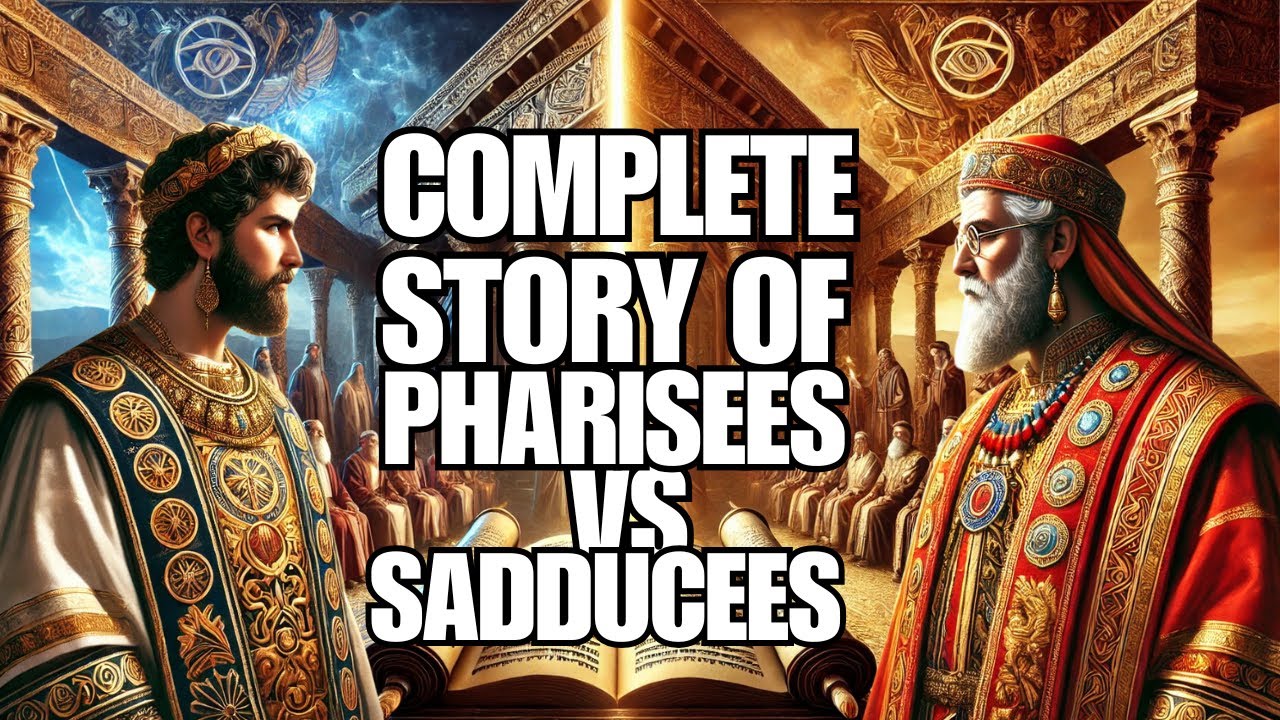
this period the emergence of the Pharisees and Sadducees The rise of the synagogue system and the translation of the Hebrew scriptures into Greek known as the Septuagint these developments not only impacted the Jewish community of the time but also created a foundation that the early church would later use to spread the gospel the emergence of the Pharisees and Sadducees represented two distinct responses to the challenges of living under foreign domination and cultural Pressures these groups which became Central to Jewish religious life played a significant role in shaping the spiritual environment into which Jesus was born
their historical Roots can be traced back to the aftermath of the maban Revolt During the period of Jewish political Independence under the hasmonean Dynasty this era saw debates about how best to interpret the law and maintain faithfulness to God amid the changing cultural and political Realities from these divisions the Pharisees and Sadducees arose as two opposing factions each offering a different perspective on what it meant to live as God's chosen people the Pharisees aligned themselves with the broader Jewish population especially those in rural areas their goal was to democratize religious observance emphasizing that Holiness was
not confined to the temple or priesthood but could be achieved by All Jews through obedience to the law and oral Traditions the Sadducees in contrast were predominantly drawn from the Priestly aristocracy and the wealthy Elite their power and influence were concentrated in Jerusalem and they were deeply connected to the temple and its sacrificial system the Pharisees distinguished themselves by their deep commitment to the Torah both written and oral they believed that the oral law passed down from Moses was as Authoritative as the written law and provided practical guidelines for applying God's commands to Everyday Life
this led to the development of detailed interpretations of the law covering areas such as Sabbath observance dietary laws and ritual Purity these interpretations were intended to promote Holiness but often became burdensome leading to accusations of legalism particularly in Jesus's critiques of the Pharisees in the New Testament Matthew 23 1-4 the Pharisees also held distinct theological beliefs including the resurrection of the Dead the existence of angels and spirits and the hope of an afterlife these views provided Comfort during times of suffering and reinforce the idea that God's justice would ultimately Prevail the saddu es by contrast
adhered strictly to the written Torah and rejected the oral Traditions upheld by the Pharisees they dismissed Doctrines not explicitly stated in the Torah such as the Resurrection the existence of angels and the afterlife their religious practices revolved around the temple and its rituals reflecting a belief that worship was centered on sacrifice rather than personal piety or theological speculation politically the Sadducees adopted a pragmatic approach often collaborating with foreign rulers including the Romans to protect their Power and the temple this cooperation earned them a reputation for being more concerned with wealth and influence than with genuine
faithfulness to God the Rivalry between the Pharisees and Sadducees created a polarized religious environment the Pharisees emphasis on personal Holiness and oral Traditions often clashed with the Sadducees focus on Temple worship and strict adherence to the written Torah these differences were not just theological but also Reflected broader social and political divides within Jewish Society in the New Testament this rivalry is evident in debates over key issues such as the resurrection for example in Acts 236 through 10 Paul uses this division to his Advantage declaring his belief in the resurrection and causing a fierce dispute between
the two groups the Pharisees supported the doctrine of Resurrection while the Sadducees vly opposed it Jesus's Ministry brought him Into frequent conflict with both groups as his teachings challenged their Authority and interpretations of the law he criticized the Pharisees for their hypocrisy and legalism accusing them of focusing on outward appearances while neglecting the deeper principles of Justice mercy and faithfulness Matthew 23:23 at the same time he confronted the Sadducees denial of the Resurrection using scripture to demonstrate that God Is the god of the living at sh Matthew 22 31-32 despite their differences both groups opposed
Jesus as his message disrupted the established religious order and threatened their influence the Pharisees and Sadducees offer valuable lessons for modern Believers the Pharisees highlight the danger of legalism placing human Traditions above the essence of God's commands the Sadducees on the other hand warn against Reducing Faith to Mere rituals or aligning too closely with worldly Powers Jesus's interactions with these groups call us to pursue a faith that transcends legalism and ritualism rooted in love for God and others and focused on the deeper truths of his kingdom these religious developments During the intertestamental period were not
merely historical but had lasting significance they set the stage for the debates and conflicts of the New Testament and Revealed the tensions within Jewish society as it struggled to remain faithful to God while navigating life under foreign domination the Pharisees and Sadducees represented two contrasting approaches to these challenges and their influence continues to provide insights into the Dynamics of Faith culture and Authority Jesus's teachings and actions ultimately transcended these divisions offering a new way of understanding and living out The kingdom of God During the intertestamental period the synagogue system emerged as a Cornerstone of Jewish
religious life ensuring the survival of faith and identity during times of upheaval and dispersion as the Jewish people adapted to life under foreign domination and often far from Jerusalem the synagogue became a vital institution where they could worship study and maintain their Covenant relationship with God the roots Of the synagogue system can be traced back to the Babylonian exile in the 6th Century BC when Solomon's Temple was destroyed in 586 BC the Jewish people were forcibly removed from their Homeland leaving them without a central place of worship with no Temple for sacrifices they began gathering
in small groups to study the Torah pray and Foster a sense of community these gatherings laid the foundation for the synagogue system by The time of the 400 silent years synagogues had become a wellestablished part of Jewish life both in the land of Israel and throughout the diaspora they served as local hubs for religious educational and social activities enabling Jewish identity and Faith to endure despite the absence of the Temple for much of Jewish history synagogues were typically modest structures located at the heart of Jewish communities unlike the grand Temple in Jerusalem which was dedicated
to sacrificial worship synagogues focused on teaching prayer and Community Fellowship the absence of an altar emphasized their unique role as places of study rather than sacrifice inside the synagogue the Torah Arc housing the sacred Scrolls of the Torah was the central Focus weekly readings from the Torah formed the foundation of synagogue worship often accompanied by prayers and Psalms This focus on scripture allowed Jewish communities to remain deeply rooted in God's word even when they were far from Jerusalem in addition to being places of worship synagogues functioned as schools for young boys where they were taught
to read and memorize the Torah this educational role was critical in preserving Jewish faith and culture across Generations as a result synagogues became centers not only for worship but also for Learning and Community Development for Jewish communities in the diaspora living in places like Alexandria Babylon and Antioch the synagogue system was especially important in these foreign lands synagogue served as a vital connection to Jewish faith and traditions enabling Jews to maintain their identity while living amid other cultures they provided a sense of solidarity and purpose fostering resilience in the face of external Pressures in cities
like Alexandria where helenistic influences were particularly strong synagogues played a dual role preserving Jewish Traditions while also engaging with Greek culture the translation of the Hebrew scriptures into Greek the Septuagint is believed to have taken place within this context highlighting the synagogue function as a bridge between Jewish and non-jewish Worlds by the time of Jesus synagogues were deeply embedded in Jewish life the New Testament frequently references synagogues as places where Jesus taught healed and proclaimed the arrival of God's Kingdom for instance in Luke 4:16 to 21 Jesus reads from The Scroll of Isaiah in the
synagogue at Nazareth declaring today this scripture is fulfilled in your hearing this powerful moment underscores the synagogue's role as a place for scriptural teaching and the Fulfillment of Prophecy similarly the Apostle Paul used synagogues as Starting points for his missionary Journeys in cities like Philippi thessalonica and Corinth Paul visited synagogues to engage with Jews and God-fearing Gentiles synagogues provided a natural platform for discussing scripture and introducing the message of Jesus as the Messiah the synagogue system demonstrated the adaptability and resilience of Jewish faith while the temple in Jerusalem remained the central symbol of Jewish Worship
synagogues enabled the decentralization of religious life this adaptability ensured that Judaism could survive periods of Exile foreign Rule and even the eventual destruction of the second temple in ad70 the emphasis on teaching and prayer within synagogues reflected broader shift from sacrificial worship to personal and communal devotion this transition not only preserved Jewish faith during the Intertestamental period but also influen the worship practices of the early Christian Church the synagogue system offers Timeless lessons about the importance of faith and Community by fostering a sense of belonging and shared purpose synagogues reminded the Jewish people that faith
is best practiced in the context of community their focus on scripture highlights the enduring significance of God's word as a source Of strength and guidance moreover the development of synagogues illustrates how Faith Can adapt to changing circumstances while remaining anchored in core beliefs through the synagogue system Jewish faith and identity were preserved during the 400 silent years the system's emphasis on teaching fellowship and prayer left a lasting impact shaping esing the development of the early church and its practices by establishing a framework that emphasized Devotion to scripture and Community the synagogue demonstrated how God uses
institutions to sustain his people and Advance his purposes across Generations the Septuagint a Greek translation of the Hebrew scriptures was one of the most transformative developments of the inter testamental period it provided greek-speaking Jews access to God's word and served as a bridge between Jewish and helenistic cultures this Monumental translation laid the groundwork for the Spread of the Gospel in the New Testament era and stands as a testament to God's Providence in preserving his word for all people the origins of the Septuagint are deeply tied to the historical context of Alexander the Great's conquests his
Empire which spanned from 336 to 323 BC unified vast regions under Greek culture and language through a process known as heniz Greek quickly became the common language of the Mediterranean World Influencing even Jewish communities scattered throughout the diaspora for Jews living in places like Alexandria Egypt a major Hub of helenistic culture Greek became their primary language many had lost fluency in Hebrew which created an urgent need for a Greek translation of the scriptures to preserve their their connection to God's word this need led to the creation of the Septuagint named after the tradition of 70
or 72 Jewish Scholars who according to Legend Completed the translation the septu agent is often associated with the reign of Tommy II philadelphus 285 to 246 BC who allegedly commissioned the translation for inclusion in the Library of Alexandria while the historical accuracy of this story is debated it underscores the cultural and religious significance of the Septuagint initially the focus of the translation was on the Torah the first five books of the Hebrew Bible Which were foundational to Jewish worship and identity over time additional books of the Hebrew scriptures were translated resulting in a comprehensive Greek
version of the Jewish Bible the translation process posed significant challenges both linguistic and cultural the translators faced the task of finding Greek equivalents for Hebrew Concepts that had no direct parallel in helenistic culture for example the Hebrew word chessed Loving kindness required careful interpretation to convey its full meaning in Greek despite these challenges the translation was remarkably faithful to the original text while remaining accessible to greek-speaking audiences the Septuagint had far-reaching culture Cal and Theological implications by translating the scriptures into Greek Jewish Scholars made their sacred texts accessible to a Much wider audience including Gentiles
interested in Jewish monotheism and ethics this accessibility introduced Central biblical ideas such as the creation of the World by a single God the concept of Covenant and the hope of a messiah into the broader philosophical and religious discussions of the helenistic world at the same time the septu agent influenced Jewish thought by incorporating Greek vocabulary and Philosophical categories into the interpretation of scripture while this blending of perspectives enriched Jewish theology it also caused tensions as some Jews resisted the helenistic influences present in the translation the septu aent became a Cornerstone of early Christianity serving as
the primary version of the scriptures for Greek speaking Believers for the apostles and early Christians who operated in a predominantly helenistic environment the septent provided a shared foundation for engaging both Jewish and Gentile audiences the New Testament writers frequently quoted from the Septuagint demonstrating its widespread use and Authority for example Matthew 1:23 cites the Septuagint rendering of Isaiah 7:14 interpreting the prophecy of a virgin birth as fulfilled in Jesus the Virgin will conceive and give birth to a Son and they will call him Emmanuel similarly the Apostle Paul relied on the Septuagint in his letters
such as Romans 15:12 where he quotes Isaiah 1110 to show how Jesus fulfilled Old Testament prophecies in addition to its use in scripture the septu agent played a crucial role in early Christian evangelism and apologetics greek-speaking Jews and God-fearing Gentiles who attended synagogues were Already familiar with the Septuagint making it an effective tool for proclaiming the gospel the apostles used it to explain how Jesus fulfilled the promises of the Old Testament Bridging the Gap between Jewish tradition and the emerging Christian faith furthermore the translation of key terms in the Septuagint shaped early Christian theology for
example the Hebrew word Messiah anointed one was rendered in Greek as Christos which became the title For Jesus in the New Testament solidifying the connection between Jewish Messianic expectations and Jesus Christ while the septu agent was embraced by the early church it eventually became a source of contention between Jews and Christians as Christianity spread and grew increasingly distinct from Judaism many Jewish communities rejected the septu agent viewing it as a christianized version of their scripture Rures by the 2nd Century a Jewish Scholars began promoting alternative Greek translations such as those by Aquila and seacus to
counter the Christian use of the Septuagint despite these disputes the Septuagint remained a foundational text for the early church and continues to be revered in Christian Traditions particularly in eastern Orthodoxy the legacy of the Septuagint extends far beyond its historical and cultural context it serves as a powerful Example of God's Providence in ensuring that his word reaches all people transcending linguistic and cultural barriers the translation also underscores the importance of making scripture accessible to diverse audiences a principle that continues to guide modern Bible translation efforts moreover it challenges Believers to recognize the universality of God's
message that his word is not confined to a single language ethnicity or Nation But is meant for all Humanity the septuaginta on Jewish and Christian history cannot be overstated it provided a bridge between cultures and prepared the world for the coming of Christ through this translation the truth of God's covenant promises and salvation became accessible to those outside the Hebrews speaking Community Paving the way for the global mission of the Gospel as cultures Clash and languages evolved God preserved his word Ensuring that its message of Hope and Redemption would endure for all people the story
of the Septuagint is a reminder of the transformative power of scripture and the responsibility to share it with others it challenges Believers to embrace the universality of God's word and to make its truths known to a world in need through the Septuagint God's plan for salvation reached across barriers of culture and language preparing the way For the Fulfillment of his promises in Jesus Christ the 400 silent years were far from Silent in terms of God's activity while there were no prophets or new scriptures God was carefully orchestrating history to create the perfect conditions for the
arrival of Jesus Christ and the spread of his gospel three major factors the establishment of a universal language the construction of the the Roman Road system and the heightened Messianic Expectation illustrate how God used every event Empire and challenge to prepare the world for the New Testament era one of the most significant ways God prepared the world was through the establishment of coin Greek as a universal language this transformation began during the conquests of Alexander the Great who envisioned a world unified by Greek culture langu language and philosophy a process known as Heniz from 336
to 323 BC Alexander's Empire expanded from Greece to India spreading Greek influence across the known world even after his death the influence of Greek culture endured deeply shaping the Mediterranean region Greek replaced many local languages becoming the lingua franer of Commerce governance and education for Jewish communities scattered across the diaspora this linguistic shift had profound effects many Jews adopted Greek As their primary language which led to the need for a Greek translation of the Hebrew scriptures resulting in the creation of the Septuagint the Septuagint was a crucial part of God's plan during this time by
translating the Hebrew scriptures into Greek Jewish Scholars made God's word accessible to a much wider audience including Gentiles curious about Jewish monotheism this Greek version of scripture introduced Central biblical ideas such as the creation of the world the Covenant relationship with God and the promise of a messiah into the broader helenistic world for early Christians the Septuagint became indispensable the apostles and evangelists frequently quoted it in the New Testament for instance Matthew 1:23 uses the septu rendering of Isaiah 7:14 to emphasize the prophecy of a virgin birth fulfilled in Jesus coin Greek's role as a
common Language ensured that Jesus's teachings and the writings of the Apostles could reach diverse audiences across the Roman Empire the Apostle Paul for example leveraged Greek to connect with helenistic audiences as seen in Acts 17 where he speaks to philosophers in Athens using their language and cultural Concepts to present the gospel this linguistic Unity was not accidental but a demonstration of God's Providence ensuring his message could Transcend barriers another essential element of God's preparation was the Roman Empire's unparalleled infrastructure particularly its Road system the Romans were Master Builders creating over 250,000 mil of roads that
connected cities and regions across their vast Empire these roads constructed with stone paved surfaces and drainage systems facilitated trade communication and travel with remarkable efficiency For early Christians these roads were a Divine provision missionaries like Paul used the Roman Road system to travel extensively bringing the gospel to cities such as Philippi Ephesus and Corinth Paul's Journeys recorded in Acts 13 to2 1 demonstrate how the physical infrastructure of Rome enabled the rapid spread of Christianity the stability provided by the Pax Romana or Roman peace was another critical Factor this period established during the reign of Augustus
Caeser brought an era of relative peace and order that lasted for over 200 years it minimized internal conflicts and made travel safer allowing missionaries to move freely throughout the Empire Roman law also provided protection for its citizens as seen in Acts 22:25 to 29 when Paul invokes his Roman citizenship to avoid unlawful treatment Additionally the Roman Postal System supported the exchange of letters and Information the New Testament Epistles such as Paul's letters to the Corinthians and Ephesians were delivered through this system providing guidance and encouragement to early Christian communities these letters became foundational to the
growth and unity of the church the Roman roads and infrastructure were not merely human achievements they were Tools in God's providential plan to ensure that the gospel could spread rapidly and Effectively a third crucial element of God's preparation was the heightened Messianic expectation among the Jewish people for centuries Old Testament prophecies had pointed to the coming of a messiah passages such as isaah Isaiah 9:6-7 foretold the birth of a Divine ruler while Micah 52 predicted that the Messiah would be born in Bethlehem Daniel 7:13-14 described a son of man who would receive Everlasting dominion and
Glory these promises sustained the Jewish people through times of Exile and oppression reminding them of God's faithfulness and his Covenant with Abraham David and their Descendants the repeated conquest of of Israel by the Babylonians Persians Greeks and Romans intensified this longing for a deliverer each new Empire brought its own forms of Oppression from Antiochus IV epiphany's desecration of the temple to the heavy Taxation and political subjugation under Roman rule these hardships deepened the Jewish hope for a messiah who would bring Liberation and justice during the intertestamental period various leaders arose claiming to fulfill Messianic expectations
figures like Judas macabus who led the revolt against the cusd were celebrated as deliverers though their victories were only temporary these movements often combined political and religious aspirations reflecting the Widespread belief that the Messiah would be a political leader who would restore Israel's independence however they also revealed the limitations of human efforts to achieve lasting salvation the arrival of Jesus Christ fulfilled these long-held expectations in ways that surpassed human understanding unlike the political deliverers many Jews anticipated Jesus came as a spiritual savior offering Redemption from sin and establishing a kingdom that transcended Earthly boundaries his
birth in Bethlehem Ministry death and Resurrection fulfilled the promises of the oldest Testament revealing the depth of God's Redemptive plan as Paul wrote in Galatians 4:4 to5 but when the set time had fully come God sent his son born of a woman born under the law to redeem those under the law that we might receive adoption to sunship the Heightened Messianic expectation during this period reminds us of the power of hope and trust in God's promises even in times of silence and suffering God's people clung to the assurance that he would act in his perfect
timing the establishment of Greek as a universal language the construction of Roman roads and the deepening Messianic hope were not random events they were carefully orchestrated preparations ensuring that the good news of Jesus Christ could Spread to All Nations these developments demonstrate God's sovereignty and his unwavering commitment to Redeeming the world through his son God's silence is never in in activity the 400 years between the Old and New Testaments often called The Silent years stand as a powerful Testament to this truth though there were no prophets proclaiming New Revelations and no scriptures being written God
was actively at work behind the scenes he was shaping history Cultures and hearts to prepare the world for the arrival of his son Jesus Christ every Empire that Rose and fell every cultural shift and every moment of longing in his people's heart Hearts played a role in his divine plan these years remind us that God's sovereignty extends over all things even during times when he appears silent the Apostle Paul captures this beautifully in Galatians 4:4 to5 but when the set time had fully come God sent his son born of A woman born under the law
to redeem those under the law that we might receive adoption to sunship this verse shows us that God's timing is always perfect the 400 silent years were not a void in his activity but a period of deliberate preparation God was aligning history so that when Jesus came the world would be ready to receive his message from the spread of a universal language like Greek to the construction of Roman roads and the Deepening Messianic expectations of the Jewish people every detail was carefully orchestrated to ensure that the gospel could spread swiftly and effectively for the Jewish
people living through those centuries the silence must have felt heavy they faced foreign domination the pressures of cultural assimilation and moments of deep spiritual uncertainty yet even in that silence God's promises remained steadfast the prophetic words of Isaiah Daniel and Malaki echoed in their hearts reminding them that God's Deliverance was still coming although they couldn't always see his and at work hindsight reveals that his presence was constant shaping every event to fulfill his ultimate purpose for us today the story of the 400 silent years is a powerful reminder of God's faithfulness and perfect timing in
our own lives we often experience Seasons when God seems distant when prayers feel unanswered and His presence feels elusive these are the times when we must remember that silence does not mean absence just as God was working during those 400 years he is working in our lives today he may be aligning circumstances preparing hearts or orchestrating details we cannot yet comprehend his timing may not align with ours but it is always perfect think about your own life have you experienced moments when God seemed silent only to Later realize he had been working all along perhaps
it was a delayed answer to prayer a difficult waiting period or a challenge that ultimately led to unexpected blessings just as he was faithful during the silent years God is faithful now the Bible is full of stories of waiting Abraham waiting for Isaac Joseph enduring years in prison and the Israelites wandering in the wilderness for 40 years in every case these periods of waiting were times of Preparation where God was shaping character strength ing faith and setting the stage for his greater purpose the key to navigating these seasons of silence is trust trust in God's
goodness trust in his sovereignty and Trust in his timing as Paul writes in Romans 8:28 and we know that in all things God works for the good of those who love him who have been called according to his purpose This Promise assures us that God is always working even when we cannot See or feel his Pres presence trusting him means staying faithful in prayer worship and obedience even during the waiting the story of the silent Years also invites us to reflect on the broader Narrative of scripture from Genesis to revelation we see a consistent thread
of God's faithfulness working to fulfill his promises and redeem his people even though the silent years are not recorded in scripture they remain a Powerful example of how God works in the background to bring his plans to fruition reading the Bible with this perspective can deepen our appreciation of his sovereignty and Inspire us to trust him more fully this story calls us to remain faithful in our own times of waiting faithfulness during waiting means continuing to seek God through prayer study and worship even when we cannot feel his presence it means trusting that he is
working behind the Scenes shaping Our Lives according to his perfect plan waiting on God is Not passive it is an active expression of trust in his goodness and timing the silent years are more than a historical period they are a message of Hope for every believer they show us that God's silence is never the end of the story when the time was right he sent his son into the world fulfilling every promise and offering the ultimate solution to Humanity's greatest need salvation this Truth should encourage us to trust him in our own seasons of silence
and share this message of Hope with others who may be struggling take a moment to reflect on how God has worked in your life even in the quiet Seasons think about the ways he has answered prayers provided in unexpected ways or guided you through challenges consider reading scripture with fresh eyes looking for evidence of his faithfulness throughout history and in your own Story if this message of the silent years has encouraged you share it with someone who might need a reminder of God's faithfulness by sharing this truth you can help others see that God is
always working even when he seems silent finally let the story of the silent years remind you that God's silence is never in activity just as he worked during those 400 years he is working in your life today when the time was right he sent his son into the world Fulfilling every promise and providing salvation for all who believe trust in his timing Trust in his plan and take heart in the knowledge that he is always faithful even in the silence