This cycle has felt impossible. Not necessarily because of price action, but because the game itself has changed. You see, we had thousands of coins launching every single day.
New metas came and went in [music] a matter of weeks, sometimes even days. And no matter how locked in you were, it always felt like the market was one step ahead of you. So, a lot of people gave up.
They declared that crypto was dead or at least that most of the opportunity was gone. But what if the problem wasn't crypto at all? What if the problem was the strategies we used throughout this cycle?
You see, I run a retail investors group called Retail Dow. And after watching hundreds of mistakes play out over the past 2 years, the pattern is painfully clear. We didn't lose because the market betrayed us.
We lost because we were using a playbook that just doesn't work anymore. So, in this video, I want to break down why this cycle felt so unfair and what we need to do instead if we want to win in the future. Okay, but before we talk specifics, we first need to understand the environment we're operating in because something fundamental has changed this cycle and most of us didn't even realize it until it was far too late.
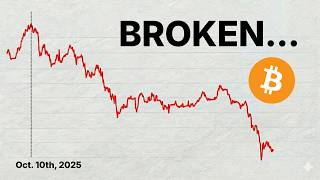
So, first of all, this was a Bitcoin dominated cycle. Like, we all know that Bitcoin hit a few new all-time highs. But if you look at the others chart, which is basically altcoins, it's been a straightup bare market for pretty much all of 2025.
So every little alt season pump we got, well, they were all fake outs. Like they got us excited and then they proceeded to wreck us soon after. And that leads me to my second point, which is that retail has basically disappeared this cycle.
I mean, if you think about it, it kind of makes sense. After all, the economy's been struggling. People are stretched thin, and the little investing money they have flowed into things like AI stocks or gold instead.
So, point is, without fresh retail capital, even the good narratives never really had room to run. But there's a third factor that completely changed the game, and that's the arrival of Pump. fun.
You see, Pump Fun absolutely destroyed our market. We used to only have a few new thousand coins launching every year, but now that number is literally in the millions because Pump Fun made it as easy as a click of a button. So that diluted the crap out of the market and completely fragmented the amount of attention and liquidity that was available.
Like there were so many projects fighting over the same tiny pool of capital that most of them never really stood a chance. And from the retail perspective after they bought into a few disappointing meme coins and lost money, they just decided to leave forever. So yeah, I could go on and list way more reasons, but I think you get the point that this past cycle was completely different from anything we've ever seen before, but here's the thing that most people still don't understand.
You see, despite everything I just shared, it still doesn't mean that crypto is dead. All it means is that the market has changed and we didn't change with it. You see, we can all agree that this cycle was difficult, but we definitely made it way harder for ourselves by relying on strategies and habits that simply don't work anymore.
For example, we followed Kos like they still had the same influence and pull that they used to, as if a single tweet could even move a chart like it did back in 2021. But this cycle, the market was way too big, too fast, and even too fragmented for any one voice to consistently swing prices. [music] Also, another big issue is that we weren't clear with ourselves about whether something was a trade or investment.
And that confusion alone made people miss some of the biggest moves this cycle. For example, someone wrote on X that they bought hype when it first dipped to around $10, but then they sold it for a quick 2x and proceeded to watch it run all the way to $60. They said that they regretted it because deep down they knew that it has strong fundamentals, but they still treated it like it was some low cap meme coin.
So point is before entering any position, you got to decide whether it's a trade or an investment and why. because if you don't decide that upfront, the market will do it for you and you're not going to like the outcome. But anyways, another mistake that we all made is that we stopped learning and experimenting.
Like in prior cycles, most retail investors were actually quite excited to try things. We read white papers, we bridged to new chains, and we explored new tools together. But this cycle, most people stuck to what they already knew and just traded whatever momentum was on the charts.
And because of that, we missed out on some of the earliest and best opportunities simply because we were too tired, jaded, or lazy to try anything new. And that actually brings me to momentum trading, which is fine, by the way. However, it only gets you so far.
You see, historically, the biggest gains come from understanding something deeply, building a long-term thesis on it, and then having the conviction to hold through the volatility. But most of us weren't doing that. We were flipping things we didn't believe in for tiny gains, and then we were wondering why our portfolio was never really taking off.
Now lastly, and this is a big one, we ignored entire sectors because they weren't our thing. A great example is cryptoreated stocks. I'm talking exchanges, miners, or infrastructure plays.
Those absolutely killed it this cycle. Most of them outperformed altcoins by a mile. But because we were so dead set on only buying tokens, we closed ourselves off to the opportunities sitting right in front of us.
So yeah, I mean I could go on for days, but I think you get the point. Yes, this environment was tough, but our approach definitely wasn't helping. And once you see that, you naturally start asking the question, what should we do instead?
Well, on paper, the solution seems simple, right? Just stop doing those things. But if you zoom out, we see something really quite interesting.
Almost every mistake that retail made this cycle comes back to one core issue. We were playing this game alone while the people who won were not. I mean, just think about who crushed it this cycle.
It was the funds and syndicates and they pulled research and capital and built positions before anyone on CT was even paying attention. It was the whale groups and trading desks and they coordinated their entries and exits not in some secret cabal type of way but through shared chats, shared data, shared order flow and clear playbooks. And of course it was also the VCs and market makers and they were aligned around unlock schedules, listings and liquidity incentives literally coordinating when attention and capital would hit a token.
So all of that was coordination and it mattered a lot. Meanwhile, us retail investors, we are kind of just going it alone. No shared framework, no shared timing, no shared understanding of the market.
And that's why in a difficult market like this, that coordination gap is the real edge. Like our problem wasn't bad strategy or not enough alpha. It's that we were trying to play a coordinated game with zero coordination.
Okay, so we need some coordination. Got it. But what does that actually look like in practice?
And where can we get it? Well, folks, this is exactly why we built retail DAO because retail DAO gives you what the winners of the cycle had all along, and that's a way to actually move and act with shared purpose. Inside the DAO, coordination isn't just some abstract concept.
It's built into the very core of how we operate. [music] For example, we share notes instead of trading off isolated opinions. We run weekly missions where we research together, try things out together, and figure out what's real versus what's noise.
And because so many people are working on the same themes at the same time, we spot rotations earlier, catch blind spots faster, and avoid obvious traps before they blow up in our face. We've got squads digging into specific areas, an XP system that rewards actual contribution, and tokenbased voting that aligns the community on what to do next. All of that is designed to take the chaos of crypto Twitter and turn it into our sustained edge.
So to clarify, this is not an alpha group nor a signals group. Like you're not going to be spoonfed anything in here. However, if you put in the work, you'll get to reap the full benefit of coordination and that's how you can make sure that you win in the long haul.
But yeah, I mean that's the story of this cycle. The environment changed, the old strategy stopped working, and the people who won did so because they were coordinated and we weren't. So, if hearing any of this made you not along even once, then you already know why we built retail DAO and why we swear by it.
It's just simply a better way for retail to operate. So, if you want to stop going it alone and start navigating this space with some real support, then come join us. links down below.