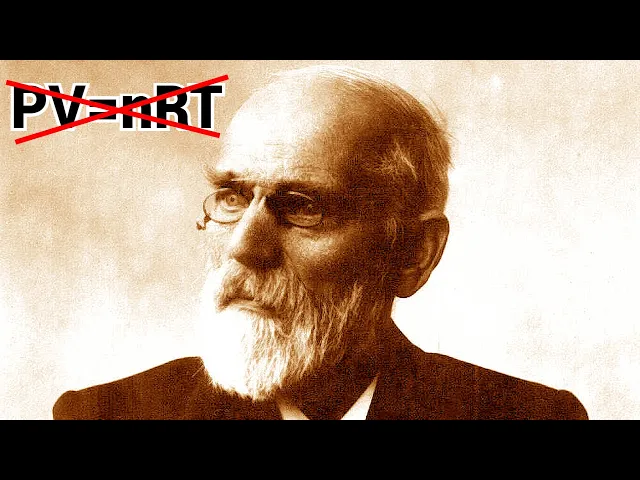
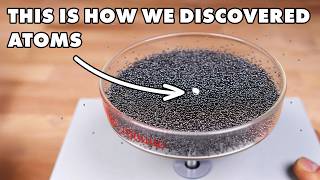
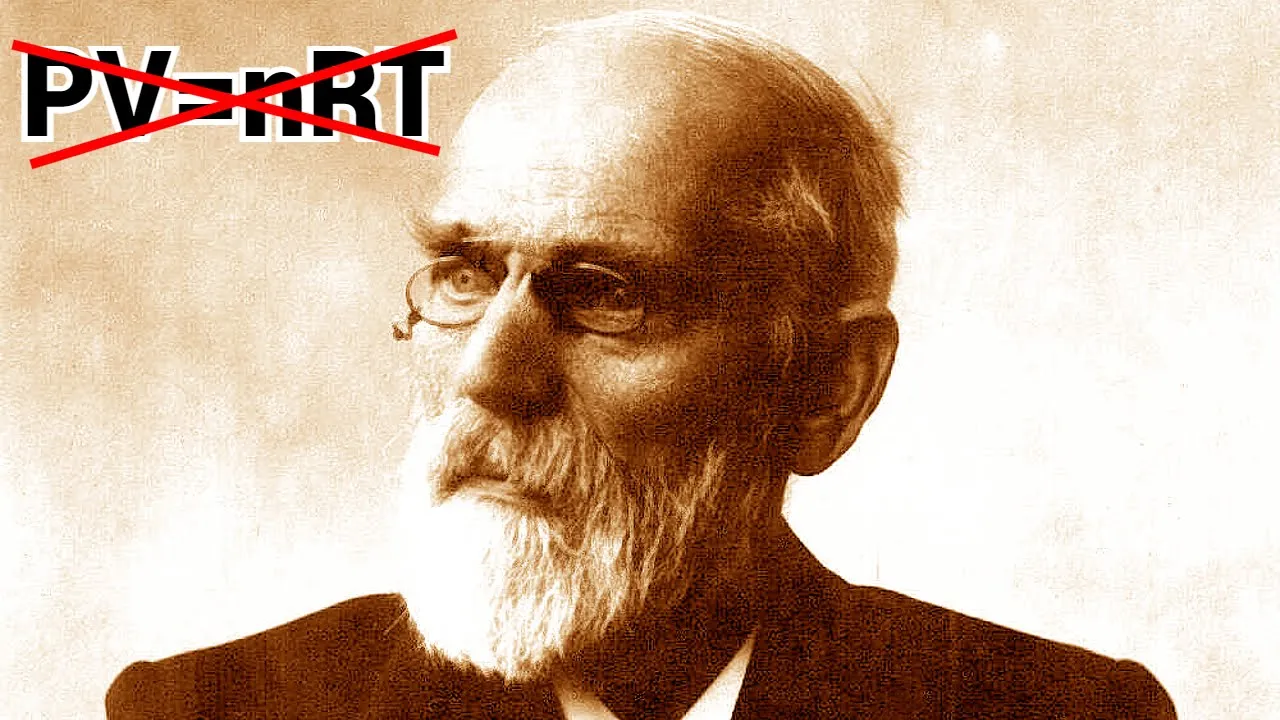
in the year 1834 Emil claperon wo together the threads of Bo's law Charles's Law gay lsac's law and avagadro's law into a single entity the ideal gas law the newly formed law was a revelation taking into account many properties was easy to use and was a great predictor for gas behavior in many scenarios however the ideal gas law was not perfect as many would come to discover over for the coming years the problems they uncovered happened at extreme pressures and temperatures in which this law would break down and fail to predict behaviors of these gases
this law was still failing to take into account some lurking variables and these variables would be unveiled for the first time in 1873 by a Dutch physicist by the name of Johan Vander wals Vander wals by no means had a normal education 18 73 was the year in which he proposed his thesis and obtained his Doctorate from the University of Leen but it was long overdue for he was 36 years old at the time as odd as it may seem it wasn't for his lack of passion for knowledge in pursuit of further education he attended
lectures at leaden University but never was able to enroll in the courses this was due to the fact that in order to enroll as a full-time student at the University it was required to have have a fluency in Latin a skill which Vander wals unfortunately lacked so he continued to teach himself and work as a physics teacher until education reforms in the Netherlands eliminated the Latin requirement when the time finally came he took and easily passed the math and physics qualification exams and became enrolled in the University Vander wal's thesis was entitled on the continuity
of the gas and liquid state in this thesis he modified the ideal gas law into a new equation which would later come to be known as the Vander wals equation this equation was almost identical to the ideal gas law except it added two key factors the first Factor was based on the assumption that gases are made of actual molecules and take up space in the volume that they exist in which was an assumption that the ideal gas law did not make vanderwal proposed that the volume of the container would be less than expected by the
ideal gas law and would be based on the number of gas molecules present and also on the volume that each molecule occupied on average the second Factor was based on the assumption that these molecules also interact with one another through electrostatic intermolecular forces this is hardly noticeable on large scales but when put under extreme scenarios intermolecular forces affect the gas's behavior at a noticeable level he proposed that the pressure would be less than expected by the ideal gas law due to the attractive nature of these electrostatic forces since all molecules are attracted to each other
in this way the intermolecular force will increase exponentially as the concentration of molecules increases this is represented mathematically as the concentration of molecules squared multiplied by the intermolecular force the molecules have for that specific gas although a revolutionary proposal the Vander wals equation was not widely accepted at first it went largely unnoticed for 4 years due to his publication being in Dutch and most didn't even know about it until 1877 when it was published in a popular German Journal even then however there was still some fightback against this proposal many at the time did not
believe that molecules even existed or at least wouldn't accept their existence because it couldn't be proven however Vander wal's thesis had one huge aspect going for it it got the immediate backing of notable physicist James Clerk Maxwell who heralded Vander walls as to soon be on the foremost of molecular science over the next few decades the scientific Community came to accept Johan's proposal as true and he eventually received tons of praise for it Vander wals received the Nobel Prize in physics for his work on the equation of State for gases and liquids this was not
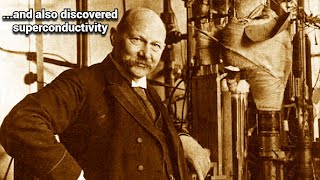
the only work he was known for either after receiving his Doctorate Vander wals became a professor at a new school the University of Amsterdam alongside other notable scientists and close friends Hugo deze and Henry vanoff together they brought Dutch science to a new high point and helped raise their University to high stature vanderwal later further cemented his status with the law of course responding States in 1880 which led to the eventual liquidation of both hydrogen and helium and later on the discovery of super conductivity other notable accomplishments of his include a theory of binary mixtures
in 1890 and an early theory of capillary action in 1893 by the time of his death in 1923 vanderwal had revolutionized the understanding of fluid behavior and opened the door for many new discoveries based on the many interesting properties of states of matter if you enjoyed this video please consider liking and subscribing click here if you want to see more videos on scientific progress made during this time period thank you for watching and I will see you in the next video