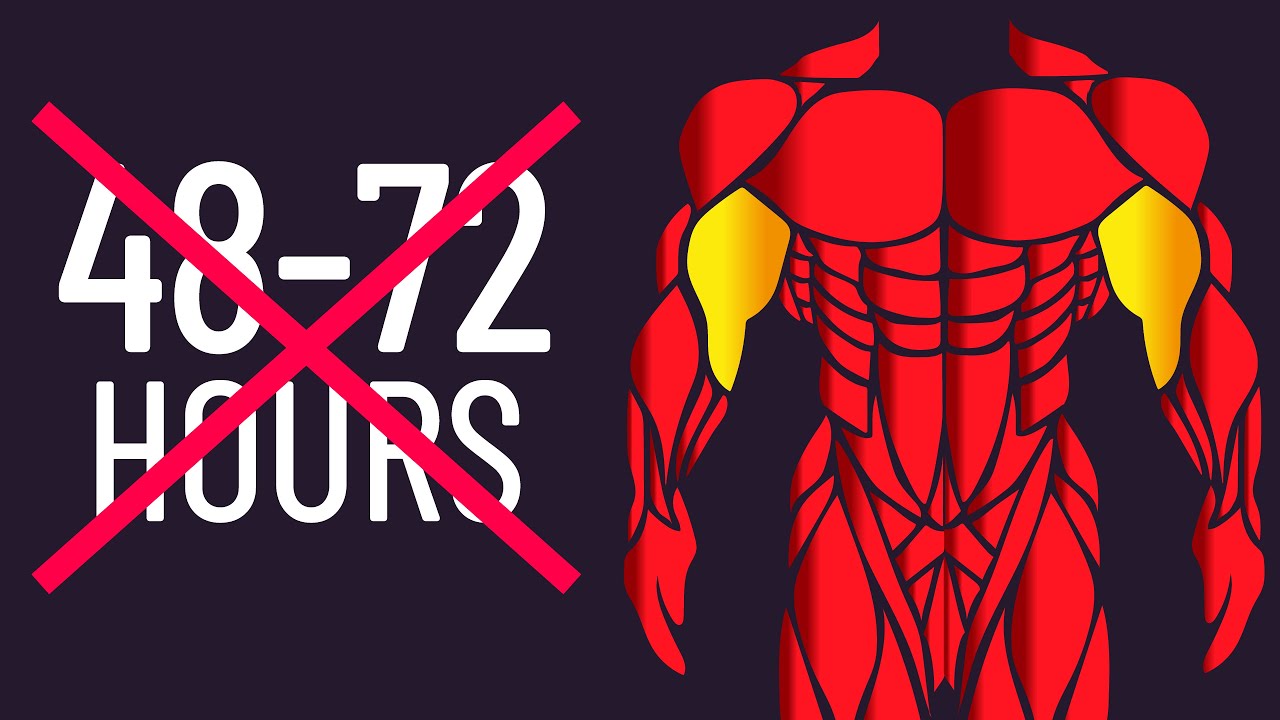
welcome to the house of hypertrophy should you train a muscle more often in a week to maximize muscle hypertrophy it's been said this allows more frequent elevations in muscle protein synthesis and more time spent in a muscle building state but is this true interestingly this 2013 analysis of 127 competitive bodybuilders reported the majority trained each muscle only once per week bro splits largely involve hitting each muscle once per week other splits like lower splits involve hitting each muscle twice a week and full body involves hitting each muscle three times per week of course there are
different variations of these splits and there are other splits or hybrid splits but what does the scientific literature say on this topic a new metaanalysis including 35 studies with over 1,000 subjects has examined the effects of how often you train each muscle in a week on muscle growth this is the same metaanalysis that explored the relationship between volume hypertrophy we dissected in our last video but it had another analysis on frequency let's dive into what they found it's critical to know the researchers examine the impact of training a muscle a different number of times per
week when the total number of sets performed for that muscle per week is equated as a simple example imagine we perform nine sets for the biceps in a week perhaps three sets on each the normal creature and incline curl a once per week frequency involves all those nine sets in one session while a three times per week frequency splits those nine sets across three sessions keeping the total weekly sets equated is important since we're trying to isolate the effects of frequency another critical thing is most studies had all subjects perform their sets to or very
close to failure within a rep range loads are usually adjusted within and across training sessions to keep reaching within that rep range this is important with our example of Performing nine sets for the biceps all in one session you can imagine fatigue will notably build up such that those later sets are going to likely be using much lighter loads to reach failure in say the 8 to 12 rep range conversely splitting those nine sets across three sessions involves fresher sets we want to see if this leads to higher frequency producing better results the final thing
we must not before revealing the results is the researchers examined if there was a superior method for counting training frequency this sounds confusing if you watched our previous volume video this is similar to what they did here but let's see how it applies the training frequency first we need to know the difference between a direct and indirect set a direct set for muscle is a set on an exercise where that muscle is the primary force generator think of the biceps and any biceps curl the tricep in any triceps extension and the chest in most bench
pressing exercises an indirect set for a muscle however is a set on an exercise where although that muscle is still fairly trained it's not the primary force generator this could be the biceps in any rowing exercise and the triceps in a wider grip bench press not everyone will agree on what should be a direct and indirect set for each muscle but here's a table showing what the authors considered as direct and indirect sets for each muscle muscle these are the exercises and muscles involved in the data that's why not every muscle and exercise is shown
the first method the total method considers both direct and indirect sets equally for example if we train a row on Monday and a biceps curl on Thursday this is a frequency of two times per week for the biceps the second method the fractional method considers indirect sets as half the frequency of direct sets with examp example of rows on Monday and Coes on Thursday this is a frequency of 1.5 times for the biceps the final method the direct method doesn't even consider indirect sets so with our example it would just be a once per week
frequency for the biceps the researchers ultimately found that the fractional method performed the best in explaining the data with the evidence being strongly or very strongly in favor of this method this is logical indirect sets answers effective as direct sets for stimulating a muscle which might be why it was better than a total method but indirect sets still provide some degree of stimulus and should therefore still contribute to a muscle frequency which may be why it was better than the direct only method from here remember the frequency numbers you see are calculated with the fractional
method with all that out the way here's the relationship between training frequency and muscle hypertrophy found there's no con istant or large effect of frequency there's an increase going from zero to a frequency of once per week which isn't that shocking as zero times per week isn't training at all there was a slight increase when going from Once to twice per week but the credible intervals indicate it's compatible with negligible effects and there's no Crystal Clear benefit of training a muscle even more times per week thus when the total number of weekly sets are equated
how often you choose to train a muscle in a week doesn't seem to matter all that much this is consistent with a meta analysis earlier this year suggesting similar hypertrophy between split routines and full body programs the current data also fails to suggest a meaningful difference between trained and previously untrained individuals is there an interaction with set numbers some have fascinatingly suggested the research used too many sets meaning the higher frequency groups were not recovering they say if recoverable volumes were used higher frequencies would be better well the researcher split the studies into those using
recoverable and unrecoverable volumes to be recoverable subjects training a muscle three times per week had to be performing no more than three sets for that muscle per session subjects training a muscle twice per week had to be performing no more than five sets for that muscle per session and subjects training a muscle once per week had to be performing no more than 12 sets for that muscle in the session the analyses still fail to demonstrate a clear and large benefit of higher frequencies with either recoverable or unrecoverable volumes in the spirit of scientific accuracy these
particular analyses aren't as rigorous as the main model but it just seems like based on the current literature it's challenging to argue that higher frequencies are better when going below a certain number of sets it is also challenging to argue higher frequencies are better when going above a certain number of sets since the unrecoverable studies generally involve higher weekly sets this is notable because others have suggested and I believe extremely logically that training a muscle more times per week is beneficial when we're performing a lot of sets for that muscle for instance if we're performing
15 weekly sets for the biceps you would think performing all of that in one session would be excessively fatiguing such that dividing it across a couple of days leads the higher quality set and thus better growth this is something that I would think to be true and I am genuinely surprised it's not clearly supported by the literature to be clear going from Once to twice a week for a muscle did numerically result in more growth but scientifically speaking we can't say if it's a genuine clear and large effect at least not currently I'll put forth
some further ideas in a second but before that I must Circle back to the recoverable values I think the researchers used since these are the values floating around social media however when considering the overall literature and not just a few papers it's within the realm of possibility to recover from doing more than these values suggest this paper had trained individuals perform this program daily for 4 days four sets for the chest and quads were performed per session subjects managed to maintain their bench press and squat performance throughout with actually a slight increase in squat performance
on the final day suggesting the capacity to recover in 24 hours from four sets this paper found after trained individuals performed seven sets per muscle the majority recovered 72 hours after this third paper found after trained individuals performed 12 sets for the chest subjects were able to replicate the training session work 72 hours after on average we can even look at long-term studies like this paper which involved untrained individuals performing six sets for the quads three times per week they successfully progressed training loads across the study indicating no serious recovery problems from performing six sets
48 hours apart this paper from last year had well-trained individuals performing 11 sets for the quads twice per week and the data demonstrates they were able to progress loads across the weeks of course there most likely will be differences in recovery capabilities between people I'll return to this point shortly [Music] as seen in previous videos getting to or close to failure and performing a sufficient number of sets are more reliably related to muscle growth in the current literature now frequency has to matter to some degree if you're performing 70 sets for your triceps in one
month performing that all in one session per month won't be optimal but when zooming into the 7 Days of a week as we've just seen growth across the different Trading frequencies tends to be similar at least on average this brings me to my next point maybe training frequency is highly individualized if we return to the recovery data we see some people recover faster than others summoning the spirit of scientific accuracy once again this data is technically not designed sufficiently to identify individual differences if you're interested in why I'll link this excellent paper in the description
nevertheless I do think it is is the case not everyone has the same recovery abilities due to a variety of different factors this may also include recovery within a training session some might better handle and dissipate fatigue within a training session While others experience a severe drop in performance on later sets these factors could mean some people benefit from training a muscle more often While others might not thus when piling the average results from a range of studies we fail to find clear effects of training frequency now I'm not saying this is definitely true but
I consider it a possibility for now but this is what I'd suggest frequency doesn't appear to be the make or break of a training program so it's best to choose a frequency that aligns with your preferences schedule and Recovery capabilities if you're training or experimenting with higher volumes for a muscle it may be practical for most to divide that volume into more days per week recall we did see a numerical although still uncertain increase from Once to twice per week but at worst training a muscle more frequently has a neutral average effect which isn't bad
of course throughout your training career you can always experiment with different training frequencies and splits to see if you prefer one over another if you're searching for further guidance on programming to obtain your desired physique it can be tricky and time consuming however our highquality partner the alpha progression app can help help you generate an evidence-based training program that's 100% custom to your needs in less than 3 minutes simply specify the equipment you have how often and how long you want to train for and if you want to focus or neglect certain muscles there are
even Advanced options to periodize your training and Implement D loads there are over a quadrillion input combinations on which your plan is based and with a touch of a few buttons you can customize things further through analyzing your past performance the app provides Progressive overload recommendations during your workouts to help you continue making gains the app automatically generates graphs that display your long-term progression thereby saving you time from having to manually track your progression the link in the comments and description gives you a 2E free trial of all the premium features and if you like
it and decide to go beyond the link gives you 20% off a subscription I truly believe the app is awesome and the reviews speak to this thank you for making it to the end feel free to check out another one of the videos at the house of hypertrophy