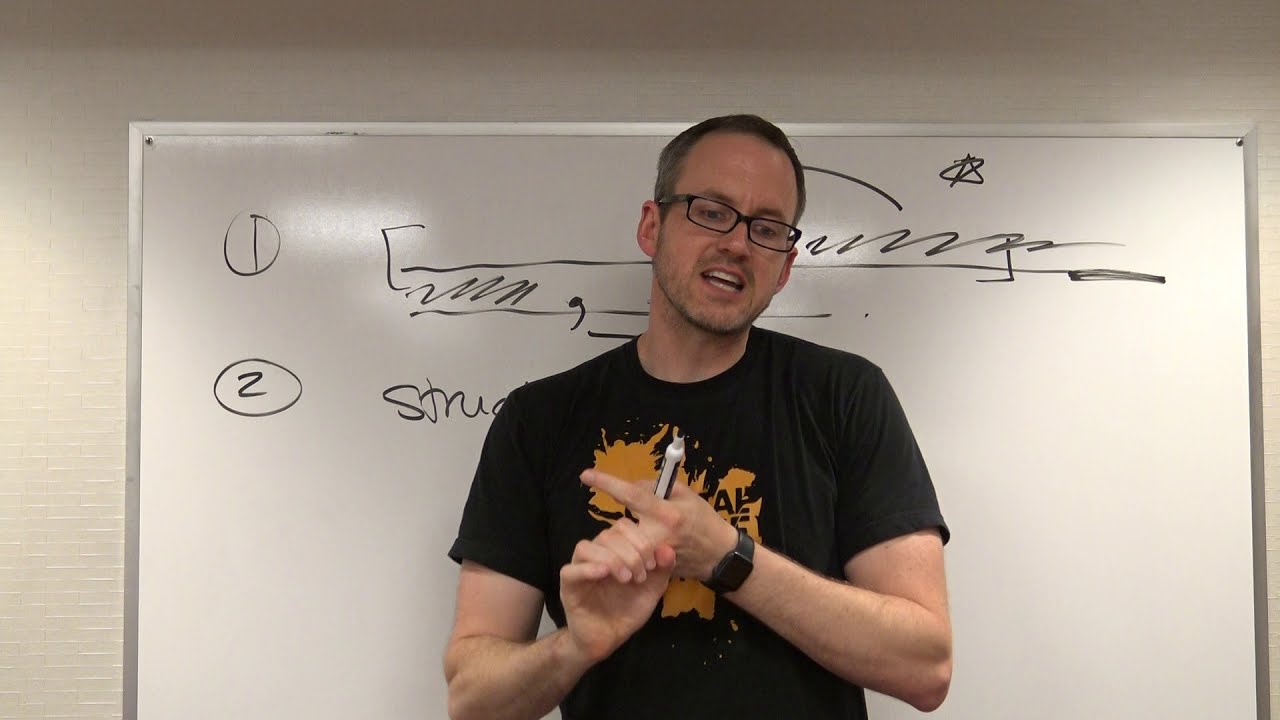
one thing to keep in mind with logical reasoning is that all the arguments or all the passages basically fall into two categories right you're either going to read an argument or you're going to read a set of facts and you don't know until you read it but once you read it it's pretty obvious it's not always obvious but it's pretty obvious if it's an argument there's a conclusion that the person is trying to prove and if it's not an argument you can kind of tell because it's just like fact fact fact and none of the
facts are supporting the other facts it's just like data points right okay now if it's an argument then what you're trying to decide is whether or not the evidence that they gave in that argument proves the conclusion and in most cases it doesn't and if it's not an argument if it's just a set of facts then 9 times out of 10 the question is going to ask you what must be true given what was said right so one way to think about this if you have an argument you're looking for you're looking at premises that
add up to a conclusion and the question is do the premises prove the conclusion right does this evidence equal this conclusion whereas if it's not an argument well you'll be given premises or pieces of evidence facts and there's no conclusion but they'll usually ask you which one of the following answers must be true given what these things say or which one of the following answers is most strongly supported by these premises the bottom line is that whether you are given an argument or given a set of facts no matter what you're given you're still being
asked to decide whether the combination of what is proven by those facts right in this case you're they're just going to ask you that directly they're going to say hey which one of the following answers must be true in this case they don't ask you that directly but that's what you're essentially figuring out you're saying okay well do these premises prove this conclusion yes or no and if the answer is no then you figure out why that's the flaw of the argument and if they do then great the argument is valid and the question might
ask you something else it might be like okay what's the main point or what's the structure of the argument or what argument is parallel and reasoning logical reasoning passages are going to fall into one of two types but even though they are very different in some ways on the surface when you dig deeper essentially all you're trying to do is make sure you understand each fact that was given and what logically follows from each of those facts when they're combined together okay that's the core skill and that's that's the core skill that's tested not only
in logical reasoning but also in games in games they're just giving you random facts and then they're asking you what must be true what has to follow from those rules right and reading comp is the same thing they're just giving it to you in a different format they're giving you 15 sentences and they're saying okay given these 15 sentences what has to be true what follows from these sentences right so although the test can feel very different in some ways it's all comes down to do you understand what claims were stated and do you understand
what logically follows from those claims okay so what's the best way in my mind to tackle this sort of framework is to carefully carefully understand each sentence as you read it in the argument and then decide is this an argument or a set of facts if it's an argument figure out whether the premises prove the conclusion in most cases they don't and then try to figure out why they don't if it's not a argument just figure out what is proven by those facts and then nine times out of ten that's what they're going to ask
you for in the answers





![If I Wanted A 175+ LSAT Score in January 2025, This is What I'd Do [FULL BLUEPRINT]](https://img.youtube.com/vi/iJd2AxbPJRU/maxresdefault.jpg)