Okay, so you should be coming from part nine of this series. These videos are a part of a topical series and should be watched from the beginning in order if you're going to understand what is being presented. So, please, if you have not watched from part one, please stop this video and start back from video one.
Okay, so in part nine we dealt with how the New Testament came to be centered around Paul. That was a topic that was hard to deliver for multiple reasons, but I felt that I could not avoid it. As we continue to discuss Christianity, people want to look at this faith like it came without any kind of influence, like it just started from Acts and came to them in 2024.
In discussing part eight, I literally had someone say, "The church fathers are irrelevant; the only thing that matters is God's word. They did not create Christianity because none of them were Christian. The first Christians were in Antioch.
" I mean, this is what people say. It's crazy to me because growing up, all I would hear about is the church fathers this and the church fathers that. People spoke so much about them, but because it was always positive, people just accepted them.
But now, since who they are is being exposed, all of a sudden, what they believed in is irrelevant, and they have no influence on the faith of Christianity—which is absolutely ridiculous. As we just went over, they're the ones who decided the books that went into the New Testament. Anyways, people seem to want to view Christianity from a lens that confirms what they want to believe, and they discard what doesn't sit right with them.
It's cognitive dissonance at its best. There is over 2,000 years of history that occurred in order for a majority of the world to be Christians, and people feel that that history is meaningless and doesn't even matter. They say that all that matters is God's word, and I truly believe that as well.
But just like I started this series off with a test, these people don't want to actually recognize that their views of the faith are not actually biblical but very much based on Christian doctrines. If the word only mattered, then most people would answer the test in the Christianity test with biblical answers. People ignore what they don't want to know, and the early church fathers' history was important to understand.
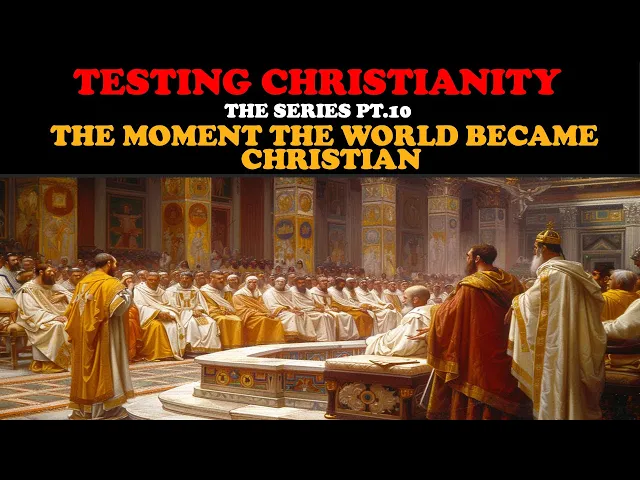
Understanding how the faith became centered around Paul's letters is also important, but it is also important to understand how Christianity became the accepted religion in this world. Because from the time of the Messiah in the first century to the time of Constantine in the 4th century, there was a lot of change and debate over the doctrines that would be formally called Christianity, and all that must be understood. This faith was not automatically accepted in Rome when it first came to be, and that is because Rome at first was a pagan empire.
But eventually, this faith of Christianity did start to grow in Rome. The Roman Empire, over the time from the 2nd through the 4th century, saw new Christians being persecuted, and because of this, their belief continued to grow. A civil war of sorts was threatening to tear Rome into two.
The pagans blamed the Christians, and the Christians blamed the pagans. Christianity was threatening to tear the Roman Empire into two. In the blasphemous movie "The Da Vinci Code," the blasphemer tries to explain just that as well.
Either way, it was no good. There are many recorded martyrs, and Christianity grew to be a political issue. Many emperors tried to deal with the Christians in a harsh way, but the influence and belief continued to spread, no matter what, until Constantine made a major change in Rome.
Rome, as we already know, during this time was already pagan; this was their foundation. But paganism is usually a tolerant religion. These people believed in the existence of more than one god, so the pagans very easily granted others the right to worship a god or gods other than their own.
The Yahudim (Jews) were already known in Rome; they were already scattered in the Roman Empire. Rome gave privileges to the Yahudim. They were excused from the worship of the goddess Roma and were excused from the worship of Caesar and Augustus, who were considered gods by their people.
The conquered Egyptians were required to perform this pagan worship, but the Yahudim were not. They were only expected to pray for the emperors. In the city of Rome itself, there were also several districts inhabited largely by Yahudim.
Each of these neighborhoods had its own synagogue; they were able to practice their law in their way of life set by Yah while they were in Rome. Now, they were not led by Yah's power any longer, but they were a people with their own way and their own customs—a set-apart people that had their own separate ways of life. It’s very important that we understand their culture, which we probably will have to deal with next.
The problem started when the Gentiles of Rome began to believe in Christianity. The Christians formed their own new community, and they refused to worship the gods of their neighbors, regarding them as demonic forces. They avoided the spectacles in the theaters and the athletic contests held in honor of the gods.
They were wary of even dining out in an age when most meat for sale had come from the temple sacrifices. They avoided military and civil service because those roles involved oaths and duties that conflicted with their faith. All this avoidance of the customs of Rome, which were regarded by their pagan neighbors as just being normal, soon earned.
. . The Christians had a reputation as being enemies of Rome.
The refusal of the Christians to swear allegiance to the gods of the state and to a divine emperor raised suspicion from the Roman government about the political loyalty of the church. In the eyes of the pagan masses, they believed the Christians were atheists who did not worship the traditional gods. In the year 303, Diocletian and a Caesar of the East, Galerius, ordered Christians to surrender their sacred books, and their churches were to be destroyed.
They severely persecuted the Christians, and from this point, the Roman Empire was being divided, split into two. It seemed that the more the Christians were persecuted without fighting back, the more they gained influence around Rome, and this influence was splitting Rome into two. Now, it is at this point in history that we see the tears that Satan planted earlier began to grow and spread.
Before Yahusha, Satan's pagan religion brought about a religious system that he was the god of, but not by name. Once Yahusha defeated him, his influence began to weaken, so he began with a practice he used many times with the Greeks. It is a practice and a word that should be known by all, but it’s not; and because of this, many people do not understand what happened throughout history with the pagans.
That word and practice is syncretism. The Oxford dictionary defines syncretism as the amalgamation or attempted amalgamation of different religions, cultures, or schools of thought. Wow, you see how hard they made that.
So what is amalgamation? Amalgamation is the action, process, or result of combining or uniting. So let's make this more simple: syncretism is the action of combining or uniting different religions, cultures, or schools of thought, and this was something that the pagans did throughout ancient history.
Please remember that word: syncretism. Syncretism was common during the Hellenistic period, and they spread their way and culture around the world. The Greek rulers regularly identified the local deities in the various parts of their domains they conquered and assimilated them with the relevant god or goddess of the Greek pantheon as a way of increasing the cohesion and connection of their kingdom.
Basically, "Oh you Egyptians, you worship Ra? Oh, we call him Zeus. Oh, you’re Isis?
Oh, we call her Demeter. " Yeah, we all worship the same gods, just by different names. So don't worry too much about these minor differences; these gods know that you're speaking to them regardless of the name that you call them by.
You see? That is a pagan thought, and people still use it today with our Messiah's name. Basically, there are over 7,100 languages in this world, and therefore there are 7,100 names for the Hebrew Messiah.
That is pagan thought, and that is how syncretism works. It’s used to bring unity of all cultures into one faith, and that was a major practice of that time. The Greeks did it during their conquests, and so did the Romans.
To note, they are doing the same thing today as they promote their interfaith one-world religions. Syncretism is a key understanding you must place in your knowledge of history if you're going to understand the faith with proper eyes of discernment. You could probably see and understand how this word got missing from our daily vocabulary.
Satan didn't want us all to understand that this was ever even practiced. Here’s the thing: we know that this was a practice that the Greeks engaged in because of the cult of Serapis. I spoke about this in part seven.
Serapis was a blend of the Egyptian god Osiris and Apis with the Greek god Zeus, creating a composite deity who would resonate with the multicultural society first envisioned from Egypt. You see? To merge the Egyptian gods with the Greek gods to bring people together: syncretism.
It’s what they did, which is exactly what they were trying to accomplish with Yahusha. They were trying to combine their Greek god Zeus with the Hebrew Messiah Yahusha. It's why when mentioning our Messiah, we focus on a Greek name instead of a Hebrew name, even though we know the Messiah was Hebrew.
They have no problem merging gods in order to bring continuity with the people. This is what syncretism does. So now that you understand this word and this practice, let's go back to Rome being divided, and then we get to Constantine.
During the early years of Constantine, again, Rome was being divided. It wasn't just the rift between the pagans and the Christians, but there was also a civil war with the West and the East, divided into two. Constantine was fighting for control of the West against Maxentius.
It is said by the so-called Christian father Eusebius, a well-known tear in the Christian Church. Eusebius tells of a vision seen by Constantine in which the Christian sign appeared in the sky with the legend saying “In hoc signo vinces,” or “In this sign, conquer,” or something to that effect. Because of this symbol, he put a cross on his legion's shields.
He easily defeated Maxentius, who fled back to Rome, but before reaching the city, he fell into the river and drowned. His body was discovered the next morning among the corpses of many others. This victory was a turning point in history.
There would now be a fusion of church and state. Constantine became emperor of the West, and Licinius took over the East. It is said that Constantine believed wholeheartedly that he had won the West through the mercy of the Christian God and from this vision.
What Constantine had was a vision of the cross, but you must understand it was not a vision from Yah. I do not want the world conquered by the pagan symbol of the cross. The cross is a pagan symbol; the cross is a very ancient symbol.
When you hear people say that the cross is a pagan symbol, this is what they are always referring to. This was a sign of three major deities: the Sumerian sun god Tammuz, the Roman god Mithras, and the Greek god Attis. This is the same T-shape that's placed on the forehead of Tammuz's followers.
This is the symbol of the pagan slain and risen god Tammuz; it is the symbol for just another counterfeit Masonic Christ. The Latin cross is the cross that is associated with Christianity, and its accounts of origin vary, but many accounts link it to the T-cross. But that doesn't matter; what I'm trying to say is that Yahweh did not give Constantine the vision of conquering the world through the cross.
That's not what He wanted; it goes against Yahusha's parable of leaven. Yahusha said in Matthew 13:33, "The Kingdom of Heaven is like leaven, which a woman took and hid in three measures of meal till it all was leavened. " When understanding this parable, think about a woman baking bread.
She kneads the dough and then puts it away until later. The yeast has raised the dough tremendously. He is saying that this is how the Kingdom of Heaven is; the leaven or yeast will grow internally through its own power.
He did not need Constantine to begin a movement of conquering the world through the cross, but this is exactly what happened nonetheless because this is a religion of tears. The world was conquered in the name of Jesus, and these colonizers will conquer and use Christianity to control the world. Now, in understanding this vision, what we see is Constantine receiving a vision from Satan, the god of this world, and Satan showed him that he could use this cross as a symbol to conquer the world.
So, instead of fighting against the faith, Constantine did the opposite: he hijacked it. Understand this clearly: Constantine grew up and was educated in the Eastern Empire under Emperor Galerius, who was very much a pagan. He was taught and brought up as a pagan; his father worshiped the pagan deities, and so did he.
He did not truly convert to the faith and want to bring the world under Yah's dominion—absolutely not. He did not worship the God of Israel; he wanted to be able to control Rome. That's all he cared about.
He was used as a tool by Satan to spread the tears that were already planted. Now, after they hijacked his faith, each and every one of us needs to go back and examine: do we follow the faith that came from Israel through the disciples, or did we become introduced to the faith by the tears who came through Constantine? You know what?
Most people, because of pride, just want to say, "Well, I came through the faith that came from the apostles. " But if most of your beliefs are not tied to biblical understandings, like I asked in that test, then you cannot make that claim. That’s why the series started off with a test—because again, if you answer those questions wrong, it's because you're influenced and under the doctrine of tears.
You really have to go back and analyze this for yourself. It takes humility, though. Let’s dig into some more as we go.
I’m sure the history will start clarifying things for you. Constantine became the emperor of the West in the year 312. In the year 313, he and co-emperor of the East Licinius proclaimed religious toleration throughout the Empire through the Edict of Milan.
This Edict legalized Christianity and allowed for freedom of worship of whatever god you chose throughout the Empire. Constantine was not baptized until on his deathbed, and he retained until his death the pagan title Pontifex Maximus. He also allowed pagan symbolism of Sol Invictus and Mars on his coinage up until the year 320.
So, like I said earlier, this obviously was not a pure conversion of faith. He started making large contributions and had begun a series of building great churches in Rome. He donated to the bishop of Rome—a role that would later be called the Pope—the Lateran Palace, which was the imperial property of the Laterani.
It was during this time that the new cathedral, the Basilica Constantiniana (now San Giovanni in Laterano), soon rose. The Church of St. Sebastian was also probably begun at this time, and it was in these early years of his reign that Constantine began issuing laws conveying upon the church and its clergy fiscal and legal privileges and immunities from civic burdens.
At Rome, the Church of St. Peter was begun in the later 320s and was lavishly endowed by Constantine. He declared the first day of the week as the Sabbath, calling it the Lord's Day.
He deemed it as the day of rest, since he deemed it as both the day of the Messiah's resurrection and the day sacred to the sun, which is why it's called Sunday. It's the reason why churches, to this day, gather and worship on Sunday. If you go to church on Sunday, this is a tradition given to you by tears.
I won't dwell on this right now; we'll just put it in the list of practices that we get from the tears. So, as everything was growing, Constantine did tolerate certain pagan religious practices, but pagan sacrifices were forbidden. Temple treasures were seized, gladiatorial contests ended, crucifixions were abolished, and laws were enacted against sexual immorality and ritual prostitution.
He was cleaning up house and transforming the faith of Rome into what we see today, away from the pagan practices like their orgies and pagan sacrifices. Were it to be continued by the masses, the distinction between the wheat and the tares would have been very easy to discern. So it was cut.
While Constantine was making all those changes, Licinius, who was the emperor of the Eastern Empire, changed his attitude towards the Christians. He conducted executions of Christians and destroyed several Christian churches, which was enough to prompt Constantine to gather an army and defeat Licinius in a second battle at Hadrianopolis in 324. Licinius was defeated and surrendered.
He hoped to return to life as a private citizen, which Constantine initially granted, but he went back on his word, and Licinius was hanged in 325. Even his nine-year-old son was killed. The victory of Constantine reunited the Empire; he now had control of both the East and West Empires of Rome.
In the same year, he officially declared himself a Christian and made Christianity the official religion of the Roman Empire. From here, we have the true beginning of the power of the Roman Catholic Church, as well as the Christian church and the religion of Christianity. You would not be calling yourself a Christian today without this history that happened here.
Now, the Yahudim were also in Rome. As I explained earlier, there were Yahudim who accepted the Messiah and those who did not accept him. They did not allow the ways of the pagans or the Christians to mix with them; they made a conscious decision to reject Yahusha.
They had already grown up under the rejection of the ways of the pagans, so they had been through that, but there were still Yahudim who accepted Yahusha, and they were living in Rome. They were known as the Ebionites. I spoke about them in the last part.
Their influence was severely suppressed and done away with by Rome. You must understand that it's not like Rome said, “So if we're going to be Christians, let us allow the Hebrews to lead this faith so we can all follow their God better. ” No, that’s not what happened.
When Constantine made Christianity the favored religion of Rome, it was now paganism that was no longer tolerated. The attitude towards the Yahudim changed shortly thereafter as well, and this was part of the hijacking that was done with the faith. There was a complete hijacking of leadership of the faith, and pagans started mingling their beliefs with the truth of Yah.
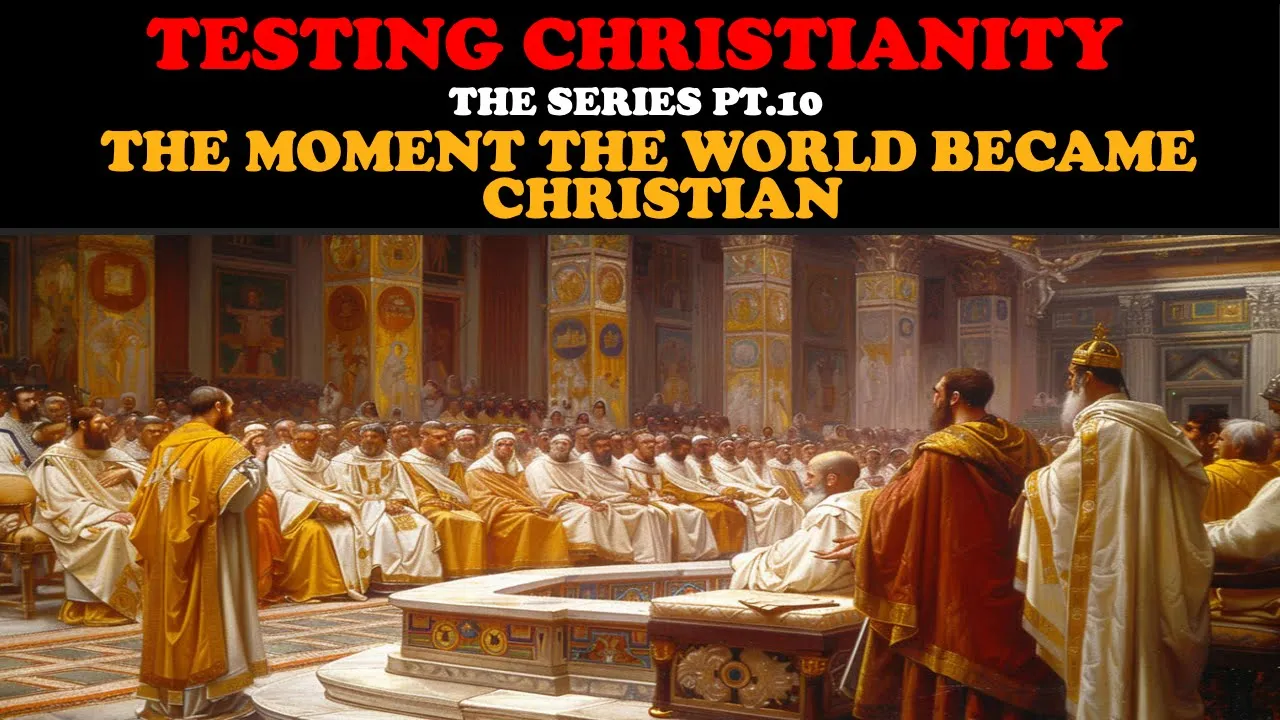
In order to do this, they wanted to remove the influence of the Yahudim. The Council of Churchmen, which met at the Council of Nicaea in 325, was meant to discuss this faith, and among other agendas, they sought to separate the Yahudim from the Christians. They forbade Christians from eating unleavened bread on the Passover or even celebrating that holiday feast at the same time as the Yahudim.
If you don’t celebrate Passover, one of the most important times in the Bible, it’s because you have been influenced by tares. Let’s add that to the list. You may want to quickly defend yourself, but ask yourself, if you are a biblically sound believer, why don’t you celebrate one of the most important times in Scripture?
Ask yourself that right now. I’m just listing the ways and doctrines that we practice today that were not influenced by Yah but by the tares planted by Satan. Many of you practice this, yet you say that you're not influenced by Christianity.
You’re lying to yourself. At the Council of Nicaea, they prohibited Christians from visiting synagogues and listening to any Yahudim preaching or teaching. They did not want these Christians influenced by the Yahudim at all.
They urged them not to observe the day of rest on the day that the Yahudim observed and instituted Sunday as the only Christian Sabbath. The bishops grew in influence and began to take away from the Yahudim some of the political privileges that they once enjoyed. Many of the Christian leadership of Rome urged the emperor to deal harshly with the Yahudim; they desired that the influence of the Yahudim disappear.
They claimed that the Yahudim had always misunderstood the Scriptures; they pointed to the loss of their nation of Yasharel as a sign that Yah had rejected and abandoned the Yahudim, and they believed that now they were the holders of the Covenant. You know this is true based on the quotes from the early church fathers that I read in part eight. These were tares.
If you believe that the church replaced Israel or that our Father is in Covenant with Christians, this is a doctrine from tares. Add it to the list. The Roman Church hijacked the faith and removed any influence that the Yahudim ever had over it.
So now, in order to understand Yahweh, they essentially said that you never needed to follow their faith—the faith of the Yahudim, from the ways of Israel and their Covenant with Yahweh. All you needed to do was follow the Christian Church. The people felt that you only needed to understand the God of Israel through the doctrine of Christianity, and it is this doctrine from tares that brings a strong delusion.
That’s why they want to consider themselves the original church; they removed any influence that the Yahudim had over it. Instead of assimilating and letting the faith be led by those who actually understood Yah and who were in Covenant with Yah, they tailored the faith to how they saw Yah and how they desired to mingle their other gods with Him. That’s Christianity.
Christianity was made the new religion of the Roman Empire—an empire that was built on paganism. Worshiping multiple gods was required to worship the God of the Christians now, well, only in title, though. Not in truth or spirit as our Father seeks, this was the first Christian nation of the world.
Now, please answer this: do you think that this foundation was built on solid ground? Emperor Constantine had hoped Christianity would be the uniting force of his empire, so understand his hopes were to have unified doctrine in which to place the faith of Rome. Under the Council of Nicaea, he aimed to unify doctrine within all the bishops of the faith.
Constantine wanted uniformity; he didn't really care about what the truth was, just as long as all the leaders of the faith agreed upon it. And so, at the Council of Nicaea, this is where the syncretism came in. The first thing that was done in order to blend Rome's pagan religion with Christianity was to ensure the pagans that this was not some new belief.
So what did they do? They tied the pagans' already pagan beliefs into the belief of Christianity, which assisted the pagans in accepting the faith. It's syncretism; remember I told you to remember this word.
This was no longer a faith from the Hebrews, a Biblical faith; the Torah of the Hebrews was no longer considered something important. It was all about their belief in Jesus, and if you believed in Him, you would go to heaven. Matter of fact, that's the goal they made about going to heaven: nothing about our Father's kingdom on Earth.
They had a Father God that they did not call Zeus any longer; they just called Him God the Father. Though at the time of their forced conversions, I'm sure Zeus was still being referred to. It’s not like they tore down his statues and everything associated with him—absolutely not.
They still have statues of Zeus to this day. The mother goddess, now known as Diana or Artemis, was now the Virgin Mary—how they say "Ave Maria" or "Hail Mary. " The Son of God, who was known to the pagans as Apollo, was now known to them as Jesus.
And that's why there's no Hebrew influence in His name. This was a faith to bring Rome together, and Rome formulated unified beliefs in regards to the faith—some biblical but many traditions of men. Their church doctrines say that tradition is just as important as what the Bible says.
To add to this, they tied Greek philosophy in with their faith in Christianity, which brought about a great deal of thoughts that were not a way of thinking that the Hebrews engaged in—thoughts like about the Trinity. But I will get to that. Before I continue, you must understand that the beliefs that came through the Roman Catholic Church were not about preparing the world for Yah's kingdom, but it was a political movement that used the guise of religion to bring its subjects into conformity and compliance.
Over time, their rules-based doctrine brought order to the empire, and even as what we know as the early Roman Empire fell, the doctrines of Christianity from their Universal Church (which is what Catholic means, "universal") have kept the dominance of Rome in our lives for over two millennia, whether we like to see their influence or not. Right now, understanding it from the ground floor should bring clarity. The religion of Rome was bringing two religions together for unity.
This was never about bringing people into Yah's kingdom, but preparing another kingdom for men, governed and ruled by men. Satan was moving from the polytheistic doctrine into a monotheistic one, and so he hijacked and assimilated the faith, leading the world to worship him. The doctrines of the pagans were intermingled with Roman Christianity, and over time, as generations died and new ones grew, their customs and their ways and their practices became universally understood, and the power of Rome went from the emperors to the Pope.
The point that needs to be understood is that when Rome created the religion of Christianity, it was not done by the power of Yahweh. This was a political move that merged the beliefs of the pagans and the new belief of the Christians. And so, as we gain more understanding of the doctrines of the Catholic Church, it makes it easier to discern how Satan has mixed his tares in the same field Yahusha planted his good seed.
This is how Christianity became known to the world. It must be understood that if you know of Christianity today, it comes from this point in history right here. Yeah, you might want to attach your faith to the church in Acts; yeah, I get it.
You want to act like your faith is biblical; yeah, I get it. But that's only because you have to ignore how this faith has come to you. It did not come to you without influence from the seed of tares from the early church fathers who hijacked the covenant to when Constantine made Christianity the religion of Rome.
This faith was made known to the world by these events, and there were many different qualities and points about this faith that were completely unbiblical. This is the foundation, and so if you want to act like you became a Christian and it was without influence, you're only lying to yourself. Anyone that says that their faith comes from the Bible and was never influenced by Rome is lying to themselves.
We all have been influenced by Rome; we've had to come out of that influence. The Bible never calls this faith Christianity, so to say that you're in Christianity is to say you're attached to Rome. This is how Rome took on the faith, and after this, their influence spread over the centuries to what we know today.
It is this history and this foundation that I reject and that I sternly stress to come out of what most people don't. Really, understanding is not just syncretism and how they merge their pagan beliefs and pagan gods with this Christian faith. Most truly don't understand Greek philosophy and how it was merged into Christianity.
Though I touched on it in part seven, I must go deeper, because once Rome made Christianity their main religion, the influence of Greek philosophy truly took hold in this world. So, we will discuss that next. In the meantime, please remember that Christianity is a religion that, on the surface, seems biblical.
However, when you dig deep into the doctrines, it is not a service to our Father, but a doctrine of abusing grace, editing covenants, rejecting the way our Father actually chose to reach humanity, and making it only about the way Christians want to receive Him. It lacks the love, obedience, and reverence for our Father that He deserves, and in the end, it does not prepare those who follow it to be ready for what our Father plans to do in the last days. If you desire to be ready for our Father and His plan for us, you must come out of this religion of tears and come to our Father in truth.
Please move to part 11 in this playlist and understand how Christianity merged with Greek philosophy. Click the link to the next video, and let's talk some more. Be blessed.
Hallelujah! Praise Yah! Okay, thanks again for watching.
If this has blessed you, please don't forget to like and share this video with your family and your friends. This video series is highly important for those trying to be ready for our Father. This is part 10 of the series.
Click this link or just move on to the next video in the playlist. As always, I want to thank all who donate and all who contribute to this ministry; this series would not be possible without your support. I thank you sincerely.
Be blessed! Okay, thanks again, everyone, for watching. See you in part 11.
I love you all!