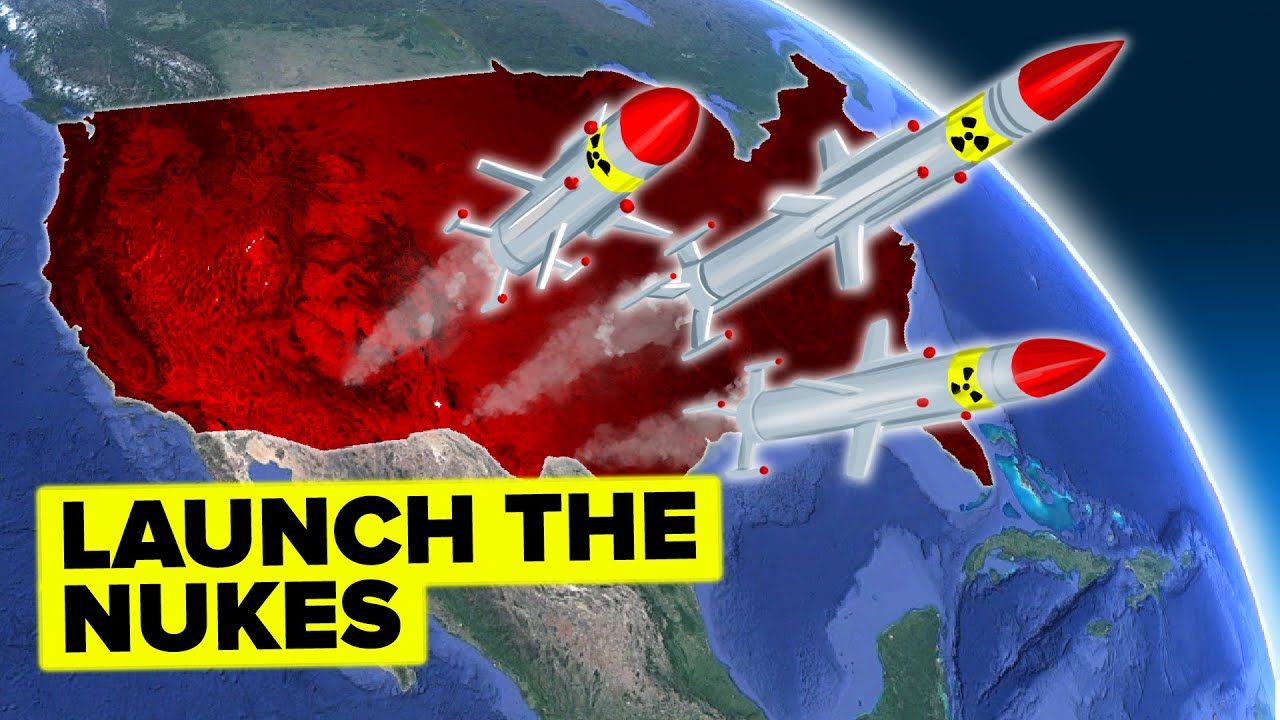
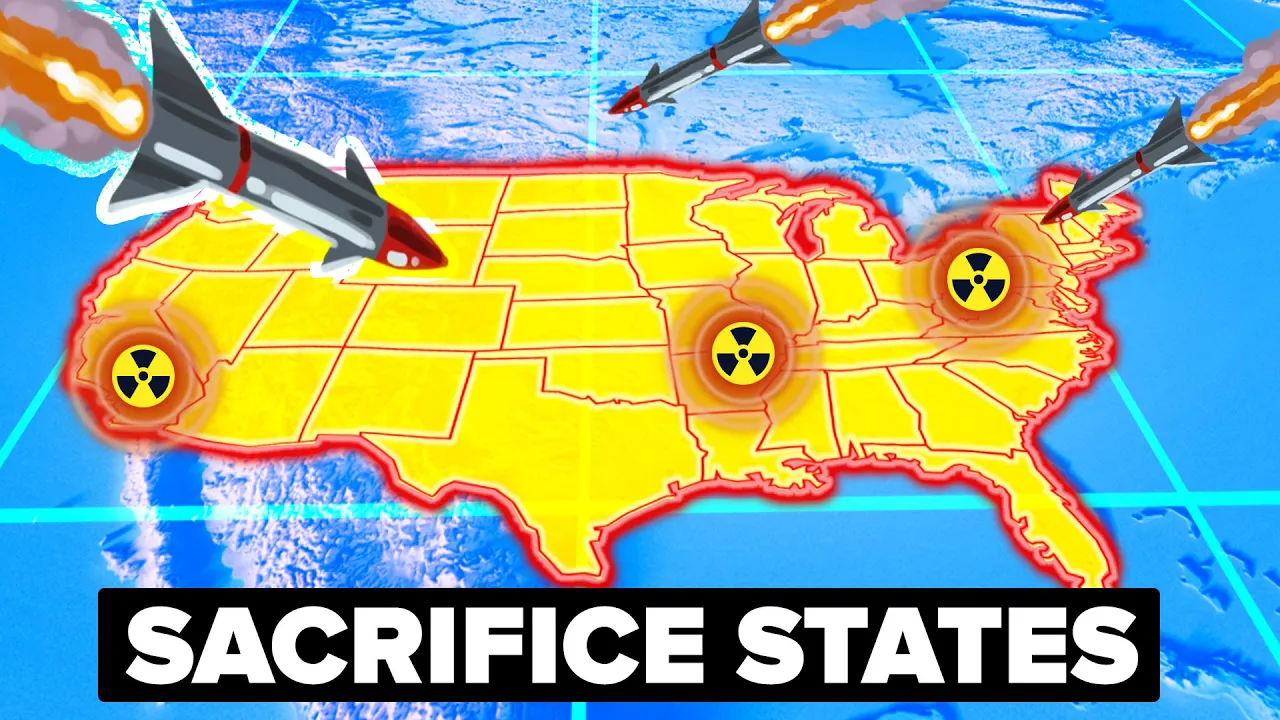
Sirens wail across the landscape. Red lights flash in military bases around the country. Someone has launched a barrage of nuclear missiles at the United States.
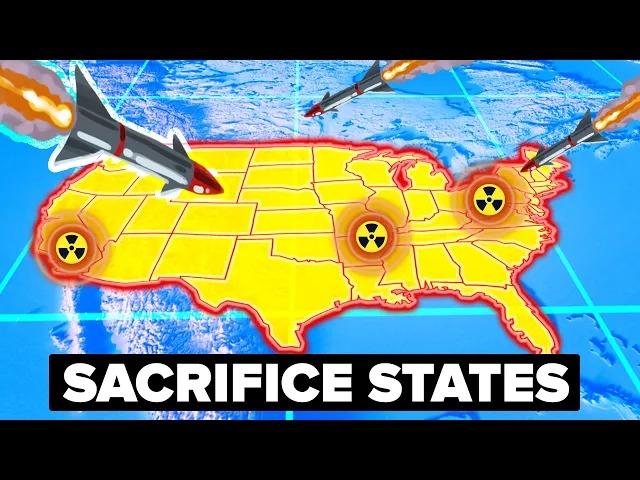
They sail over New York City, blast past San Francisco, and rocket away from D. C. These major cities all seemed like they should have been key targets, but instead, the missiles are headed to several unsuspecting states in the middle of the country; places where people thought they’d be safe.
The United States’ nuclear sponge is attracting the enemy nukes as planned. Unfortunately, anyone living in these states is about to be annihilated in a holocaust of nuclear explosions. There are five U.
S. states that still house a large number of nuclear missile silos in a concentrated area. These states are what is known as a nuclear sponge.
The question is: do you live in one of the five? If nuclear war breaks out, you may not be as safe as you might think. First, what is a nuclear sponge?
During the Cold War, the U. S. was very concerned about major cities and metropolitan areas being targeted by Soviet nukes.
In order to draw attention away from these areas, the Department of Defense came up with an interesting idea. They hypothesized that if a large number of ICBM nukes were placed in the middle of the country, then the Soviet Union would have to target them first if they were to attack. Because if they didn’t, the U.
S. would be able to retaliate with nukes of their own. These missile sites were placed in rural areas so that the number of casualties would remain low.
Forcing the Soviet Union to attack these rural areas would draw fire away from places like New York City, Washington D. C. , or any other densely populated part of the country.
The remote nuclear sites were known as a nuclear sponge since they would “absorb” the missile fire from the enemy. The missile silos that originally made up the United States’ nuclear sponge were deep underground and spaced far enough apart that the Soviet Union would need to commit a large percentage of its nuclear arsenal to destroy them. These nuclear launch sites were put in the plains states so they could be launched northward, travel over the arctic, and hit the Soviet Union on the other side of the planet.
So, just to recap, a nuclear sponge is the section of the U. S. where large numbers of ICBM nuclear missiles are housed in the hope that if an enemy ever did launch a nuclear attack, they would commit a large number of their missiles to destroy the nuclear sponge.
This would hopefully spare major urban areas from total destruction at the expense of the people living within or anywhere near the nuclear sponge. Right off the bat, you probably see some problems with this plan. And even when it was conceived during the Cold War, many people voiced their opposition to having nuclear silos in the middle of the country.
Yet, the Department of Defence built the nuclear silos anyways, and now, with a renewed nuclear threat from Putin and the Russian government, there has been large amounts of money dedicated to updating the United States’ nuclear sponge. Unfortunately, as we are about to explain, this is a huge waste of money, incredibly dangerous, and provides no real safety to anyone in the U. S.
First and foremost, the United States’ main strategy for surviving a nuclear attack should be to never let it happen in the first place. Diplomacy and de-escalation should take precedence over everything else. And to be honest, updating the nuclear sponge should be at the very bottom of the list.
In fact, it should be so far down on the list that it isn’t even considered an option because, in the current era, a nuclear sponge isn’t effective, as we’ll explain in a bit. But first, let's examine why the U. S.
is even considering upgrades to its nuclear sponge, the history behind the original idea, and what states are part of the plan to draw fire away from major cities. All you can do is hope that you don’t live in one of these states if nuclear war becomes a reality. The main reason we are talking about the nuclear sponge in the middle of the United States is that as Russia continues to suffer defeat after defeat in Ukraine, Putin has stated he is considering putting nuclear options on the table.
The weapons he is talking about are likely tactical nukes, which can vary in size from a few kilotons up to 50 kilotons. These low-yield nukes would still cause massive destruction and irradiate the surrounding area, but they are nowhere near as devastating as strategic nukes, which have yields of 1000 kilotons or more. The problem is that if Putin starts launching nukes in Ukraine, regardless of size, NATO will need to respond in some way.
And let’s be honest, Putin is not the most stable individual, so if he feels threatened by NATO, he could launch the entire Russian nuclear arsenal at western countries. He is probably thinking at this point if he can’t win, no one can. This has put the U.
S. and NATO on high alert. As a result, the United States is dumping huge amounts of money into its military.
Hundreds of billions of dollars have been put into the United States’ nuclear weapons program in recent years. Some of this money has gone towards upgrading the nuclear sponge in the middle of the country, which makes zero sense, as you are about to find out. At the end of the 1950s, when the Cold War was in full swing and the Red Scare had just destroyed the lives of countless innocent Americans, the development of the original nuclear sponge began.
After some consideration, the U. S. government decided that the best location to install their ICBM missile silos that would be far enough away from major cities were in the plains of Colorado, Wyoming, Nebraska, Montana, South Dakota, and North Dakota.
It was here that the first Minuteman nuclear missile silos were constructed in the early 1960s. After the Cold War ended, the silos in South Dakota were retired, which left the other five states as the current nuclear sponge of the United States. Since their conception, the nuclear sites in these states have housed Atlas, Titan, Minuteman, and Peacekeeper rockets.
However, the most favorable option was the Minuteman missiles due to their solid fuel and ability to be launched from a safe distance. The reason these states were chosen to house the silos was because their landscapes allowed for relatively easy development while also having the space to build Launch Control Facilities that could launch missiles from several silos at any given time. By the 1990s, there were around 1,000 Minuteman silos and approximately 100 Launch Control Facilities spread across Colorado, Wyoming, Nebraska, Montana, and North Dakota.
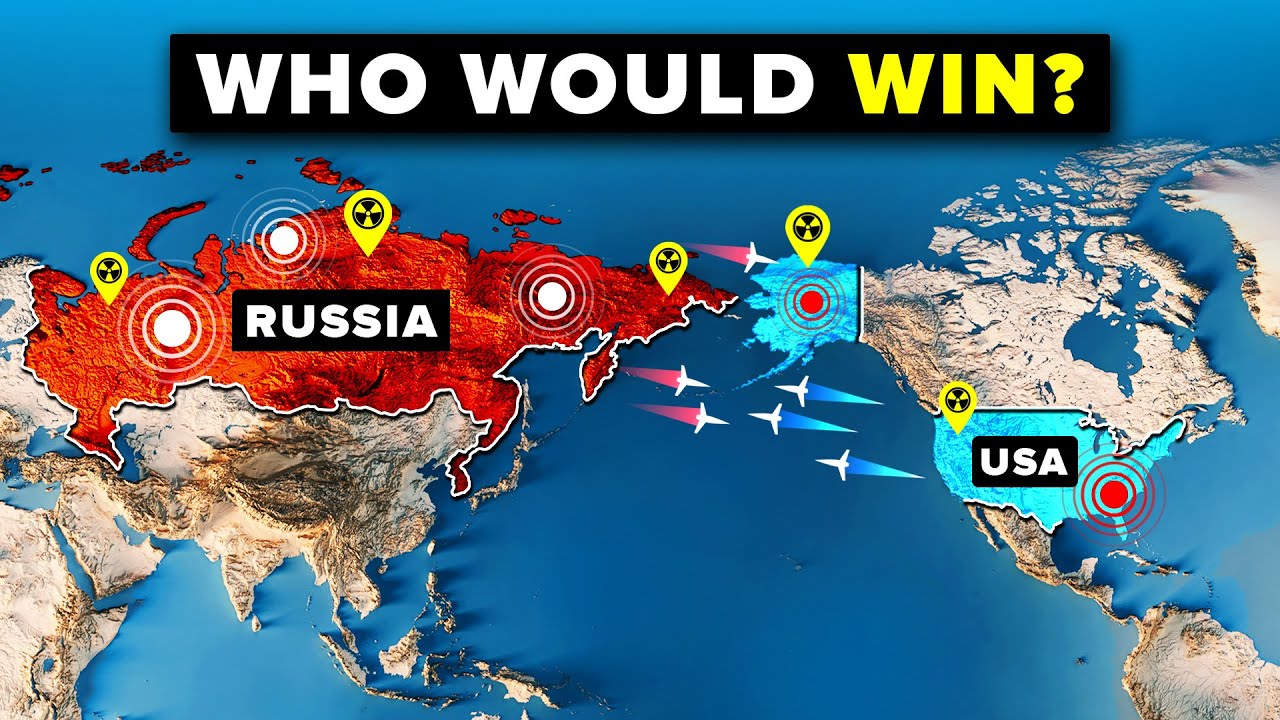
However, there were several other reasons why these states made such a good nuclear sponge. The distance between them and Russia was short enough to hit Moscow, which is approximately 5,100 miles away when traveling over the north pole. Also, the distance from the coast would give these sites enough time to launch even if the enemy fired nukes from submarines along the coast.
But the biggest motivator for building the missile silos in these five states was that they were sparsely populated, and if they were targeted, they would keep enemy missiles from hitting major cities. For all of these reasons, if you live in Colorado, Wyoming, Nebraska, Montana, or North Dakota, you are in the nuclear sponge of the United States. During the Cold War, when both the Soviet Union and the United States could only launch nukes at one another using ICBMs, the nuclear sponge sort of made sense.
There was still the problem of putting the populations in these states in danger of being killed by enemy nukes, but the nuclear sponge would likely attract much of the Soviet’s nuclear arsenal if they ever did decide to attack the United States. Today, this argument does not hold any weight. The main reason why the nuclear sponge is useless now is that if Russia were to attack, they have enough nukes to hit every nuclear silo and every major city many times over.
It’s estimated that Russia has somewhere around 5,977 nuclear warheads at its disposal. The nuclear sponge obviously doesn’t require 5,977 missiles to be destroyed. Therefore, if Russia really wanted to attack the U.
S. , they could fire several nukes at each of the five states where the ICBMs are located and still send several thousand other missiles to hit all major cities in the United States. Today, Russia and the United States can launch nukes from submarines, which means that having a lot of stationary silos doesn’t serve any advantage, and there is no reason to waste hundreds of nukes to destroy them.
The missile silos in the nuclear sponge of the U. S. are highly visible and would definitely be easy targets; however, strategically, it doesn’t make any sense for Vladamir Putin or anyone else to waste their nukes on them in the current age of warfare.
This brings us to another huge problem with the nuclear sponge. The original intention was for these states to draw nuclear fire away from major cities, but what about the people living in Colorado, Wyoming, Nebraska, Montana, and North Dakota? It’s messed up that the United States government willingly admits they built the nuclear sponge to sacrifice one part of the country to save another.
But that’s exactly what they did. Instead of sacrificing anyone, we might suggest that world powers work towards getting rid of nukes altogether rather than deciding who is worth saving and who isn’t. Just having a nuclear sponge at all is terrible, and since the original arguments as to why the U.
S. needs one are no longer valid, there should be no reason for the United States to spend money updating it. However, billions of dollars are still being allocated to the silos in the middle of the country.
And the reason why is appalling. Before we get into why money is continuously being funneled into an obsolete U. S.
nuclear sponge, let’s imagine a terrifying scenario. What would actually happen if the military thought there were nukes headed toward the silos in the middle of the country? A group of highly trained NORAD analysts at Joint Base Elmendorf-Richardson in Alaska sit at their stations.
They are constantly monitoring thousands of data points to ensure the United States is safe from nuclear strikes. It’s the middle of the night, but the sun is still up. During the summer months, there are almost 24 hours of daylight.
It seemed to be just another normal night when suddenly, a red light started flashing on one of the consoles. The technician sitting near the station pushes their rolling chair over to the computer to get a better look at the flashing light. Their eyes open wide as they read the label.
“I’ve got a nuclear launch indicator light going off over here! ” they yell. Everyone turns to look at them.
Then a light at another station begins to blink, then another, and another… and another. “Get the Secretary of Defense on the Phone! ” a commander yells.
Everyone scrambles to figure out exactly where the nukes are being fired from and where they are headed. The President of the United States is startled out of his slumber by a dozen secret service agents bursting into his bedroom. “Sir, we need to get you to the bunker immediately,” the lead agent says.
There is no time for the president to get dressed. He throws on a robe and is escorted deep underground, where the Secretary of Defense waits for him along with several other high-ranking generals. “What is going on?
” the President asks. “We just received word from NORAD,” the Secretary of Defense responds. “They are tracking several nuclear missiles headed toward our Minuteman silos in the midwest.
” There is very little time for discussion. The generals lay the options out on the table, but the President must make the final decision. It has been about ten minutes since the warning lights started flashing at NORAD, and whatever path the President is going to choose, he has to choose it now.
The President’s predicament is made worse by the fact that there is no way to know if the sensors at NORAD are malfunctioning or if there are actually dozens of nukes rocketing toward the middle of the country. Therefore, the President has to use his best judgment and the data available to make a choice that could change the world forever. On the one hand, he could just wait and let the events unfolding play out.
If the nukes really were launched, the middle of the country would be decimated, and thousands of U. S. missiles would be obliterated.
However, the United States would still have thousands of nuclear weapons still active aboard submarines and in storage sites around the country. The fear is that if the sensors are malfunctioning and the readings coming into NORAD are wrong, the President could inadvertently start a nuclear war if he launches the U. S.
’s arsenal. This would be a fatal mistake that could destroy the world. The President has to think hard before coming to a decision, but he is out of time.
“Hold your fire,” he whispers to the generals sitting around the table. “We built the nuclear sponge for this very reason. We will know soon enough if nuclear missiles really were fired at the United States.
I am not about to start World War III over a malfunctioning computer. ” The President and his generals wait for what seems like an eternity. They receive confirmation that the skies are clear.
The warning lights were triggered by a series of unfortunate events that mimicked a nuclear attack. Russia was testing several new rockets that it had just developed. A series of solar flares scrambled radiation readings aboard surveillance satellites.
And a meteor shower was responsible for the atmospheric disturbances detected. If the President had been too hasty and fired the United States’s nukes prematurely, he would have caused all-out war and the irradiation of our entire planet. This is a fictitious scenario that is based on very real events.
There have been at least three false alarms in the past that could have led to nuclear war. All three of these events came about due to malfunctioning equipment. Around 40 years ago, heads of the Department of Defense received a very ominous phone call in the middle of the night.
The analysts working at a nuclear defense office acquired data that indicated 200 ICBMs were launched from the Soviet Union and headed straight for the United States. Everyone scrambled to identify if the readings were accurate. The world was on the brink of war when it was determined that the signals were the result of a computer glitch.
Everyone stood down, and the planet was saved. An even more terrifying event occurred in the Soviet Union. On September 26, 1983, the Soviet Union’s early-warning radar system showed that the United States had launched five ICBM nukes at them.
An officer in the Soviet Air Defence Force named Stanislav Petrov suspected that this was a false alarm and double-checked the readings. Rather than immediately calling Yuri Andropov, the current dictator of the Soviet Union, and causing nuclear war to break out, Petrov waited for corroborating evidence. When none came, it was clear that the supposed missiles launched from the United States were just the result of a satellite malfunction.
It’s these types of scenarios that should make us nervous when there are unstable dictators or presidents in control of nations that have nuclear weapons. All it would take is one malfunctioning computer or one mistaken reading to plunge the world into nuclear war. And in a nuclear war, there are no winners.
More recently, a bigger problem has been brought up around having a large number of nuclear missile silos in a relatively concentrated area of the United States. As the nuclear sponge is upgraded and more sophisticated launch systems are put into place, there have been concerns that vulnerabilities may allow hackers to access parts of the nuclear weapons’ programming. This would obviously lead to a devastating series of events.
If hackers ever gained access to the missiles in the nuclear sponge, they could hold them for ransom. The U. S.
would likely have to pay huge sums of money to regain control of its nukes and then would have to figure out how the hackers got into the system to keep it from happening again. In a worst-case scenario, hackers or terrorists that gained access to a nuclear device by infiltrating its software could detonate the nuke right in its silo. This would cause a massive amount of destruction and would irradiate the surrounding area.
Even more horrifying would be if the hackers managed to launch the nukes. Perhaps they’d target populated U. S.
cities, which were the one thing that the nuclear sponge was meant to protect. Connecting land-based nuclear missiles to computer systems that hackers might infiltrate is the stuff of nightmares. The nuclear sponge is obsolete, dangerous, and puts the lives of certain American citizens ahead of others.
The nuclear silos in the middle of the country should be retired and demolished. And since all of these facts are rather obvious, you may be wondering why the United States still has a nuclear sponge. Or an even more pressing question is: why are huge amounts of money being funneled into an outdated Cold War era set of silos that no longer serve any strategic significance?
Like the answer to so many baffling questions that come out of politics and the government's choices, it all has to do with money. It has been reported that the United States plans to spend around $264 billion on its next-generation ICBM program. This money would be used to upgrade the silos and missiles in the nuclear sponge of the country.
This is not being done to enhance the defense capabilities of the U. S. or even to make the nuclear sponge more attractive to enemy missiles.
Instead, the tremendous amount of money being spent on upgrades is the result of greedy politicians and corporations. Companies like Northrop Grumman get paid vast amounts of money to develop missile tech for the U. S.
Military. This means that if the funding for programs such as the nuclear sponge ran dry, it would severely hurt the company’s profits. Therefore, defense contractors tend to do a lot of shady things to ensure that the government keeps spending money on missile tech.
To be fair, Northrop Grumman isn’t the only private business contracted by the U. S. government, and it’s not the only company benefitting greatly from money being spent on unnecessary military technology.
However, in 2018 Northrop Grumman contributed 5. 6 million dollars to specific campaigns to ensure candidates who supported their cause were elected. Northrop Grumman spends more money lobbying than any other defense contractor and only slightly less than tech companies like Amazon and Facebook.
These huge corporations pay unfathomable amounts of money to influence the laws being made and the way the U. S. government spends its funds.
This, of course, is technically illegal, yet it still happens all the time. The craziest part is that whenever congress tries to pass a bill to reduce the number of missiles in the nuclear sponge states, they are often met with resistance from representatives of those very states. You would think that politicians and constituents would no longer want nuclear weapons within their borders, especially if it's going to put them in danger of being blown up.
However, this doesn’t seem to be the case. In fact, politicians from North Dakota, Wyoming, and Montana are known as the “Missile Caucus” because they constantly try to shoot down any bills that would remove nukes from their states. Why do politicians and people living in the nuclear sponge of the United States want to keep nukes there?
The answer, once again, is money. The building, maintenance, and upgrading of nuclear silos and weapons creates an enormous amount of jobs and brings in a ton of money to these states. Many citizens living within the nuclear sponge work for the U.
S. government or one of the defense contractors that maintain the missiles and their silos. Therefore, if the government ever decided to remove the silos and get rid of the nuclear sponge in Colorado, Wyoming, Nebraska, Montana, and North Dakota, tens of thousands of people could become unemployed.
Obviously, many in these states don’t want this, which is why they vote to keep nuclear weapons within their borders. Until the U. S.
government is willing to admit that the nuclear sponge idea from the Cold War is no longer valid and can break their ties with defense contractors who rely on the nukes as a source of income, it’s highly unlikely that the silos in the middle of the country will be retired any time soon. It can’t be stated enough that the nuclear sponge no longer has any strategic significance. Yes, if nuclear war broke out, the U.
S. could launch its missiles from these silos, but at that point, who cares? If it ever came to nuclear war, the world would come to an end.
The amount of nuclear weapons that are still active between the U. S. and Russia is appalling.
It’s clear that land-based missile silos serve no purpose and are outdated because you can literally find them on Google Maps. The real threat in terms of nuclear wars are submarines and stealth bombers that can deliver their payload anywhere in the world at a moment's notice. The nuclear sponge hasn’t been a valid strategy for a very long time, and no matter how many upgrades go into the silos in the middle of the United States, it will likely never become a good strategy in the future.
Even though some jobs are created by building and maintaining nuclear silos, many more jobs could be created if the silos were decommissioned and the land was used for other purposes, such as harnessing renewable energy. Also, if the U. S.
government decided to remove the silos, it would not only save tons of money, but it would also reduce the threat of these states being nuked in the future, which should be a win for everyone living there. Perhaps the best argument for getting rid of the nuclear sponge in the United States is that the money being used to fund it could go to other programs. Imagine how much of a difference it would make if the 100 billion dollars spent on upgrading nuclear missiles and their silos went towards improving health care and education instead.
Even if the U. S. removed its nuclear sponge, it still has plenty of nukes to wage war and destroy the world if it really wants to.
Therefore, the U. S. might as well retire the Cold War-era nuclear sponge and invest the money into programs that might actually make a difference.
Now watch “US World War 3 Plan. ” Or check out “US Plans for a Nuclear Attack.