hello good evening hello uh welcome back this is the second of three Clarendon lectures my name is Mark vesk I'm on the faculty here I'd like to join Peter last night and Richard tomorrow night welcoming you to S and to Oxford uh we have a very stimulating set of lectures we're really grateful to have Professor Clayton Christensen with us tonight he'll be speaking on key decisions that managers don't make often enough so I will let him tell you more about that let me just remind you last night he introduced us to some of the ideas
that are core to his kind of visible globally known name that is that disruption matters we want to harness disruption we want to think about disruption in the material he developed last night really as a source of growth an alternative to other versions of macroeconomic growth uh he made a set of arguments about a set of tools that have risen over the last few decades that may have focused many managers and many firms terms on overly precise and overly present visions of how to make profit and so he left left us last night with a
set of puzzles and questions and really invited people to come to him when he returns in September to be in Residence here to come to him and help him think about those issues so last night really set the stage for not only the early work he did on technology uh disruption but last night really opened up some initial ideas about disruption as a l literally a theory of growth that helps to explain why many firms that start at the bottom work their way up and displace firms at the top as I said he really tried
to help us see those questions not only as questions of Technology but a more general theory of growth and so tonight I think he's going to return to many core issues in strategy and also to the role of managers Professor Christensen [Applause] well you're very kind to come back a second time um that today I think it'll be a a different talk than last night I've thought about last night's stuff a lot um part of the charter here is for me to give a talk that I haven't given before or written about and uh so
these are thoughts that are Half Baked and I would love to have you um listen to it and uh when we have discussion toward the end have you be able to criticize my thinking or reinforce my thinking if you think there's something here that is useful so to set it up um Stephen J Gould who was a an extraordinary evolutionary biologist at Harvard wrote a book be uh uh an article before he died called the Panda's thumb and I can't remember all the details of this article but essentially what he points out is that for
most U Bears they have four claws they're not very long but the the panda has longer fingers uh on their paws and they have an opposing thumb and clearly that evolved with the panda so that he could they could get things and eat it given the environment in which they lived but then something happened the environment changed or they migrated somewhere and this thumb became no longer important to them and so the Panda's thumb is still there but it's become rigid and actually if you had one of those on your hand you would want it
off because it just gets in the way and so he then describes in this paper all of the other pandas thumbs in our system that evolved because at one point in the past they were very useful and then today they're not useful but they're still there and and if we don't think about it sometimes we assume that they need to be be there when in fact they don't and so I've been putting that Panda's thumb on like a set of lenses trying to go through um what goes on in a company and are there pandas
thumbs in management where we do things because at some point in the past this was actually quite important and somebody or some set of people decided that this is the way it should be done and now the world has changed uh and yet we continue to follow this the panda thumbs in our management thinking so that's what I want to talk about is just proposals about Panda's thumbs and another way to put it is the way um I was I framed this originally which is I bet you that there are a lot of important decisions
in a company that were never made made explicitly by the management but instead somebody back there made these decisions and like Panda thumbs we just keep following these stupid rules so um why I have that there this was a list of five we'll see how well we do and I checked them off but I want to start with uh the top one which is the metric of Financial Health so you suffered through this yesterday about how the mini Mills killed the integrated steel companies the integrated steel companies measured profitability by gross margin percentage and because
they measured it in that way every when they got out of rebar and then when they got out of uh angle iron and thicker Barn rod and then when they got out of structural steel every time they got out they lopped off the lowest gross margin product from their product line and gross margin percentage improved as they got out so the question is who told them that they need to measure profitability by gross margin percentage that's a serious question who told them to do that I don't think it was God but somehow somebody back there
decided to measure profitability by gross margin percentage and because they measured it in this way it caused the integrated steel companies to just getting out and getting out and getting out it turns out that there are other ways to manage it so um there's a company in a similar kind of a business called Dow Corning and they make silicons of all all sorts and uh what was happening to them is uh um their customers would come to Dow Corning engineers and say you know we got a big order here but actually we need this silicone
to cure faster than what we've been using historically and you know if you could just make the color a little bit a pinky pearish the customers will like it better and uh and it has to have these this me measures of strength and uh tensil strength and so on and so uh the engineers would get together and try to customize the product to the customer's need and when they do it then the the their engineer would come and say you wouldn't believe what's happened to us we have these stupid people who work in purchasing and
their rule is that when you're you're ordering this much of a material we have to put it out to bid and I'm sorry to tell you but this company in China has just come in with a 15% lower bid and they can emulate all of these things that you have done to the material and I tell you if I was making the decision we'd put it all with you dorning but I don't I can't I can't and so it's it's all going to these guys in China and this happened at dorning over and over again
and so what was happening is they were incurring the cost of serving their customers but then they didn't didn't get the volume so um they read this junk about disruption and uh decided we're not going to let the Chinese disrupt us but that means that we've got to reduce the cost or or the prices by 15% but we still have to be as profitable as before and this was a very difficult problem but they decided that they could do it if when the order came in um the customer could not talk to a human it
had to be done all online we couldn't ship it from from stock because then we have to give it a a an allocation for uh capital or inventory cost and you have to take it in a tank car but if you live with these we'll ship the money uh we'll ship it to you and uh and it turned out that if they do those things they could price it 15% lower but then the big one is they said we're going to change the way we measure it so we're going to measure it by net profit
not gross product not gross margin because when you measure it by gross margin you focus on reducing the direct cost but you assume that the overhead cost is somehow dictated by deity and if you measure net profit down at the bottom then you worry about the overhead cost as well as the direct cost and when they did that what they decided is that measuring in that way caused them to stay in the low end of the market because you had more volume at the bottom that absorbed all of the overheads and that meant that the
customized stuff at the high-end became very profitable but they stayed at the bottom of the market and uh the result of that is that their volume increased by 40% these were customers that they never met before and profitability increased 900x is a unbelievably a good idea um but just measuring profitability made the whole difference so these guys actually don't have to measure profitability by gross margin percentage they could measure it by net profit per ton at the bottom of the market and it would cause them not to walk away from the volume at the low
end anyway to me it just I never thought about it before that actually the metric caused the innovator's dilemma and if people didn't measure profitability by gross margin percentage Maybe all of this phenomena that made clay tenure will become obviated so I want to just walk through this is a model that we put in the second of our books the innovators solution that really came from mburg and a few others about where strategy comes from but I want to go through this to highlight how critical it is to decide what you're going to measure so
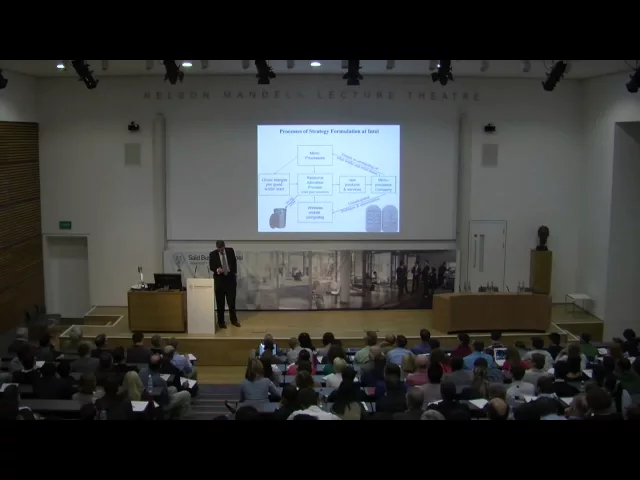
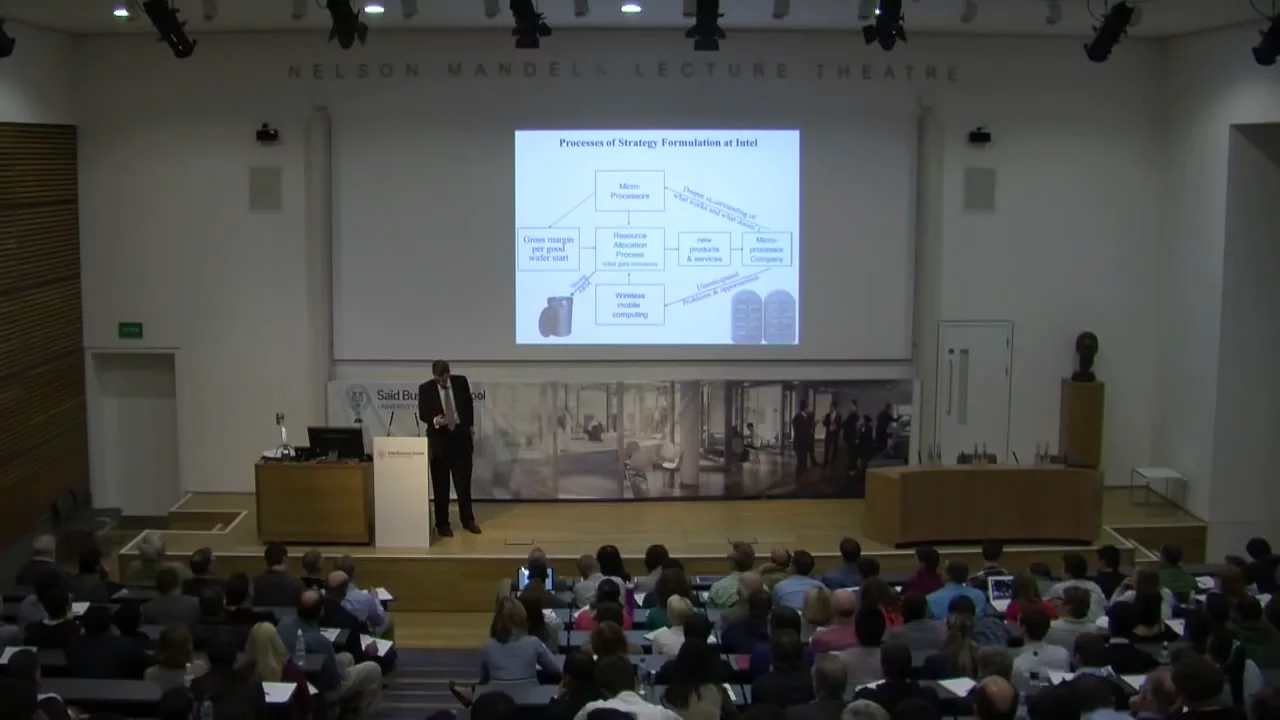
what metric or what mburg says is that when we start out we figure out what we want to do and we he calls this deliberate strategy but translate TR strategy into action means that you have to get uh resources for it and there's a process by which you get funded then use that to make products and services and what you actually do with this becomes our strategy and uh sometimes if this is tight your deliberate strategy equals your actual strategy and as you sell those in the marketplace you learn about how the business works and
uh and as you learn about what does and what doesn't work a profit formula begins to emerge and that is if I understand how the profitability engine works this becomes the metric by which we decide what we'll do and what we won't do and so this is kind of the way it works and then on top of that if in the resource allocation process there's a proposal that doesn't fit the profit formula then you just don't ever fund it and you don't see that there's actually a can there that what you judge to be bad
ideas get thrown into now what also happens is that unanticipated problems and opportunities emerge every day and those things we'll call them emergent opportunities and problems and they start to compete against deliberate strategy to see what actually gets funded and what doesn't and as you know as you if you some of you have run businesses what happens in the resource allocation process becomes very complicated because some of these things that have emerge are actually bigger nicer or more exciting ideas than the original strategy that you had and so you want to be sure that the
process is capable to identifying the better ideas so that we can walk away from those that aren't good but on the other hand you can't do everything and so you've all lived in that thing but this process is going on um whereas when I studied studied strategy in my MBA program or when I worked at BCG I thought of strategy as an event followed by implementation and what this taught taught us is no strategy is a process that goes on 247 in any organization now let me describe how this worked at Intel in fact is
still at work at Intel so Intel started by making dram chips memory chips and it was a marvelous Innovation relative to the uh core technology that had been used before they got cap capital started the company up and uh they were a dram company and a very profitable Dam company and uh what they learned from that made them even better and uh and they figured out then how to really make money at intel was looking at gross margin per per good waer start and the reason it needed to be good is because you don't want
to fund things that have bad Wafers wafers in them and so the business started to work just fine then um inadvertently this guy named to Ted Hoff uh got assigned to deliver a a comp a product to a Japanese company called busicom in 1971 and bcom was one of the early manufacturers of four function calculators and uh they asked Intel to provide a chip set of four chips dams that they would make this calculator faster and so they assigned uh Ted Hoff to this project and one night in the middle of the night he said
you know you don't have to provide four chips we just need to provide one chip with some software and that chip will be able to do the calculations that those guys think require four chips and he said I I think I'm going to call this thing a microprocessor for better words and went to work uh juggled it up Pres pres presented it to Andy Grove and um and Robert Moore and they said let's do it and so they fabricated these little microprocessors and it really worked and so Ted just thought there got to be other
uses for this uh microprocessor than just for four function calculators but nobody else had this potential for that so Ted coff went to China went to Japan and cut a deal with busycal look we'll reduce the cost of this chip by half and we will give you all of the rights to use the microprocessor in building calculators and Intel gets all of the other rights for other applications and bucom said what a great deal and they did it well then at the very same time that he inadvertently discovered the microprocessor in the dram Market um
companies like NEC and Fujitsu and T and Toshiba in Japan were just uh flooding America with cheap microprocessors and so what happened every month when they had to decide what they're going to produce in their Fabs they made a listing of all the products at Intel and at the high end of this list was the products that had the highest gross margins and at the bottom are the products that have the lowest gross margins and what they would do then is give the full oh and they also had forecasts for sales for each product so
they would give the product that had the highest gross margin all of the capacity to to satisfy its forecast and then the second most profitable one by that measure they got all the capacity they needed and so on until when you came to the bottom if there was any capacity left over the lowest profit part the L lowest profit product got any residual capacity and so this is the way they managed this resource allocation process is whoever had the highest gross margin per way for start got the priority all the way to the bottom and
so what happened is nobody else made microprocessors but Intel and so their margins on those products were the highest and with all of this competition in dams from Japan and Dam's margins became the lowest and so little by little the system um exe executed an exit from the dram business as this microprocessor emerged and Intel their Senior Management kept investing in dams even while the system exited out of the dram business uh and it got the dram business Intel out of the dam business without the decision of the executives at all and uh finally they
got to a point where uh only 3% of their volume was for drams and so they finally decided they were a microprocessor business company and so that's what happened it became a microprocessor company they learned how to make money at microprocessors and uh and it's viewed by people on the outside is what a remarkable thing that the Senior Management executed one business and reoriented themselves in another business the reality is because the microprocessor made higher gross margins the system uh executed it without uh any executive decision now the next thing that happened at Intel is
it became believed about a a a decade ago that wireless mobile Computing was the next big wave for these companies uh and that emerged nobody thought about this much in advance uh but it had to get funding and when Wireless Communications had to compete against microprocessors that were used in uh servers and work workstations this just didn't measure up and so what happened in the resource allocation process is that it threw all of their uh all of their assets into the tank because the gross margins were not good enough to compete against the traditional microprocessors
and uh a booming New Market emerged here and Intel has participated in none of it uh anyway why did I put this here it was because what determines what a company can do actually is less what an executive thinks ought to be done but rather that decision decision right there makes determines what this happens and that determines what this is this is actually more powerful than an executive decision I think and it's interesting that these metrics we assume that that's the way it should be done but we never think about it and just as a
general rule when we decide we're going to measure it this way people all of us um cheat and and try to gain the system so that the the metric goes up um so for example in America when we had the most recent George Bush he said to a mankind that our America's CH uh schools will never left any children behind and so once he articulated this then the schools in the districts started to call the White House and say well how are you going to measure whether we're leaving children behind in our public schools and
uh the for about two years the White House had no way to measure whether we're leaving people behind but about two years into it they articulated the standards by which people were would be judged are you leaving people behind or not within a year the the public schools in America just went and started to teach to the test and and they would do everything they could to game the system so that they were delivering whatever they needed to do to make it appear as if they were leaving CH no children behind um I'm a member
of the Mormon Church which is a marvelous Church um but we have the same problem in that and people try to game the system even in something that is honest as a church so there's one measure which is can you calc can you report to us every quarter of all of the members of your church how many of them actually go to church so what you see happening is people will look down the list of your members and you come down and say oh look anybody knows this guy Steve whatever and nobody remembers knows who
he is and say would you just visit his his address and if he's not there let's just ship the the membership off to some law file to get the the if we get out reduce the denominator of this Rao then the number looks good and uh because we gain the system on the other hand if we didn't measure ask them to say what percentage of people aren't going to church if we ask people to just report how many people are going to church then when you look down the system and you see David and you
say where is this guy we got to find out where he is so we can get him to start coming to church and so how you measure profitability even at that level because everybody always will game the system therefore you need to measure measure it in a way that causes people to do good things and so in our church if you just count the number of people who are showing up at church it causes you to do all all kinds of good things and uh in a company I think that we need to come up
with ways of thinking in this way people will always game the system therefore how can we measure things so that it will cause people to do good things and it's not an easy answer and business school professors I think have dropped the ball because we don't have a theory about how to measure the right things so I'll just the last one and then I'll get on with live um if you measure market share right this is a ratio and you can get market share up by defining in narrower and never narrower slice is the market
what we call the served Market have you ever seen that happen to you and so what you do is try to reduce the denominator of the ratio in order to get gross margin or uh market share up and that's a bad measure because it causes people to do bad things and uh how how you would measure it so that people would do good things that is build the company profitably um we don't we as um faculty members haven't provided a good theory about this are you doing okay um so let me go through another and
maybe I'll stop and see if you have questions now the next one is about what do we focus on so try this I'm sure that you guys have wonderful marketing profession professors but those of you who are still in the programs take just some subset of the mar of the marketing cases that you've used and go into the exhibits and look there for how they calcul how they Define the segmentation in use at that company and what you will find is that this company segments its markets by product category and the next one segments the
markets by the demographics of customers and the next one defines their markets by De Geographic um segments and so on and what you'll see is if you look at about a 10 or so cases there are about six ways of measuring or or def mining segmentation now um if you ask the people in those companies how come you decided to measure profitability or I'm sorry to to uh calculate I'm sorry who decided to use your segmentation scheme in in um how do you segment the markets actually nobody knows why this company decided to measure profitability
by product category demographic category Geographic nobody knows why they did that and again this didn't come from deity but somebody back there decided that we'll measure profit will Define the segments this way and then the next question is was this a an an a question of uh substance or just doesn't really matter well I will assert that design defining what the segments are is of vast consequence because the segmentation scheme that comes out of Marketing determines who you compete against it DET determines what products you will make and what products you won't make and in
many ways it's a way that you measure whether you're being successful or not it determines how big the opportunities you see are and aren't and and essentially the segmentation scheme in use at a company defines the focus of that company and actually defining the focus of the company I think is a very important question and yet in almost every company that I've pursued this question around nobody realizes that it was an important question and nobody understands who who decided that um so I just wanted to offer a different way to define the the focus of
a company that I think is really quite an important Insight from us that beats the pants off of segmentation by product category or customer category and so on on um but it causes us to cognitively make a decision that this is the focus of the company and uh and it's called the job to be done as a focus for a company so um here I am Clayton Christensen and as you can see I have all kinds of characteristics and attributes um I just turned 61 un unfortunately uh I am 6'8 unfortunately the size of my
feet are American size 16 unfortunately we sent off our youngest daughter Katie to study at Colombia unfortunately and I have lots of other characteristics and attributes you don't need to know about but none of these characteristics or attributes have yet caused me to go out and buy the financial times today there might be a correlation between my characteristics and the propensity to buy the financial times but they don't cause me to buy the financial times and if you as a marketer want to predict whether somebody is going to actually buy the product and pull it
into their lives you need to understand what causes this not what is correlated with it and what causes us to buy products or Services is you know stuff happens to us every day all day jobs arise in our life that we need to get done and when we have a job to do we look around the market and we try to find something that I can borrow or buy or steal and pull it into my life to get the job done and the reason why this is not a stupid Insight is that if you understand
the job the customer is trying to get done and you develop a product that Nails the job perfectly You can predict that when they have this job to be done they will pull it into your life and understanding the customer is the wrong unit of analysis because I have a lot of jobs to do one of which is I need to be informed and I might hire the financial times to do that job so uh understanding the job is just critical uh and yet most people don't ask this question and therefore they don't Focus around
a job to be done but I want to take you here just so that you can get a sense for uh why uh deciding on the focus of the company is critical so one of the big uh fast food restaurant chains in America U McDonald's decided they wanted to increase the sales of their milkshakes these are very sophisticated marketing people and so they had a demographic profile of the quintessential customer that bought every product on their menu including they had a demographic profile of the milkshake customer it turns out clay fits that demographic profile perfectly
so they would invite people like me into conference rooms and ask them could you tell us how we can improve the milkshake so you you can buy you'll buy more of them and the customers would give them very clear feedback they would then improve the product on those dimensions and it had no impact on sales or profits of milkshakes at all so we convinced them to try to rethink their this themselves around a job to be done in other words gosh there's got to be a job out there somewhere that people find themselves needing to
get done that causes them to hire a milkshake and we got to understand what that job is so one of my colleagues stood in a restaurant for 18 hours and just took very careful notes whenever somebody bought a milkshake what was the time what was he wearing they were almost all males uh was he alone did he buy other product with it or just the milkshake did he eat it in the restaurant or get in the car and drove off with it well by the end of the day when we looked at that data we
realized that about half of the milkshakes were being sold in the early morning um it was the only thing they bought they were always alone and they all got in the car and drove off with it so my colleague and I went there the next day and positioned ourselves outside the the restaurant so that we could confront these people as they were emerging with this milkshake and in language that we could under that they could understand we essentially said look I got a problem with you here what job were you trying to do that caused
you at 6:30 in the morning to come here and hire a McDonald's milkshake and as they would struggle to answer we'd ask them well look think about the last time you're in the same situation trying to get the same job done but you didn't come here to hire a milkshake what did you hire and turns out that they all had the same job to do that is they had a long and boring drive to work and they just needed something to do to keep themselves uh engaged in the commute they were bored and one hand
had to be on the wheel but gosh somebody gave me another hand and there isn't anything in it and I just needed something to do while I'm driving I'm not hungry yet but I know I'm going to be hungry at 10 o'clock so I also need something that will just go thunk and stay there for the morning you know I never thought about it in this way before but last Friday I hired a banana to do the job take my word for it never hire bananas they're gone in 3 minutes you're hungry by 7:30 he
promised not to tell my wife I hire um Donuts maybe twice a week but they actually don't do the job well they make my fingers gooey crumb all over my clothes they're gone too fast yeah I do Bagels sometimes but gez they're so dry and tasteless that I have to steer the car with my knees while I put the cream cheese on and then if the phone rings I got three problems and two hands and what do you want you know and somebody said I hired a Snickers bar once to do the job but I
felt so guilty I've never hired Snickers again but let me tell you when I come here and hire this McDonald's B uh milkshake it is so viscous it takes me 23 minutes to suck it up this thin little straw who knows what the ingredients are I I just know that I'm still full at 10:00 and uh and and it fits right in this cup holder they gave me and uh actually if something goes wrong and I forget that it's there I can turn it sideways and it doesn't fall out and it turns out that the
milkshake does the job better than any of the competitors and the competitors are not Burger King milkshakes but in the customer's mind it's bananas Donuts Bagels Snickers bars coffee and a few other things and then it was hired for a fundamentally different job in the afternoon and evening and you don't want to know about that one but anyway once you understood what the job was then you realize gosh these guys had been improving the milkshake on dimensions of performance that were irrelevant to the job to be done but once they understood the job then how
to improve it became very clear so how would you improve the the the morning commute product well you'd make it even more viscous to take longer to suck it up you'd St and stir tiny chunks of fruit in it not to help it be healthy because they're not hiring it to become healthy but to provide unpredictability to a boring routine and I'm driving along and all of a sudden I suck up a piece and I kind of re-engage with Mankind and and then you take the dispensing machine from behind the counter to the front of
the counter and give people a prepaid swipe card so they could just come in gas up and go and never got get caught in a line when they're rate uh late to work and uh anyway I it turns out that um this is why understanding the customer is the wrong unit of analysis understanding the job uh is what we have to do and unfortunately Peter Ducker said this before I did the the customer rarely buys what the company thinks it's selling him if you understand the job to be done then you can ask the next
question which is all right so to provide that job what are the experiences in purchase and use that we need to provide to nail the job perfectly and if we know what experiences we need to provide what do we have to integrate and how we need to integrate it so that we can provide the experiences to get the job done and uh what we found is that a company that organizing organizes the company around a job to be done and provides all of these things actually have no competitors and it's not that people can copy
their products or services but the other two things are very hard to copy so let's CH check this our son Michael the the thir thirdd of five unfortunately went to Stanford to get his PhD and uh when he showed up there he got an apartment and then he called Christine and me up and he said I found the apartment I need to furnish my apartment tomorrow this is a job he needed to do I had to furnish my apartment tomorrow when you hear that that there's a job to be done what word pops into your
mind that you can hire to get that job done Ikea isn't it interesting that you realize a job to be done and the next thing that happens is the word Ikea pops into your mind and they've organized that company in a very different way than any other um Furniture retailer around a job to be done and uh you notice that Ikea has been rolling out its business model around the world for 45 years and nobody has copied Ikea nobody and it's not that they have secrets anybody could buy their products uh reverse engineer them copy
them uh it's not that they uh that there's no money in it their owner is the third richest guy in the world and yet nobody has copied Ikea because rather than segmenting the markets by product category or customer category they're focused down a around a job to be done and they provide these things that are just quite incredible they realize that most people who have this job to do are younger and so you walk in and you can check your children at the door so that they don't distract you you know and as you go
through it's not just Furniture but everything you need to furnish your apartment halfway through there's a cafeteria so that you can ref refuel yourself for the rest of the game and uh and you notice that they have a brand that pops into people's mind when they have this job to do and if we had a couple of days I could just go through other companies who actually decided that the focus of the company will be around a job to be done and um none of them have competitors they are wildly profitable people are delighted to
pay a premium price because they get the job done well why does clay waste your time on this it is because this decision of how to focus what are we going to focus the company on almost always is a decision that nobody makes but somebody did uh and in this case what I observe is the company that con con Focus consciously on focusing the company around a job to be done have no competitors um and there are a few nice things about it so um and I'm sorry that I I come across as a missionary
for this idea of jobs to be done maybe there's a better idea I just want to say we need to decide consciously what the focus of the company will be so there's a job out there somewhere which is I need to get this from here to there with perfect certainty as fast as possible this is a job and we find this arise in our lives once or twice a month for most of us um turns out that Julius Caesar had the same job to do and what he could hire to do the job was a
horseman with a chariot the US President Abraham Lincoln had the same job to to do at his era he could hire Telegraph for railroad to get the job done our president during World War II had the same job to do he could hire an airplane to do it and Ronald Reagan could hire FedEx and so but the job itself was unchanged what you could hire to do the job changed quite dramatically and the reason why I think this is not a stupid idea is because the job to be done is very stable over time we
can then see these newer and better ways to get the job done and uh adopt them without being surprised on the other hand if we Define the focus of our company by the product or the customer we can get very surprised when a better way of getting the job done emerges and uh almost all of us in marketing or strategy have concepts of a product life cycle or a customer life cycle uh and Jeffrey Moore gives us uh chasms in the middle of all the stuff you know but I think that thinking about the your
world by a cycle like this we get going things are nice things get mature and then we die away and we have to manage this product life cycle actually exists as a panda thumb with people who think that the market is defined by product category and customer category and if we focus around a job to be done the whole concept of a cycle is just obviated anyway that's what I was thinking about that um I have to give this as a confession in term in in in front of Christine so um let's do this second
one I had this question Walmart sells consumer electronics and hardware and Clay Christensen needs consumer electronics and Hardware and the fact that Walmart provides both of these things shouldn't I always be would prefer to go to Walmart because they offer everything that I need and why is there a Best Buy that exists independantly only selling consumer electronics and Home Depot selling only Hardware um and the idiot simple answer is Clay the reason why the focused ones can exist in the presence of Walmart that offers everything is the job to be done which require cause you
to might hire consumer electronics occurs on Christmas and holiday and uh birthdays and the job that causes me to go to Walmart or to Home Depot occurs on Saturday morning when I have to fix something at home and because the jobs Arise at different points in time and space it makes sense that these guys don't have an advantage over these guys because the jobs AR Arise at different points in time and space um but a generation ago almost all of the petrol was sold in focused service stations and uh and then junk food was sold
independently in 71s in places like that and you notice that those have all converged and the reason is that the job to be done that causes me to need to get a g a gas up the the job of needing junk food arises at the same point in time and space because Christine won't let me eat junk food at home and that means I have to eat it when I'm driving and so the same job the two jobs Arise at the same point in time and space and so you would expect them to converge and
again I don't think this is a stupid idea because everybody's deciding should we merge should we keep things separate and if instead you think about that issue around what are the jobs and do they occur at different points in time and space or the same points in time and space I think gives you Clarity that otherwise you don't see and I don't need to say how much junk I eat because you don't see it um let's see let me just do this next one and then uh we'll just give some time for your observations I
decided that the development of the spreadsheet has been a a pox for mankind because before the spreadsheet was developed Klay Christensen oh thanks I remember in the 70s when I was in our MBA program I remember our Finance Professor taught me how to calculate internal rate of return and I had a calculator and I had to make the proforma finance uh documents by hand on paper with a pencil and if I did it all done and I got the wrong answer I had to do the whole thing over again by hand and so we just
didn't use the concept of internal rate of return turn at all because it was just too cumbersome uh but thank goodness it was actually at the Harvard Business School that one of my classmates invented the the spreadsheet and so what that did is it allows analysts to uh effortlessly build Financial models of any company and the great thing about a spreadsheet is they can tweak this input or this input and see the impact that it has on Rona or irr or whatever you want to do and uh and that allows then the analyst to take
their model to Executives and uh teach Executives how to run the companies and then with shorts and calls and puts they can punish Executives who don't deliver the numbers that they figured out up here and uh and that's what they do in in a lot of of instances and what the executive's job has become in many ways is the job of a general manager is to assemble and ship numbers and uh and this is not a job that is fun for general managers in my classes I very often ask people did any of you work
in a direct uh responsibility to a general manager to sit through the meetings that the general manager put together how much of the general manager's time is spent assembling and shipping numbers meaning look you guys we got we have to ship the numbers in eight days and we need two more percentage points of gross margin who's going to find that and they spend all their time figuring out where they are going to find these numbers and uh and that's what their job is to assemble and ship numbers and the number the kinds of questions about
where's growth going to come from uh and uh who are our competitors and what are they doing actually rarely come up in management meetings because this process has redefined the the uh the life the life of a general manager um and the way this works is is really um nobody decided to to cause this system to occur but it creates real trouble we have a case in my class about Intel new business initiatives and so it's an incubator they got a budget of of $20 million a year and if you have an idea to start
a new company using something that relates to Intel you can go to the NBI with a business proposal if they like it they give you money and then what happens in the company is they give you enough money to get the product developed and then launch it into the market and then when you're in adolescence in this product the funding stops and then you have to find somebody who will take the product and so you then visit all of the general managers in the different divisions within Intel explained that you've got this thing and it's
taken off uh and would you like to put this into your product line and what they found is that over and over again the general managers say no and why is it that they say no to products that are taking off in the market and the answer is the job of a general manager is to assemble and ship numbers and somebody brings to them an opportunity that is in the market that is growing but its profit is negative and its cash flow is way negative and the general manager has made a commitment to ship assemble
and ship numbers and because this idea doesn't help me get my job done I can't take it on and so over and over again so far 42 exciting ideas took off and then they needed to get funding and nobody would fund it and it ends up in the drink 4 42 out of 42 and the idea is not that they can't come up with great ideas but because of the spread sheet I think this is the causality they develop Financial models you have to deliver the numbers or I will punish you therefore the job of
a general manager has evolved so that they can't think about these things but rather they have to deliver the numbers and Innovation therefore is actually very hard to do um and nobody decided that we should live life this way but it just inadvertently happened to us and we need to be more conscious about it anyway um the other two are even worse but we could talk that another time if I come down here and you guys have uh questions um can you throw at me [Applause]