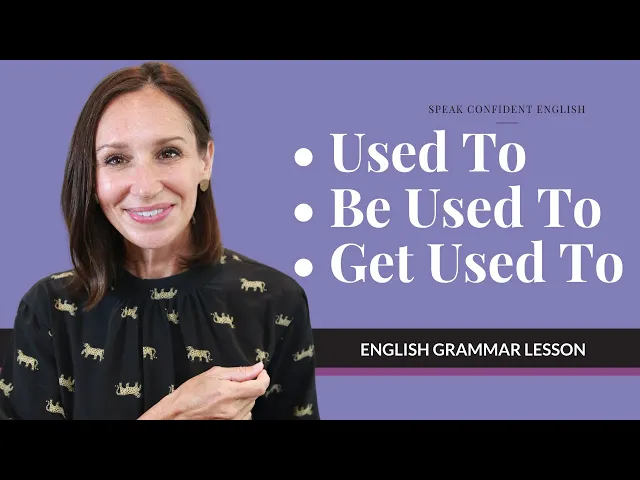
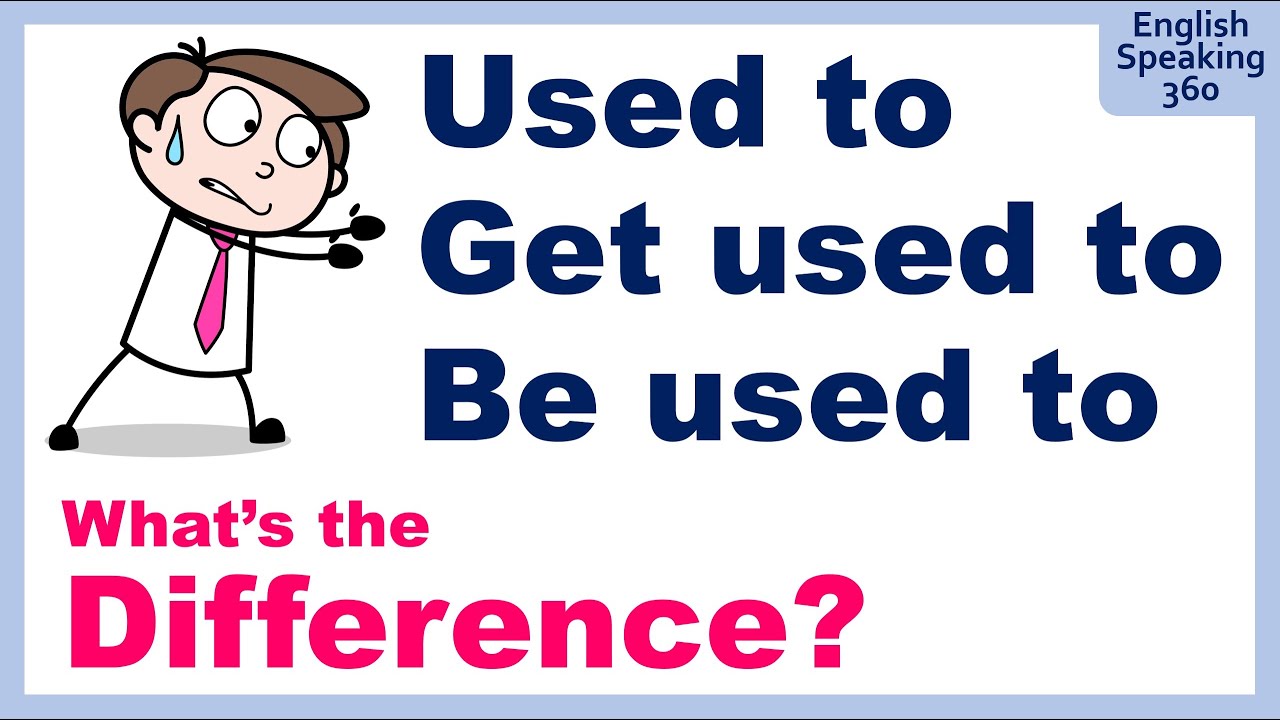
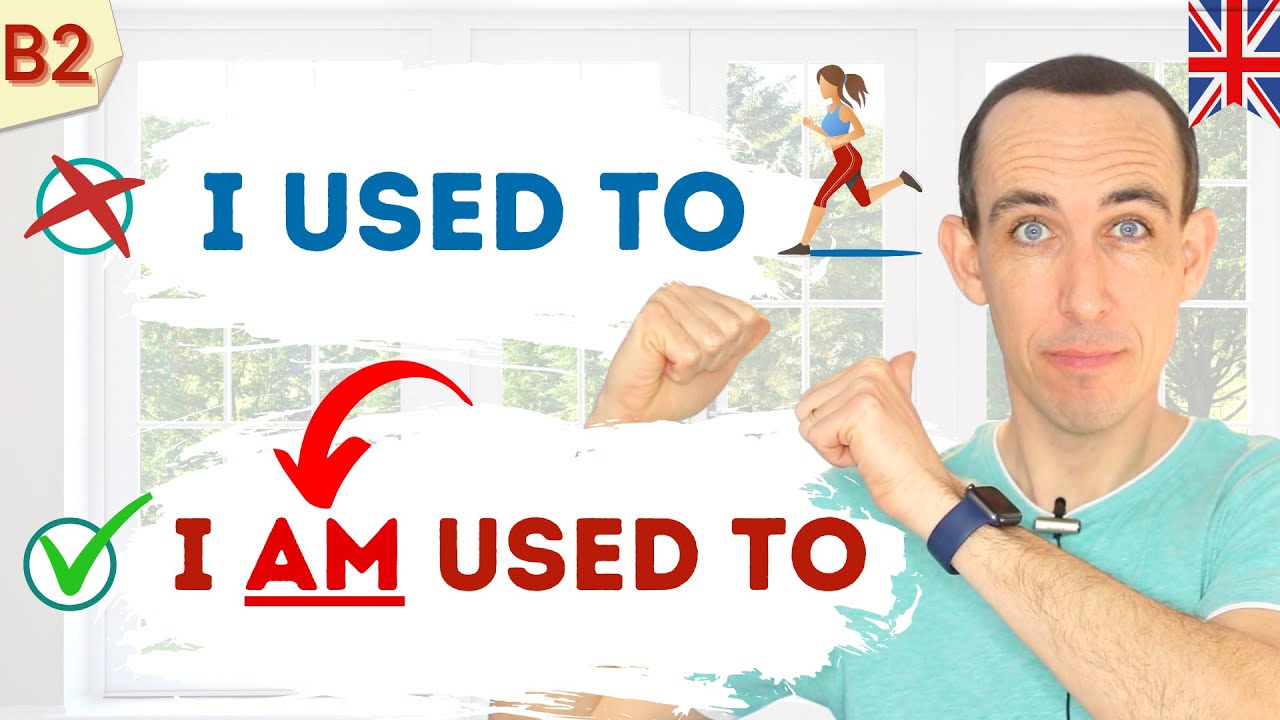
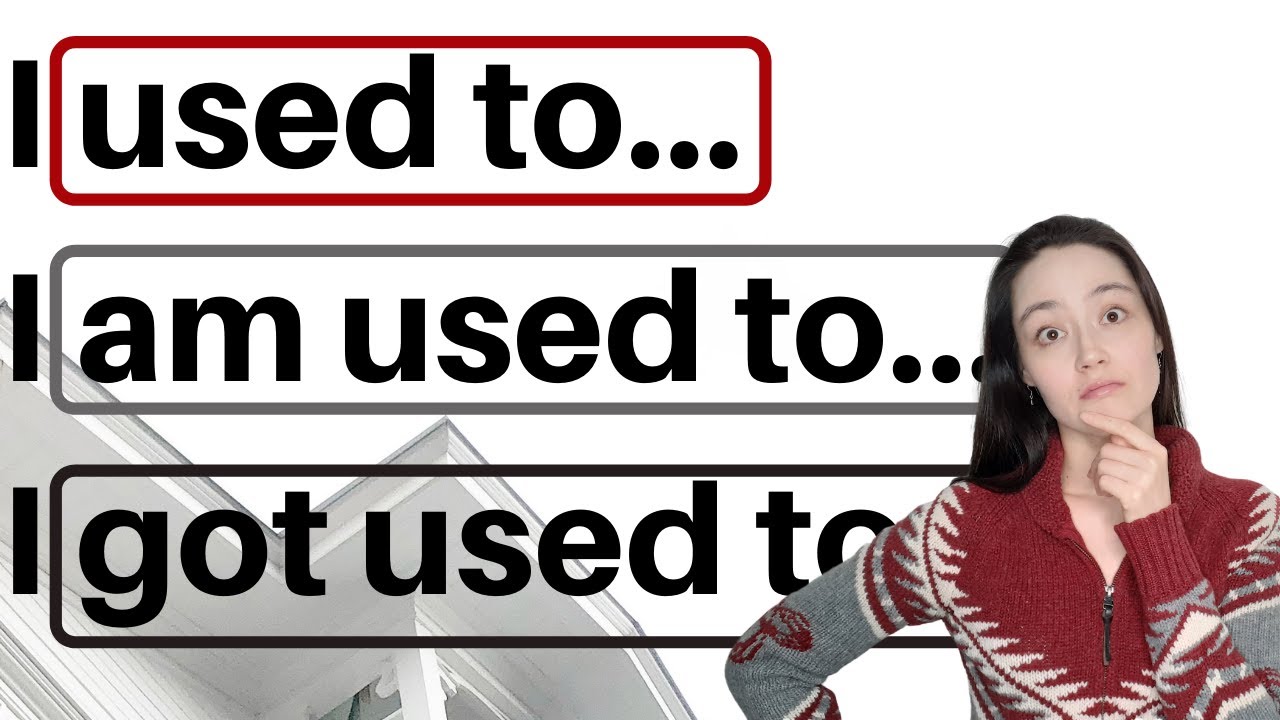
I used to do yoga three times a week. I am used to doing yoga three times a week. I was used to doing yoga three times a week.
I'm getting used to doing yoga three times a week. I got used to doing yoga three times a week. What exactly is the difference with all of those sentences?
They look and sound quite similar. So are they not quite? With this Confident English lesson today, we are going to explore, used to, be used to, and get used to.
You are going to understand exactly what each of those means and how to use them with grammatical accuracy. If you don't already know, I'm Annemarie with Speak Confident English. Everything I do is designed to help you get the confidence you want for your life and work in English.
One way I do that is by sharing my weekly Confident English lessons where I share some of my top fluency-building strategies, advanced-level vocabulary, and targeted grammar just as in this lesson today. So while you're here, make sure you subscribe to my Speak Confident English channel here on YouTube. When you do that, you'll be notified every time I share one of my weekly lessons.
And now let's get right into the differences between used to be used to and get used to. We're going to start with a focus on used to its meaning and structure because it's rather different from be and get used to. So let's take a look at three example sentences.
I want you to see if you can determine its meaning and grammatical pattern. I used to drink coffee but now I only drink green tea. She used to live in Los Angeles but now she lives in Chicago.
We used to go see a movie every Friday night, but now we prefer to stay home. What do those sentences tell you by using used to plus an infinitive verb form for example, used to drink, used to go and so on. We highlight a past repeated action or state something that was true in the past but is no longer true.
For example, in the sentence I used to drink coffee, I'm indicating that that was a past repeated or habitual action that is no longer true. Similarly, used to go, used to go to the movies again was an action that happened consistently in the past but no longer happens now. And lastly, used to live isn't a repeated action, it's a state you either are or aren't living in a location.
But in that example she used to live in LA we're indicating that something was true in the past and is no longer true. Now, before we talk about the grammatical structure being used, I want to answer two questions you might be thinking right now. The first one is a pronunciation question.
When I say I used to drink coffee, she used to live, Am I using used to or used to? Can I use both and what's the difference? And the second question you might be thinking is why can't I say she lived in LA and now she lives in Chicago?
Why can't I just use the past? Simple. These are great questions.
Let's start with the first one. Is it used to or used to? This isn't a grammatical question, it's a pronunciation question.
The truth is it is used to, it is always used to. That is the only one we can use. However, what you likely hear sounds like use to, and let me explain why.
With the verb use in English when we use it in the past simple form we have used with that strong D sound at the end. So you have a Z + D used. For example, I used a red pen to mark the exam or I used all the milk this morning, but when we follow 'used' with 'to' we're following that hard D in the past form with a hard T at the beginning of to.
Used + to. And that is really tough to say clearly every time I used to live in Washington DC. So instead we soften that D sound.
In fact it almost disappears. So what you hear sounds exactly like use to. You have that soft S, she used to live in LA but now she lives in Chicago.
We are using used to, if you see it in writing, that's what it is, but you're going to hear use to. Now let's talk about why we use this form. She used to live in LA as opposed to she lived in la.
Well let's talk about this scenario. Let's say a friend reaches out to you on social media. It's a friend you knew in high school, you haven't talked to each other in years.
She reaches out to you, you reconnect and she says, Oh my gosh, I thought you lived in la. What happened? Oh, I used to live in LA but now I live in Chicago.
In stating that, you're confirming that that was true in the past, it's no longer true now. Now that we have those two questions cleared up, let's talk about the grammatical structure. Look again at those first sentences we used, used to drink, used to live, used to go.
When we use this form, it is always used to with that infinitive verb. And now let's take a look at, be used to and get used to make sure that you stick with me all the way to the end because I do have a quiz for you. I want to make sure that you understand this perfectly well when it comes to be and get used to, they have a lot in common.
So let's start with the similarities unlike used to, which can only be used in the past form, be used to and get used to can be used in the present, past and future. For example, take a look at these six sentences. I am used to doing yoga early in the morning.
I was used to doing yoga. I will be used to doing yoga and then I'm getting used to doing yoga early in the morning. I got used to doing yoga and I will get used to not only can both be used in the present past and future verb forms, but they also have a similar grammatical structure.
We use be or get in the appropriate time tense plus to followed by a noun phrase, a pronoun or the -ing form of a verb. Again, let's take a look at a few example sentences. At first it was difficult but now she is used to the constant noise at night.
Here we're using be used to followed by a noun phrase. Number two, when her husband started a new job, he had to get up much earlier than before. It took her a while but she got used to him waking early.
Here we've got got used to followed by the pronoun him. And number three, I will get used to doing yoga early in the morning. Soon I just need to keep building up my habit.
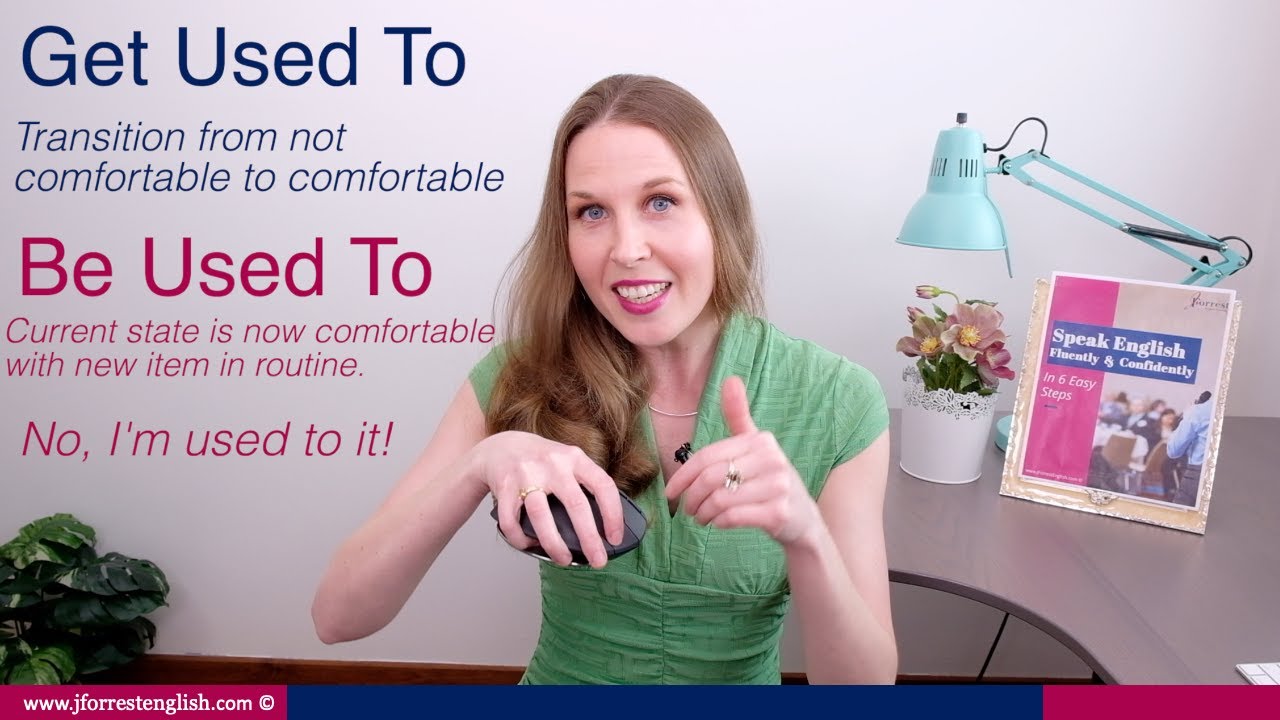
Of course, here we have the future form followed by an -ing form of the verb. Now as we've reviewed the structure of be and get used to, we've also looked at several example sentences now and I'm curious if you've started to distinguish the difference in meaning. When we use be used to we're indicating that we are familiar with or accustomed to something we either are or we're not.
We're familiar with it or we're not. There's no middle ground here. For example, I am used to waking early every morning or I'm not used to waking early every morning.
It's one or the other and that's where get used to comes in, get used to, describes the process of becoming familiar or accustomed to something. It's focus is on all those steps you take to build up that habit, that routine, that familiarity. In other words, you're not a hundred percent familiar with it yet or accustomed to it yet, but you're on your way.
For example, if I say I'm getting used to waking up early in the morning, I'm indicating that it's not always easy. There are some days maybe when I sleep in, but I'm trying. I'm in the process of developing that habit and if I say I got used to waking up early after a few months, I am highlighting the fact that it took me a few months to develop that habit, that familiarity.
I'm focusing on the length of time that process took. Now that you have a full picture of, used to, be used to and get used to, I have a quiz for you, but before I share that quiz, I want to also challenge you. Try using used to in a few different sentences, tell me a little bit about something that used to be true for you but is no longer true.
You can share your example sentences below. Similarly, I want you to try using be and get used to with the correct time tense and with the correct meaning. You can always share your examples down below and now I've got a quiz.
I have five sentences where I want you to fill in the correct choice should you use, used to, be used to, or get used to. And I also want you to pay attention to the time tense. I'm going to share the sentence with you.
You'll be able to see it as well. I'll pause briefly so you have time to think and then I'll share the answer with you. Number one, when we first adopted our puppy, it was quite an adjustment, but now we ____ walking him several times a day.
What do you think? If you selected, we are used to walking him several times a day. You're absolutely correct.
This is something you've become accustomed to or you are now accustomed to. Number two, I _________ have a strong accent in my second language, but with time and practice I made a lot of improvement. What do you think?
Number two is used to something that was true. I used to have a strong accent in my second language, but with time and practice I made a lot of improvement. Number three, I need to lower my caffeine intake, which means drinking less coffee.
It hasn't been easy. I'm still ___________drinking tea instead. If you selected getting used to drinking tea instead, you're exactly right.
We're focused on the process. I haven't completed that transition yet. I'm working toward it.
Number four, he _______ workout every day of the week, but after his injury he had to reduce it to three or four times a week. What's the correct choice here if you selected used to, you're exactly right. And now number five, it took several months, but she ____________ her new role at work now, what do you think?
This one's a bit tricky. The answer is she is used to her new role at work. Now the reason I say it's tricky is at the beginning we highlight that it took several months, so it sounds like we're focused on the process, but the very last word in that sentence is now indicating that something is now true.
She is used to her role. Now, if you found today's lesson helpful to you, I would love to know. Drp a comment down below or simply give this lesson a thumbs up here on YouTube and again, don't forget to subscribe so that you always get my Confident English lessons.
Thank you so much for joining me and I look forward to seeing you next time.