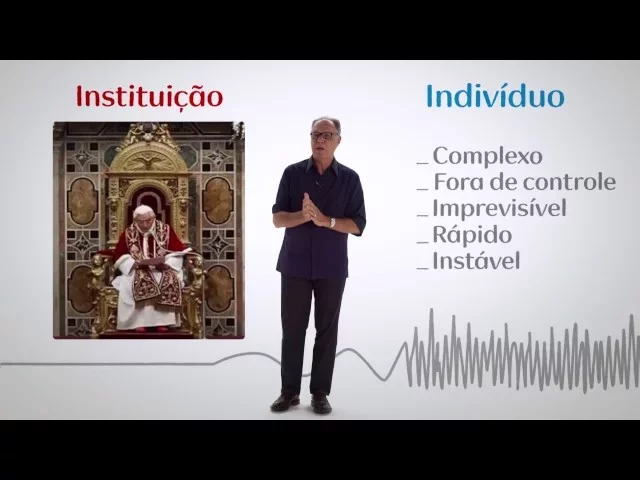
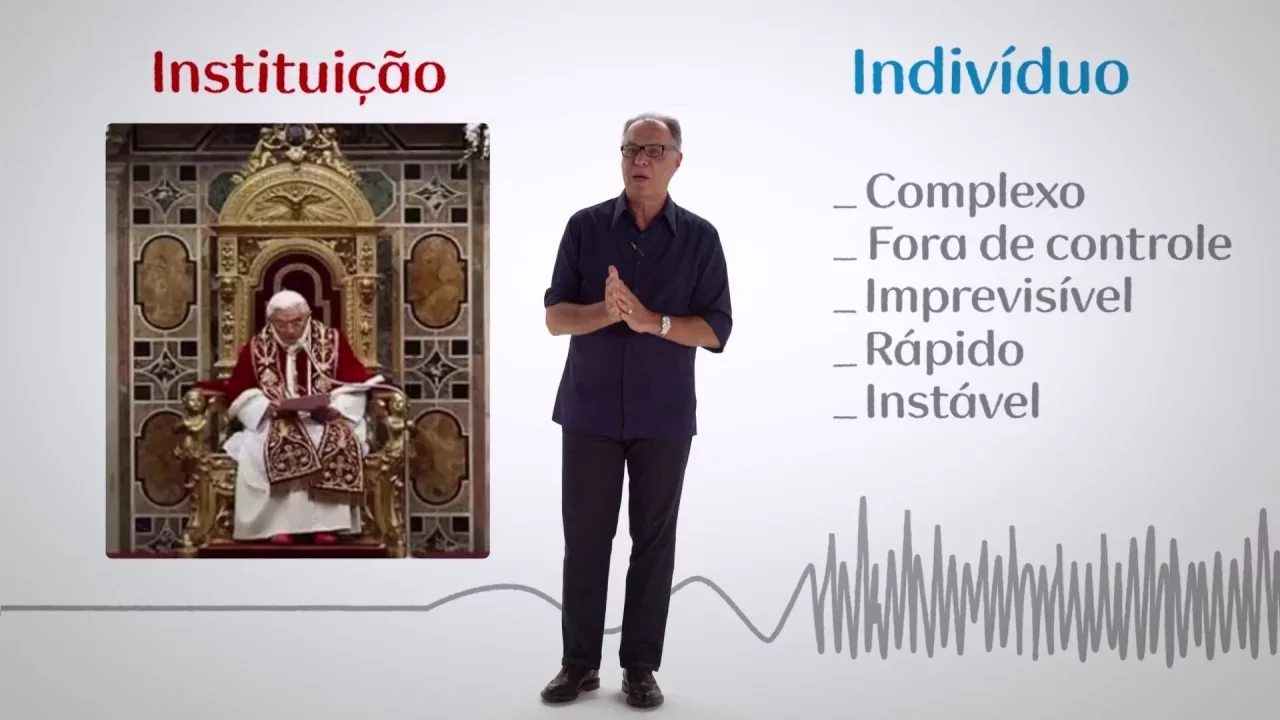
World Context Hello! My name is Ricardo Guimarães, I have been married to Lili for 44 years, I have 4 children, 3 grandchildren, some teenagers, I work for big companies, living this crazy world, and here I will tell you what we understand about this world, it may help you make good decisions in regard the education you provide your children, your career, your work, and ultimately the future of us all. Take a look: This drawing means what is happening to the world.
It looks like a cardiogram, but it isn't. It shows that there was a time when things were very still, almost dead, and it begins to accelerate, begins to have an animation, a life it did not have before. Everything was accelerated.
Do you know why? Because of information and communication technology. At this stage there were fewer people in the world and the information and communication technology was very rudimentary and expensive.
Landline phone fixed in a space, can you imagine? It took too long for things to happen. The scenario was stable, almost stationary, slow, predictable, controllable, simple, happening one thing at a time.
In this phase we created institutions with powerful hierarchies that controlled the world. And we felt very safe, because everything remained the same for so long. The individual submitted to the group, gave up his individuality, learned the rules of the game, and life went on.
It worked for a long time. Then, with more people in the world and a more powerful and cheaper information and communication technology, allowing everyone to make decisions at all times, at an absurd speed, the world started to become unstable, dynamic, fast, unpredictable, transparent, out of control, complex, and in this whole dynamic, beyond the institution, comes in play a new and very powerful character: the connected individual, who accesses everything and everyone all the time. He mobilizes people, works, produces knowledge, without needing the structures and permission of the institutions.
Those hierarchical and controlling institutions are having to learn to deal with this new scenario, this new, more connected, freer, more mobile, better informed, and critical individual. The world has changed so much that very successful people in that scenario are having a hard time keeping their business and jobs nowadays. I am going to tell the story of a very important executive, from a powerful, global organization, who was having huge problems, losing money, losing market share in every country in which it had operations.
There were internal political fights, between departments, between regions, public scandals, financial corruption and all happening simultaneously, live and transparent in real time. This great executive saw that scenario and said: I do not conceive this complexity, this speed, all this transparency. I quit.
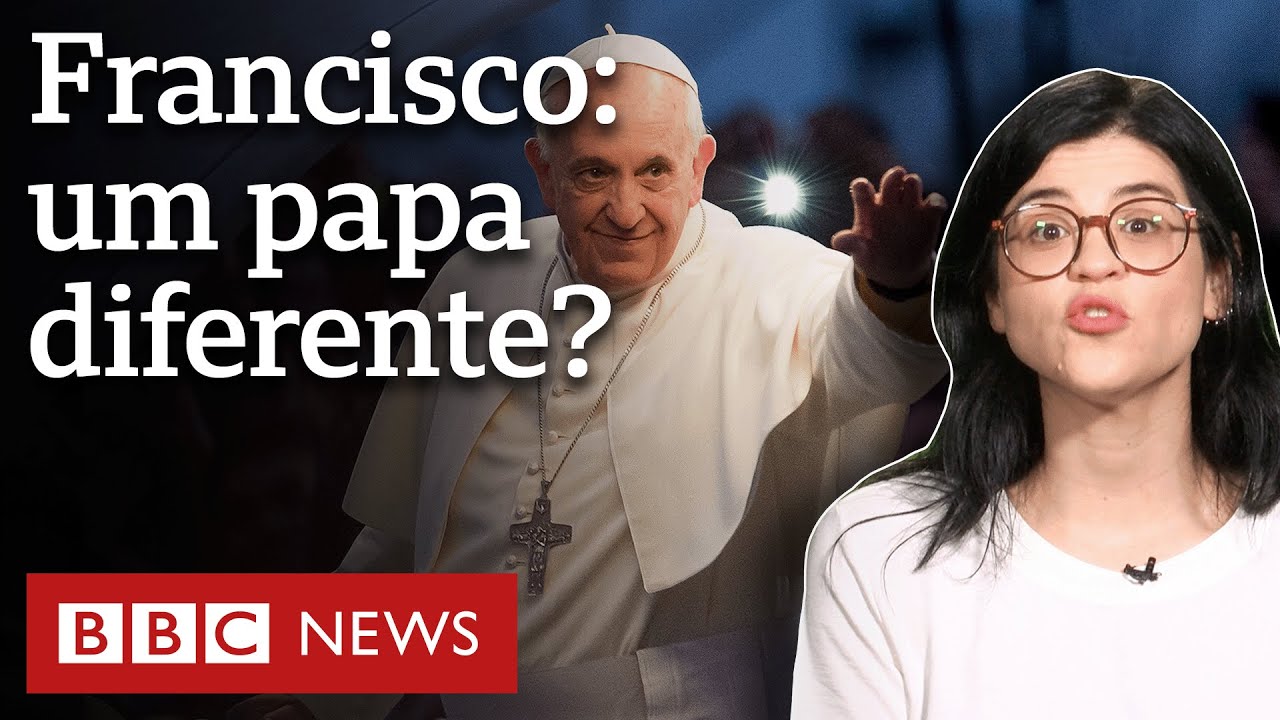
Here he is. Our dear Benedict. Benedict was succeeded by another executive, who seems to have been custom made to deal with this time of such innovation where the individual has to be more autonomous, more self-reliant, not to submit to the institution, but rather to lead the institution.
Francis accepted the challenge. Here he is in an easy way to compare and observe the differences between him and Benedict. See that Benedict is arcuate, submitting to the protocol and rules of the institution.
Francis is more self-confident. In order to help the church, he had to change the church. To change the church he had to criticize and propose new ways of doing things, because the way it worked in the past was not the way it would work in the new scenario.
And he began to criticize and change everything using judgment, common sense, and his values that are the same as the institution. The chair for example. He asked for a simpler, lighter, more practical chair that he could carry himself.
An outfit that was easy to wear, light, simple and comfortable. The speech, he didn't want anyone writing for him, he was going to make the speech himself with his own words. And for him to be always up to date and able to speak freely, he was not going to be isolated in the Vatican Palace, in a 300 square meters room.
He chose to live in the Santa Marta Palace, in a 30 square meters room, along with other 400 priests and bishops who traveled the world, he would have lunch with these priests and bishops to talk, exchange ideas and know what was happening in the world. He had the glass of the Pope mobile removed so that he could talk to the people. He changed the Vatican's investment policy in order to conform with the church’s beliefs, hence, investing in companies that upheld Christian values, because if the investment policy did not conform to church’s beliefs, how would he have credibility when selling the faith of his church?
Observe that he is putting to practice his discernment, to change everything in the institution, from the chair to the investments. He seeks simplicity, practicality, economy, agility, lightness and consistency. Francis is a good example of success in this new scenario.
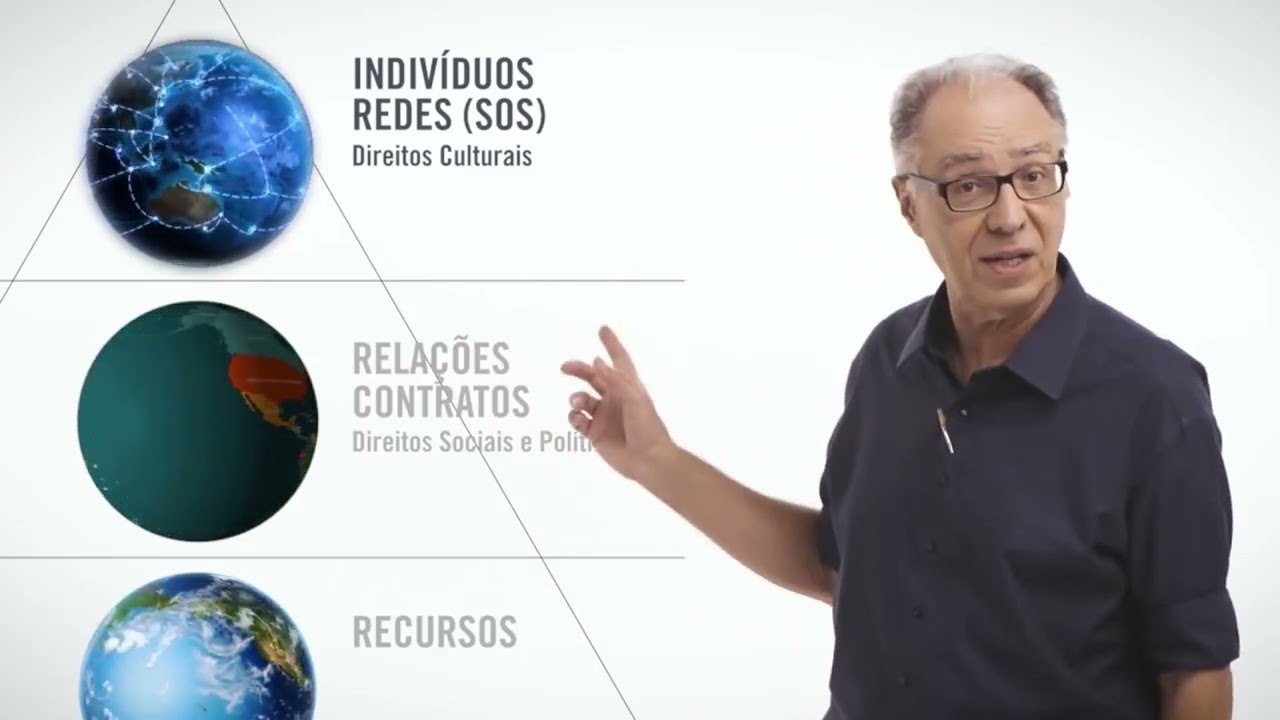
The change is so great that historians say the industrial society is coming to an end and the knowledge society, the network society, the networked individual society is beginning. It is a time of transition, and we are here, right in the middle of this transition. Take a look at what’s happening: In this static and stable environment, the good company worked like a clock, a lifeless gear, isolated from the environment, ticking, ticking, ticking.
Where the employee was a gear part. The future was the same as the past. As the environment changes, gaining speed, new at all times, unpredictable, the company has to update, learn and evolve all the time in order not to disappear.
It is no longer a matter of conserving, but adapting, learning and evolving. It may not be a clock that repeats itself forever without change. But it needs to be a living, open, interactive system that learns and evolves constantly.
People can't be mindlessly repeating gears, they have to be living, sensitive, critical, interactive cells that exchange ideas, suggest solutions, just like Francis. The good news is that we know how to manage living systems very well. Do you know why?
Because we are living systems. We are made of systems: Respiratory System, Endocrine System, Bone System, Digestive System. System is a set of elements that work interdependently with a common purpose.
Like our body. The most important aspect of our body’s health is interdependence. Observe in your own body: our organs work in an interdependent way always in search of body balance, that is the purpose.
If an organ declares independence, this is called cancer, the body collapses. The integration between the organs disappears, the body’s energy fades and can no longer interact with the environment or react to stimuli. As an open system, it will succumb to the scenario.
So if you want to work for a successful company in this scenario, help it work as an open living system. You know how, because you are an open living system. Anyway here are some tips to help.
Use your judgment, your common sense and intuition, trust yourself. Promote integration and interaction wherever you are. Be sensitive to relevant information to improve your work and business.
And most importantly: Recognize that reality is interdependent and therefore needs the participation of each and everyone to solve their problems. Keep in mind: Good management of interdependence ensures the good health of your body and corporation. One more tip: Don't let people confuse autonomy with independence.
Autonomy means that you are aware that you are part of a larger whole and that you can speak for the whole. Therefore it may occupy positions of responsibility in the hierarchy. Independence is when you don't recognize yourself as part of the whole and just look at yourself, putting the whole system at risk of collapse.
“Independence or death” worked in the last century. In this century the correct is “interdependence or death”. Observe the evolution of relationships in the company and in the market.
In the beginning, the hierarchy was absolute. Few commanded and all obeyed as obedient children. There was no competition yet there was a need of a selling channel.
After the company grows, the hierarchy remains, but the areas have their bosses, the children have become young and as young people walk in tribes. Us versus them. Areas compete all the time because they need to assert themselves, like young people.
This is the phase of independence or death. The competing market appears and forces the company to look at the consumer. Today the competition continues, but you will have to live with cooperation to survive in this faster and changing world where interdependence is becoming increasingly important.
We have to mature as individuals and look at our self-interest and the whole at the same time. When Pope Francis spoke of the environment in his encyclical, he did not speak to Christians alone. He talked to everyone who lives on this planet, which he called our home.
That's it. This is us. Together and mixed as one.
This is the real one. This is the future with the most valued, better informed people and making better choices for their lives. Good luck.