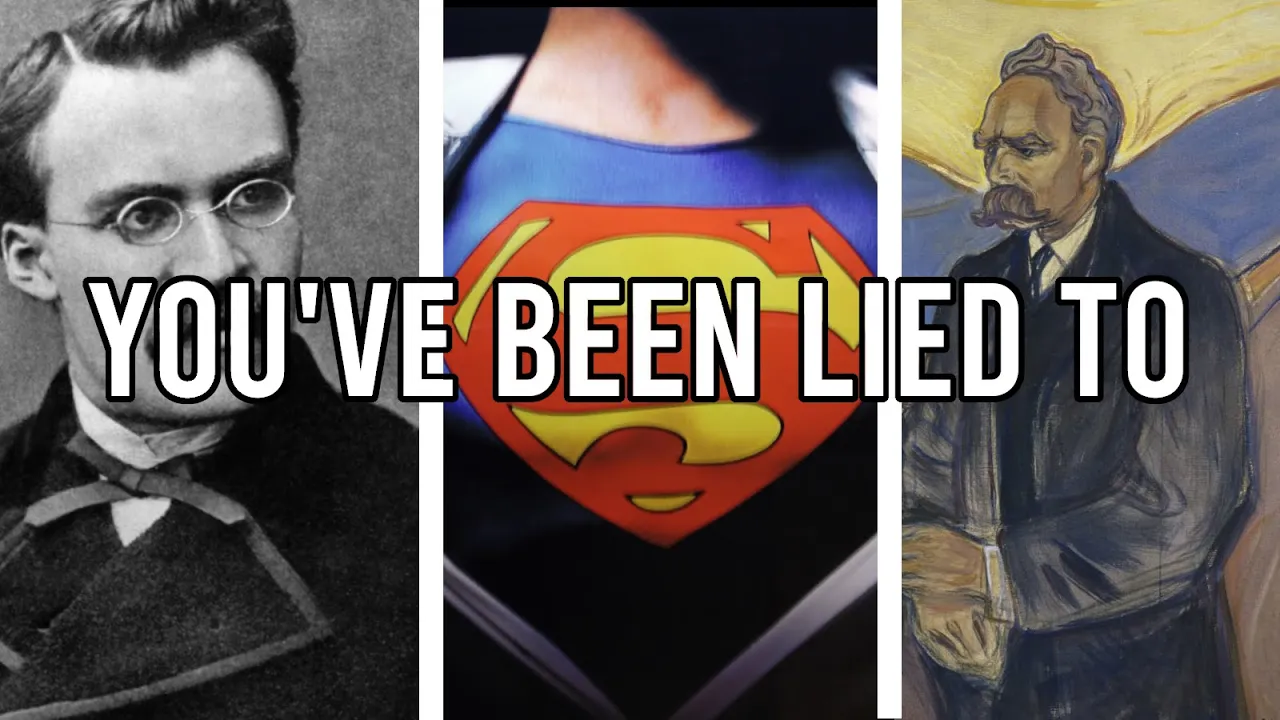
I wants to teach men the sense of their existence which is the uber mench the lightning out of the dark cloud. Ah the uber mench the domain of philosophers revolutionaries and edgy teenagers. This has got to be one of nature's most famous ideas but perhaps also his most misunderstood one.
The uber mench is often characterized as just a very strong guy or a kind of alpha type who sits at the top of our current societal hierarchy. But as we will see these descriptions of the uber mench are at best incomplete and at worst deeply misleading. The truth is that nature had far far greater plans for what he saw was the next evolution of mankind.
The Uber Mench is a happy, creative, and powerful character whose ultimate aim is to move us from a world of religious values to a strong, original, and joyful philosophy. Here we'll learn some of the characteristics of the uber mench that nature describes, dispel some common myths, and ultimately show just how this radical conception of what humanity can aspire to can help us in our own lives. As always, I encourage you to read nature for yourself to get your own interpretation of this concept.
The key text to bear in mind here is thus spake zarathustra. This video is just my understanding which will be colored by my own cognitive biases and will inevitably leave something out. The uber mench, even more so than most of nature's philosophy, is described in flowery and poetic language, which makes it open to many different interpretations.
It's worth reading nature for yourselves. Get your own insights unblenmished by my understanding. But first, why should we even think the uber mench is possible?
Well, for that we need to look into some background on the death of God. One, God is dead, but we are not. Perhaps nature's most famous quote is, "God is dead and we have killed him.
" But what most people don't know is the significance of this idea to nature's wider philosophy and especially his conception of the uber mench. For nature, until the 19th century, the force sustaining our moral values was religion. If you had a moral quandry, you asked your local priest.
You did not dain to answer these questions for yourself or attempt to create your own values. And in Europe, the dominant moral system was Christianity with its primary values being loving your neighbor and loving the powerless. And this reliance of morality on religion made sense.
The whole of humanity was submitting to a higher being and understandably following their orders. But there was change on the wind. The rise of atheism and modern science in the wake of the enlightenment meant that the very existence of God was being questioned.
People were no longer making theological arguments for their moral values, but secular philosophical ones. Jeremy Bentham did not argue that what was good was what made the most people happy because he thought it was some God's will. He argued it because he thought that it was philosophically correct.
And this is what nature means by God is dead. It means religion can no longer support our moral values. Mankind will have to make them for itself.
This situation presents a whole host of problems from nihilism to existential despair. Nature says it can lead to humanity's degradation into a character he calls the last man. The last man is the epitome of mediocre.
They do not strive for anything great. They are robbed of their natural human courage and tenacity. Instead, they pursue comfort, avoid danger, and trudge from day to day in a meaningless existence.
They are nihilists who despise action. They find no meaning in their lives and they let this rob them of their internal drive. They were totally dependent on the existence of a higher being to give them the motivation to do anything.
And with that removed, they can't see further than the next day. They hate discomfort, and this traps them in a cycle of mediocrity and despair. Nature views this almost like a doomsday scenario.
He thinks it will be the ultimate waste of mankind's potential. For him, there needs to be an alternative. Nature sees in the death of God a potentially fantastic opportunity.
For the first time in thousands of years, mankind has the power to craft its own definitions of right and wrong, good and evil, or move past the concepts entirely. We can create our own values. And this is where the Uber Mench walks onto the scene.
The purpose of the Uber Mench is to move beyond humanity as it currently exists. They have the boldness to reshape the world as they see fit and forge brand new morals, brand new values in the fires of the old ones. For nature, many of these values will be centered around one great aim, the affirmation of material life.
One of the aspects of religion that nature found endlessly irritating was its tendency to make the material world secondary to some higher spiritual plane. In Christianity, this is primarily done by making the world a precursor to either heaven or hell. The significance of the temporary physical world pales in comparison to the eternal metaphysical world just on the horizon.
Nature thought that philosophies like this encouraged us to waste the great gift of life. It told people to hold it at a distance, as something that will be gone soon and is just a prologue to a much greater existence. The Uber Mench would do the opposite.
They would conduct their entire life with a great love for material reality. They would love their fate and love their lives and take each moment with great gratitude in their hearts. This is an aspect of the uber mench that's often lost in analyses of nature.
They are not necessarily hungry for wealth or to be at the top of our current hierarchy. According to nature, present- day hierarchies aren't even worth ascending. Instead, the uber mench and those that would assist them want to change the values of society to fit a new world.
They are not just hungry for power. They have a definite end in mind. Nature does not spell out in perfect detail what these values will be.
He largely sees himself as setting the stage for a new generation of philosophers who will do the job of making these values. But then the question on a lot of people's lips is how does the uber mench come about? And that is exactly our next point.
If you want more on philosophy and the art of learning, subscribe to my email list. The link is in the description. Two, the metamorphoses of the uber mench.
The word uber mench is commonly translated as superman and this conjures up a whole host of images in our head, some of which are deeply misleading and some of which I probably used on my thumbnail. The characteristic most people emphasize is strength. And nature definitely thought the uber mench must be strong.
But it is not just a matter of strength. It is also important what somebody does with that strength. There were plenty of strong people in nature's age, but he said the uber mench did not yet exist.
So what else is needed in the recipe for this next evolution of humanity? In thus spake zarahustra nature says the transformation from man to uber mench comes in three stages. He calls the first stage the camel.
This is probably what most people think of when they conceive of the uber mench. The camel is strong enough to bear all the challenges of the world. They are powerful in the most straightforward sense of the word.
They seek out the hardest things to do and then do them all in the name of overcoming obstacles, developing their strength, and rejoicing in their own power. They're like the David Gogggins of 19th century philosophy. But importantly, the camel is not yet challenging our value system.
As far as they're concerned, our current values might be absolutely correct. They have strength, but they don't yet have creativity. They seek to conquer the world, but they don't yet seek to change it.
They want to be at the top of the current tree, but they have no desire to cut it down and start a new. The second stage is where the purpose of Nature's Uber Mench comes a little bit more into focus. He calls this stage the lion, and it is where the power that the fledgling Uber Mench has gained comes into full force.
In nature's words, the lion replaces thou shalt with I will. This is the point at which the old values are being deconstructed and destroyed. The lion is feasting on the corpse of our current moral values and is carving out space for new ones to be created.
They reject the values of others and instead prioritize their own wills. The lion, in nature's view, is essentially a destructive force. They are like a whirlwind tearing down moral values wherever they find them.
If we were to meet the lion, we'd probably call them a psychopath or at the very least a rebellious nihilist. But to nature, they seem an essential stage that the Uber mench must pass through to reach their final destination. The one thing the lion cannot do is create brand new values.
And that is where the final transformation comes into play. The final stage that nature lays out for the uber mench is perhaps the most interesting. Whereas the previous two stages have been characterized by beasts and nashing of teeth.
The final stage is called the child. The child is very different from the last two stages in that their essential properties are creativity and innocence. With the lion having carved out space for the creation of new values, the child actually gets to create them.
They forget the morals and doctrines of the old world and construct philosophy a new with all of the joyful playfulness of a toddler. Here we see some of the values that nature cherished but are often ignored by analyses of his work. Joy, innocence, playfulness, creativity, and a deep love of life.
These are all characteristics that nature attributes to the uber mench and they are most emphasized in this idea of the child. It is sometimes difficult to see exactly what nature means by these stages. Are these metamorphoses we must go through to become the uber mench ourselves?
Or can we merely hope to prepare the world for a generation which will themselves be uber mention? This is a point that nature seems to skip back and forth on in thus bakes our thustra and different people have very different interpretations of what these stages mean. But I'd be very interested to know what you think.
But what is the uber mench actually like? Well, I'm glad you asked. Three, the characteristics of the Uber mench.
One of the things that makes the uber mench so difficult to talk about is the way nature presents them as a mishmash of different qualities. Sometimes these qualities contradict, sometimes they align. Sometimes it is not clear where the nature is talking about the uber mench themselves or some other form of higher being.
All this means is a struggle to get a clear picture of the uber mench's qualities without obscuring what nature actually said, which is rich in meaning but light on specificity. And this is almost certainly by design. Throughout Nature's writings, he is constantly talking about how he is merely clearing the way for a different and possibly better type of philosopher.
His great work beyond good and evil is subtitled a prelude to the philosophy of the future. And this is reflected in his descriptions of the uber mench. There is no step-by-step guide on how to become one.
Nature is not a philosophical self-help guru. Instead, there are qualities that present a blurry picture of what nature thought the next evolution of mankind might be. First, as is clear from the previous section, nature thinks the uber mench must be powerful.
Sometimes he means physical or material strength by this, but just as often he means spiritual toughness. This power is not simply for its own sake, though. It is so the uber mench has the tenacity and the drive to tear down the values of the old world.
Attempting to destroy the dominant moral system of Europe is no small feat, and it's fair to say that there will be some backlash. So, to be fit for this grand task, the Uber Mench must be able to bear all this torment. They must hold fast in the face of pressure from others and carve out a new path for themselves and all humanity.
Their power extends to overcoming themselves and seizing control of their own will so that it will not deviate from their intended path. Next, there is an inherently rebellious nature to the uber mench. They reject the dominant moral system and its teachings.
So, it's hardly surprising that they have a bit of a problem with authority. This manifests most readily as refusing to submit their will to others. They do not bow to the authority of a church or state and recognize no higher power than their own will.
This ties closely in with the creativity of the uber mench. The source of the new values they create will be their own will uncorrupted by external influence. If they submitted their will to others, they would have nothing with which they could conjure up these new values.
The uber mench is essentially taking on the role of a god in that they will decide for themselves what is right, what is wrong, and what is valuable. Nature thinks they cannot do this from a position of submission. They may not require a position of domination either, but they must have freedom and independence so they can at the very least be master of their own wills.
This may make them seem evil to everyone else, but for nature, it's an integral step in the creative process. Lastly, and perhaps most surprisingly, the uber mench has a deep love in their hearts for the world and for mankind itself. Often, nature is painted as a crude egoist, recommending that we pursue our own selfish desires in any situation and saying that the rest of humanity can go to hell.
But I disagree with this interpretation. Nichzche's Uber mench does not construct new values out of hate or a wish to be cruel or spiteful, though it may seem that way from the outside. They do it out of love.
They believe that their will is the best will. The one with the strength and fortitude to rescue humanity from nihilism and bring us into a new age of greater philosophy, greater art, greater work, and greater people. Some may call this simple delusion, but nature says that in the right hands, this unabashed confidence is exactly what we need in the wake of the death of God.
This idea of love for the world is reflected most of all in the character of Zarathustra who is constantly talking about his love for people. How he wants to shepherd them into a better way of living, a way of living free from the crude constraints of religious morality. He wants to release the greatness he believes is inside mankind and which he thinks has been strangled by our current values.
He is not unkind, though he may act that way at times. He is more like a stern but loving parent who gets the best out of us through the occasional use of harsh words but through the prodigious use of affectionate encouragement. There are many more qualities that nature assigns to the uber mench.
He says they are to be free from pity and resentment and free from disgust and have a great love for the material world. But there is one more quality of the uber mench that I think is applicable to all of us and that is how they approach joy. For the joyful philosopher nature has been called many things.
a radical political thinker, an essential existentialist, and a complete madman. But there is one label that is just as appropriate as any of these, and that is a philosopher of joy. Despite how he may seem, Nze is genuinely one of the most upbeat philosophers I've ever read.
He is constantly talking about new ways we can find happiness, new sources of laughter, and new methods of loving our fate. One of my favorite of his books is literally called the gay science, or the joyful science if you're teaching about it in a secondary school. His works are littered with enthusiastic aspirations.
And in thus spake Zarathustra, he gives one of his most insightful pieces of wisdom. If you want to be happy, don't aim for happiness. At first, this seems really counterintuitive.
Why would we not aim to be happy? After all, a miserable life that is barely worth living is hardly something to aspire to. But nature's Uber Mench demonstrates why this piece of advice works and how each of us can apply it in our own lives.
The Uber Mench does not seek out happiness directly. They instead seek out suffering and pain. But importantly, they don't do this out of some masochistic desire to hurt themselves or out of self-hate.
Instead, they do it to, as nature puts it, rejoice at their own strength and to reach higher and higher levels of understanding. To really get to grips with what nature means here, we need to realize that he doesn't view suffering as a bad thing. He thinks it is entirely necessary for our development as people.
If we never suffered, we wouldn't have the urge to question anything. We would never properly interact with the world as thinkers. We would be turned into cattle being fed pleasant sensations day after day until one day we keel over.
For nature, this is no way for a person to live and certainly no way to evolve beyond our current state. In his more grandiose moments, nature speaks of how we should love our suffering, embracing it like a friend. We should grab the worst experiences in our lives and kiss them passionately, showing our appreciation of their vital contributions to our characters.
And this attitude makes a certain sense if you want to get the most joy possible out of life. It is very easy to enjoy things that are sensually pleasurable. You will very rarely hear somebody complain about the pain of a delicious meal or time spent with their best friends.
So we can consider such experiences occupied ground as far as our happiness goes. What remains are all the awful experiences in life, the tragedies, the pains, the endless irritations. This is the land we must conquer if we want it too to bring us joy.
And nature allows us to do this by setting our course directly for suffering. Then when we suffer, it is no bad thing. We've achieved what we wanted to do.
And by highlighting all of pain's developmental aspects, nature is making this redirection a little bit easier. The idea is that joy will then not need finding at all. It will catch us entirely unawares.
We will be sitting by ourselves when happiness will bubble up inside us. We will find a naturally carefree and joyful attitude to life as innocently as a child does. But nature thinks this can only happen if we let go of our wish to be happy altogether.
Nature says it is just at this moment where we stop aiming for joy and instead set out for pain that peace will fall upon us. Seeking happiness is a bit like flirting. It only works if you don't mind getting rejected.
Secure joy for nature can only be obtained when we no longer desire to avoid suffering. And all the better if we actively run towards it. There are certainly some parallels with Buddhist philosophy to be made here.
And this is what allows the uber mench to be so joyful and creative. They don't mind the slings and arrows of the world. And this grants them immense freedom.
They don't care about being condemned by others. so they can craft their own values. They're not bothered by hardship so they can secure their independence from the people around them.
They don't directly wish to be happy so they are all the more effective in exercising their will and in the process they secure happiness almost as an afterthought. Again, this is a really really difficult thing to get your head around. Or at least it was for me.
But there is an awful lot of insight here. And if we can embrace it, it is the closest we can realistically come to attaining the freedom and creativity of nature's uber mench. Five.
What next? Sometimes reading nature is like consulting a very wise but ever so slightly imprecise oracle. There is definite wisdom in here, but sometimes it's hard to bring out specific recommendations.
But here are some key takeaways I think we can gain from nature's concept of the uber mench. The first is simply his warning about the last man. This pitiful figure who shies away from challenge and seeks only comfort.
Who lives dayto-day and never strives for anything greater. Who becomes a sluggish nihilist. Nature identifies that we're in danger of becoming such creatures if we're not careful.
In situations where meaning is hard to come by, but comfort abounds. It is easy to give over to a form of subtle misery, where each day is pleasant, but our lives as a whole seem deeply unfulfilling. Where we eat donuts with a frown on our face and chase whatever will give us our next fix of pleasure before we retire back into our soft despair.
Nature warns us to avoid becoming this person at all costs. Secondly, his idea of the uber mench overcoming themselves is not limited to those with grand designs on reshaping our moral values. We might apply this idea of dominating ourselves to gaining back our self-respect and wrenching control of our lives.
We might use it to push our limits and force ourselves to strive for greatness in whatever way best suits us. It encourages us to grasp our minds with both hands and gain power over the one thing we always have access to, ourselves. This is a useful ambition to struggle after.
Whether you want to forge new values in the fires of God's funeral or just attempt to make the best of the material reality that you've been given. Lastly, nature's uber mench teaches us how to find joy in difficult places. It encourages us to be creative as well as destructive.
Above all, it allows us to reclaim a time when we were constantly original when every day we had a new magnumopus where we did not feel ashamed of failure or insufficiency but embraced our creative wills wholeheartedly. He teaches us to recreate a little part of the magic spark we had as children and guard it carefully from anyone who seeks to crush or constrain it. And I want to finish on this point.
For all his reputation as a vicious and cruel thinker who encouraged the nobles to crush the slaves and thought the idea that all men were created equal was complete nonsense, nature would ultimately bow his head in acknowledgement of the wisdom of a child. And I think that's rather beautiful. As always, I encourage you to read nature for yourself to get your own interpretation of these fascinating ideas.
The key text to bear in mind here is thus spake Zarathstra. And click here to learn more about his devastating critique of morality, perhaps his most controversial philosophical idea.