Turkey is home to countless impressive Roman sites, arguably more than any other country. But the most impressive one of all, is without a doubt, Ephesus. This is because it was actually the biggest Roman city in the region, and so it left behind the largest ruin.
By the time Rome came along, Ephesus had been an important Greek city for 800 years already. But like the rest of the Mediterranean world, it eventually got absorbed into the Roman Empire. What’s interesting about Ephesus however, is that it wasn’t actually conquered by Rome, but given to it as a gift, in a will.
So who gave this gift? And what made it such an impressive Roman city? Today the Roman ruin lies 5 km from the coast, but back then it was right on the waterfront.
Over the centuries, the river that spilled into this bay deposited sediment, and slowly pushed the coastline farther and farther to the west, turning the bay into a fertile valley. What’s interesting is that the original Greek city was 2 km farther inland, where the modern town of Selcuk is. This is because the coastline during the Classical Age was even deeper.
By the time we get to the Hellenistic Age, around 300 BC, the coastline had moved at least a kilometer away from the original Greek city, killing its port, and causing malaria due to the marshes left behind. A brand new city was built 2 km south west, in a more strategic position between 2 mountains and a natural harbor. This new Hellenistic Ephesus was the site of the later Roman city, and is the location of the ruin today.
The Hellenistic Age was when the Eastern Mediterranean was ruled by various Greek speaking dynasties, who often fought each other over territory. Meanwhile in Italy, the Roman Republic was on the rise, and it increasingly had a geopolitical influence on the affairs of the Eastern Mediterranean. One of the Greek speaking dynasties that grew, were the Attalids, ruling out of Pergamon, an imposing mountain top city.
The Attalids were politically savvy, and they quickly acquired territory, including Ephesus, and became a regional power in western Asia Minor, what is modern day western Turkey. Probably their savviest move was allying themselves to Rome, which they clearly saw as the rising winning power in the Mediterranean. They helped Rome in its wars in the region, and in return, Rome backed them up and recognized their sovereignty over their territories in Asia Minor.
But when the last Attalid king died, in 133 BC, he left no heir, so he gifted his entire kingdom to Rome, in his will. And so the Romans just scored a massive new possession, for free. And it so happened that this newly acquired possession, contained some of the richest cities in the Mediterranean, including Ephesus, which made this prize a lucrative asset for taxation.
They took the entire kingdom of Pergamon, and turned it into their newest province, the province of Asia, with Pergamon as the provincial capital. A century later, in 27 BC, the emperor Augustus switched the capital of Asia from Pergamon, to Ephesus. And so Ephesus became the new crown jewel of this wealthy province.
And it was developed and adorned with imperial scale building projects, and became a lavish and impressive city. We are now in the Roman Imperial Age. The Roman Republic had just come out of a bloody civil war, and Octavian, the man coming out on top, just made himself the first emperor in 27 BC, and called himself Augustus.
It was a busy year for him as he consolidated his power, and reformed the political systems in Rome, to shift it from a Republic to an Empire. The fact that in the same busy year he prioritized switching the capital of Asia from Pergamon to Ephesus, shows the economic and strategic importance of Asia for the larger empire. The reason for this switch is fairly obvious.
Pergamon was not only inland, but on top of a mountain, which made it more isolated than a coastal city. Ephesus on the other hand, possessed one of the finest harbors in the region. This gave it direct access to the well developed trade network in the Mediterranean, which now during times of peace, would develop and flourish even more.
Sailing from Rome to Ephesus would only take a few weeks, so this direct line of communication gave it that logistical advantage. Having a direct link to Rome was also the reason King Herod built his artificial harbor at Caesarea. Watch my video on Caesarea to learn about Israel’s most impressive Roman ruin.
So both cities were enjoying this period of peace and economic prosperity, known as the Pax Romana, The Roman Peace. The accessibility to the maritime trade routes, and its new political status as a provincial capital, made Ephesus an important hub, and it became even more wealthy and influential under the Romans. It was also the terminus point of an old trade route coming in from the east, The Royal Road This was a long highway built by the Persians 500 years earlier, which started at their capital Susa, and ended at Sardis, their regional capital in their western most province.
This road was so well built, it continued to be in use during Roman times. When the Romans took control of Asia, and the other regions of Anatolia, they simply incorporated it into their vast network of roads, and maintained it. So if you were a merchant coming into Sardis from the east along the Royal Road, and you wanted to ship your goods to Rome, you most likely would have continued the last leg either to Smyrna, or Ephesus, which had the infrastructure and trade connections to be able to move your product onto Rome, or anywhere else in the Mediterranean.
This made Ephesus a crucial economic link between East and West. Economic hubs always create jobs and attract people, so naturally its population grew, to as high as 250,000 according to the most liberal estimates, which is a large population center for the ancient world. The ancient geographer Strabo, was a Greek who had lived during the transition between the Roman Republic and Roman Empire.
He traveled extensively throughout the Roman world, and wrote about his travels. He portrays Ephesus as a large and bustling metropolis. It would have been one of the largest cities in the empire during his time.
Even under the Romans, the predominant language on the street was still Greek. Ephesus always maintained its strong Greek identity. Although undoubtedly, Latin would have been increasingly used as Ephesus became more and more Romanized, and definitely for official and administrative purposes.
It’s also important to know that Ephesus became one of the key markets in the empire for the slave trade. Being such an important hub meant that all kinds of goods came through, including slaves, which was an inseparable component of Roman society. Not all slaves had it bad, but many did, and most if not all the hard labor necessary to build an empire, was done with slave labor, including the impressive monuments which we’ll now explore.
Most of the monuments today, date from the Roman Imperial Age. We start our tour at the top of the city, where the gate is. The first main monument you’ll pass is the Odeon.
This was a small theater seating about 1500 people, and was used for small performances and political meetings. It’s an open theater today, but back then it was a closed building. Moving downhill, we walk through Curetes Street, named after the Curetes who were the priests of the city.
It was lined with shops, temples, and monuments. Some of it still survive today. Walking down this street, you get a feel for what the city would have been like.
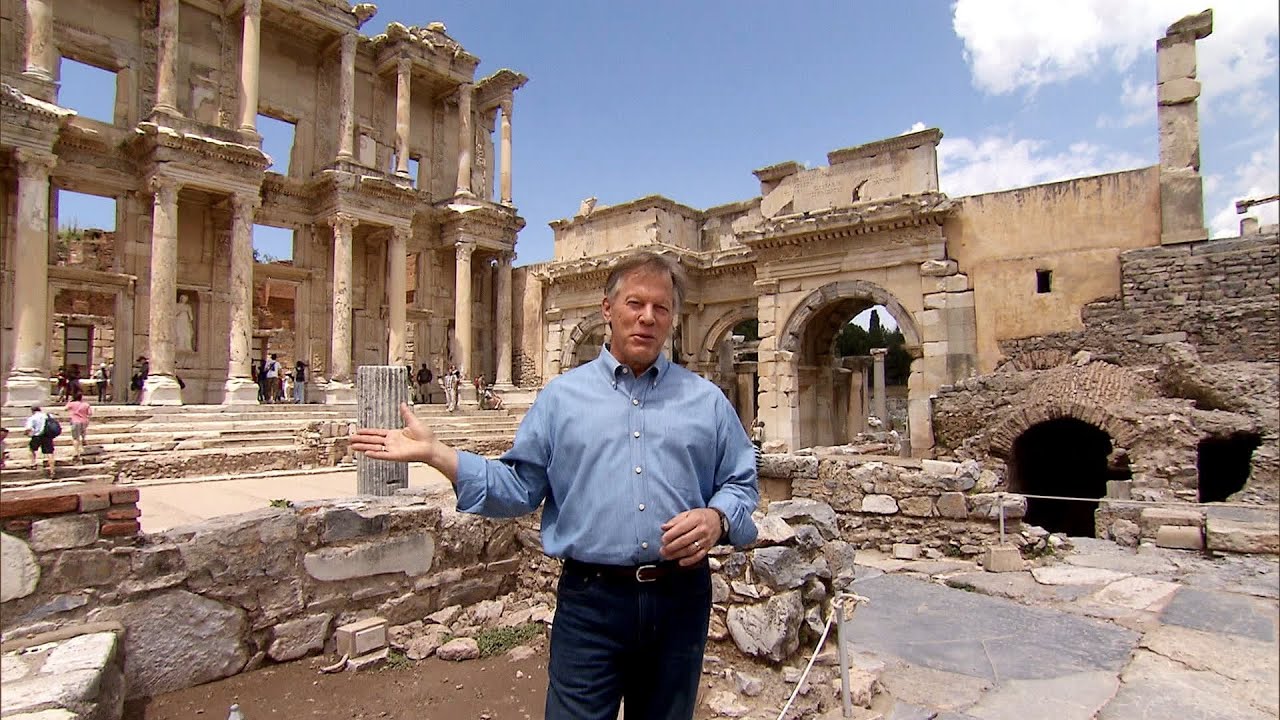
The street will take you downhill to the Library of Celsus. The most iconic monument of Ephesus. This facade is of course reconstructed, which gives us a good idea of what it would have looked like.
It was paid for by a rich and popular Ephesian named Celsus, who was governor of the Province of Asia. His tomb lies underneath the library. The white marble would have been brightly painted, and adorned with statues.
It was the 3rd largest library in the ancient world, after Alexandria and Pergamon, and contained 12,000 scrolls. A world class library, fit for a cosmopolitan world class city. Just next to the library, inside that massive modern structure, is a series of treasures that await us next.
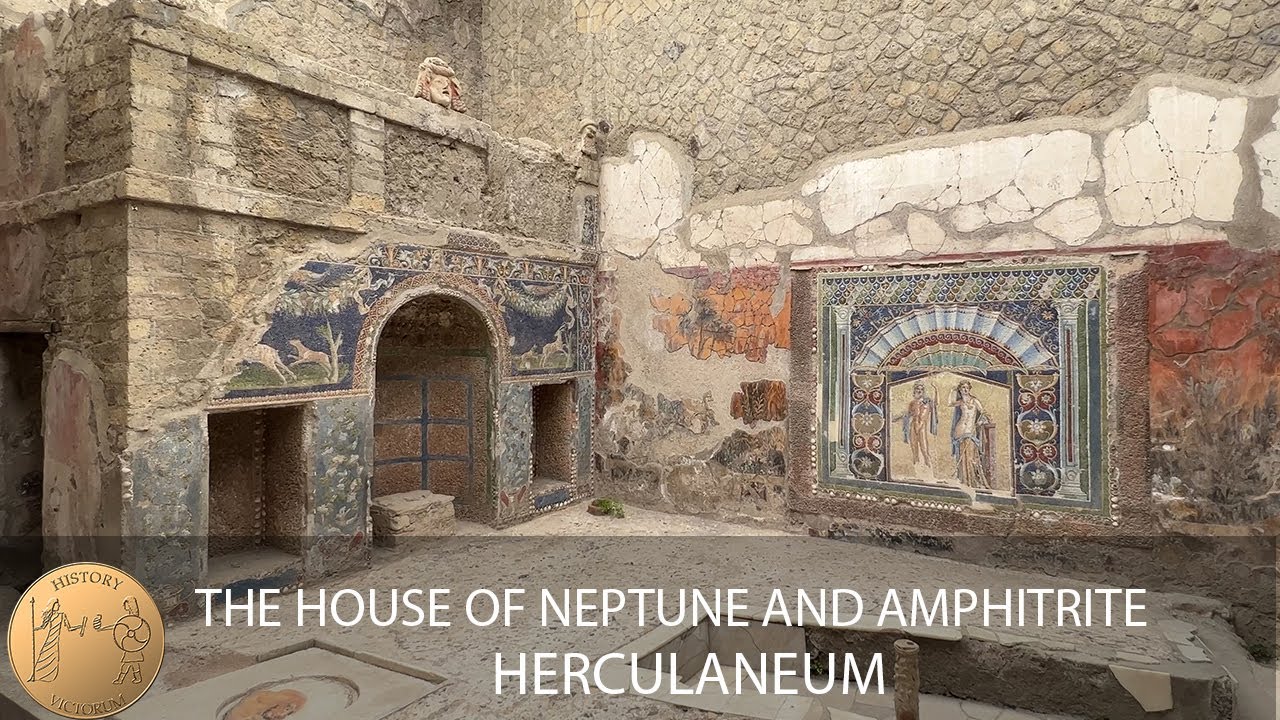
It’s a complex series of houses all bunched up together, and climbing up the slope in a series of terraces. This was where the rich elite lived, the affluent Ephesians, some of whom probably made their fortunes with import-export businesses in the port. They were discovered in the 1960’s, and excavations are still ongoing, revealing an invaluable window into what life was like for the wealthy Roman elites.
They had running water, and central heating, and were designed around a central courtyard called the Atrium, with a basin in the center called the Impluvium. Directly above was an opening in the roof to allow fresh air and sunlight, and when it rained, the basin collected the rain water. The beautifully preserved mosaics and frescoes are testament to the opulence of these houses, depicting wild animals mythological scenes angels and people.
Looking at these, you can’t help but feel like you’re meeting real Romans, face to face. Also next to the Library, is the Agora, or marketplace. This was the main square of the city, which was the center of civic and commercial life.
Here would have been the majority of merchants and shops, and was also the geographic center of the city. The harbor front during Roman times was just a few hundred meters away. This was the main street leading to the port, called Harbor Road, or the Arcadian Way.
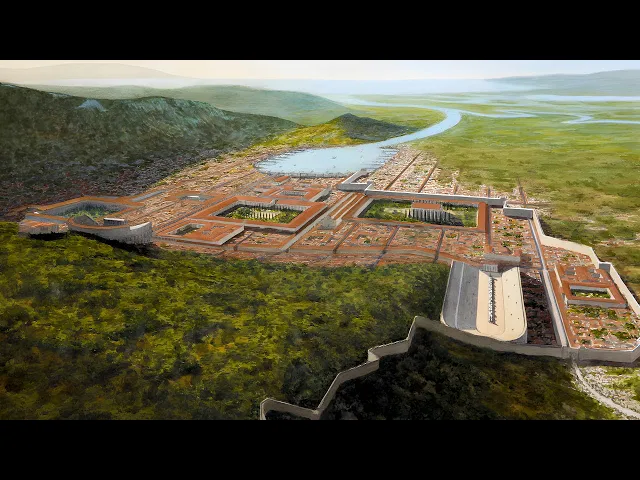
If you look at this archeological survey of the Roman city, you can see that the harbor was more like a basin, connected to the Aegean Sea by an artificial canal. By now, the river had silted up much of the valley around it, so the Romans had to dig their way out in order to connect the port with the sea. And what’s really interesting is that today, even though all of it is silted up, you can still see the outline of the Roman harbor and canal, by now just a marshy swamp.
Just a fun fact, Mark Anthony and Cleopatra, gathered their fleet here at Ephesus, in this very port, before heading out to confront Octavian in the naval battle of Actium, where they were utterly defeated, which left Octavian the undisputed champion of Rome. So Ephesus had a role to play in the transition from the Republic to the Empire. Moving on, we arrive at the most well preserved monument, The Great Theater.
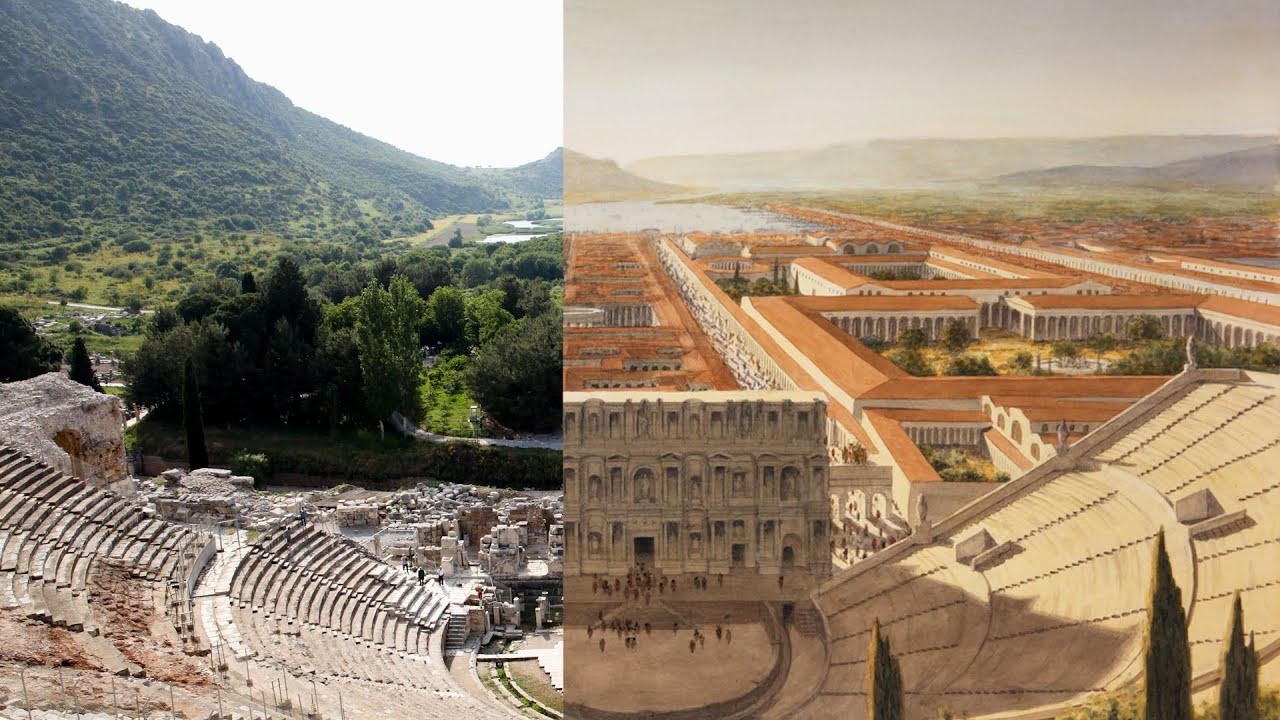
Built into the hillside, this was one of the largest theaters in antiquity, holding up to 25,000 people. Carving a theater out of the hillside was a Greek practice, but the 3-story stage front was typically Roman. One of the most impressive features was its acoustics.
The concave design allowed for excellent sound transmission, so that even those up in the high seats could hear what was being performed all the way down at the bottom. No need for modern amplification. The location of the theater was chosen on purpose, to give the audience this beautiful backdrop.
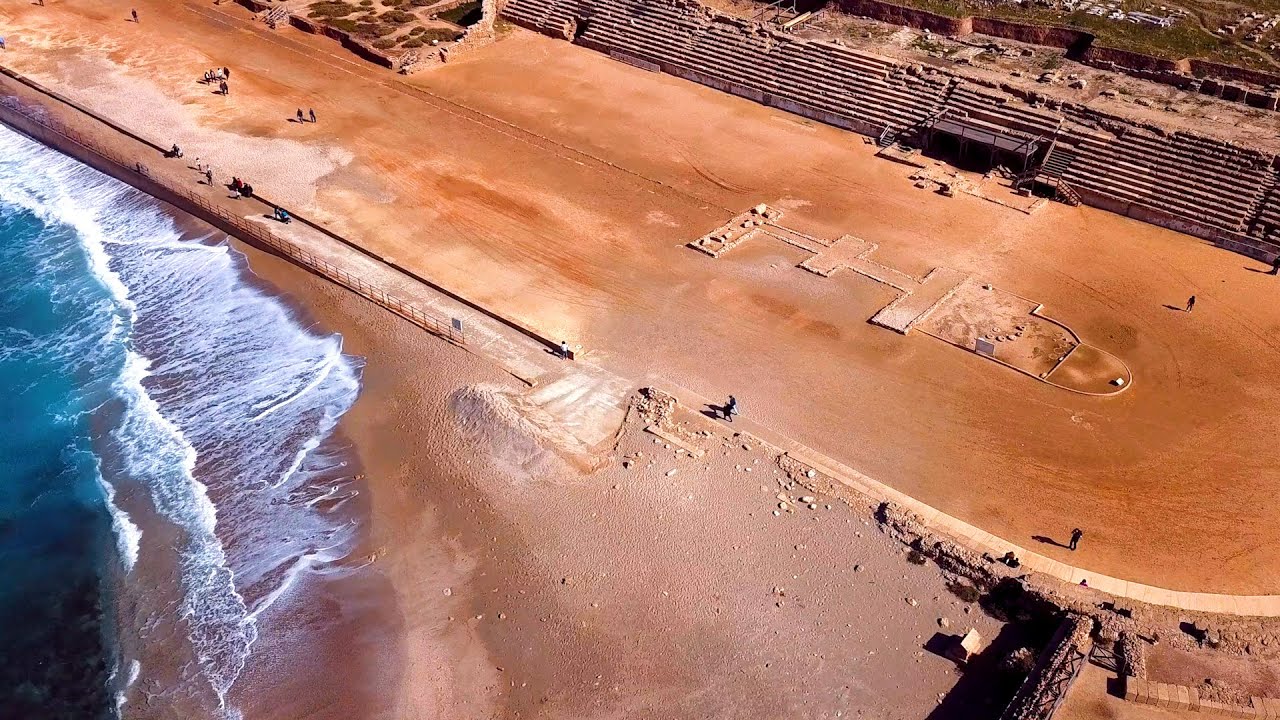
One intriguing monument is this hidden structure, half buried and overgrown. This was the hippodrome, or stadium of the city, and was used for chariot races, running competitions, as well as gladiatorial and animal fights. While every Roman city had a theater, not every city had a stadium.
So this demonstrates the prestige that Ephesus had as a large urban center. It’s 250 meters long, and not much of it remains today because in the Byzantine period, most of the stones were taken out and reused as building materials for a large church not far from here. You can see that the landscape has preserved the long and concave shape of the stadium.
The slope on the right is part of the natural hill, which would have provided the slope for the seats. You can still see some of them over here. Whereas this side needed a structure in order to provide the slope for the seats there.
You can see it better in this photo. The natural slope of the hill, and the artificial slope of the structure. And it seems that enough dirt has accumulated at the bottom, To create a field that covers the original floor level.
A kind of bathtub filled with soil. It had a capacity of 30,000 people. And would have been one of the main gathering venues for the city's population.
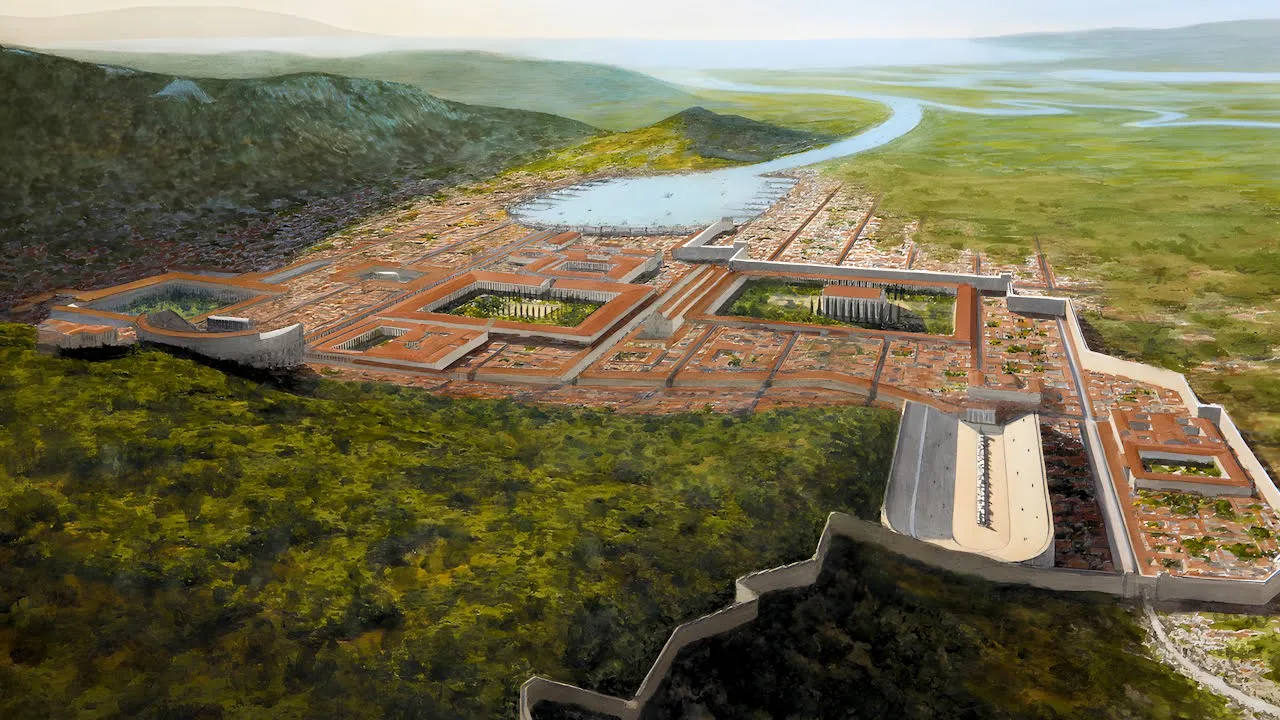
And it's quite possible that in the late Roman era, Christians would have been martyred here. Thrown to the lions, so to speak. Now that we’ve looked at most of the landmarks, you’ll have a better appreciation for this reconstruction looking west.
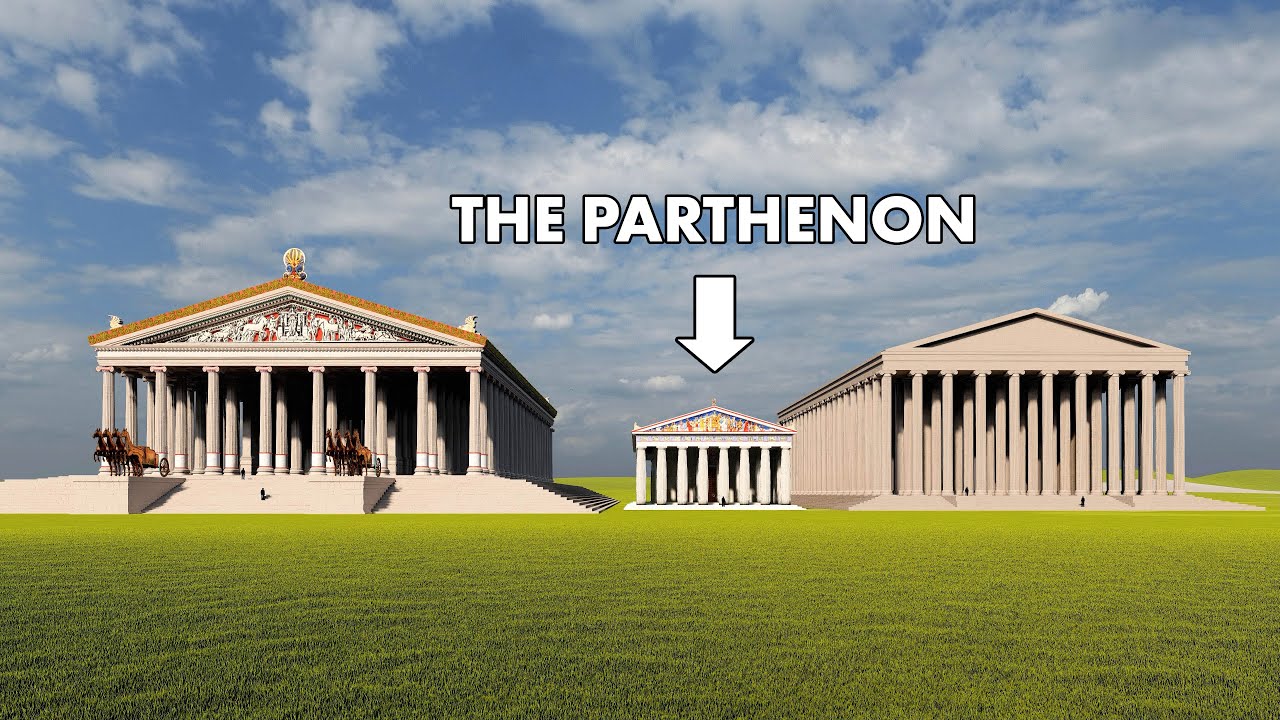
We have the theater, The Agora, The dug out harbor and canal leading to the Aegean Sea, and the stadium. From this gate, a road called the Sacred Way led to the Temple of Artemis, where the old Greek city used to be. There had been a temple to Artemis on this site for a 1000 years by this point, destroyed and rebuilt twice, and so this was the 3rd generation of the temple, which by now was already considered one of the 7 wonders of the world.
The millennial Cult of Artemis was still going strong, even under the Romans, who called her Diana. But all that would eventually be extinguished by Christianity, which is the topic of my next video. I highly recommend you go watch my video on the Greek history of Ephesus.
And when the episode on Christian Ephesus is ready, it’ll appear below it. And please subscribe to my channel.