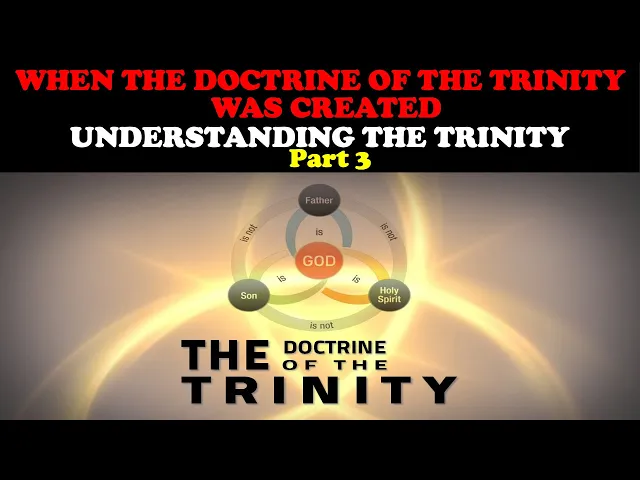
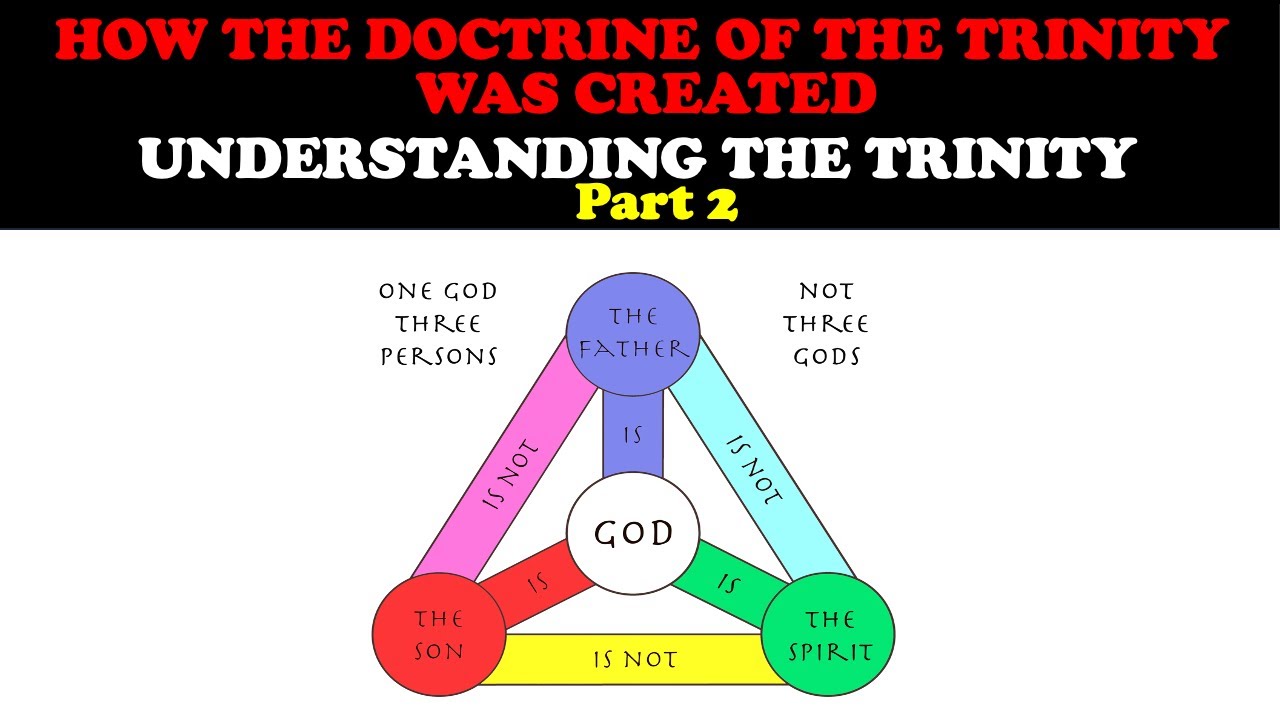
In the last part of the series about the Trinity, I dealt with the claim that there is no evidence that the doctrine of the Trinity is rooted in Greek philosophy and that it is not a doctrine of men. A percentage of people that watch "Truth Unedited" come away thinking that Jesus is not God, and anyone who thinks that Jesus is God is embracing a Greek philosophy. The Greeks did not come up with this.
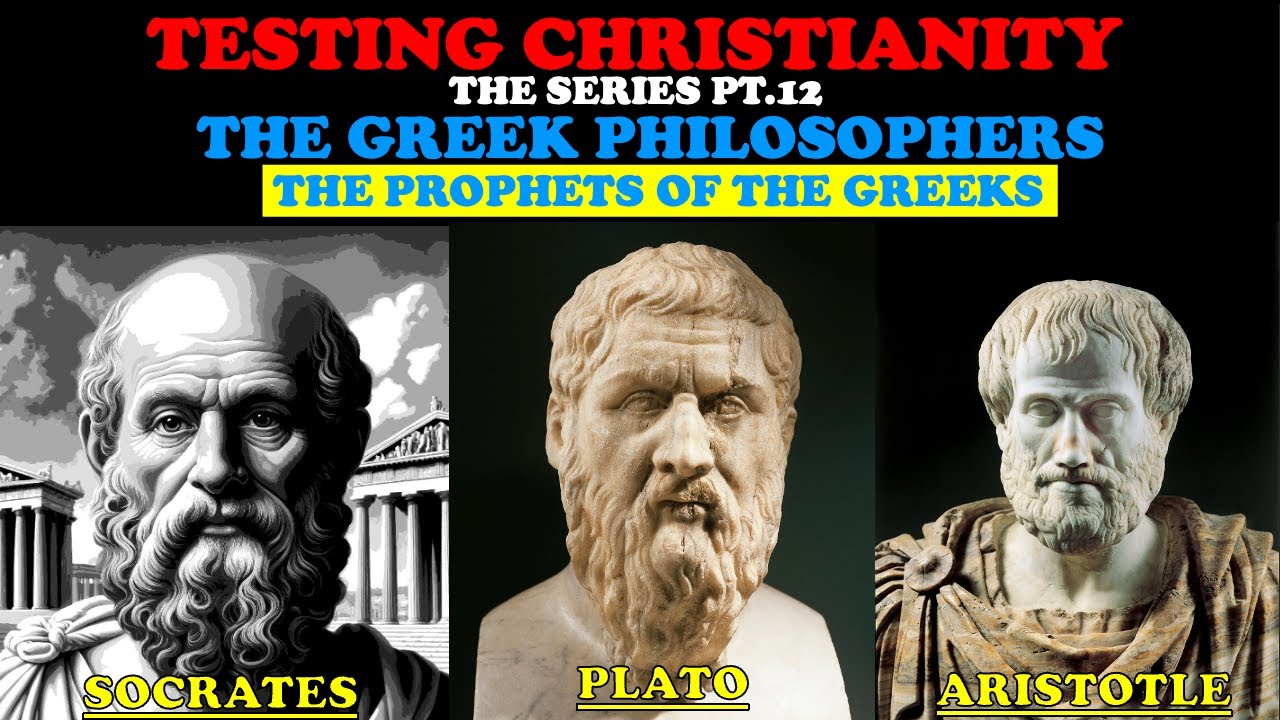
I went through the evidence and provided receipts for anyone who wanted to say that I'm making things up. Let's go through that list one more time. The study of divinity originates from the Greeks and their philosophy.
The business of philosophy is to make inquiries into the nature of divinity, as told by early Church Father Justin the Martyr. Before the second century, there is no written evidence about the Trinitarian doctrine. Origen was the first Christian to speak of the three hypostases in the Trinity.
He was also the first to use the term "homoousios" in a Christian context. Origen replaced Plato's metaphysical theory with Christian terms; he replaced monad with the Father, he replaced dyad with the Son, and he replaced the World Soul with the Holy Spirit. Hypostasis is a term from Greek philosophy and was used in Neoplatonism in Christianity.
Origen's theology is completely inspired by the philosophical question of the relation of the one to the many. This is Neoplatonism. Neoplatonism influenced the development of Trinitarian theology.
Origen's Trinity doctrine stated that the Son and Holy Spirit were subordinate to the Father. This subordination didn't relegate the Son to being a created being. In his doctrine, the Father-Son relationship was eternal and an essential aspect of God's nature.
Tertullian was the first to use the Latin term "Trinitas" to describe the relationship between the Father, Son, and Holy Spirit; he is from whom we get the term "Trinity. " Tertullian was under the influence of Stoic philosophy when he created his doctrine of the Trinity. With his theory, the Son is not God Himself, nor is He divine in the same sense that the Father is.
Rather, the Son is divine in that He is made of a portion of the matter that the Father is composed of. This makes them one substance, or not different as to essence. The Neoplatonic view of the Trinity doctrine was opposed; the opposition of the Neoplatonists' views of the Trinity led to the Council of Nicaea, and that was just the beginning of the list.
But there's so much more to present. Listen, I'm not here to play games with people. You can hate me or make it all about me if you want; I'm just trying to save as many souls as I can.
The deception in this world is real, and it will take the masses to hell. Scripture says Satan deceives the whole world, but yet Christians can't fathom that could be in reference to them as well. That's pride, and it will lead them to condemnation.
For this reason, Elohim will send them strong delusion, that they should believe the lie, that they all may be condemned who do not believe the truth but have pleasure in unrighteousness (2 Thessalonians 2:11–12). Anyways, there is a lot more to discuss because we have to discuss how this doctrine has made it to your eyes and ears that have led you to believe it. You see, people want to believe that they believe this doctrine just because they are only influenced by the Scriptures, but that is so far from the truth.
You believe this doctrine because it has been a main teaching throughout the history of Christianity, and in our modern era, there are not many voices challenging it or even allowed to disagree with it. No matter what I say and show people, they will say they believe this because they read it in the Scriptures, but they are ignoring the influence that taught them to even look at this subject: the deity of the Messiah and His divinity. It's not a Biblical subject but a subject centered around Greek philosophical thinking.
The business of philosophy is to make inquiries into the nature of divinity. My point is that you would not know this doctrine without major events in history, and that leads us to the Council of Nicaea. And so that's where we'll go.
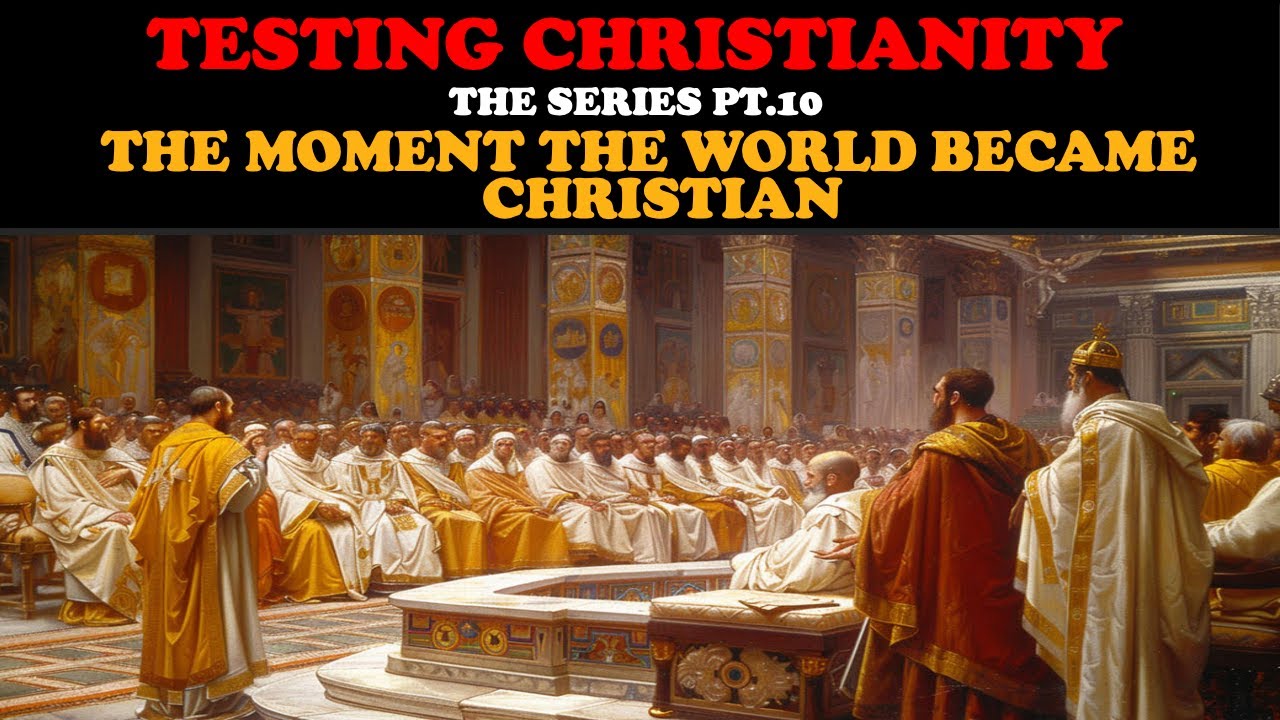
We will see how the doctrine of the Trinity was established and agreed upon at the Council of Nicaea. Let's begin. Okay, so we're going to discuss the Council of Nicaea.
For this research, I'm using a book from Leo Donald Davis, *The First Seven Ecumenical Councils (325–787): Their History and Theology*. It's a great book to reference and understand these church councils that created the doctrines of consensus within Rome. So, when we ended part two, we left with an argument about the rationalizations of the Trinity.
The Hellenistic mentality of the Gentile converts believed that, to many of them, the Old Testament was nonsense, and they turned to symbolic speculation in the Gnostic style. Thinkers like Irenaeus insisted that the God of the Old Testament, the God of the Gospels, and the Supreme Being knowable through reason were identical, and there was debate about the divinity of the Messiah. The misinterpretations questioned the humanity of Yahusha and the matter of His deity; meaning the debate was rising whether Yahusha was more of a man or more of a God.
The early Christians tried to protect the humanity of Yahusha by teaching that Yahusha of Nazareth was an ordinary man and was adopted as the Son of God at the moment of His baptism, His resurrection, or His Ascension. This heresy is known as adoptionism. Now, the Gnostics wanted to protect Him against involvement in the world of matter, which they regarded as essentially evil, and so they taught that He had.
. . Only an apparent, not real body, this heresy was called Docetism.
Straight heresies: people added their own view of the world to their view of the Messiah, and this created false doctrines. This has never stopped, but most of the struggle about Yahusha was over his relation to the Father. Some early views were so intent on keeping his identity with the Father that the distinction of his person—you know, that hypostasis talk—was lost, and he became merely a manifestation of the one God.
Basically, the idea of the Messiah was a mode of divine self-manifestation. The Father, Son, and Holy Spirit are three different modes or aspects of God; basically, God is just changing his mask. This heresy is called Moralism or Sabellianism.
Who was the third-century theologian who came up with this view? This is the narrow mind that people want to hold me to; they believe that if I don't agree with the doctrine of the Trinity, maybe it's because I'm attached to Modalism. I don't care about none of this stuff.
Other interpretations of how the Messiah was in relation to Elohim went to the opposite extreme. Others insisted so strenuously upon the distinctness of his person from that of the Father that they subordinated him to the Father; they placed him at a much lower level. This heresy was called Subordinationism.
There are many different beliefs that were trying to rationalize the understanding of Yahusha. To this day, this is something that is discussed and debated within the many sects of Christian denominations. Like with me again, people try to understand my view and rationalize it to another one of these points of views and these false ways of thinking.
Like I'm a Moralist or something—I'm not any of this. And look, maybe some of those rationalizations even sounded like they made sense to you. This is one of the main problems with Christianity: a lot of different doctrines surrounding who Yahusha was and how he related to the Father.
The overall point is that we shouldn't be trying to philosophize this and make these arguments or debates. You must understand that this is another faith than what is presented in the Scriptures—those actually tied to our Father in truth. We don't do this, and this is also a reason why this history is not told, because everyone wants me to hold a view that eventually won and became popular.
But what you will see that is undeniably true is that this is just men deciding what the overall view that we should have about our Father's relationship with his Son—what we should think about it. I don't claim to know, and it's not my desire to rationalize it. Once you step away from these mindsets, I want you to see how free you become, because all the confusion and the chaos leave.
All you can see with all this is chaos. Look at this man on this forum trying to explain the Trinity. I showed him last week.
Do you think this actually has anything to do with the Scriptures and our Father? There is nothing but confusion with the doctrine of the Trinity. Ask yourself, who is the author of confusion?
My point is that there were different doctrines about the Trinity being raised: there was Adoptionism, Modalism, Docetism, Subordinationism, Arianism, Neoplatonism, etc. Let's add that to the list—a bunch of isms that we should have no business with. But either way, what you need to know is that there was controversy, and this was the purpose of the First Council of Nicaea around the year 318 in the Alexandria suburb of Balis.
A well-liked elder of the church by the name of Arius—we spoke about him briefly in the end of part two—began teaching in opposition to the Bishop of Alexandria, who was Alexander. Specifically, he disagreed with Alexander's teaching that Yahusha, the Son of Elohim, had existed eternally, being generated eternally by the Father. Instead, Arius insisted that there was a time when the Son was not.
He believed the Messiah must be numbered among the created beings—highly exalted to be sure, but a creation nonetheless. The Bishop of Alexandria, Alexander, defended his position, and shortly after, Arius was declared a heretic in a local council in 321. Arius taught that the Son of God was created out of nothing; he, of course, found an audience for his teachings.
Over the course of the next few years, the debate became so heated that it came to the attention of Constantine, the emperor. Arius's belief was that the Messiah was thus less than Elohim, but more than a human being. He was divine, but he was not Elohim.
This was known as Arianism. It said that Arius was influenced by the Old Testament concept of a God who was absolutely one, who acts as an artisan in creating all from nothing and not by emanations from himself. Arius was said to be influenced by a Yahudim interpreter of the Scriptures, Philo of Alexandria.
This was a Hellenistic Yahudim from Alexandria. He had resolute monotheism that did not allow speculation of these other doctrines. The controversy over Arius's views grew, and there began a split between the Christian church over this doctrine of the Trinity.
Now, Constantine had just had victory over Licinius and became sole ruler of the Roman world in 324 AD. The newly converted Emperor Constantine had hoped Christianity would be the uniting force of his Empire, so his hopes were to have unified doctrine in which to place the faith of Rome under. Now, the misconception is that Constantine held this First Council of Nicaea to push his views on the bishops to create the religion that he desired, but this is not the truth.
The true reason for the Council of Nicaea was to unify. Doctrine within all the Bishops of the faith. Constantine wanted uniformity; he didn't really care about what the truth was, just as long as all the other leaders of the faith agreed upon it.
So, to understand what the Council of Nicaea (NAA) was about is not really about understanding Constantine and his goals; it's more about understanding what was going on in the faith, and I just explained that. Constantine, who had now become the sole ruler of the Roman world, was very disturbed to find that there was religious division within his politically unified realm. He found it was not just as simple as claiming belief in Jesus; there were divisions that needed to be settled.
So, Constantine sent his chief ecclesiastical adviser, Osus, the Bishop of Cordoba in Spain, who was a veteran in church politics. He sent Osus to Alexandria with personal letters for both Alexander and Arius. The letters were said to be far from understanding of the significance of the controversy; he expressed his disapproval for raising such questions at all.
Constantine did not care about those things; he just wanted peace and uniformity, and with this, I agree with Constantine. He expressed that these disagreements about the Trinity Doctrine were mere debating points, arising from misused leisure and results of intellectual exercises that should have been kept to oneself and not entrusted to the ears of the crowd. He asked, "Who can comprehend or explain subjects so sublime and obtuse in their nature?
" Look at that—the one who eventually had the doctrine of the Trinity unified believed that the subject isn't even something that people could really understand or should even try to. Constantine did not believe that this argument was worth the effort and controversy it was receiving; he believed unity was most important. So let's write this down: First thing, there was controversy before the doctrine of the Trinity was agreed on.
Anyone now making it sound as if it's solidified biblical doctrine is leaving out history. Constantine himself did not agree with the debates about the Trinity and that they should be had. Constantine wanted the disagreements to end, but the attempts of Osus failed.
So, Constantine had called for a council of all the Bishops to meet in Nicaea, which today would be the village of Iznik in northwest Turkey. He said Nicaea was more accessible for the Bishops of Italy and Europe and had more of a congenial climate. Historian Francis Dorick argued that Constantine thought he had the right to call the council because, in the spirit of the definition of Hellenistic royal competence, he regarded himself as legally entitled to interfere with religious affairs.
He represented the Divinity on Earth; it was given by God—supreme power in things material and spiritual. He thought it was his foremost duty to lead men to God, blending the church and the state, which would be a problem after Constantine and the Roman Empire faded away, and the Roman Catholic Church took its place. So, in 325 AD, Constantine held the first ecumenical council at Nicaea in Turkey.
The Council of Nicaea was in session after centuries of persecution by Roman officials. Christian bishops from across the Empire now journeyed to Nicaea under state protection to discuss theological problems with the help of the Roman Emperor. Now, they did not take minutes at this meeting, so what was discussed can only be known by those that were in attendance.
We are dependent, in a very large way, on the words of Eusebius of Caesarea for our knowledge of many of the events at this council. This is very unfortunate because Eusebius, who's called the first church historian, was a one-sided participant. His viewpoint was influenced by his desire for the favor of the Emperor.
Anastasius was another eyewitness, and he wrote about it in his letter to the Bishops of Africa in his defense of the Nicene definition. Then some church fathers who lived during or shortly after the council speak on it as well: Theodoret, Socrates Scholasticus, and Sozomen. You can find their writings in the Church Fathers' ecclesiastical history.
Constantine took an active part in its debates, but there's no evidence of his voting at the Council of Nicaea. He only confirmed the decision of the Bishops and made them binding under Roman law. Now again, the main purpose of the Council of Nicaea was to resolve a debate within the Catholic Church which was threatening the peace of the Roman Empire: It was whether Yahusha is fully God or essentially subordinate to God the Father, making him not equal to the Father in essence.
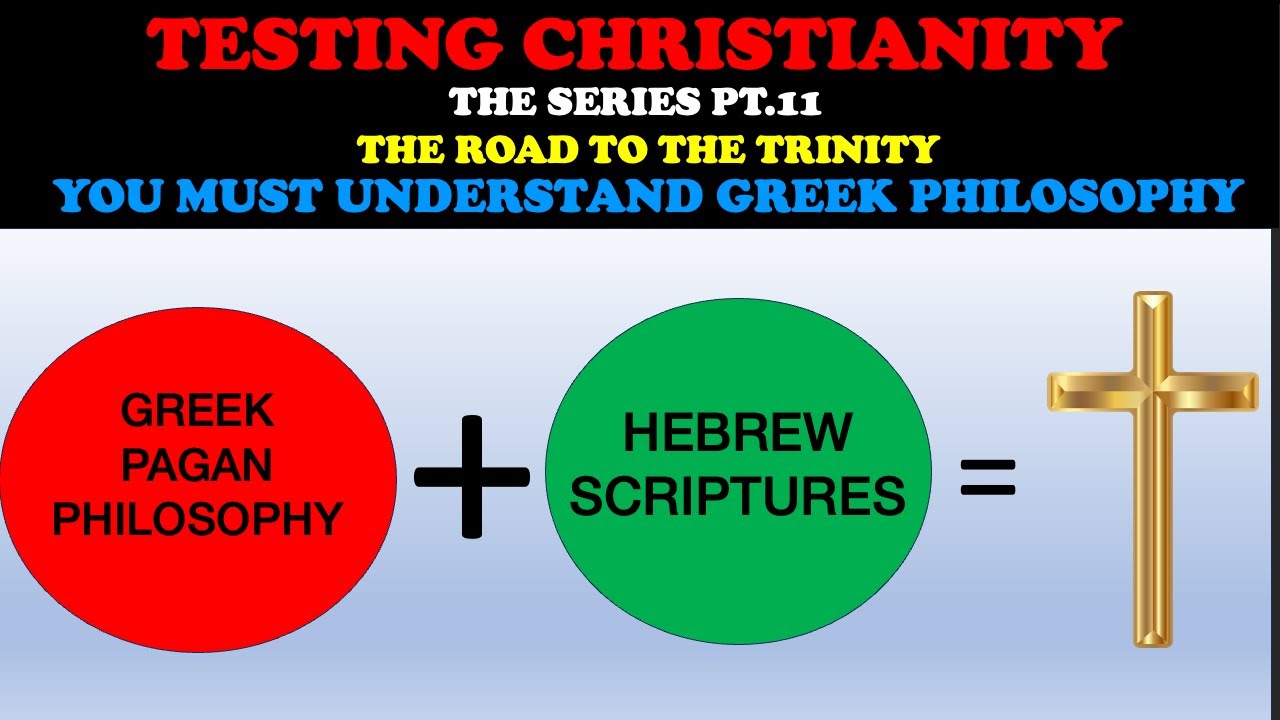
Constantine hoped a general council of the church would solve the problem created in the Eastern Church by Arianism, a view looked at as heresy, proposed by Arius of Alexandria, that affirmed that the Messiah is not Divine but a created being. As the pagans started to convert to Christianity, their pagan views coincided with their belief in Yahusha, and this greatly impacted Christianity. They mixed and included their pagan Greek philosophy with their belief in Yahusha.
So, let's talk about the council. At the council, they condemned Arius and, with reluctance from some, incorporated the non-scriptural word "homoousios. " This means "of one substance.
" This phrase asserts that the Son shares the same being as the Father and is therefore fully Divine. I spoke about this in part two, and they created the Nicene Creed to signify the absolute equality of the Son with the Father. The Nicene Creed states: "We believe in one God, the Father Almighty, maker of all things visible and invisible; and in one Lord Jesus Christ, the Son of God, begotten of the Father, only begotten, that is, from the substance of the Father; God from God, light from light, true God from true God, begotten, not made, of one substance.
" With the Father, through whom all things were made, who for us men and our salvation came down, became incarnate, and was made man, suffered, and rose on the third day, and ascended into heaven, and is coming with glory to judge the living and the dead, and in the Holy Spirit. But those who say there was when the Son of God was not, and before he was begotten he was not, or that he came into being from things that are not, or that he is of a different hypostasis or substance, or that he is mutable or alterable, the Catholic and Apostolic Church anathematized. "Anathematized" means curses or condemns, and this is why these people today try to tell me I can't be saved because I don't believe in this doctrine.
This is the Nicene Creed, and it will later become revised with some things added, but from this Creed of Nicaea, the doctrine of the Trinity became unified. The Council of Nicaea determined that Christ was begotten, not made; that he was therefore not creature but Creator. It also asserted that he was of the same substance as the Father.
So let's add it to the list: the Nicene Creed affirms the doctrine of the Trinity was first formulated by men at the Council of Nicaea. The Council of Nicaea determined that Christ was begotten, not made; that he was therefore not creature but Creator. It also asserted that he was of the same substance as the Father, and this is where the beginning of everyone's Trinity doctrine that they want to force me to accept came from.
Everyone that's asked me if Jesus is God, this is where it comes from. People literally call me a heretic because I don't align with the doctrine of men—these men that never knew Yah, were never in covenant with Him. These men decided to explain to us who Yahweh and Yahusha are and what we should believe about their relationship.
This moment in history, at the Council of Nicaea, is where these men argued and debated and settled on this. The thing is that they didn't even agree on all this when the Creed was finished; perhaps by June 19th, 18 of the bishops still opposed it. Constantine then intervened to threaten exile to anyone who would not sign it.
So let's add this to the list: there was not 100% unity of this doctrine when it was created, but Constantine threatened to exile any church member who did not sign. Arius and his die-hard supporters did not sign, and what happened to them? Yeah, they were exiled.
So I want you to examine the absolute nerve of people trying to hold me to this doctrine because they're indoctrinated by it, because they haven't looked into the history of how it became. All these people spewing all these things tell me, "Oh, you don't believe in the Trinity, or you're going to be cursed. " You're indoctrinated.
Okay, last thing I want to do is talk about Augustine. Augustine of Hippo (354 to 430 CE) was a key figure in merging Greek philosophy with Christianity. He was influenced by Greek philosophers, even though he rejected many of their ideas.
He incorporated his favorite Greek beliefs into Christian philosophy. Augustine's work helped lay the foundation for medieval and modern Christian thought; he's considered one of the most significant Christian thinkers after Paul. Now, I have a lot more to share about him in regards to Christianity as a whole, but I will deal with him in the Testing Christianity series.
Here's the thing, though: he is absolutely known to have attached Greek philosophy to Christianity. It's not even a secret; they don't even hide it. It's what he's known for and prided for.
So with that understanding, you should also understand that he had tremendous impact on the Trinity doctrine as well. His writing, called "On the Trinity," has helped shape the minds of many who sought to understand the Trinity doctrine. His impact is huge.
They say that what you hear about Trinitarian theology now—the way you think of the Holy Spirit, the way you think about the relationship between the three divine persons—depends a lot on what Augustine elaborated in his book "On the Trinity. " I've given out the PDF of this document as well. These are major works of doctrine that the Christian world holds to, but they don't know where the thoughts come from.
They just think they have some scriptural viewpoint, but no, this is all indoctrinated thoughts that you've been led to believe in. I would let this man explain some of it to you. Augustine teaches on all different kinds of topics.
We've already seen his teaching on the Church; we've seen something about his teaching on the sacraments, on Christian anthropology, on grace, on free will, and on original sin. Let's now just turn to his teaching on the Trinity because here he has, again, massive impact on the future of Western theology. What you hear about Trinitarian theology now, and the way you think of the Holy Spirit, the way you think about the relationship between the three divine persons, a lot of it depends on what Augustine elaborated in his book "On the Trinity.
" This is not controversial theology; he's not pushed into this because of a debate; the debate has basically been settled. Augustine is in love with the Trinity; he's in love with God. So this is a meditation, really a reflection on an understanding—it's faith seeking deeper understanding.
He is the one, Augustine, who conceives of the Holy Spirit as the personal love of the Father for the Son and the Son for the Father. If that's the way you've heard the Trinity explained, particularly regarding the Holy Spirit, thank Augustine for that. The way in.
. . Which Augustine conceives of it is that the Father and the Son are a single principle from which the Spirit proceeds.
Now, I just want to point out that the Orthodox in the East, at this point, there's no differentiation between Orthodox and Catholic, but the Christians of the East, as they learn about Augustine's theology—and it takes a long time because they don't read Latin—the Western Empire, by this time, no one's reading Greek. Ambrose is one of the last great Christian figures who is really fluent in reading Greek and reads the Greek Fathers. From Augustine onwards, we don't find many in the West who can even read Greek; that's why so many Greek documents are lost and forgotten—no one's copying them because no one's reading them in Greek.
It’s his theology, largely together with the Bible translated by St. Jerome, it’s his theology and the Bible of Jerome, called The Vulgate, that become the basis of Christian culture in the monasteries during these Dark Ages. That's where the light of learning is left alive.
No one else has the impact on the Western theological tradition, the Western Catholic tradition. No one has the kind of impact that Augustine has. For the next thousand years, it’s going to be the corpus of Augustine, together with the Bible, that will form the culture largely of these Latin Middle Ages.
You see, this is how this doctrine of the Trinity has been delivered to you, for you to receive it. A great deal of it is by his influence, and many more, like I've showed earlier. You need to put all of this together.
I'm just trying to get you to see that if you think any of this nonsense has anything to do with our Father, you are being highly deceived. This is all a part of the doctrine of tears that are in this world, and this is why I reject the Trinity. So hold on; let's add it to the list: Augustine, who merged Greek philosophy of Plato with Christianity, helped shape the minds of many that sought to understand the Trinity doctrine.
His book on the Trinity explains the relationship between the three Divine Persons. And here you go: this is the entire list of my evidence—this is why I reject the Trinity doctrine. The understanding of this would not have been something I could have just given by comments.
I tried to do so, and like I showed in part one, people just ignore what I'm saying and just say it's not true, and they just focus on the fact that I said Jesus is not God or whatever. So I had to take my time to pick this all apart and walk it all down. If you say that I’m a heretic because I reject the doctrine of the Trinity, even though I have given all this reasoning, you very clearly are tied to the enemy and you have exposed yourself.
It is actually true that you are the heretic that believe in this doctrine of the Trinity because this is clearly a doctrine of men. I’ve given you the timestamp in history where they agreed on this doctrine that you want to hold to; this is a doctrine of men. Prove me wrong.
I am a natural branch of Yasharel, and I have absolutely no business with these doctrines of men that desire to philosophize about my Father and His Son. I don’t have some desire to try to rationalize this and use my own knowledge and my own intellect to figure this all out. So men like this, that make these statements that because I don't believe in the Trinity doctrine that it’s impossible for me to be saved, these men are boastful and proud deceivers.
If he’s struggling with it, I pray that he comes along and gets it right. But if you don't get that right, if you don't get the identity of who your Savior is, then He cannot be your Savior. He cannot be your Savior if you don't recognize who He is; His identity is of utmost importance.
Do you have to fully understand all the tenets of the Trinity? No. If it's foggy as to the Father and so forth, okay, fine.
There are people that get saved and still struggle with that, not fully sure, because again, it’s something that we’re not used to. There’s nothing like the Lord; there’s nothing like God; there’s nothing that you can compare Him to. Who shall I compare the Lord to?
Well, nothing, because there is nothing like the Lord. But what you must believe, what you must understand, what you must wrap your head around—even if you don't fully get it—you must accept it as true that Jesus is God, that He is the Lord and He is God. Otherwise, you cannot be saved.
And so let me tell you that this doctrine of men, that these men who believed in Greek philosophy, has nothing to do with the truth of the Scriptures. This is religion; this is Greek philosophy, and it will all soon be burnt to the ground. Now that I have explained all this, I'm going to close this series about the Trinity by teaching about the actual danger of this doctrine.
People don't understand what Satan has done by creating this doctrine of men. I want you to question the people that are trying to hold you to this doctrine and look at them. Most of these people have gone to seminary training where they claimed their thing in Divinity School.
Most of these people, in the back of their videos, they show their degrees, and they’re proud of it. This is a stronghold for them; what they are proud of is actually a stronghold on them, and they don't recognize it. What they're boasting.
. . Of is actually what makes them weak and a tool of the enemy, but they boast on it like it's something to be proud of.
That's what makes them a slave to this system and the falsies of this world. Because they cannot reject all these things that the system promoted to them and that they feel proud of, they want to just come at me. I don't care about it.
Actually, you do what you want; my Father is coming to gather us soon. You deal with it. Our Father is not looking to see how well we can resolve the relationship between Himself and His Son.
He told us to believe in His Son, and truly, Yahusha did many other signs in the presence of His disciples, which are not written in this book. But these are written that you may believe that Yahusha is the Messiah, the Son of Elohim, and that believing, you may have life in His name (John 20:30-31). Nowhere does it say in believing Yahusha is the Messiah that He’s Elohim; you may have life in His name.
Nowhere does it say that. It doesn't say this. Can you see that by making this understanding deeper than what it actually says, you are bringing confusion to the word and into the hearts of women and men?
People call me a heretic because I believe this, and this is truly a sign of the times that we're in. You don't need to know all these deep doctrines of men to be saved; you need to focus on your relationship with our Father and know you can only come to our Father through His Son, whom He sent. Yahusha answered and said to them, “This is the work of Elohim that you believe in Him whom He sent” (John 6:29).
This is what you must do. I do not know the full nature of the Son in Heaven and what that means. And listen, I'm not trying to guess.
While all these people are trying to get you to focus on this, they are not focused on making sure that you're living in obedience, keeping the commandments, and ensuring that you're not being tainted by this world. They are not preparing you for the gathering that our Father is preparing for us. They are busy making hit pieces about me so they can try to elevate themselves.
I mean, I've never heard of this one channel, but apparently, his whole channel is about tearing down other ministries and belittling them. I don't even really rock with the Sakari dude, but what he did with this is rude. What kind of fruit does this display?
This kind of stuff is not edifying, and yet this is what the Christian church is upholding and the kind of content everyone's looking for. I don't normally speak about ministry; I focus on teaching what Yahweh places on my heart. But please, analyze what this man has said.
He has said that the Trinity doctrine is not influenced by Greek philosophy, and then he says if you don't believe it, you can't be saved. These are very strong remarks; it's not something you take lightly. People should not talk like this, but he has said this proudly and boldly.
But look at all the evidence that I have given here. You need better discernment on what you're following. He has very clearly spoken false things that he does not know.
Everyone needs to be careful about what you're following. These people treat me like I'm an enemy when I'm just explaining my reasoning and exactly what is behind all these things. We all understand what it is—the scriptures say what you want to evaluate is the mindset that you're evaluating the scriptures through.
This Greek philosophical mindset is not a way of Yasharel; it is not a way of the Hebrews. In either way, it’s very clearly proven that this is a doctrine of men. There is no way of getting around that.
So for people to say that you cannot be saved because of this doctrine of men, you need to hold them accountable for that. People treat this like it's a game. This is not a game; I don't treat it like a game.
I believe everyone needs to get very serious and wake up. But you do what you want. I will tell you that we are in the last days and Satan is very much on the attack and stealing souls.
You need to work out your own salvation with fear and trembling. You need to live in repentance and work to be a better follower of Yahusha every day. Grow in spiritual power and know how to defeat your enemy.
The fact that this doctrine needed to be covered in order to show that I'm not a heretic shows how false the religion of Christianity is. People keep fighting over doctrines of men—such as not keeping the Sabbath, celebrating Christmas, and believing in the Trinity doctrine. These are all doctrines of men, and people keep fighting over them instead of just applying the word as it says.
Come out of this and just focus on your personal relationship you can have with our Father through the redemptive blood of Yahusha and the indwelling of the Holy Spirit. Figuring out their persons, their hypostasis, their nature, their essence, their works, and their economies—this is philosophical ideas of men and it will be tossed in the fire along with the rest of the tares. I am pleading with you to not go down with them.
Just focus on the word and be led by the Spirit, and let our Father preserve you until He gathers us. These Christians, they're not even waiting for these things. When dealing with Christians, ask them the questions in the testing Christianity series and you can understand what they are tied to.
Anyone that's challenging anything I'm saying about Christianity, just take this test and answer the questions. Then you can see where your doctrines lie; you can examine what people are tied to. I will close the series on the Trinity as I deal with the dangers of it.
I hope this brings clarity and understanding, and you're seeing exactly what mixing Greek philosophy with the Hebrew Scriptures brings about: a doctrine of tears. Come out of it and serve our Father in truth because the hour is coming, and now is, when the true worshippers will worship the Father in spirit and truth; for the Father is seeking such to worship Him (John 4:23). Make sure you are one that is what He desires, and we will all be gathered soon.
Be ready and be blessed! Hallelujah! Praise Yah!
Okay, thanks again for watching. If this has blessed you, please don't forget to like it and share this with others. I hope this provides more clarity on this subject.
Share this with whoever you think needs to hear it. If you have not already done so, please don't forget to subscribe to this channel. Yah willing, I upload every Friday.
Also, please don't forget to follow this ministry on Facebook and Instagram. As always, I would like to sincerely thank all those who support this ministry. I'm very grateful for your love and your support through all this.
Your support has truly made a difference in this ministry and has assisted me greatly with putting together these messages. I thank you from the bottom of my heart. Thank you for being a blessing!
Okay, thanks again everyone for watching. I love you all.