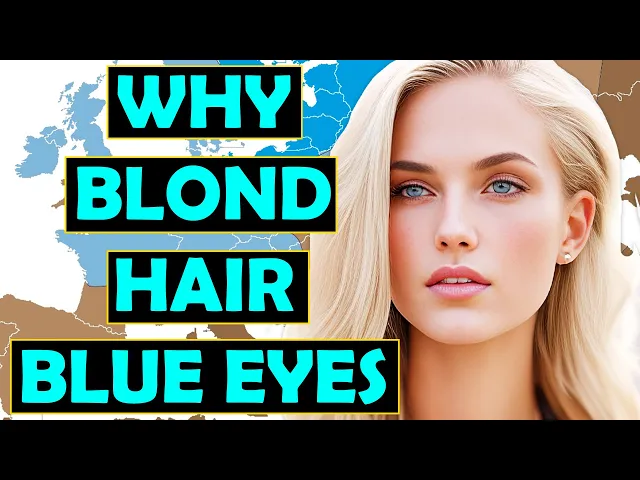
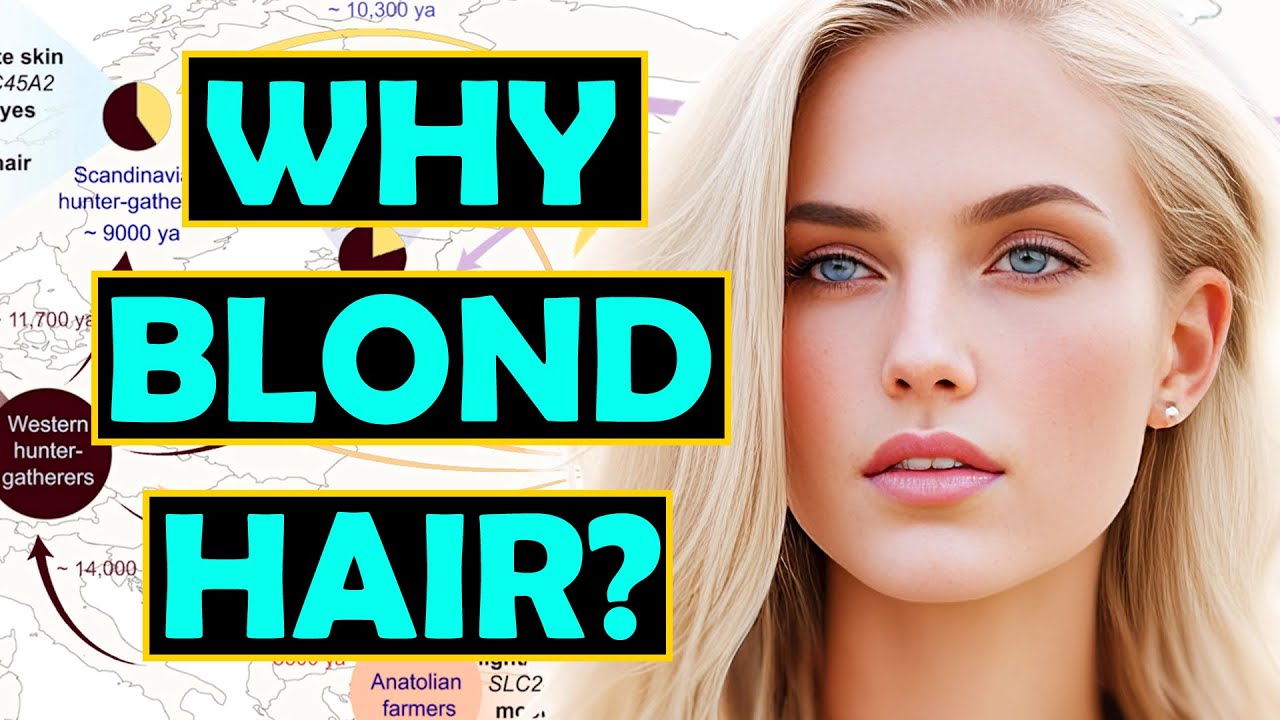
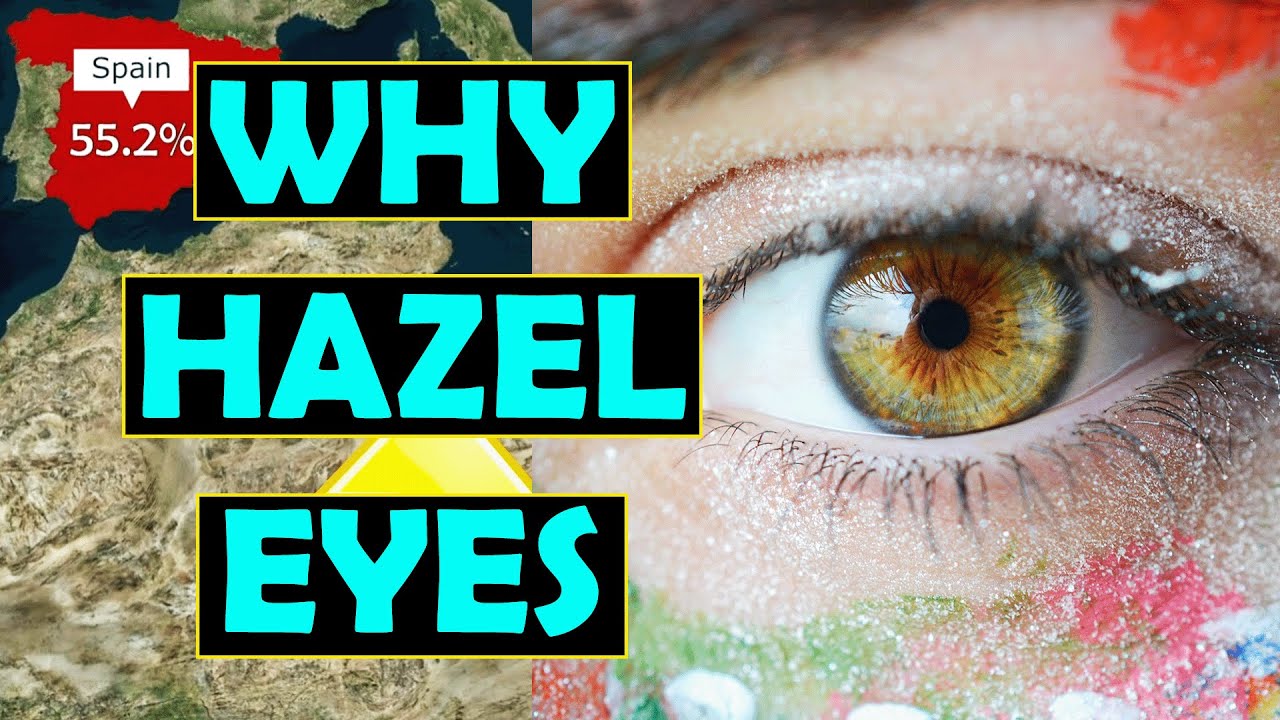
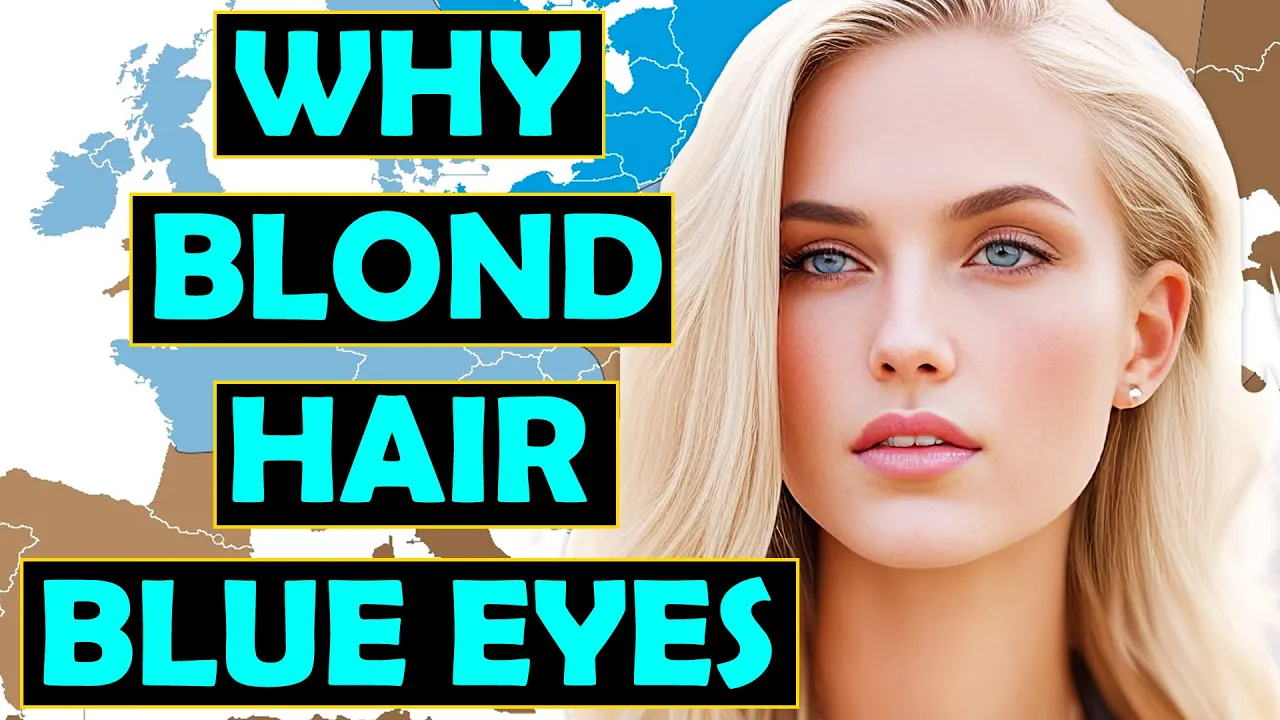
Look at this map that shows the countries with the most people with blue eyes in the world. Now look at this map that shows the countries with the most people with naturally blond hair in the world. As you can see, there is a strong overlap in Scandinavia and the northeast of Europe.
Countries like Finland, Sweden, Norway, Estonia as well as Iceland (which was settled by the Norse), have the highest levels of people with blond hair and blue eyes in the world. Why is this though, and when did this phenomenon of blond hair and blue eyes first develop, and how did it spread to Europe? Now let’s start by looking at the origins of blue eyes and blond hair.
First up is blue eyes, and I often see people on the internet quoting outdated information on the origin of blue eyes. This is because the initial research came from a team from the University of Copenhagen in 2008 who identified the genes involved in blue eye color developing in humans. To be more specific, they identified a mutation in the HERC2 gene which influences the expression of the adjacent OCA2 gene, a gene that is involved in melanin production.
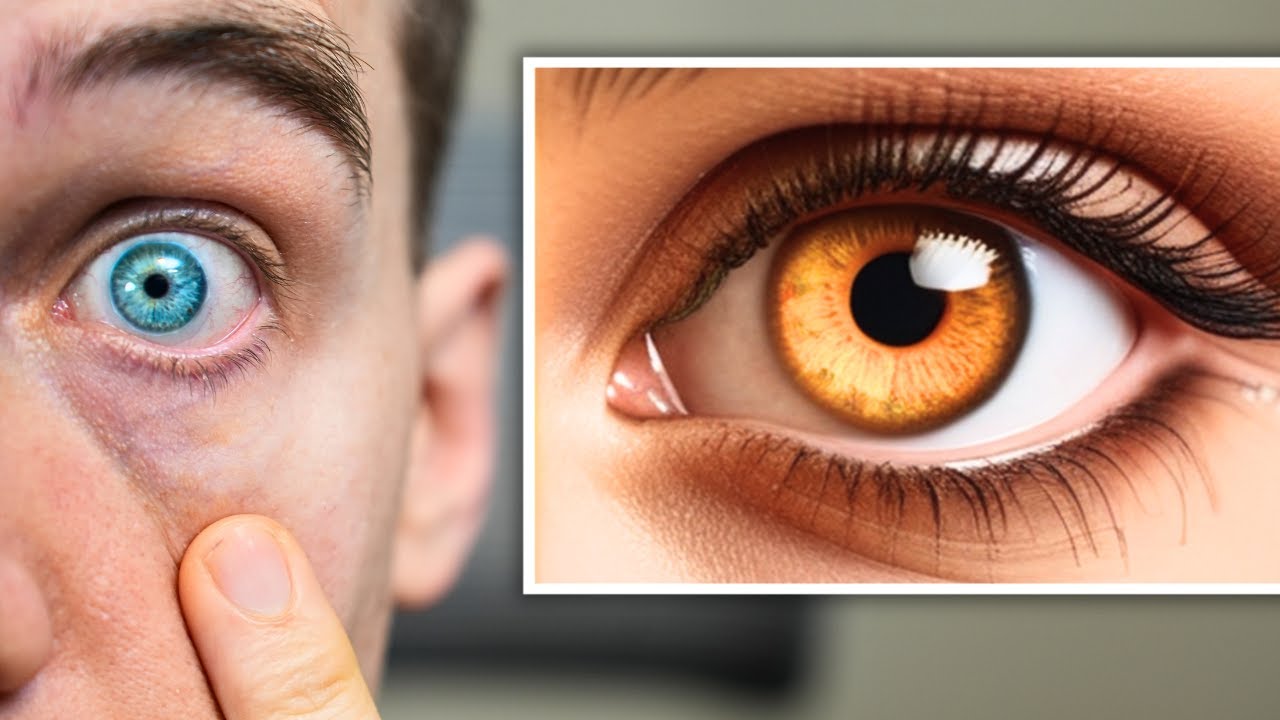
Now we know that people with blue eyes have less melanin in their irises than people with brown eyes. This is basically a result of a mutation on this HERC2 gene that acts as a switch for the OCA2 gene, downregulating the activity of this OCA2 gene and thus reducing the melanin output, leading to blue eyes. The authors hypothesized that this mutation arose in an individual who lived in the Black Sea region sometime between 6,000 and 10,000 years ago.
Although the mechanism of HERC2 OCA2 is broadly correct, this origin story is outdated, as we know that blue eyes are older than 6,000 and 10,000 years ago, even though some still people recite this today. A 2016 study for instance that looked at the genetic history of Ice Age Europe found this mutation in the HERC2 area in individuals who lived 14,000-13,000 years ago in the Caucasus and Italy. And a 2020 study that looked at Skin colour and Vitamin D suggested that blue eyes could have first developed around 42,000 years ago, arguably around the time that modern humans entered Europe.
So we know that blue eyes have a long history in Europe, potentially evolving very soon after modern humans arrived in Europe according to some theories at least. We also know that blue eyes were very common among Western Hunter Gatherers, the ancient hunter gatherers who lived in parts of western and central Europe. Yet we know that the majority of these Western Hunter Gatherers had dark hair, not blond hair.
Perhaps a very small amount of Western Hunter Gatherers had blond hair, but this combination of blue eyes and blond hair was exceedingly rare in early Western Hunter Gatherers if present at all. So when does blond hair enter the picture and how did this trait arrive in Europe in a meaningful way? Well ancient DNA analysis has revealed that the oldest fossil known to carry the mutated allele rs12821256 of the KITLG gene, which is responsible for blond hair in modern Europeans, is a 17,000 year old Ancient North Eurasian specimen from Southern Siberia.
More specifically, the remains were from a complex of archaeological sites known as the Afontova Gora. The blond allele was found in a site known as Afontova Gora 3, where archaeologists found the remains of two different females: the atlas of an adult female and the mandible and five lower teeth of a teenage girl estimated to be around 14–15 years old. But how did this blond hair allele arrive in Europe?
Well it seems that the hundreds of millions of copies of this blond allele entered continental Europe by way of a massive population migration from the Eurasian steppe, by a people who had substantial Ancient North Eurasian ancestry. It appears that this blond allele first entered Europe through migrations of Eastern Hunter-Gatherers. 3 Eastern Hunter-Gatherers from Sweden, Russia and Ukraine all had this allele associated with blond hair for example, as detailed in the supplementary information of a study on The Genomic History of Southeastern Europe, which analysed 225 individuals from southeastern Europe who lived between 12,000 and 500 BC.
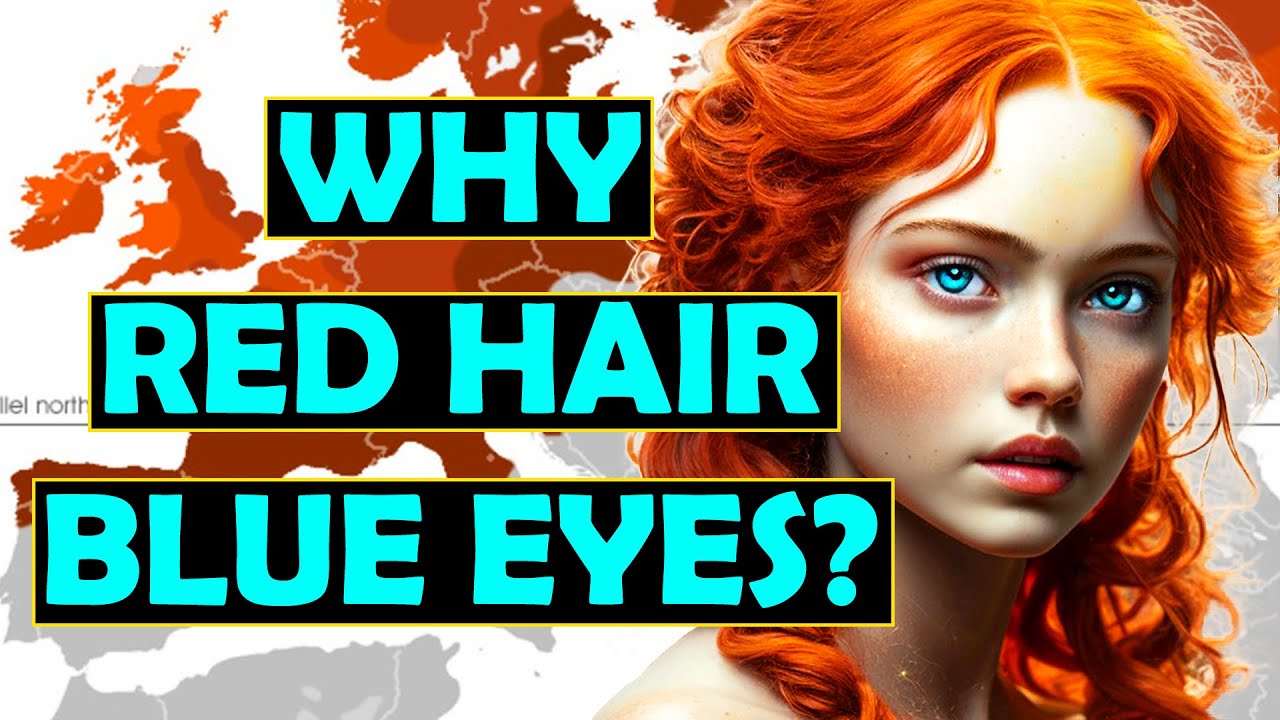
Yet Eastern Hunter Gatherers largely had brown eyes, not blue eyes. So when did we see this combination of blue eyes and blond hair first arise in any meaningful way in Europe? Well it was the mixing of these populations of Western Hunter Gatherers and Eastern Hunter Gatherers that first created this appearance of blond hair and blue eyes for the first time in Europe in any significant way.
What is even more interesting is that if we look at the map today of the countries with the highest number of people with blue eyes and blond hair, namely in Scandinavia, Finland and around the Baltic area, these regions would have been the exact locations where there would have been mixing between these eastern and western hunter gatherer groups thousands of years ago. We known for instance that Scandinavian hunter-gatherers are a group that was formed due to an initial migration of western hunter gatherers that moved into Scandinavia after the last ice age from the south, and then a later migration from the north of Eastern Hunter Gatherers. Thus, this combination of blue eyes and blond hair has deep historical roots in places like Scandinavia due to the mixing of groups from the east and the west, where the genetics for blue eyes and blond hair first met in a significant way.
Now if you’re enjoying this video, please consider subscribing. But the story doesn’t end here though. What impact did the Indo-Europeans have on blond hair and blue eyes?
Now anyone who has seen any of the my previous videos on the genetic history series will know that during the Bronze Age, there was massive migrations from the steppe associated with the Yamnaya beginning around 3,000 BC. This had a major impact on most parts of Europe, and followed the previous major wave of migration across Europe from the First Farmers from around Anatolia, who largely had brown eyes and brown hair. But what did Yamnaya look like and were they involved in the spread of blond hair and blue eyes?
Well initially there was an argument that these migrations from the Bronze Age helped spread blond hair into Europe, yet more recent research has suggested this wasn’t quite the case. A 2022 study for instance found that the Yamnaya largely had brown-eyes and brown hair, with the Yamnaya potentially looking more like this reconstruction. This is not to say that some Yamnaya didn’t have blond hair, or at least didn’t carry the genetic mutation for blond hair, but the Yamnaya mostly had brown hair and probably had less of an impact in the spread of blond hair into Europe than initially thought, although they potentially brought a little of these genes in, as part of their ancestry was Ancient North Eurasian.
What is interesting though is that cultures that were connected to the Yamnaya seemed to have higher levels of both blue eyes and blond hair than the Yamnaya. It seems that the Bell Beakers had blue eyes and blond hair at higher levels than the Yamnaya for example, and helped bring these traits into Britain, after the previous major migration into Britain was with the Early European Farmers, who largely had dark hair and eyes as they were originally from around Anatolia. The Corded Ware Culture and the Battle Axe culture also seemed to have higher level of blue eyes and blond hair compared to the Yamnaya.
A 2019 study for example that looked at the genomic ancestry of the Scandinavian Battle Axe Culture and their relation to the broader Corded Ware horizon analysed 11 individuals from modern-day Sweden, Estonia, and Poland, who were dated to 3330–1665 BC. They found that these people “displayed a mixed appearance with both light and dark hair and brown and blue eyes,” with some people within these cultures having this combination of blue eyes and blond hair. Perhaps the reason that the Bell Beakers and the Corded Ware culture had higher rates of these traits than the Yamnaya is because even though they had some steppe ancestry, they also mixed with the local populations of Europe, picking up these traits in higher numbers.
Other factors could have acted as selective pressures as well though that helped these traits of blond hair and blue eyes be selected for over time and become more common. Before we look at these I would quickly likely to thank my Patreon members for voting for this video topic in a recent poll. If you would like to vote for what video topics I make videos on, I will put on link in the description below to my Patreon page.
Thanks for your support. Now sexual attractiveness could have helped blond hair and blue eyes became more common after the initial mixing of Western and Eastern Hunter Gatherers, with people with these traits perhaps more likely to reproduce and in greater numbers. We know today for instance that blonde is generally the most popular colour for women to dye their hair, and this fondness of blonde hair seems to go back thousands of years down through history, as I detail on my video on the origins of blond hair.
Blue eyes are also considered attractive by many, with this combination of blond hair and blue eyes still striking today. Blue eyes also would have probably had an adaptive advantage as well in northern Europe, given how dark the winter months are in parts of Sweden or Finland say. So overall, this combination of blond hair and blue eyes has a long history and involves various factors, from genetic mutations, to the mixing of ancient populations, to selective pressures perhaps helping to select this combination over time, increasing its frequency.
Other factors such as the Vikings having a genetic impact on so many parts of Europe could also have compounded all this, spreading this Scandinavian ancestry into places such as Iceland and Britian and Ireland for example. But speaking of blue eyes, what is the reason for blue eyes? To find out, please click here… Thanks for watching, please let me know your thoughts below.