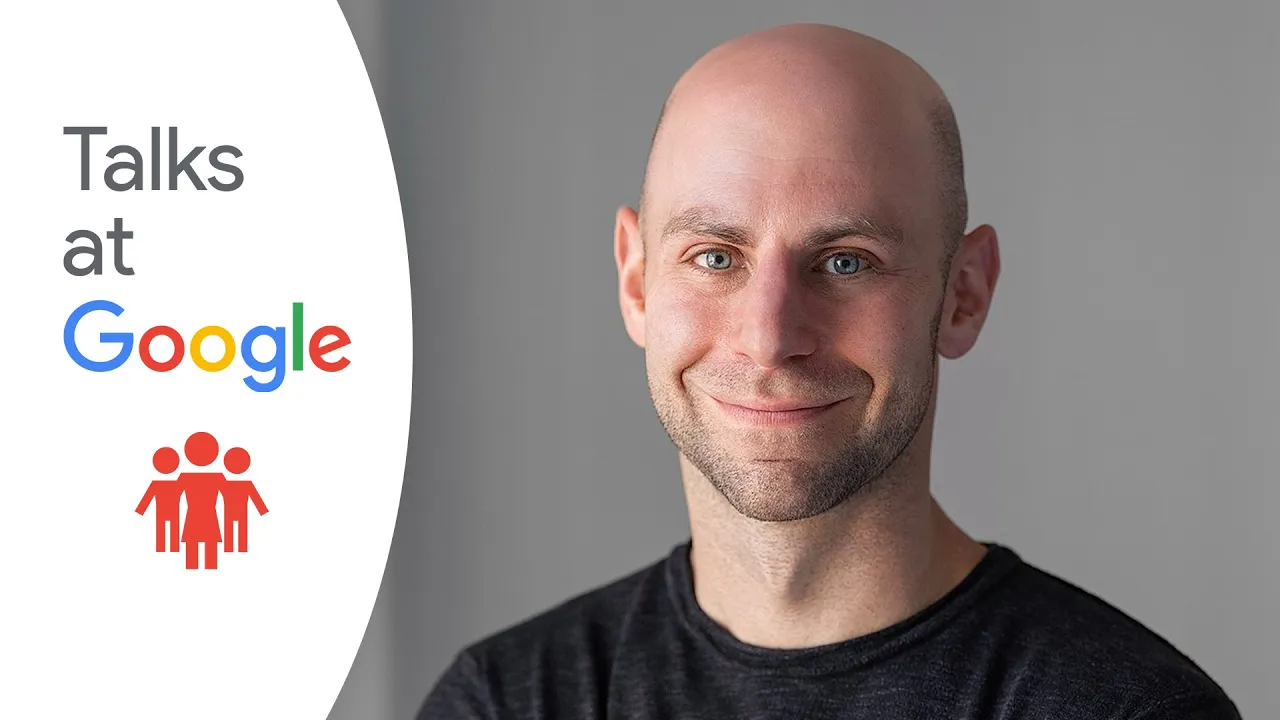
[Music] Adam welcome to talks at Google thank you such a thrill so your new book hidden potential uh it's all about cultivating the genius and everyone you talk about Champion chess players artists Business Leaders NASA astronauts and through these stories uh I started to see that success comes in in many forms it's not just for those who have you know natural aptitude or a head start you talk about with the right motivation mindset and support each of us can achieve a lot more than we think so I'm wondering Adam what do we need to do
get what do we need to do get started on that journey I mean I don't know I just study this so good luck I'm not sure no I think for me the the starting point is to recognize that we're often the worst judges of of our own potential because we're seeing ourselves from the inside and very often that means we don't just have blind spots we're also we're unaware of our own strengths um and I think the bias that exists especially in the Western World um toward thinking about potential in terms of natural Talent um
leaves us to think that if I'm not good at something right away then this is not a strength for me and therefore I should focus on something else and the reality is um it doesn't really matter where you start the ultimate question of potential is um how far can you travel and so given that your own judgment is going to be biased I think the best thing you can do is find knowledgeable people who are capable of holding up a mirror and letting you know what you know what might be in your future five 10
years down the road um and take that as a better parameter um than your own judgment of yourself the playful spirit has always been a really core part of of Google's DNA and I'm curious from your research how do you square this with the need for hard work and persistence at the at the surface it can feel a little bit like they're at odds talk to us a little bit more about that it does feel like they're at odds but I I actually think that deliberate play is is how you make hard work motivating um
and how you sustain your energy and enthusiasm over time and it's very googly to say look we we're not going to assume that there's a fundamental choice you can either work hard or you can play and have fun right we we actually want hard work to become fun yeah and I I can tell you the way the way to do that is not um to turn practice into a grind um and I think that unfortunately that's how a lot of people have approached deliberate practice to say okay I know I need a hon a skill
um it's probably not going to be 10,000 hours because it turns out to be a lot more complicated depending on the person and the skill the number of hours and Reps is going to vary dramatically what we do know though is that you need a given number of reps to to move toward expertise um and a lot of people just think they they have to push themselves to do that the problem with that is you're at risk for Burnout over the Long Haul and even before you get to burnout there's another syndrome that psychologists call
bore out which is exactly what it sounds like it's so monotonous that you're just bored on your mind and you don't want to do it anymore and you start to disengage Evelyn Glenny is one of my favorite examples that I wrote about she's a a musician who um you know found going through percussion drills a little bit dull and so she started giving herself challenges like I'm going to try to harmonize Buck on a snare drum and that maintained her interest and she's won the equivalent of the Nobel Prize of Music um she's been a
superstar for almost half a century now um and that's to me what deliberate play looks like it's it's saying I'm not just going to accept that The Daily Grind has to be miserable I want to turn it into a source of daily Joy what are some of the the skill sets and mindsets you think that we should be thinking about instilling in our leaders here and another places well I think the you know one of the things I I saw when I was doing research for for the book was there's I mean there's some sort
of kindergarten level character skills that every leader needs um I think about them as being proactive pro-social disciplined and determined and those are table Stakes but I think we we need to go a little bit further if we want to ask what is it that separates great leaders from their peers and I think there what I'm really interested in um is you know not just being indiscriminately pro-social not just being um a servant leader but being focused on the mission and saying okay how am I going to help make a group more than the sum
of its parts right that's what Pro social skills are about when it comes to being proactive I think that what proactive leaders do most effectively is um they are human sponges which means they're not just seeking out and absorbing information from everywhere but just like a c sponge they also have highly tuned filters to weed out um particles that are harmful um and ultimately keep nutrients in and so I want leaders who you know instead of silencing critics will engage their critics but also recognize that not all critics are thinking critically or speaking constructively um
and that that requires initiative and then I think you know when it comes to discipline and determination what I'm really interested in there is is leaders who are not content to stay within their comfort zones and play to their strengths but who want to stretch beyond their strengths and continue evolving and adapting um and that requires them to embrace some discomfort it requires them to have the discipline to say there are times when I need to aim for the best and times when it's okay to settle for good enough um and maybe even tolerate some
minor mistakes that are part of growth that are part of risk-taking that are part of challenging myself and experimenting and so I guess those are the kinds of character skills that I'm looking for talk to us a little bit more about this idea of perfectionism and how it gets in the way yeah what what the research on perfectionism shows pretty consistently is perfectionists do tend to do better in school um you can see this in meta analysis studies of studies um if you are a perfectionist you will get better grades on average but when you
send them out into the real world there is no relationship between perfectionism and job performance and Career Success perfectionists are really good at mastering known problems so if you know what's on the test right you can you can continue studying until you've you've really committed the material to memory and then you're more likely to Ace it the problem is in the real world um we don't tell you what's going to be on the test and you may not get graded on a regular basis so perfectionists end up making the mistake of of basically trying to
fix the flaws that are controllable and predictable instead of um being open and flexible um and that limits their learning um what you see is that perfectionists are so concerned about getting the right answer that they end up asking the wrong questions um they're so worried about the one detail that that they might get incorrect that they end up missing the forest and the trees and so yeah where I've landed is I think we all need to develop the character skill of being imperfectionists and by that I mean we have to tolerate the right imperfections
um you don't want to fire the wrong person you don't want to make a catastrophic high stakes decision but there are mistakes that we're all going to make that are not only tolerable but necessary on the path to growth and we need to figure out how to identify those so that then we can invest in them and learn from them well I I'll give you one that I learned from my diving coach Eric best so I I by the way I thought I thought perfectionism was going to be an asset as a diver I thought
right yes like the fact that I want perfect is gonna get me closer to perfect tens and it turned out to be a huge liability for me as a diver because I was constantly beating myself up for falling short of perfection and that rumination was counterproductive I was also I would B halfway down the diving board I would stop and turn around because I messed up my Approach and then I got fewer Dives in so I was actually limiting my own practice and my own development um by trying to get it right every time as
opposed to just doing it and getting better over time if nothing else what would it be what would be the one thing that you hope this inspires that's a great question um I'm curious to hear your reaction to that what what was the one thing you took away from it for me it was it was really working on on on character and thinking about how we show up on those hard days I think the the the underpinning of that was was around courage I don't think we've talked a lot about that in recent years but
this need to really figure out how to step into that discomfort not knowing all the answers not relying on what we've been taught uh being okay being wrong um says a lot about about who we are and no longer is it a nice to have it's it's a must have and and seeing the research that backs that was was was really um was really helpful was really helpful and I think it could unlock so much in organizations and in Society if we if we did that better well that's that's the answer I clearly want to
give then like done um maybe to build to build on that I I think the main thing that I want people to take away is that your potential is not just the Peaks you reach it's also The Valleys who cross and what that means is you can't judge your future possibility by where you are today um you can't judge it by what you've achieved yesterday um what you can do is pay attention to the obstacles you've overcome and take that as a signal that there's going to be an upward slope in your future how can
someone first build the confidence and belief that they can achieve greater things now than that we've already done I think that what most people believe is that in order to realize their hidden potential um they need to build their confidence and then they can start to pursue a new challenge or take on a new um a new risk and empirically I think that's backward um the causal effect flows more strongly in the other direction in other words it's it's through taking on the challenge that you actually start to build your confidence it's through making progress
that you start to realize oh I'm more capable than I thought if if you know you're going to do it one day there's no reason why today couldn't be that day and I wasn't just going to become magically ready to take the leap I needed to take the leap in order to feel ready yeah I think a lot of people um end up self-limiting so yeah imposter syndrome comes up immediately whenever whenever this topic is is raised um I wrote about it a little bit and think again um basima Tuk did This brilliant research showing
that why do we turn this into a syndrome why do we have have to act like it's a chronic debilitating disease where people walk around thinking like you've heard of impostor syndrome but I am an actual fraud and it's only a matter of minutes until until everyone finds out what basima said is we ought to think about this more I mean yes there are people who experience it as that debilitating but what most of us could do is say okay you feel like an impostor when there's a gap between other people's expectations of you and
your expectations of yourself it's like imposter syndrome is a paradox on the one hand you're saying I don't know what I'm doing I don't believe in myself on the other hand you're saying but I definitely know that I don't know what I'm doing like what I'm going to trust my own judgment of myself and that does not make any sense like those two things should not code exists if you know you don't know what you're doing you should discount your own judgment of whether you know what you're doing and you should trust the other people
who have an independent neutral more objective view of what your capabilities are and so Brian I think the the message that that basima sends on that is when you feel like an impostor it's a sign that other people think you're pretty amazing and it's a chance to to earn those Impressions and I would even go further I would say if multiple people believe in you it is probably time to believe them can you share any more about how we can think about an individual's journey to Mastery across all three of these and is there one
particular skill relevant more than others given the current pace of change in the tech industry um interesting so I didn't have good data on on the prevalence of these character skills when I finished writing the book but um last month I launched a hidden potential quiz on my website where we've had over 38,000 people in the last few weeks take the quiz and it's a short fun assessment um you can take it if you go to Adam grant. net for those of you who are interested but what it does is it assesses you on your
tendency to be a sponge an imperfectionist and a discomfort seeker and then it gives you feedback on which of those character skills is your strongest and which one might be an area for growth and what I can tell you from from analyzing the data last last week actually is um the most common character strength of those three is being a sponge um and the least common is being an imperfectionist um that seems to be the one that people struggle with the most worldwide across Industries and my guess is this is a little bit less of
a challenge for people in Tech where like you've heard over and over again like the perfect is the enemy of the good um talk about how like we want to fail fast um we want to you know ship as opposed to you know always perfecting um I wonder if if it's not discomfort seeking that's the biggest challenge in Tech um I think from the you know the time I've spent at Google and also the time I've spent in Silicon Valley more generally um doing research Gathering data um giving talks advising I think that very often
um people sort of end up almost putting themselves in a version of the Peter Principle so Brian you you know the Peter Principle well is the the phenomenon where every time people are good at a job they get promoted and then they keep getting promoted until they're not good at a job anymore and then they get stuck there and they're stranded at their level of incompetence my experience of of the tech world is that people are extremely afraid of um of of not being competent and so oftentimes what they do is they say okay I'm
gonna play to my strengths and I'm gonna do the things that I'm really good at and when they start to get that Pang of discomfort um it could be a new leadership challenge in front of them it could be a new product that they task to build it could be um selling in a domain that they're not familiar with it might even be managing a hybrid or remote team as opposed to an in-person team for the first time um they often kind of feel this like this knee-jerk reflexive like well I don't know if I'm
good at that and so like I don't want to embarrass myself I don't want to be in an awkward situation so I'm going to avoid that all together I actually set a goal now to launch a couple of projects every year that fail and let me be clear I'm not aiming for failure what I'm doing is I'm treating that as a gauge that I'm embracing discomfort and that I'm you know accepting imperfection I feel like if if if everything I do succeeds then I've been playing it too safe I haven't been taking risks I haven't
been stretching myself I haven't been you know pushing myself to learn something new and so I guess it's it's not a goal so much as an expectation um I have an expectation that I will launch a few things that you know that flop or disappointments or don't go as planned um what if we gave everyone the permission to do that what really inspired you to to write this book from the beginning and was there anything that you had to unlearn definitely there always is that's I mean for me that's one of the the highlights of
writing a book is I have to abandon some old beliefs and adopt some new ones um through through the research process um and there's nothing like by the way there's nothing like like telling other people um here's what here's what the science says um to convince yourself in fact that you were wrong so that's that's a a joy for me as as part of the writing process um I think the the reason I took on hidden potential is um I I just have gotten sick of seeing potential squander um and I've noticed that so many
of you know of the people that I've I've seen extraordinary capability in um have either felt underqualified or overlooked um at various points in their lives and I wanted to try to do something about that at scale what's one piece of advice that you want the listeners here today to to walk away with I'll start there and say that you know the problem with asking for feedback if you look at the data is that you tend to elicit a lot of critics and cheerleaders the critics attack your worst self yeah the cheerleaders applaud your best
self and you don't always learn a lot from them um the critics can demoralize you um the cheerleaders can leave you complacent also um so there's a risk that not only do you fail to grow as much as you wanted but you failed to get the motivation you were looking for when you ask for advice you shift the time Horizon instead of asking what did I do right or wrong yesterday you put the focus on what can I do better tomorrow and that leads to more constructive more actionable suggestions because instead of being critics or
cheerleaders you are turning people into coaches and that's what we all need a great coach is somebody who sees your potential and helps you become a better version of yourself and I think that's what we all need in our lives to realize our own hidden potential so my advice would be to find a coach who believes you're capable of more than you think you are and who's able to give you guidance um about how to reach that [Music] potential [Music]