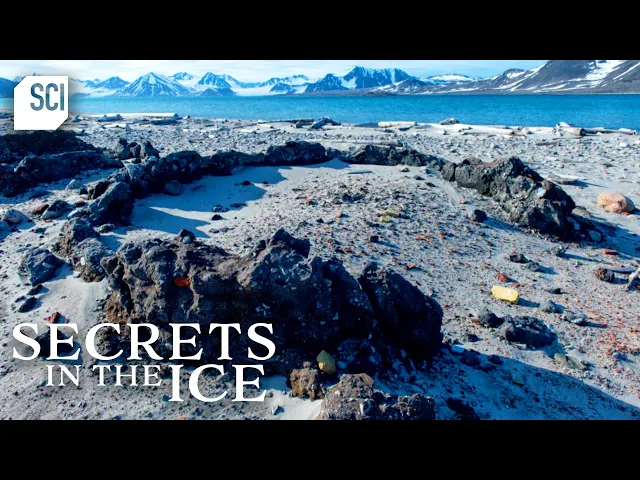
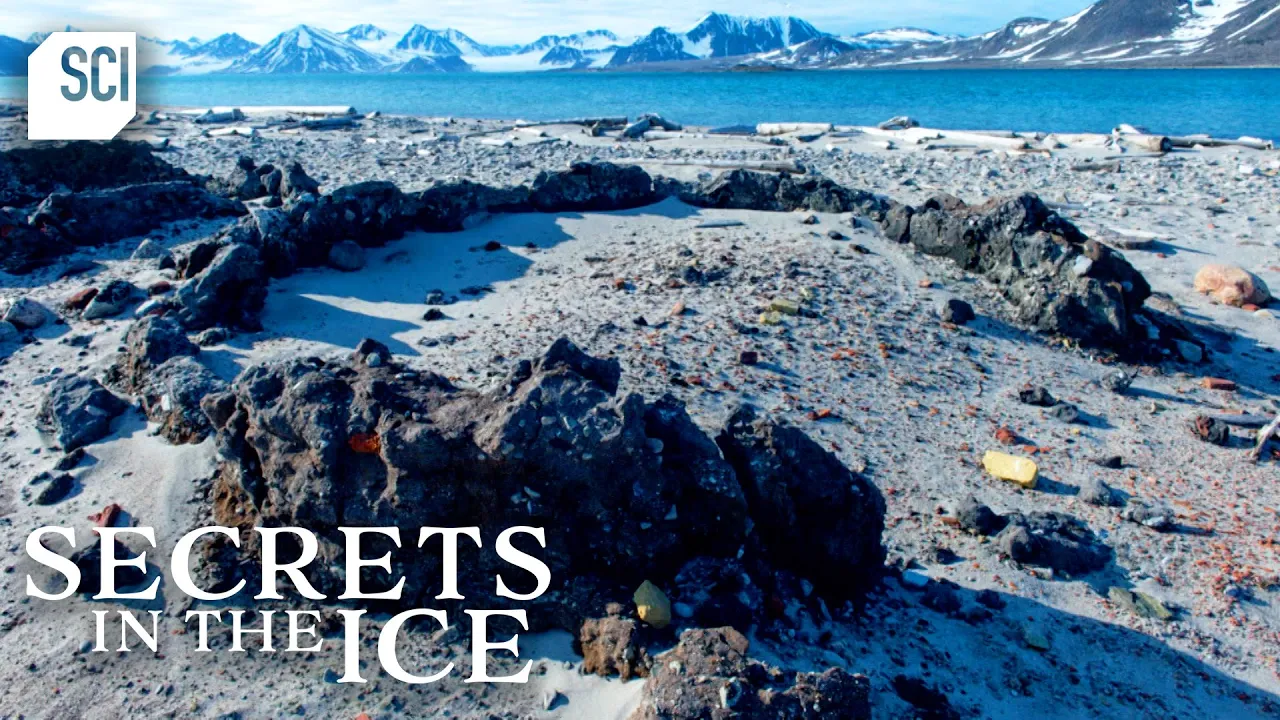
a group of Norwegian archaeologists are investigating a cluster of strange formations on a remote Arctic Island at first glance they wonder if the unique shapes were formed by powerful geologic or natural [Music] forces it's possible they're the remnants of an ancient Rock pool or maybe even small meteorite craters but that doesn't account for the burnt ashalt material that looks m manmade if they aren't naturally formed they were obviously built by people for some purpose so what were these circles used for the archaeologists wonder if the circles were buildings used by an indigenous people who once
called these islands home in Northern Canada Greenland and parts of Siberia we see eagloo doed structures made of ice and Inuit hunting tents do leave stone rings so is it possible these are Inuit structures but an eagloo wouldn't leave a rocky Trace like this and an Inuit building would be made of stone not this ashalt material so if it's not an Inuit Camp maybe a more modern group lived here between 850 and 1100 the Vikings expanded their territory from Norway to Iceland and West to Greenland Viking buildings were typically built in an oval shape to
resemble their warships these formation are round almost circular so it's unlikely that this was a site of a Viking Village the team scour the area inside the formations the burnt remains of bone straw-like sticks and moldy charcoal are spread across the whole Space it's strange for a couple of reasons that's too big of an area to be the central Hearth of a house and this is an unusual mix of fuels fatty bone marrow Burns well and the tiny straw-like sticks were probably broom spindles while The Moldy charcoal was likely Driftwood they were using anything they
could find as fuel this massive fire would have generated a tremendous amount of heat but what was happening here that needed a fire that big and that hot to learn more the researchers expand their investigation of the site further Inland they're astonished when they make the Grim discovery of dozens of shallow [Music] Graves they contain the decayed remains of 101 bodies that have wasted away to skeletons it's a ghastly site something really horrific must have happened to kill off so many people in this remote Community the permafrost preserve these people's clothes I mean their skeletons
are still dressed in heavy W coats shirts trousers hats it looks like they were dressed to work in a really frigid climate adding to the mystery each body has been buried in an individual coffin made of wood the wooden coffins really stand out this community was so desperate for firewood they were burning broomsticks but they saved enough wood for 101 coffins it's a strange contradiction several bodies are forensically examined allowing researchers to date them to the early 1600s many show signs of scurvy a deadly illness caused by a lack of vitamin C whoever they were
this community was living a rough life working in the freezing cold subsisting on a bad diet but did these people build the formations on the beach over 400 years ago the researchers head back to the beaches in the hopes of Excavating more artifacts close to the circles they discover the remains of large rounded pieces of copper they're burnt and blackened in places and they've corroded after years of exposure to the Salty ocean in Arctic air but their shape is still clear these look like giant copper cauldrons and they're certainly too big for a kitchen which
means they probably had an industrial use so what was being cooked in these cauldrons on the beach as the archaeologists dig into the permafrost near the horseshoe formations they uncover various curiously shaped knives they look like little hockey sticks with long handles and curved blades these types of knives are typically used in abatar or Fisheries to butcher meat so what was being butchered here after Norwegian archaeologists discover a mass grave site containing over 100 bodies dating back to the the early 1600s they then uncover several large blades possibly used for butchering they wonder if the
bodies the blades and the strange formations on the beach are somehow connected the team scour the beaches and stumble across their answer half buried in the sand they find these enormous bones buried in the ground scattered at random some of the bones are long wide and curved they're whale Bowes and it looks like they're from a few different species a close inspection of the bones reveals the scrapes scratches and marks that only knives or blades could make so could these ashalt formations on the beach be the most obvious remains of a 17th century whaling station
starting in the early 1600s the Dutch British Danish and Norwegians all battled for control of a revolutionary new commodity whale oil had become the most desired fuel for lamps and a main ingredient in soap giving way to the rise of the blubber Wars throughout the 1600s the British and Dutch were obsessed with controlling the whale oil Market they sent fleets to the edges of the earth looking for undiscovered hunting grounds the nutrient-rich Atlantic and Arctic oceans are a favorite place for whales of all kinds to feed during the warmer Seasons so once the sea ice
receded the Whalers gave Chase in the early 17th century Whalers couldn't easily boil and render the fat while at sea but the spalart islands are on the whales migration route and made for an excellent place for the slaughtered whales to be butchered boiled and turned into oil the site on Amsterdam Island was called smeberg blubber toown and Dutch and for nearly 40 years it was the main whaling station of the fallard archip poo rumors about blubber toown started to spread in the 1660s and by the 19th century it was said that it was home to
18,000 people complete with paved streets bakeries bars and brothel but the reality of blubber toown was a far cry from The Legend at most this station supported around 200 Whalers during the spring and summer months butchering and processing whales by their hundreds those oddly shaped knives were likely f or mincing knives used to butcher the whale carcasses then the blubber would be boiled and melted into oil inside those huge copper kettles the stench must have been awful the working conditions would have been extremely harsh and dangerous with limited shelter and food the researchers believe the
dark ashalt horseshoe formations were the foundations for blubber ovens they would have housed huge fires fueled by anything the Whalers could find to heat the copper kettles in which they would render the whale blubber into oil the blackened ashalt likee substance that formed the Horseshoe circles was an incredible combination of sand and gravel bound together with whale oil and baked into a building material this would have been a really strong and resilient material definitely capable of supporting the copper kettles full of boiling water and blubber smearin BG's time as an important wailing station was shortlived
by the 1660s the whale population around spard was hunted to near Extinction as Whalers were forced to hunt farther from the archipelago it was easier to butcher the whales at Sea rather than make the trip to smear andberg blubber toown was abandoned and the swalberg archipelago's main whaling post was left to decay in the Frozen winds and Ice of the Arctic over the course of 40 odd years hundreds of Whalers worked in in awful conditions in this harsh place for some poor souls the danger the cold and the diet would prove too much and they
were buried in the permafrost by their peers ironically raw whale blubber is loaded with vitamin C so if these Whalers had eaten even a little more of their catch they probably wouldn't have died at least not of scurvy Greenland's vast interior is a seemingly impenetrable sheet of ice in 1993 a team of American geologists pull ice cor samples from a glacier deep in the heart of the [Music] island they're hoping microscopic debris locked in the ice can reveal more about the earth's climate Greenland's Glaciers are ancient the layers of snow in them store secrets from
Millennia scientists drill cores hundreds or even thousands of feet through this ice in order to unlock the secrets that are stored within it a 500t sample of core can contain a geological record going back centuries they're like time traveling ice tubes the ice core sample contains a layer made of a mysterious microscopic substance the geologists haven't seen before the scientists are trying to find ancient greenhouse gases but the material in the ice core is solid like a microscopic powder what is it the scientists are able to date the ice layer that contains the unidentified particles
to between 532 and 5 42 this period is already known to researchers as a mysterious time of climate change the Earth's temperature plummeted to its coldest in over 2300 years it's known as the year of darkness in 536 people from across Europe the Middle East and Asia experienced a NeverEnding fog a cold summer and near permanent Darkness one Roman official detailed a Perpetual bluec colored Sun that dimmed the full moon and resulted in a summer without heat it must have been terrifying people literally thought it was the apocalypse there were reports of snowcapped trees in
the middle of summer without enough light or warmth crops failed all across Europe as a result thousands of people died of starvation the cause of the so-called year of Darkness has never been truly explained was the secret trapped in Greenland's ice this whole time until now the leading theory was that an enormous volcanic eruption blotted out the sun does the Greenland ice core contain traces of volcanic ash proving once and for all that a volcano caused the year of darkness when a volcano erupts volcanic ash and sulfur dioxide are spewed into the atmosphere here they
reflect the Sun's light and heat back into space cooling the planet this super lightweight Dustin debris can hang in the atmosphere and circulate for years eventually it can settle down out of the atmosphere and be locked away in these ice and rock cores for thousands of years the scientists test the core samples for volcanic debris such as bismo and sulfur they find traces of sulfate but in minuscule amounts when compared to other eruptions that had drastic effects on the global climate certainly not enough to blot the Sun out for months but the substance that's locked
in this single layer of an ice core is still unidentified so if this year of Darkness 536 wasn't caused by a volcanic ash cloud what else could it be another theory is a big impact from a meteorite threw up enough dust to block the sun when huge meteors smash into the Earth the explosive impacts can force a massive amount of debris into the sky which blocks the Sun and cools the planet the geologists analyze the ice core sample looking for evidence of extraterrestrial material by comparing the substance in the ice core to known meteorite fragments
on Earth they they can tell if the sample is meteoric but the unknown substance is determined to be from Earth not space the researchers are stumped the two most logical causes of this debris in the atmosphere that may have caused the year of Darkness just aren't possible so what can this strange substance in the ice core tell [Music] them the scientist study the chemistry of the ice core and make a surprising discovery the mysterious sub instance is a calcium Laden sediment containing microscopic Marine fossils the place in Greenland this sample was pulled from is hundreds
of miles Inland so what are ocean dwelling life forms doing there but here's where it gets even stranger the scientists found 91 species all from warm tropical waters thousands of miles to the South it's [Music] baffling