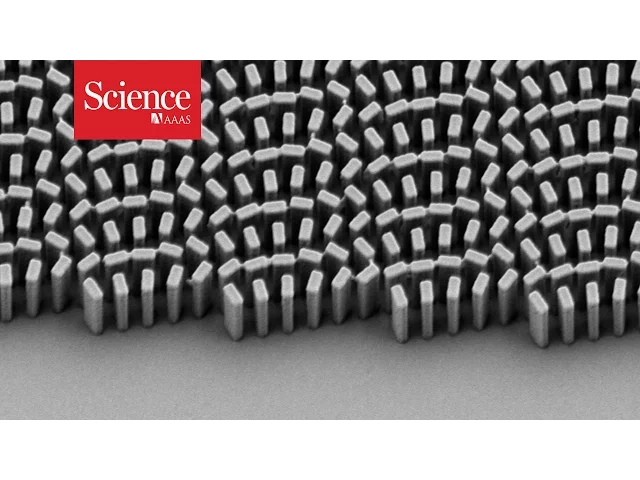
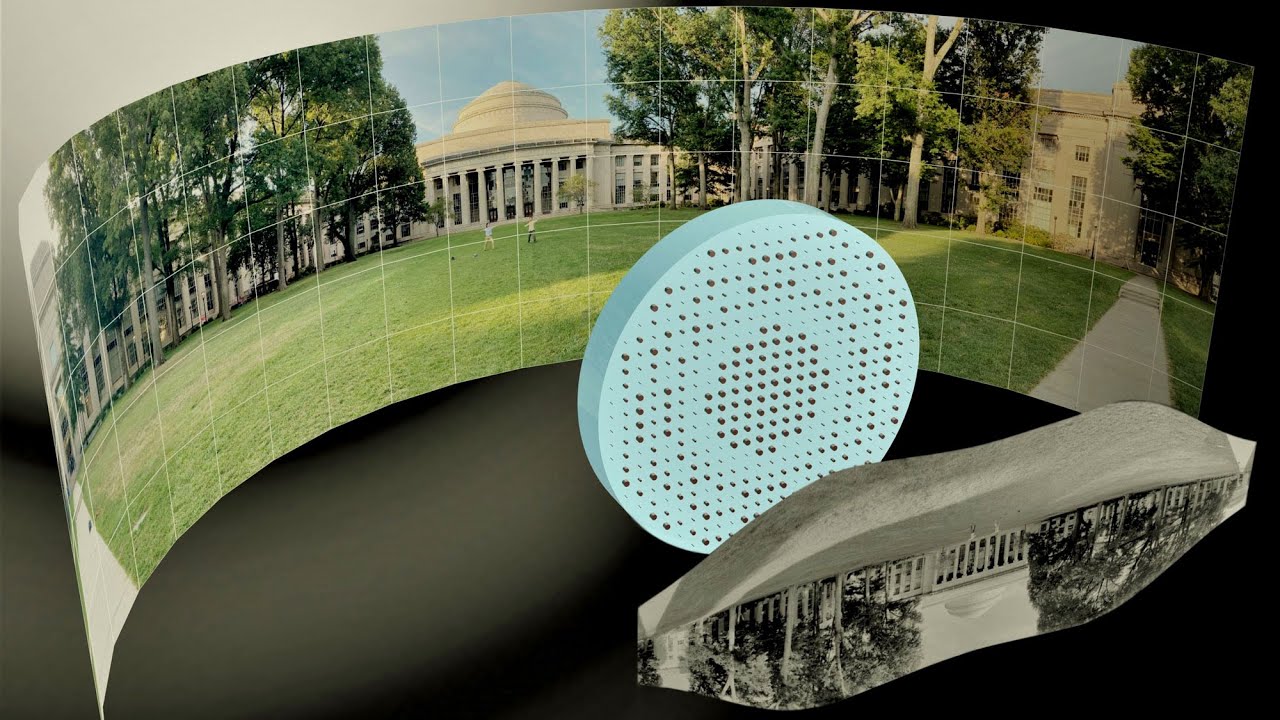
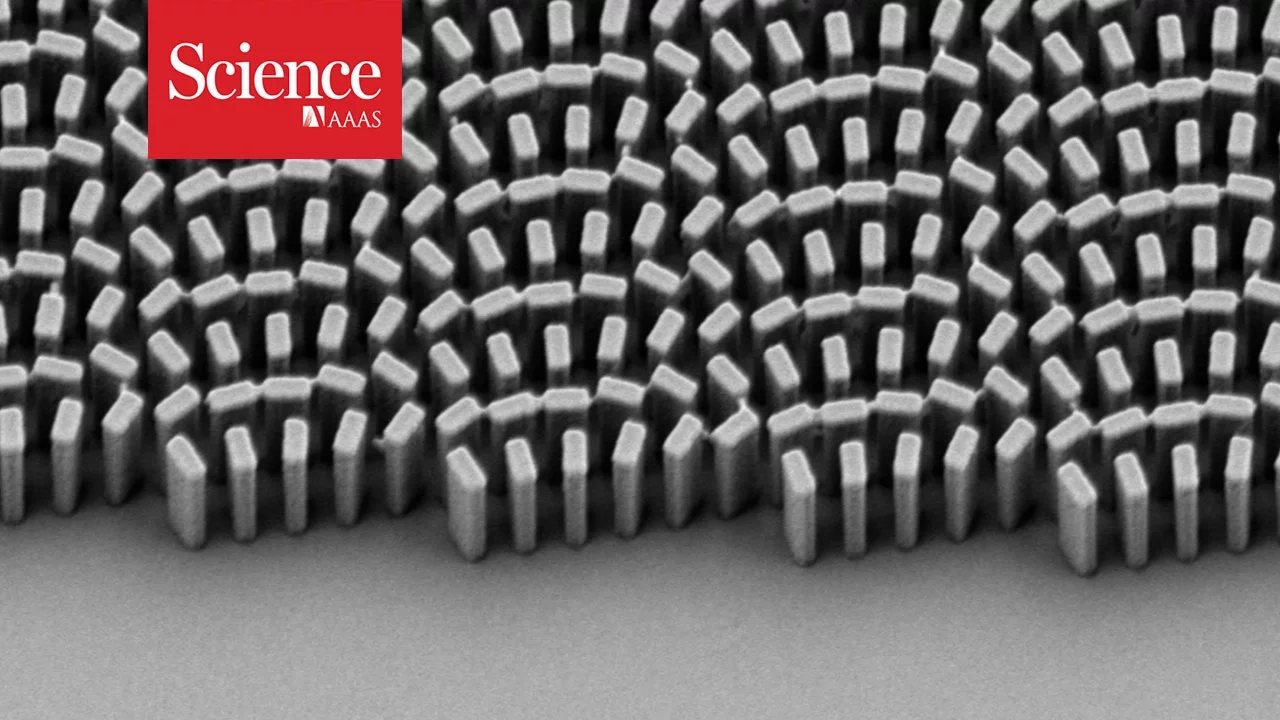
Technology is shrinking - smaller phones, smaller laptops, smaller everything, but shrinking lenses, like those found in cameras and microscopes, has been a problem. Material scientists are trying to replace glass lenses with something lighter and smaller based on "meta surfaces" or engineered materials In this meta-surface lens, tiny towers of titanium dioxide are arranged in a specific pattern to focus light. Different patterns focus different colors of light.
In a traditional microscope lens the glass varies in thickness between the middle and edges. Inside the lens the wavefront of light is shaped via different thicknesses of glass. This focuses the light at one specific point beyond the lens.
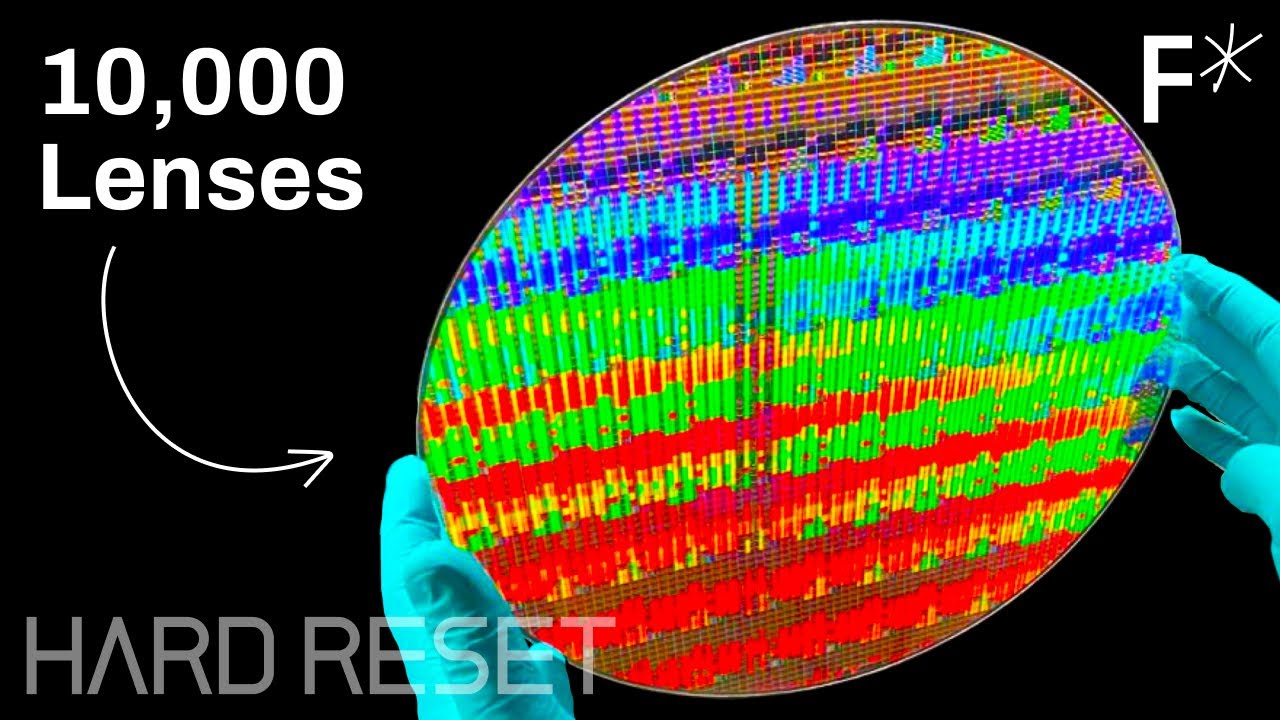
In the meta-surface lens, the transparent blocks also bend the light toward the focal point matching what happens in the glass lens, but with much less material. The tiny meta-surface lens building blocks, about six hundred nanometers in length, can achieve the same resolution and magnification as a lens that is 5-6 centimeters in length. Fabrications of these meta-lenses should also be much more cost-effective, compatible with silicon chip technology versus complex polishing and sometimes stringent requirements for high-performance lenses.
The next step is to focus all of the visible spectrum into the same focal length using a meta-surface lens. Once this happens these glitter-sized lenses can replace the lens in a smartphone, regular camera, microscope - anywhere a lens might be needed and the great shrinking can continue.