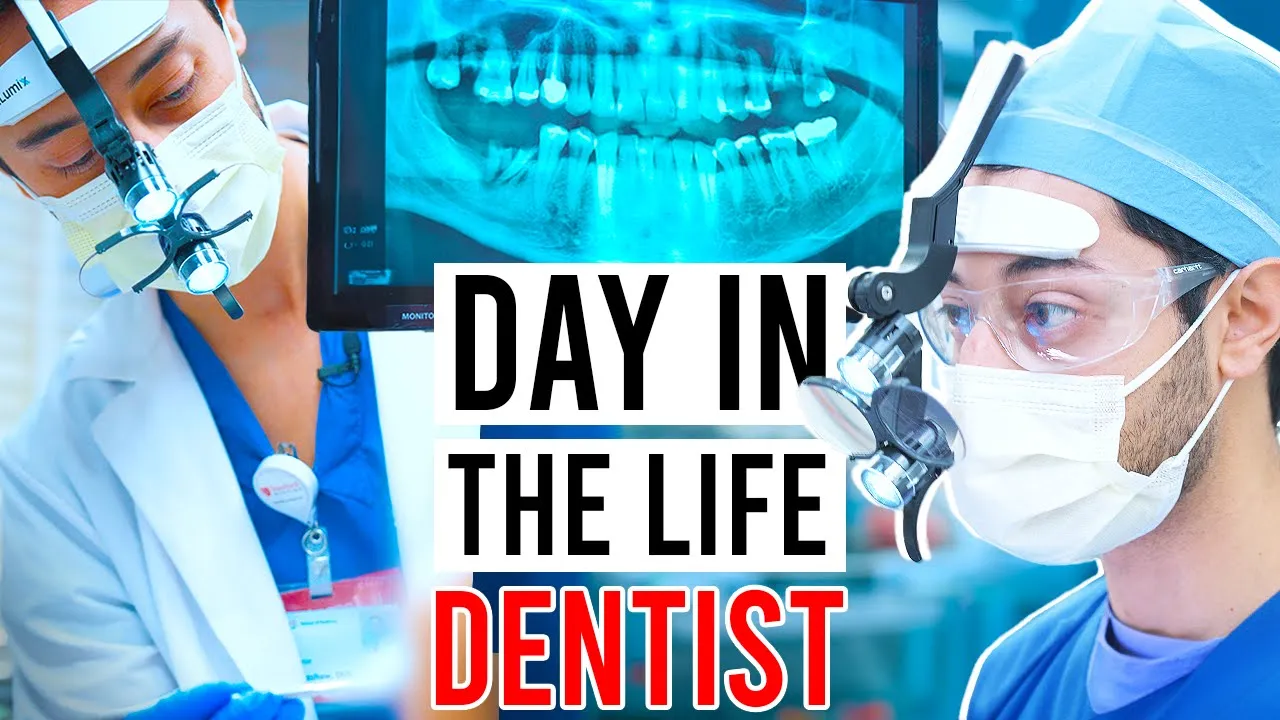
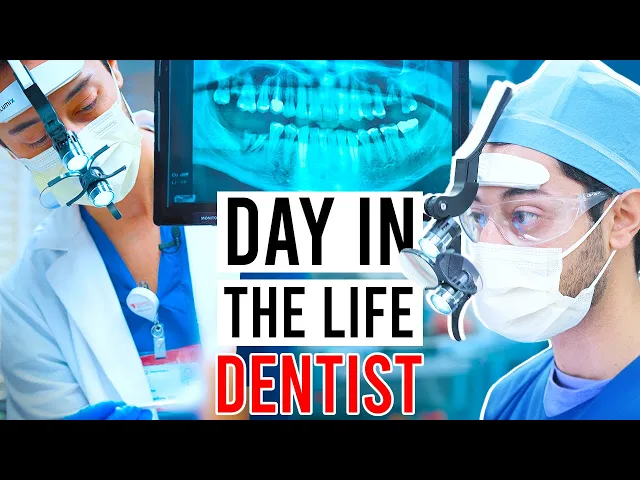
[Music] [Music] [Music] oh [Music] [Music] this is Dr Pedra Masha I'm a dental fellow at Stanford hospital this is med school insiders a day in the life we got a pretty busy day today we're going to do some rounds in the morning then some o cases in the afternoon we'll be in clinic in our Outpatient Clinic the role as a dental fellow really entails being in the hospital and managing a lot of our consultations and as well as teaching some of the dental residents what it means to be a hospital dentist and doing dental care
in a hospital hospital setting which is not very common at all because we treat very medically complex patients that you don't often see any private office I went to dental school at University of Pacific in San Francisco and then I did a one-year general practice residency at the VA here in Pao California after that I started this Fellowship here at Stanford to really learn more about what it takes to be a hospital dentist and I'm really passionate about that and a want to serve my community and the medically complex patients that otherwise can't be seen
in a private office and the goal is to help train dentists to be more Incorporated in a hospital to treat this underserved [Music] population rounding is when we're going to check up on our patients in the morning and we're going to check to see if they're healing correctly after oral surgery and some dental extractions we're checking for excessive bleeding and signs of [Music] infection we just finished rounds on four of our patients everyone is healing pretty well one of the gentlemen uh had a little bit of excessive bleeding and so we able stop that with
some goau pressure all of our patients had Dental extractions done um and now we're going to finish some notes and then jump over to the O for a joint case with ENT we have a 56-year-old male who's got Squam cell carcinoma of the tongue he potentially will be getting radiation therapy in the near future and so we're doing the dental extractions or the dental clearance prior to the radiation therapy we had the chance to join ENT in their surgery of the partial glossectomy and they'll be doing their part after we do the dental extractions so
we got about four teeth to remove we'll make sure that they are nice and clean from any infection and then we'll make sure he's nice and hemostatic from our part and then we'll have ENT join us after that [Music] so these these four teeth look pretty curious what do you think yeah looking at his radioraps and looking at this clinically I don't think these T teeth are restorable honestly given that he's about to start radiation therapy I think these four teeth need to be extracted prior to starting therapy yeah I agree and and we definitely
want to take these teeth out prior to the radiation as he would be an in at an increased uh risk of developing Osteo Ron necrosis which is basically dead bone from radiation in the jaw if a tooth extraction were to happen after for the radiation we just finished the case here is the X-ray of our patient he had these root tips in a big cavity over here that we ended up removing these teeth he does have a cavity here and a potential um infection on on this tooth but these teeth can be treated in an
Alpa Clinic getting fillings crowns and a root canal the best thing about this is the patient recently established care with a dentist so he's going to be seeing um that dentist for the fillings and the crowns and the and the potential root canal on that tooth root canals fillings crowns are totally safe after radiation it's only when um we're doing any sort of surgery with the bone including tooth extractions that were concerned about prior to radiation not every time do we get a chance to just sit down and eat some lunch when you're in a
fast-paced environment uh it's always grab and go or no lunch and when you have the opportunity you take it one of the reasons why I went to Dentistry was a few things when I was in college exploring the medical route the dental route and even becoming a professor in engineering uh it really a few things were important to me to for that decision one is can I use my hands two can I teach and uh three can I help others uh and let's be honest I did want to feel that I could be fairly compensated
for a specialized skill and Dentistry ticked a lot of those boxes for me and it really boil down to the community a sense of belonging and uh the autonomy to own my own practice after dental school you don't have to do a residency it's completely optional you can do specialty residencies like Orthodontics periodontics Oral maxal Facial Surgery uh but you don't have to you can start practicing immediately after there are some general practice residencies you can do but it's completely optional uh and that's more to learn more advanced surgeries um more medicine and it's more
in an academic type setting it's usually about a year if you do these general practice residencies I chose to do a hospital-based general practice residency for a year to learn more advanced surgeries uh complex procedures in dentistry more of the medicine and um with the overall goal to learn uh more about treating the overall patients and to learn about medically medically complex patients and how to treat them in a dental [Music] setting I just got a page from uh looks like it's cardiac surgery whenever that pager goes off it's always really anxiety provoking so let's
give him a call back and see what's going on hey yeah this is is Dr mha with the uh dental service I just got your page okay yeah so so you guys want a dental clearance prior to cardiac surgery that's when is it planned for you want okay okay plan for Friday and um uh okay did did you guys get any Imaging by any chance yet okay got it okay perfect is up okay great I'll take a look and then um we'll give you a call back let me go see the patient and review the
Imaging and we'll get back to you awesome all right thank you so much bye looking at the X-ray at first glance I see two teeth that kind of jump out at me in terms of being a risk for infection one of them here on this lower right is this Muller that's got some bone loss and potentially some infection around here and then the Muller right here the first on the lower left it looks like it has a big cavity and it looks like there's some bone loss which could actually be part of the infection we're
looking at probably just these two teeth to be extracted but of course we need to go look clinically and just confirm our findings and then give her recommendations likely this will be a case that will be added on for uh a weight list for the O prior to cardiac surgery which is scheduled on Friday hey Priscilla I just got a dental clear prior to cardiac surgery I'm going to go see the patient probably needs two extractions do you want to come with me yeah sure let's do it now all [Music] right [Music] [Music] so we
just came to Clinic uh just we just finished off the consults with Dr lur our resident um and we confirmed that the patient does need those two extractions there was just those two teeth that we needed extraction so we were scheduling that for later this week um now we're in clinic we got a full schedule of today we're a little bit late clinics usually starts at 12:30 but um we got some patients waiting for us so let's go see them hey how's it going good to see you so tell me what's going on do you
have any jaw pain we had a pretty busy day today in clinic but it was pretty exciting we saw some special needs patients we did some cleanings for we also saw some patients with jaw pain and one particular case we did a biopsy for a gentleman that we had a suspicion for oral cancer now this is not a typical General Dentistry office where they usually do fillings or crowns or restorative work for this is more operating as a dental surgery or Oral Surgery Clinic and so we're really following up on our patients that have been
seen in a hospital and we're monitoring their healing progress or were evaluating patients to be uh surgical candidates for for potential surgery in the hospital there are a lot of things that surprised me about coming into Dentistry the average debt after coming out of Del school was very high could be anywhere around $400,000 that was pretty shocking the second thing is the breath and the depth of knowledge that that's required including the beyond the teeth and the gums like knowing the anatomy physiology pharmacology uh about the muscles of mastication the cusion and how that all
intertwines as well there are a lot of things I I love about dentistry and one of it is being the educator and helping patients understand about their oral health even my friends and family as it's not really taught in grade at school very much second is being able to give patients a smile that they're proud of some of the things that I don't like about Dentistry are the um how mentally and physically draining it can be you're hunched over all time you could have poor posture and that could really catch up to you the other
thing is that the negative perception that a society has over dentist uh it can really lead to a lot of fear anxiety and avoidance of dental care which can have negative consequences on oral health and of course it's it's not always uh a fun time when your patients at least once a week for me when a patient tells me that they hate the dentist it's 5:30 I'm going to go home now this is a typical o and Clinic day but there are some days where we have o all day and that is pretty demanding that
can end around 6:00 p.m. and those days are pretty tired today I'm pretty tired we're just going to go home relax hang out I like to play a little piano so hopefully I can get some some playing in you know Dentistry can be lots of fun I think it's great for some that wants to use their hands every day has an eye for Aesthetics it's it's sometimes the first thing that people will see and if somebody wants a shorter training period I think Dentistry is is great for that dental school is very similar to medical
school in terms of the first two years being pretty heavy didactics and you learn a lot of the biomedical Sciences your Anatomy physiology pharmacology and you also learn about the whole body and the whole system in addition to that the first two years you have to also go to simulation lab or Sim lab where you practice droing on teeth and you learn all the techniques and the mechanics behind the Dentistry doing the fillings and the crowns and things like that then the last two years you're more in in clinic and each dental school has a
clinic that you see patients in so on average you could see two to three patients a day depending on the your clinic schedule and what you have planned and then those two last years you also have um some of the more Advanced Dental Dental courses you do finally back home we're going to relax play a little bit of piano do a little bit of reading and recharge and get ready for the day tomorrow some advice I have for incoming Dental students or pre- dental students are to really hone in on your why for wanting to
do Dentistry because they don't want to be stuck in a career that's not going to be super fulfilling for you um don't be afraid of failing and always ask for help find ways to increase your ey hand coordination anything like sewing drawing playing an instrument find something and start planning your finances now because dental school is pretty expensive I chose to do a fellowship at Stanford hospital because truthfully I didn't know of any other programs that did Hospital Dentistry and and I was already doing a residency at the VA close by that rotated at stford
and so I saw the work that was being done and I loved it and I chose to stay to complete a fellowship after I finished Fellowship I really want to go into private practice and to improve my restorative skill set and be a comprehensive Family Dentist but I also want to be part-time Hospital dentist doing exactly what I'm doing now and seeing patients in a hospital setting um because I would like like to remain in Academia thanks for watching that was med school insiders a day in the life of a dental [Music] fellow

![Day in the Life - Orthopedic Sports Surgeon [Ep. 18]](https://img.youtube.com/vi/2zedGSfyniU/maxresdefault.jpg)