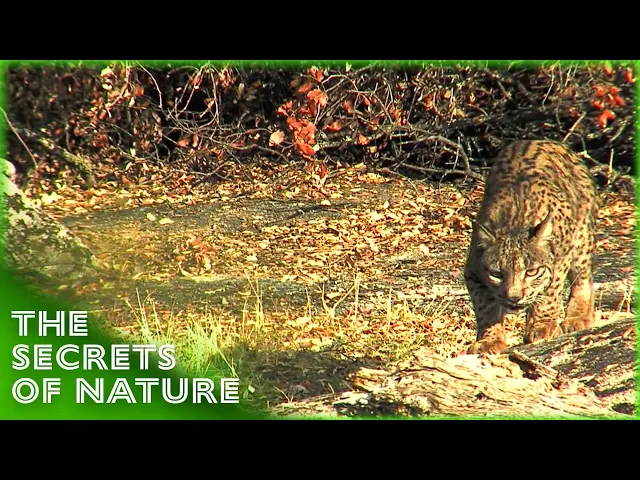
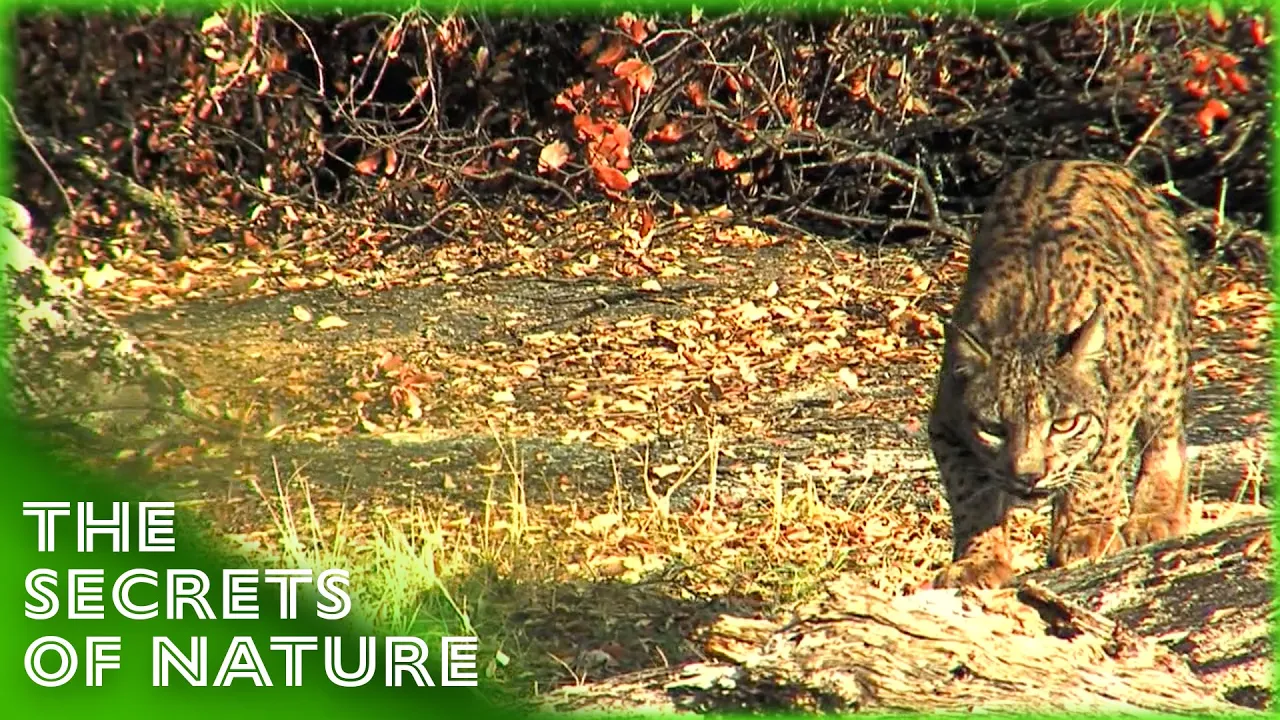
[Applause] [Music] [Music] looking for paradise the iberian links one of the most threatened animal species on the face of the earth this impressive feeling is a specialist predator which as it evolved adapted to take advantage of a food source that was very abundant in the mediterranean scrambler in recent times the populations of iberian rabbits have been decimated in the linksys habitats which has aggravated the feline situation the loss of its main food source together with the loss of habitat and the proliferation of human activities has left the links in a critical situation [Music] today the
lynx is found only in the sierra mourinho mountain range and in donana national park their populations are fragmented over a large geographical area full of obstacles and dangers the isolation and scarcity of specimens can cause an increase in inbreeding and put the survival of the species even more at risk [Music] this situation makes the need to intervene urgent it may be necessary to move some of the animals not only among the existing populations but also to new territories that meet their needs [Music] to that end lynxes are also being raised in captivity great efforts and
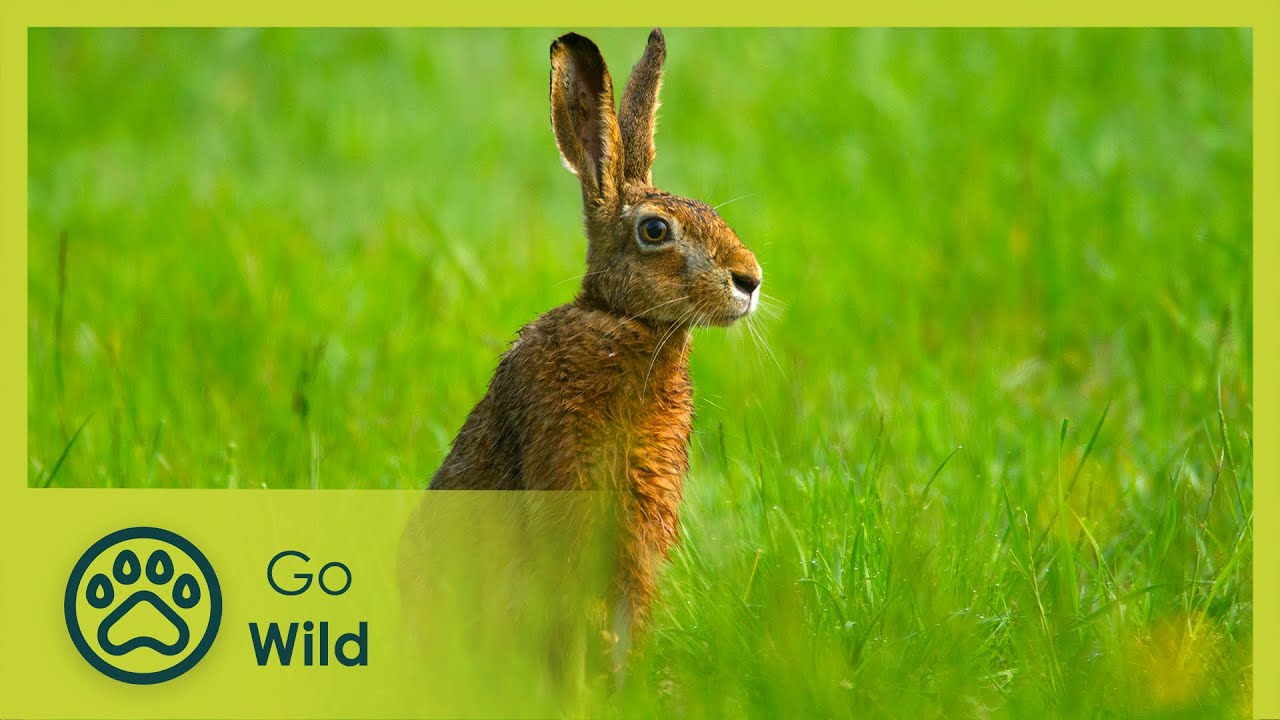
investments are being made to raise cubs that can be freed in areas with an appropriate habitat and enough rabbits to guarantee their survival these actions are only valid as emergency solutions but we need to know how we can encourage natural movements the connections among the populations and their expansion into new areas the team of dr eloy revilla is studying the movements of the lynxes and their behavior when they spread out over a territory it's a question of seeing the landscape with the lynx's eyes of interpreting their needs and requirements to do that for more than
20 years the researchers have followed 30 lynxes marked with tracking collars that have spread over the territory their movements recorded with this procedure can be interpreted in relation to the characteristics of the terrain and models can be drawn up to help us understand the patterns of their movements in these years of study the researchers have obtained surprising results although lynxes normally don't stray from their little fragmented populations when an animal was released far from its habitual area it returned to its place of origin crossing highways freeways and even railways with security fences long journeys represent
big risks and the animals aren't normally willing to run those risks although lynxes are able to overcome big obstacles if they have to in practice the populations will only make contact if there are corridors with the right kinds of habitats and ecological conditions thanks to the models they have developed the researchers have been able to see that the type of habitat is decisive for the links to spread and that this doesn't happen merely according to the distance as was hypothesized up to now just as with humans and many other species young lynxes take greater risks
than the adults venturing into open areas especially at night although there can be no doubt that their preferred habitat is mediterranean scrubble the success of their adventure to eventually establish themselves in new territories depends on the habitat they must cross but also on a multitude of unpredictable factors in fact it is a stage in their lives when many are killed in accidents there is much we have yet to learn about the iberian links its behavior is truly fascinating but what's more it's the key to continuing the work to manage to save it from extinction [Music]
journey to discovery every year thousands of black kites cross back over the strait of gibraltar to reach their breeding grounds on the iberian peninsula this is no ordinary bird its opportunistic nature and its impressive ability to adapt have made it the most widely distributed bird of prey in the world found throughout europe asia africa and oceania dr fabrizio sergio a member of the group directed by fernando hiraldo at the donana biological station studies kites in one of their main european breeding habitats for more than 30 years kites have been banded in dona this intense monitoring
has allowed researchers to get a close-up look at their biology and behavior the youngest birds are the most vulnerable in the first year of life sixty percent of those that hatch will die between 7 and 11 years of age they reach full size and enjoy their greatest reproductive potential for a pair of kites having a nest in favorable territory with an abundance of prey is a guarantee that their young will be able to develop completely competition for territory is intense and the birds who have access to the best areas are those who remain physically robust
as they age researchers have found that the kites return year after year to the same territories in fact they have even been known to reuse the same nest for more than 20 years dr sergio uses a micro camera on the end of a long pole to check out the contents of nests without having to physically clog the tree females generally lay two to three eggs at a time which they then incubate for about a month normally it is only possible to obtain enough food to feed one of these chicks although there have been cases of
three surviving young among skilled adults living in territories with abundant prey on the shores of the salt marshes of donana an astoundingly biodiverse ecosystem has developed the aviary a line of cork oak trees is home to nests belonging to herons spoonbills and other ardaidas this is where the kites come each morning in search of prey researchers have discovered that inundation levels on the salt marshes following spring rains are directly related to the proportion of chicks that will survive each year after nearly 50 days the young kite is ready to leave the nest and soon thereafter
he will travel to africa just like his parents up until very recently the birds journey through african territory was something of a mystery but now dr sergio and his team use sophisticated techniques for following the kites year round even on their long trip first they must capture the birds using carrion as bait and a net that is activated from a distance once the biometric data has been gathered they are outfitted with a gps satellite transmitter for several years they are able to detect the position of each bird at all times within just a few meters
this team has already used the system to mark more than 100 birds thanks to their methods they are aware of the location of migrating birds in africa and all the details of their journey including the very tree where they will nest upon their return in the spring never before has such a large group of raptors been followed so meticulously the youngest birds begin their migration back to spain a bit later so they have access only to the less desirable areas and aren't able to reproduce as a result this is despite the fact that they are
physically able to do so as proven by dr julio blas another member of the team only the most experienced and a few more gifted young birds are able to begin the return earlier and ensure the best nesting sites some individuals become veritable experts continuing to reproduce beyond 24 years of age [Music] when it comes to quality individual variability is quite important and the most competent birds clearly stand out those who will almost certainly produce the most offspring these young will be able to inherit their parents qualities and ensure continued success [Music] kings of the meadow
monfrague national park is home to one of the most impressive and well-preserved sanctuaries of mediterranean forest on these mountains and hillsides covered in dense vegetation one of europe's most emblematic carrier-eating birds makes its home the black vulture [Music] this natural landscape is the ideal spot for nurturing one of the world's healthiest populations of this bird black vultures prefer to nest in majestic trees from native mediterranean forests such as the core coke they also choose spots high up on craggy cliffs which cannot be easily accessed by land predators it must be said that one of the
keys to the existence of the black vultures of monfrague is located in large part outside of the park although they nest here their feeding grounds are found in another area entirely what are the sources of food that keep this thriving population alive emilio costillo a researcher from the university of extremadura and member of the team led by dr juan manuel sanchez guthman has analyzed their feeding preferences black vultures avail themselves of carrion from small and medium-sized mammals in a wide variety of sizes ranging from rabbits to deer areas where vegetation is not as dense make
it easier for them to locate carcasses from the air [Music] they live close to the more abundant griffin vultures and often eat alongside them in spite of being physically larger black vultures prefer to avoid the noisy struggles that often occur when feeding on carrion the spectacular black vultures are more apt to wait for the right moment to assert their rights [Applause] in order to track their flight they are outfitted with radio transmitters dr emilio costillo marked several birds in extremadura the team led by dr jose antonio donata from the donana biological station has also carried
out a study with vultures that have been marked with these transmitters this time to the north of welva and in southern extremadura both studies revealed that in the period of one day an individual is capable of flying up to 80 kilometers even when they are busy nesting and must return to the nest after every flight the area they cover extends for a radius of dozens of kilometers these studies show that extensive well-preserved meadows are of utmost important to black vultures researchers have also discovered that some meadows are of more importance than others several years ago
the black vultures diet consisted largely of rabbits recently however owing to decreasing rabbit populations the main carrion meats consumed by vultures are sheep sometimes complemented by deer and wild boar [Music] the behavior of vultures when searching for food from the air as well as the types of prey they are able to eat explain why netherlands are so important to these birds the population at montfragwe is what it is thanks to the vast expanse of meadows in extremadura which are still used for traditional purposes they are also located at a distance which is easy for the
vultures to reach from their breeding grounds the future of carrying eating birds as emblematic as the black vulture depends on the conservation of the traditional use of large areas outside the limits of protected lands [Music] [Applause] [Music] courting the grain-filled flatlands of extremadura are home to a large portion of the world's great bustards this bird holds the world record for heaviest flying animals males who are much larger than females can reach up to 1 meter high and come close to weighing 20 kilograms in the spring these huge males strut about in front of their rivals
imposing their hierarchical standing and their corresponding reproductive rights still in order to mate they must attract the females that are spread out over vast expanses of territory in order to do so they arrange themselves in specific areas with special characteristics known as lex these protected areas are free of predators and human interference and are visible from great distances on the flatlands frequently groups of males form so as to more effectively attract females like the majority of stat birds great bastards present cryptic coloring that keeps them camouflaged in their environment still when males want to be
seen they are able to change into attention-grabbing white balls that stand out like floodlights on the grassy flats the male great buster twists his wings and tail revealing the white feathers that are normally covered by others of a drab brown color a recent study by dr javier revealed that during the display males turn and take their starts depending on the position of the sun thus ensuring that their signals reach the females with the best lighting possible the males also boast a full range of sexual characteristics that they use in these displays including the colored chestnut-coloured
sack and the neck bristles fine long feathers that extend from either side of the beam [Music] dr sebastiani dalgo de truthios and his collaborators have studied the great bastards in extremadura for nearly two decades [Music] although it might be said that males work together to attract females to the legs once the females arrive it is clear that the males are nothing more than dedicated adversaries competing to reproduce the spectacular displays and competitive rivalry require significant amounts of energy and the taking of important risks that not all males are prepared or able to assume putting on
an impressive display can make them even easier for predators to spot [Music] [Music] while following a group of males for an entire year in controlled conditions researchers discovered that only those who are most physically fit developed sexual characteristics and dared to enter the reproductive game that year for this reason those who were better prepared increased their body weight by about 30 percent in early spring they then began to mold and to behave like males seeking to reproduce after taking measurements of some of these sexual structures the group observed that the size of the gula sac
was directly related to the male's physical condition and dominance while the length of the neck bristles corresponded to its age these characteristics say much about the bird's rank to both rivals and females in keeping with the unspoken rules of the mating system all male great busters who display in the center ring must first pass a preliminary aptitude test but there is yet another test to come winning over females who are free to choose from a variety of suitors once the choice has been made the female retires once more to one of the many hidden corners
on the plains where she will raise this year's chicks on her own the conservation of the great buster means the conservation of habitats but not only for the feeding and raising of young there must also be lacks free from human interference where the displays can take place displays that maintain the most genuine characteristics of these flatland birds [Music] captives of the forest in the cold springtime nights on the peaks of tantamount it is more and more difficult to hear the song of the forest's great springtime the cantabrian capper an animal that is a symbol of
the iberian peninsula is disappearing the cantabrian capital an animal that is a symbol of the island in the traditional spots called lex where males gather to put on courtship displays and attract females meanwhile great efforts are being made to try and save this large grouse as an emergency measure a breeding project is in development the first cantabrian kappa kale eggs to be incubated in captivity are being cared for in this center in the principality of asturias inside a tiny heart beats as it faces an uncertain future but the conservation of this great [ __ ]
is not possible solely through captive breeding we must also become aware of the factors that are provoking a decline in natural populations and then strive to correct [Music] doctors maria jose manuelos and mario quebedo of the university of oviedo study the habitat characteristics of the kappa kali they use powerful geographic informational systems to try and pinpoint the conditions that determine whether a habitat is appropriate or not it's not necessary to capture or even bother these birds in order to obtain valuable information on their behavior feathers found on the forest floor contain dna that makes it
possible to confirm which specific individual male or female has been here by studying the birds droppings researchers are also able to recognize each individual and what's more they can also analyze its diet this allows them to learn not only which individual is at hand but its dietary preferences as well to date researchers have discovered that the cantabrian capically spends more time on the forest floor than its european cousins in early spring their diet is based on beech tree sprouts and later they focus on blueberries holly and various species of herb in winter they have been
known to eat ferns during the mating season males make use of specific areas called lex these are spots that are recognized for playing a key role in the conservation process it is here that the showy meeting dance takes place meanwhile females use nearby areas to bring up their chicks these distinct habitats provide them with ample food and shelter as far as the males after breeding they depart for other zones which often share a common border with the legs [Music] in the past few years forest areas have become more and more fragmented this makes it difficult
for birds from different habitats to make the connections they need and could compromise the viability of their populations researchers have analyzed the locations of both older and current lacks as related to human activity in the forest [Music] this has made it possible for them to study changes in the use of space over the years and to evaluate the importance of these habitats over longer periods of time it has been observed how the presence of paths trails and other types of infrastructure as well as livestock negatively affects the kappa kali in fact in the past few
years the birds have tended to occupy areas that are higher up on the mountainside pushed there by the growing impact of human activity the kappa kali is fairly phylopatric which is to say that they tend to remain in areas that were once beneficial to them even when they no longer are owing to changes brought on by human activity these zones can act as traps for females attempting to nest there they are normally unsuccessful in their efforts using these models protected areas can be established it is even possible to attempt to predict where the next local
extinctions are likely to occur the conservation of the kappa kali requires the protection not only of the most emblematic forests and of breeding grounds but also of all habitats that allow the birds to meet their needs throughout the year in other words the conservation of complete natural ecosystems pollen in the fossil record indicates that these forests have remained virtually unchanged for thousands of years and that these birds were fully adapted to their surroundings long before humans became involved for this reason it is particularly important to conserve forests in their original state untouched by humans as
their future is inexorably linked to the survival of the great [ __ ] of the forest [Music] [Applause] [Music] seasonal hermits in massifs made of limestone thousands of years of erosion by water activity have created a subterranean world caves are a special habitat to which very few animals manage to adapt there are no plants here as complete darkness makes photosynthesis impossible this is a kingdom ruled by silence broken only by the sound of water that forms this underground landscape drop by drop [Music] in the sierra rana region in granada we find the cueva del agua
which held the record for many years as the deepest cave in spain here there are several animals that do not inhabit any other spot like this small pseudo scorpion the size of a mosquito this blind millipede devoid of all pigmentation is also endemic to this cave other animals use the cave to hibernate or take shelter in the coldest months like these nocturnal butterflies and also these caddisflies which have much in common with the ancestors of butterflies their spanish name tricoptero translates as fuzzy wings these fine hairs have evolved into the scales that cover the wings
of butterflies caddisflies from the species mesophylaxis purses have adapted to life in seasonal streams they survive the hot dry summer inside the cave where they enter a dormant state until autumn the temperature and humidity are constant inside the cave year round nine degrees celsius and one hundred percent relative humidity so how do these insects know when it is time for them to leave the cave dr carmen tamora and her team from the university of granada are studying the behavior of the cave dwelling caddisfly locating the insects inside the cueva de lagua requires a painstaking search
of the cave november is mating season afterward the females leave the cave to lay their eggs on the banks of a river once the egg sac is covered by water small aquatic larvae emerge and build themselves protective casings out of rock fragments that they will slowly enlarge as they grow after metamorphosis is complete adults must enter the cave until summer is over it is still unknown how they are able to find the cave's small entrance which is more than 13 kilometers away from the river at an altitude of nearly 2000 metres above sea level after
spending several months inside the cave they returned to these activities in the fall to complete a new life cycle in order to confirm the factors that make the mesophyllax come out of its dormant state researchers weighed and measured the insects in spring and in fall and kept track of environmental data inside the cave [Music] when they analyzed temperatures both outside and inside the cave they discovered something quite interesting every year the awakening of the caddisflies takes place exactly one week after the inversion of the temperature gradient that is to say when exterior temperatures drop the
air inside the cave which is less dense tends to blow out of the cave and renew itself the resulting air current is a sign felt by the insects that tells them it is time to awaken from their dormant state time to mate and complete a new life cycle caves are a special habitat in short supply which are very fragile extremely stable in their environmental variables the animals who live in caves have adapted by being very sensitive to small variations that keep them informed as to fundamental changes in their life cycles for this reason subtle variations
caused by human activity can have a much greater impact inside caves than they do outside whether caves will continue to abound with life depends on the conservation of stable conditions [Music] microstrategists malaria is one of the harshest pandemics to hit humankind the struggle against this illness is a battle that began long ago and whose end is still not in sight birds also suffer from a type of malaria similar to ours but which cannot be transmitted to humans because they are simple to study in natural conditions and many aspects can easily be controlled birds are ideal
models for malaria research the infection is brought on by the bite of mosquitoes that transmit the parasite to the host when a fresh mosquito bites an infected animal it ingests blood with parasites that are fully developed these multiply within the mosquito system starting the cycle anew dr santiago merino of the spanish council for scientific research studies malaria in the blue tit a small bird that frequently reproduces using nest boxes an adhesive plate located on the roof of the nest box traps mosquitoes that then infect the birds with a strain of malaria that is not dangerous
to humans when the checks are three days old researchers capture the adults and take the first round of data after making note of their general state and their weight they take a small sample of blood which they use to determine the presence of illness a microchip is placed on the bird's leg which will enable the researchers to measure efforts made to bring food to the nest in addition one group was injected with a treatment against the parasite a sensor placed in the entrance to the nest box keeps track of the birds comings and goings ten
days later the researchers take stock again evaluating the effectiveness of the treatment and checking to see how the chicks are developing the medication lowers the number of parasites in the body of the blue tip this reduction has been seen to increase the reproductive success of the females when compared to the control group these females enable more fledglings to leave the nest lose less weight while raising their young and have higher survival rates it is in the blue tits interest to fight the parasites while it is in the parasites interest to utilize the bird's body as
a platform for spreading to other hosts the birds use their immune system to fight the parasites one interesting way of doing this is to provoke competition between the parasites themselves among birds with stronger immune systems it has been observed that there is sometimes more than one parasite within the same blood cell for some reason these multi-parasitic cells do not generally survive putting an end to the parasites carried by the birds this leads experts to believe that this is a defensive strategy used by the host as for the parasites they respond with other strategies their main
goal is the spread to other birds infecting them as well to this end more females than males are generally produced inside the host as just a few males are capable of fertilizing many females making the reproduction process more efficient mating occurs in the digestive tract of the mosquito that has ingested a sample of blood after biting an infected host within this blood sample are thousands of parasites but just a few male parasites is enough to fertilize all of the females nevertheless when there are not many parasites inside the host due to medication or because of
the bird's immune system it sometimes happens that in the drop of blood ingested by the mosquito there are very few parasites none of which are male dr moreno has discovered that in these cases the parasite alters the proportion of sexes thus increasing the number of males so that at least one will come into contact with the females in the blood ingested by the mosquito between blue tits and protozoa a co-evolution process is taking place so that when attacked by the bird's immune system the parasites are able to alter the proportion of sexes in order to
ensure reproduction and transmission to other hosts for our own struggle against these micro strategists it is of utmost importance to become familiar with their tactics discoveries about the behavior of the parasites that cause malaria and their hosts lead to new clues on how to combat this grave illness [Music] birds with personality [Music] in the late 1980s experts on animal behavior began to notice that animals have a personality meaning that individuals show consistent behavioral differences they observe that given animals which are more easily startled or more aggressive tend to exhibit that behavior in different situations and
contexts [Music] the behavior of different individuals then shows a degree of flexibility on the other hand the various personality types that make up a group or population will determine how much variability is available when facing situations that are different new or unpredictable the study of animal personality is especially interesting in endangered species such is the case with the northern bald ibis only 300 of these curious birds remain living in northern africa when a species reaches this point there is no alternative than the one we are able to offer through captive breeding [Music] after many trying
years in the most positive cases we'll have a small group that will be charged with giving rise to future populations ideally the founders should have personalities that are as varied as possible there should be aggressive individuals that will do better in situations where competition is fierce and others that are not as aggressive that will thrive in situations where there is not much competition timid birds will find more success in high risk situations while daring birds will do better in low risk situations researchers from ashredondo and eduardo aguilera from the spanish council for scientific research are
studying the personality of the northern bold ibis being bred at a center funded by the government of andalusia in cadiz they carry out interesting experiments with the birds like a test that measures immobility tendencies the eyes of each animal are covered and they are placed face up for several seconds the amount of time they remain still depends on the character of each individual other experiments reveal data related to reactions when faced with new situations each animal is placed inside a box a trap door is then opened and a conflict is created a tray with food
is revealed which is being watched over by a doll that the animal has never seen before some individuals behave timidly while others don't seem to fear the patient observer using different stimuli researchers try to uncover the personality of each ibis some were brought up by humans while others were raised in captivity by their own parents the latter group displays a wider variety of personalities and what appears to be a higher rate of survival research has also obtained some very interesting results when they followed a series of individuals after being set free in the wild some
took off eventually establishing themselves hundreds of kilometers away while others stayed in the spot where they were born the birds that spread out had different personality traits than those who didn't they were more prone to flee when faced with danger and were also more willing to explore new situations like all animals birds must make important decisions throughout their lives experts in animal behavior are just beginning to understand what those decisions are based on the study of animal personality is fundamental for understanding their behavior and in the future it will be vital as plans are made
to save endangered species [Music] [Applause] [Music] low stress diet [Music] for thousands of years horses have evolved in step regions trusting in their ability to remain alert [Music] evolution has selected those individuals that have managed to avoid attacks from the predators attempting to take them by surprise horses have a radius of sight that is practically 360 degrees and although they are able to make out fewer colors than we are they have a much higher capacity for motion detection their auditory capacity is also much greater than ours this acute sensorial capacity ensures that horses are able
to flee quickly when danger approaches but almost 50 000 years ago one predator of horses began to establish a relationship with them that has continued to modern day and that has changed the history of both species they are no longer the driving force behind the army or a main mode of transport but they are the ideal companion for tourist outings the star of passion-filled sports events and an excellent tool for the physical and emotional development of children they even provide a means for treating illnesses and handicaps [Music] the possibilities for equine therapy are growing more
popular by the day and the results can be spectacular the animals used for this purpose must be particularly calm and trustworthy generally speaking the demand for calm animals is growing but on occasion the defense mechanisms of each species can create dangerous situations for the people who handle them a horse that starts violently is a risk in any situation not only when riding but when grooming transporting or shoeing stress is an adaptive mechanism that is an effective defense against predators in a natural setting but for an animal in captivity being under continual stress can result in
physical or psychological damage up to now the only way of avoiding these continually stressful situations was through training and braking recently however it has been suggested that diet may also influence a horse's stress level dr alberto redondo of the university of cordoba studies the behavior of horses and its relationship to diet he fed 50 horses a standard diet containing three percent fat after two months he put all of the horses through a series of tests to evaluate their stress level and their response to an unexpected scare he measured their heart rate variability at night as
well as bloodstream levels of cortisol a hormone that measures stress flight response was measured using a tiger head model that popped up unexpectedly this experiment was also carried out at night in order to rule out the influence of the animals daytime activities later he divided the horses into two random groups he continued to feed half of them with the same diet the other half ate a diet with the same amount of calories but with ten percent of vegetable fat after two months he put the horses through the same tests and observed that those with a
fattier diet were more relaxed at rest they were also slower to react to the tiger head while the other group of horses continued to experience high levels of stress in order to prove it was the fat that was responsible for the horse's lowered stress levels and reaction times he swapped the diets being consumed by each group and then repeated the tests for a third time after two months at this point the results were conclusive those who cut back on the fat recovered their higher stress levels at rest and were quicker to react to the predator
model while those with the 10 fat diet were observed to be more relaxed than ever by simply adjusting diet we can reduce the risk of accidents in the presence of horses and not only this by reducing their stress levels we are also improving their well-being and their quality of life this faithful companion deserves a concerted effort and dedication on our part to try and understand their way of thinking a little better each day in this way we will be able to return to them a small part of what these noble beasts have given us [Music]
eat or be eaten when we walk through the aisles of a supermarket trying to find food we wish to buy our only sense of rush comes from thoughts of what we have to do afterward or how long our shopping list seems to be this experience would be quite different if we knew that at any moment a predator could jump out from behind the shelves [Music] our shopping trip would certainly be much faster and we would only be concerned with the most essential products [Music] many animals are faced with this situation when looking for food the
continual experience with predators that are likely to take them by surprise makes them distrustful and causes them to dedicate the least amount of time to risky behavior clearly being skittish means lowering their possibilities for finding food but a lack of caution could mean that they end up being food for other animals we can therefore expect that natural selection makes animals more or less skittish according to the real risk they run of being hunted the three-spined stickleback is a small fish that lives in the continental waters of the northern hemisphere and its search for food is
anything that's safe wading birds like herons wait patiently for the sticklebacks to move underwater before launching a well-aimed stand with their long sharp knees [Music] herons frequently attack these fish in lakes or calm pools of water in rivers and streams they are more difficult to capture the ripples on the surface of the water make it difficult for them to see what is below and to measure their position before attacking [Music] dr david alvarez from the university of vietnam posed the hypothesis that even though they are from the same species it is probable that the sticklebacks
that live in pools are more fearful of herons than those living in rivers and streams in order to prove his theory he gathered fish from various rivers and also from a variety of pools to subject them to an experiment in his lab he prepared an aquarium with plants so that the fish would have somewhere to hide [Music] to one side he placed a device that released small worms when the fish moved to feed on them a fake heron head sprang into action simulating an attack the researcher measured the time the fish took to calm down
and begin feeding again the differences were quite clear when comparing the pool fish and the river fish [Music] the still water fish took longer than those from the river to return to feeding they also ate more quickly it's interesting that there were no differences between different still water groups or different river groups only between groups from varying habitats in other words it seems that waters with calm surfaces produce fish that are more skittish because of how easy it is for herons to hunt them fear when faced with possible risks or boldness in dangerous situations are
behavioral tendencies that define the personality of animals studies like the one using three spine sticklebacks show that there are adaptational reasons behind these personality differences [Music] you