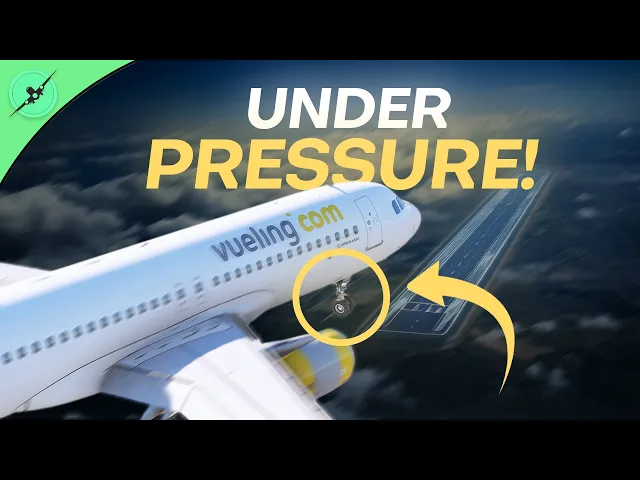
Pilots are trained to handle just about any emergency they might face but what happens when they encounter a problem which isn't fully covered in their manuals high above the Spanish Countryside this is exactly what happened the crew of a Welling Airbus A320 on its way from Barcelona to Seville when a serious problem emerged with the nose wheel the pilots would need to rely on their experience and training to make quick decisions which would impact the safety of all 157 people on board this is a story about how people behave under pressure and it's a story
about the enduring importance of problem solving in an age of increasing automation this is the story of Welling flight 2220 it was a sunny April evening in Barcelona Spain when 150 passengers stepped on board an Airbus a 320 operated by Spanish lowcost Airline dwelling they were Bound for civil just an hour to the Southwest many of the passengers were tourists visiting the historic Andalusian City others were traveling to see family or returning home from worker study in Barcelona up front in the cockpit was a crew of three Pilots one captain and two co-pilots it was
the crew's third Flight of the day before this they had flown to Roman back the captain was a 47-year-old French national and with over 10,000 hours of flying time he was highly experienced he was also very familiar with the Airbus a 320 having accumulated over $4,000 on the aircraft this experience would end up being extremely valuable on this flight on this flight the captain would be training up a new first officer A 42-year-old Spaniard who was still relatively new to Flying the traine first officer still had less than a th hours of Total flying time
only 90 of which were on the A320 in fact most of his A320 hours had been built up in just the last 30 days because of the reduced safety margin from having an inexperienced pilot at the controls there was a third pilot sitting in the jump seat for this flight he was 33 years old and had almost 6,000 hours of flying time about half of which run the A320 he had also worked as a test pilot at his two previous Airlines having graduated from ntps the only civilian test pilot school in the United States his
job on this fight would be to supervise the new co-pilot and to keep an eye on the broader picture of what was happening in case the captain attention became too focused on training the new first officer he would also need to be ready to jump in in case anything went wrong shortly before 7:00 that evening flight 2220 pushed back from the gate at Barcelona's Terminal 1 and the pilots began taxiing out to the runway it was a sunny day in Northeast Spain and conditions were perfect for flying the pilots weren't anticipating any problems as they
made their way out to the runway it would would be a busy trip however both because of the extra workload from training the new pilot and the fact that the flight was so short the captain would be flying the plane for this leg of the journey with the traine pilot acting as pilot monitoring on the way back to Barcelona they would switch rolls just after 7:00 the plane had reached the whole short point of the runway and air traffic control cleared it for takeoff on the ground pilot steer not using the rotor which is ineffective
at low speed but using a tiller which directly controls the nose wheel steering with his hand on the tiller the captain lined up on the runway and then set the engines to take off thrust from here on out he would be controlling the plane using his side stick the thrust levers and the rudder pedals within a few moments the fight was airborne and heading Southwest towards Seville for the first 25 minutes everything went to plan the plane quickly reached its cruising altitude of flight level 350 or about 35,000 ft and the four cabin crew went
through the cabin serving food and drinks the aircraft being used for this flight was one of the oldest in the airlines Fleet it was now 21 years of age having rolled off the production line in 1990 in fact it was old enough that the cockpits jump seat was particularly uncomfortable so uncomfortable in fact that when the plane reached cruising altitude the backup pilot left the cockpit preferring even the lowcost airlines passenger seats over the jump seat as it would happen on this day you wouldn't be there for long despite the age of this particular airframe
the A320 itself was still a state-of-the-art yet in 2011 from a pilot's perspective one of the real Innovations was the ecam or electronic centralized aircraft monitor this is a system which monitors the status of the aircraft and displays the functioning of Key Systems to the pilots like the pressurization electrical and hydraulic systems among others it also displays any FSE faults that occur which require action from the pilots and crucially it even tells them how to rectify these faults where possible the Ecom made its debut in airbus's second ever model the A310 in the early 1980s
so ahead of its time was the ecam that nowadays Boeing's latest competitor aircraft to the A320 the Boeing 737 Max still doesn't have an equivalent system over three decades after Airbus first brought it to Market but even modern aircraft are prone to problems and at 29 minutes P 7 just after Crossing into Madrid's airspace flight 2220 encountered its first problem of the evening the Amber Master caution light illuminated in the cockpit accompanied by fault message on the ecam then the captain's primary flight display went completely blank needless to say this was highly unusual the pilots
barely had time to react to this before a new fault message replaced the first one it told the pilots that the nose wheel steering system had failed moments after this the captain's primary flight display was restored but the ecam fault message remained on screen the first question the pilots had to answer was how serious a problem this was back at the start of the day the captain had seen a note in the plan's technical log book saying that there had been issues with the nose wheel steering so he knew that this wasn't a totally new
issue for the aircraft and that it had at least to some extent been looked into by the airlines Engineers however there were no ecam actions associated with it meaning meing that there were no steps the pilots needed to carry out to fix it but as useful as the ecam is it's still far from the only place Pilots go to see if something can be done about a problem the captain flicked through the plan's flight crew operating manual and the quick reference handbook in search of any information on how this fault should be dealt with the
quick reference handbook recommended resetting one of the plane's computers to clear the warning but the captain decided against this while he focused on looking for solutions to the problem he also needed to think think about whether it was a good idea to continue to cvil in case he couldn't fix the issue but by this point in the flight they were already quite close to civil it wasn't like the issue was a fire either which would require them to land immediately and besides civil was a more than adequately sized airport so the captain decided to continue
towards his destination while working on the problem one change he did make though was in the composition of the crew whatever the true status of the aircraft it would be better if the captain had had somebody other than a trainee to help him deal with it he called the backup first officer back to the cockpit who then swapped places with the traine his experience as a test pilot was about to serve him very well in fact he even had experience with steering failures the backup first officer began searching the plane's minimum equipment list and the
flight crew operating manual to see if there was any way to deal with the problem that the captain may have missed meanwhile the captain sent a message to the company's maintenance department alerting them to the fact that they would need to carry out some work on the plane when it landed but it was now beginning to Dawn on him that the state of the aircraft after landing might not be one which a simple repair job could fix on the A320 when the nose gear steering fails quite a counterintuitive thing happens by Design the wheel turns
automatically by 90° you might be thinking that a sideways wheel couldn't possibly do a very good job of being a wheel and you'd be right but that's exactly the point if the wheel was free to move however it liked it could end up steering the aircraft off the side of the runway at least by turning fully to one side there would be no bias towards Rolling the aircraft in any particular direction it would simply stay stuck at 90° for the entirety of the landing but while this was a clever solution it wasn't without its dangers
the pilots now had their work cut out for them in mitigating these dangers as much as they possibly could 150 passengers depended on them carrying out their job correctly after a few minutes of searching through the manuals the first officer could find nothing which would help the pilot solve the problem with the nose gear whether they liked it or not they were stuck with it the two pilots then began briefing the arrival into sevil they would be landing on Runway 27 the airport's Westerly Runway they reviewed the weather there which included a slight crosswind from
the left but otherwise conditions were good the captain called the senior cabin remembered to the cockpit and told her that there was a problem with the nose landing gear but that the landing should be normal at least for now there didn't appear to be anything major to worry about with the briefing complete and the cabin crew aware that there was an issue the pilots began their descent towards cille as they descended they contacted cevil approach control and declared a pan pan this is the international standard urgency signal used by boats ships and aircraft which tells
controllers and rescue Pres know that the craft situation is urgent but that for the time being there is no imminent danger to life the captain told the controller that he probably wouldn't be able to steer the aircraft Off The Runway after landing for now this was his main concern if anything the bigger problem was for the airport itself which only had one Runway the controller put a hold on all departing and arriving flights affecting over a thousand passengers on other aircraft at at this point despite some nervous anticipation the pilots were fully in control of
the situation but in a few minutes as the flight neared the airport things would go quickly from bad to worse as the plane descended the captain radioed the airlines maintenance department and briefed them on the problem with the nose wheel steering this wasn't in case they could fix it now that possibility was off the table at this point but they needed to be aware of the issue so that when the plane landed they could repair it as soon as possible at 19 minutes past 88 that evening flight 2220 lined up with Runway 27 at Seville
the pilots were now just moments from finding out whether their suspicions about the landing gear were correct the first officer lowered the gear and the crew waited a few seconds later the landing gear indicator lights showed three greens the gear was down and locked this is what the pilots expected to see but it was a good sign nonetheless but this relative normality didn't last long moments later when the pilots extended the flaps to the third setting the autopilots suddenly disconnected seconds after that the flight directors disappeared from the Pilot's primary flight displays and then the
auto thrust disconnected as well the captain was now flying the aircraft by hand a warning appeared on the ecamp telling the crew that there was a problem with the nose Wheels shock absorber it had detected that there was weight on the wheels and therefore it thought that the plane was on the ground thankfully the main gear didn't sense this but it was a sign that there was indeed something wrong with the nose gear wanting to free up their attention to troubleshoot the problem the crew tried to reconnect the autopilots but this didn't work immediately the
first officer recognized what problem they were facing a few years previously in 2005 an Airbus A320 operated by US Airline JetBlue had had a strikingly similar incident the nose gear on that flight had turned fully sideways and the plane had to make an emergency landing at Los Angeles in that incident the nature of the problem was known so long in advance that a news helicopter actually broadcast the landing live on air meaning that thousands of people tuned in to watch The Landing as it happened even the passengers on the flight itself got to watch the
news coverage of the incident on their inflight entertainment screens before these were shut off by the pilots the Welling Pilots all remembered to this incident well and they now wanted clarification from the tower that their wheel was indeed turned sideways to get this confirmation they decided to do a low pass over the runway at a height of just 100 ft in order to give the controllers a chance to see the position of the nose wheel the captain continued descending towards the runway slowing down to a speed of 160 knots almost as if he was coming
into Land once he got to 100 ft above the ground he stopped The Descent and flew steadily above the runway so that the tower could take a look passengers on the right hand side of the plane retreated to a very unusual sight cevil airport simply passing by out the window from a height of 100 ft from the tower the Pilot's fears were confirmed the nose landing gear had rotated a full 90° to the side the warnings they had received were not computer glitches or problems with the nose wheel gear sensors they were the result of
a genuine issue which had caused the wheel to turn completely sideways the pilots would now have to fly back around and make an emergency landing on the runway the captain began climbing the aircraft to an altitude of 2,000 ft the approach chart the pilots were using was this one here you can see that for missed approaches Pilots are required to make a right-and turn back to the runway avoiding the city of sevil to the South however on this afternoon there was a storm cloud to the north of the airport so the crew asked Air Traffic
Control if they could fly to the South and come back around that way the last thing they needed was to have to contend with a storm cloud with their workload already high from the emergency this lewn pattern was approved by the controller once they had skirted the northern edge of the city of Seville the captain turned to the South and continued climbing to 3,500 ft now the crew needed some time to think they got a further radar Vector from Air Traffic Control to head out east and they began discussing how to bring the plane in
and land land it for one thing the fact that the nose was pointed to one side meant that this would no longer be the normal Landing they had hoped it was going to be in fact it presented all sorts of dangers if the rubber on the wheel wore away from friction with the runway as it had done in the Jet Blue incident a fire could ignite when the metal wheel rims made direct contact with the runway at high speed what's more it was possible that without being in its normal orientation and being exposed to more
stress than normal on Landing the wheel strut might collapse sending the aircraft sliding down the runway on its nose this threat of a loss of control on the runway combined with an added risk of fire meant that the Pilot's earlier Declaration of a pan pan was no longer fitting they now believed that there was an actual threat to life and to the Integrity of the aircraft as a result they declared a Mayday to our traffic control they also asked if it would be possible for fire Crews to coat the runway in a layer of foam
before the aircraft landed their Hope was that this would reduce the risk of a fire the controller needed to check if this was possible and said that he would get back to them about this with air traffic control informed about the crew's intentions the captain now needed to brief the rest of his crew he handed over control of the plane to the first officer and called the senior cabin crew member up to the cockpit he told her that they had a more serious problem with the landing gear than initially suspected and that they would be
landing in sevil in about 10 minutes he said that 2 minutes before landing he would call out finished preparation twice so that she and the other cabin crew could take their seats in advance of landing and then 1 minute before landing he would call out brace brace twice he also mentioned the Jet Blue incident telling the cabin attendant that she should expect something similar on landing and that an evacuation may be required now fully briefed about the situation the senior cabin crew member headed back to her station and along with the rest of the crew
began preparing the passengers for the emergency landing among other things this included making sure that there were able-bodied people at the plane's exits and ensuring that they knew how to open the exits if the evacuation command was given the captain took back control of the aircraft from the first officer who then made an announcement to the passengers telling them that they would be making an emergency landing in Seville and they should listen carefully to the instructions of the cabin crew with the cabin crew and pass briefed and air traffic control aware that this was now
an emergency the pilots could now devote their attention to figuring out how to best land the plane given the position of the nose wheel for one thing the captain decided that he would not use the auto Brak this applies wheel breaking automatically on landing and he figured that by using manual braking instead he would give himself maximum control over how the plane decelerated he also said that he would be using maximum reverse thrust immediately on Landing to minimize the amount of Runway that the plane took to slow down years previously the JetBlue aircraft had used
up nearly all of the 11,000 ft Runway at Los Angeles and that had been praised as an incident where nearly everything went right the captain was Keen to get the plane slowed down as quickly as possible using every method available to him when it came to the actual technique for landing the pilots looked at the flight crew operating manual for guidance one of the procedures it mentioned for this type of emergency said that on touchdown the pilots should keep the nose of the aircraft held off the ground for as long as possible the reason for
this was to minimize damage to it and to minimize the risk of fire but this was pretty much the only Guidance the procedure gave the pilots given the seriousness of their situation they were not satisfied with such a short procedure so eager to do as much as possible to keep the aircraft safe they looked to another checklist one which did not apply to their situation this checklist referred to a situation where the nose gear had failed to lock into place and because it was designed for a different emergency it had advice which contradicted the advice
of the correct checklist rather than telling the pilots to keep the nose up for as long as possible it told them to lower it sooner while they still had enough control to lower it gently so that it wouldn't come smacking down onto the runway when the plane ran out of speed this made perfect sense for a situation in which the gear is not locked into place and would therefore be highly prone to collapsing but it made less sense in this situation where the gear was locked in the D down position and where the greatest risk
of damage came from keeping the nose in contact with the ground sideways at high speed but in the pressure of the moment the pilots decided to follow the wrong checklist they knew the checklist did not apply to their situation but they reasoned that it made more sense to lower the nose while they still had control of the plane using the rudder another key difference in the second checklist the pilots looked at was its advice to shut down the engines before the nose wheel touched the ground again the piloted whether this made sense in their case
the captain's primary concern was about stopping the aircraft before he reached the end of the runway he wanted to keep the engines running until the plane had almost come to his stop so that he could use reverse thrust for as long as possible so he felt it would be better to disregard this part of the checklist what's more in case he had any difficulties steering the plane with the rotor he wanted to be able to use differential reverse thrust to control the plane which of course required that the engines be left on on during Landing
the pilots eventually agreed on a kind of compromise they would keep the engines running until the nose wheel touch down and only then shut it down a fascinating Paradox was now playing out in the cockpit of flight 2220 which is only becoming more relevant as safety improves nowadays planes have become so reliable that most Pilots go through their entire careers without experiencing any major incidents the only time their skills to handle serious eerc mer gencies are tested is in the flight simulator two times per year and while simulators are relatively good at recreating emergencies they
are not good at recreating the psychological effects of emergencies in Pilots as a result they can never fully prepare Pilots for what it truly feels like to deal with an emergency in Flight what this means is that when Pilots do face emergencies they are required to perform at the highest possible level in a situation for which they are in some important ways less prepared than ever vastly improved training especially in the area of crew Resource Management has mitigated some of this effect but emergencies are unpredictable by their very nature and people tend to perform worse
Under Pressure rather than better the kind of thinking skills that Pilots need to use in emergencies and other abnormal situations are exactly those which are most impaired by the stress and pressure of emergencies on this flight the Pilot's use of items from a non-applicable checklist was one mistake which resulted from this added pressure but how important this would end up being would only become apparent on Landing as the pilots continued their discussions the controller chimed in with some bad news the airport could not provide foam on the runway for landing while the pilots would have
preferred there to be foam available as they thought this would reduce the risk of a fire this was actually a blessing in disguise a review of the data on emergency Landings with and without foam suggests that it in fact does not significantly decrease the risk of a fire nor does it minimize structural damage to the aircraft if anything using foam on the runway may actually increase the danger by reducing the amount of foam available for firefighting and by making it harder to control the plane on landing something which on this flight was already a concern
for these reasons in recent years fewer and fewer airports have this capability available but the Welling Pilots were not aware of this and as far as they knew the chances of needing to carry out an evacu ation had just gone up a notch by this point another worry had entered the picture the first officer checked the amount of fuel on board which was now just over 3 tons this may sound like a lot but with the gear down the A320 consumes almost three times as much fuel as it does with the gear up what's more
the flight management system which the pilots normally use for fuel burn estimations doesn't account for the position of the landing gear in its calculations meaning that the pilot couldn't trust its fuel predictions what this meant was that the pilots were now under even more pressure than they already had been to get the plane down safely on their first attempt but at the same time they were reluctant to bring the plane back around for a landing until the fire brigade were in position beside the runway and the cabin crew had confirmed that the cabin was Secure
the pilots asked the controller whether the fire brigade were ready the controller confirmed that they were now waiting beside the runway and ready to douse the plane with fire retardant if needed moments later the cabin crew called the cockpit and confirmed that the passenger cabin was now secure the pilots now had everything they needed to bring the plane in for landing for a second time that evening the captain lined the aircraft up with Runway 27 at Seville in a few short moments the pilots would find out if their bets on the various checklists they referred
to would pay off because the only problem was with the nose wheel the aircraft was handling as usual and there was very little in the cockpit to suggest that this would be anything other than a normal approach and Landing but the dramatic imagery from the JetBlue incident was still front and center in the Pilot's minds they would only really know how things turned out when the nose wheel touched the ground would they skid off the side of the runway collapsing the gear and starting a deadly fire or would they be unable to stop in time
and end up sliding off the end of the runway like the jet blue plane nearly did or would they remain on the runway with the nose wheel Catching Fire from the extreme friction 400 the automated voice of the A320 called out their height above the ground 300 it was counting down the Moment of Truth the captain radioed the controller One Last Time reminding him that the runway would be blocked once they landed other flights which had been on their way into sevil were told to divert to the nearby airports of Herz and Malaga all eyes
were on the stricken Welling plane as it made its way in the fire trucks r in position preparing for the worst as the flight neared the ground the first officer gave the order to brace for impact the cabin crew then began shouting this repeatedly as the plane descended the final few meters towards the runway what happened next would depend entirely on how the captain managed to control the plane on touchdown in the passenger cabin 154 people held their breath 20 10 traveling at 23 30 kmph the plane's main Wheels touched down the spoilers deployed and
the captain immediately brought the engines into maximum reverse thrust holding them there as he held the nose up with the side stick gradually as the plane slowed down he carefully lowered the nose the nose wheel touched the ground as the plane decelerated through 90 knots the rubber in the frontmost tire began wearing away immediately before long the tire burst whether it would now wear out all the way to the metal rim would depend on how long the plane continued moving for thankfully the captain's use of full reverse thrust had drastically improved the plane's rate of
deceleration his aggressive use of every braking technique available meant that his aircraft wasn't even going to come close to the end of the runway as the plane passed through 30 knots the captain shut off the engines shortly after the plane came to a halt as expected without electrical power the cockpit instruments went dark the pilots could smell a slight odor of burning rubber not all that surprising but the real question was was there any fire they radioed the tower and firefighters asking if there was a fire both confirmed that there was not just before 9:00
barely 10 minutes after touching down air stairs were brought to the plane and the passengers were offloaded and bust back to the terminal building after all of that they had only suffered the minor inconvenience of arriving a few minutes late not only did the pilots manage to stop the plane well before the end of the runway but the only damage sustained by the aircraft was a burst Tire the plane was towed Off The Runway at 10 minutes 10 that night having occupied it for over an hour and causing 11 inbound flights to divert and 18
departing flights to be either delayed or canceled the investigation which took place after the incident found that three independent faults had caused the the nose wheel to rotate 90° one of these was electrical arcing in wire bundles as a result of inadequate maintenance the other was a steering valve in the wrong position also due to poor maintenance and finally one fault whose Source could not be found which involved the landing gear lever sending erroneous Gear Up commands the final report on this incident recommended that Airbus create a procedure specifically for this type of emergency so
that Pilots have confidence that their Landing technique will maximize the safety of the flight this was far from the first time this had happened with there being 18 recorded incidents of the nose wheel of a320s turning 90° to one side irreversibly and what's more eight separate causes had been identified in these 18 incidents meaning that it was reasonably likely that even when the underlying issues which caused this incident to happen were fixed it would happen again for other reasons if the existing documentation for dealing with this problem stayed in force there could be no guarantee
that future Pilots would use their judgment about which items to use from which checklist as well as the pilots of flight 2220 had