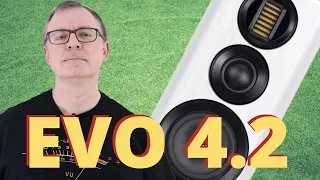
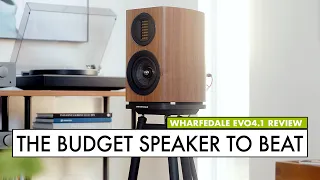
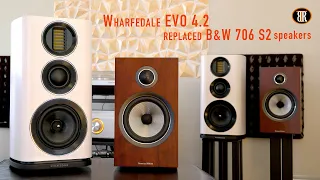
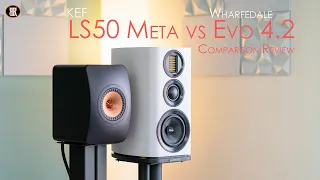
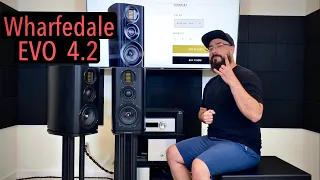
[Music] [Music] so you know what's crazy guys here we are in 2020 yet one of the most popular speakers in the market today comes from a company that was founded all the way back in 1932. yet as crazy as that is that's exactly what i'm going to focus on in today's video is the evo 4. 2 by warfdale so getting right to it the 4.
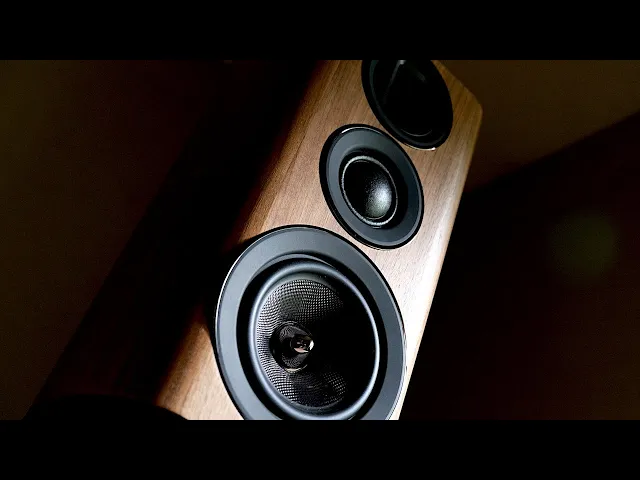
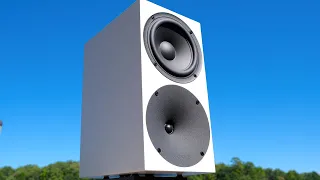
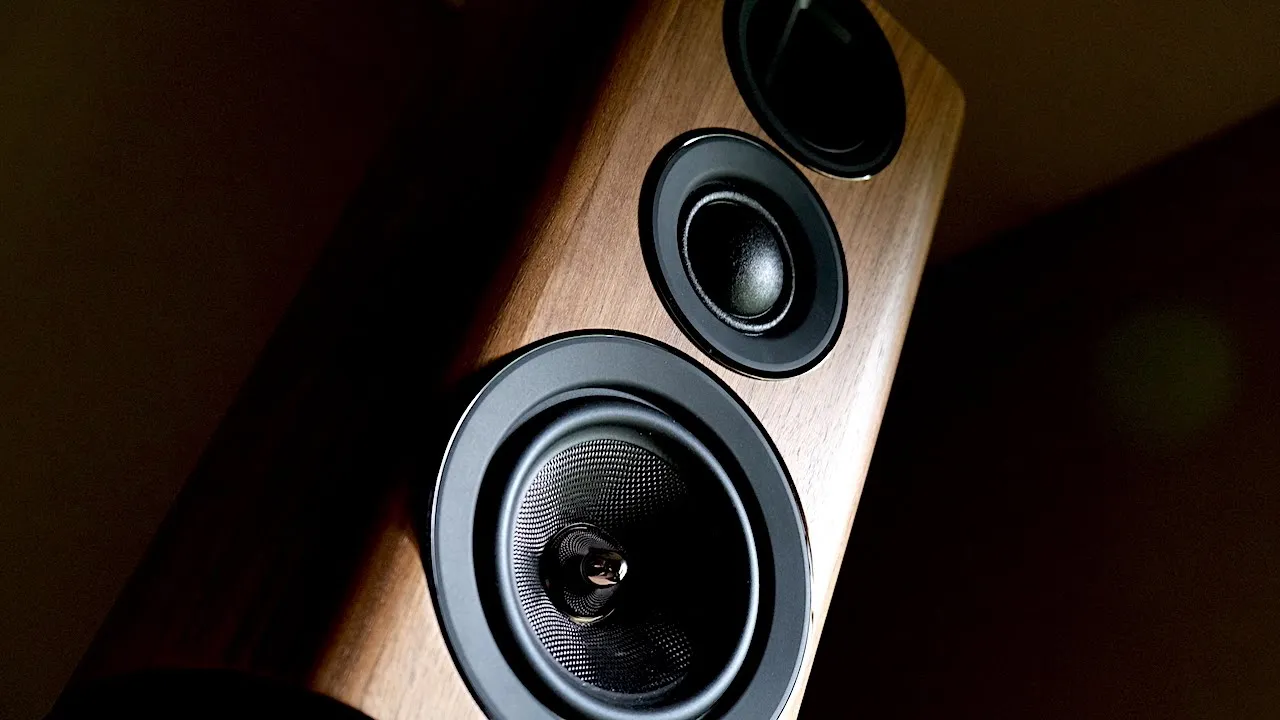
2 is a three-way ported bookshelf loudspeaker that retails for just under 000 us dollars and is available across many retailers around the globe let's kick things off by first looking at the build quality into fit and finish each speaker weighs nearly 30 pounds apiece and i gotta say it looks absolutely stunning in fact in my nearly 20 years of being an enthusiast i can't recall another manufacturer offering something like this for the same amount of money let alone a company that follows your typical distributor retailer business model i mean look say what you will about made in china but iag knocked it out the park with this one anyways now let's look at the driver configuration starting on top we have our air motion transformer or amt for short this is what handles the high frequencies so what you're getting here is basically a low mass folded diaphragm material that allows for a quick response and possesses a large radiating surface area this allows the driver to deliver low distortion output but the problem with amt's is that they're usually limited in terms of low frequency extension enter the 2-inch dome mid-range driver so this is yet another low-mass solution that's capable of taking over where the amt drops off these drivers are coveted for their excellent dispersion characteristics and when implemented the right way at least subjectively speaking audiophiles love them because they feel like they can sound more natural than your conventional woofer yet the challenge is doing it the right way apparently this is a very difficult thing to pull off which is why you see so few affordable speakers using dome mid-range solutions and yet here it is pairing up to that is going to be a six and a half inch woofer that uses a kevlar cone material and then on the very bottom we have our logo on what looks to be a base but is actually this slotted port system which supposed to funnel base evenly away from the speaker and also allows it to be placed next to a wall boundary without suffering too much to the performance so that's going to be the front of the speaker so now let's take a look at the back okay so here's the back of the 4. 2s we have this nice curved cabinet and down below you'll see this unique binding post configuration so they are by wire capable but if you're like me and you tend to prefer two conductor options all you have to do is use the two bottom terminals anyways there's no question that these speakers are built very well but that means nothing if they don't sound good so now it's time to talk about how they perform [Music] okay so when it comes to performance let's go ahead and start off with the most obvious observation first so the evo 4. 2s are big bookshelf speakers and because of their size they're going to give you a fuller truer to life sensitive scale than most other bookshelf speakers for around the same amount of money mostly because they're bigger than they are and that's the advantage of having a greater amount of radiating surface area not exactly something i think most of us will complain about but when it comes to overall sound and character the evo 4.
2 what you're going to get is a speaker that has a warm rich and slightly laid back presentation with one exception which i'll mention here in just a bit but i need to emphasize that what you are not getting is a conventionally accurate sounding speaker nor are you getting something that has that cliche audiophile sound to where the treble is sharp and prominent instead you're getting something that's designed to give you this bridge between resolution and something that's easy to listen to and that leads me to the different elements of the presentation starting with the treble so you can't talk about the treble without talking about the ant and i don't mind saying guys i'm normally not a fan of amt drivers usually they sound very uh prominent and usually they don't sound very natural to my ears yet when i listen to the evo series i got to admit they did a great job with this in fact if i didn't know any better and if i were blindfolded i would probably tell you i was listening to a really good soft tone driver because with the evo series it's not trying to force gobs of high frequency information down your ears nor does it sound overly sibilant and harsh even with less than perfect recordings now don't get me wrong on the worst of recordings that's unavoidable through any system but overall it seems like wharfdale took the amt they rolled it off yet they still allowed it to do what amts do so well which is unforced resolution and the net result of that is something that's airy spacious there's still good detail to the sound but it's not fatiguing it's not too prominent and in your face and i think it's something that a lot of people will like and what these drivers are so good with is that when the music gets chaotic when there's a lot going on it does a great job of being able to give each detail within the top end his own sense of space it still sounds uncluttered and clear even at louder volumes with complex music overall it's really good and i think it's something that people who want balance are going to enjoy now clearly if you're looking for that sharpness in the top end or you're a fan of the clips and jbl sound and you want a lot of trouble these aren't going to be for you but for everybody else yeah i think it makes for a good listening experience and now let's talk about that mid-range so the mid-range is arguably the star of the show here and this is where the sound deviates a bit from that warm rich laid-back character because the mid-range on the evo series is prominent it projects in a forward way and this does a few things for you so for example when you're listening to vocals because it projects in such a way it gives you that the listener is there i should say the musician is there in the room with you effect there's a big sense of scale it's immediate it's an intimate experience and because a dome mid-range driver is so good at delivering unforced resolution and an overall good balance between not being too thin or not being too warm overall you're getting exceptional mid-range i mean this is giving you an insight into what high-end is really about now some people i've seen say that it's close to an ls35a i'm not sure i would say that but it is very good and for people out there who like the sound of a piano especially the attack of a piano you're going to like it it has good tone there and also when it comes to acoustic instruments like guitar not only does it have good attack but because the overall sound is still rich and warm it does a nice job of capturing the body of the guitar so overall it's very good the only compromise with the mid-range is depending on how you have these speakers set up or what you haven't connected to it can beam at you from time to time so it's just something to be aware of anyways now let's talk about the bass so the bass let's take on this warm character but it's not really as prominent as you may expect from a speaker at this size in fact you don't really realize how much bass output there is to the 4. 2s until you start to really crank the volume and you realize wow this speaker actually has a pretty decent amount of bass and it's keeping up it's not distorting it's actually pretty strong sounding but i think the most difficult thing to describe about the bass is its prominence the way that it fills a space and i think this is due to the slot loaded port system that they use it's just it fills out the room very evenly it's very strong and it almost has this unforced and natural quality to it i think that's the third time now i've used the word unforced so now let's talk about imaging so i need to make it clear that when it comes to imaging the evo 4. 2 is best suited for listeners who are going to experience the speaker on axis or in other words when you're sitting in your listening chair this is where you're gonna get good focus between the speakers and while the imaging isn't what i would call holographic at least not compared to some other speakers it's going to be sufficiently wide enough for most people but the biggest thing about the sound stage is this ability to place instruments or i should say different notes distinctly within that sound stage it locks them in and that helps to create more of a realistic presentation on to dynamics so dynamic output is interesting when it comes to macro dynamic output or at least the ability to move a lot of air quickly now these speakers don't really do a great job of that just because you have a dome mid-range driver and an amt there's just only so much air that those drivers can move however when it comes to micro dynamics or in other words let's just say somebody's playing a guitar and they're changing the velocity of which they hit the strings that's where the speaker's really special and you can experience those nuanced changes more effortlessly than you can with many other budget speakers so overall what you're getting is a very good very special sounding presentation if you can accommodate them properly so if you're seriously considering a pair of 4.
2s you need to spend the time to check out the other section because well there's a lot that you need to know about in terms of getting really good performance out of them so let's do that right now [Music] okay so i need to make this clear while the evo 4. 2s are very capable speakers they are not a drop and plop solution so if you want to realize their performance potential then you need to pay attention to how you set them up and you also need to be aware of the kind of gear that they perform best with all of that i'm going to cover in this section now because there's so much information to go over i decided to actually write down a list to follow because i don't want to miss anything important something that i almost never do for my videos so first let's focus on setup procedures and let's start off with the most important stuff first which is going to be break in so normally i don't really talk about break into my reviews because usually it doesn't have a significant impact on the performance but with the evo 4. 2s it has a huge impact on what you experience with these speakers so out of the box the evo 4.
2 is for me sounded bright beamy with absolutely no integration between the amt the dome mid-range and the woofer it was so bad that i almost sent these speakers back without a review but i stuck in there and after two hours of play i sat back down and quite frankly i couldn't believe what i heard in my 20 years of listening to hifi products i've never heard something go from one extreme to the other instead what i heard is pretty much what i reported in this review something that was laid back warm rich sounding with good integration between the drivers it was so surprising that i called the distributor and said hey look this is crazy but this is what i ran into does this sound right and i was both relieved and surprised to hear them say well we didn't necessarily experience the same bright sound you reported but yes after two hours of play they changed monumentally in fact they were kind of horrified at what they heard when they first brought in the speakers but just like with myself after a couple hours everything settled down and it was all good from that point onwards so you need to be aware of that and then number two these speakers are going to be very sensitive with the height of your ears relative to the height of the drivers so in order to get the most natural sound out of them you want your ears to either be directly in line with the amt driver or you need it to be directly in line with the dome mid-range any higher or lower that could really alter how you experience the sound of these speakers next in terms of stands look as with any high quality stand out speaker they sound best with high quality stands this doesn't mean spending a lot of money stands for monoprice or pangaea will be good enough just fill them up with dry sand and away you go but some of you may need to buy new stands because these speakers may need to be a little bit lower than what you're used to just something to be aware of so next consulting to list these speakers tend to sound good when they're spread far apart from one another now in my room there's usually one spot where most speakers sound very good especially bookshelf speakers but i noticed that these sound a little bit claustrophobic when they're placed a little too close together so spread them apart at least as best as you can that opens up the sound and will give you cleaner uh and a wider sound stage moving on let's talk about toe-in so this is something that's free to experiment with so if you're somebody who likes more of a brighter more forward presentation what you want to do is you want to take the grilles off and then point the drivers directly towards your ears this is where you're going to get the most prominent treble information if you're somebody who likes the opposite type of sound and you want something that's more laid back then point the speakers directly out into the room and experiment with leaving the grilles on personally i think they sound best with a little bit of toe in i like the point of drivers just outside of my shoulder area this gives you good focus between the speakers and a good balance between travel that's expressive but not over the top okay so moving on now let's talk about positioning as far as wall boundary placement is concerned so the good news is that these speakers actually sound pretty good next to a wall boundary thanks to that slotted porting system that they have so if you have to put these close to a wall you'll be fine now obviously ideally for the best performance you want to give them at least a little bit of room to breathe i would say a foot to two foot away from any wall boundary is good and for those of you who can afford to pull them out a good three feet from the wall i would encourage you to do so again that's going to open up the sound just a little bit anyways that's it for setup tips so now let's talk about equipment matching so number one despite what the specifications may suggest these speakers like power now if you're in a small room and you listen at mostly soft to moderate volumes you can get away with a 30 watt per channel integrated amplifier just as an example but for most of you you're going to want 50 to 60 watts of solid state power or more especially if you're in a larger room and you like to listen at louder volumes so here would be my recommendations first when it comes to the kind of gear that they respond well to i would say class d amplifiers anything that has a mild dip in the mid-range and anything that has a v curve to it to give you some specific examples the nad 316b v2 for a small room that'd be fine same thing as goes with uh the marantz five zero zero five or the miranda six zero zero six both of which have a v curve the ps audio sprout 100 another good match if you have a little bit more money the rogue audio sphinx and to me the best match that i personally experienced was with the cambridge cxa 81 integrated amplifier that combo in particular is freakishly good for the money and what's going on here is this i think because the treble presentation of the evo 4. 2 is inherently so smooth that something with a v curve kind of brings it out a little bit more and because the bass is warm sounding but not necessarily prominent it also brings out the bass a little bit more but then it takes the mid-range just already forward and then retracts it a bit so when you put both of those things together you get a very balanced yet engaging sound so if you have the money to cambridge cxa81 it's going to be my top recommendation for you gear that i would stay away from is gear that either has a neutral sound to it or something that's already warm and rolled off it's just it's too much of a good thing so as much as i like to recommend something like the iota vx sa3 for a lot of speakers in this range i don't think that's a good match for the evo 4. 2s i'd rather pair it up to something like the sprout 100 if you're on a budget anyways let's move on here so the last thing is actually you know what that's it so all right so that's going to be it for my setup tips so now let's go over some of the caveats okay so unrelated but i really like the idea of using a list to keep track of certain bullet points it just makes so much more sense and plus it's a lot easier than how i normally do things so who knows maybe i'll do that more often in the future but for now let's focus on those caveats so there are a few things i need to go over with you all starting with the most obvious which is look the evo 4.
2s are not drop and plop solutions forget about the price tag you have to treat them like a proper high-end speaker this means understanding what you're dealing with and then accommodating them appropriately now for some of you that sounds like a lot of fun and it's not a problem at all but for others who just want to buy something you want to stick it in your system and you expect amazing performance well you may be in for disappointment now moving on as i mentioned earlier in the review but i'm going to reinforce now off axis imaging is just okay this is a speaker that's best suited for somebody who will be usually listening in the sweet spot in their listening chair that's because as you stand up and as you move around the tonal shift will change and as you would expect from anything that uses a dome driver and an amt at the same time the driver integration becomes compromised and you'll become more aware of the fact that there's multiple drivers at play and then lastly look these are not going to be the best solution for people who listen almost exclusively at whisper quiet volumes these speakers need just a little bit of power in order to gain some momentum and drive and life and energy to the sound i would say 73 to 75 db and higher is where these speakers like to be and that's about it i think the only thing i can think of is that look when it comes to equipment matching i know a lot of people in the comments section are going to ask me sean i have this equipment do you think it'll work bottom line is i don't really know i've noticed that these speakers respond in a way that's almost unpredictable in terms of what they work well with and what they don't the only consistency so far has been with class d amplifiers or anything with a dip within the mid-range that seems to work well for them so if that's what your components are known for then try it out it should work out very well anyways that's going to be it for my take on the evo 4. 2s so let's wrap up this review okay so look i'm going to be real with you all the only reason why i'm reviewing these speakers right now is because so many of you have asked me to do so and these speakers are very popular in fact worfdale can barely keep them in stock and after spending time with them i mean i totally get it first there's the build quality the build the fit and finish is absolutely incredible for something at this price in fact i don't mind saying i think it sets a whole new standard in that category it'll make even two thousand dollar bookshelf speakers blush by direct comparison so they did a fantastic job in that regard and then you have the performance when you accommodate these speakers accordingly they deliver sound that's well beyond what you would expect from something at that price point now the only reason why this isn't a super rave review with me screaming from the rooftop about how everybody should rush out and buy these is because these speakers the overall sound of them can change dramatically depending on how you have them set up and the kind of gear that you connect to them in fact it makes it very difficult for me to come up with an evaluation that's going to be applicable for most listening rooms in most scenarios all i can do is determine what i think the natural performance envelope of the product is and then hope that it mirrors your experience i suppose in time i will find out if that's the case anyways that's just going to be my take on the wharfdale evo 4. 2 guys thanks for watching if you're into comparison stick around otherwise take it easy and peace okay guys so this is the only relevant comparison that i have for you right now to the right we have the wharfdale evo 4.
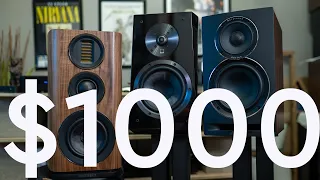
2 a set of three-way bottom ported bookshelf loudspeakers that retail for around a thousand dollars a pair and then to the left we have the bacard audio s300 mark twos a two-way rear-ported bookshelf speaker that retails for around twelve hundred dollars u. s a pair so the big question is how do they compete against one another because when you read the reviews or you watch my reviews both of them are described as having a similar sound both being laid back and on the warm side of neutral yet when you listen to them side by side it's clear that they are very very different from one another but that doesn't mean one is inherently better it just depends on what you want so first let's start off with the strengths of the evo so because it's a larger speaker it has better power handling characteristics not only that but because of the driver array that you see here it's capable of laying down a more realistic vertical image in other words the sense of scale to the music is a little bit more realistic with the evo and because it has that natural unforced detail to it one can say that it's more resolute than what you get with the picard audio s300 another thing i like about the evo is that the dome mid-range sounds fuller and warmer compared to the mid-range that you get on the picard audio s300 which by comparison is almost a little bit thin something you may not notice until you compare it directly with something like an evo now when it comes to the picard audio s300 it too has quite a few advantages so first let's talk about imaging which by and large is just hands down better in every way it's much wider the sound stage is much more holographic there's more depth to the sound there's more focus in between the speakers and the off axis imaging is rivaling totem in terms of the ability to sound coherent as you move about the room something that the evos really fall apart with the bacard s 300s have a livelier sound it's definitely more forward it's airier and it's going to be for somebody who says hey i like the evos but they sound just a little too muted a little too rolled off to my taste well the bakarts are going to sound a lot more open to your ears without sounding aggressive or fatiguing now the base believe it or not is going to be stronger on the s300s the smaller two-way speaker but there's a compromise with that they're reported so when you put them close to a wall boundary that base can become too much of a good thing and it can sound rather bloated and boomy whereas the wharfdales actually sound fairly coherent even even excuse me even when you have to place them next to a wall boundary so overall they're very different speakers i would say for people who love imaging and you like a more open sound yet you still like a warm presentation the book hearts are going to be the way to go especially if you listen to live recorded material and or you're really big on electronic type music however if you're somebody who listens to jazz or maybe your end a singer songwriter acoustic material and you don't need huge imaging you're just more about that low distortion output and that nice full warm presentation then there's a really good chance you'll prefer the evos so it's a matter of understanding what it is you need and then making the right choice now i don't really have any other comparisons for you i know in the comments section you guys are going to ask about all kinds of things and really i just don't know what to tell you the wharfdales have a sound that's the opposite of kef or focal that's all you really need to know about that when it comes to other speakers i've reviewed look the triangle bro 3s aren't nearly as good as the evos you pay you get same thing goes with the elac dbr 62s this is basically a much better version of something like a dbr 62.