Synaptic Plasticity - How the Brain Learns All actions requiring movement – like riding a bike, for example - must first be learned. Whether straightforward cycling or complex tricks and stunts. What is happening in our nerve cells when we learn something?
Let's take a look inside the most complex organ in the human body: our brain. 100 billion nerve cells – also called neurons – communicate with each other. That's about as many neurons as there are stars in the Milky Way.
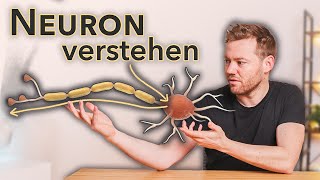
A neuron consists of a cell body and many extensions, called dendrites. It also has a longer extension: the axon. The dendrites receive electrical stimuli and lead them to the cell bodies.
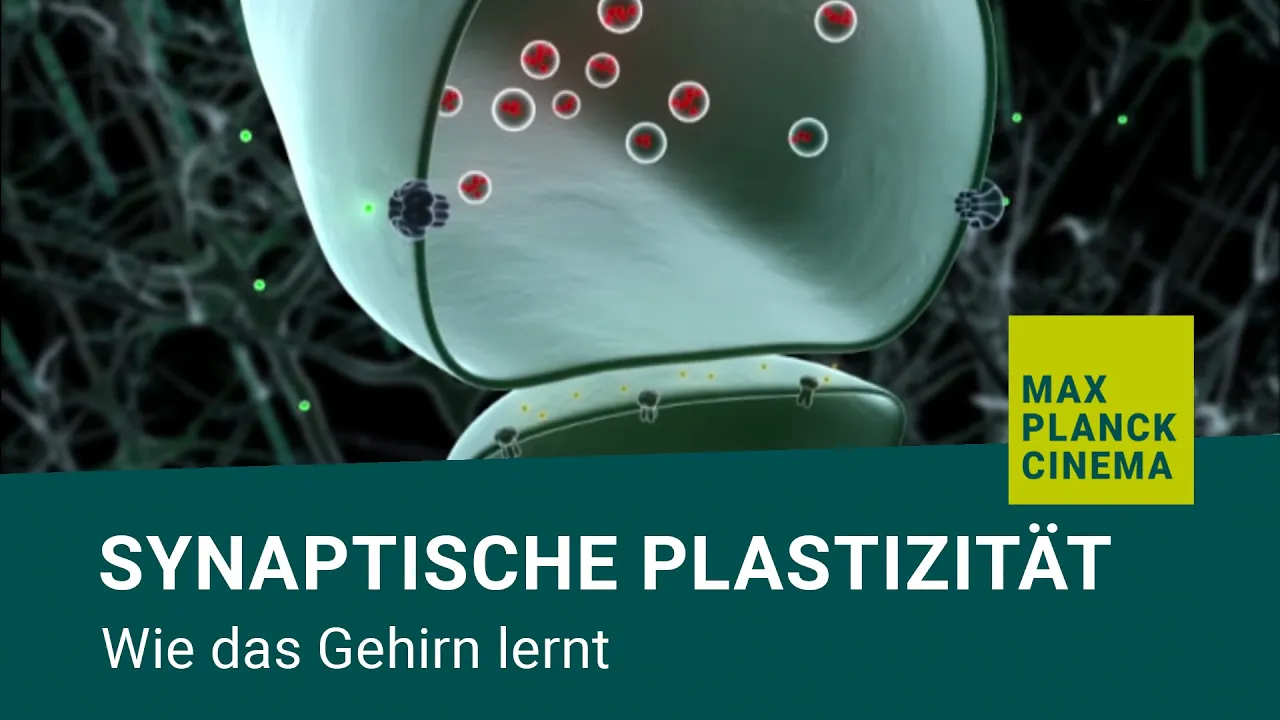
From there, axons send them on to other neurons. The transfer from one cell to the next happens at the synapses. This is where the electrical impulse is translated to a chemical one.
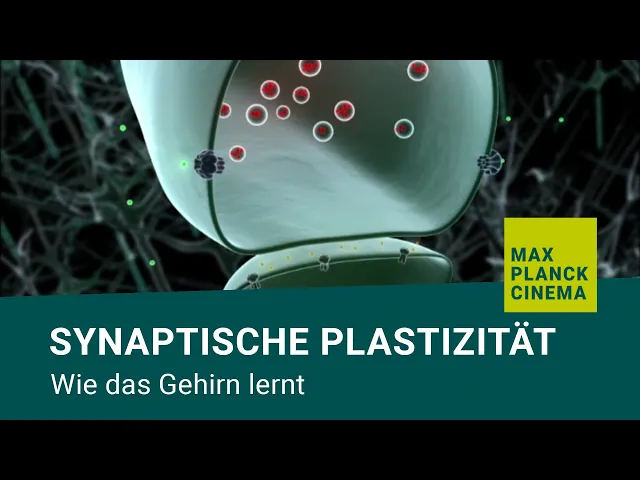
Calcium ions then flow into the pre-synapse. Tiny blisters - the vesicles - now release chemical messengers such as glutamate. Here in red.
They flow across the synaptic cleft to the post-synapse. Here, they bind to glutamate receptors. The result: sodium flows into the next cell.
This impulse first travels to the cell body and from there through the axon to the next synapse. And from there again on to the next. When we practice something, a process called long-term potentiation - or LTP for short - begins.
One and the same point of contact between two neurons is repeatedly activated. And it happens like this: In normal conditions, the synapses do not transfer every impulse received to the next cell. When we practice something, the rate of transfer is increased.
. . .
. . and more impulses pass through the synapses.
After a while, LTP kicks in – long-term potentiation. Now, more incoming stimuli are passed on to the next cell. The impulse transfer thereby improves.
What’s more, the post-synapse reacts more strongly. Receptors play an important role in this enhanced reaction, . .
. . .
. in terms of both their quantity and type. AMPA receptors are one of two kinds of glutamate receptors in the post-synaptic membrane.
Sodium ions flow through them into the cell. In this way, a new impulse is created in the receptor cell. The second type: the NMDA receptors.
Only when the transfer rate has increased and the AMPA receptors are open, . . .
. . .
do NMDA receptors let sodium and calcium flow into the cell. This amplifies the impulse in the next cell. In the event of intense practicing or learning, new AMPA receptors can be produced.
These then migrate to the post-synaptic membrane. . .
. . .
and ensure that the next cell will react even more strongly to each impulse. The result: The impulse transfer is enhanced, delivering a clearer response. Learning thus happens at the synapses, .
. . .
. . so that impulses are more efficiently communicated from one cell to the next.