when I first started it's better now and it actually was better in 2012 to be fair but when I first started we had this amazingly talented group of designers I don't know how many there were eight somewhere between 8 and 12 of us and they just did whatever they wanted like it was one of those weird things where they were talented they got really good work done they worked really hard and you would ask them to work on something and they would smile and Nod and they would work on something else whatever they thought was
the most important thing um this is like Matt Cahill and celayo and Blaze The Purge and all these characters and I was reliable because I had a job before Facebook I ran a small design firm I was like used to having clients and felt like I had a bias towards doing what the client asked for so when I joined a company I had a biased towards doing what my boss asked me for and so I think that helped give me get a leg up can I be rude and asked do you think like a really
important thing in terms of scaling from you know IC to leader is understanding that internal politics and do you think you kind of understood it in a way that others didn't maybe a little I think that it became clear to me that a lot of times for the people who are senior at the at the company and I was not senior what they really wanted was to be able to hand you a problem and then not to hear anything back from you until it was solved and so I I kind of made like I internalized
this early because that's kind of how I felt when I was a boss running my own design firm and so I just remember with a couple people I just was like look whenever I got handed to something I didn't tell them this I was just like okay I'm gonna I'm just gonna do it and fix it and do it well and then they're not going to hear back from me might be a day might be a week might be a month until the answer or the responses I took care of that just so you know
and so I definitely leaned into that for a number of years do you feel you have that today with the people in your team that sounds like a dream to me as a manager I don't have that no no I don't but I don't know if I was my team I have so much affection for my team probably more than it's healthy but they um but and part of it is because I they're all particularly my directs they're all much better at me at something and I can learn from them and so I try and
create an environment where they can challenge me um I know that sometimes I take up too much air in the room so I'm always trying to figure out how to delegate more how to empower them more publicly so that they don't do the wrong thing even if I ask them to do it you said about them challenging you I I love Gustav I use a CPO Spotify and he said talk is cheap and so we should do more of it when it comes to products I thought very Swedish it it wasn't what I thought that
covered and so my question to you is like bluntly do you agree with that talk is cheap and inspiring that internal debate or are you more like my mindset which is badly velocity and get done move fast it's a balance hey and this will feel like a cop-out maybe to you but so I do think that you do we as a lead you need to talk a lot and I think people underestimate this um it's just weird we do it in our company our business model is ads and marketing if you talk to anybody in
that world they'll tell you it's not just about the message it's also about the frequency of how often you deliver that message and then internally we decide we're going to do something different we make a post internally and one out of eight employees reads it and we move on with our lives and we're surprised when the whole company doesn't move along with us and so I've tried to really Embrace some advice I got early who was this from I forget who it was I could have come back to me which was if you really want
to move the team on something you need to say it until so many times that you literally want to throw up in your mouth if you say it again and then you need to say it again and again and again and again and it can be tough because you can feel like you're not being heard or you can feel like you're being predictable or just annoying but the truth is people need to hear things multiple times to fully internalize them and so I do think from the part of that quote that resonates is like I
do think you need to talk a lot um now I also think you need to be very clear about when you're just going to make a call and when you're not and there are some times where it's like no if I don't make this call we're going to waste too much time or I have the right occasionally as a leader to just use my you know veto power so to speak but then you have to be careful because if you over if you do that too much you stifle creativity you don't create enough space you
cannot hire or retain the most creative and interesting Talent so you have to use that sparingly but that's like a card to play and you can play it every once in a while but you can't play it every day at least is my experience be honest if we were a few of my mentor and I was a product or design kind of icy and I wanted to make the transition knowing all you know now is there anything that you'd advise me in terms of making that transition from from an IC to a manager like a
more senior leader from an IC to a manager and a product leader honestly anybody earlier in their career is probably just to get a a range of different experiences I think it's super important to broaden your skill set even if you don't or to even just experiment with different types of work whether maybe you're still a designer but you're designing different types of projects and you add space in the consumer space and the Enterprise space so that you can figure out in a more informed way what what your values are what matters to you what
your aspirations are because the most important thing over the long run is that whatever you want to be professionally that you're clear and honest with yourself about that and then you need to shape your work to be an overlap between what helps you achieve that and then if you work at a company what the company needs of you and your manager's job is to find that overlap and help you with that but not everyone's a great manager and it's so I think you need to do that proactively and I think early on in the career
if you want to get into management or become a more senior leader I think range is valuable even if you don't even if you want to be a specialist because I think it helps you make a more informed decision about the stake on the ground you want to place about what your aspirations are but you also have to be okay picking that stake up and moving it because maybe you learn something and it changes but it's better to move towards a goal that you set and change it later than to float through and large companies
and quickly growing companies like the one I work for will just pull you week to week in the fire over the weekend so if you don't put that steak in the ground you can really lose a lot of time and then pop your head up and be like whoa I don't even know how I spent this last 12 months speaking of putting a stake in the ground and speaking of advice that I I did want to ask you know obviously you kind of then became CEO of Instagram and I think one of my favorite questions
to ask is if you could with all you know now call up Adam the night before your first day of CEO of Instagram and give yourself some advice on what's to come what you could or should know what would that advice have been it probably would be more like emotional support um it probably would just be patient I the first there's a bit more emotionally challenging than you thought the first year was really tough uh three four months in I my my take was like I've made a horrible mistake I just why was that just
too much it was a lot I mean we lost our um we didn't only lose Mike and Kevin her amazing product thinkers and part of the reason I joined Instagram was to work with them we ended up losing pretty much our whole leadership team uh a little bit before and a little bit after that so my first year I had to hire a head of design engineering product management data science research HR Communications marketing and a CEO and so it's just a lot so there was a period there where I was very alone and that
was what was really hard because like if you have a really strong staff you and they and they have trust and they get along and they can challenge each other and they bring different skills you can kind of take on anything and if you don't anything can become a problem and that was that trough in that you know four or five months in was pretty pretty can I ask who did you talk to because that is lonely and CEO ship is a really lonely Endeavor yeah I always um who did I talk to back then
um I talked to some friends who are CEOs of other companies what did they advise you and to focus on things that were paid long-term pay off longer term so that they're like look you can mess things up in the short term but get like get your staff in the place aim high don't compromise because maybe that'll make the next three months worse but then the next three years will be better yeah I talked to somebody I talked to will Cathcart a lot who runs WhatsApp I think he was running the Facebook app at the
time and but he's been a he's been a good guy to bounce ideas off of for a long time now some friends outside of the company who had left the company who knew it but some people were just totally just was it difficult bringing in a whole new c-suite and making them gel together this is hard yeah um it's all it's always it's always a challenge uh I I've been lucky I have an amazing team um I've made a few mistakes in hiring but for the the vast majority of those hires I made in that
first year are still at the company and still in the positions at Instagram but yeah you have to kind of pick the People based on their skills but also based on does the group end up with the set of skills you need from this group as opposed from each individual and then you kind of have to also try and build that and pick people for whom they're going to have some chemistry without having them all be alike and that's an art not a science so you know it's a working project process work in progress but
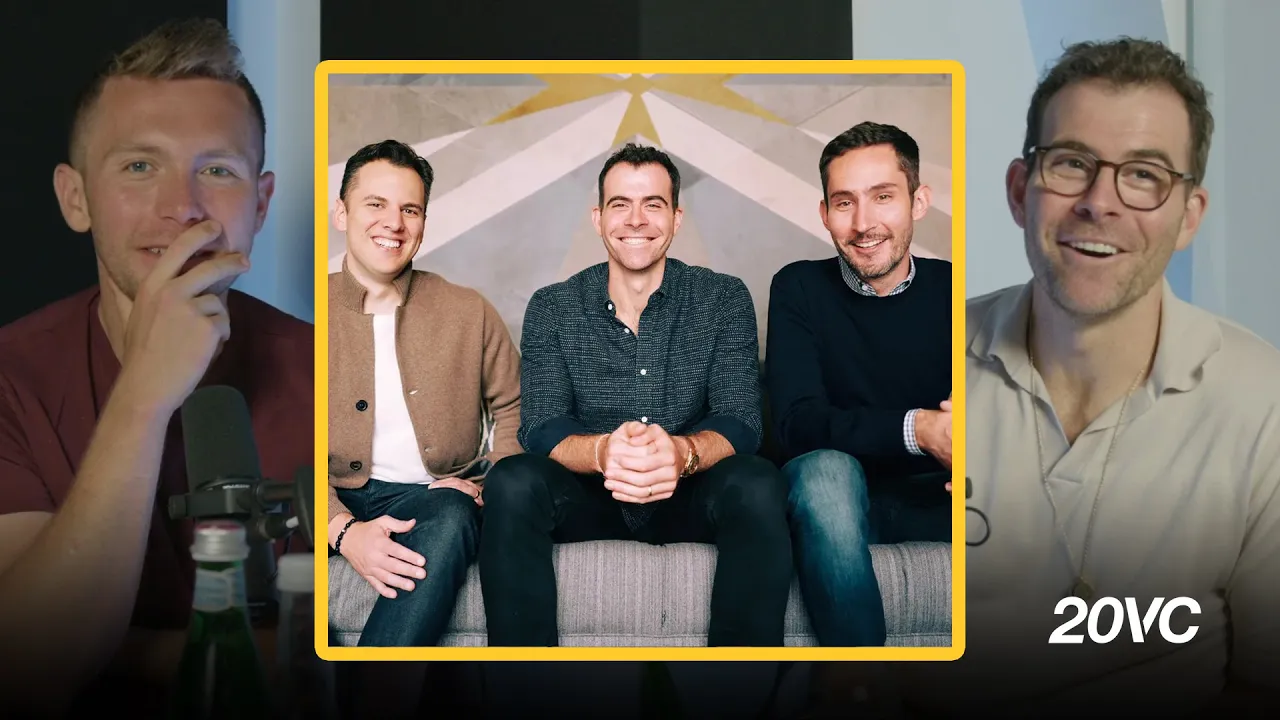
it's I just think it's important to spend time on I'm always working on figuring out how to increase the Rapport and the trust within that senior most team you mentioned Kevin and Mike there it's a very difficult thing taking over a Founder leg company as a kind of new CEO what are one or two of your biggest lessons having done it now very successfully with Instagram I mean one is actually some advice that Kevin and Mike gave me later so Kevin and Mike they were very supportive and I'm and I'm very grateful to them for
a lot of reasons and I had a drink with them pretty like maybe six or nine months in um and I had spent a ton of time that year trying to make sure that the team was in a good place there's a lot of anxiety with the founders leaving are we going to get swallowed by the big company or we're gonna lose our identity and you know I spent a lot of time trying to clarify our identity to try to you know boost morale team meetings roundtables q and A's you know all this kind of
stuff and Kevin Kevin Kevin's advice was look that's all nice but really what's going to boost morale more than anything else is just doing really good work and succeeding in the market and everything else is kind of noise and I'm I don't think he said it quite that um and it's quite such a black and white way but more or less that was the message and I think he's right I I still value investing in org leadership and communication a lot I spent a lot of time on I do weekly Q A's with my whole
team but I really do think that over the long run the thing that's going to get people the most rallied the most excited the most motivated the most effective is doing good work and and and being successful and so I've been trying to balance that and make sure that I don't do too much to to to focus on the short-term reactionary and more to focus on how to be really just deliver over years as opposed to worry about something that's you know someone might be upset about this week what's your message to the team when
you come in is it like this is a continuation of what we've done before is it like this is a change in how we're doing it and we should be excited how did you approach that I said I'm going to be a sponge and I'm going to try and learn as much as I can as quickly as I can and I'm not going to push for any change for at least a couple months I ended up breaking my promise in one place but for the most part I kept it and I think that helped why
did you break your promise these safety and integrity work we were running too much of our own stuff and not leveraging the much larger teams at Facebook and in the central teams I think there were more Engineers that worked on safety integrity at the company at the time that then worked at all of Instagram and so I was like let's just tap into that there's to do with all this hard stuff like