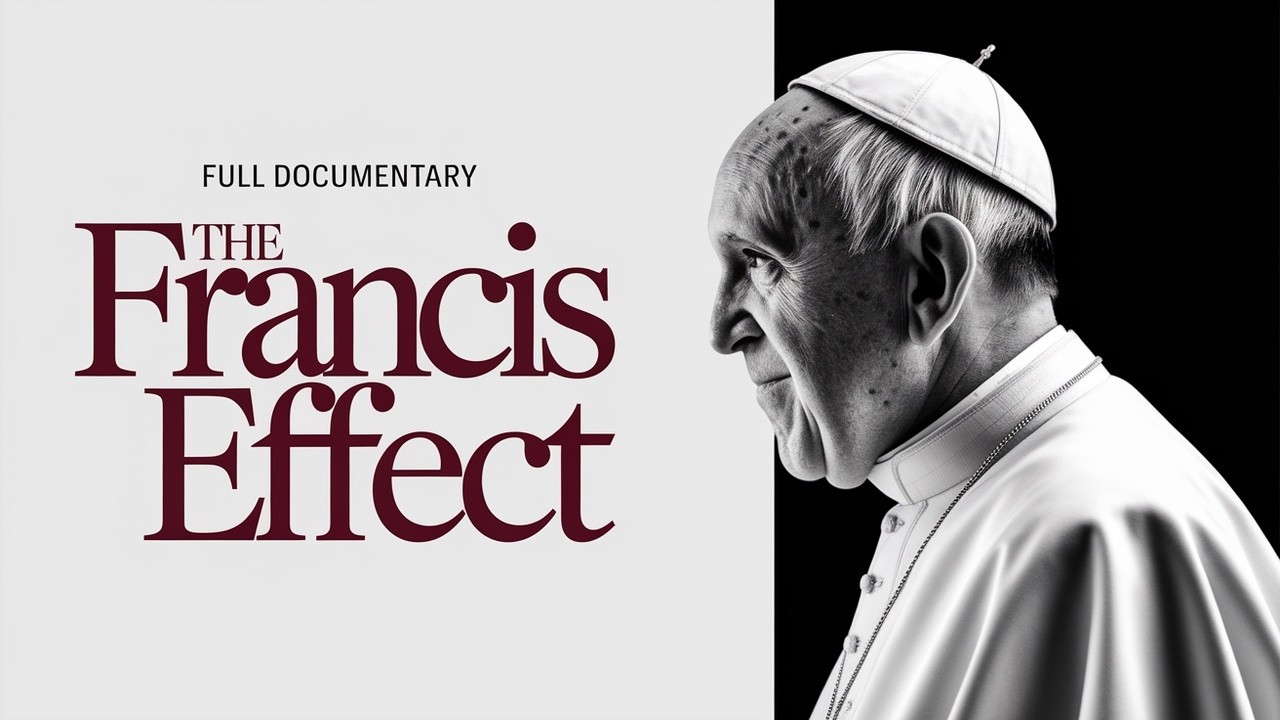
My name is Sister Maria. I've lived most of my life behind stone walls. Not because I was hiding from the world, but because I wanted to pray for it without distraction. But I am speaking now. Not because I want to, but because I promised him I would. The man I'm speaking of is Pope Francis. To the world, he was the holy father, the bishop of Rome, the vicer of Christ. To me, he was Horge, a brother in Christ, a Fellow servant of the same king. Many don't know that we were close. Not through politics or
position, but through prayer. We shared letters, moments of stillness, and an unspoken understanding that sometimes words cheapen what the soul already knows. I met him when I was still in my 40s and he was still in Argentina walking the streets that smelled like both incense and poverty. He was not yet a pope, not yet recognized globally, but even then He carried a fire that made you sit up straighter. When he entered the room, the first time we met, he asked me no questions. He just listened. Really listened, the way few people ever do. I spoke
of silence, of suffering, of the ache in prayer that doesn't go away. He nodded, not to agree, but because he had been there, too. He once told me, "The holiest things in life are never loud." That line has stayed with me for years. When he became pope, I cried. Not Because I thought he would forget me. I knew he wouldn't, but because I knew the weight he would carry. People don't realize what that role costs a man. They see the robes, the balcony, the headlines. They don't see the nights he spends awake weeping over the
sins of the world. They don't see the loneliness, the prayer, the hours spent asking God for mercy on behalf of a church that is often too distracted to ask for it themselves. I saw those parts and now I carry the memory of them like a second habit on my soul. In the final years of his life, our communication grew quieter, but deeper. We wrote less often, but when we did, it was urgent, not frantic, just focused. I could sense something in him shifting. There was a clarity in his words, like someone who knew his time
was drawing close. He didn't speak of death with fear. In fact, he rarely used the word at all. He called it the door. Just that, a doorway into the final truth. On one of the last occasions I heard from him, his letter began with these words. Maria, if I leave before you, tell them. That was it. No instructions, no list, just a knowing that there were things too important to die with him. In our last exchange, just weeks before his passing, he made it clearer. The world is too loud. But you, Maria, you know how
to speak in silence. So speak. Speak not with argument, but With witness. Tell them what they need to remember. And now I must I don't speak as a theologian or a celebrity. I speak as someone who prayed with a man who heard the voice of Jesus clearer than most. I speak as someone who saw behind the papal image into the heart of a servant who never wanted to be famous. He once told me, "Maria, I didn't ask for the keys. I just promised I would keep the door open Until he returned. That's the kind of
man he was. Not perfect, not without flaws, but real, raw, holy in a way that doesn't need applause. What I'm about to share is not a political statement. It's not commentary on doctrine or debate. It's personal. It's spiritual. And it comes from the last conversations I had with a man who knew he was preparing to meet his maker. He didn't want the spotlight. He wanted the truth to shine. And more than anything, he wanted you, Yes you, the one watching this right now, to remember that Jesus is not a symbol. He is the center. The
things he told me in his final days were not theories. They were convictions. He believed that the church was at a crossroads. That believers were choosing comfort over conviction, noise over stillness, and appearance over anointing. He feared a church that knew how to perform but had forgotten how to weep. He grieved over empty pulpits, Over Christians who could quote theology but hadn't spoken to Jesus in months. and he wept truly wept for a generation being raised on distractions while their souls quietly starved. He told me once, "Maria, they are building bigger sanctuaries, but their prayer
closets are full of dust." That line broke something in me because I knew it was true. And he wasn't judging. He was pleading. pleading for us to come back. Not to Tradition, not to innovation, but to the cross. The real one, the one that still bleeds and still saves. In his last message to me, he wrote, "If I could tell the world one thing, it wouldn't be to listen to me. It would be to return to the Gospels, return to Jesus, return to the fire." That's why I'm speaking now because I believe someone needs to
hear that. Maybe you've been going through the motions. Maybe you've been numb, Distant, disillusioned. Maybe you've been wondering if any of this is even real anymore. It is. And Pope Francis believed that with every ounce of his being. He told me once, "When I die, don't let them remember my face. Let them remember his. And so here I am, not to elevate a pope, but to echo a prophet, to remind the world that a man of God lived, prayed, and died with the name of Jesus still burning on his lips. This won't be an easy
story to tell, but it's the one I promise to carry. And it begins here with a vow made in prayer, in silence, and in love. A vow I now keep for him and for you. There's something strange that happens when a person becomes famous. They begin to disappear behind the headlines. The public builds a version of them out of quotes and controversy, hand gestures, and half understood statements. And suddenly the real person is buried Beneath the noise. I watched that happen to Jorge. The world came to know him as Pope Francis with robes and titles
and duties that made him seem distant or larger than life. But to me, he was always just Jorge, my brother in Christ, and one of the most humble men I've ever known. We began writing to one another back when he was still archbishop of Buenos Ays. Our correspondence wasn't frequent and it wasn't grand. It was quiet, reverent, simple. I would send Him reflections on scripture or notes from my time in the chapel, thoughts that surfaced after long hours of silence. And he would reply with his own heart, never with formality, never with pomp. He would
call me Hermona, sister, and I called him Hermono because that's what he truly was. We didn't talk about politics or positions. We talked about prayer, about the ache for a world that had forgotten God, about the beauty of the gospel, the mystery of the cross, The stillness of the spirit. I remember one letter in particular, short and scribbled, clearly written in a moment between appointments, where he said, "Maria, the world is burning and still I hear him whisper." That was him. Even surrounded by noise, by pressure, by the endless responsibilities of his office, he kept
his ear tuned to the voice that truly mattered. He once described prayer as breathing in the presence of God and exhaling everything else. I found that Profound, especially coming from a man who had so much placed on his shoulders. I don't think people realize how lonely leadership can be, especially spiritual leadership. Everyone looks to you for answers, for guidance, for strength, and often they don't realize how deeply you need to be held yourself. Jorge carried that with grace. He leaned on Christ. He found his rest in the stillness of prayer, not the applause of men.
I recall a visit to Rome some years ago, Long after he became pope. We met privately, not in the grandeur of an official audience, but in a quiet chapel tucked away from the crowds. He greeted me with tired eyes and a warm smile. He knelt beside me. No entourage, no pretense, just two servants of the Lord, reunited in silence. After a few moments, he whispered, "Sometimes I miss being nobody." It wasn't self-pity. It was honesty. He missed the anonymity that allowed him to walk through markets Unnoticed, to pray in churches without cameras. But he didn't
resent where God had placed him. He simply wanted to remain small even as the world saw him as great. That was his holiness. Not in his status, but in his simplicity. He had a soft humor, too. He would make little jokes about his age, about the pressures of Vatican life. I remember him once saying, "If Peter had a press team, we would have never gotten the truth." We laughed hard that day. Two Older souls who understood how easily the message of Jesus could get lost in the machinery of institutions. But he never grew cynical. Even
when he was criticized, even when misqued, misunderstood, and maligned, he didn't grow bitter, he would simply return to prayer and ask, "Is this helping me love Christ more?" That was always his compass. Not success, not popularity, but deeper love. His hunger for God never Diminished. That surprised me. You'd think a man in his position with so much theological knowledge surrounded by liturgy and ritual every day might eventually grow weary or mechanical in his devotion. But not Jorge. He was always chasing God, always searching the scriptures like a man looking for water in a desert. He
once told me, "Even popes get thirsty." And he meant it. He never assumed that his closeness to God was Automatic. He fought for it. He pursued it. He protected it. In our letters, he would often write about his mornings. He'd rise early before the city stirred, before the gates opened, before anyone needed anything from him. And in those precious moments, he would sit with the gospels, journal a few lines, and listen. He told me that's when he felt most like a child, barefoot before the father, waiting for bread. I've carried that image with me ever
since because That's who he really was. A man who, despite the crown of authority on his head, never stopped seeing himself as a servant at the master's feet. People think power changes a person and perhaps it does. But I believe holiness changes you more. And Jorge had been shaped not by power but by presence. The presence of God. That's what set him apart. That's what made his words carry weight. Not the seal of the Vatican, but the scent of Christ on his Soul. I once asked him what he feared most. He didn't hesitate that I
would become professional in the things of God and forget why I fell in love in the first place. That answer pierced me because it's so easy even in ministry even in religious life to become efficient to become polished to forget that Jesus is not a task but a treasure. Jorge never forgot not once. And so when I speak now, I don't speak of a figurehead. I Speak of a friend, a brother, a shepherd who long before he held the keys of Peter carried the heart of Jesus. I saw his humanity. I saw his humility. I
saw his hunger for God. And I saw the cost he bore quietly, willingly, so that the world might hear just a little more clearly the invitation of Christ. He wasn't just a pope to me. He was someone who helped me believe that holiness is still possible in this life. Not perfection, not power, but real raw Holiness. The kind that bleeds, the kind that bends, the kind that burns through every mask we wear and calls us deeper. I miss him, and I know I always will. But his words remain, and now they are yours, too. The
last time I saw him, the air felt still in a way I can't fully describe. It wasn't the stillness of sadness, though there was sorrow in the room, nor was it silence born from fear. It was holy stillness, the kind that falls when you know heaven is close. He Was lying in his simple bed, a soft white blanket drawn up around his chest, his crucifix resting lightly in his hands. There were no cameras, no assistance, no public, just the sound of breath, the rustle of a turning page as I read aloud from the Psalms, and
the quiet weight of what was soon to come. He looked tired, yes, but not diminished. If anything, he looked more alive than I had seen him in years. Not in body, but in spirit. His face was Thinner, his hands delicate, but his eyes still carried that strange mix of fire and peace that I had come to know so well. There was no fear in them, no hesitation, only clarity. I've sat beside many death beds in my life. Some clung to life, others drifted away unaware. But he met it differently. He spoke of death the way
a child might speak of the first day of school, unsure of what exactly lies ahead, but confident in who is waiting on the other Side. He had said it before in sermons, in private letters, but now he said it with the full weight of someone standing at the edge of eternity. Death is not the end. It's the doorway, and I'm not walking through it alone. His voice didn't tremble. Mine still does, just remembering it. Because it wasn't just what he said, it was how he said it. as if he had already seen something we couldn't.
As if the veil between here And there had already started to thin, he reached for my hand and held it for a long while. Not tightly, not desperately, just as someone who wanted to make sure his final words would be carried forward by someone who truly understood. Maria, he said, the church is falling asleep. I didn't know what to say. I think I looked away because the weight of it startled me. But he didn't stop. She has forgotten how close eternity really is, how urgent love is, How fierce holiness must become again. There was pain
in his voice then, not for himself, but for the body of Christ, for the faithful who had grown tired, for the shepherds who had grown soft, for the masses chasing relevance while neglecting reverence. He said, "We are in a fog. Beautiful rituals, empty hearts, crowded pews, distracted minds, sermons without tears, altars without fire." He paused then, breathing slowly. The world isn't just hungry for truth, It's starving for it. But we feed them noise. It was hard to hear. Not because it wasn't true, but because it was. And I think deep down we both knew it.
He looked at me and I saw in his eyes both the sadness of a father and the faith of a saint. Maria, he said, if you ever feel tempted to be quiet for the sake of peace, remember that silence can also be complicity. He never liked being harsh, but he knew sometimes love requires urgency, especially when eternity is Involved. He talked about the gospels as if they were still unfolding. He said, "We read them like stories, but they are instructions, warnings, invitations." He believed the sermon on the mount wasn't a poetic ideal. It was a
road map. "Blessed are the poor in spirit," he whispered. "Because they know they need me." That's what he wanted the church to return to. need, not perfection, not popularity, just raw, honest need for Christ. He turned his gaze to the small Crucifix on the table nearby and said, "That's not decoration. That's what love costs." He didn't cry, but I did because I understood. We had spent our lives in habits and vows in chapels and confessionals trying to carry that truth and still we had barely scratched the surface of it. There was a moment quiet simple
when he closed his eyes and said, "I hope when I see him he recognizes me." That undid me because here was the pope, the most Visible spiritual figure on earth. And his final hope was not applause or honor or legacy. It was to be recognized by the one who loved him first. That kind of humility doesn't come from a position. It comes from a lifetime of broken bread and whispered prayers. He spoke of eternity not as a reward but as home. I don't deserve it, he said. But I believe he promised it. And I believe
he doesn't break promises. I think that's the greatest Peace a soul can have in their final hours. Not confidence in their works, but confidence in God's mercy. He once wrote in a letter to me, "The holiest people I've met never talked about their holiness. They talked about his grace." And now, as he prepared to meet that grace face to face, he wasn't afraid. He was ready. He didn't ask for final words to be published. He didn't dictate a message for the church. He simply said, "Tell them it's real. All of it. Heaven, Mercy, judgment, Jesus."
Then he looked at me with eyes full of the kind of love that burns through pride and leaves only truth behind. Tell them it's not too late, but the hour is very late. Those words, they've never left me. I left that day knowing it would be our last meeting. I walked away not just from a pope, but from a friend, a spiritual brother who had poured everything he had into making Christ known. And as I stepped out into the Evening light, I knew I was carrying something sacred. So now I'm telling you, because he asked
me to, because eternity is closer than we think, and because his voice never trembled, but mine still does. I think what broke him most in the end wasn't his body. It wasn't the burdens of papal responsibility, the countless demands, or even the pressure of a divided world watching his every move. What broke his heart, what made him cry in the silence Of the night was the church. Not the world outside her walls, but the one within them. He loved her deeply as a man loves his bride. But like any husband watching his beloved drift away,
he wept not in bitterness but in aching love. People often imagine that a pope's sorrow would be reserved for crisis, scandals, politics, or public disgrace. But that wasn't what grieved Jorge the most. What brought him to tears, real physical trembling tears, was the loss Of the secret place, the absence of prayer, the silencing of intimacy with Christ in exchange for performance systems optics. They preach me, he said once, his voice barely above a whisper. But they don't know me. I remember that moment vividly. We were sitting together during a retreat, one of the few times
he had carved out space just to rest and reconnect with God. He had been unusually quiet all day, though not absent. He carried something in his Spirit that he hadn't yet spoken. Then, without warning, he turned to me, looked directly into my eyes, and said those words, "They preach me, but they don't know me." I couldn't speak. I didn't need to. We both sat in the weight of that sentence like it was a stone dropped into the center of our souls. That was the wound he carried in secret. A wound that pierced not his reputation,
but his heart for the church. He didn't speak about Denominations. He didn't blame groups or doctrines. What pained him was how easy it had become to build ministries without God, to deliver sermons without prayer, to gather crowds without the cross. He once wrote to me, "We have mistaken inspiration for intimacy and charisma for communion." That was his sorrow. A church drifting not into heresy, but into emptiness. a church that still used his name, still invoked his symbols, but rarely lingered long Enough to hear his voice. He would often reflect on the passage from Revelation, the
letter to the church in Leadyia. You are neither hot nor cold, Jesus said. I am about to spit you out of my mouth. Francis would sit with those words for hours. Lukewarmness, he told me, is the slow death of love. Not rebellion, not scandal, but lukewarmness, the quiet, comfortable, well-lit path that leads a soul away from the fire without ever raising its Voice. He wasn't angry about it. He was heartbroken. He loved the church, not as an institution, but as a bride. He believed with all his heart that she could rise again, burn again, become
radiant again. But he also believed that would only happen if she remembered her first love. Not tradition, not relevance, not even influence, but Christ, the raw, unedited, allconsuming presence of Christ. The one who walked dusty roads, healed lepers, flipped Tables, forgave sinners, and wept over cities. That Christ, he often said, "We are polishing the chalicees while forgetting to kneel." And it was true. How many programs are launched while the prayer rooms stay empty? How many churches echo with clever sermons while the altar gathers dust? How often do we talk about revival while ignoring the repentance
that must come first? He didn't say these things to condemn. He said them as someone trying to wake the Sleeping. Maria, he told me once, when the people of God lose the language of tears, they lose the language of heaven. He believed we had become too professional, too curated, too distracted. We had learned how to host services but forgotten how to host him. We had mastered religious speech but neglected holy silence. And he feared that if we didn't return to that secret place, the place where we are undone before God, we would continue to drift
Further into a faith that looked alive but had no pulse. There was one night near the end when we sat in silence together. He was holding his Bible worn and underlined, pages softened from years of use. He didn't say anything for a long time. Then he closed it slowly and whispered, "This word burns, Maria, but too many are content just to quote it. We must let it burn us again." That's what he longed for. Not louder churches, but burning Hearts. Not a bigger following, but deeper faith. He believed that the church's future wouldn't be found
in strategy, but surrender. Not in louder platforms, but lower knees. He dreamed of a day when we would no longer be obsessed with being known, but obsessed with knowing him. Where people wouldn't just attend a service, but become altars themselves. He used to say the church should not be a performance hall. She should be a hospital, a refuge, a Fire. Even now thinking back on his tears, I feel that ache rising in me again, he didn't cry for headlines. He cried for holiness. For hearts that once burned with love for Jesus, but had settled into
cold, polite religion. For pastors too busy to pray. for worship leaders more in tune with trends than with truth. For believers who forgot how to sit at his feet. And so I weep too, not because I am without fault, but because I have seen what he saw. The Church is beautiful. She is still his bride. But she must wake up. She must return to the scriptures, to the cross, to her knees, to her first love. That's what he begged for with his final strength. Not reform, not rebellion, just return. Return to him. Because in the
end, that's all that matters. There comes a point in every soul's journey where the message is no longer optional. It becomes a mission. That's how it felt for me. I didn't want to speak. I didn't Want to be visible. I've spent a lifetime in habits of silence, in hidden spaces of prayer far from the spotlight. But when a man of God with tears in his eyes and eternity on his breath tells you to deliver a message, you don't hesitate. You say yes, not because it's easy, but because it's holy. He didn't say it dramatically. In
fact, his voice was barely above a whisper, but the weight of his words was heavier than anything I'd carried before. It was the Final time I saw him just days before he stepped through what he always called the doorway. I was sitting beside his bed. He looked thinner, but there was a strange glow in his face, a brightness in his eyes that didn't match the weakness of his body. He held my hand and after a long moment of silence, he said, "Maria, this is the message. This is what I want them to hear." He didn't
Launch into a long theological explanation. He didn't quote councils or catechisms. He just said three things slowly, intentionally. Return to the gospels. Return to your knees. Return to the fire. At first, I wasn't sure I fully grasped what he meant. I nodded, but he saw the question in my eyes. So, he smiled faintly and began to explain. The gospels, he said, are not decorative. They are not museum pieces. They are the words of Jesus, alive, burning, sharp. We have turned them into liturgy, and that is good. But we must not forget they are also invitation.
Every parable, every biatitude, every cry from the cross, it is him calling us home. He looked down for a moment, then back up at me. We've memorized verses. But have we obeyed them? He spoke about how the church had drifted into commentary. We study the word, dissect it, debate it, but rarely do we allow it To undo us. The early disciples didn't have seminaries. He said they had Jesus. And his words changed them. Not their intellect, their hearts. He believed that the next revival wouldn't come through clever sermons or perfect choirs, but through hearts that
tremble again at the words of Christ. And then he said the second thing, "Return to your knees." That phrase hit me hard because I knew What he meant. Not just physical posture, but spiritual humility, a return to dependence, a return to desperation. He believed the church had grown too confident in her own strength, too reliant on structure, reputation, influence. When we stop kneeling, he said, we start pretending. We perform instead of pray. We speak of God instead of speak to him. His eyes welled up as he added, "Power without prayer is noise, and we've made
a lot of noise." He spoke about how the church must become a people of intercession again. Not just prayer before meals or polite requests, but deep groaning prayer. The kind that shakes rooms. The kind that births tears. the kind that silences pride and calls heaven to attention. "Our knees must be bruised again," he said, "because that's where the battle is won." And then the third thing, "Return to the fire." That's when his voice Changed. Not louder, but steadier, firmer. He wasn't talking about literal fire. He was talking about the Holy Spirit, the burning presence of
God that purifies, empowers, awakens, and sends. He said, "We've replaced the fire with fog machines, with structure, with safe religion." His hand trembled slightly, but his words did not. But the spirit cannot be tamed. He cannot be scheduled. He comes to consume, and that's what we need. He talked about how the early Church had no buildings, no budgets, no platforms, but they had fire. The spirit burned through fishermen, tax collectors, women, widows, the poor, the nameless, and they changed the world. It's not about cathedrals, he said. It's about kitchens, living rooms, corners of prayer, and
quiet homes where mothers weep for their children, where fathers open the word with trembling hands, where neighbors pray over one another without needing a stage. That's What he believed. that the future of the church wasn't going to be built in marble and gold, but in everyday places by everyday people who carried the fire of God in their hearts. He longed to see believers become altars again, not just attendees, but living sacrifices. People who would carry Jesus into their jobs, their families, their phones, their habits. Not just Sunday morning. Return to the Gospels. Return to your
knees. Return to the fire. Those Three lines weren't poetic. They were prophetic. They burned into me then and they burn in me still. That was the message. No complex theology, no controversy, just a call to come back. Back to the simplicity that still saves. Back to the Jesus who still walks among the lampstands. Back to the raw, burning, beautiful truth that we were made for him and him alone. I didn't want to be the one to carry this. I didn't feel Worthy. I'm just a nun. But then again, so was Mary Magdalene. So was Clare
of Aisi. So were countless other women who carried messages too holy to be contained by the world's standards. And I promised him. I promised I would speak. So I am. If you've drifted, come back. If you've grown cold, come close. If you've built a life around Christianity, but not Christ, tear it down. Start again. Let the gospel shake you. Let your knees find the floor. Let The spirit light you up from the inside out. This is not a warning. It's an invitation. The same one he gave 2,000 years ago. Follow me. There were many things
Pope Francis never said in public. Not because he was hiding them, but because he understood that some truths must first be whispered in the quiet before they are proclaimed from the pulpit. He never wanted to stir panic, never sought to alarm. But beneath his humility, beneath his Gentleness and humor, there was a deep and quiet urgency that carried weight far beyond his words. It lived in his eyes, in the way he lingered in prayer, in the way he would sometimes fall silent mid-con conversation as if he were hearing something the rest of us couldn't. I
remember once during a long afternoon walk inside the Vatican Gardens, one of the few places where he could breathe without cameras following, he stopped midstep. The sun had just Dipped below the roof line, and the air smelt faintly of pine and old stone. He stood still for a long moment, then turned to me and said, "Maria, there is less time than we think." It wasn't said with drama. There was no dread in his voice, just a knowing, a reverent sobriety, as if someone had just whispered eternity into his ear. He never gave me dates. He
never made predictions. But he often spoke as if he Could feel the pulse of heaven and it was beating faster. "The days of delay are over." He once said, "We have built comforts where we should have built altars." He wasn't speaking about the world alone. He was speaking about the church. And what broke his heart most deeply was that much of the church didn't even realize how far she had drifted because everything still looked fine from the outside. He believed that judgment would not begin with Governments or corporations or world systems. It would begin with
the house of God. That wasn't just theology to him. It was a reality he felt pressed against his chest every day. "We must stop praying for fire to fall on the lost," he said once, "and begin praying that it falls on us." Francis was not obsessed with end times. He was not preoccupied with apocalyptic charts or endless speculation. He was far too grounded in the present for that. But he knew scripture. He knew the warnings. He knew the voice of the shepherd. And he knew what it sounded like when heaven was calling its people to
wake up. He often quoted Matthew 25, the parable of the 10 virgins. Half were foolish, he would say. And the only difference wasn't their robes or their place in line. It was oil, only oil. He believed we had traded intimacy for imitation, the look Of devotion for the substance of it, candles without flame. And this is why his sorrow ran so deep. Not because he thought the church had failed. He never gave in to cynicism. He always believed in her, but he also knew she was in danger. Not of falling to persecution, but of falling
asleep. And sleep, he would remind me, is more dangerous than doubt. Because when you're asleep, you don't even know what you've lost. The devil isn't attacking the church, he Said once. He's seducing her. And he wept as he said it. He saw the patterns. He saw the distraction, the division, the spiritual fog settling over leaders who once carried fire. He saw how slowly, imperceptibly, ministries were becoming movements of men rather than movements of God. And yet he held on to hope. Always hope. Revival will come, he told me. But it will come through repentance, not
relevance. It will come when the Church stops chasing the world and starts weeping again. He believed that before God sends awakening, he allows breaking, not as punishment but as mercy because it is only when hearts are soft that they can carry the flame. We do not prepare for rain by polishing windows, he said. We prepare by digging trenches, by making room, by getting low. His words were never about fear. They were about readiness. "The groom is coming," he whispered once. "And the bride must Trim her lamp." "I remember him reading from Joel, too, during one
of our final prayer sessions together. His voice cracked as he said the words, "Return to me with all your heart, with fasting and weeping and mourning." "Blow the trumpet in Zion. Declare a holy fast. Call a sacred assembly." He looked up and said, "We've replaced fasting with feasting, morning with marketing, sacred with safe." Then he bowed his head and whispered, "No more. No more delay." He wasn't angry. He wasn't dramatic. He was heartbroken. He believed in a remnant, a people within the people who still burned, who still listened, who still knelt. And he believed that
it was to them that God would entrust the next move. Not the loudest, he told me, the lowest, the ones who tremble. And he longed to see them rise, to see them return to the gospels, to their knees, to the fire. That rhythm became his heartbeat. Even in his final hours, he Was praying for this, not for his legacy, not for headlines. He was praying for hearts to awaken. For leaders to fall in love again with the one they first met when they had nothing. for churches to turn off the lights, cancel the program, and
just sit in silence, in repentance, in awe. He believed that holiness, not strategy, would carry the church through the shaking to come. And now I see it, too. I see it in the flickering Attention of believers. I see it in the busyiness of our faith. I see it in the fatigue that has settled over our spirits like dust on a once burning lamp. But I also see the invitation. The door hasn't closed. The time hasn't ended. The invitation is still open to return, to repent, to ready our hearts. Pope Francis didn't preach doom. He preached
Jesus. But he also understood that loving Jesus means listening when he knocks. And he is knocking not in Anger, in love, in mercy. So I'm knocking, too. If you're listening, you know the time is short, the hour is late. But the fire is still offered, and the bridegroom still waits. People often ask me if Pope Francis was political. The question is always cautious as if they expect me to defend him or denounce him. But my answer has always been the same and it will never change. Francis wasn't political. He was personal. His faith wasn't shaped
by polls or Popularity. It was shaped by a person, Jesus Christ. And when you really love someone, when you're truly devoted, it changes how you see everything. How you speak, how you lead, how you hurt. Every decision Jorge made, every word he chose or chose not to say came from a place of personal encounter. The church may have crowned him pope, but long before that, Jesus had already crowned him disciple. What most people don't realize, because they've only seen the headlines, the Photos, the sound bites, is that the man they think they know was a
man constantly on his knees. I saw it with my own eyes. I saw how he lived behind closed doors. how he rose early, sometimes before the sun, to sit in silence with Christ. Not as an obligation, not because of pressure, but because he missed him. That's what he would say to me sometimes. I miss him. Like a child longing for his father. He was a man who could be surrounded by Gold and power and the weight of the entire Catholic world and still feel utterly small before God and want nothing more than to stay there.
One evening, not long after he had become pope, we were speaking quietly in a side chapel tucked behind St. Peter's. It was empty except for us and the flickering light of a single candle. He looked at me weary from travel and meetings and the strain of representing billions of people and he said, "Maria, I never Wanted a throne. I wanted to carry a towel." I knew immediately what he meant. The image of Jesus, not with a crown, but with a basin and a towel, kneeling to wash the feet of those who would soon abandon him.
That's who Jorge wanted to be. Not a ruler, a servant. He once told me with trembling sincerity, "I don't need people to agree with me. I need to be faithful." That was the line that defined him. Faithful to Jesus, faithful to the gospels, faithful even When the world misread him. He was misunderstood often, sometimes misqued, sometimes even rejected by the very people he tried to lead. But none of that seemed to change his posture before God. He didn't serve for applause. He served because he couldn't help it. Love had changed him too deeply. He wasn't
perfect. He never claimed to be. He carried wounds just like every believer does. He made mistakes, felt the weight of regret, and repented often. But That's what made his faith so real, so raw, so relatable. He didn't pretend. He didn't wear masks. He never played the part of the untouchable pope. He was transparent, tender, and above all, devoted. Francis wasn't interested in shaping culture. He was consumed with shaping hearts. He would often remind me that Jesus never asked us to win arguments. He asked us to love our enemies, to carry our cross, to forgive without
Limit. And Jorge lived that. I saw it in the way he would pause before answering difficult questions, asking himself silently, "Will this reflect Christ?" I saw it in the way he welcomed people who didn't fit the mold, who didn't carry all the right language or the right theology, but whose hearts were open and seeking. He believed Jesus would meet them there, and he trusted him to do the work. There were times when he made choices that shocked even Those closest to him. Times he extended mercy when the world expected judgment. times he stayed silent when
the world demanded statements. But underneath it all was the same motive. Love, not weak love, not soft love, but the kind of love that looks like Calvary, that sacrifices, that bleeds, that forgives the very hand that strikes. If I cannot reflect the heart of Jesus, he once said, I have no right to wear this robe. That's what guided him. Not platforms, Not pressure, but the person of Christ who spoke gently to the sinner, fiercely to the proud, and clearly to all who would listen. Francis modeled that balance. He could rebuke when necessary. He could correct
with strength. But even in confrontation, there was always tenderness behind his eyes. He never forgot that the church isn't a courtroom. It's a hospital and we are all patients in need of the same grace. He told me once, I don't want people to Follow me. I want to follow him. And if my following leads others to his feet, then I've done well. That was his deepest desire, to decrease so Christ could increase. He knew the dangers of popularity. He knew the temptation to become a symbol rather than a servant. But he constantly fought to remain
grounded and he never let the world's applause drown out the still small voice he heard in his private hours of prayer. I remember one letter he wrote years Ago. In it he said, "Maria, I am not interested in being remembered. I am interested in being obedient." That sentence marked me because it captured the soul of the man. He didn't want his name carved in stone. He wanted the name of Jesus lifted high and in every homaly, every handshake, every hidden act of compassion. That's exactly what he did. People may argue over his choices. That's the
nature of leadership. But they cannot argue with His love for Christ. It wasn't performative. It wasn't theoretical. It was personal. It was deep. It was the kind of love that comes from long hours of weeping and prayer, from confessing weakness, from laying everything on the altar over and over again. And now with him gone, I see more clearly than ever that his mission wasn't to make the world love him. It was to remind the world that it is still loved by a savior who still knocks, who still calls, and Who still saves. So, if you're
watching this wondering who he really was, this is who. A man who knew Jesus, who followed him with everything he had, who wanted nothing more than to be a reflection of the one who gave him everything. He didn't want followers. He wanted to be a disciple. And now I ask you, will you follow that same Jesus? Not the version people argue about, but the real one, the living one, the one who still calls our name in the quiet. It would have been easier to stay quiet. After he passed, I thought maybe my part was done.
That I had fulfilled my promise simply by grieving, by praying for his soul, by lighting candles, and reciting the psalms the once read together. I was content in a way to keep his final words tucked safely in my heart like sacred relics, to treasure them in silence just between me and God. But silence, even holy silence, can sometimes become Disobedience when God has asked you to speak. And that's exactly what he asked of me to speak. It didn't happen immediately. I went through weeks of aching, sleepless nights where I replayed our last conversations over and
over again in my mind. His voice still echoed in the chapel where we used to sit. His handwriting was still fresh on my letters. His presence was, in a strange way, still near, but his absence was heavier. The world moved on quickly. Headlines faded. Statements were issued. Debates arose. But underneath all of that noise, I heard something else. Something quieter, but infinitely louder in my soul. Tell them. That phrase wouldn't let me go. I tried to rationalize it away. Who was I really? Just a nun hidden away from the world with nothing more than memory
and conviction. I wasn't a scholar. I wasn't a theologian. I didn't have credentials to speak on the legacy of a pope. But I Had something else, something sacred. I had his final message and I had a vow. I remember kneeling in the small side chapel of our convent one early morning, still shrouded in the blue light of dawn. I was weeping quietly, heart torn between reverence and reluctance. And I asked aloud, not shouting, but whispering like a daughter, "Lord, do you really want me to do this?" There was no dramatic sign, no vision, no voice
of thunder. But in my heart, I Heard him answer as clearly as any prayer I've ever prayed. You were there. You heard him speak. So here I am, not as a voice of authority, not as a nun seeking attention, but as a witness, a witness to what was said when the microphones were off, when the incense had cleared, when the robes were hung and the prayers had faded into silence. I speak not from obligation, but from obedience. Because what he said wasn't just meant for me. It was meant for you. You, the weary pastor wondering
if holiness still matters. You, the burnedout believer who has memorized scripture but forgotten how to feel it. You, the one who once burned with fire and now drifts in religious routine. You, the one who thinks you've gone too far to return. He told me to speak because he knew, as I now do, that the church needs to hear more than commentary. She needs to hear the cry of the spirit again. A cry not for Spectacle, but for surrender. A cry not for bigger churches, but for broken hearts. That's why I can't stay silent. Because silence
in this moment would be a betrayal of everything we prayed for. It would be easier to blend in, to retreat back into the safety of anonymity. But love doesn't blend in. And truth doesn't stay hidden forever. And this moment, this hour is far too urgent for half words and hesitant hearts. You see, Pope Francis never once Asked me to protect his image. He asked me to protect the flame. He wasn't interested in reputation. He was interested in revival. He didn't fear criticism. He feared complacency. And the greatest honor I can give him now is not
to weep at his memory, but to carry the torch he handed me with both hands, even if it burns. I want to be clear. I don't speak as someone above you. I speak as someone beside you. As someone who like you is Trying to return to the gospels, trying to return to her knees, trying to fan the flame that the world keeps trying to extinguish with distraction, division, and doubt. I speak not to glorify a man, but to amplify a message. The message that Christ is coming and the bride is not ready. the message that
holiness is still beautiful, that prayer is still powerful, that the cross is still the only door to resurrection, and that the church must awaken, not in fear, but in Love. Love that breaks us open. Love that brings us low. Love that sets our bones on fire. This is not nostalgia for a good man. This is intercession for a sleeping church. I watched a man, one of the most powerful religious leaders on the planet, fall in love with Jesus over and over again every single day. And now I want you to know that same love is
still available to you. Not through papal decrees, not through rituals alone, but through real surrender. Through the kind of prayer that costs something. Through the kind of disciplehip that dares to say, "All I am is yours." That's what Francis taught me. Not with lectures, but with tears. Not with eloquence, but with example. And I will spend the rest of my life echoing what he whispered in those final hours. Return to the Gospels. Return to your knees. Return to the fire. And if you're still wondering whether this message is for you, it is. If you're still
hoping for a sign, this is it. If you felt the flame flicker but not die, fan it now because it's not too late. But it is late and I cannot stay silent anymore. If you're still watching this, it's not by accident. That's something Pope Francis used to say often. God is not casual. Every moment is invitation. And I believe that with all my heart, especially now, especially after everything I've shared with you. You didn't find this video randomly. You Didn't click out of curiosity alone. If you've made it this far, if your heart is still
open, then perhaps it's because you too are being called. Not called to a position, not called to be seen, but called to come back. Back to scripture, back to the gospels, back to Jesus. Not the idea, not the ritual, but the person, the living one, the one who still walks with the broken, who still speaks through silence, who still reaches for those who've convinced Themselves they're too far gone. Francis believed, no, he knew that the church's greatest need was not for another program, not for better marketing or louder movements. Her greatest need was to fall
in love again. To fall in love with the word of God, to weep over it, to live in it, to let it read us more than we read it. He used to say, "The Gospels aren't just a message. They're a mirror, and they don't flatter." He believed every revival would begin with A return to the truth. Not the trendy truth, not the edited truth, but the unchanging truth of Jesus Christ. And what about prayer? He once asked me, "When did we become afraid of silence?" He saw it happen, the drift into noise, the addiction to
activity. But the church was birthed in an upper room, not on a platform. It was born through waiting, through tongues of fire, through hearts that didn't have a plan B. He wanted that again. Not just For Rome, not just for bishops, for you, for me, for every believer who still carries the whisper of eternity in their soul and wonders why the world feels so loud. He believed in simplicity, not poverty of spirit alone, but poverty of distractions. The early disciples didn't have branding, but they had boldness. They didn't carry budgets, but they carried burdens. They
lived with the end in mind, not in fear, but in fire. And Francis longed for that again. "We are Too careful with comfort," he said once. "We need to become reckless with grace." And then there was surrender. That was the word that marked his life. Not success, not strategy, surrender. He knew that Jesus wasn't looking for polished Christians, but poured out ones. People who would wake up every morning and say, "Here I am, Lord." Again, that's what he did. Even as pope, even with the weight of the world on his shoulders, he still whispered that
Prayer day after day, often with tears. Here I am, Lord. Take it all. Now I've told you everything I was asked to carry. I've opened my heart. I've shared his final conversations, his fears, his fire. I've walked you through the rooms where only prayer dared to speak. And I've brought you to the edge of what he believed mattered most. Not because I want your attention, but because I promised Him. Because I heard his voice grow quieter by the hour. And yet his message only grew louder. Tell them, he said. Tell them Jesus is still enough.
Not Jesus plus power. Not Jesus plus a platform. Not Jesus plus a political angle or a perfect life or applause. Just Jesus. The one who bled. The one who rose. The one who still calls even now through the static of this digital world into your living room, your car, your midnight hour, your distracted Mind, your disappointed faith still calling. Can you hear him? Because I can. And I'm begging you, respond. Don't harden your heart. Don't brush this off as emotion or nostalgia or just another story about a holy man who passed. This is your moment.
Return to the gospels. Return to your knees. Return to the fire. And if it hurts, let it hurt. If it breaks you, let it break. If it cost you your comfort, let it. Because the pearl of great price is still worth Everything. Still more beautiful than the world's empty treasures. Still waiting for hearts that will say, "Yes, Lord, you are enough." If you felt dry, come home. If you've been performing, stop and come home. If you've been running, slow down. The shepherd hasn't left. He's just waiting. He always waits. So if you're listening, it's because
you're called too. To more than belief, to more than tradition, to deep love, to truth that purifies, to Obedience that stings, to fire that doesn't burn buildings but burns pride, ego, excuses. I didn't expect to be the one to carry this message, but now I know why I must. And now it's yours. Do what you must with it. But if it moves something in you, even a little, don't let the moment pass. Act, speak, share, repent. Begin again. And if it helps, I'll leave you with this simple plea. Like this message if it stirred something
in your Heart. Share it with someone who needs to wake up. Subscribe only if you want more of this kind of truth. Not because it's popular, but because it's urgent. Not for me. for him.