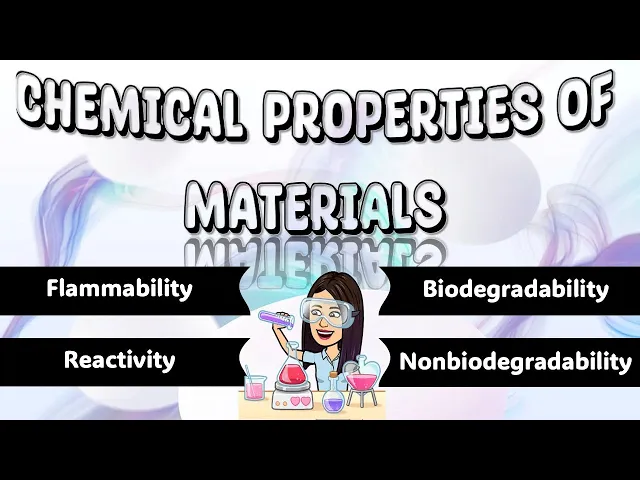
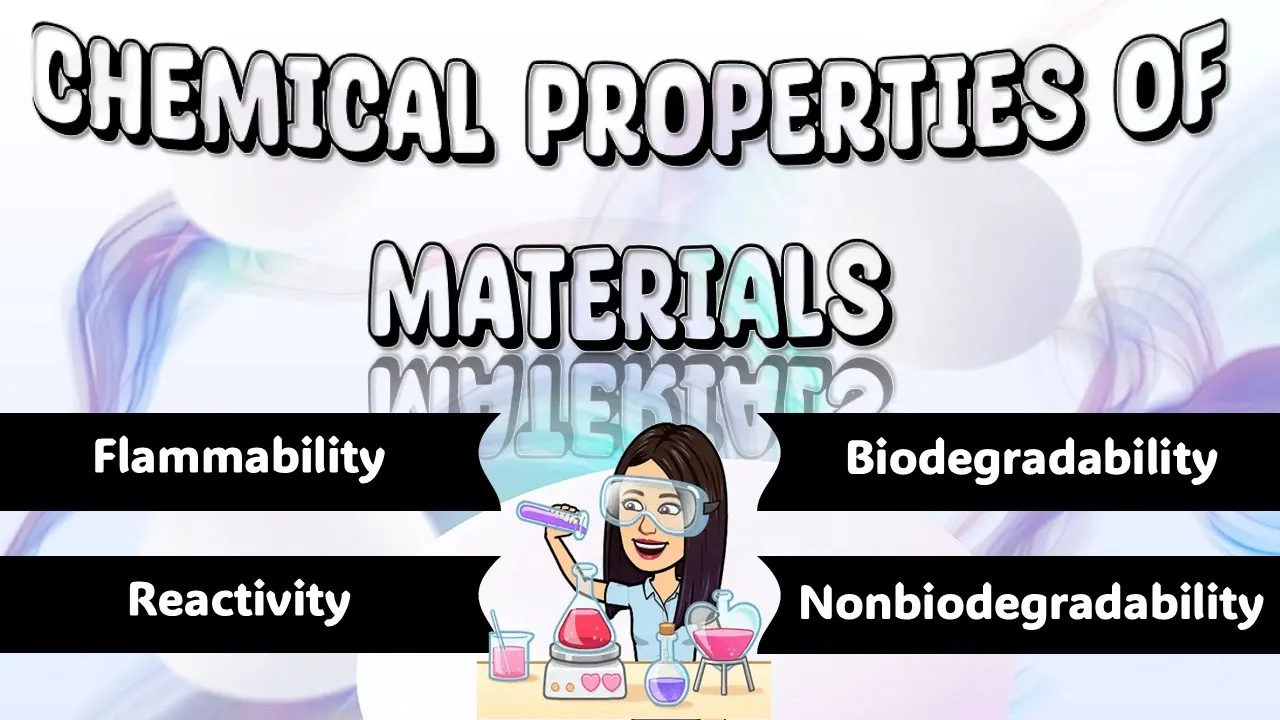
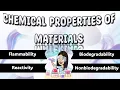
[Musika] Hi kids Welcome to teacher bath class TV Today we're going to discuss about the chemical properties of materials in this lesson you will learn and understand the characteristics of the chemical properties of materials such as flammability reactivity biodegradability and non biodegradability Are you ready look at the picture of a dining table describe what you see you can can describe the things on the table in several ways these things have several characteristics each has a set of properties that makes it unique these properties are useful in describing and grouping all kinds of matter materials have
physical and chemical properties physical properties are those characteristics of obser or measured without changing the identity of the substance on the other hand chemical properties are those that cause materials to change after some time or when they combine with other materials when a material combines with other materials a different materials form materials have chemical properties such as flammability reactivity biodegradability and non biodegradability What do you see on your screen exactly It's a Burning paper paper is an example of a Flam thing imagine you have a piece of paper if you light a much and hold
it near the paper the paper will the Fire And Burn that's because paper isable and it Burns easily one of the chemical properties is flammability the ability of a material to burn or Ignite it is something can easily catch Fire And Burn flammable things are like a campfire they need a little SP to get going but then they burn really well these are some things that are flammable paper wood or lag gasoline and fabrics How about you can you give other examples of flammable things how materials react with other materials imagine you're playing with playdoh
when you mix different colors together you can make new colors that's kind of like how materials react with each other in science sometimes when you mix things they change in a way that you can see or feel reactivity is another chemical property the tendency of the substance to undergo chemical reactions one best example of this is the rusting of iron when iron comes into contact with oxygen and moisture in the air it undergoes a chemical reaction known as oxidation this results in the formation of iron oxide also known as rust another example is the tarnishing
of silver jewelry when silver comes into contact with sulfur compounds present in the air water or certain materials it undergoes chemical reaction called [Musika] tarnishing another examples are food and fresh milk when food is left in the open it spoils and its taste odor and texture change the food reacts with air moisture and bacteria causing it to spoil when fresh milk is Left unrefrigerated for a few hours it turns sour and the milk begins to form curds What do you think will happen to fruit peelings vegetable scrubs egg shells left in an open area exactly
these materials will Decay and give off a bad smell they are examples of biodegradable materials biodegradable materials are materials that are broken down by microorganism like bacteria and fungi organisms that cause biodegradable materials to Decay are called decomposers when when the composers break down biodegradable waste they return the nutrients to the soil And making the soil fertil these are some examples of biodegradable materials paper food waste twigs or wood and leaves How about you can you give other examples of biodegradable mats some materials take a very long time to Decay some do not Decay At
All These materials are known as non-biodegradable materials nonbiodegradable these materials are not broken down by bacteria or other living organisms these materials may be toxic and cause pollution if not properly stored or disposed of these are some examples plastics metals batteries below is the table that shown the Decay rates of different materials for example paper the estimated time of Decay is 5 months leather 50 years rubber sho Souls estimated time is is 80 years battery 100 years aluminum can like the soda Tan is 200 years estimated time of Decay ziplock bags estimated time of Decay
is 500 to 1,000 Years The styropor Cup is 1 million years and the glass bottles estimated time of Decay is 1 million years too These are the causes and effects of Decay bacteria and fungi cause the process of Decay They eat antic compose Dead organic materials that are left Exposed in the air the Decay or decomposition process produces foul od and certain gases in including ammonia and hydrogen sulfide bacteria and fungi may also act upon left over foods when this happens the food becomes spoiled and should not be eaten anymore spoiled food can be easily
identified they have an awful smell molds grow on spoiled bread and fruits a can good with a bulging top contains spoiled food fruits and vegetables can also get spoiled due to loss of moisture food poisoning happens when you eat a spoiled food it cause vomiting stomach pain crumbs or diarrhea and sometimes food poisoning can even cause death decaying waste should be properly disposed of or else they can be breeding grounds of cocker chess rats and flies which carry diseases such as lepoy ois and malaria very decaying m in the ground this way the soil becomes
fertile when the materials Decay What do you do to preserve the freshness of fish and meat after buying them from the market Here are some ways to help control the Decay of matter drying is one of the most popular food preservation techniques this process removes water from fish and meat to prevent the growth of molds and bacteria refrigeration or freezing preserves food by slowing down the growth of of organisms that cause Decay vacuum packing stores food in an airtight bag or bottle the vacuum environment removes oxygen which bacteria need to grow thus slowing down the
process of spoilage use preservatives to prolong the shelf life of food products preservatives are food additives that vent the growth of bacteria or mold once again materials have chemical properties such as flammability reactivity biodegradability and non biodegradability flammability is the ability of a material to burn or Ignite reactivity is the tendency of the substance to undergo chemical reactions biodegradability these are broken down by microorganism like bacteria and fungi biodegradability also means ability to Decay due to bacteria fungi loss of water and increase moisture but they can be prevented by dry V ping Anding and lastly
non this matal are not Bren Down by bacteria or other living organisms [Musika] read each question carefully identify the correct answer to actively participate in this activity you may write your answer in the comment section which is an example of a flammable material a glass B metal C paper d rock the answer is C [Musika] paper which is a chemical property of a material a degrade ability B Flame ability c reactivity d all of the above and the answer is d all of the [Musika] above Which process will not help preserve meat a curing b
drying C freezing d composting the answer is D compos [Musika] Which of the following best describes flammability a the ability of a material to dissolve in water B the ability of a material to conduct electricity C the ability of a material to catch fire and burn and d that tendency of a material to react with oxygen in the air and the answer is letter C the ability of a material to catch Fire And Burn Which of the following describes a physical property a a cardboard readily Burns B food decays when unrefrigerated c a rubber band
is used to tie long hair B copper metal corrodes after a month the answer is letter c a rubber band is used to tie long hair which is good practice for disposing of waste a throwing away all clothes and bags B dumping decaying materials in vacant lot C keeping empty containers in the backyard d sorting biodegradable and non-biodegradable was in separate containers for garbage collection and the answer is letter d sorting biodegradable and non-biodegradable ways in separate containers for garbage collection What property of matter indicates that a substance is biodegradable a attractive B colorful C
decaying d does not Decay and the answer is c [Musika] decaying when ion reacts with oxygen and the air What does it form a rust B aluminum oxide C carbon dioxide d hydrogen gas the answer is a rust [Musika] which is not an effect of food poisoning a diarrhea B vomiting C sore throat d stomach pain the answer is c [Musika] s Which of the following mat is biodegradable a banana Peel B nylon fishing line C sty cup d plastic drinking stow and the answer is a banana peel Which of the following materials is nonbiodegradable
a batteries B leaves C food waste d vegetables scops the correct answer is letter a batteries [Musika] the ability of a material to burn or Ignite a flammability b reactivity c biodegradability d non biodegradability and the answer is a flammability [Musika] these materials are not broken down by bacteria or other living organisms a flammability b reactivity c biodegradability d non biodegradability and the answer is D non biodegradability the tendency of the substance to undergo chemical reactions A flammability B reactivity C biodegradability D non-biodegradable bility and the answer is letter b reactivity [Musika] these materials are
broken down by microorganism like bacteria and fungi a flammability b reactivity c biodegradability d non biodegradability and the answer is letter C by the [Musika] Thank you for joining me let's learn play and grow together teacher beath class TV subscribe like and share Thank you