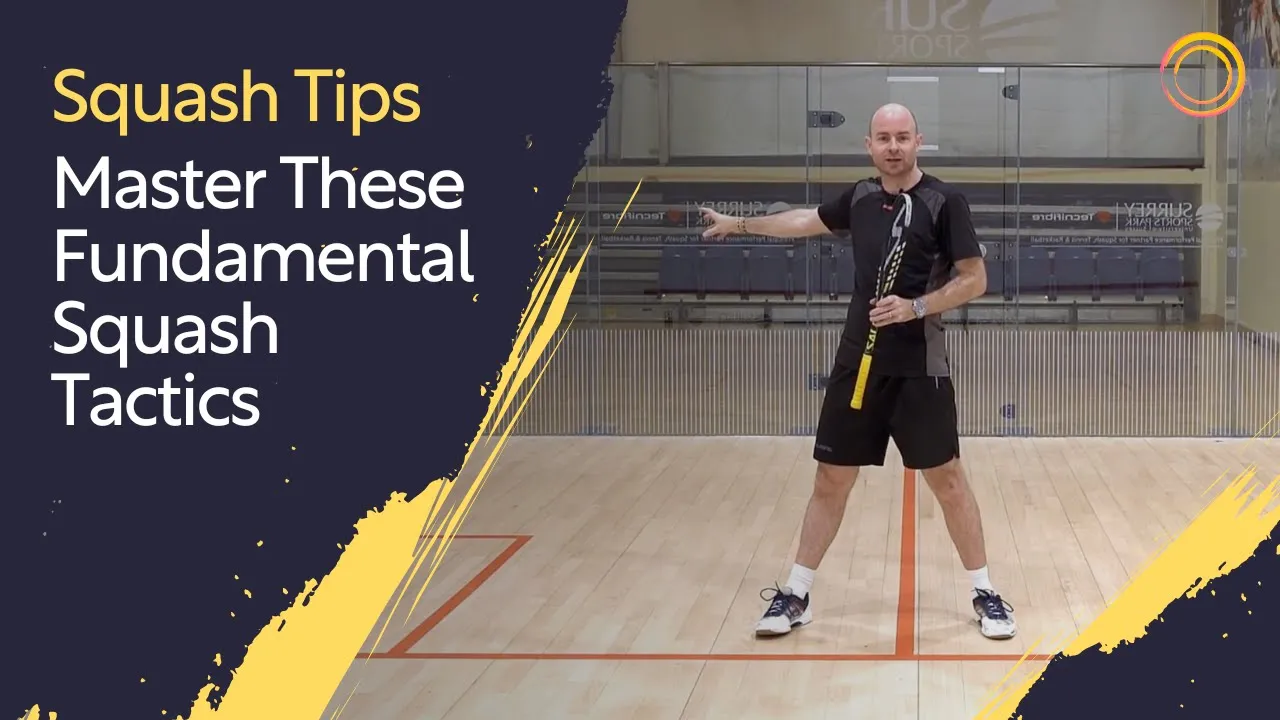
in this final video in regard to your tactics and your Tactical side of the game we're going to look at just a couple of overarching General tactics so ones that are not necessarily majorly specific but ones that probably need to be sitting on top of everything that you're doing so we've talked about you know rally structure a bit of survival different styles of play your strengths and opponents weaknesses so these couple are going to talk about the overarching side of things and the first thing I've got to mention and something that goes underrated is watch
your opponent and when I say watch I mean really really watch your opponents I can't over emphasize that word watch I coach a lot of players and I see them then play a match and they are watching the opponents but they're not really watching they're watching a general era they in a way they're actually watching the ball which is which is the starting point you've got to watch the ball so if I've hit a shot through to the back and I'm on that tier and my opponent's on the back there I I'm watching the ball
at a certain point tracking it but at a certain point there's no more clues in the ball all the clues will now come from your opponents they will come from their stance they'll come from their racket position they will come from the the ball in relation to their body those are the clues about where that ball is going to be played if you're not watching those parts for example if my opponent's here and they're lining something up like this I would I would look at the angle of their lunge I'd look at where their hips
are I would look at their shoulders and their racket head and that position for me would mean the ball was probably slightly behind them so they're going to play something that's relatively defensive because I'm watching and because I'm looking for those Clues my anticipation levels will be elevated massively you know there's this this tactic not this tactic or there's this massive floor called front wall watching squash is a game that you've got to watch the ball and you've got to watch opponent so you often plays hit a decent shot down the line it's going there
they'll get to the T and they'll look at the front wall that is a cardinal sin there's not one clue there when all the clues are where the ball and your opponent is so again really watch your opponent and over time you will start to create equations if you can call them that as it look squashes an art form not a science but there's certain positions or certain swings or certain grips that your opponent will be in that only equate to one shot so I would encourage you to start picking some of the simple ones
over anticipate if you have to you know take a little bit of risk move right up to here before they've hit because if they nail that shot and you're there to pick it up man you're putting massive pressure on your opponents you might get it wrong but over time you will start to create this pattern and this picture and this image in your head of what's going on and what shots going to come through and again that only comes from this real real watching your opponent and I encourage my players that I work with to
watch two Styles while to watch the pros there's so much on YouTube and and online you can you know type in a general search for the world championship final from a few years ago watch what the pros do and try pick the shot before it happens try even say the shot Drive boast drop lob crossword in your mind before and it gives you this idea of patterns and then also watch Club players because the club players it should be more obvious it should look the pros have got lots of subtleties and they can change things
at the last moment but if you just turn up to a match early and there's two people on the court before do yourself a favor sit and watch for 10 minutes pick one player and really watch them and think about what shot they're gonna play next and have it just running in your head when I get my juniors to do that boy do they improve quickly their awareness levels Elevate massively so it's a nice little trick to try because that'll just increase your database of knowledge in your head about where that ball is coming so
like I said that's quite a big overarching thing in the game in general it's not very specific but it's overarching and needs to be there the second overarching tactic in your game which should be an Ever present is volley that ball look to volley whenever you can volley try and volley hunt the volley there's an expression called hunt the volley and it's important to have that word hunt because hunt implies alertness it applies looking for the ball it applies intercepting it because if I'm volleying I'm securing my middle ground I'm securing that t error I
think I've alluded before about the fried egg analogy standing in that yolk you know if I'm if I imagine that massive fried egg I want to be operating in that yolk more often I want to be then reaching for that volley because if I'm there it means my opponent is not it means they are exposed in one of those areas that is further away from me so that is definitely a style of play you have a volleyer style of play but for me it's even more important than that it's actually an overarching idea and the
more you volley and the more you accumulate volley you start to starve your opponent of time you'd starve them of decisions you starve them of options and it's a lovely thing to be able to do to play the game we buy the middle and end of the game the opponent is scratching their head going what can I do I'm just completely reacting to my opponent's volleying Style so those are two major overarching areas of tactics and the last thing I want to mention in this video which is not necessarily a tactic is play with the
right ball so I'm going to talk about the three different balls that I generally talk about when we play with so the most common ball is your two dot ball okay so the two dot ball is a pro ball it's called the pro ball Dunlop balls are generally the best balls you're going to use so the two dot ball will be the ball that the pros use but it doesn't bounce very much if you're maybe at a slightly lower level that can be a frustrating ball because that ball needs to get warmed up it needs
to get a bit springier and bouncier because when you play a game that gets that ball toasty hot man it's just gonna if you play with a slightly bouncy ball that's going to go all over the place so that's the advanced side I would say that that would be I would encourage you to use it but you might have to possibly go down the scale a little bit so we'll talk about the next ball which is a simple one dot so it's a single dot ball and it's bouncier in essence it's it's a little bit
Hefty it's got a little bit more rubber involved it's a bit springier so the ball will jump up a little bit and what will happen because it's slightly bouncier it'll probably give you a little bit more time when the ball bounces and it might rebound off the back wall a bit easier and it might rebound and give you more time to get into position and start to get your Technique and your movement a little bit better obviously the one downside about a bounce your ball on the floor it actually travels through the air a little
bit quicker so it might hit that well we'll hit that front wall and it will maybe it will zip a little bit quicker so that's no bad thing because what it actually will do will increase your reaction time and will increase your speed of thought so even though it bounces quick or higher on the floor it does go through the air slightly quicker and the last one I'm going to talk about is the blue ball it's a blue dot but actually really like the blue ball itself it's um it's a lot bouncy it's like a
a warmed up version of the two dots it's you don't need to warm this ball up it's already got spring in it's nice and light and and it's light-ish type Rubber and actually first or second lesson I do with a beginner I get this ball out it's very forgiving it bounces up nicely it gives you a little bit of time yes it can spring off the walls a little bit quick so your action time is being tested but because it's bouncy and spring out it bounces off your strings easier it's easier to get it to
the front wall it's easier because the ball sits up a lot you might not spend a huge amount of time with this ball but I do recommend giving it a go one thing also I encourage with the slightly bouncier ball it helps improve your racket head control or controlling the ball because it's bouncy and springy if you're just throwing your arm and whacking it around it can just go all over the place you know and the challenge would be to try and control that ball so that's my recommendation with the three balls have a go
with some of the three or think about where you're at and maybe move it around ultimately you want to be playing with that two dot ball sooner rather than later but there's nothing wrong with testing out some of the other balls first and foremost so good luck with your tactics again there's a lot of information in there I recommend maybe watch the video a couple of times or pick out one or two areas before you go in and play think about what you're doing tactically but hopefully in hindsight when you watch these videos back you
will have a heightened awareness of your game of your tactics and giving yourself a bit of structure and a game plan which ultimately will increase your enjoyment massively in the game of squash


![5 SOLO SQUASH DRILLS [to improve your game]](https://img.youtube.com/vi/sVyovti9blI/maxresdefault.jpg)