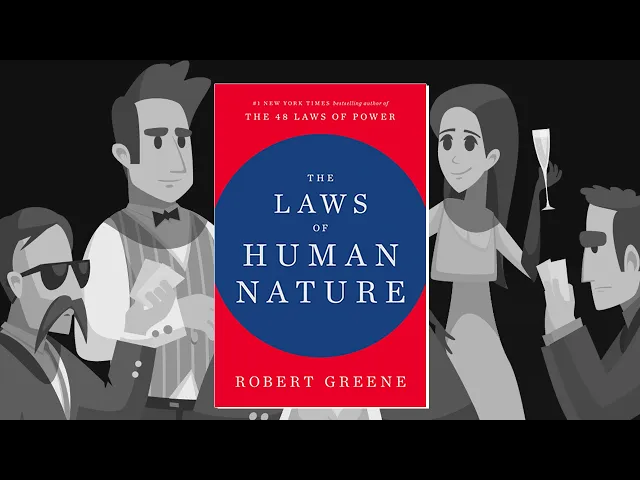
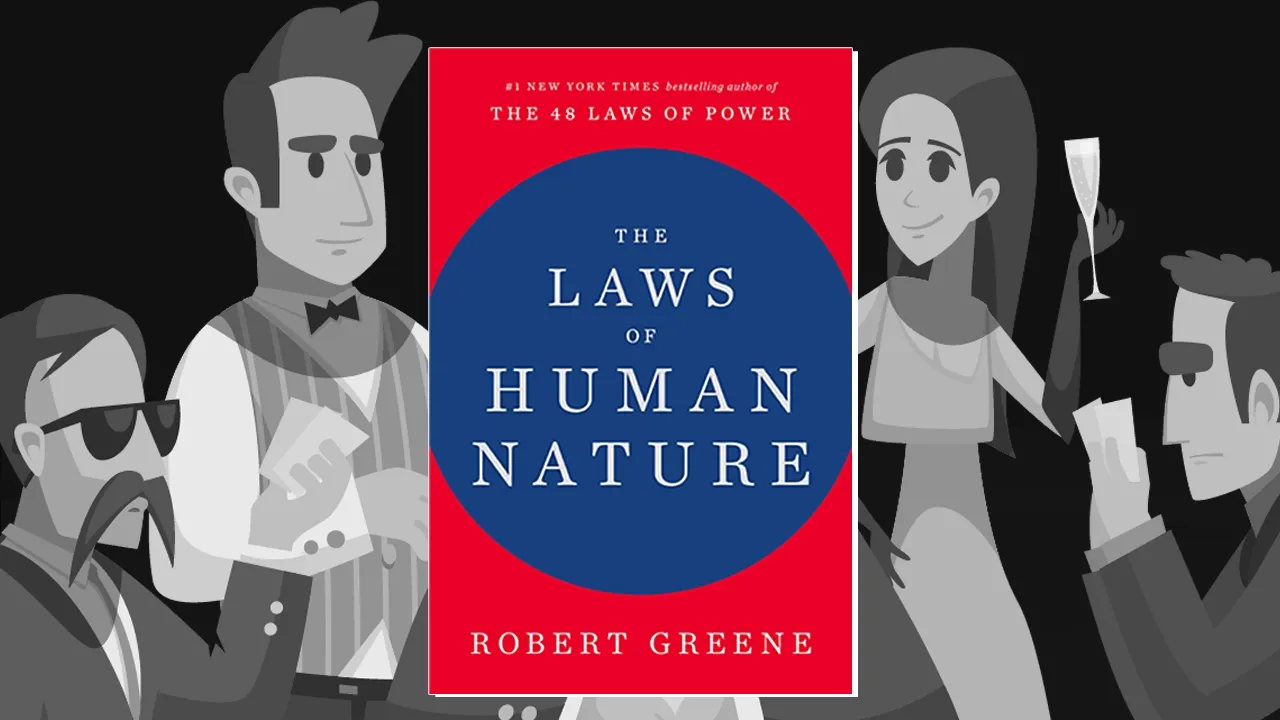
The Laws of Human Nature by Robert Green is one of the most eye-opening and brutally honest books ever written about human behavior. Why people act the way they do, what drives their decisions, and how to truly understand the hidden forces at play in every interaction. In today's video, we'll break down Green's masterpiece, revealing the unconscious patterns and deeprooted instincts that shape the people around you and yourself, whether you're aware of them or not.
By the end, you won't just understand human nature. You'll know how to read people like an open book, predict their behavior, and protect yourself from manipulation. If you want to turn these insights into real world results, I've put together a blueprint and premium blueprint for you, both available on the website.
There's a lot to uncover. So, let's get started. Part one, mastering yourself.
Law one, the law of irrationality. Remember last time you've had a heated argument with someone you love? Your heart races, your face flushes, and suddenly words fly out of your mouth that you instantly regret.
Hours later, when the storm has passed, you wonder, "Why did I say that? That's not even what I really think. " Like you, I've always thought I was a logical person making rational choices based on careful thinking.
But most of the time, it's our emotions in the driver's seat. And logic is just the backseat passenger trying to make sense of the ride. Your brain didn't evolve in neat, logical steps.
It's a messy survival driven system built layer by layer over millions of years. At the core is the reptilian brain, your ancient operating system obsessed with keeping you alive. It's the part that yanks your body away when a car swerves toward you.
No thinking, just instinct. Stacked on top is the lyic system, your emotional brain. This is where feelings are born and memories are colored with meaning.
Remember that warm memory of your grandma's cooking? That's your lyic system, attaching meaning to the moment. Finally, there's the neoortex, your rational brain.
It's what lets you plan for retirement, solve complex problems, and understand this video right now. It's powerful, but it's also slow. Think about the last time you picked a new phone, a pair of sneakers, or even just a coffee brand.
You probably believe you weighed the pros and cons. But research shows that while your emotional brain reacts in milliseconds, your rational brain needs seconds. By the time your neoortex starts weighing the options, your emotions have already made the call.
Marketers know this better than anyone. They don't sell products. They sell identities, belonging, and status.
That's why sneaker ads don't list materials. They show athletes in action. They know we're emotional creatures wearing a thin disguise of rationality.
So, how do you stay in control? The first step to becoming more rational is recognizing when you're not in control. Next time you feel a strong reaction building, name the emotion.
Is it fear, anger, desire? Just identifying it weakens its grip. Once you've identified the emotion, trace it to its source.
Ask yourself, why am I really feeling this way? Often, the trigger isn't what you think. That anger at your coworker might actually be frustration about something entirely different.
When you feel a surge of emotion, create a pause. The space between stimulus and response is where your freedom lies. Take a deep breath.
Count to 10. This gives your rational brain time to catch up to your emotional reaction. Law two, the law of narcissism.
Picture this. You're at dinner with friends, excited to share some big news. As you're mid-sentence, building up to the moment, one of your friends cuts in.
Suddenly, the conversation shifts. The spotlight moves to him. Your excitement fades, replaced by annoyance.
You nod along, but inside you're thinking, "Did they even hear me? " That's a sign. Whether you like it or not, we all have narcissistic tendencies.
The question isn't whether you're a narcissist, but where you fall on the spectrum. Imagine a line. On one end stands the deep narcissist, someone consumed by self-importance like Jordan Belelffort from The Wolf of Wall Street.
They crave validation. And beneath their confident facade lies a fragile ego, easily wounded. When they get ignored, frustration or even rage bubbles to the surface.
Think of a friend who hijacks every conversation or the partner who never seems to consider your needs. To them, life is a one-man show, and you're just an extra. On the opposite end, you have the healthy narcissist, someone who values themselves, but not at the expense of others.
Think of someone like Oprah. They're confident enough to pursue their goals, but they also know how to listen, empathize, and connect. Before you make math whether you fall on one side or the other, know that none of us live permanently at either extreme.
We slide along this spectrum depending on our emotional state, security level, and environmental triggers. Now, instead of mentally cataloging all the narcissists in your life, try this. During your next three conversations, count how many times you redirect the topic back to yourself.
Check your phone while someone else is speaking. Formulate your response before they finish talking and feel impatient when attention shifts away from you. You will be shocked by what this simple awareness exercise reveals.
But here's the good news. You can control your narcissistic tendencies. It starts with awareness.
First, practice curiosity instead of judgment. Every person you meet carries an invisible world of experiences, fears, and dreams you can't see. Second, develop your empathic imagination.
Research shows that reading fiction significantly increases empathy because when you step into a character's shoes, you exercise the same mental muscles needed for real world connection. Third, create a digital detox ritual. Social media platforms are designed to amplify narcissistic tendencies.
They reward self-promotion and turn human connection into a quantifiable competition. The most counterintuitive truth about narcissism is this. The more interested you are in others, the more magnetic you become.
Law three, the law of role playing. One day, I remember walking into a highstakes job interview. As I entered the room, I straightened my posture, deepened my voice, and tried to project confidence, even though I was scared to death.
Later that same day at the bar with my friends, I was a totally different person. Louder, more relaxed, almost like I was someone else entirely. As the philosopher Arthur Schopenhau once observed, "People are like the moon.
They only show you one side. " We all wear masks, switching between them so seamlessly, we barely notice we're doing it. But make no mistake, every interaction you have is a performance on an invisible stage.
Think about it. The polished LinkedIn profile that omits your career failures. The Instagram feed showing vacation highlights, but never the arguments that happen minutes before the photo.
The resume that turns a messy career into a smooth success story. These aren't necessarily lies. They're selective presentations.
We do it for four reasons. First, protection. Masks hide vulnerability in competitive environments.
Second, adaptation. Different environments demand different versions of yourself. Third, conformity.
Mirroring others helps us build connection and avoid exclusion. Finally, power. By controlling what people see, you shape how they respond.
But if everyone's performing, how do you see the truth? Start by watching for inongruence. These are moments when words and body language don't match.
They say they're totally fine, but their body is screaming no. Then establish a baseline behavior. How do they normally behave?
If someone's usually talkative but goes quiet when a topic comes up, there's your clue. Also, pay attention to context shifts. Notice how someone's behavior shifts across different environments.
Like the friend who's genuine one-on-one but performs in front of a crowd. Understanding that all interaction involves performance doesn't mean becoming fake. It means becoming intentional.
Know your audience. Adapt to different settings without losing yourself. Align your tone, body language, and words.
Studies show only 7% of emotional meaning comes from words. The rest comes from how you say it in your body language. If these don't match, people feel something's off, even if they can't explain why.
Use strategic vulnerability. A little openness builds connection. The best performers aren't flawless, they're selectively open.
Share something real, but not everything. It builds trust and respect. And above all, stay true to your core values.
The best performances come from amplifying real aspects of yourself, not inventing a new one. The person who understands that everyone is performing gains an unfair advantage in every room they walk into. Law four, the law of compulsive behavior.
Imagine you're at a casino watching a man at the roulette table. He's lost seven times in a row, but swears the next spin will be different. His wife and her friend have tried to pull him away, but 4 hours and his entire paycheck later, he's still there, trapped in a cycle he can't escape.
We all have patterns like this, unconscious scripts that repeat throughout our lives, even when they don't serve us. The uncomfortable truth is that who you are has largely shaped in childhood. Think of your character as an operating system installed during childhood.
By adolescence, your core tendencies were largely set. The ambitious executive who can't enjoy success. Look closely and you'll often find a childhood where love was conditional on achievement.
The woman who repeatedly chooses partners who mistreat her. Often she's unconsciously recreating the emotional patterns of her earliest relationships. These aren't just habits.
They're compulsions, deeply ingrained patterns that feel as natural as breathing. And while we love stories about radical transformation, our core character remains remarkably stable throughout life. Then to understand someone, ignore their words and watch for these revealing patterns.
How they handle small problems. Someone who explodes at a minor mistake isn't just having a bad day. They're showing you their default response to frustration.
What they do with power. Give someone authority and their true character emerges quickly. Their behavior when they think no one's watching.
This reveals far more than their public persona. In a world where most people remain blind to their own patterns, the person who sees these invisible scripts in themselves and others transforms every interaction from unconscious reaction to strategic choice. Law five, the law of covetousness.
I was scrolling through Instagram the other day when I saw that Jake, my cousin, got a brand new car, sleek, expensive. A moment before, I was perfectly happy with my old car. But suddenly, I felt this weird little sting of envy, like, why don't I have that?
Then later at work, I heard that Lucas from marketing got promoted. I'd never even wanted that position, but the second I heard the news, this thought popped into my head. Why wasn't it me?
This isn't coincidence. It's human nature. We're hardwired to want what we can't easily have.
A famous experiment demonstrated this perfectly. Researchers placed identical cookies in two jars, one nearly full, one with just two cookies remaining. When asked which cookies they preferred, participants overwhelmingly chose from the nearly empty jar, convinced those cookies must be better simply because they were scarcer.
Throughout history, three factors have consistently amplified human desire. The forbidden, whatever is denied to us immediately becomes more attractive. This explains why teenagers rebel against parents rules and why exclusive clubs with strict entry policies never lack applicants.
The mysterious. We are pattern recognition machines and mystery creates a cognitive itch we desperately need to scratch. This is why you stay up watching just one more episode of a show with a cliffhanger ending and why people who reveal less seem more intriguing.
The validated. When others value something, we assume it must be valuable. A restaurant with a line outside must be better than the empty one next door, even if we know nothing about either place's food.
This social proof shapes our desires more powerfully than we realize. Next time you feel that surge of wanting something simply because others value it, pause and ask, "Would I want this if no one else did? " This single question can free you from the exhausting cycle of constant dissatisfaction.
Law six, the law of short-sightedness. Imagine two chess players. One is a beginner, impulsive and reactive.
He sees a moves, makes it, and hopes for the best. Within a few turns, he's trapped. Checkmate.
Game over. The other player is a master. He sees the entire board, thinking 10 moves ahead, and controls the flow of the game.
Most people live life like the first player, reacting to whatever is in front of them, chasing quick wins and never considering the long-term consequences. But life, like chess, rewards those who see beyond the next move. Why do we fall into this trap?
Because we're wired for short-term thinking. Our brains evolved to seek immediate rewards. Food, pleasure, safety, without much concern for the future.
But in modern life, that instinct can wreck us. Green identifies four traps that keep us locked in short-sighted thinking. The trap of unintended consequences.
We think actions lead to simple, predictable outcomes, but life is messy. Meet Sarah. She starts a crash diet to fit into her wedding dress.
She loses 15 lbs but injures her knee. No more workouts, weight rebounds, plus 10 extra. The trap of tactical hell.
This is where you win battles but lose wars. Consider Julie, who won every argument with her boss, feeling triumphant until promotion season came. Her quieter colleagues advanced while her victories cost her long-term success.
The trap of ticker tape fever. Reacting to everything means thinking about nothing. Like Michael, who saw a news alert about a stock surging and immediately invested his savings without research.
Two weeks later, the stock crashed. Reacting impulsively to news cost him big. The trap of drowning in details.
When we obsess over minor elements, it can paralyze our progress. Think of Lisa, a perfectionist who spent weeks choosing the perfect font and colors for her new business website while her competitors were already launching products. Her focus on trivial details cost her critical early momentum.
So, how do we break free from short-sightedness? Green offers three powerful strategies. First, practice strategic detachment.
Before making a decision, ask yourself, will this matter in 5 years? That one question pulls you out of impulse mode and into long-term thinking. Second, connect daily actions to big goals.
Before acting, ask, "Does this move me closer or further my long-term vision? " Make your decisions serve the future, not just the moment. Third, surround yourself with long-term thinkers.
We become like those we spend time with. If you're around people who chase instant gratification, you will too. Find mentors who play the long game.
The ability to delay gratification is perhaps the single greatest predictor of success in life. While others are busy making impulsive moves, you'll be thinking 10 steps ahead, setting up the real checkmate. Law seven, the law of defensiveness.
Think about the last time someone criticized you. What was your immediate reaction? You probably felt that familiar tightening in your chest, the surge of justifications rising to your lips, maybe even anger at the person offering feedback.
This reaction is natural. It's hardwired into your psychology. Your brain processes criticism as a threat, triggering the same fightor-flight response as a physical attack.
According to Green, our defensiveness stems from three core beliefs that form our identity. First, I am autonomous. We desperately want to believe we're in control of our lives and decisions.
That's why people resist the idea that they've been influenced, even when it's obvious. Second, I am intelligent. No one wants to feel foolish.
Admitting we were wrong, whether about a scam, a manipulative person, or a bad decision, hurts our ego. We need to believe our decisions are smart and our judgment is sound. Third, I am good and decent.
We see ourselves as moral. If someone challenges that, we instinctively reject it, even creating elaborate justifications for our actions. Here's the painful truth.
Every time you become defensive, you forfeit an opportunity to grow. The most valuable feedback often comes wrapped in the packaging we most want to reject. But defensiveness isn't just a personal challenge.
It's also the biggest obstacle in persuading others. Green offers five strategies to work around it and persuade people. Become a deep listener.
Most people just wait for their turn to talk. Instead, focus on truly understanding the other person. Ask questions.
Resist the urge to insert your own experience or opinion until you've fully explored theirs. Create emotional contagion. Emotions are contagious.
If you're anxious or aggressive, people mirror that energy. If you stay calm and confident, they soften. Validate their self-image.
Instead of attacking people's core beliefs, reinforce them. If someone values their independence, emphasize the choices available to them rather than pushing your agenda. Address hidden insecurities.
Beneath defensiveness lies fear. Fear of looking weak, irrelevant, or foolish. If you can subtly reassure someone without exposing their insecurity, they'll be more open to new ideas.
Use resistance as a pathway. If someone is stubbornly resisting, don't push harder. Pull back.
Say, you know, this might not be for you. Their natural contrarian instinct might lead them to embrace what they were rejecting. Law 8, the law of self-sabotage.
Meet Michael. At 28, he's been offered the promotion he's dreamed of for years. But instead of celebrating, he lies awake thinking, "What if I'm not good enough?
What if everyone realizes I'm a fraud? " 3 days before starting, he sends a late night email declining the offer. Sound familiar?
We like to blame outside forces for our failures, bad luck, difficult people, unfair circumstances. But often the real sabotur is us. Your attitude isn't just a passive reaction to life.
It actively shapes your reality. Like a filter on a camera lens, it affects what you focus on, how you act, and what results you get. Green identifies two core mindsets that determine whether we grow or self-destruct.
The negative mindset. This one is rooted in fear. People stuck here see limitations everywhere, reasons why things won't work, why they shouldn't try, why change is dangerous, and it becomes a self-fulfilling prophecy.
Imagine walking into a party convinced no one will like you. You show up guarded, quiet, maybe even defensive. People pick up on that and naturally keep their distance, which only confirms your belief.
I don't belong. The positive mindset. This one runs on possibility.
People here see opportunities where others see obstacles, learning experiences where others see failures, and connections where others see threats. Now, picture that same party with this mindset. You walk into the party exuding confidence and openness, naturally attracting others.
Same event, different mindset, totally different outcome. Green identifies five negative attitudes that lead to self-sabotage. As I describe each one, ask yourself which of these might be holding you back.
The hostile attitude. Here the world feels threatening so you stay defensive and reject help. The anxious attitude.
You fear uncertainty and mistakes. The avoidant attitude. Drven by a fear of not being good enough.
You procrastinate. The depressive attitude. A quiet voice says you don't deserve happiness or success.
The resentful attitude. You fixate on what others have instead of what you can build. But the good news here is that your attitudes aren't fixed.
They're just habits of mind. And habits can change. Sometimes it takes a crisis, a breakup, or a failure to break the cycle.
But you don't need to wait for disaster. The key is small, consistent shifts in action. Because when your actions change, your results change.
And when your results change, so does your belief in what's possible. Law nine, the law of repression. We all wear masks.
The polite co-orker hiding resentment. The tough guy who crumbles when he's alone. The moral preacher with a secret vice.
Indeed, beneath those masks lives what Carl Jung called the shadow. The parts of ourselves we deem too dangerous, shameful, or vulnerable to show the world. But the more we repress our shadows, the more it controls us.
Green outlines six signs that your shadow might be in control. The contradictory behavior. The politician preaching family values while cheating on his spouse.
The wellness guru secretly chain smoking. When actions don't match beliefs, the shadow is in charge. The emotional outbursts.
Ever seen someone explode over something small? A boss firing an employee for a minor mistake? A friend cutting you off over a small disagreement.
That's not about this moment. It's years of repression boiling over. The passionate denial.
People who aggressively condemn something often battle those very urges in themselves. Think of the anti-corruption politician hiding offshore accounts or the moral preacher concealing secret affairs. The over idealization.
History is full heroes who once in power became the very thing they fought against. Their shadow just waited patiently, then took the wheel. The accidental behavior.
Under extreme stress or a few drinks, the mask slips and suddenly the real self shows up. Sometimes with shocking results. The mirror of projection.
When someone constantly accuses others of manipulation, selfishness, or dishonesty. Often it's an unagnowledged reflection of their own traits. Identifying your shadow is fundamental because denying your shadow will only drain you.
It will find unhealthy channels such as addiction, destructive relationships, or unexplained illness to express itself. But when you face it, you become stronger, more self-aware, and more compassionate toward yourself and toward others. Here's how.
See it. Notice when you feel defensive, triggered, or judgmental. That's your shadow speaking.
Embrace it. Don't fight it with shame. Own it.
Explore it. Ask, "What does this part of me actually need? " Often its needs are legitimate, just expressed in unhealthy ways.
Channel it. Let it work for you, not against you. Use its strength to set boundaries and assert yourself.
Manage it. Learn when to let your shadow step forward. Sometimes your shadow's instincts are exactly what a situation requires.
Whether it's using anger to defend your boundaries or assertiveness to fight for what's right. Part two, navigating social landscapes. Law 10, the law of envy.
Have you ever felt a twinge of resentment when a co-orker got praised for something you worked just as hard on? Or when a friend shared amazing news and instead of feeling happy, you felt irritated? Maybe you told yourself, "I'm not jealous.
I just don't like how they act now. " But was it really about them or about you? What makes envy particularly dangerous is how easily we deny it.
We disguise it as criticism or concern. And the deeper it's buried, the more destructive it becomes. Envy has two expressions, each with its distinct danger.
Passive envy, the silence avatar. It works through subtle undermining, cold withdrawal, and quiet obstruction. Maybe you're thinking of a colleague who forgets to include you in important emails, or the friend who changes the subject when your achievements come up.
Active envy, the open attacker. This is direct criticism, gossip, or sabotage. The person who publicly questions your qualifications or spreads rumors about how you really achieved your success.
Certain situations are more likely to trigger active envy, even in people who may not be naturally envious. Rapid success. Nothing provokes envy like quick achievement.
The young prodigy, the newcomer who surpasses veterans. These people become instant targets because they challenge others excuses for mediocrity. Public recognition.
The more visible your success, the more it breeds silent resentment. Proximity. Strangers envy from a distance, but friends, siblings, and colleagues take it personally.
Scarcity of opportunity. If only one person can win, one promotion, one award, your gain feels like their loss. The most uncomfortable truth about envy, we all feel it.
The solution? Transform it. Master your craft.
A skilled carpenter doesn't envy a master painter. Focus on your path and envy fades. Abandon comparison.
The only real competition is with your past self. Embrace your uniqueness. Your strengths aren't meant to match others.
Lean into what sets you apart. Develop emotional intelligence. When envy arises, notice it, name it, and let it go.
Build resilience through challenge. As selfworth comes from overcoming struggles, you won't be shaken by others successes. That's something I try to remind myself every time I catch that old voice whispering, "Why not me?
" Law 11, the law of grandiosity. You likely know a colleague who changed and not for the better. Once a beloved team member, always ready with a kind word and eager to collaborate.
Everyone rooted for him. When he landed a big promotion, the cheers were genuine. But things shifted subtly at first.
A slight change in tone, a hint of arrogance. Compliments fueled his ego and feedback fell on deaf ears. He believed he was destined for greatness, exempt from limitations.
Colleagues who once admired him now found him unbearable. This shift is due to grandiosity. The belief that one is above others, destined for greatness.
It feels empowering, but if left unchecked, it leads to disaster. To know when healthy confidence has morphed into dangerous grandiosity identifies one of these five critical warning signals, the chosen one syndrome. You believe your success comes from pure talent, not effort, timing, or collaboration.
You ignore the role of luck and others contributions. The fortress of flattery. You surround yourself with people who validate your greatness, rejecting criticism or uncomfortable truths.
The destiny delusion. Every small success feels like proof that you're meant for legendary status, making you blind to reality. The spotlight addiction.
You crave attention more than actual achievement. Making increasingly bold moves just to stay relevant. The invincibility illusion.
You take reckless risks, believing the rules don't apply to you. This works until it doesn't. But we all have grandiose impulses.
The key isn't to suppress them. It's to channel them productively. Robert Green calls this practical grandiosity.
Ambition with awareness. Here's how to practice it. Embrace your ambition.
Don't deny your desire for recognition. Face it so it doesn't control you. Stay grounded.
Balance big dreams with reality checks. Keep people around who challenge you, not just praise you. Focus your fire.
Instead of chasing every dream, commit to one big achievable goal at a time. Stretch don't snap. Set challenges that push you without breaking you.
Create controlled burn zones. Occasionally take bold risks, but do it with limits in place. In essence, grandiosity can either fuel your growth or lead to your downfall.
The choice is yours. Law 12, the law of gender rigidity. From the moment we're born, society tells us how men and women should behave.
Boys are taught to be tough. Girls are taught to be nurturing. These messages don't just shape our behavior.
They shape our identity. And in the process, we lose access to half of who we really are. Traditionally, masculine traits include assertiveness, ambition, independence, while feminine traits include empathy, intuition, patience, and we all have both.
But as Carl Young discovered, what we repress doesn't vanish. It shows up in our projections. We chase in others what we've buried in ourselves.
Green outlines six ways this plays out in relationships. The devilish romantic, idealizing a partner who seems to offer everything we lack. The elusive woman of perfection, falling for someone based on fantasy, not reality.
The lovable rebel attracted to rule breakers because we secretly crave freedom. The fallen woman seeking the opposite of our upbringing in a partner often as a form of rebellion. The superior man drawn to power and confidence to cover up our own self-doubt.
The woman to worship him wanting admiration not just for the ego boost but for a deeper sense of selfworth. The path to wholeness begins with a simple truth. Everything you chase is already within you.
Green suggests practical steps to reclaim your full humanity. Step one, recognize your repressions. Ask yourself, what qualities attract and irritate me and others?
The answers reveal the traits you've denied in yourself. If you're irritated by someone's boldness, but also drawn to it, you might be hiding your own desire to be assertive. Step two, practice integration.
If you are afraid of being too emotional, try expressing your feelings. If you are too passive, start setting boundaries. Growth begins with discomfort.
Step three, aim for balance, not extremes. The goal isn't to abandon your strengths, but to compliment them. A logical person doesn't need to reject reason.
They need to add empathy. A nurturing person doesn't need to stop caring. They need to add assertiveness.
True power comes from flexibility. the ability to access the full spectrum of human qualities as situations demand. The more flexible you are, the more whole you become.
Law 13, the law of aimlessness. Take Alex, a brilliant college graduate who spent his 20s chasing status. High-paying jobs he hated, startup ideas he abandoned.
By 35, he felt lost, bouncing between therapists and self-help books. Meanwhile, his classmate Maya focused on solving a specific problem in renewable energy. Despite setbacks, her purpose gave her resilience.
By 35, she had built not just a successful company, but a meaningful life. The difference wasn't intelligence. It was purpose.
The 13th law is perhaps the most silent killer of potential. A life without direction. But here's where the trap appears.
We chase meaning in the wrong places. Pleasure. Studies show lottery winners return to baseline happiness within months, while those who chase hedonism often end up depressed and anxious.
Causes in cults. Some chase movements not out of conviction but to fill a void. They hop from one ideology to the next.
High on belonging until it fades. Money and success. History's full of people who hit their financial goals only to ask, "Is this all there is?
From wealthy executives who die of heart attacks at their desks to billionaires who can't maintain relationships, money makes a terrible purpose. Attention and fame. Social media has made fame accessible and meaningless.
It offers validation but not purpose. Studies of influencers reveal alarming rates of depression and identity crisis because external validation is an insatiable hunger that only grows the more you feed it. Cynicism.
Saying nothing matters is just another mask for aimlessness. So where do we find the real thing? Robert Green offers five strategies to help you find what the Japanese call icky guy, a reason for being.
Look back at your life. Discover your calling through the past. When did time seem to disappear?
These moments were clues of your purpose. Turn criticism into motivation. When JK Rowling pitched Harry Potter, she faced 12 rejections.
When Elon Musk announced electric cars, industry experts mocked him. Every great achievement faces resistance. Expect it.
Embrace it. Build your purpose circle. Jim Ran famously said, "You become the average of the five people you spend the most time with.
" So surround yourself with people who build, not drift. Create your purpose ladder. Break your goals down yearly, monthly, weekly, and daily.
When Michelangelo sculpted David, he didn't achieve it in a day. He approached the marble with both a grand vision and the discipline to chip away one small piece at a time. Finally, master the flow state.
Purpose comes alive in what psychologist Mihali Chicken Mihali called flow. That state where challenge meets skill and time vanishes. It's where fulfillment lives.
In the end, purpose isn't just about the destination. It's about falling in love with the process. Law 14.
the law of conformity. When I started dating my partner, I found myself in a dilemma. She and all our friends loved baseball, but I didn't.
Not wanting to be the odd one out, I pretended to enjoy the games. Months passed and it got harder and harder to hide. Until one day, my partner noticed how disengaged I was and asked me what was wrong.
We like to think we're independent, but the truth is, groups shape us more than we realize. We all have two distinct sides to our personality. First, there's our individual character, the core of who we are, shaped by our values, memories, and personal experiences.
But there's another side that emerges whenever we enter groups, our social personality. This isn't a mask we consciously put on. It's an unconscious transformation that happens automatically to fit in with groups.
We all shift between these. But the danger comes when the social self takes over completely. It happens in subtle ways.
You start mirroring opinions just to fit in. You go along with things you'd normally question because everyone else is doing it. And if you don't recognize it, you become a puppet of the group.
Robert Green identifies four key ways your social personality gets hijacked. The desire to fit in. You mirror others beliefs even when they contradict your own.
The performers trap. You craft your actions and even your social media posts based on how you want to be perceived. The emotional contagion.
Emotions spread through groups like viruses. This explains how ordinary people participated in history's darkest moments or heroic revolutions. The certainty illusion.
In groups, doubts disappear and certainty takes over. When surrounded by people who seem sure of something, you stop questioning. This is why investment bubbles form or cults attract intelligent people.
So how do you stay strong within a group instead of being controlled by it? Have a clear purpose. Without it, groups spiral into gossip, power struggles, and pettiness.
But a group with a strong purpose keeps you above the noise. Curate your inner circle. You become who you're around.
Choose people who balance your weaknesses but share your values. Master emotional contagion. As a leader, your emotions spread the fastest.
If you stay calm in chaos, others will too. Create psychological safety. The best groups encourage debate, not blind agreement, because disagreement sharpens truth.
Test loyalty under pressure. True character emerges under pressure. Create controlled challenges that reveal who stands with you and who crumbles.
Most people drift through life shaped by whatever group they fall into. But the few who understand how groups work, they shape the group and through it they shape the world. Law 15, the law of fickleness.
Have you ever had a close friendship, someone you've been through thick and thin with? Then one day they hear a rumor about you and without asking they turn their back on you. You reach out to explain, but they've already made up their mind.
We like to believe we form stable opinions, but the truth is our emotions and perceptions are constantly shifting. There are two main forces behind this. First, internal triggers.
We don't react to reality, we react to our emotions. An investor excited about your project yesterday suddenly pulls back after recalling a past failure. a romantic partner who swore loyalty questions everything after a minor disagreement.
Second, we're simultaneously bombarded by external pressures. People crave novelty. What excites them today bores them tomorrow.
And with social media constantly amplifying extreme emotions, the cycle only speeds up. Together, these internal and external factors create a perfect storm of instability. So, how do you lead when people's opinions are this unpredictable?
Robert Green lays out eight key strategies. Create emotional anchors. People stick with leaders who connect to something deeper than trends, values, identity, and meaning.
Lead with consistency, not flashiness. Flashy leaders enjoy short bursts of attention. Consistent leaders build long-term trust.
Master group psychology. Crowds amplify emotions. If you don't control them, they will control you.
Stay unpredictable. Predictability makes you easy to ignore. A touch of surprise makes you magnetic.
Think of the tough boss who shows unexpected compassion or the intellectual who reveals a playful side. Don't let short-term failures define you. The public overreacts to both success and failure.
If you chase every opinion, you'll burn out. Use symbols of stability. In chaos, people need anchors.
Flags, logos, and rituals create continuity. Master timing. Even the right move fails at the wrong moment.
Great leaders wait for their moment. Stay calm in chaos. When everything's falling apart, your calm becomes contagious.
You become the anchor. Part three, achieving long-term fulfillment. Law 16, the law of aggression.
Ever noticed how some people seem calm, polite, and composed, yet something about them feels off? That colleague with the perfect smile? The friend who never gets angry?
The stranger who helps an old woman cross the road with just a little too much courtesy. What if I told you that behind many polite interactions, there's often a hidden force at play? Aggressiveness.
It's uncomfortable to admit, but we are inherently aggressive creatures. Civilization hasn't erased this. It's just taught us how to hide it.
But hiding aggression doesn't make it go away. It just twists it into something harder to see and more dangerous. Some people repress it and turn it inward into anxiety, self-doubt, even depression.
Others let it leak out through passive aggressive behaviors, slowly poisoning relationships. But the smartest ones channel it into ambition, turning raw aggression into unstoppable drive. Passive aggression is the most deceptive form.
It hides behind smiles and politeness, but carries a blade. It shows up in five ways. The subtle superior, always late, always making you wait.
Their real message, I'm more important than you. The sympathy seeker, the eternal victim. They drain your energy by making their problems the center of attention.
The insinuator. Masters of the backhanded compliment. That was actually a great presentation for someone with so little experience.
The blame shifter. Call them out and suddenly you're the bad guy. They twist the narrative so you end up apologizing.
The passive tyrant. No matter what you do, it's never enough. They control you through constant dissatisfaction.
So, how do you deal with aggression both in others and yourself? The solution isn't repression, it's redirection. Instead of letting aggression control you, learn to control it.
Start with awareness. Recognize your own aggressive tendencies. Don't judge them.
Understand them. Practice controlled aggression. Don't suppress frustration.
Channel it into action. Let it drive your ambition, not your reactions. Be assertive, not aggressive.
Stand firm. Speak clearly. Set boundaries without aggression.
Think strategically. Don't react emotionally. Respond with precision.
The most dangerous person in the room is the calm one. Law 17. The law of generational myopia.
You might think you're in full control of your choices, but the way you think and what you value is influenced by your generation. We're all influenced by the events of our formative years. For example, the Great Depression created a generation obsessed with financial security, while the '90s tech boom created an unshakable faith in innovation.
These aren't just preferences, they limit how we see the world. Iben Caldon, a 14th century historian, observed that history follows predictable cycles across four generations. First generation, the revolutionaries.
These are the rule breakers, the visionaries who overthrow the old order. Second generation, the organizers. They bring structure and ensure the gains of the revolution aren't lost.
Third generation, the builders. These are pragmatists who focus on growth and stability. Fourth generation, the cynics.
They witness how progress has created new problems. They question everything and set the stage for the next revolution. This cycle repeats, shaping history and whether we realize it or not, shaping us.
So, how do you break free from the blind spots of your own era? Recognize your generational lens. What shaped your worldview?
Social media, for instance, may have affected your attention span and relationships. Question your assumptions. The most powerful beliefs are the ones you don't even recognize as beliefs.
For example, older generations believed in jobs for life, but many today pivot careers constantly. Stay radically curious. Engage with ideas from different eras.
Challenge yourself with perspectives that make you uncomfortable. Connect across generations. Some of your greatest insights will come from people much younger or older than you.
Study historical patterns. The more you understand how past generations reacted to technological, political, and economic shifts, the better you'll understand today's world and where it's headed. Harness collective energy.
Every generation has a dominant energy. Idealism, ambition, digital confidence. Don't just drift along with it.
Use it to your advantage. Law 18, the law of death denial. We live as if death is something that happens to other people, something distant we'll face someday.
We fill our days with work, distractions, and social media, avoiding the one truth that gives life meaning. Throughout history, humans have created immortality projects, ways to transcend death by leaving something behind. Pyramids, masterpieces, space travel, and life extension research are all attempts to escape our mortality.
But Robert Green argues that true freedom, it comes from fully embracing death. When we do, three things happen. First, our priorities clarify.
Petty worries and social comparisons lose their grip. What truly matters becomes clear. Meaningful relationships, fulfilling work, and enriching experiences.
A stranger's judgment or a bad day at work feel insignificant when we remember our time is limited. Second, we become more present. Denial of death makes us numb, but accepting it makes every moment richer.
A sunset isn't just background noise. It's an unre repeatable event. Conversations with loved ones aren't interruptions to our productivity.
There are moments we'll one day wish we had back. Third, we discover authentic courage. Fear of failure, rejection, or judgment shrinks in next to the ultimate fear.
Reaching the end of life with regrets. The question shift from what if I fail to what if I never try? This isn't about recklessness.
It's about focusing our fears on what really matters.