thank you [Music] [Music] [Music] thank you foreign guys jack Gardner here today we are looking at one of my favorite topics Triads Triads are an amazing way of implying Harmony both in terms of our chordal playing and our lead playing when we utilize them as arpeggios today we are going to be looking at how you can learn them from say complete scratch all the way to a kind of advanced level utilizing them in different ways both in terms of our lead playing and our Corporal playing just a quick word from today's sponsor before we go
into this lesson today's video is sponsored by musicpro.co.uk music bro is an online educational platform with tons of guitar courses and lessons from myself and a load of production and songwriting courses from my partner in crime away if you are interested in tabs and PDFs of all of these examples today plus two extra levels or exercises then please do check out music bro straight after this video without further Ado let's go into level one then okay so with the level one all we want to do is understand what a Triad is and how we can
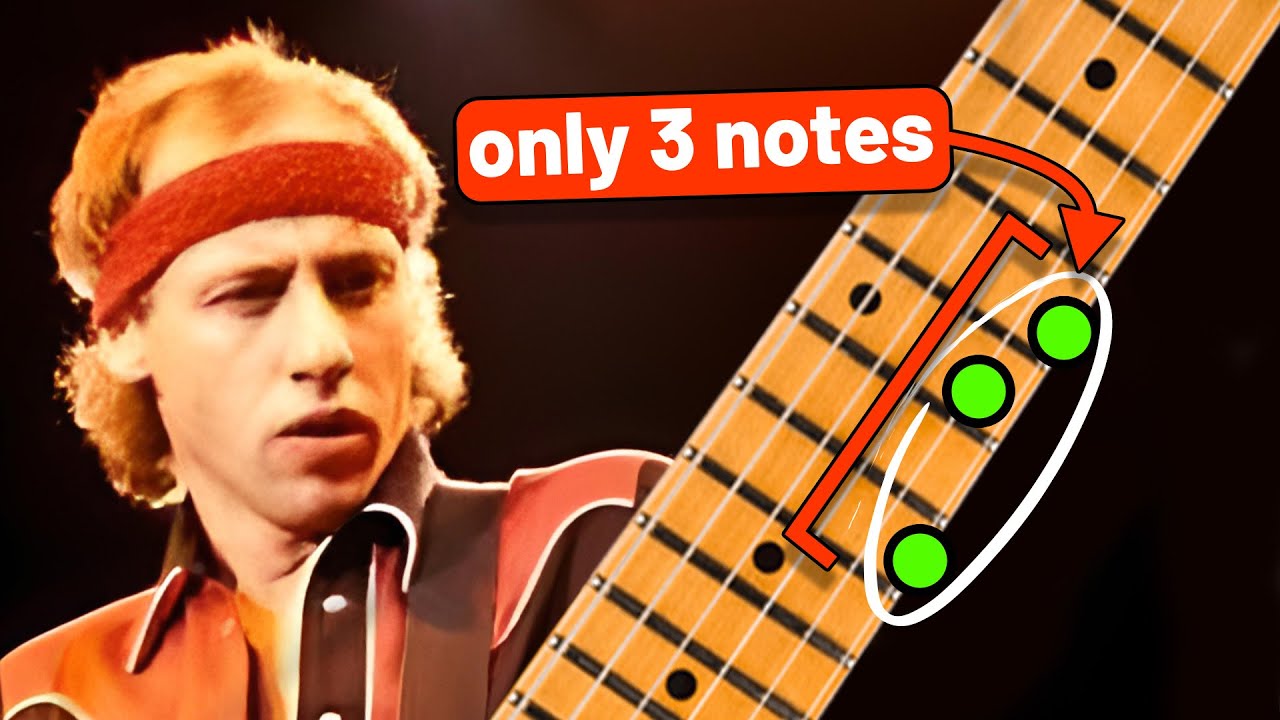
construct one so if you are a complete beginner you've probably looked at these open chords the basic ones [Music] and they are all constructed via Triads just in different inversions more on that later but I just want you to see that you have probably already played one even if you don't know what they are but essentially Triad means three notes so in order to understand how we can construct one I want to take a major scale first so we're just going to take the c major scale I want to label this in terms of intervals
so I would have root major second major third perfect fourth perfect fifth major sixth major seven or one two three four five six seven now in terms of constructing this very first Triad all we need to do is take a root a third and a fifth so in this case we have the root of C the third note of that scale is the note E the major third and then the fifth note is the note G we play them together and we've got a C major Triad and doesn't that look exactly like this it's just
here we've doubled the root note of one octave so a Triad is essentially the one three and five of the harmonized scale now in terms of the relationship between those notes they are stacked thirds if you think that's a third and that's a third but you don't need to understand too much of that just yet now we wanted to build the other types of Triads we just need to change certain intervals now to clear things up there are four types of Triads we have major minor diminished and augmented today we are just going to focus
on major and minor but if you are interested in diminished and augmented check out my course on music bro for essentially a major trial the only difference between this and A Minor triad is the third so when we take this C major if we wanted a Minor triad we just have to flatten that third there we have it so A Minor triad in its construction is just root flat three and the fifth major Triad is root major third and the perfect fifth so major Triad Minor triad and if you know this and you understand how
these are constructed you can make it from any root note so I could do this from F from G from a I just need to know the root nodes and to be able to see these are the two notes next to it the third and the fifth or the flat third and the fifth minor so that concludes level one let's move on to level two okay so with level two we want to talk about inversions and what on Earth is an inversion so remember I spoke about the construction of these being one three five and
inversion is where we simply change that order these are much easier on a piano when you see on a piano you have the note c e g if you want to invert that it's very easy you just change that order to EGC then the next one would be g c e on guitar this is much more difficult because we have multiple options the way in which I like to learn these and to practice them is to think of four different string sets on the guitar and split these Triads into those four different categories we are
going to take the first one and I would call this the a string set because it's got the a string D string and G string but we're going to take that Triad and look at how we can invert it so like I say we have the note c e g or the intervals root third and fifth if I want to invert this I can take each one of these notes up to the next interval or the next note so in the order remember c e g so this node C would go to E this note
E would go to G and this note G will go to C and we get what's called first inversion so we've got the third the fifth and the root or e g and C if you know the tune Sweet Home Alabama it's that shape you've probably seen it and played it already if I invert that again I'm going to take that note E to G I'm going to take this note G to C and I'm going to take this note C to e and I would get this now doesn't that look familiar looks like an
open E major chord or bar chord it's just these three and that's what we call second immersion so we've got the fifth the root and the third though if we invert that again we're just going to go back to the first shape root third fifth c e g now the way I would practice this is to just take that one string set and build an arpeggio [Music] now what I can do is do this on every string set I just need to find the root note and build the routing version Triad so on the low
E string [Music] notice how they are all the same shapes if I go to the D string and then the G string set [Music] so four string sets E string a string D string and G string and you learn all of those Triads that way with the inversions building arpeggios anyway let's move on then to level three so in level three we're going to take a look at minor trades for some reason these are always harder for guitar players to learn or visualize I've always found I don't know why it's just one note difference if
you are learning these in terms of their interval structure then this should be quite straightforward all we need to do with all of the major Triads we've learned is flatten that third so we take that one from the a string set here the root inversion if I just flatten the third I have a Minor triad now and I would take this same idea of inverting these so root inversion that's one flat three five the first inversion would have the third on the bottom so that's going to be flat three five one and then second inversion
always has the fifth on the bottom so that would be five one flat three we embed it one more time we get back to routine version and again I will practice these as I'll pick edges with these string sets the four string sets so starting on the a string you get [Music] if I do it on the E string set so the low E string you'll notice they are the same shapes [Music] if I do it on the D string set starting from root immersion [Music] and then I do it from the G string set
so this one from root inversion [Music] and they are all the Triads covered essentially for major minor remember it's so important that you see these as intervals at least for me so when I see root immersion I know that's one two and one three and five or one flat three five in this case second inversion is always going to be the third on the bottom so three five one or flat three five one for minor and then the second immersion is always going to be five one flat three for minor or normal three for major
and Within These I'm always trying to see The Roots as well that's important for when we start applying these two chord structures or when we're improvising I always like to see where the root nose is inside these Triads so here it's this one here it's this one and here it's this one more on that later but that is level three so you practice them as arpeggios on the string sets this way so horizontally okay so with level four what we want to do is to start visualizing these Triads vertically rather than horizontally what do I
mean by that so so far we've been taking a string set and we've been moving just this way horizontally across the guitar neck [Music] what we want to do now is keep into a more Consolidated area of the fretboard and have a way to practice these so this entails taking say root inversion on the E string set and then moving across string sets so I get first inversion on the a string set if I move across again I'm on the D string set now I would get second inversion and then move across again and we're
back to root inversion but this is on the G string set now and so we get [Music] we're moving this way instead it's much closer together now I could start this from first inversion and use the same kind of principle so if I started here this is first inversion then I'd move across the a string set and get second inversion move across the D string set I get root immersion move across to the G string set and then back to that first inversion do it one more time and we'd be starting from that second inversion
on the a string set rooting version on the D string set I get first immersion and then on the G string set I get second inversion again I could do that an octave below [Music] this is just another great way of seeing these Triads closer together in one area of the fretboard across the strings so we're going vertically rather than horizontally now you could do this with minor Triads as well so if I take the same principle I'm going to start off on that rooting version on the low E string [Music] I can move to
First inversion [Music] and then second inversion [Music] it's the same idea it's just a different way of practicing them and visualizing them make sure to check out my fretboard visualization course over at music Pro where you can either stream it if you're a member or download it if you want to purchase it but we cover all of these kind of things anyway without further Ado let's move on then to level five so in level five what we want to do is look at building Triads within a harmonize scale so what does this mean well remember
way back when we looked at the c major scale at the beginning of the video [Music] when we've built our first Triad we built it from the root note and we created C major but we can actually build a Triad on each degree of this scale so if we were to take the second note of the scale D we can actually build a Triad there so we're using the principle of thirds or one way which I like to do it is to play the scale where we take one note skip this one take this note
skip this one and take this note and then we've got this that is a D Minor triad so I know on the second degree of this C major scale that I have a Minor triad that goes for any major scale it doesn't matter where you are the second degree is always minor and we can do this for every degree of the scale so we again just to recap if we were to start on the root we'd get major go to the second we get minor go to the third we get minor go to the fourth
we get major go to the fifth we get major go to the six we get minor and then on the seventh we get diminished and then we're back to Major so you could practice your scales using these Triads to harmonize them [Music] do this across every string set you could apply this with those exercises where you move horizontally as well sorry yes vertically as well um there's tons of different ways you can practice this but the most important thing is understanding that we have now harmonized the scale and this is what we call diatonic Harmony
it's where we can get all of our chord structures from and that is what we're going to look at in level six how we can actually start practicing these Triads with chord structures so now in level six we want to look at a chord structure so the fact that we've already harmonized the scale we can number every degree of that scale and if we know which Triad falls on which degree then we can we can create these chord structures very easily so one which I like to do is the one six four five to practice
this so in the key of C that would be C major we've got a minor we've got F major on four and G major on the fifth so it's C major a minor f g or one six four five now in terms of where you see these this is going to be important so we just want the basic root Triads at first so if I was to take say C major I have this one here I take an A Minor here for the sixth chord for the major chord f i could take this one and
for the G I could take this one so you've got [Music] foreign and I would do this cross different string sets so I could start on the E string here so and I'm getting all of the sounds of the harmony just with these Triads now in terms of what you could do next it's a great idea to limit yourself to one area of the fretboard so I could take for example any of the inversions of these chords but looking for them in a really small area of the neck so if I took that c there
I can see that there's an A Minor triad here and that is starting essentially from that second inversion we just want to see that it's close then I can see an F here and then I can see a g here nice and close together so I'm going [Music] to move that to a different position so I could get this I can move it to another position again [Music] just opens up the fretboard and we're not limited to just these Chords Anymore [Music] this kind of idea we've got freedom if I just improvise a little bit
with this chord structure let's hear how that can sound just using Triads and their inversions so foreign [Music] thank you really really cool and useful and you can apply this to any chord structures you like within that diatonic framework what lots of people like to do is the one four five because they're all major this kind of idea [Music] I like to do that 1645 because I'm getting a Minor triad in there and that's what you should be practicing both major and minor and if you're feeling adventurous diminished maybe augmented but for now that covers
this level let's move on to the next one so now in level seven we want to start looking at these Triads as arpeggios or single notes played one after each other and this is often very hard for guitarists to have a concrete method in which they approach these and visualize these for me I like to keep things really simple but I like to view them in terms of intervals so the way in which I do this is I start by limiting myself I find a root note on the low E string and then I try
to build it from the first finger so I would get root then I get the major third then I get the fifth here now instead of going okay let's move on and let's find more shapes I think play that starting from my second finger and see where these intervals are so if I start with the second finger on that same root note the third is now actually here on the a string and then the fifth is with the pinky here on that a string so it changed from to this I do the same thing starting
from my third finger and then the same thing from the fourth finger and they are very often the same shape then I've got four different ways to play that c major starting from that root note I could do the same thing on the a string it's going to be very very similar [Music] do it from the D string do it from the G string and if you're feeling really adventurous do from the B and then crazy adventurous is to do it on one string and you can do this on all of them in a single
string so you get this kind of idea and then if you were to bridge those two look we've got a full shape where it's just two fingers [Music] and that is another way of visualizing these you can do that like I say on every single individual string [Music] that's gonna look the same if I go here ah sorry and then here here they're all the same and this is what's really cool about this visualization exercise limiting it to that one string set but also what we did with the individual fingers once you've done that from
every root note on every string then you've covered every possible C major Triad across all of the fretboard it's a lot of work but it really comes in very very handy so good luck with that one let's check out the next level then so in level eight we're going to take a look at another way of visualizing these Triads but this way to open up the fretboard horizontally and this doesn't get spoken about enough when it comes to visual entrance in my opinion anyway what we are going to do is take that low E string
and build the Triad shape but what I should do is then move to the D string and you'll notice it's exactly the same shape if I move to the B string it's going to be exactly the same so we've got now I can do that from the third as well and I'll get a slightly different shape where I get this very very cool it's just one finger pattern and it moves through these three octaves essentially I could go from the fifth as well and I get this [Music] so I'm covering the whole length of the
neck so it's this shape from the root from the third it's this shape and from the fifth it's this shape so and you can start linking them [Music] just another really cool way of visualizing them and it's moving you this way rather than one position this is really tough you can apply this to of course minor diminished and augmented Triads as well but it's just another tool to add to your belt really in terms of visualization let's move on then to level nine okay so in level nine I want to see if I can use
these Triads as arpeggios to move through the chord structure that we had before so we're going to take that one six four five and the very first thing you'd want to do is just see if you can create those arpeggios from the root notes of each chord so C major and then a minor F major G major and if you can do this in time in the metronome or back in track even better but really it's about the visualization you want to be seeing where these root notes of every chord are and where the rest
of those thirds and fifths are on top so if I was to do this I want to just play Four notes for each chord [Music] and that's where we are just kind of keeping to these root notes and we want to be able to see if we can move freely with them it's a true test of your improvisation skills and visualization skills really but now for a bonus challenge we can call this level 10 if you like is you want to see if you can freely move between these without it just being the root note
we're wanting to see connections so it doesn't matter if we start on the third the fifth or the root we just want to find ones that are close together and see if we can imply this harmony to The Listener hopefully you'll be able to hear the chord structure even though I'm not playing chords I'm just playing these arpeggios so we're going to take that one six four five and I'm going to try and connect these Triads connect the dots really so let's give this a go [Music] thank you [Applause] [Music] foreign [Music] improvise and place
something a little bit more free time but hopefully you'll hear the chords still so [Music] thank you [Music] [Applause] [Music] hopefully you can hear their all of that nice Harmony and I'm just trying to connect all of these Triads I hope all of this has made sense remember there are some bonus levels over at musicpro.co.uk and if you are interested in even more in depth then check out the fretboard visualization course over there if you want the PDFs for that you can of course purchase it as a one-time download or if you just want to
stream all the content then as a member you have access to all that I hope you guys have enjoyed these ideas let me know what it is you'd like to see in a future video I'm always down for kind of inspiration from you guys hope all of that made sense good luck with your Triad Journey I'll see you guys in the next song cheers [Music] foreign [Music]