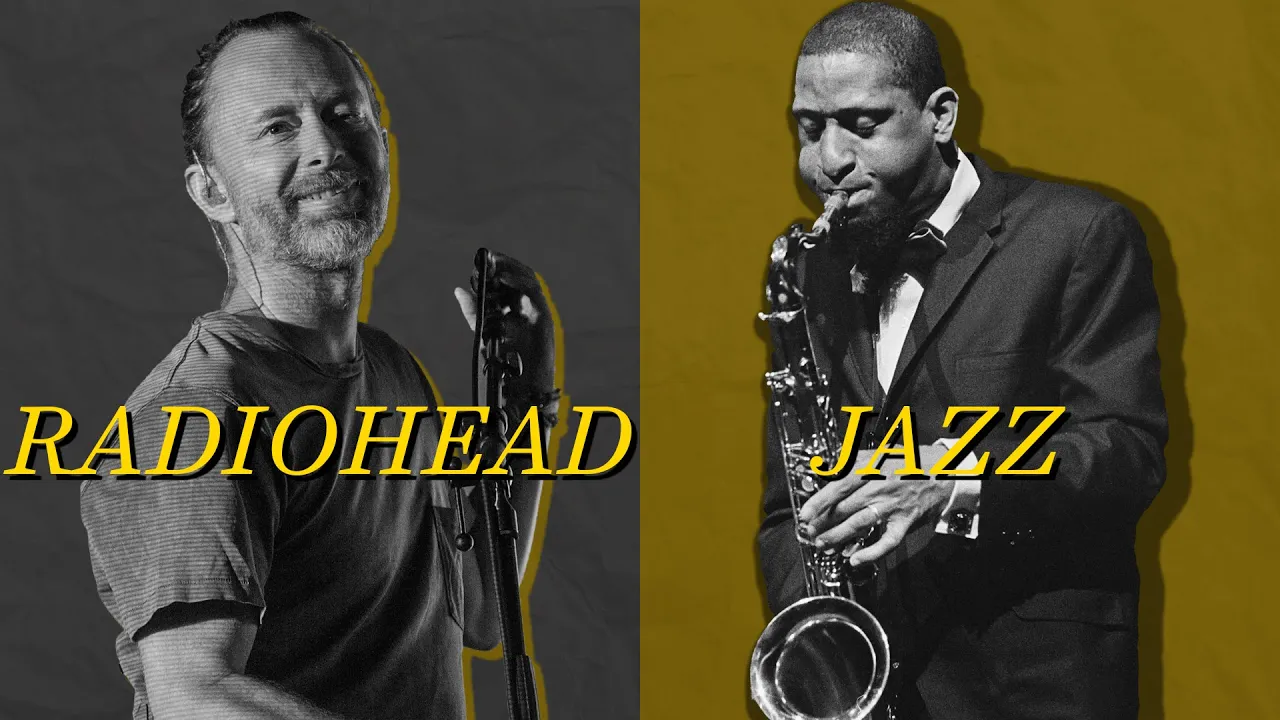
there's always something great about musicians that are able to cross traditional genre boundaries serving as conduits between these imaginary walls we put up to cordon off different styles of music there's no shortage of these musicians but today I'm going to talk about Radiohead both their Jazz influence mindset and their attitude towards music making but also delving into some of the specific musical features of their work that take implants from Jazz I've made a video about how radio had drawn from one of their favorite classical composers Olivia messian but he had the unfortunate quality of being
dead before radio had even released their first album so as per usual the practicalities and mortality have stood in the way of potential musical exchange but with radiohead's jazz influence ideas and inspiration have been able to flow both ways since neither Radiohead nor all of the world's Jazz musicians are dead yet Jazz musicians have reciprocated radiohead's passion for that genre with names like Robert Glasper Brad Bell and more contributing to a rich musical dialogue there's spanned over two decades this was especially true on their two albums kid a and amnesiac released in 2000 and 2001
respectively but importantly recorded together in the same sessions I'm going to structure this video around two main Jazz musicians who've influenced radiohead's work though I'll extrapolate into some broader themes around radio as Jazz influence more generally then we'll take a look how some contemporary jazz artists have responded to radiohead's music and why they love Radiohead so very much just before we get stuck in though I want to give credit to Pete Carney who's a jazz musician and educator who's done extensive research on how Jazz has inspired Radiohead a great deal of this video is based
upon the work that he's done and his dissertation is linked to the sources in the description if you want to read it all which I would highly recommend and even though I'm going to talk about just two Jazz musicians today radio herd have of course been influenced by more namely Miles Davis and Louis Armstrong but this video would end up being hours long if I tried to tackle them all just before we get into it if you are enjoying this video so far please feel free to leave a like leave a comment and subscribe it
really really helps the channel out and keeps me being able to make these videos also my hay fever is really kicking off today so if my voice sounds a little nasally then that's why the first of the two musicians I'll talk about is arguably the most key Jazz influence to Radiohead Alice Coltrane as with a lot of the Jazz influence in Radiohead hearing coltrane's influences most clear on kid a Brady had have said in interviews that they would jam over Alice Coltrane specifically her 1971 album journey in Satya dananda which he made with Pharaoh Sanders
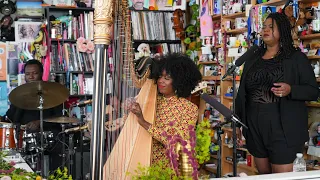
they would play along to the album turning themselves gradually down and Alice gradually up until they were silent compared to the record there's a number of things on this Coltrane record that clearly seep into radiohead's work on kid a but first they will talk about the heart it doesn't take a genius to hear the similarities between Radiohead juice and the heart and the use of the harp on this record such as in the title track or on other songs of coltrane's like our version of her late husband to Love Supreme it is constructive or Galaxy
in San Diego [Music] if you haven't already realized this is the harp on radiohead's motion picture soundtrack clearly a homage to Coltrane Johnny Greenwood said in a 2001 interview with Mexico these are direct Alice Coltrane samples cut off and stuck together making up for the distinct lack of real Harps in the studio [Music] it conjures imagery of Disney films fantasy spirituality something profoundly human in an album touted fairly wrongly in my opinion for being cold Jagged and human all the Alice coal terrain Tunes I've talked about so far come from 1971. just four years after
the premature death of her husband the great John Coltrane if one listen to the words that Tom York sings on motion picture soundtrack ending with I will see you in the next life it's not hard to see a connection here oh even though it wouldn't be released until 2000 motion picture soundtrack was written in the mid-1990s but it sounded really different back then just an acoustic guitar ballad with very basic chords of just major and minor yet to adopt the more Jazz influence seventh and 9th chords that could be heard on the final version of
the song [Music] the song cycled through multiple versions including this heart-wrenching piano version that was released on the Hacked mini discs a few years back in the name by tracing the evolution of this song firstly taking the harmonic influence from Jazz more generally and then the direct Alice Coltrane references in the heart it can be seen how Jazz slowly crept his way into radiohead's work but it's not a jazz tune by any stretch you can see the influence of for example old Radiohead favorite Jeff Buckley in the harmonium opening [Music] when Radiohead plays the song
live they used the sound of a distorted harmonium a sound that comes across as rather grating to a first time listener used to the gentler sound of the studio version but this tone is even perhaps more effective than the studio tone creating an even greater feeling of transcendence when the harps and the choir heard later in the song around the time of the release of the album Radiohead would play Alice coal train at their concerts look at this example from their 2001 gig at the Gorge in Washington state they finished up the setlist with motion
picture soundtrack and then immediately play on the sound system there Alice coltrane's Blue Nile listen to how smoothly the two tracks flow together [Music] another Radiohead song that Alice Coltrane has influenced is my personal favorite redhead song of all Pyramid Song firstly Pyramid Song and Blue Nile there's clear links to egyptology here Tommy York said in a 2013 interview that he was exploring the Egyptian section of the Museum in Copenhagen in all probability the Egyptian section of the Carlsberg lift attack there's clearly a lot of money in beer and that this was the Genesis of
the Egyptian influence in Pyramid Song so Radiohead making a song inspired by Egypt around the turn of the century the exact same time that they're jamming along to Alice Coltrane whose Blue Nile is clearly inspired by Egypt both nominally and in The Wider context of the album patava El daoud referencing the ancient Egyptian deity looking closer at the music there's a lot of similarities to be drawn between the two songs The Melodies of the songs are comparable being based on the pentatonic and really emphasizing the fourth and fifth degrees of the respective scales [Music] foreign
[Music] 's work but at least in this stage of radiohead's career was far from the norm the drum beats are fairly similar too with a ride symbol keeping time and syncopated snare drum hits the very rhythm finally the rhythm of the bass is pretty similar too pyramid songs fairly unique Rhythm isn't exactly taken from coltrane's work it's not like she invented the dotted Rhythm or anything but it's a clear source of inspiration when all other connections are considered also since the songs are played at fairly similar tempos so the beat ends up having a very
similar feel to it [Music] thank you in his work on Radiohead and Jazz Carney also believes that radiohead's phrygian education as he puts it came from Alice Coltrane specifically her track Isis and Osiris which he calls a 12-minute g phrygian epic and one of the songs that Radiohead have actually acknowledged jammington [Music] the last key bit of influence I'll talk about Alice Coltrane is about her string arranging firstly and most importantly she arranged her strings in octaves such as here on her version of a Love Supreme [Music] love is the name of God [Music] this
kind of string orchestration in octaves is something of a Hallmark of Alice coltrane's work and as a result has now become a Hallmark of Radiohead string Arrangement at least in their earlier days of doing it [Music] she also makes use of kind of pentatonic strain clusters which can be found in Endless Radiohead songs like Specter How to Disappear Completely dollars and cents and Bloom to say just four [Music] now we'll talk about one of the other Jazz musicians who significantly influenced Radiohead Charles Mingus when you're talking about Radiohead and Mingus the song that immediately comes
to mind is the national anthem teaming up with a nine piece horn section the song which was also released on kid a has a frantic Jazzy feel Carney and his work on Radiohead and Jazz created this really helpful graph which outlines how the event sequence of mingus's Wednesday night prayer meeting corresponds neatly with that of the national anthem let's take a closer look at this graph to understand what exactly this means Charles Mingus was an exponent of collective improvisation a practice drawn from earlier Jazz Traditions seen in New Orleans and the worship rituals of the
black Pentecostal Church listen to this recording of Livery stable Blues played by the original Dixieland Jazz Band all the way back when it was called Jazz with an s from 1917. [Music] it's a lot closer to the collective Spirit of radiohead's the national anthem than say the Jazz of the 1940s mingus's work in the 1950s and 1960s as Wednesday night prayer meeting is it's built on this somewhat abandoned tradition never shy of cacophonous exaltations the tune which sets at a roughly similar length to the national anthem expands and contracts in the same fashion beginning with
the base and then the keys [Music] foreign [Music] builds increasingly busy lines of horns whilst radio had incorporates a multitude of sound effects and the on Martino their favorite electronic instrument something you can find more about in this video I did about that classical influence the pieces differ the most here with Radiohead veering off into polyphonic horns which are somewhat buried in the mix whilst Mingus employs more traditional soloing first the alto saxophone then the trombone then the piano but the pieces then converge In Style again and this is where the greatest similarities emerge with
key structural points in the Mingus piece being replicated in the Radiohead ones whilst the graph goes into a lot of detail here I'll just describe what I see to be the essential point of comparison a baritone ostinato precedes an individual solo disrupted by an intense tennis wheel before exploding into a wild polyphony ending on a long held out fermata all the while vocals are heard shouting intensely in the background Johnny Greenwood said in 2001 that the national anthem was inspired by the blues and Roots era of Charles Mingus the very album that Wednesday night prayer
meeting is on as well as the fact that Greenwood said it would be the one Mingus piece he'd played the uninitiated I think of all the songs that I talk about in this video this is the one that most directly sounds like the one it's based off probably owing to the use of more traditional jazz instruments than in radiohead's other work Liam Kirkland who is one of the trombone player players on National Anthem noted that the lineup except for the addition of one additional trumpet is the exact same as the eight-man hornline up in the
Mingus tune there's a few more parallels as well look at the bass line that anchors the national anthem running throughout the song [Music] this bass line which comprises mostly descending major and minor thirds is really the mirror of mingus's Baseline which uses equally bluesy driving thirds [Music] Pyramid Song 2 has early influence from Mingus though by the final version we hear on the album it's all but disappeared Tommy York said in an interview in 2001 that the whole song was just him being totally obsessed by a Charlie Mingus song called freedom and that he was
simply trying to duplicate that with the early versions of the song even including the cracks from the Mingus song however calling the claps Naf the version appearance song that we finally got and discussed earlier had Stripped Away a lot of the clear Mingus influence at least on the surface Tom York said in 2001 that the whole of kid a and amnesiac was him trying to drag out the feeling from mingus's freedom but in 2003 a more clear direct reference to Freedom emerged on WE sucked Young Blood a Radiohead tune that gets a mixed reception even
from their most die-hard fans but I really like if you Google the tempo we suck young Bloods you get numbers like 77 or 154 BPM but I don't know why they're counting it like this because I hear that as counting in double time I hear the achingly slowed tempo of just 39 beads per minute which is roughly the same same speed as freedom and we suck Young Blood employs the Clapping that Pyramid Song didn't use a clear homage to Tom York's seemingly favorite Mingus tune [Music] one final thing about Mingus is that since Radiohead has
acknowledged their relative lack of virtuosity as instrumentalists and the fact that they're ostensibly not Jazz musicians nor improvisers he's talked about how this has allowed them to adopt aspects of mingus's work that perhaps others who have a more traditional jazz education May Overlook so clearly radio had liked their Jazz but how has the Jazz World responded to Radiohead the classical world has responded with warmth to the group with two out of the three main influences Pandora skin Reich working with the band members and making their own versions of Radiohead songs respectively in the Jazz World
whilst radiohead's Heroes have the unfortunate hiccup of all being dead the modern Jazz world has taken up Radiohead themselves loads of jazz musicians have tried their hand at interpreting radio songs but one really kicked it off Brad mehldau the Jazz times dismisses radiohead's early work saying that Pablo Honey in the Benz are way too Poppy for the serious Jazz musician's taste which as well as being demonstrably untrue and contributing to needless and harmful genre barriers does contain an element of fact in it that it wouldn't be to locate computer and Beyond the Jazz musicians would
really start to pay attention to Radiohead as a band of exceptionally high quality Brad mehldau burnt out with a lifetime of jazz records turned to other genres of music finding musicians like Elliot Smith Fiona Apple and more but above all the works of Nick Drake and Radiohead he explains his affinity for Nick Drake by comparing him to John Coltrane but if Coltrane was a folk musician rather than a jazz one on his fourth album art of the trio volume 3 maldow performs a version of radiohead's accent music for a film something which he says borders
on plagiarism of Beethoven's Moonlight Sonata he's gone on to record and perform versions of loads of Radiohead songs Paranoid Android knives out and jigsaw falling into place for example but meld out opened the floodgates for a host of other Jazz musicians but the only other one I'll talk about here is Robert Glasper one of the most famous names in modern Jazz his most famous version of her Radiohead work is everything in its right place mixed with Herbie Hancock's maiden voyage creating an overall fantastic Fusion foreign [Music] versions of other Radiohead songs like reckoner and even
less popular ones by the band such as packed like sardines in a crushed tin box when asked about his love of the band and everything in his right place in particular Glasper said I'm a changes guy I like chord progressions and that has beautiful chord progressions I love repeating one note and changing things around that note that happens a lot in that song it lends itself to re-harmonizing and reclaiming it lends itself to Jazz all I know is that it's different to a lot of things you've heard they're one of my favorite bands ever but
of course when they're taken from Radiohead they're not just taken from Radiohead in their Jazz influences they're taking from the Pixies David Bowie Neil Young Aphex Twin orteka messian pandaratsuki and many many more the range of radiohead's influence is what gives them such a unique sound and the rich harmonic World they create their intricate rhythmic ideas and more all make their songs like Adventure playgrounds for the Intrepid jazz musician thank you very very much for watching I really hope you enjoyed this video if you did please feel free to leave a like subscribe and best
of all leave a comment because I always love hearing what you guys have to say and consider checking some of my other videos out thank you very very much for watching and goodbye