We recall that a brand is a person's gut feeling about a product, service, organization as defined by brand legend himself, Marty Nummire. So what happens if you're in a situation where the perception of your brand is different than your own image and your mind or what you wish it to be? And this happens all the time.
There's a misalignment. And if we go with the conceit that your brand isn't what you say and it's what they say it is, then the only one that really matters is what they say it is. And we know that recently, I think Chevy got into some heat because they came out with a Camaro that is electric, I believe, or a hybrid engine that loses all of the identity of Camaro, which is American muscle car that's loud and powerful.
And so the perception from the audience is Chevy's lost their way. They've neutered this masculine vehicle. They're moving in the wrong direction.
There's another one that came out. I don't know why I'm talking about car Compass, but with Jaguars, Jaguars rebrand trying to appeal to a whole different demographic that's more feminine, that's more inclusive, that's more fashion forward than the traditional heritage. They changed everything about it.
And so people were up in arms saying, "What' you do to my Jaguar brand? " So here we are. What if you're one of those companies where your own internal perception or where you'd like to be is the one that aligns with public perception?
Well, I think number one is you have to do a little bit of social listening to see what they're really saying. And to have a honest conversation with yourself to say like it doesn't matter what we say we do. If people don't perceive that then it's just an intention.
It's an idea. But when that intention meets reality the cold hard truth comes out. Let's say you're really a customer serviceoriented company that you believe in excellence and customer service but you don't train the right way and you don't hire the right way so that when someone goes to your place of business they have a very different perception.
Parking is confusing. Customer service is rude. People are very curt.
No one goes out of the way to help you. So you see now where the real problem is. It almost ultimately the problem lies in you and how you've been able to execute on an idea.
We know that in business ideas are cheap. It's execution that wins the game. So you have to take your brand as seriously as you do in a product or the delivery of a service.
You have to take it all the way through. So you have to hire different, you have to hire better, you have to train and implement certain things so that people are living up to the promise of the brand. Now let's just say you've done all that stuff.
You've read the reviews. You've done the social listening. You understand what people are saying, the sentiment, both good and bad, and you've gone to fix that.
What can you do? You have to tackle the perception headon. You have to address it.
Previously, we failed. We were negligent in delivering the world-class service that we thought we had. We had to go through a internal audit and we've changed.
Give us a second chance. The next drink or the next something is on us and allow us to show you this. Now, you might sit there and think, Chris, that's pretty nice from the world of your imagination, but how does this work in reality?
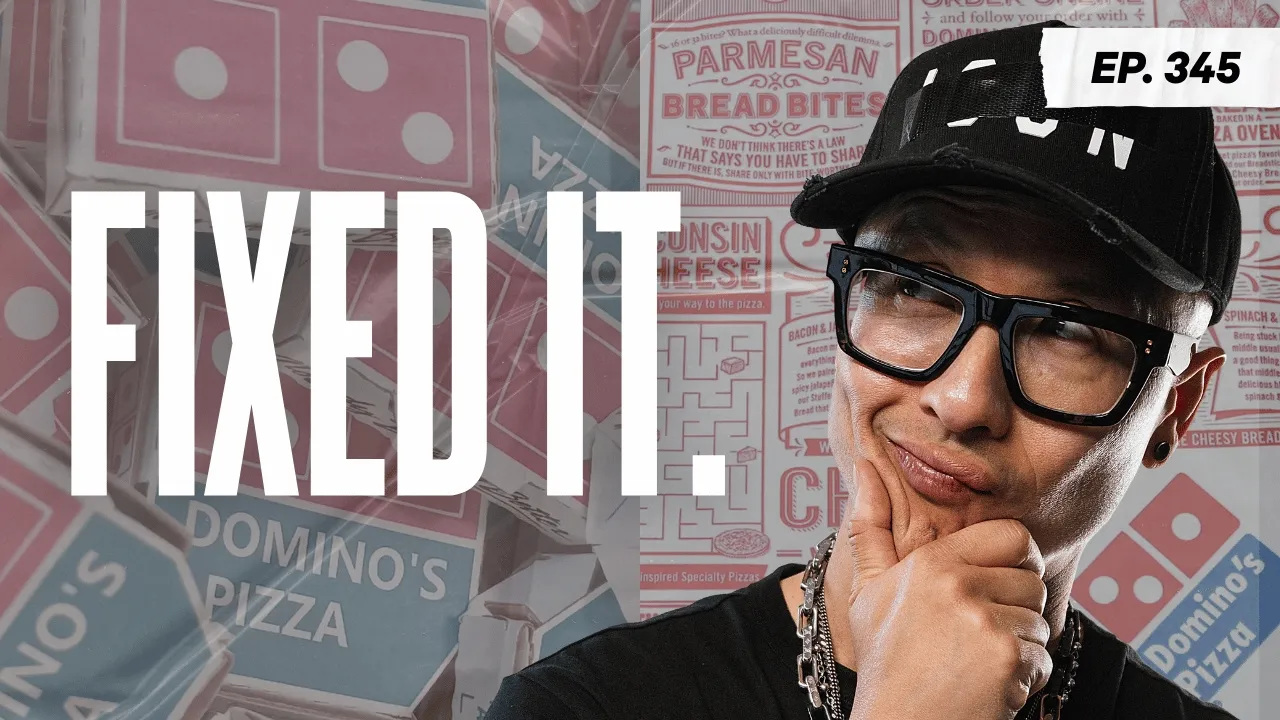
Well, in reality, Domino's Pizza did this very thing. They thought they had a really good pizza, but Domino's is the kind of pizza you used to order when you had no other options. No one would deliver.
was open and you would just order Dominoes. Their dough tasted like cardboard. Their cheese wasn't tasty.
The toppings weren't premium. And so they went through this very expensive process and hired consultants and chefs to fix their entire pizza making operation. Then what they did was they reached out to a bunch of influencers said, "We're going to just send you pizza.
We're not asking you to do anything. If you like it, talk about it. If you don't talk about it, we're good to go.
Would you be willing to do that? " And they sent a bunch of pizzas to people who were influential. I'm like, "Wow, this is very different.
" And it's reflected today in the packaging. If you look at the packaging of today versus a few years back where the box was mostly a blue and red Domino's logo to one that feels like it's got attitude and it's handdrawn. It's got a lot of personality to it as if it were from a smaller pizzeria in New York City somewhere.
It has a whole vibe. And in fact, it's done such a good job that my perception of the brand is so different than it used to be. My son and I, we like pizza and we like dirty, greasy pizza, not the artisal high, you know, high pinky pizza.
We like this kind of dirty American pizza. And Domino's is something we do like and we enjoy it very much. So that's how people in the real world in Fortune 100 companies have done this.
You tackle the objection or the belief or the perception heads on and you do a mia copa. You say, "We've messed up. We've failed.
We will try harder. Give us a shot and here's what we're willing to do to make it up to you. " Let's say you're Spirit Airlines, which is really bargain flying.
It's barely like a bus with wings, right? And what Spirit doesn't want to do is tell you they're Virgin Atlantic. They're not going to tell you they're Singapore Airlines or Emirates because they can't.
They're just so laughable if they were trying to claim that. So, the best thing that you do then is you just lean into it. You're like, "The cheapest fairs and we're barely better than a bus.
" And then people say, "They have a sense of humor. I like them. They're being really honest.
" You know, we like people who are honest with themselves and with us. We know better that you're not trying to pull the wool over our eyes and we feel a connection there. Southwest has done a really good job of making their airline great and profitable despite being a discount airline.
They've revolutionized how people get on the plane. You don't have preassigned seats. They barely even give you anything to eat.
And they all fly the exact same kind of jet. But what they do is they say fairs and I like that. It's like we're not going to tell you what's the best.
and they encourage their employees, the airline attendants, the flight attendants to have fun. So, their announcements are weird. They're wacky and they tell jokes.
So, it's kind of like, are you a flight attendant or part-time standup comic? And we're just embracing this, right? Like, oh, the captain is uh turn on a sign that means please sit down.
That yes, you in row three, sit down, please. You know, and they have a good sense of humor, and I like that. So, they they said it's just a famous line in Pulp Fiction, right?
There's an argument between Samuel L. Jackson's character and John Travoltto's character and they're talking about pork. And he's like, "You don't eat pork?
" He goes, "No, pork is a filthy animal, right? " And he goes, "But pork tastes good. " And he goes, "Well, you ain't going to eat a dog, are you?
" Well, he dogs got a personality. And so he's like, "Would you give up bacon? " He goes, "Well, we have to be talking about one charming mother pig.
" What what I'm saying in that that rough comparison here is if it's not great, at least bring personality to it. Bring sense of humor. bring some charm.
Here's one last example I'll share with that. The Montana Tourism Board was seeing that, you know, we're not getting a lot of tourism here. So, they hired an ad agency to figure out how they can bring more people to Montana to spend their money.
States like that need your tourism dollars. So, they went and did an audit. They questioned a lot of people.
They did focus groups. And time and time again, what people would say like, "Yeah, what do you think about Montana? There's nothing here.
" So, they came up with a campaign that showed pristine, untouched wilderness, mountains, and rivers and streams. And they came up with a tagline, guess what they said? Nothing here.
Isn't that genius? And you're like, you're right. You're not fighting my perception.
Another one, even more famous than this one, way more famous, is what happens in Las Vegas. And you know the rest of the story, cuz we're not going to pretend like bad stuff doesn't happen here. We're just saying we have a secret pack not to tell our significant others or bosses or employees what happens here.
It's worked so well that Las Vegas needs to change this image about themselves because they they feel like they've outgrown the sin city of stereotype. Good luck with that. In just a few months, we're going to hit our 400th episode of this podcast.
And before we get there, we want to take a moment to really listen to you, our loyal listeners. If you're open to chatting with my producer Rich Cardona or someone on his team, we'd love to hear from you. Just fill out the short form in the show notes.
It takes less than 20 seconds.



![How to Find and Live by Your Values [SOLVED]](https://img.youtube.com/vi/uvXdMPNhp9M/maxresdefault.jpg)