What did Jesus think about the Elohim [Music] stories? There's a moment when he says, "All who came before were thieves and robbers. The thief comes only to steal and kill and destroy," and that's a pretty good summary of what the Elohim did when they came, colonized our planet, and governed over our ancestors.
Jesus sets himself up in contrast to people who've treated humanity that way. In Southern Africa, researcher Michael Tellinger points to the presence of prehistoric mines, which he dates to around 200,000 years before present. His work joins with the work of Yan Haer, who first drew attention to a vast network of stone circles spanning South Africa, Zimbabwe, and Botswana.
Michael Tellinger's work studying the wear patterns of the stones in their current setting dates them to between 200,000 and 300,000 years ago. But who was here 200,000 to 300,000 years ago to build on such a vast scale, and to what purpose? What function did this stone grid serve?
Might it have been a form of technology that we have yet to understand? The presence of prehistoric gold mines in Southern Africa certainly raises the question of who was here in the prehistoric past, who wanted those minerals, and who did the actual mining? If the mines really are 200,000 years old, as some researchers are arguing, then our ancestors, Homo sapiens, were here at that time—not yet smart enough to work out how to farm, but smart enough to work in someone else's mine.
Now, there's a connection between our early ancestors and mining that's actually hinted at in the Book of Genesis. The text introduces us to Eden as a place where the humans lived in their earliest iteration. In other words, this is the point in the story before they have been upgraded with a higher intelligence.
Meanwhile, the text informs us that just near Eden are some key mineral deposits, including gold, and then we're told that the overlords, the Elohim, the powerful ones, put the humans to work. Now who was interested in those minerals? Not the humans.
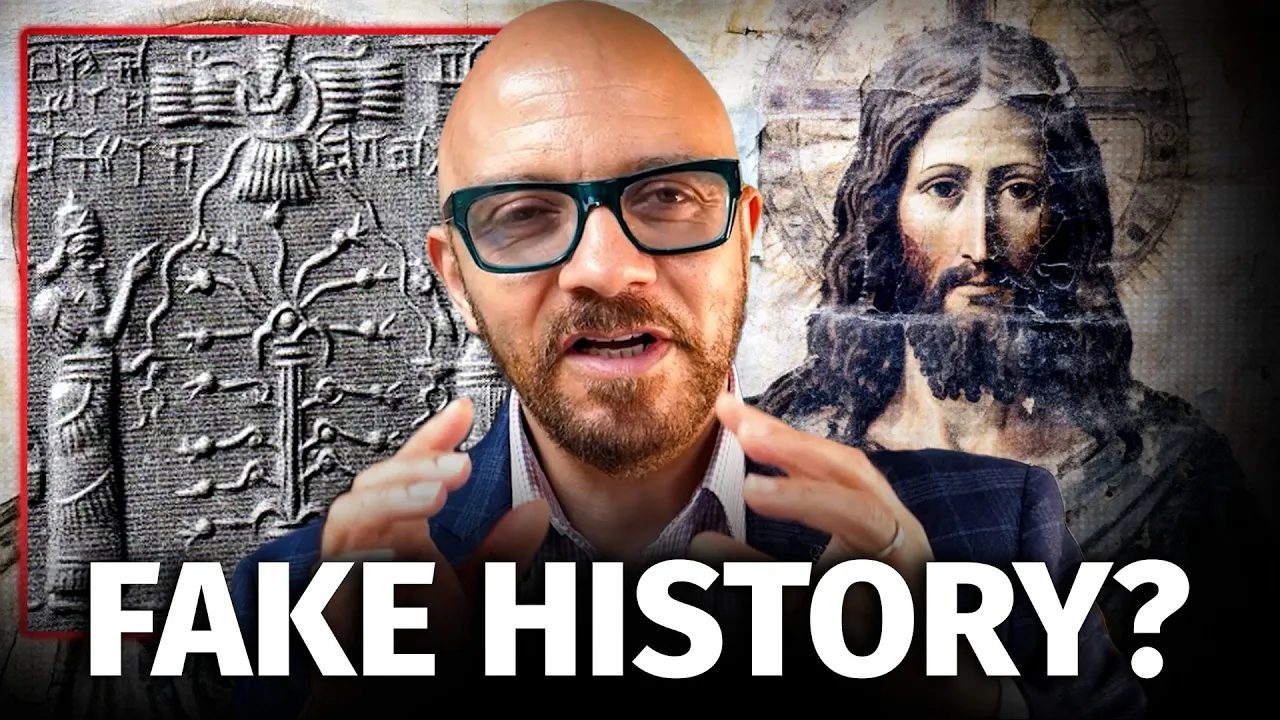
And exactly what work were our ancestors put to? In the 20th century, the writer Zechariah Sitchin began pouring over the cuneiform texts. He highlighted the clear implications of the Sumerian stories that the Anunnaki were powerful and advanced extraterrestrial species.
Their arrival on planet Earth put them at the top of the terrestrial food chain. To create a local workforce, the Anunnaki used sequences of their own genetic code to hybridize a primate ancestor into a human ready to be put to work for their Anunnaki masters. Sitchin argued that the word Anunnaki means "those who came from the heavens to Earth," a phrase that made clear their extraterrestrial origin.
Zechariah Sitchin was not an academic; he was not a PhD or a professor. He had a degree from the London School of Economics and worked in commerce, and the LSE, I should say, is a pretty august institution. He wrote at a popular level—that's to say, for a general audience and not with the kind of referencing and footnotes that you'd expect to see in an academic tone.
Academic critics don't like that; they think that's slack. Some might identify mistakes or bias in his work, and that's their pretext to disregard his contribution, which is an important one. Now some writers in the field reject Sitchin's translation of the word Anunnaki, and they would contend that the word's usage tells us that it simply means nobility or royalty—the rulers.
I'm not persuaded by that. It's not that that's not true; it's just a very partial answer. It's a very lazy explanation.
It simply doesn't ask enough questions. Who were the rulers identified by this word? Why is that word associated with the rulers?
You see, if you look at the etymology of the word, at its root meanings, look at the component parts: you have Anu, which means heavens; Ki, which means Earth; Anunnaki—those who came from the heavens to the Earth. You can follow the logic, but even if you didn't have that narrative embedded in the word itself, as soon as you read the cuneiform texts, the stories themselves unpack that—that is exactly what was going on. And the glyph that they use to indicate the rulers who come down from the heavens at the beginning of the story?
That glyph simply indicates the sky. So these Anunnaki are from the heavens—the sky people. Traditionally, the story of the forbidden fruit in the Garden of Eden has been told as the fall of humanity from a state of innocence.
Seen in the context of a plural Elohim, the narrative flips. Far from being a fall, the conflict is over an upgrade to the human condition. Pluralizing the translation almost reverses the meaning of the entire episode.
What we have here is the Bible's version of the conflict between Enlil and Enki over how intelligent the human beings should be. Reading Genesis 3 as the story of an intervention in the process of human evolution and as an upgrade to human intelligence reframes the whole scene, casting the serpent in Eden as the good guy of the story. For some, this is a disturbing and controversial interpretation.
It represents a 180° change from the traditional religious reading of those texts. For centuries, the story of Yahweh, Elohim, and the serpent in Eden has been read as a moment in the cosmic battle between the Almighty and Satan—a fight between God and the devil. However, the names devil or Satan are nowhere mentioned in the text, and if this is really an Elohim story, then we are certainly in the realm of plural visitors—powerful ones conflicting over Project Humanity.
Moreover, the source narratives from ancient Mesopotamia on which the Genesis story would appear to be based point to a completely different framing. I would say that the source of this story is not a God and the serpent story at all; it's the story of two brothers, Enlil and Ani, who have an argument over how intelligent human beings should be. Eni is the commander of Project Earth; his younger brother, Enlil, is the commander of this region of space.
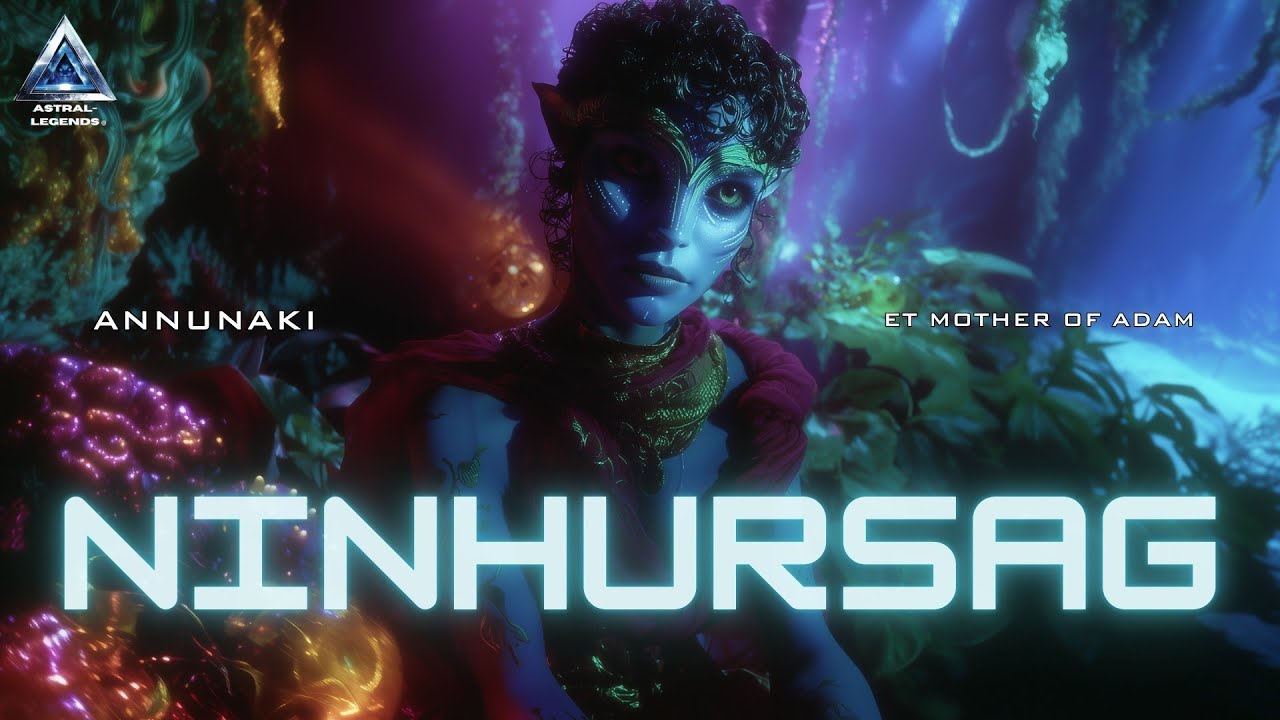
Other entities, N Ninag, Kul, and Maduk, all play their part in a story of conflicts over their agendas for our planet and our race. The stories of the Elohim, the powerful ones of the Bible, appear to be a summary form of these even more ancient recollections of Sky People. The plural Elohim, the powerful ones, were part of the world of Abraham and Sarah, the progenitors of the Hebrew tradition.
When a neighboring chief asked Abraham, "Why did you leave Ur of the Chaldeans? "—which was a Mesopotamian-based culture full of stories of Sky People—the answer that Abraham gave was, "Because the Elohim" (plural noun) "told me" (plural verb). These plural beings were part of Abraham and Sarah's world, and they crop up later in their story.
Though generations of translators have translated Elohim as God, Abraham, the progenitor of the Hebrew tradition, was very familiar with Elohim as plural beings. The word, if we take the root meaning, means "the powerful ones. " Now, some scholars have argued that it means "the powers of God," and that's why it's in the plural, but that doesn't quite relate to how other pluralizations work in Hebrew.
"Cherubim" is many "cherubs," not the many qualities of "Cherub" kind. When translators want to say that it means "the powers of God," what that fails to take into account is that these powers conflict with one another over agendas for the human race. These powers go to war against each other, and human beings get genocided in the process of those conflicts.
So, no, it's not the powers of a divinity we are talking about; we are talking about ET demographics that arrived as a colonizing force on planet Earth, and our ancestors were caught in the crossfire as they went to war over Project Earth. The ancient Norse mythologies speak of conflicts among advanced beings as they conflict with one another over the management of the human race. These stories can be found to echo all around the world.
The ancient Indian Vedas and the stories of the Mahabharata tell of kings warring against each other with advanced technology as they battle for hegemony of Project Earth. Greek mythology speaks of advanced beings living nearby but somehow inaccessible to the human race on Mount Olympus; they, too, battle with one another over questions of how to manage human beings. These stories of wars among the powerful ones are there in Genesis as well.
There is a whole theme of stories in the pages of the Hebrew Scriptures that can be referred to as the Sky Council, sometimes referenced as the Divine Council or the Heavenly Council. But the behavior of the members of the council, not that divine, not that heavenly, they really do go to war with one another and conflict with one another constantly over questions of how the human race should be developed and protected, or otherwise. So, these council members, they're not avatars for a loving holy God; they are different ET factions competing with one another for stakes in the management of our planet.
In the book of 2 Samuel, King David describes Yahweh like this: "In my distress, I called out to Yahweh; from his temple, he heard my voice; my cry came to his ears. The earth trembled and quaked; the foundations of the skies shook; they trembled because he was angry. Smoke rose from his nostrils; consuming fire came from his mouth; burning coals blazed out of it.
He parted the skies and came down with dark clouds of smoke under his feet. He mounted the cherubim and flew, soaring on the wings of the wind. Bolts of lightning blazed forth.
The valleys of the sea were exposed, and the foundations of the earth laid bare at the rebuke of Yahweh, at the blast of breath from his nostrils. " Numbers 31:17 reports that after one raid on a neighboring community, Yahweh demands that his human avatars bring him 675 sheep and goats, 72 cattle, 61 donkeys, 32 virgin girls, and 420 lbs of gold. The humans, he says, can keep the rest.
This would seem a strange request if Yahweh were an almighty God. But what did the entity Yahweh want with all those edible offerings? Was it possible that they were intended to be consumed not by Yahweh himself but by his priests?
From the Septuagint, the Greek translation of the Hebrew Scriptures, comes a surprising clue. In a book called "Bel and the Drgon," there is a mockery of a competing society that has the same pattern of worship that surrounded Yahweh, including the regular task of providing their powerful one with continual edible offerings. The joke in the story of "Bel and the Drgon" is that the huge tent supposedly holding their dragon is empty; the priests are pretending the powerful one is still in the tent, pretending to visit him, as the people go in.
In reality, it is the priests who are eating all the edible offerings brought by the people. This story is told to contrast the competing people group with the people of Yahweh. The people of Yahweh had a real powerful one who really was eating the offerings himself, who really was kept hidden in the furthest recesses of an enormous tabernacle, hidden in darkness and surrounded by smoke.
But does that sound like the story of an almighty God? Could these ancient stories of a fearful dragon ruling over his humans have been mistakenly translated as stories of Yahweh? How can a name associated with almighty God also be associated.
. . With such a fearful, fiery figure in the final edit of the Hebrew canon, did the editors paste the whole holy name of God over stories of completely different kinds of entity?
The Qumran caves, on the northern shore of the Dead Sea, it was in caves hidden in these Judean mountains that an ancient religious community hid its precious archives of papyrus scrolls and manuscripts. In 1947, a sheer throwing rocks was surprised by the sound of a breaking pot. When he investigated, he realized he stumbled upon an incredible treasure trove of ancient texts.
Between 800 and 900 manuscripts have since been recovered; among them, some of the most important historic and religious texts ever found, among them the Book of Enoch. The earliest version of the Book of Enoch is the Ethiopian book. Ethiopia is home to the one church communion that accepts the Book of Enoch within the canon of the Bible.
The Ethiopian book comprises the Book of Watchers, the Parables of Enoch, the Astronomical Book (or the Book of Luminaries), the Book of Drams, and the Epistle of Enoch. Many of its themes echo the aspirations and concerns of many of the Hebrew Scriptures, but other themes occur within its pages that are more unusual. The current scrolls date from the 3rd to the 1st century BCE; the source of their narratives and their authorship remains a mystery.
The Book of Enoch comprises several works. In the Book of Watchers, Enoch tells the story of human females being abducted and impregnated by beings who arrive on Earth from their stations in the sky. It goes on to describe the writer's journeys through the cosmos, discovering truths previously hidden from humanity concerning other dimensions.
The Book of Parables speaks more of Enoch's journeys and God's judgment of the watchers and plans for humanity. It holds out the promise of a heavenly messiah. In the Book of Heavenly Luminaries, Enoch is shown around the galaxy by an entity called Uriel.
Whether through a physical journey, astral travel, or simple tutelage, Uriel instructs him in astronomy and the lords of the cosmos. Enoch describes what he has been shown on the basis of his geocentric worldview, in which he pictured the Earth as flat and covered by a dome-like canopy. It is in those terms that he interprets what he is being shown, and yet the motif of a human being shown astronomy by an advanced being finds echoes elsewhere in the Hebrew tradition.
The prophet Ezekiel describes his experience in more physical terms. The prophet Ezekiel reports an experience of being picked up in a flying chariot. In his experience, a humanlike pilot flies him around various cities of ancient Iraq before finally depositing him in Tiberias.
In the past, scholars have assumed that Ezekiel was describing a vision, but might the writer have been describing something real and material—something that today we would call an alien abduction? The claims of the Book of Ezekiel find support in other ancient literature. Flying and space-faring craft are described in the Hindu texts of the Bhagavad Gita.
Similar craft are depicted in the ancient wall art of Egypt and Mesoamerica. In Tikal, we can see depictions of figures with spacesuits and helmets, an antenna, and gloves, along with what appear to be flying saucers. To my mind, that's the most obvious way of interpreting those figures, and just look out for the UFO behind the figure.
India, known for its ancient narratives of flying vimanas, holds a wealth of such images. In the Raja Caves, in the forest of Bari at B. Tessell, in the Rizen district, Dr Wasim Khan brings our attention to images that are 4,000 years old, depicting what appears to be an alien, a wormhole, and a UFO, along with various other UFO craft.
In 1486, Italian artist Carlo Crivelli produced his painting "The Annunciation. " You'll note that the way it depicts the supernatural conception of Jesus in the womb of Mary is quite different from the account carried in canonical texts. The "Summer Triumph" tapestry from Buer in Belgium was produced in 1538.
Now look in the sky—do you reckon those are flying Cardinals' hats, or are they something a little more familiar to the modern eye? Another moment in the story of Jesus Christ is depicted in this painting from 1710, painted by E. R.
de Gelder, the last pupil of Rembrandt. Do we believe what we are seeing, or do our official narratives and canonical texts in the West allow us to look at these pictures but feel the need to explain them away and not believe what we’re seeing? Well, we can certainly say that Jesus did not read the Hebrew canon in a fundamentalist way.
He and his apostles almost never reached for a plain reading of those texts; they would always go for mystical and esoteric interpretations, never for the plain meaning. If you look through the gospels, count up the number of times Jesus says, "In the past, you've heard this, but I say this. " And when he says "in the past," he means the Hebrew Scriptures, or he'll say, "Moses said this.
I say this. Moses allowed you this. I say this.
" And so you know straight away that he is not endorsing the Mosaic teachings and laws; far from it, he is repudiating them. "Moses said this, but I say this," and then he'll say something different. So, as to that layer of redaction that was done on these ancient texts—we know there were a series of redactions where work was added to the earlier text, then it’s harmonized, more is added, then it’s harmonized.
There was a moment when the Pentateuch was produced and harmonized to authenticate the Mosaic law. Jesus doesn't endorse that edit; there's a moment when more scriptures are added, and it's. .
. Harmonized to endorse the monarchy, the priesthood, and the Yahwistic law, Jesus does not affirm that; he repudiates that. Now, it was so clear to the apostles and the early church that Jesus had repudiated the Mosaic law and the Yahwistic law that when they got to Acts 15, they came to a decision of saying the laws of the Old Covenant, the laws of the Hebrew Scriptures, are no longer binding; they are not relevant to international Christianity moving forward.
We're not bound by those teachings anymore. They came to that conclusion because, in the end, it was clear that Jesus had distanced himself from those writings; he had repudiated them. Now, he had said other things that did not make that immediately obvious because he had pointed to those Scriptures and said those are the Scriptures that testify to me.
And so, the early church felt they couldn't simply jettison the Hebrew Scriptures if they are the ones that testified to Jesus. But then, how do you handle them? How do you interpret them?
These early church fathers said, "Well, look at how Jesus and the apostles handled them. " They went to them for prophetic meanings, for esoteric meanings, not to teach the plain story and not to say that the Elohim were [Music] God. What did Jesus think about the Elohim [Music] stories?
There's a moment when he says, "All who came before me were thieves and robbers. The thief comes only to steal and kill and destroy," and that's a pretty good summary of what the Elohim did when they came, colonized our planet, and governed over our ancestors. Jesus sets himself up in contrast to people who've treated humanity that way.
Do Jesus' "I am" sayings mean that he sees himself as an expression of the "I am" of Yahweh? Did Jesus regard himself as an expression of Yahweh or as a counterpart to Yahweh? Did he believe Yahweh was God?
Well, here's an intriguing moment: Jesus is encouraging people to engage with the source, to address the source of Father, and to expect the source to provide them with things. There is a moment in Luke and Matthew's Gospel when he says, "Which of you fathers, if your child asked you for food, would give him a snake? If your children asked you for bread, would you give them serpents?
Now, if you, who are evil, know how to give good gifts to your children, how much more will your Father in heaven give good gifts to those who ask? " The other Gospel says, "How much more will your Father in heaven give the Holy Spirit to those who ask? " So, he's saying, "Go to the source and expect good things.
" The source is not like a wicked father who would give serpents to children hungry and asking for food. What's he talking about? Why on earth would he come up with that image?
Well, the answer is that that image comes from the Hebrew Scriptures. There is a moment when the people of Israel are starving in the desert, and so they come to Moses and they say, "Please, can you get Yahweh to provide us with some food? " Instead of providing them with food, he sends serpents—fiery serpents—to go in and attack the [Music] people.
It's a horrible story. The people are starving; the children are starving. They've asked for food, and Yahweh says, "You're not going to get food; you're going to get serpents.
You're going to get snakes. You're going to get dragons, and then you'll learn to worship me. " And Jesus says, "What father, if their child asks for food, would give them a serpent?
" Now, that to me suggests he is strongly distancing himself from that vision of Yahweh, that vision or understanding of God. Now, Jesus believed in God, and he had an intimate relationship with God. The Gospels say he spoke to God as if God were his father; he spoke to the source as if the source were his father.
And so I think we can see clear daylight between Jesus' concept of God and his concept of the Yahweh stories and the Elohim stories of the Hebrew canon. The Ido people of Southern Nigeria and Benin tell a story from the dawn of time. In it, the sons of Osana Bua arrive on planet Earth.
They are beings who arrive from outer space to a planet that is entirely covered by water. Their task is to terraform [Music] it. After they have cleared the waters from the higher ground, the leader and father, Osanaba, appears in the sky and descends from water, appearing to be a chain stretching as far as the eye can see into the heavens.
Osanaba then delegates to his sons all the subtle works of terraforming the planet, ready for human society. An ancient Filipino narrative of creation speaks of the arrival of Tagalog, a giant bird who hovers hawk-like over the flooded waters of the planet. Tagalog then creates vortices of wind which pull the waters away from the higher ground to create the islands, and so the work of terraforming begins.
This aspect of the use of vortices of wind to clear land on a prehistoric planet Earth repeats in various narratives around the world, not least of all the Sumerian stories told in the ancient cuneiforms of the Mesopotamian cultures of Sumeria, Babylonia, Arcadia, and Assyria. When we read the Sumerian account again, we've got the descent of beings from the heavens to planet Earth, to a planet that is flooded, and the first thing they have to do is the separation of the waters—separate fresh water from salt water if they're going to nurture life on earth—and the separation of land from water. Some technology has to be used to say to the sea, "Thus.
. . " Far and no further.
Once again, we've got vortices of wind doing the work. The for Winds of the Suian account is the same visual memory being told from culture to culture, and if it is, who were the eyewitnesses who recalled this ancient visitation? Francisco Heenez was the Dominican priest who, in the very early 1700s, translated an ancient K'iche' text which had been entrusted to him.
It was the Mayan creation narrative, and it spoke of the arrival of beings from the heavens to a flooded planet Earth—once again, it's flooded and shrouded in darkness. Those who arrive hover above the waters. We're told they hover above the waters and hold discussions as to how they're going to nurture life on Earth: botanical life, then zoological life, and then intelligent life with which they can work.
What the text leaves open is the question of what they are hovering in, but if we're willing to read these ancient mythologies alongside each other, it's actually the Bible that introduces the theme of technology and explains what these beings arrived in when they hovered over the prehistoric waters. In The Book of Genesis, we're told that the Elohim—the powerful ones—arrive over the dark floodwaters of the planet in a "ruah. " The word "ruah" is popularly translated as the Spirit of God, and in later texts in the Bible, it appears to be used in that way.
In its first mention in Genesis, the text specifies that the "ruah" was hovering. The word for hovering, "melahet," is the word the Bible uses to describe how birds of prey hover in the sky, appearing to float in the air without moving their wings. This is what the powerful ones' "ruah" was doing; it was hovering in the sky without moving any wings.
The Filipino narrative speaks about "Tagalog," the hawk, hovering over the waters and, with its wings, creating vortices of wind to clear dry land. So there's a really interesting note here in Genesis that talks about this "ruah," which is hovering like a hawk—I wonder if there's a connection there. There is another connection in the word itself.
Maru Bilino is a scholar of ancient Hebrew. For many years, he worked for the St. Paul Press in Rome, translating with great precision the literal meaning of Hebrew words for Vatican-approved interlinear Bibles.
Providing the interlinear meaning is a very exact discipline; the scholar must be rigorous in avoiding any kind of interpretation of the word and give only the literal etymological meaning of each word part. So it is with that degree of precision that Maru Bilino explains in his writings that the use of the word "ruah" in Hebrew literature shows that the word means either a wind or something flying through the air and creating a strong wind. This meaning has survived to this day in the Ethiopian Amharic word "roa"; it means a fan or anything that moves through the air and creates a wind.
What could this wind-making "ruach" possibly be? Ancient Babylon and Sumeria, ancient Greece, Central and South America, Mali, Benin, Nigeria, southern Africa, and Australia all carry a rich tradition of ancestral memory. It is in these ancient indigenous narratives that our ancestors speak of an earlier tutelage, an earlier intervention in the human story—interventions by nonhuman helpers.
What today we would call ETs. In the 3rd century of the Common Era, the Greek priest Berossus wrote down the Babylonian explanation of the Great Leap Forward, and he tells the story of beings called Ananus and the Apaloo. Now, we know about these beings not just from Berossus but from two other Sumerian sources: one is Ad-Dara, the purification priest of Eridu, and that's the account of a priest who experienced an abduction up into the sky; and the other source is the Epic of Gilgamesh, the oldest written narrative known to humanity.
They all refer to Ananus and the Apaloo emerging and teaching our ancestors all the rudiments of agronomy and city-building. Now, this is how Berossus describes Ananus: an extraordinary monster first witnessed on the shore of the Red Sea. Its entire body appeared like that of a fish, and underneath the head was a second head like that of a man.
His appearance is still remembered and depicted to this day. This being taught people writing, geometry, science, and technology of all kinds: the civil engineering for city-building, legal systems. He taught us how to cultivate grains and harvest fruits.
In short, he provided everything that constitutes the marks of a civilization. Every sunset, the monster would return into the sea, where it lived under the waves, being amphibious. Later, seven similar beings appeared; their role was to manage Earth according to plans made in the sky.
Similarly to the Berossus account, the ancient Philistines of the biblical story described Dagon in exactly the same terms as Ananus and the Apaloo. Dagon was an amphibious reptilian monster who tutored their ancestors in the secrets of agricultural science, and the Philistines never suggested that Dagon was human. Similarly, if you go to the Doon people of Mali, West Africa, when they talk about their ancient tutors, the Namos, they speak about amphibious beings based on Earth but whose origins are in the sky, and they're specific about what part of the sky they came from: from the Sirius star system.
In a similar vein, Native American narratives among the Cherokee and Lakota Nations credit visitors from the Pleiades. The Hebrew Bible recalls the arrival of what it calls the "Tsava Hashamayim," the sky armies. It speaks of the "K'mashim" and the "K'mapim," advanced weaponry for ethnic cleansing.
Similarly, Norse mythology, the Vedic annals of the kings, Sumerian, and biblical narratives all speak of violence and warfare among their respective powerful ones. There is a dark side even to the story of our ancient. Helpers in the Babylonian story of Ananas, we have the recollection of the arrival of people who looked bizarre to our Mesopotamian ancestors.
They were described as extraordinary monsters, and yet they were honored for having introduced humanity to advanced technology. They taught civil engineering, sanitation, and medication. They introduced the human race to all the accoutrements of denser living—city living.
They introduced mathematics, recordkeeping, money systems, banks, and legal systems—all the accoutrements of a sophisticated, specialized civilization. But there's kind of a double layer to that story as well, because on the one hand, this is a phenomenal leap forward for human beings on planet Earth. Yet the introduction of all those things changes a lot regarding our social order.
With that denser living comes the privatization of land, and so land rights—which is really the power to live on the land—are extracted from the grassroots and are now managed and controlled with a money system. You have those who issue the money and those who must now work for money because they can't support themselves off the land. They have to work for money, and so you have the hierarchy of those who issue the money and those who work for the money.
The legal system means you've now got a hierarchy of those who create and police the laws and those who have to keep them. And so there's a stratification of society that comes with that intervention of Ananas and the Apaloo. You can hear that echoed in the ancient Hawaiian story of the Mo, the Ahumanu.
In the ancient world of Anatolia and Armenia, stories are told of an advanced being called Haldi. Just as Ananus is associated with authorities in space or authorities in the heavens, so Haldi, or Hake as he is also known, is associated with another region of space: Orion. Orion is one of three regions of space that keep cropping up in ancestral narratives all around the world, and they are Orion, Sirius, and the Pleiades.
Now, the stories that emerge from the Pleiades are universally positive. They are to do with helpful interventions; they are angelic stories. They are helpers, beautiful people.
Stories from Sirius are also helpful, and from Orion, they're also helpful but a little more layered. Haldi from Orion is associated with advancement and ascension. He carries a bowl of higher science and medication; he's offering the pine cone of ascension and high cognitive powers, but he's always associated with weaponry.
His very name, Hali, means taken or conquered. I think of a being remembered by the name "the conqueror"; we can safely say his arrival was an invasion. Found at archaeological sites across the Levant, ancient clay figurines of Ashera reveal how widespread the cult of her memory really was.
In the practice of ancient Judaism, Ashera was known by many names: Ashera, AAR, Haor, the Lion Lady. The Romans knew her as Venus, the Greeks as Aphrodite, but in other places, she was depicted as an olive tree. Throughout the world of Eastern Orthodoxy, when a church can be found with an olive tree in the courtyard, it is the cult of Ashera that is persisting, even within the world of Orthodox Christianity.
Ashera was one of many Elohim, or powerful beings, whose existence is recorded in the pages of the Bible: El of Ekron, Akek of Egypt, Deeon of the Philistines, and Yahweh El-Shadai of the tribes of Israel are all included in what the ancient biblical writers called "theim. " Where do the figures of Yahweh and Ashera figure in this great panel? So, I've mentioned that there's this great spectrum of Paleo contact experiences—some positive, some less so.
When we get to Second Kings and the writings of Jeremiah in the Bible, we're told that the memory of the Jewish people of the 7th and 8th century BCE—the memory of Yahweh—was negative. It says they spoke disparagingly of him; they disrespected him and disregarded his laws. They rejected his tradition, but they remembered Ashera positively.
So much so that on every high hill and under every green tree, there would be installations to commemorate and give thanks to Ashera for her involvement in the human story. And so, I think when we put Ashera and Yahweh alongside each other, which has occurred in some ancient carvings, what we're looking at is the two poles of Paleo contact. Ashera is the positive nurturer; Yahweh is the lawgiver, the dominator, the controller.
It's interesting that the biblical writers tell us that Ashera is remembered with affection while Yahweh was being rejected because of what the ancient Hebrew people remembered about what life was like under the rulership of Yahweh. So I think they belong together; when you see them together, they represent the two poles of this very diverse experience of ancient ET contact. Genesis 6: When the human population on Earth began to grow and daughters were born to them, the Ben Elohim saw that the daughters of men were beautiful and took any of them they chose.
The Nephilim were on the earth in those days and also afterward when the Bene Elohim went to the daughters of men and had children by them. These were the heroes of old, men of renown. Now, whether we go to the Genesis 6 story, the Greek story, or the story from The Book of Enoch—which expands the Bible story from Genesis 6—what we're looking at are stories of hybridization.
Their explanation for these giant hominids is that there was some hybridization happening between Homo sapiens and something else. The giants were the result. According to the Hebrew tradition, there were giants in the lands of various kinds: the Gites, the Rites, the Nephilim, the Anakim.
Now, the Anakim were the descendants of the giant king Anak. Anak has a counterpart in Islam; the female Anak, her son is Uj. Now, in the Hebrew tradition, UJ is OG, and the Bible notes that OG was so large that his bed was 13 ft long by 6 ft wide.
In Greek mythology, we find the giant King Anak. So we have Anak, Anak, and Anax, and Anx was the progenitor of the Anoran, a race of giants reputedly 15 ft tall. In April 2003, a German LED research team announced it had found King Gilgamesh's tomb.
It was an incredible moment in the history of religion and archaeology—not much more than a month after the first U. S. invasion of Iraq under George H.
W. Bush. A research team led by Yorg Fasbinder of the Bavarian Department of Historical Monuments in Munich announced the incredible discovery they had made was scarcely contained.
Excitement built as Fasbinder spoke to the BBC and said, "The most surprising thing was that we found structures already described by the Epic of Gilgamesh. We covered more than 100 hectares. We have found garden structures and field structures just as described in the Epic.
The differences in magnetization in the soil allow us to look into the ground. The difference between mud bricks and sediments in the Euphrates River gives a very detailed structure. I don't want to say definitively that it was the grave of King Gilgamesh, but it looks very similar to that described in the Epic.
We found just outside the city, in the middle of the former Euphrates River, the remains of such a building that could be interpreted as a burial place. What an outstanding opportunity to test the relationship of those mythologies against scientific fact. We could DNA test the remains of that person in the tomb marked Gilgamesh.
" Potentially, it was one of the most significant archaeological finds in history. Once the find had been located and cordoned off, the first Iraq war ended within a matter of days. What this gave us was the opportunity to understand the Sumerian Kings List: Is it a literal account of beings from another planet ruling over planet Earth and then handing over to humans, or is it something else?
Should we read it differently? Here, we had the opportunity to test it, and it was a unique opportunity. Sadly, the public investigation of the site was quickly interrupted.
In 2005, Fasbinder wrote mournfully in the scientific journal of Dossier Archaeology, "To translate it from the French text: Contrary to what some journalists have claimed, it isn't at all proven that our find corresponds with Gilgamesh's under-river tomb. We are sorry not to be able to give a more precise idea of the results of our magnetic investigation, but since 2003, all the archaeological sites of Iraq have been under a serious and growing threat. The lack of security in the country and the trafficking of art and artifacts are causing the total and irreversible destruction of archaeological sites by looters.
All archaeological structures will be better preserved if we leave them under the ground, untouched and buried. " And 16 years later, it's still buried. How can you bury an opportunity like that?
Why would you not want to know if that account of human origins is rooted in fact or is pure fiction? It was important enough that during the Iraq War, protection was given so that Fasbinder could get in there with his team, but not important enough to probe in the 16 years since. This is a test that could answer one way or another: Was humanity engineered by an ET species, the sky people of the Sumerian narrative, or was our evolution pure chance?
Today's scientific consensus has concluded that our ancestors were descended from a primate ancestor shared by the great apes. The two forks of primate evolution separated as the result of what might seem a tiny modification of chromosomes. Great apes have 24 pairings of chromosomes containing the instructions for how to build a great ape.
Human beings have 23 pairings of chromosomes. So did the apes gain a chromosome, or did humans lose one? In 2002, a research team in Seattle analyzing the human genome demonstrated that human chromosome number two was created by fusing two ancestral chromosomes together.
In the April 7th issue of the journal Nature in 2005, a team led by Washington University School of Medicine published research that included an analysis of human chromosome two. The team included scientists from Washington University, MIT, Stanford, the Wellcome Trust, the Sanger Institute, and the National Yang Ming University of Taiwan, among others. Their research uncovered new evidence that confirmed the Seattle team's finding that human chromosome two resulted from the fusion of two ancestral ape chromosomes.
It contains 1,346 protein-coding genes, representing around 8% of human DNA. But what or who engineered this prehistoric fusion that enabled our ancestors to stand apart from apes and become truly human? Mesoamerican, Mesopotamian, and Greek mythology, as well as the narratives of the Bible, all speak of a moment in human history when another civilization from another place interfered in human evolution.
Now, the Popol Vuh, the Mayan mythology, is especially interesting because it speaks of a sequence of experiments to get us like this, and the product of the successful experiments was us and some ape-like creatures that live in the forest. That's what it says. Now, what's so interesting about that is that the Popol Vuh relates us to apes centuries ahead of Charles Darwin.
And it's not that we're descended from apes; in the Mayan story, the Popol Vuh says that we and these forest-dwelling apes were engineered from a shared ancestor. Well, that's amazing because that is exactly what contemporary research, including DNA research, is telling us today. Our ancestral narratives, so many of them, speak about complex decisions being taken about upgrading human intelligence and consciousness, and we're told that there are conflicts among these other powers as to how intelligent or conscious they wanted the human beings to be.
Be now. These decisions followed a period in which the earlier iterations of humans had been engineered as workers for this other species. The Mind Mythology of the Popol Vuh is very frank, plain speaking when it says the engineers said to each other, "Let us make avatars for ourselves to work for us.
" The Popol Vuh expresses the Mayan narrative of beginnings. It tells of advanced beings arriving on a flooded planet Earth who set about terraforming and adapting our ancestors into a useful workforce. Quetzalcoatl, otherwise known as Kukul Khan or Ketzal, is the chief genetic engineer.
He produces a being more advanced than ourselves; we could call him Homo sapiens qualus, which is us plus a bit of precognition, us plus a bit of remote viewing—so cognitive abilities a bit more developed than our own. Unfortunately, Quetzalcoatl and the other powerful ones confer, and they say, "These humans are too difficult to manage; they're too smart. Can we dumb them down?
" So the final experiment involves Quetzalcoatl producing a vapor that, when sprayed over human populations, damages their neurological connections so that their perceptual field is brought down to the five physical senses. No more remote viewing, no more precognition; they can just see and hear what's around them. Now they can be corralled and managed.
Now, this is another story that when you hear it you think, "Wait a minute—a vapor sprayed over human populations to dumb them down? Are we talking about the past or the present? " Because today, people are concerned about what is being sprayed into our atmospheres.
Why are we finding metals in our soils, in our oceans, in our food supply? And is that good for us? Thank you for watching The Fifth Kind TV.
Remember to subscribe and click on the bell for notifications so that you never miss when we upload new content. For uncensored access to our full interviews and documentaries, go to fifthkind. tv.
For more videos about paleo contact and the wisdom of the world's ancestral narratives, go to The Paul Wallace Channel, subscribe, and click on the bell. Thank you for watching The Fifth Kind TV.